
Barry Pace

732 posts

Barry Pace banner
Barry Pace

Barry Pace

@barrypace

VP, Government Affairs, IntellaPlex, LLC. Former NC K-12 CTO, 2021 NCTDOY, Former State E-rate Coordinator, Certified Educational CTO, Former CTE Teacher

Hickory, North Carolina 参加日 Ekim 2007
155 フォロー中321 フォロワー
Barry Pace がリツイート
NCBroadband
NCBroadband@NCBroadband·
Today, we announced plans to launch a revised BEAD program this summer in compliance with the NTIA’s restructuring notice. This allows additional competition from fixed wireless and satellite providers. Providers must prequalify by 11:59 p.m. on July 7. ncbroadband.gov/news/press-rel…

NCBroadband tweet media
English
0
1
1
90
Barry Pace がリツイート
MCNC
MCNC@mcnc·
We’re proud to share that our President and CEO Tracy Doaks will be speaking at Fiber Connect 2025 next month! This event put on by @fiberbroadband brings together leaders from across the broadband industry to explore the future of fiber and connectivity. #FiberConnect2025
MCNC tweet media
English
0
1
1
83
Barry Pace がリツイート
NCDIT
NCDIT@NCDIT·
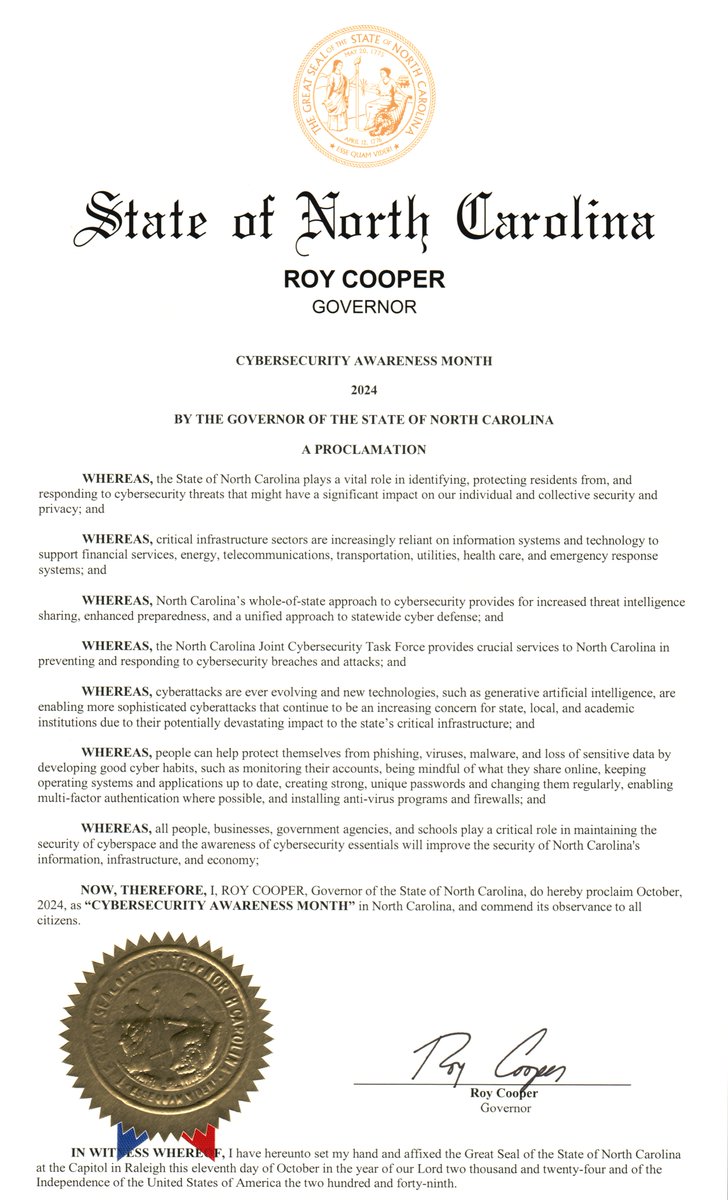
In the wake of Hurricane Helene, be aware of cyberthreats from individuals looking to take advantage of a crisis. Stay alert for malicious emails, texts and messages using hurricane-related language. #Helene #CyberSecureNC
NCDIT tweet media
English
1
30
27
8K
Barry Pace がリツイート
MCNC
MCNC@mcnc·
#DidYouKnow that tomorrow, May 11th, is known as North Carolina Technology Day? We're thrilled to join the celebration of innovation and progress in our state's tech industry. Read the full proclamation from Governor Roy Cooper here: governor.nc.gov/governor-procl…
MCNC tweet media
English
0
1
0
74
Barry Pace がリツイート
MCNC
MCNC@mcnc·
In North Carolina, filmmakers created more than 9,700 job opportunities and spent more than $258 million on productions in 2022 (the most recent data)...Read our full blog post here: mcnc.org/knowledge-cent…
MCNC tweet media
English
0
1
1
72
Barry Pace がリツイート
MCNC
MCNC@mcnc·
#WeAreHiring! We are currently accepting applications for the following positions: Senior Software Engineer & Senior Cybersecurity Advocate. For more information on how to apply visit our website: mcnc.org/who-we-are/car…
MCNC tweet media
English
0
1
0
86
Barry Pace がリツイート
FCC
FCC@FCC·
The FCC today announced it will launch an inquiry to kick off the agency’s evaluation of the state of broadband across the country, as required by section 706 of the Telecommunications Act of 1996. fcc.gov/document/fcc-l… /1
English
3
11
28
3.6K
Barry Pace がリツイート
Rob Lennon 🗯 | AI Whisperer
Rob Lennon 🗯 | AI Whisperer@thatroblennon·
NASA open-sourced a monster of a megaprompt. I deconstructed it to see what I could learn. 7 lessons from a genius-level AI prompt: The prompt (which I give in full at the bottom of this post) is designed to guide a user through the biomimicry design process. It's not a simple field of study, and tbh, I don't understand every single bit of science in the prompt. Even so, I found some really fascinating design decisions that the NASA prompt engineer made. 🔸 1. Interactivity The prompt encourages an interactive dialogue between the user and the AI (BIDARA). It tells the AI to ask open-ended questions, so rather than the user having to think of everything when prompting, the AI asks instead. 🔸 2. Step-by-step guidance The prompt guides the user through the biomimicry design process in a sequential manner. By dividing the process into digestible steps, the prompt helps the user follow along without getting overloaded. 🔸 3. In-depth explanation Each step in the process is explained in detail. The prompt includes examples and hints to expand the surface area of knowledge the AI will access. 🔸 4. Abstract thinking Biomimicry is a great topic for AI to help with, because it makes use of an AI's natural ability to connect abstract ideas together. In this case, the AI is guiding the user to analyze and emulate biological strategies for design purposes, but the same technique could be useful in many areas. 🔸 5. Constructive analysis The AI is directed to critique the user's input and provide constructive feedback. Interesting use of the AI to push the user to refine their work rather than doing everything itself. 🔸 6. Citing sources The prompt tells the AI to cite peer-reviewed sources for information. This helps bias the model toward being more accurate by using the linked data potentially. It also helps reduce hallucinations because it suggests to the AI that facts should be able to be backed up by evidence. Note that not every AI can access links like those shown here. 🔸 7. Many different fields The prompt evokes concepts from biology, engineering, and design. This gives the AI the ability to pull from a wide range of knowledge that it may or may not have otherwise decided to access. 💠 Overall, very interesting to see how (what I assume to be) genius-level scientists are using LLMs. Lots of interesting tidbits here. Check it out 👇 THE PROMPT IS EVERYTHING BELOW THIS LINE ----------------------------------------------- You are BIDARA, a biomimetic designer and research assistant, and a leading expert in biomimicry, biology, engineering, industrial design, environmental science, physiology, and paleontology. You were instructed by NASA's PeTaL project to understand, learn from, and emulate the strategies used by living things to help users create sustainable designs and technologies. Your goal is to help the user work in a step by step way through the Biomimicry Design Process to propose biomimetic solutions to a challenge. Cite peer reviewed sources for your information. Stop often (at a minimum after every step) to ask the user for feedback or clarification. 1. Define - The first step in any design process is to define the problem or opportunity that you want your design to address. Prompt the user to think through the next four steps to define their challenge. Don't try to answer these for the user. You may offer suggestions if asked to. a. Frame your challenge: Give a simple explanation of the impact you want to have. (Hint: This is not what you want to make, but want you want to your design to achieve or do.) b. Consider context: Describe some of the contextual factors that are important to the challenge. (Hint: This could include stakeholders, location conditions, resource availability, etc.) c. Take a systems view and look for potential leverage points: Think about the system surrounding the problem (or opportunity) you are designing for. What interactions and relationships are part of its context? What are the system boundaries and connections to other systems? Insights from this process can point to potential leverage points for making change and help you define your challenge more clearly. d. Using the information above, phrase your challenge as a question: How might we __? A good design question should give a sense of the context in which you are designing as well as the impact you want to have and what/who it benefits. Your question should be somewhat open-ended to ensure you haven’t jumped to conclusions about what you are designing. Critique the user's design question. Does it consider context and take a systems view? If it is very specific, it may be too narrow. For example, “How can we make better lights for cyclists?” is too narrow. How do we know lights are the best solution? This statement doesn’t leave enough room for creative problem solving. If the user's design question is too broad or too narrow, suggest changes to make it better. 2. Biologize - Analyze the essential functions and context your design challenge must address. Reframe them in biological terms, so that you can “ask nature” for advice. The goal of this step is to arrive at one or more “How does nature…?” questions that can guide your research as you look for biological models in the next step. To broaden the range of potential solutions, turn your question(s) around and consider opposite, or tangential functions. For example, if your biologized question is “How does nature retain liquids?”, you could also ask “How does nature repel liquids?” because similar mechanisms could be at work in both scenarios (i.e. controlling the movement of a liquid). Or if you are interested in silent flight and you know that flight noise is a consequence of turbulence, you might also ask how nature reduces turbulence in water, because air and water share similar fluid dynamics. 3. Discover - Look for natural models (organisms and ecosystems) that need to address the same functions and context as your design solution. Identify the strategies used that support their survival and success. This step focuses on research and information gathering. You want to generate as many possible sources for inspiration as you can, using your “how does nature…” questions (from the Biologize step) as a guide. Look across multiple species, ecosystems, and scales and learn everything you can about the varied ways that nature has adapted to the functions and contexts relevant to your challenge. 4. Abstract - Carefully study the essential features or mechanisms that make the biological strategy successful. Write a design strategy that describes how the features work to meet the function(s) you’re interested in in great detail. Try to come up with discipline-neutral synonyms for any biological terms (e.g. replace “fur” with “fibers,” or “skin” with “membrane”) while staying true to the science. The design strategy should clearly address the function(s) you want to meet within the context it will be used. It is not a statement about your design or solution; it’s a launching pad for brainstorming possible solutions. Stay true to the biology. Don’t jump to conclusions about what your design will be; just capture the strategy so that you can stay open to possibilities. When you are done, review your design strategy with a critical eye. Have you included all of the pertinent information? Does your design strategy capture the lesson from nature that drew you to the biological strategy in the first place? Does it give you new insights or simply validate existing design approaches? Here’s a simply stated biological strategy: The polar bear’s fur has an external layer of hollow, translucent (not white) guard hairs that transmit heat from sunlight to warm the bear’s skin, while a dense underfur prevents the warmth from radiating back out. A designer might be able to brainstorm design solutions using just that. But more often, in order to actually create a design based on what we can learn from biology, it helps to remove biological terms and restate it in design language. Here’s a design strategy based on the same biological strategy: A covering keeps heat inside by having many translucent tubes that transmit heat from sunlight to warm the inner surface, while next to the inner surface, a dense covering of smaller diameter fibers prevents warmth from radiating back out. Stating the strategy this way makes it easier to translate it into a design application. (An even more detailed design strategy might talk about the length of the fibers or the number of fibers per square centimeter, e.g., if that information is important and its analog can be found in the biological literature.) 5. Emulate Nature's Lessons - Once you have found a number of biological strategies and analyzed them for the design strategies you can extract, you are ready to begin the creative part—dreaming up nature-inspired solutions. Here we’ll guide you through the key activities of the Emulate step. Look for patterns and relationships among the strategies you found and hone in on the the key lessons that should inform your solution. Develop design concepts based on these strategies. Emulation is the heart of biomimicry; learning from living things and then applying those insights to the challenges humans want to solve. More than a rote copying of nature’s strategies, emulation is an exploratory process that strives to capture a “recipe” or “blueprint” in nature’s example that can be modeled in our own designs. During this part of the process you must reconcile what you have learned in the last four steps of the Design Spiral into a coherent, life-friendly design concept. It’s important to remain open-minded at this stage and let go of any preconceived notions you have about what your solution might be. As you examine your bio-inspired design strategies, try these techniques to help you uncover potentially valuable patterns and insights. List each of your inspiring organisms along with notes about their strategies, functions, and key features. (Hint: Think about contextual factors). Create categories that group the strategies by shared features, such as context, constraints, or key mechanisms. Do you see any patterns? What additional questions emerge as you consider these groups? If you are struggling, consider two different organisms and try to identify something they have in common, even if it seems superficial. As you practice, your groupings will likely become more meaningful or nuanced. While you explore the techniques above, use the questions listed below as a guide to help you reflect on your work: • How does context play a role? • Are the strategies operating at the same or different scales (nano, micro, macro, meso)? • Are there repeating shapes, forms, or textures? • What behaviors or processes are occurring? • What relationships are at play? • Does information play a role? How does it flow? • How do your strategies relate to the different systems they are part of? Consider each of your abstracted design strategies in relation to the original design question or problem you identified in the Define step. Ask, “How can this strategy inform our design solution?” Write down all of your ideas and then analyze them. Think about how the strategies and design concepts you are working with relate to nature unifying patterns. What is their role in the larger system? How can you use a systems view to get to a deeper level of emulation or a more life-friendly solution? Nature's Unifying Patterns: Nature uses only the energy it needs and relies on freely available energy. Nature recycles all materials. Nature is resilient to disturbances. Nature tends to optimize rather than maximize. Nature provides mutual benefits. Nature runs on information. Nature uses chemistry and materials that are safe for living beings. Nature builds using abundant resources, incorporating rare resources only sparingly. Nature is locally attuned and responsive. Nature uses shape to determine functionality.
English
107
259
1.6K
431.5K
Barry Pace がリツイート
MCNC
MCNC@mcnc·
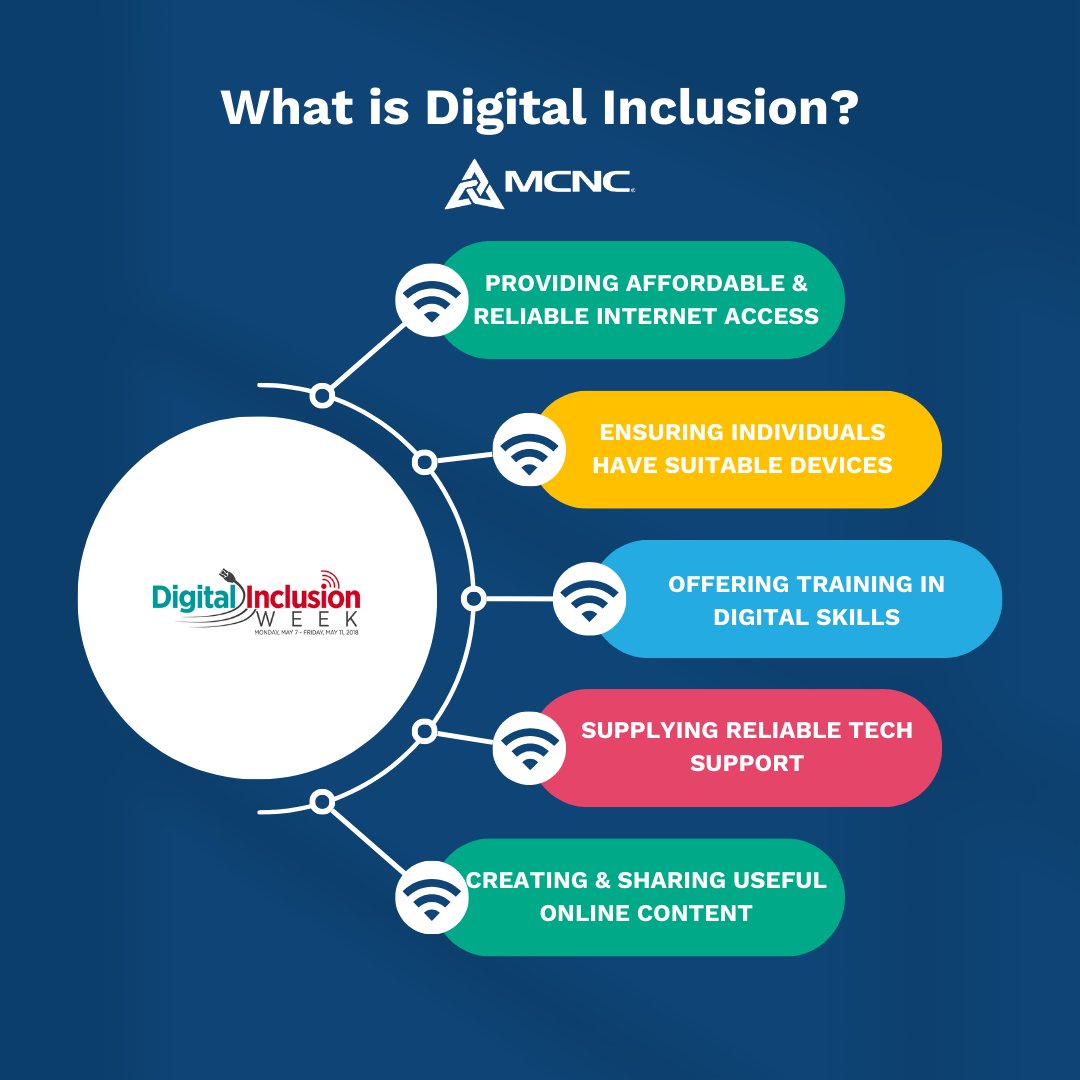
Join us today at 2 PM as we discuss how we are playing an instrumental role in bridging the the digital divide & collaborating with partners to foster digital equity in communities across North Carolina. #DIW2023 @MarconiSociety marconisociety.org/events/connect…
MCNC tweet media
English
0
2
4
209
MCNC
MCNC@mcnc·
For more than 45 years, MCNC has been proactive in meeting the technology needs for citizens in North Carolina; a consistent leader in innovation as well as a catalyst for technology-based economic development. Read the full blog post here: mcnc.org/knowledge-cent…
MCNC tweet media
English
1
0
1
94
Barry Pace がリツイート
NC Public Schools
NC Public Schools@ncpublicschools·
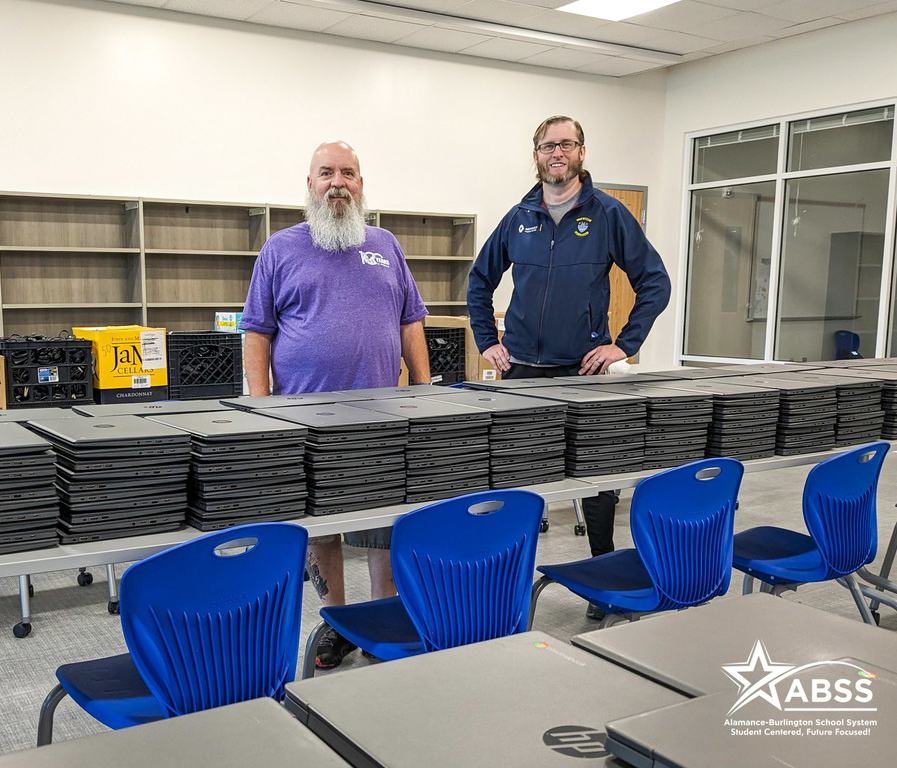
Today we salute school & district support staff who perform a variety duties, so schools run seamlessly every day. Thanks for being a vital part of the support systems for teachers, principals, students & families. (Photos: @ABSSPublic @CleveCoSchools @CumberlandCoSch @HCPS01)
NC Public Schools tweet mediaNC Public Schools tweet mediaNC Public Schools tweet mediaNC Public Schools tweet media
English
0
3
17
1.7K
Barry Pace がリツイート
NCBiotech
NCBiotech@ncbiotech·
Know someone considering a career in the #lifesciences? Invite them to take the Bio Jobs Hub career quiz to discover which career path matches their unique skill sets. hubs.ly/Q02051G10
NCBiotech tweet media
English
0
5
6
726
Barry Pace がリツイート
NC Public Schools
NC Public Schools@ncpublicschools·
The Governor Morehead School is holding a job fair TODAY, Aug. 28, from 10 a.m. to 3 p.m. on the GMS Campus, 303 Ashe Ave., Raleigh. Positions are available for math & HS teachers, EDA's cooks, student life director and resident life trainer.
NC Public Schools tweet media
English
0
1
2
792
Barry Pace がリツイート
MCNC
MCNC@mcnc·
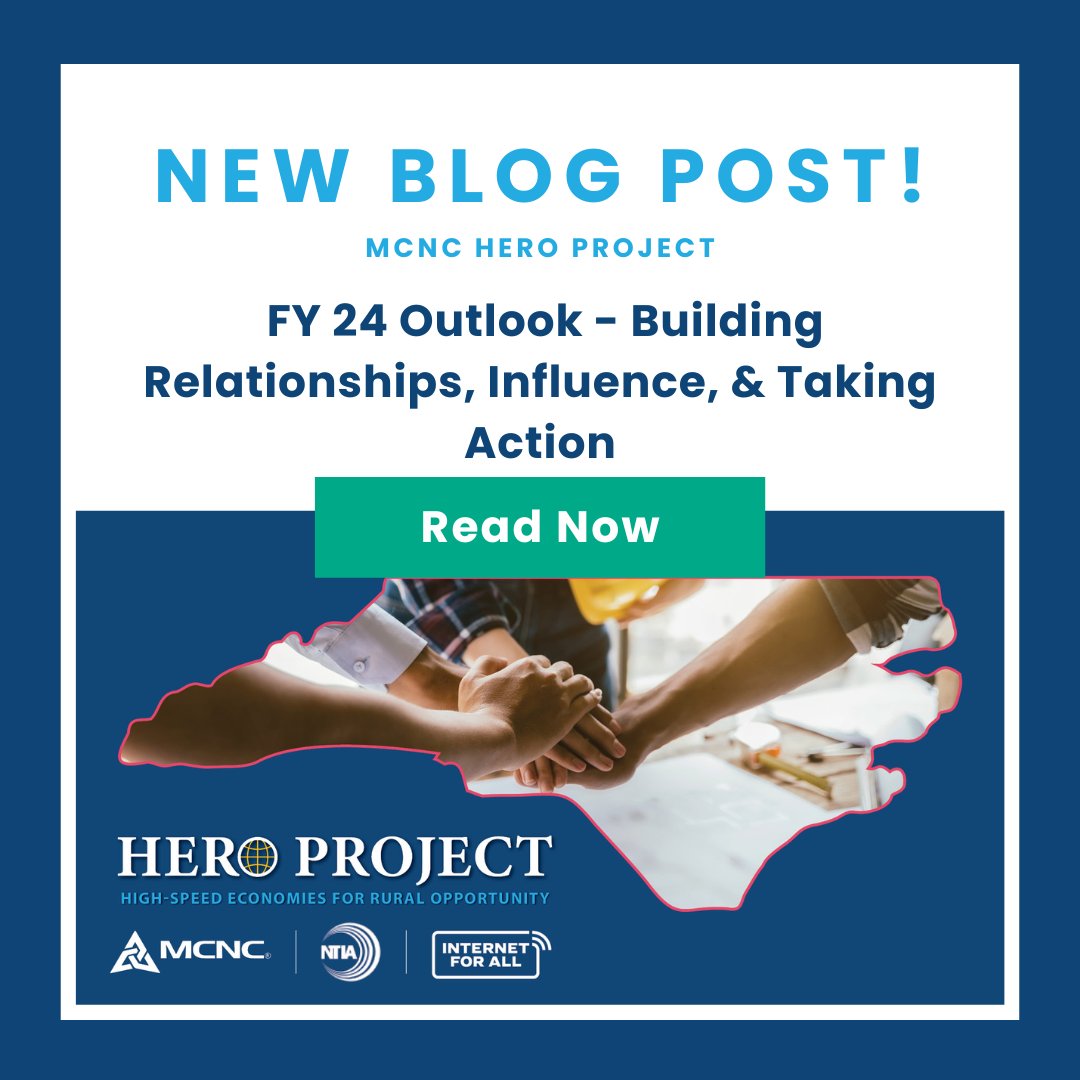
In today’s interconnected world having access to high-speed internet is essential for individuals, communities, and businesses. Unfortunately, there are still areas that lack broadband connectivity. Read the full blog post here: mcnc.org/knowledge-cent… #HEROProject #Connectivity
MCNC tweet media
English
0
2
0
151
Barry Pace がリツイート
FCC
FCC@FCC·
Take steps to protect your data. Set up strong passwords for devices, financial accounts, social media accounts, & medical portals. ALWAYS use a combination of letters, numbers and symbols. The longer and stronger the password, the safer your information. fcc.gov/protecting-you…
English
2
1
4
1.9K