Dr Anna Harutyunyan

107 posts

Dr Anna Harutyunyan banner
Dr Anna Harutyunyan

Dr Anna Harutyunyan

@brain_scientia

Neuroscientist, bioinformatician, cat mom, latin dancer. Postdoc @Sydney_uni. Opinions are my own

Sydney, New South Wales 参加日 Mayıs 2019
456 フォロー中178 フォロワー
Dr Anna Harutyunyan がリツイート

The Nobel Prize
The Nobel Prize@NobelPrize·
BREAKING NEWS The Royal Swedish Academy of Sciences has decided to award the 2025 #NobelPrize in Chemistry to Susumu Kitagawa, Richard Robson and Omar M. Yaghi “for the development of metal–organic frameworks.”
The Nobel Prize tweet media
English
479
8.7K
18.8K
6.1M
Dr Anna Harutyunyan がリツイート
The Nobel Prize
The Nobel Prize@NobelPrize·
“My parents could barely read or write. It’s been quite a journey, science allows you to do it.” New laureate Omar Yaghi was in the middle of changing flights when we reached him, just after he heard that he had been awarded the 2025 #NobelPrize in Chemistry. In this interview we speak about his early life as a refugee in Jordan and the overwhelming draw of the beauty of chemistry: “I set out to build beautiful things and solve intellectual problems.” Listen now:
English
391
4.5K
15.8K
3.6M
Dr Anna Harutyunyan がリツイート
Niko McCarty.
Niko McCarty.@NikoMcCarty·
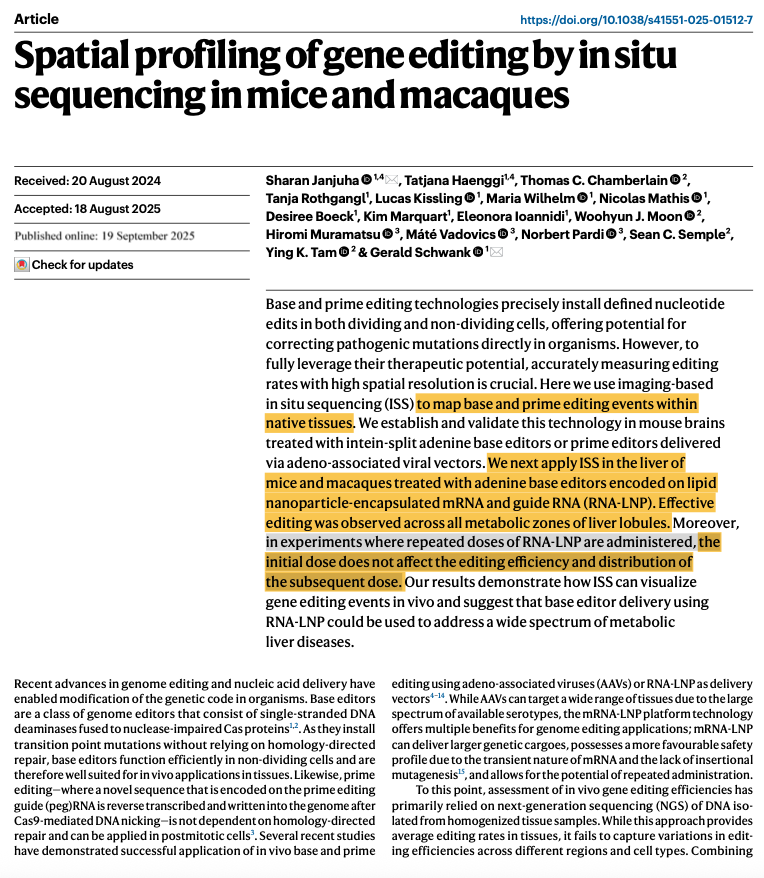
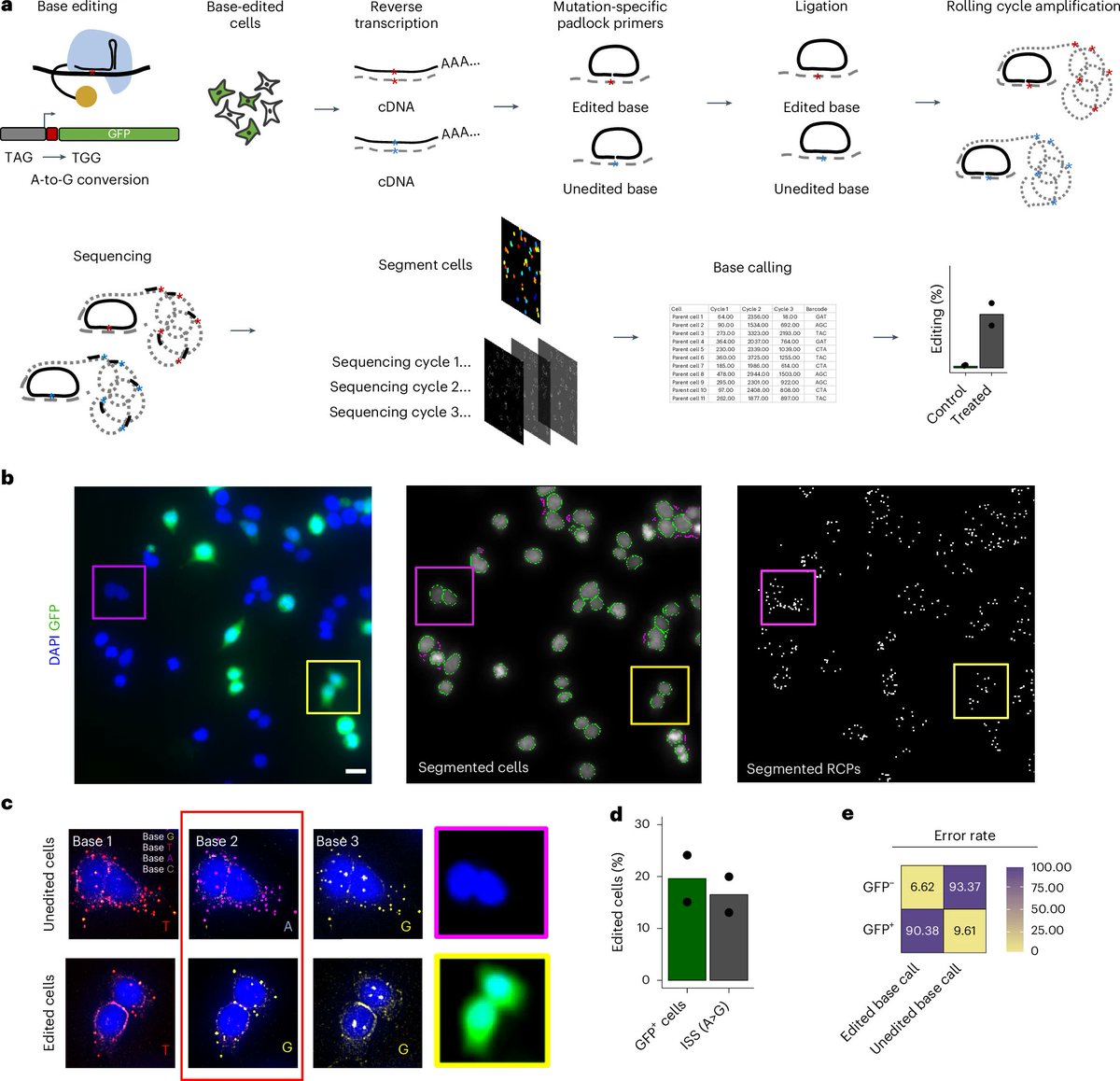
It is now possible to directly read and locate precise gene-editing events inside of intact tissue at single-cell resolution. TL;DR: You can deliver a base editor to the liver and then figure out where it made edits across all the cells in the organ. Before now, there were two main ways to quantify gene-editing: Bulky and tedious. For the “bulk” approach, you inject a mouse with an AAV carrying your base-editing payload, say, and then kill that mouse later. You cut out its liver (or brain, or whatever), put it in a blender, and sequence all the DNA therein. This gives the AVERAGE fraction of edited alleles in the organ, but removes spatial information. The tedious approach is microdissections. Instead of dropping the liver into a blender, you cut it into ultra-thin slices and then use a laser to cut out individual cells. By sequencing just those cells, you can figure out which got the genetic edits. So tedious! A new paper in Nature Biomedical Engineering solves this problem using a technique called in situ sequencing, or ISS. This is a way to “read” genetic edits in single cells without ever cutting out those cells. First, they take the tissue and fix it on a slide, so the cells stay in place. Next, they wash these cells with a short strand of DNA, designed to bind exactly where the gene-editing tool cuts. Attached to that DNA strand is a special probe, called a padlock. This padlock is designed, at the molecular level, to CLOSE only if the short DNA sequence exactly matches the gene-editing location. When this probe closes — only in edited cells — it becomes circular. Next, the scientists “amplify” only the circular DNA (again, INSIDE the cells) and sequence them using a miniature version of sequencing-by-synthesis chemistry. The final result is that you can figure out which alleles got edited in which cells, across the entire organ. In mouse brains, these scientists saw higher editing in neurons than astrocytes, for example. And when they injected macaques with lipid nanoparticles carrying base editors, they found that editing was surprisingly uniform across the entire organ (a good sign that the technology "could be used to address a wide spectrum of metabolic liver diseases," as the authors write.) Another important finding (in mice and macaques) is this: "...in experiments where repeated doses of RNA-LNP are administered, the initial dose does not affect the editing efficiency and distribution of the subsequent dose." This is a nice paper, and well worth reading. It will be good to have more rigorous methods for quantifying gene-editing efficiencies, because these metrics have been so scattered from one paper to the next. It has been really difficult to come up with high-quality benchmarks.
Niko McCarty. tweet mediaNiko McCarty. tweet media
English
4
52
354
25.7K
Dr Anna Harutyunyan がリツイート
Brain
Brain@Brain1878·
Simon et al. demonstrate that sensory-motor circuit dysfunction involving impairment of proprioceptive synapses on motor neurons is a conserved pathogenic event and therapeutic target across animal models and humans with spinal muscular atrophy. tinyurl.com/2556tvu4
Brain tweet media
English
0
18
89
5.4K
Dr Anna Harutyunyan
Dr Anna Harutyunyan@brain_scientia·
@ardemp Արտեմ Փաթափության Պիեզոների Մեծ Հայտնագործող Միակ ու անկրկնելի - a less ոսկեղենիք, modern eastern version. Only took an embarrassing (but still acceptable) amount of time to type that.
0
0
1
26
Dr Anna Harutyunyan がリツイート
Nature Medicine
Nature Medicine@NatureMedicine·
Taking a deep dive into the Global Neurodegeneration Proteomics Consortium dataset, Catilin Finney and colleagues identified a cerebrospinal fluid and plasma protein signature associated with carriers of the APOE ε4 allele which suggests the variant has a role in neurodegeneration beyond AD. nature.com/articles/s4159… And Tony Wyss-Coray @wysscoray and colleagues identified age-related changes in proteins that correlate with cognitive function. nature.com/articles/s4159…
English
0
4
18
5.1K
Dr Anna Harutyunyan がリツイート
Alzheimer's Association
Alzheimer's Association@alzassociation·
Help us wish a happy birthday to singer and songwriter @LuisFonsi! Thank you, Luis, for being a part of #MusicMoments to raise Alzheimer's awareness through the power of music.
English
2
8
35
1.8K
Dr Anna Harutyunyan がリツイート
Sen. Bernie Sanders
Sen. Bernie Sanders@SenSanders·
I attended Trump’s inauguration yesterday. Here are my thoughts:
English
3.9K
22K
128.5K
6.7M
Dr Anna Harutyunyan がリツイート
Rosa Ritunnano
Rosa Ritunnano@RRitunnano·
Instead of listing my publications, as the year draws to an end, I want to put pressure on the commonplace assumption that productivity must always increase. Good research is disruptive and thinking time is central to high quality scholarship and necessary for disruptive research
Rosa Ritunnano tweet media
English
52
1.3K
4.6K
383.8K
Dr Anna Harutyunyan がリツイート
Dr Shóbi Sivathamboo
Dr Shóbi Sivathamboo@shobi__s·
Today is #SUDEPActionDay2024. What is #SUDEP? It stands for “Sudden Unexpected Death in Epilepsy” and is very sadly the most common cause of premature death from #epilepsy particularly in young people with epilepsy. Tips to minimise risks (thread 🧵)
Dr Shóbi Sivathamboo tweet media
English
2
9
14
767
Dr Anna Harutyunyan がリツイート
Alzheimer's Association
Alzheimer's Association@alzassociation·
BREAKING NEWS: The House just passed reauthorization of the bipartisan #BOLDAlzheimersAct! 🎉 Thank you to our advocates who helped advance this critical legislation to empower our nation’s health departments to address Alzheimer’s and other dementias in their communities. ➡️Next up, the bill heads to the Senate!
Alzheimer's Association tweet media
English
7
93
233
15.8K
Dr Anna Harutyunyan がリツイート
Lukas Valihrach
Lukas Valihrach@LukasValihrach·
Uncovering Plaque-Glia Niches in Human Alzheimer's Disease Brains Using Spatial Transcriptomics biorxiv.org/content/10.110…
Lukas Valihrach tweet media
English
0
17
72
8.2K
Dr Anna Harutyunyan がリツイート
Ardem Patapoutian
Ardem Patapoutian@ardemp·
Armenians call themselves “Hay” and refer to Armenia as “Hayastan” (Land of the Hays). One explanation for this comes from Michael J. Arlen in Passage to Ararat. I’m enjoying this book, which captures the author’s journey to rediscover his Armenian heritage.
Ardem Patapoutian tweet media
English
11
20
166
9.4K
Dr Anna Harutyunyan がリツイート
Cell
Cell@CellCellPress·
In the latest issue! Multiphoton fluorescence microscopy for in vivo imaging dlvr.it/TCRtTn
English
0
32
108
12.9K
Dr Anna Harutyunyan がリツイート
Brain
Brain@Brain1878·
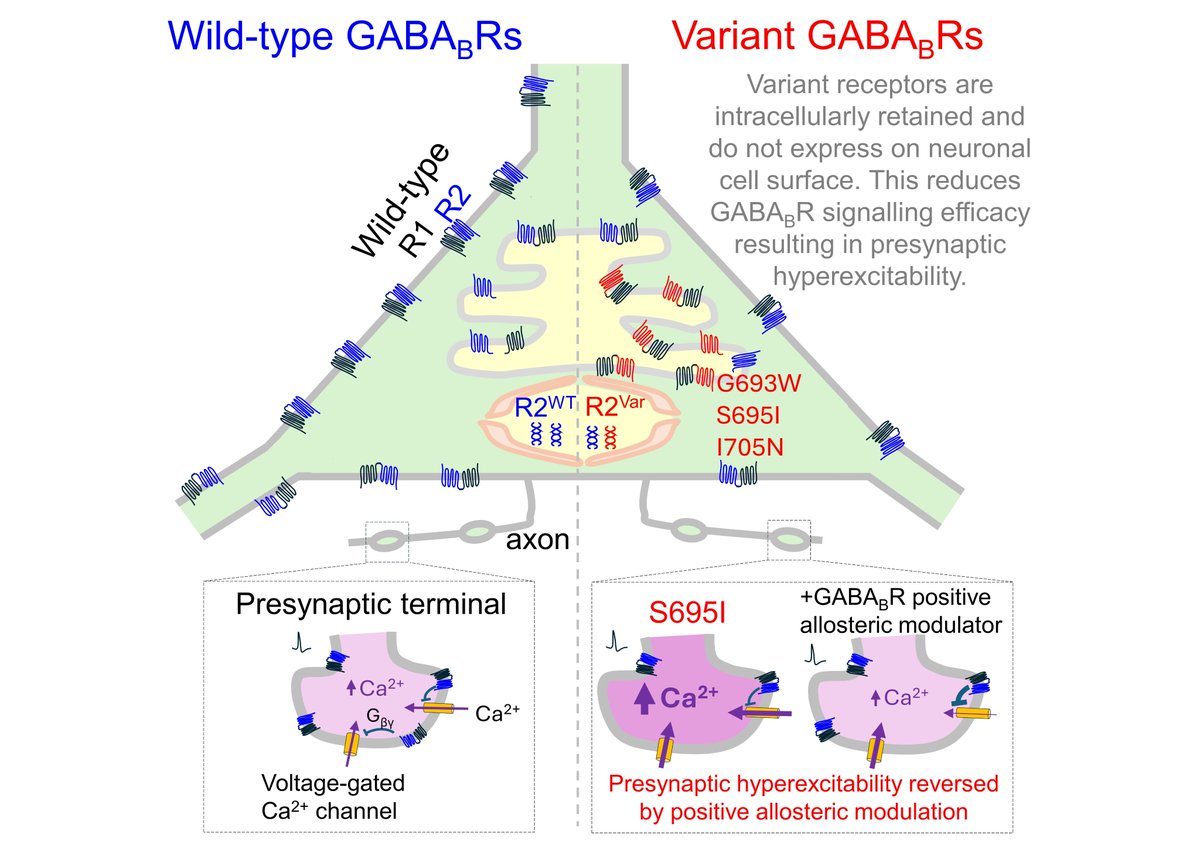
Minere et al. provide new insights into the mechanisms by which GABA-B receptor variants give rise to neurodevelopmental disease, and show that positive allosteric modulators have therapeutic potential. tinyurl.com/4saxubr2
Brain tweet media
English
0
8
29
3.4K
Dr Anna Harutyunyan がリツイート
Agustin Ibañez
Agustin Ibañez@AgustinMIbanez·
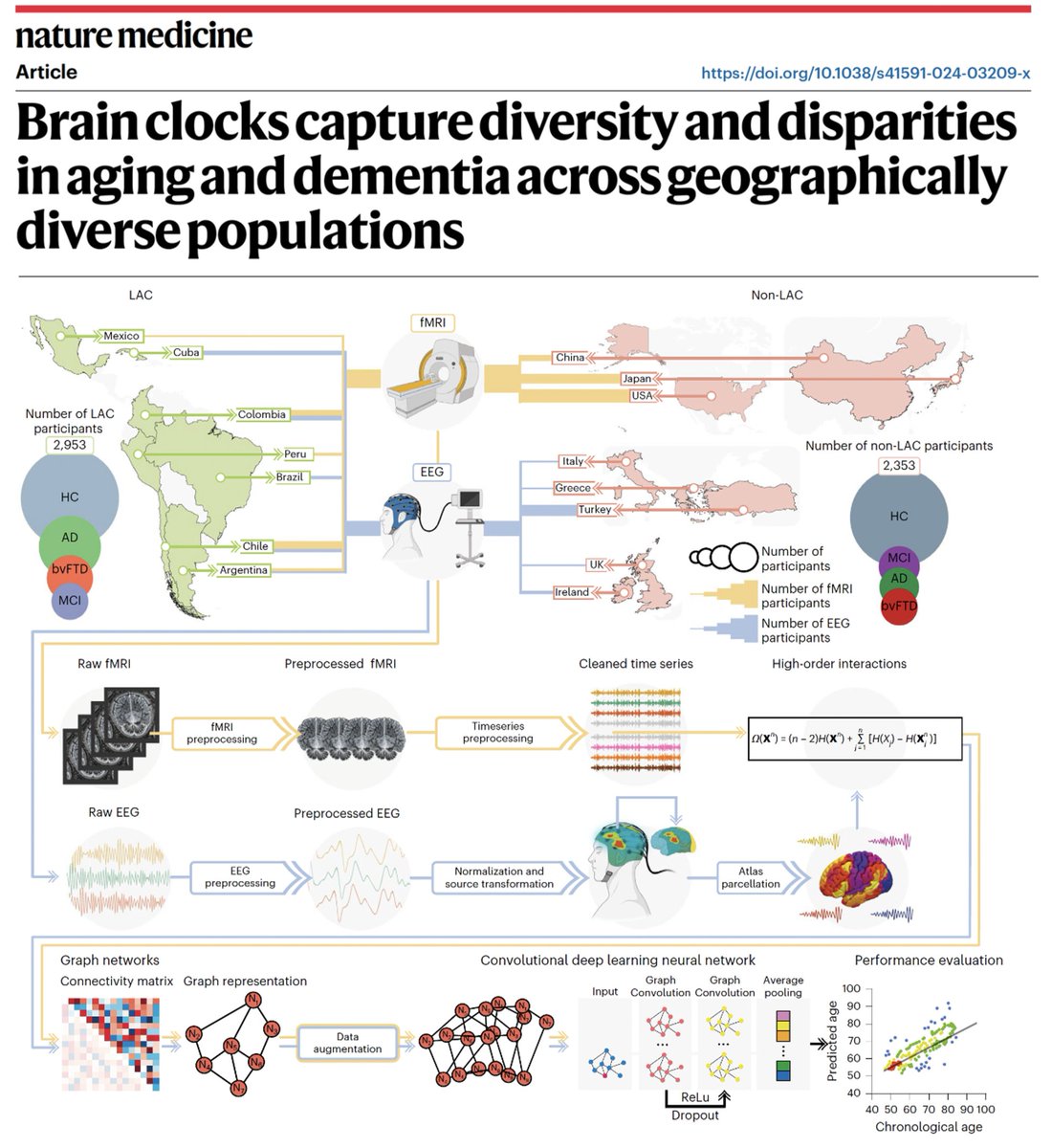
Your Brain Age is less about mechanical ticks & more about entropic lifestyle & environment. In our @NatureMedicine, brain clocks speed up due to dementia, exposome (economic inequality, pollution), gender-health disparities, & regional factors👉 nature.com/articles/s4159… 🧵1/6
Agustin Ibañez tweet media
English
9
207
592
133.2K