Brydgework

1.7K posts

Brydgework banner
Brydgework

Brydgework

@brydgework

We foster MSME resilience as the foundation for inclusive growth and sustainable development.

India 参加日 Haziran 2024
6 フォロー中144 フォロワー
固定されたツイート
Brydgework
Brydgework@brydgework·
Brydgework Consultants empowers enterprises, including small & medium businesses in India’s tier 2 & 3 cities, with tailored solutions. Follow this thread to explore our top services and see why we’re your ideal growth partner.
Brydgework tweet media
English
1
1
7
2.6K
Shashank Mattoo
Shashank Mattoo@MattooShashank·
BREAKING: India hits back at Trump’s “hellhole” comment “The remarks are obviously uninformed, inappropriate and in poor taste,” says MEA
Shashank Mattoo tweet media
English
128
96
546
47.5K
Brydgework
Brydgework@brydgework·
🚨Inflation Warning: What RBI Has Recently Warned About (And How It Affects You) According to the latest RBI State of the Economy report, inflation risks have become a major concern once again. However, this time, it doesn’t relate to demand-side issues but to the following: Geopolitical Disruptions Issues in the logistics sector and increasing crude oil prices may lead to higher import costs. Changing Weather Patterns Erratic monsoon seasons may affect food production and increase its price levels. Key Takeaway for Policymakers This situation cannot be viewed as a traditional case of inflation. Therefore, even changing the interest rate won't help much to mitigate it. Consequences for Companies and Consumers * Increase in operating expenses * Decrease in profit margins * Growth in the cost of living * Uncertainty in economic forecasts Conclusion: We are moving into an era where external factors (climate change, geopolitics, and oil prices) will become a bigger challenge compared to domestic consumption trends. 👉 Businesses must learn to cope with this new reality. #RBI #Inflation #India #EconomicPolicy #IndustryAnalysis #Brydgework
Brydgework tweet media
English
0
0
0
14
Brydgework
Brydgework@brydgework·
Disruptions on a global scale, especially the current situation in the Middle East, are leading to changes in energy streams and uncertainty regarding the economic outlook. However, the effect experienced varies greatly between countries. According to the @IMFNews Managing Director, @KGeorgieva, countries which have stable oil and gas export are not experiencing any macroeconomic pressure. On the other hand, those that are directly involved in the dispute, or are important oil exporters in the area, are facing severe economic difficulties due to problems associated with the interruption of supply streams. However, the most affected part includes oil-importing countries with large amounts of energy imports contributing to the total GDP of such countries. In these cases, high prices on imported resources, devaluation issues, and other macroeconomic problems tend to arise rather quickly. One of the main distinguishing features between affected economies is their ability to cope with macroeconomic stress. Those countries that have strong sovereign credit ratings and sufficient fiscal room to maneuver will be able to soften the blow, while the opposite is true for others. For companies and government officials, this difference serves as a reminder to prepare adequately for such scenarios in the future.
English
0
0
0
29
Brydgework
Brydgework@brydgework·
AI is not coming primarily for people. It is coming for inefficiency, for the unnecessary steps, the duplicated effort, and the decisions made slowly because information was unavailable or poorly structured. brydgework.com/ai-will-create…
English
0
0
0
96
Brydgework
Brydgework@brydgework·
The government’s first advance estimate for FY26 stands at 7.4%. If Q3 prints near 8.1% as projected, it reinforces the narrative that domestic consumption continues to power India’s near-term growth cycle. #GDP #India #Growth #SBI #Brydgework
English
0
0
0
45
Brydgework
Brydgework@brydgework·
India is also shifting its GDP base year from 2011-12 to 2022-23. The revised series, to be released by the Ministry of Statistics and Programme Implementation on February 27, 2026, may alter historical growth comparisons.
English
1
0
0
44
Brydgework
Brydgework@brydgework·
SBI Projects 8.1% GDP Growth for Q3 FY26 on Strong Domestic Demand India’s growth engine appears to be accelerating. @TheOfficialSBI projects 8.1% GDP growth for Q3 FY26, showing strong momentum in the October to December 2025 quarter, driven largely by domestic demand.
Brydgework tweet media
English
1
0
0
75
Brydgework
Brydgework@brydgework·
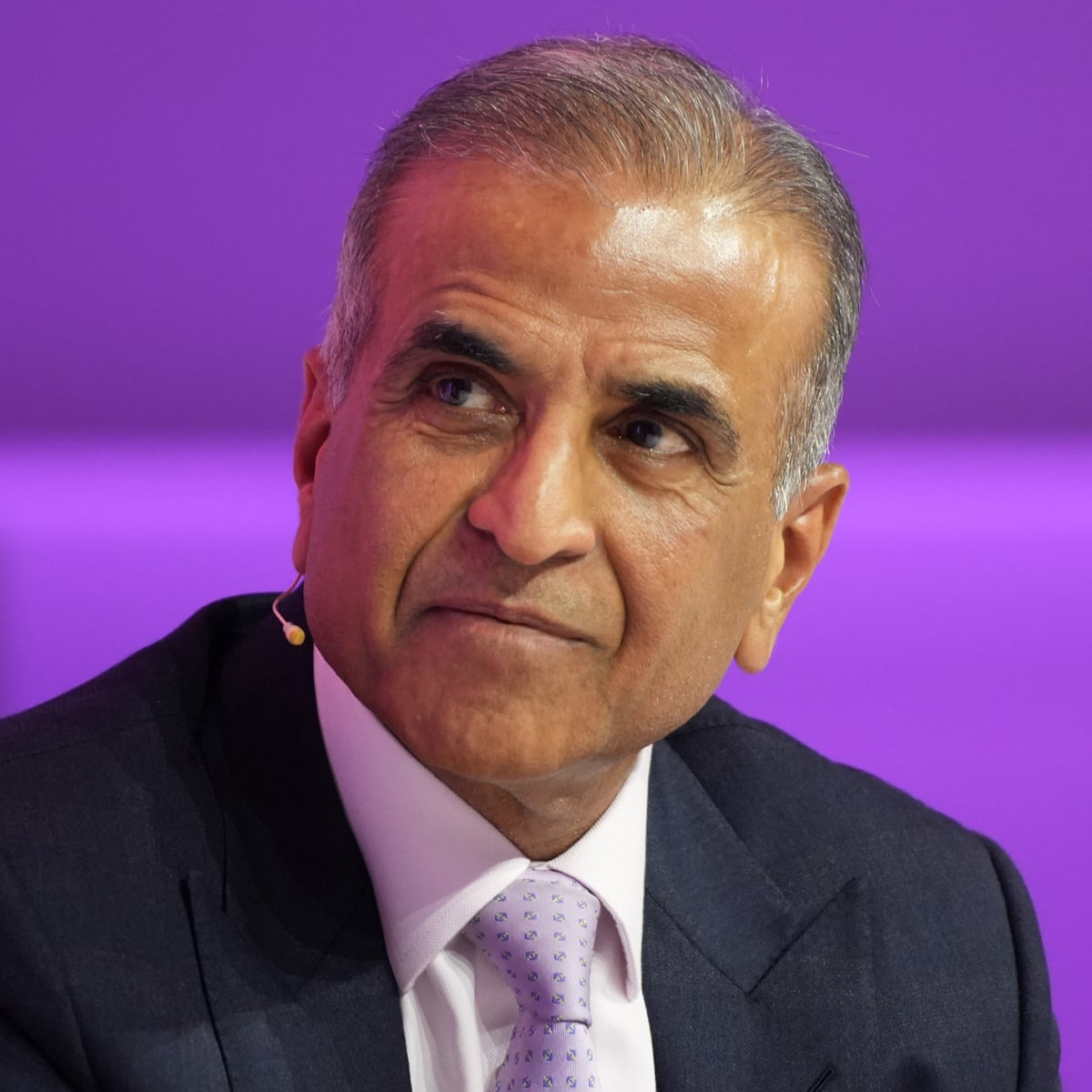
Healthcare, education to flourish with AI: Bharti Chairman Sunil Mittal Sectors such as healthcare, education, deep research, and medical sciences are set to flourish with the power of AI, said Sunil Bharti Mittal, Chairman of Bharti Enterprises, at the India AI Impact Summit 2026 in New Delhi. He reiterated that AI is now embedded in how the Indian conglomerate operates and engages with customers, stressing the importance of keeping AI open for the benefit of all. Healthcare: From reactive treatment to predictive care AI is enabling earlier diagnosis, smarter medical imaging, faster drug discovery, and personalized treatment pathways. Hospitals and health systems are beginning to move from treating illness to predicting and preventing it. For a country with population-scale healthcare challenges, AI-powered systems could dramatically improve access, efficiency, and outcomes, especially in underserved regions. Education: From one-size-fits-all to personalized learning AI-driven tools can tailor learning speeds, identify student gaps instantly, assist teachers with analytics, and make high-quality education accessible beyond urban centers. The long-term impact could be massive: a workforce trained not just faster, but smarter. Deep research and medical science acceleration Scientific discovery cycles that once took years can now be compressed with AI-assisted modeling, simulation, and large-scale data analysis. This means faster breakthroughs in biotechnology, pharmaceuticals, and advanced materials. AI must remain open and inclusive Mittal’s emphasis on keeping AI open is critical. The real promise of AI is not captured when only a few organizations control it; its full societal value emerges when businesses, researchers, startups, and public institutions can all build upon shared technological foundations. #AISummit #Airtel
Brydgework tweet media
English
0
0
0
45
Brydgework
Brydgework@brydgework·
India ‘has done what no other country has’: Macron hails digital transformation of nation During his address at the India AI Impact Summit, French President Emmanuel Macron lauded India’s digital transformation and its pioneering role in technology governance, describing the nation’s progress as a global benchmark. He highlighted advances in digital identity, payments, and health IDs, noting their impact on financial inclusion. What makes India’s digital transformation unique! > Population-scale digital identity India built one of the world’s largest digital identity ecosystems, enabling hundreds of millions of citizens to access services, banking, and benefits with minimal friction. > Real-time digital payments revolution India’s payment infrastructure fundamentally changed how money moves — from street vendors to multinational businesses — making instant, low-cost transactions the norm rather than the exception. > Digital health infrastructure at national scale The rollout of health IDs and digital medical records is creating a connected healthcare ecosystem that can dramatically improve service delivery, portability of records, and access for rural populations. > Governance through digital public infrastructure Instead of relying only on private platforms, India invested in national-level digital rails that startups, banks, fintech firms, and state agencies can all build upon.
Brydgework tweet media
English
0
0
0
47
Brydgework
Brydgework@brydgework·
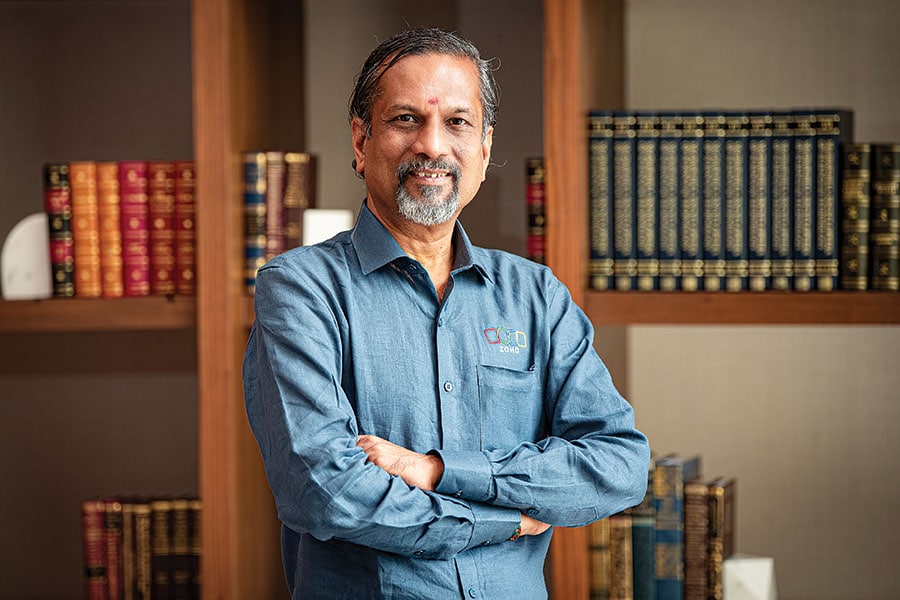
India could surpass the United States in AI adoption in the next 10 years: Sridhar Vembu Sridhar Vembu, Co-founder and Chief Scientist of Zoho Corporation, said that with its young and increasingly optimistic population embracing the next wave of technology, India could adopt AI faster than the United States within a decade. Speaking at the AI Impact Summit, Vembu noted that just as India built UPI at a massive scale, AI could follow a similar path. Why India could lead the AI adoption race? > Population-scale digital readiness India already operates at unmatched digital scale. Hundreds of millions of users are online, data costs are among the lowest globally, and digital services are deeply embedded in everyday life. > The UPI precedent The success of India’s real-time payments infrastructure, developed under the National Payments Corporation of India, showed how quickly a nation can leapfrog legacy systems when public digital infrastructure is built for scale. AI could become the next such platform. > A young, tech-adaptive workforce India’s demographic advantage matters. A young workforce that is mobile-first, software-comfortable, and entrepreneurial dramatically accelerates the adoption curve for emerging technologies. > Expanding startup and SaaS ecosystem India is no longer just an IT services hub. Product-driven companies and AI startups are growing rapidly, building solutions not only for India but for global markets.
Brydgework tweet media
English
0
0
0
52
Brydgework
Brydgework@brydgework·
Inside Sarvam AI, India’s hybrid intelligence architecture that combines speech recognition, translation, document AI, and offline LLM deployment. brydgework.com/sarvam-ai-and-…
English
0
0
0
42
Brydgework
Brydgework@brydgework·
India’s Growth Map Is Expanding Beyond Metros India’s growth story is entering a quieter but structurally important phase, one where economic momentum is beginning to diffuse beyond traditional metropolitan anchors and into district-level growth centres. Recent data from the City Vitality Index shows that the geography of India’s expansion is gradually widening, with northern and eastern districts emerging as increasingly visible contributors to national economic dynamism. For decades, India’s economic expansion was strongly metropolitan-centric. Cities such as Ahmedabad, Bengaluru, Delhi, Pune, Hyderabad, and Chennai functioned as primary engines of productivity, employment generation, and capital attraction. These cities still remain critical nodes in India’s economic architecture, supported by mature infrastructure, institutional density, and strong corporate ecosystems. Ahmedabad, in particular, continues to demonstrate strong economic vitality, reinforcing the role of established urban clusters as foundational pillars of growth. However, the emerging trend reveals that India’s economic expansion is transitioning from a concentrated metropolitan model toward a distributed regional growth model. Several districts in the northern and eastern parts of the country are now demonstrating measurable acceleration in economic activity, infrastructure development, and urban expansion. This shift reflects deeper structural transformation driven by connectivity upgrades, decentralised industrialisation, and increased integration of tier two and tier three geographies into national supply chains. Among the emerging growth districts, North 24 Parganas has surfaced as one of the most economically vibrant rising regions. The district’s proximity to industrial corridors, combined with expanding service sector activity, has positioned it as a strong example of how peri-urban regions are evolving into independent economic clusters. Similarly, districts such as Thane and Jaipur illustrate how infrastructure integration and demographic expansion are transforming urban-adjacent districts into high-momentum growth centres. The transformation is even more pronounced when observing upward mobility across several northern and eastern districts. Regions such as Gurugram, Hooghly, Moradabad, Samastipur, and Madhubani have shown significant improvements in economic vibrancy rankings. Particularly notable is Gonda, which has demonstrated sharp upward movement, reflecting rapid localised expansion in economic and infrastructure indicators. This evolving spatial distribution of growth is closely linked to improvements in physical and digital infrastructure across the country. Expansion of highway networks, freight corridors, regional airports, and digital connectivity is reducing the traditional economic disadvantage faced by smaller districts. As supply chains become more distributed and technology reduces geographic constraints, economic activity is increasingly locating itself closer to labour pools and cost-efficient production centres. Another important factor driving this transition is the rising economic participation of non-metro populations. Consumption growth in smaller cities and districts is creating new demand hubs, encouraging investment into manufacturing, logistics, retail, and service sectors. This shift suggests that India’s consumption economy is gradually broadening, strengthening domestic demand resilience while also supporting employment diversification. From a policy perspective, the emergence of district-driven growth carries significant macroeconomic implications. Balanced regional development reduces migration pressures on megacities, improves resource allocation efficiency, and enhances overall economic stability. It also aligns with India’s long-term strategy of building multiple industrial and service sector clusters rather than relying excessively on a few metropolitan hubs. India’s next growth phase may therefore not be defined solely by how fast its largest cities expand, but by how effectively its emerging districts integrate into the national economic fabric. The rise of northern and eastern districts shows that the country’s development story is becoming more inclusive, spatially balanced, and structurally resilient.
Brydgework tweet media
English
0
0
0
54
Brydgework
Brydgework@brydgework·
Generative AI could drive up to 46% productivity gains in Indian banking by 2030. Explore how AI leaders will permanently outperform competitors. brydgework.com/how-generative…
English
0
0
0
27
Brydgework
Brydgework@brydgework·
Transitional protection can serve as a capability-building instrument, but its strategic value diminishes if it is not paired with time-bound competitiveness milestones. Linking market safeguards with measurable commitments on export quality, cost efficiency, and global benchmarking introduces performance accountability into industrial policy. This approach can catalyse capital deepening, technology absorption, and supply chain sophistication, positioning Indian industry to compete on comparative advantage rather than regulatory insulation.
English
0
0
0
220
Shashank Mattoo
Shashank Mattoo@MattooShashank·
India's industry is very used to a large stable market within the country. We have been explicit that there will be no protection for industry in perpetuity. There will be no protection without commitments from industry on export quality and price, says India's Chief Econ Adviser
English
7
48
340
17K
Brydgework
Brydgework@brydgework·
As India positions itself as a global manufacturing and export hub, MSMEs will remain central to supply chain depth, innovation, and employment generation. Their growth trajectory will significantly influence India’s long-term economic transformation.
English
0
0
0
20
Brydgework
Brydgework@brydgework·
MSMEs also play an important social role. A large share of enterprises are women-led, strengthening inclusive growth and encouraging broader participation in India’s entrepreneurial landscape.
English
1
0
0
18
Brydgework
Brydgework@brydgework·
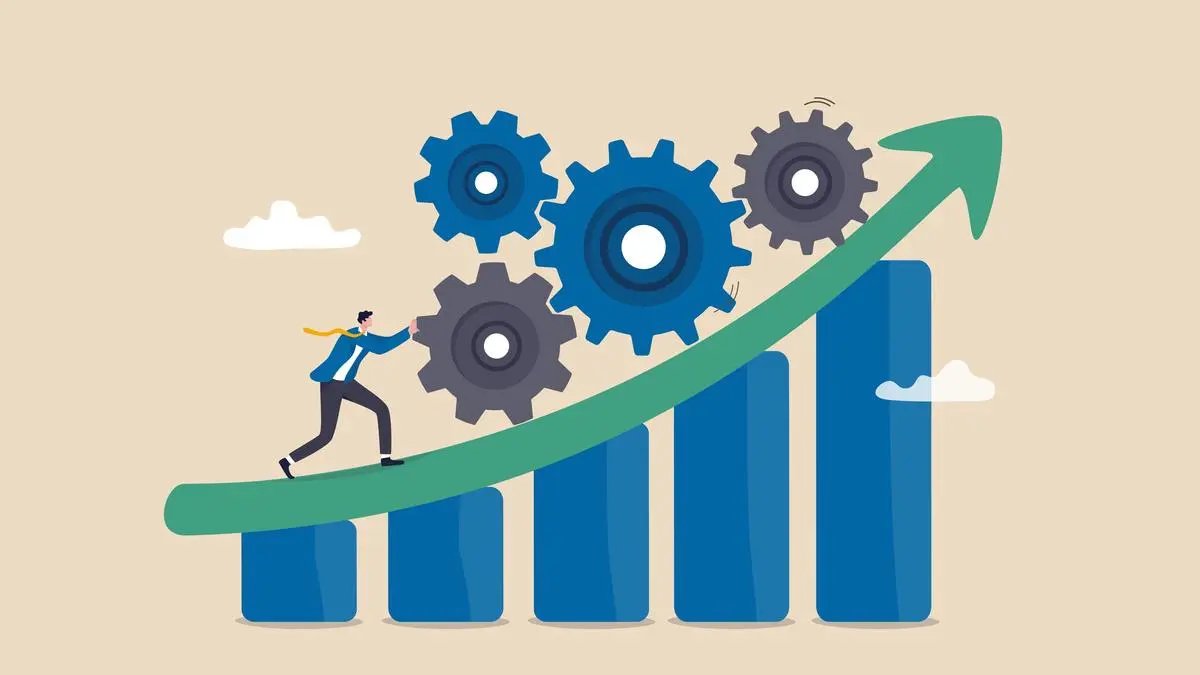
MSMEs: The Silent Engine Powering India’s Growth India’s growth story is increasingly being shaped by its Micro, Small and Medium Enterprises. The sector has strengthened its economic footprint, contributing over 30% to India’s Gross Value Added, reflecting rising productivity, scale, and resilience.
Brydgework tweet media
English
1
0
0
39