Cagatay Cali

1.9K posts

Cagatay Cali banner
Cagatay Cali

Cagatay Cali

@devcagatay

参加日 Eylül 2018
901 フォロー中1.2K フォロワー
Cagatay Cali
Cagatay Cali@devcagatay·
just told my AI agent "install everything on thor and make a video explaining devduck" it SSH'd into an arm64 jetson, compiled ffmpeg from scratch, installed node 22, rendered a 32s 1080p video with hyperframes, and telegram'd it back to me i did nothing. i was eating
English
0
0
0
25
Cagatay Cali がリツイート
AWS Developers
AWS Developers@awsdevelopers·
You keep hearing about Strands agents… but have you seen what it actually does? We built the smallest demo possible: a local “tell me a joke” app. Here's our code without Strands:
AWS Developers tweet media
English
1
9
54
4.6K
Cagatay Cali がリツイート
AWS Developers
AWS Developers@awsdevelopers·
strands steering is 100% accurate, are you?
GIF
English
3
2
16
2.6K
Cagatay Cali
Cagatay Cali@devcagatay·
Today I will try to teach you what peer-to-peer systems are, and explain an underappreciated technique for your agents. To understand peer to peer systems we can remember what software we used before centralized solutions became way better. Let's take torrents as an example. Anyone remember torrents? Back in the day we used peer to peer torrents to download files from other people's computers directly. There was no YouTube to watch videos, no X to upload model files to. Fun fact: @MistralAI uploaded their model weights to a torrent as an alternative to centralized file storage. Peer to peer never really died - we just stopped paying attention. So what makes peer to peer systems still the only solution for some use cases we forgot about during the last 10-15 years? Ethereum is actually a peer to peer network. If you are a more technical person, visit libp2p (libp2p.io) - it is the networking stack underneath a lot of what you call "web3." Distributed ledger is the technology built on top of p2p. Think of it as a shared notebook where every transaction is verified by enough nodes (51% precisely) to confirm the transaction is within bounds. We will unpack what "bounds" means in a moment. libp2p has competition in open source. Zenoh is one of the leading alternatives for building p2p networks - lighter weight, designed for IoT and edge, and very relevant if you are building agent systems. So what are the essential components for a system we can call p2p? 1Auto-discovery: Every node should announce itself in a way that other peers register it in their local state. No central registry. You show up, you get known. 2Heartbeats: Every node should broadcast heartbeats to keep journals up to date. No-show means the node is not healthy. This is how the network prunes itself without a coordinator. 3Unidirectional communication: Every peer should be able to perform communication between one or more peers. This includes direct messages, broadcasts, and subscribe/publish patterns. The key insight: you do not need a server in the middle to route these messages. Now here is the part nobody is talking about in the agent space: Your agents are nodes. If you are building multi-agent systems where Agent A calls Agent B through a central orchestrator, you have reinvented client-server architecture from the 1990s with extra steps. The orchestrator is a single point of failure, a bottleneck, and an unnecessary dependency. What if your agents discovered each other, maintained heartbeats, and communicated directly? What if when one agent found something useful, it published it to a shared context ring that every other agent could subscribe to - no coordinator needed? This is not theoretical. This is how I built the mesh network behind agi.diy. Browser tabs discover each other via BroadcastChannel. CLI agents connect via WebSocket. They all share a ring context - a lightweight circular buffer where any agent can publish findings and every other agent sees them. No central brain. No orchestrator. Just peers. The bounds I mentioned earlier? In a distributed ledger, bounds means the rules that define a valid transaction. In an agent mesh, bounds means the protocol contract - what messages look like, what actions are allowed, what context gets shared. Without bounds, you do not have a network. You have chaos. The underappreciated technique: treat your agents as peers, not as workers reporting to a manager. Give them discovery, give them heartbeats, give them direct communication. The system becomes resilient, scalable, and most importantly, it keeps working when any single node goes down. We went from downloading movies on LimeWire to building autonomous agent networks. The underlying principle never changed. Peers talking to peers. No middleman. That is the post. Go build p2p agents.
English
0
0
5
180
Cagatay Cali
Cagatay Cali@devcagatay·
What if I told you I’ve built OpenClaw way before OpenClaw and enjoying where community going, deeply grateful that we saw the huge demand to safe autonomous agents on scale! Visit repository link below to see the source code and commit history! Be my guest!
English
1
2
7
328
Cagatay Cali
Cagatay Cali@devcagatay·
World foundation models are trying to understand the video we live in as a neural network, takes video, audio and robot’s physical state from motors! I am not an expert in the field, but I can count myself as a learner from the best teachers, my humble research opinion is L4 level autonomy is achieved on Physical AI, it’s time for training them with ALL perception heads with MoE similar approach to switch Action Heads during test-time! Swapping batteries ~ swapping adapters! Charge your humanoid, and meanwhile your new checkpoints are ready for tomorrow! Let’s teach robots to see time!
English
0
0
1
74
Cagatay Cali
Cagatay Cali@devcagatay·
Let’s think about this, imagine you have unlimited amounts of time to solve a problem, what is the problem you would want to solve today? Folding a t-shirt? Take as claimed and expect to see humanoid forms are walking talking among us in next very few years. They are fundemantally different than a LLM, they are WFM’s!
English
1
0
1
102
Cagatay Cali
Cagatay Cali@devcagatay·
I appreciate as a research engineer, ~ Papers with SOTA results Geniune effort to solve a real problem. Solutions lean on simplicity than novelity. Reality response by mass adoption. Everything else is a daydream. Collective actions are bigger than claims on things proven on paper. ~ 1/*
English
1
0
2
154
Cagatay Cali がリツイート
NVIDIA Robotics
NVIDIA Robotics@NVIDIARobotics·
Everywhere you turned at #NVIDIAGTC, physical AI was in the mix. 🦾 From robots and autonomous vehicles to industrial AI, it was incredible to see it all in one place, alongside an amazing community of developers. See you at the next GTC. 🤗
English
19
28
159
22.5K
Cagatay Cali
Cagatay Cali@devcagatay·
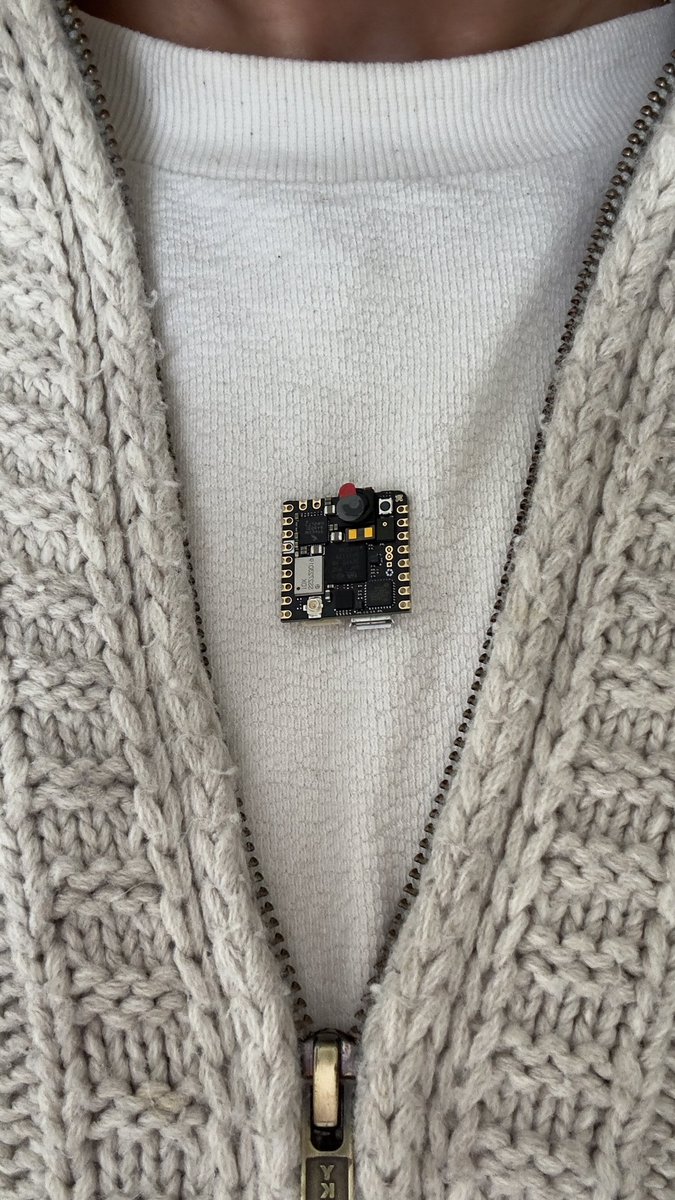
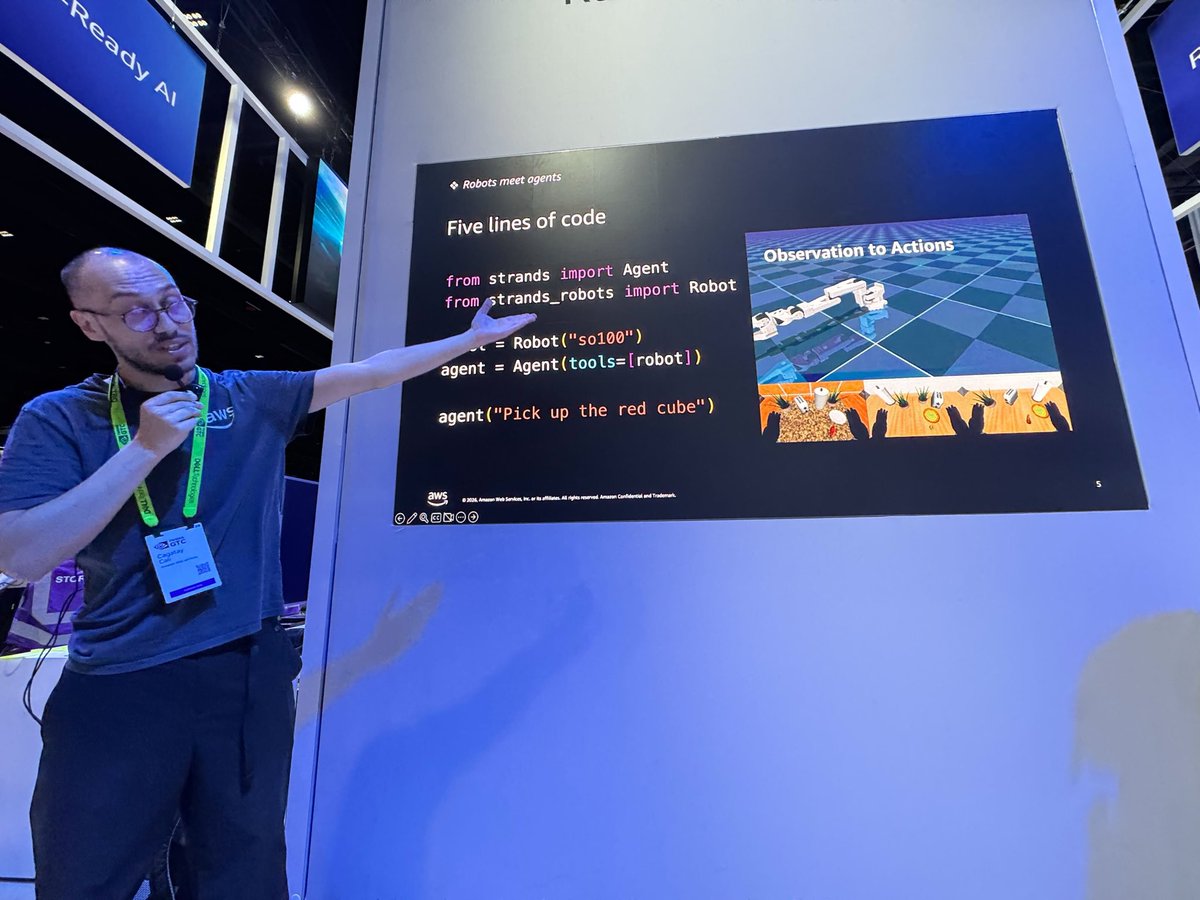
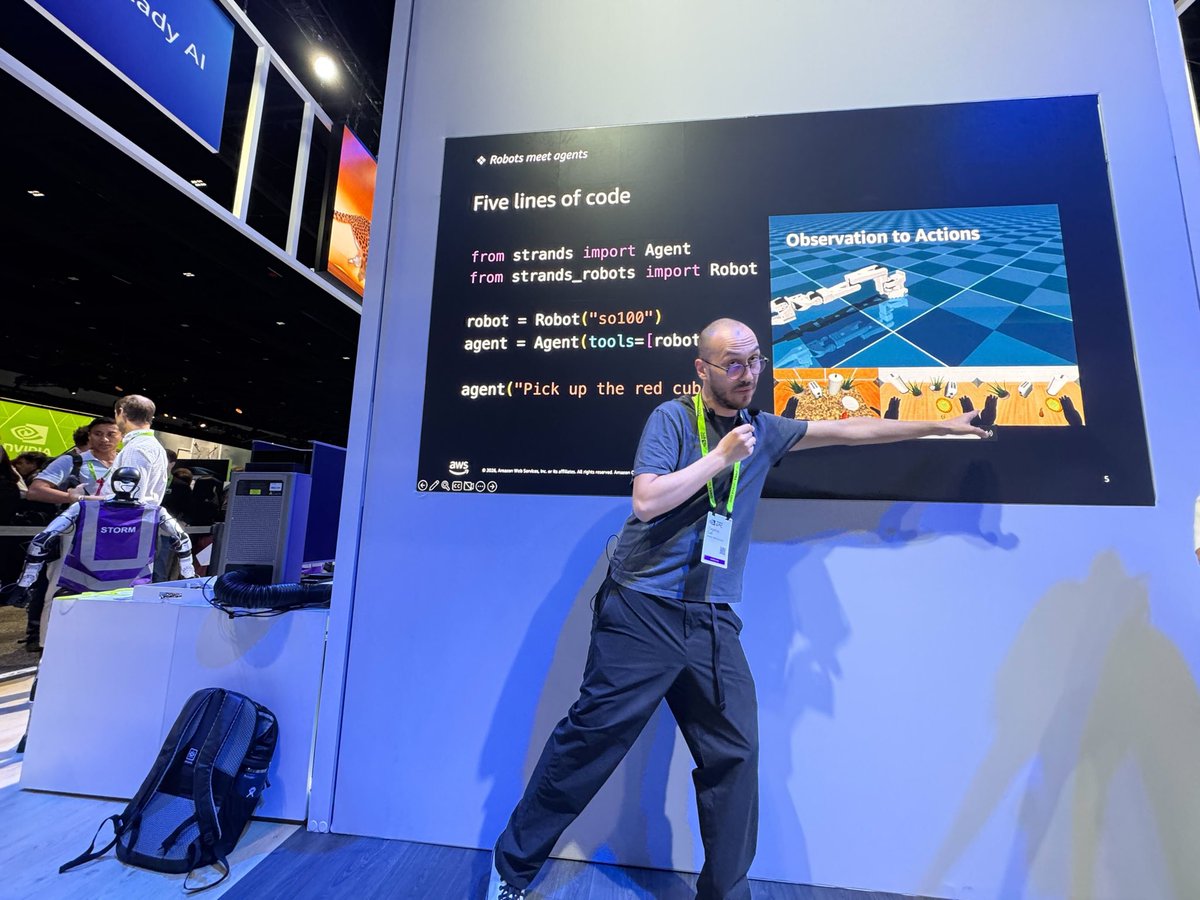
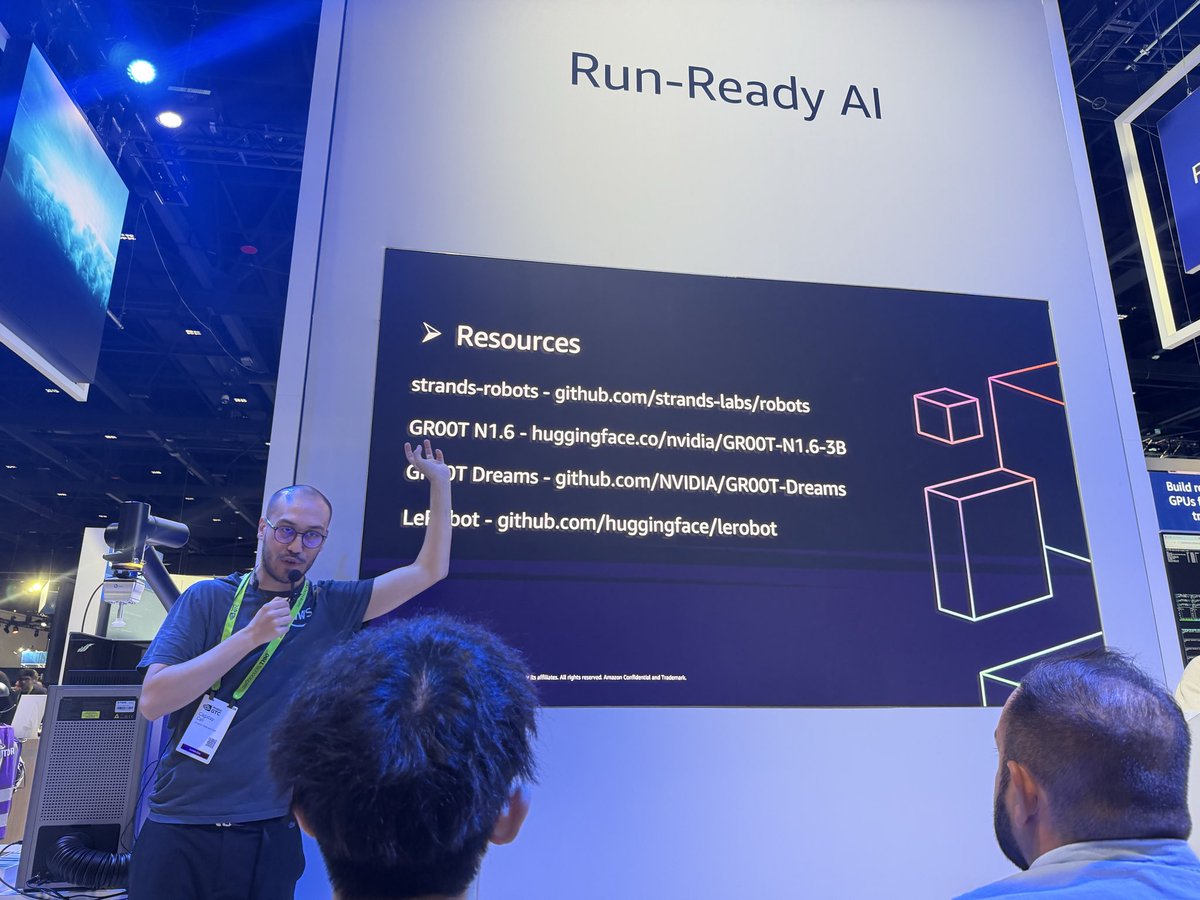
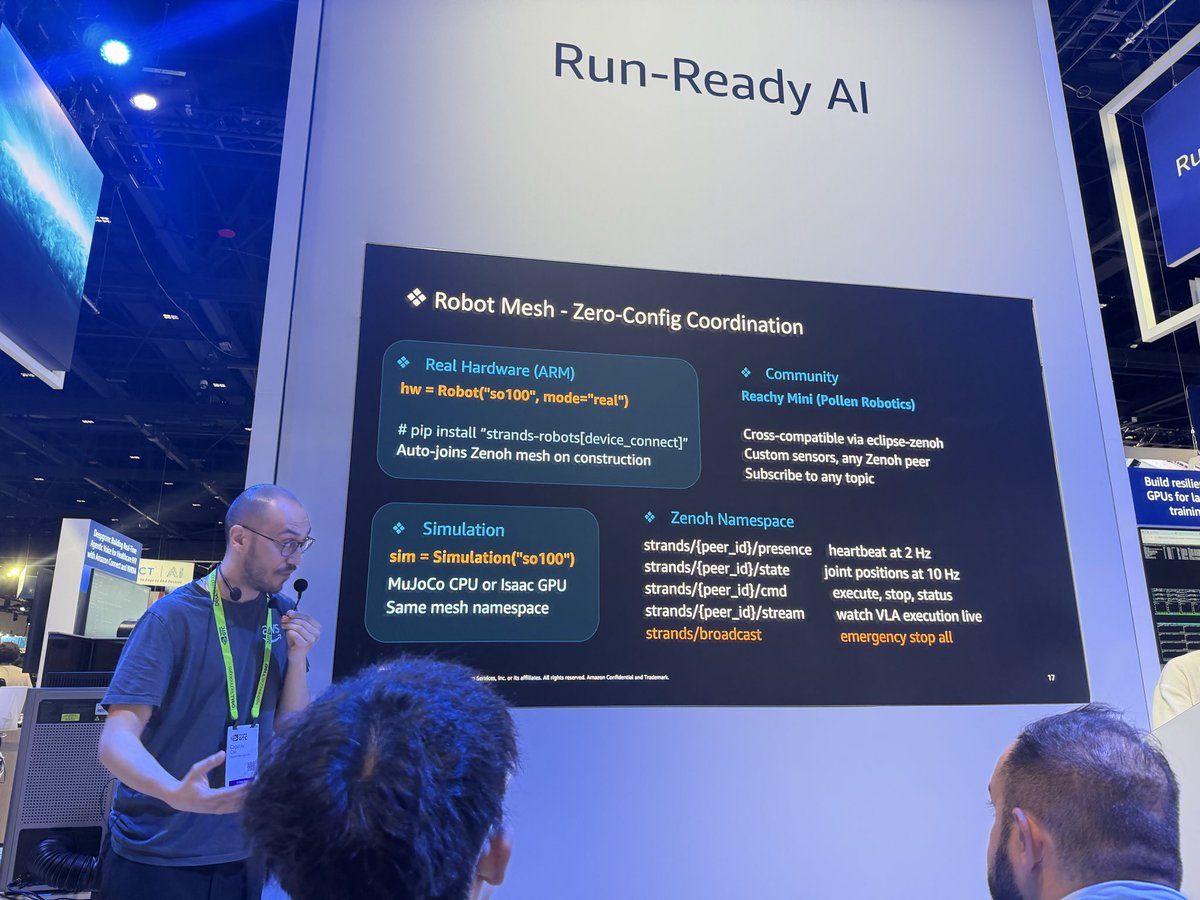
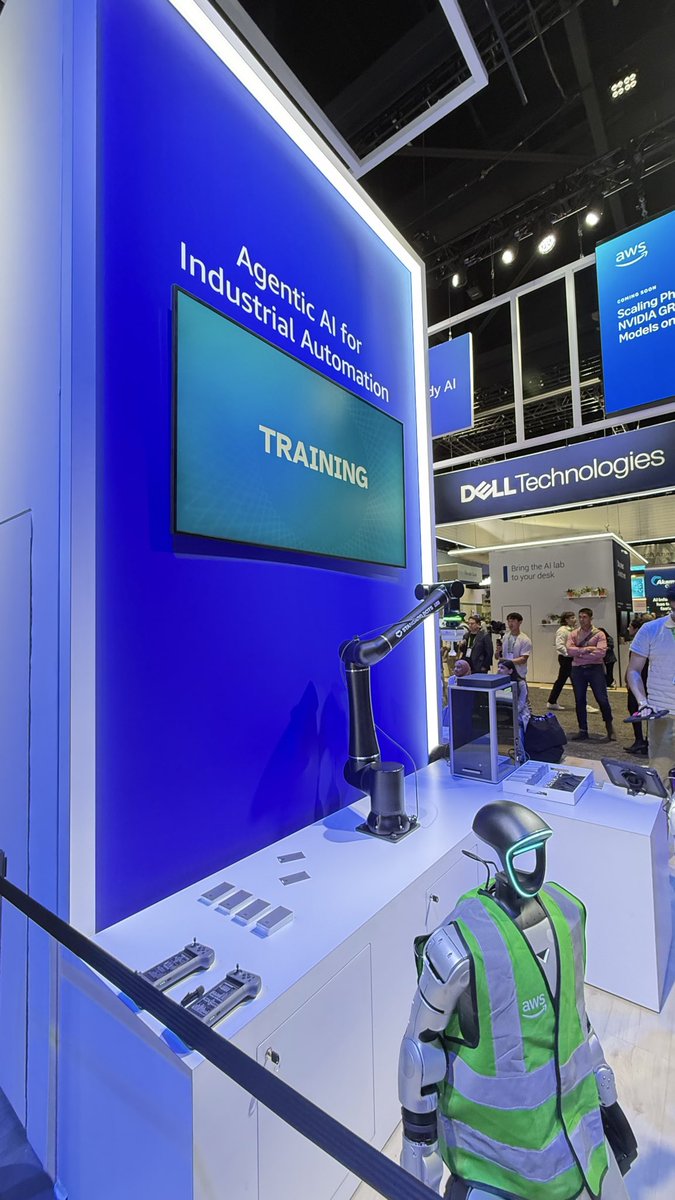
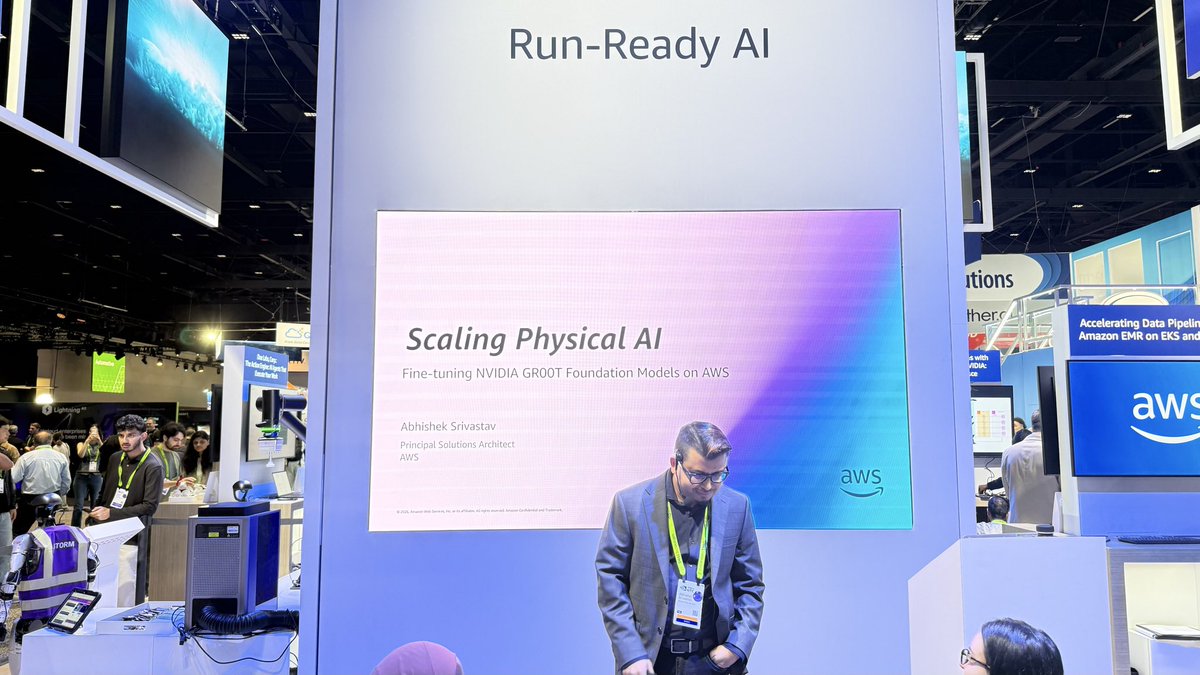
What if we connect all of agents and robots into a mesh network?! Just starting to build publicly! Come and join us testing on strands-labs/robots, today!
Cagatay Cali tweet mediaCagatay Cali tweet mediaCagatay Cali tweet mediaCagatay Cali tweet media
English
0
0
5
195
Cagatay Cali
Cagatay Cali@devcagatay·
Everyone is on the same page, you can feel the passion in air! Jensen Huang visits booths, chats with builders, directly!!!! Such an incredible moment to see how positive the atmosphere was!
Cagatay Cali tweet mediaCagatay Cali tweet mediaCagatay Cali tweet media
English
1
0
4
243
Cagatay Cali
Cagatay Cali@devcagatay·
GTC was a blast! Tune in.
Cagatay Cali tweet mediaCagatay Cali tweet media
Cagatay Cali tweet media
English
1
2
56
37.1K