Chief Edward David Onoja

3.8K posts

Chief Edward David Onoja

Chief Edward David Onoja

@ed_onoja

SEDC Board Member, North Central | Deputy Governor, Kogi State (2019–2024) | Chief of Staff to the Governor (2016–2019)
参加日 Aralık 2015
93 フォロー中35.7K フォロワー
Chief Edward David Onoja
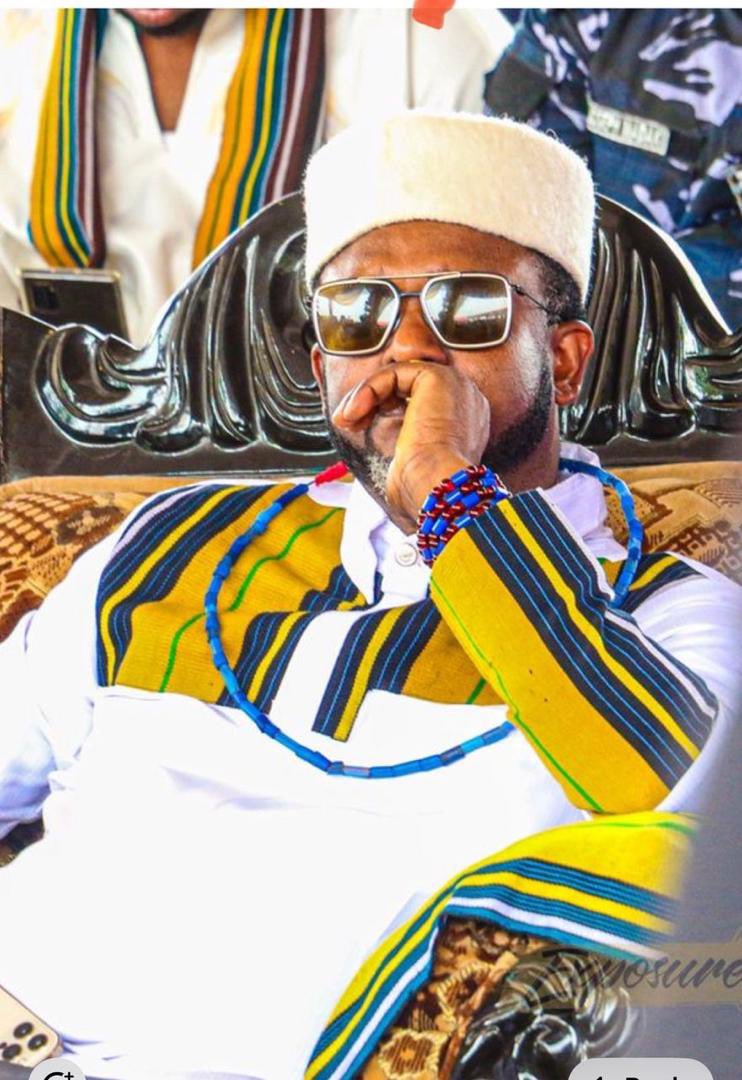
APC’s Ogugu Ward 3/Olamaboro LGA direct primaries for our candidate. President Bola Ahmed Tinubu ✅
Filipino
6
4
11
305
Chief Edward David Onoja
Chief Edward David Onoja@ed_onoja·
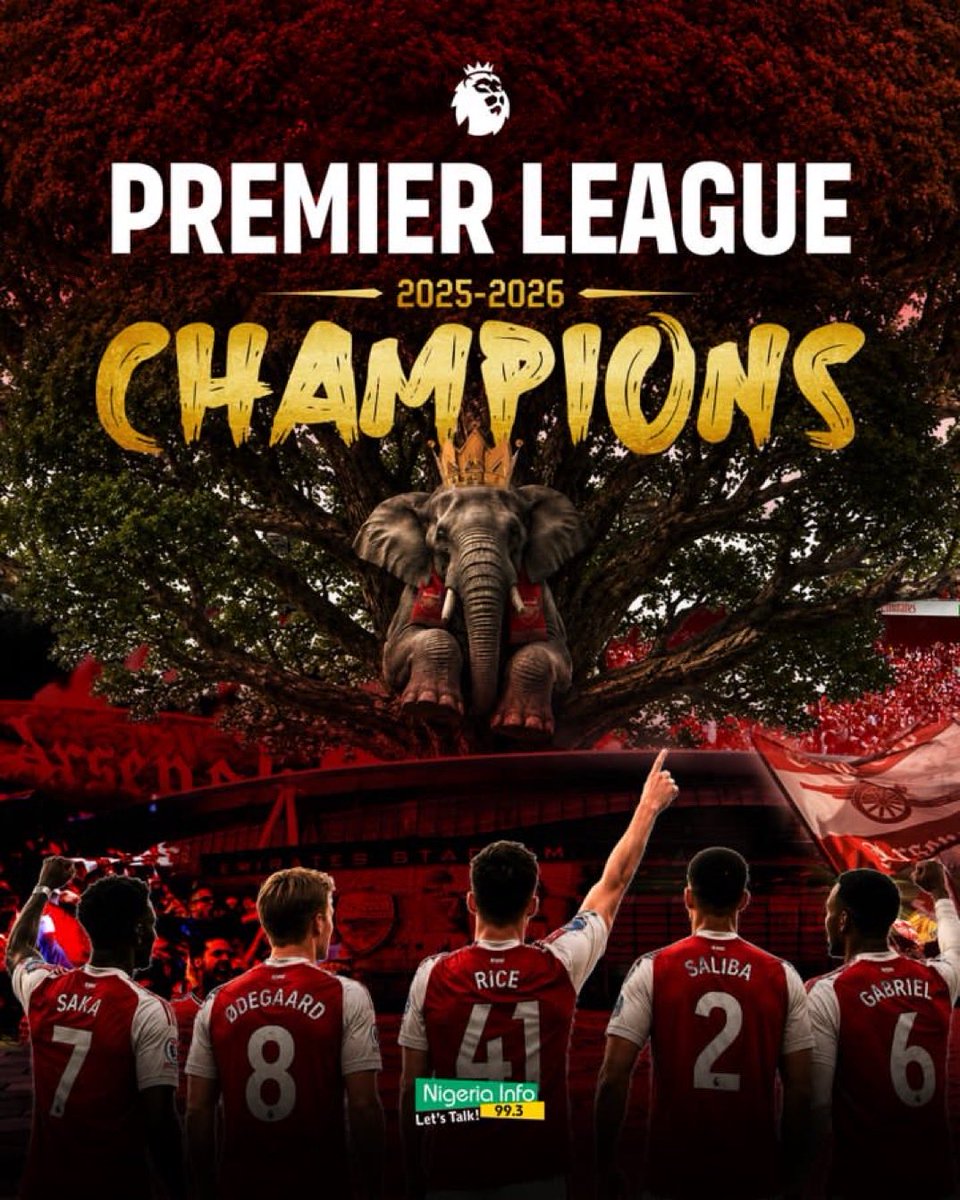
The wait was long. The victory feels even sweeter. Arsenal for the double. Mikel Arteta… you truly deserve it after 7 years. Congratulations Arsenal
Chief Edward David Onoja tweet media
English
2
4
8
233
Chief Edward David Onoja
Chief Edward David Onoja@ed_onoja·
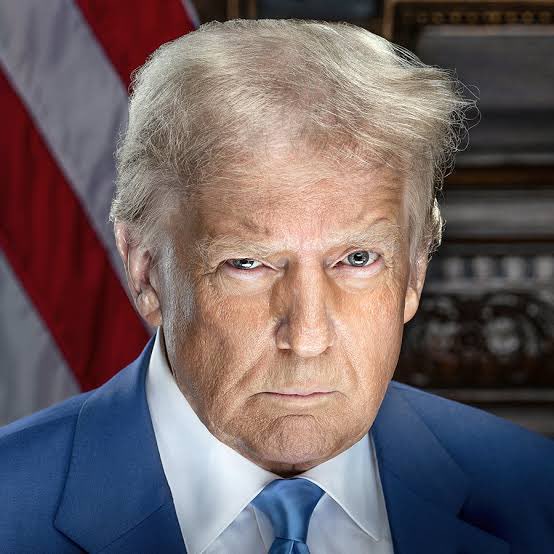
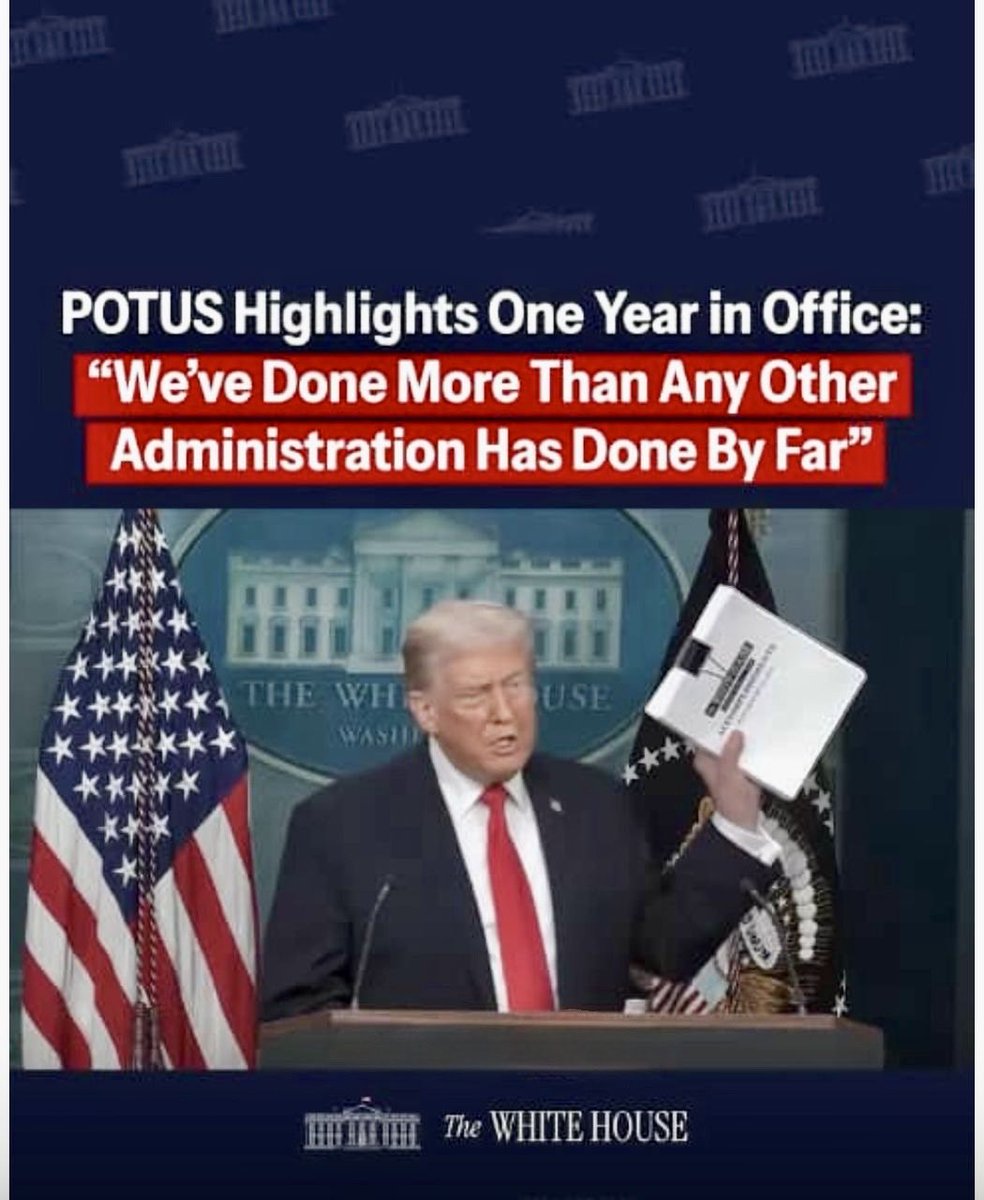
365 days of Trump felt like a decade. In just one year, the world saw decisive leadership return to the center stage. Borders were enforced, not debated. Global trade was renegotiated with national interest first. Energy independence was restored, anchoring economic confidence. America spoke plainly again, without apology or ambiguity. Beyond its borders, the message was equally clear: Strength deters chaos. Allies adjusted. Adversaries recalibrated. That posture echoed far beyond Washington. Even in Africa, it mattered. In Nigeria, renewed diplomatic engagement and security cooperation reaffirmed that strategic partnerships still count, especially in confronting insecurity, instability, and economic disruption. This was not about style. It was about resolve. Not noise, but impact. Love him or loathe him, one truth stands: some leaders manage time. Others redefine it. History always remembers the latter. Happy One Year Anniversary - Donald Trump.
Chief Edward David Onoja tweet media
English
7
6
12
414
Chief Edward David Onoja がリツイート
Chief Edward David Onoja
Chief Edward David Onoja@ed_onoja·
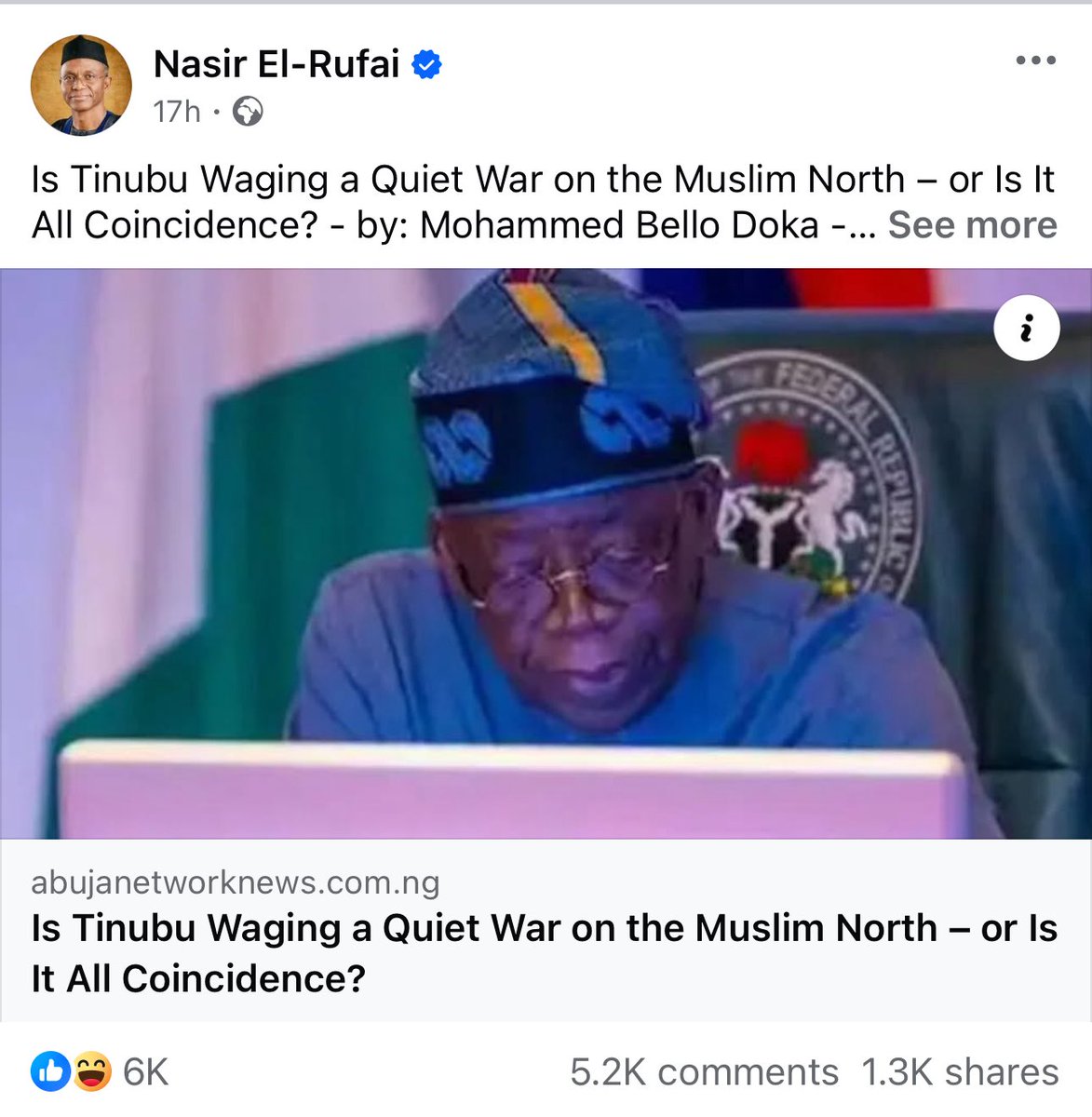
The writeup raises serious questions, but many of its claims rely more on suspicion than on facts. It links unrelated political transitions and frames them as a deliberate pattern, when these same transitions happen in every administration. The idea that the “Muslim North” is being sidelined is misleading. The North has never been a religious bloc. Christians and Muslims across Borno, Katsina, Gombe, Bauchi, Niger, Kano, Kaduna, Plateau, Benue, Taraba, Adamawa, Nasarawa, Kogi and others have always been Northerners together. They have lived, traded and shaped the regions politics despite differences. Turning the region into rigid religious blocs is dangerous. We must see ourselves as Nigerians and Northerners first, before Muslim or Christian. The claim that certain groups “make kings” also distorts reality. No region or religion determines power. People mobilise and vote, but leadership ultimately comes from God. Reducing politics to religious lines misrepresents our history and our faith. On appointments, the idea of calculated displacement does not align with facts. When Kemi Adeosun resigned under Buhari, she was replaced by Zainab Ahmed from Kaduna. No one linked it to religion. When Adams Oshiomhole left as APC Chairman, Mai Mala Buni from Yobe replaced him without controversy. Even Gandujes exit simply returned the office to North Central where it was originally zoned. That was the fair and balanced thing to do. These are normal political corrections, not signs of a quiet war. On insecurity, every region faces its own challenges. Yet defence and security now take the largest share of the national budget at about twelve percent, almost double the seven percent average of past administrations. That contradicts the narrative of a lukewarm posture toward Northern insecurity. The Lagos Calabar coastal highway is also misrepresented. It is not a Lagos road. It spans eight states including Lagos, Ogun, Ondo, Delta, Bayelsa, Rivers, Akwa Ibom and Cross River. Many of these are oil producing states that remain the economic backbone of the country. Investing in infrastructure along this corridor is logical, just as increasing defence spending is logical given national insecurity. Both priorities can coexist. Negotiations with bandits did not begin today. Northern governors have adopted similar approaches in previous years. Presenting this as a new federal agenda against the North ignores that record. As for foreign pressure or online rhetoric, Nigeria is governed by its constitution, not by tweets or external commentary. Supporters posting provocative views do not represent government policy. And no President seeking re election can ignore Northern votes, both Christian and Muslim. Every serious political actor understands this. What is most concerning is how the narrative encourages Northerners to distrust one another. It tells Christians they are outsiders and tells Muslims they are victims, quietly fracturing a region that is strongest when united in purpose even with internal differences. This does not defend the North. It weakens it. Nigeria needs less religion in politics and more focus on building a cohesive nation. At this point in our national life, leaders, stakeholders and citizens must push through both words and actions for national integration, peace and unity for the sake of the country regardless of region, religion or political leaning.
Chief Edward David Onoja tweet media
English
67
288
562
39.6K
Chief Edward David Onoja
Chief Edward David Onoja@ed_onoja·
In 2023, when our current distinguished, cerebral, and deeply experienced Vice President, His Excellency Senator Kashim Shettima, was chosen, some of us from the North who are Christians did not resort to grievance politics. Instead, we engaged our communities, many of them predominantly Christian, made the case for our party, and delivered votes against all odds. We sold President Tinubu’s persona to those communities: his liberal instincts, his inclusiveness, and his respect for diversity. Today, those same communities are beginning to see that reality play out. It is therefore surprising that the conversation has shifted to questioning why Northerners of a particular faith should even be considered for service in certain capacities. Our campaign logic in 2023 was clear and it remains valid today. The offices of President, Vice President, Governor, or Deputy are not meant to lead Sunday services or Juma’at prayers, but to secure lives, unite the nation, and deliver prosperity. Public service must not be reduced to religious leanings. When former Governor Nasir El Rufai, a famously intelligent and calculating political strategist, decided that Kaduna State’s long standing Muslim Christian ticket convention no longer mattered, nobody described it as a silent war against Southern Kaduna citizens who happen to be predominantly Christians.That irony should not be lost on us. THE MOST DANGEROUS ASSUMPTION: REDEFINING THE NORTH BY RELIGION The North has never survived by religious purity. It has endured because of shared geography, interwoven families, economic interdependence, and political coalition. To now speak of a “Muslim North” losing power to a “Christian North” is to erase lived realities and hand ammunition to extremists on all sides. We are Northerners first. Any narrative that breeds mistrust or suspicion between Northern Muslims and Northern Christians is not resistance. It is self-inflicted sabotage. FINAL WORD: VIGILANCE WITHOUT DIVISION Power must always be scrutinized. Governments must always be questioned. But scrutiny must be grounded in facts, not fear, and vigilance must never come at the expense of unity. If we fracture the North internally,to push a divisive narrative. We will be whittling down the political value the north has consistently brought to national politics. The North does not need new labels. It needs fairness, security, opportunity, and inclusion for all its people. That struggle is shared. And it must remain so.
English
3
2
8
177
Chief Edward David Onoja
Chief Edward David Onoja@ed_onoja·
INSTITUTIONS, LAGOS, AND THE MISDIAGNOSIS OF POWER Concerns about Lagos centric economic and institutional concentration are valid, but they are structural, not religious. This centralization affects Northern Christians, Middle Belt states, and even parts of the South East and South South. It is an economic governance issue, not evidence of a campaign against Northern Muslims. It is also important to situate these decisions within practical economic and administrative realities. Lagos is Nigeria’s commercial nerve centre. Virtually all major commercial banks operating in Nigeria are headquartered in Lagos, and the Central Bank of Nigeria, as the apex regulatory and coordinating authority for the financial system, already maintains its strongest operational presence there. Locating certain regulatory and supervisory departments closer to the institutions they oversee reduces duplication, lowers logistics costs, shortens response times, and improves efficiency. This is administrative pragmatism, not regional favoritism. The Bank of Industry’s expanded footprint in Lagos follows the same logic. Lagos hosts the largest concentration of industrial activity in Nigeria, ranging from manufacturing to services and export oriented enterprises. Positioning key BOI departments closer to the highest volume of industrial transactions enhances monitoring, financing turnaround, and sectoral impact. It does not diminish the relevance or access of industries in other regions, which remain beneficiaries of BOI interventions nationwide. Similarly, FAAN’s operational emphasis on Lagos is hardly surprising. Murtala Mohammed International Airport is by far the busiest airport in Nigeria, handling the highest passenger traffic, cargo volume, and international connections. Concentrating aviation management and coordination capacity where activity is most intense is consistent with global best practice, not evidence of political bias. As for NIMASA and the Nigerian Ports Authority, both institutions have long been headquartered in Lagos due to the city’s status as Nigeria’s primary maritime hub. The overwhelming majority of port activity, shipping traffic, and maritime services are anchored there. Any serious maritime economy would naturally situate its regulatory and operational core where the industry itself is concentrated. These choices reflect efficiency, scale, and economic logic. They do not amount to an attempt to marginalize any region, nor can they reasonably be interpreted as a religious or sectional agenda. The real conversation Nigeria should be having is how to strengthen economic clusters across the country, not how to politicize administrative geography. INSECURITY IN THE NORTH: A NATIONAL CHALLENGE, NOT A POLITICAL STRATEGY Banditry, terrorism, and displacement in the North predate this administration. They affect Muslims and Christians alike and have devastated entire communities. To suggest that insecurity is being tolerated or weaponized to politically weaken a religious bloc is a serious claim, one that demands evidence far stronger than proximity or timing. Insecurity thrives on weak institutions, not religious favoritism. ON THE RUNNING MATE DEBATE AND THE DANGER OF SELECTIVE OUTRAGE Recent media speculation about a possible Christian running mate in 2027 deserves calm and principled reflection. It is both the constitutional right and political prerogative of a party’s presidential candidate to choose a running mate based on multiple indices: character,competence,trust,loyalty, leadership experience,electiral value, national balance, and the overriding interest of stability.
English
3
3
8
189
Chief Edward David Onoja
Chief Edward David Onoja@ed_onoja·
I have read Mohammed Bello Doka’s follow up essay carefully and with the seriousness it deserves. In a country as complex as Nigeria, asking difficult questions is not a crime. However, how those questions are framed matters just as much as what is being asked, especially when the framing risks deepening fault lines in an already fragile polity. My response rests on one firm position. There is no such thing as a “Muslim North” and a “Christian North” as separate political entities. There is only Northern Nigeria, plural, diverse, and interdependent. Any attempt to subdivide it along religious lines may appear clever, but it is ultimately dangerous and deeply misleading. QUESTIONING POWER SHIFTS IS LEGITIMATE, BUT CORRELATION IS NOT CAUSATION The article presents a list of political and institutional changes involving individuals from the North who happen to be Muslim and implies a deliberate pattern. But listing events does not automatically establish motive. In every administration, particularly one undertaking structural reforms, there will be exits, replacements, reshuffles, and investigations. These developments must be assessed on constitutional authority, performance, tenure cycles, and institutional needs, not reduced to a religious narrative simply because of the personal faith of officeholders. If religion were truly the guiding determinant, Northern Christians would never lose office, Southern Muslims would never face scrutiny, and political outcomes would follow neat religious lines. That is not, and has never been, Nigeria’s reality. NIGERIA’S POWER STRUCTURE HAS ALWAYS SHIFTED The suggestion that political power was once stable and has suddenly been tilted ignores Nigeria’s history. From the military era to successive civilian governments, power has shifted between regions, institutions have been reorganized and restructured, and individuals across all regions and faiths have risen and fallen. What we are witnessing today is centralized governance and institutional consolidation, not a religiously motivated purge. MEDIA ACCUSATIONS AND ANTI CORRUPTION: IDENTITY IS NOT EVIDENCE Yes, media accusations involving Northern Muslim figures have surfaced. Two facts must be clearly stated. Accusation is not conviction. Anti corruption processes are driven by petitions, audits, and intelligence, not religious identity. There are unresolved allegations involving Southern Christians, Southern Muslims, Northern Christians, and others. The real problem is institutional inconsistency and judicial delay, not selective religious persecution. Turning systemic justice challenges into sectarian grievance only weakens legitimate reform demands.
Nasir Ahmad El-Rufai@elrufai

NIGERIA UPDATE - “Tinubu’s Silent War on the Muslim North, Revisited: New Questions, Familiar Patterns — or More Unfortunate Coincidences?” - By Mohammed Bello Doka- January 17, 2026 - Part 1 I have been insulted, abused, threatened, and even warned of bodily harm and elimination. Some have openly called for my arrest and detention; others have gone as far as wishing me death. Yet I am left with no option but to do what many are too afraid to do: ask the difficult questions. If this burden has been placed on me, I will carry it until freedom or martyrdom—because silence, in moments like this, is complicity. Most of the abuse followed a single article. That article asked one question—and instead of answers, it provoked rage. This is my response. And when examined closely, it reveals that there are now more questions than answers. In my last article, I asked a direct question: Is President Bola Ahmed Tinubu waging a quiet war against the Muslim North, or are we merely witnessing a series of coincidences? The response avoided the question. Instead, there were insults, accusations of paranoia, and loud whataboutism. This Was the Question Then. This Is the Question Now. Why do power, protection, and proximity to the centre keep moving away from the same bloc? Why do media accusations of terrorism financing and corruption repeatedly feature Northern Muslim powerbrokers? Why are institutions, money, and regulatory authority consolidating in one direction, while exposure, insecurity, and political vulnerability concentrate in another? If this is coincidence, it is an unusually consistent and stubborn one. Power First: Who Lost What—and When? The article details a series of political and institutional shifts, noting exits and replacements of major figures: Abdullahi Umar Ganduje — Muslim, North — exited as APC National Chairman, replaced by Nentawe Goshwe Yilwatda — Northern Christian. The electoral nerve centre shifted from Mahmood Yakubu — Muslim, North — to Joash Amupitan — Northern Christian. The Defence Ministry changed hands during a national security emergency; Mohammed Badaru Abubakar — Muslim, North — was replaced by a Northern Christian, General Christopher Musa. Senate security oversight was reshuffled, removing a Muslim, Northern chair. Elite discussion continues about replacing Vice President Kashim Shettima — Muslim, North — with a Northern Christian in 2027. The article asks: How many such shifts, all pointing in the same direction, can reasonably be dismissed as random? Then Exposure: Clear Media Accusations, No Closure The article also highlights media accusations involving three Northern Muslim figures related to terrorism financing or corruption: - Tukur Yusuf Buratai - Faruk Yahaya - Abubakar Malami, now under EFCC detention (not yet fully known). The article notes these are accusations—not convictions—and points out that similar allegations are not publicly made against other regional or religious groups. Beyond Party Lines: Everyone Is Now Expendable The article claims the pattern of political displacement and legal/ media pressure extends across party lines and includes other Northern Muslim figures such as Nasir El-Rufai, Aminu Waziri Tambuwal, and others, with investigations or suspicions lingering without judicial closure. Institutions and Money: Where Power Now Lives The article also discusses shifts in institutional and economic centres of power towards Lagos—such as headquarters relocations for agencies like FAAN, CBN departments, BOI, NPA, and NIMASA—suggesting this peripheralises regions in the North. Insecurity and Electoral Weakening I therefore juxtaposes institutional consolidation with ongoing insecurity in the North—banditry, displacement, and disruption of everyday life—posing the question whether the insecurity outcomes correlate with political weakening. Mohammed Bello Doka can be reached via bellodoka82@gmail.com desertherald.ng/tinubus-silent…

English
7
8
16
424
Chief Edward David Onoja
Chief Edward David Onoja@ed_onoja·
In a nation where the twin, hydra-headed monsters of tribalism and religious nepotism have long stifled our collective potential, one man reminded us of what too many have failed to show: HUMANITY FIRST. Though our tribes and creeds may differ, in true brotherhood we stand. That is the Nigeria we must choose. That is the Nigeria we must build. We will get there. It is only a matter of time. These monsters will fall, sooner than many think. We pray that Almighty God grants him eternal rest and perfect peace in paradise.
Chief Edward David Onoja tweet media
English
9
8
18
435
Chief Edward David Onoja
Chief Edward David Onoja@ed_onoja·
I enter the new year with faith in Nigeria and confidence in her people. The journey has not been easy, but resilience is our strength and hope is in sight. This year 2026 , may unity deepen, trust grow, and our collective sacrifices yield visible progress in our nation. Nigeria will rise,because we the people never gave up. Happy New Year.
Chief Edward David Onoja tweet media
English
14
10
46
1.1K
Chief Edward David Onoja がリツイート
Sir Fernandez
Sir Fernandez@OluwoleTosin9·
@ed_onoja @ed_onoja Forgive me if I must say I underestimated you in the past, never knew you were this gifted. I concur completely with your analysis. May God bless you the more Sir.
English
0
1
3
303
Chief Edward David Onoja がリツイート
Joshua Oshanupin
Joshua Oshanupin@joshanupin·
@ed_onoja Your excellency, this is well put.
English
0
1
2
255
Chief Edward David Onoja がリツイート
Dr Dare Tanko🇳🇬🅽🇳🇬
We'll articulated. Even I, a sceptic, see reason .....
Chief Edward David Onoja@ed_onoja

I’m no authority on security matters, but there is a basic truth about how threats are neutralised that is being missed in the debate around the Sokoto strike. You do not always hit the loudest battlefield first. You hit the brain that coordinates the chaos. Sokoto is not just a dot on the map. It has evolved into a strategic nerve point. When you strike the head of the snake, the body weakens everywhere else. That is the logic behind the action taken. In every serious security operation, there are locations deliberately kept quiet. No constant firefights. No daily headlines. Those spaces exist so command, coordination, financing, and movement can happen without attention. They often escape public debate, but they do not escape serious intelligence systems. What looks calm on the surface can very well be the control room of a much wider operation. When that control room is hit, confusion spreads across the network. Structures are disrupted. Coordination is shaken. That does not mean violence ends overnight, but it changes its character. We may see improvements over time, but nothing here should be sold as instant peace or guaranteed calm. Like a snake whose head is severed, we may still see incidents in different spots and locations. That is the kick of a drowning monster, not a sign of strength. Quiet precision today does not promise perfection tomorrow, but it gives the country a better chance of preventing many loud tragedies down the line. Finally, I urge all Nigerians of every creed, tongue, and background to rise above suspicion and stand in the gap for our country. This is not a moment for division or cynicism, but for unity, vigilance, and a shared commitment to Nigeria’s survival and ultimate victory.

English
0
1
1
158
Chief Edward David Onoja
Chief Edward David Onoja@ed_onoja·
I’m no authority on security matters, but there is a basic truth about how threats are neutralised that is being missed in the debate around the Sokoto strike. You do not always hit the loudest battlefield first. You hit the brain that coordinates the chaos. Sokoto is not just a dot on the map. It has evolved into a strategic nerve point. When you strike the head of the snake, the body weakens everywhere else. That is the logic behind the action taken. In every serious security operation, there are locations deliberately kept quiet. No constant firefights. No daily headlines. Those spaces exist so command, coordination, financing, and movement can happen without attention. They often escape public debate, but they do not escape serious intelligence systems. What looks calm on the surface can very well be the control room of a much wider operation. When that control room is hit, confusion spreads across the network. Structures are disrupted. Coordination is shaken. That does not mean violence ends overnight, but it changes its character. We may see improvements over time, but nothing here should be sold as instant peace or guaranteed calm. Like a snake whose head is severed, we may still see incidents in different spots and locations. That is the kick of a drowning monster, not a sign of strength. Quiet precision today does not promise perfection tomorrow, but it gives the country a better chance of preventing many loud tragedies down the line. Finally, I urge all Nigerians of every creed, tongue, and background to rise above suspicion and stand in the gap for our country. This is not a moment for division or cynicism, but for unity, vigilance, and a shared commitment to Nigeria’s survival and ultimate victory.
English
23
49
166
14.9K
Chief Edward David Onoja
Chief Edward David Onoja@ed_onoja·
54 days. That’s all it took. From statements to airstrikes. Love it or hate it, the old truth remains. Action speaks louder than words. In a global order where hesitation is often mistaken for diplomacy, decisiveness still sends the clearest signal. This is not about personalities or politics. It is about ending the killing of Nigerians, everywhere, without excuse or delay.
Chief Edward David Onoja tweet media
English
10
17
48
3.4K
Chief Edward David Onoja
Chief Edward David Onoja@ed_onoja·
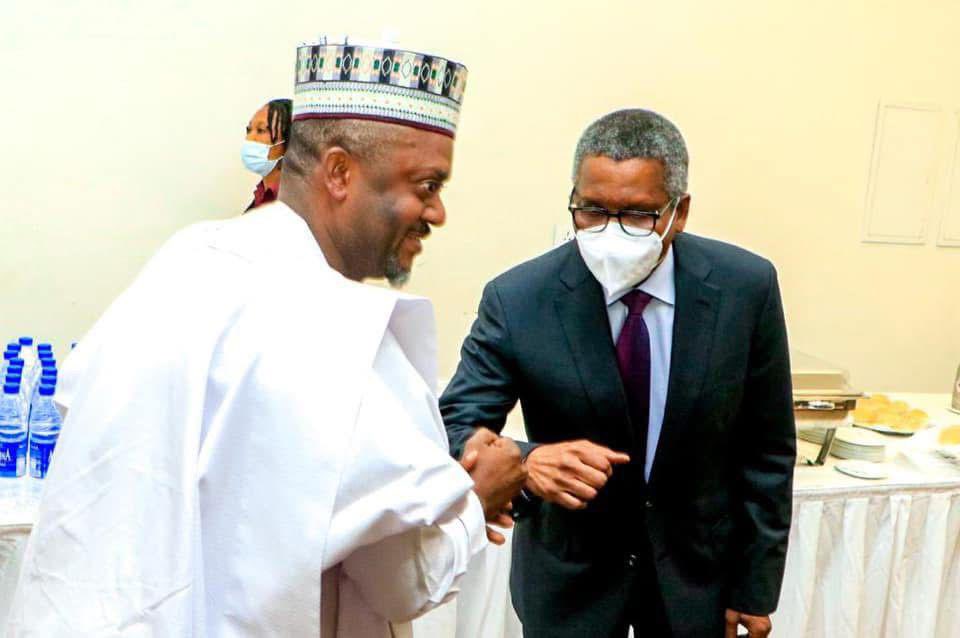
The Lone Refiner & Reformer. “One courageous man, standing firm, can turn decades of failure into a future of possibility.” CEDO 2025 For nearly 30 years, Nigeria’s refineries stood as symbols of failure. Our state owned refineries stopped producing for almost a decade before Dangote’s breakthrough. They were crippled by fraudulent turnaround maintenance that consumed hundreds of billions of naira and delivered nothing. That deep rooted systemic fleecing is now under investigation. Many tried to fix the system. Most walked away. Aliko Dangote stayed. After buying the Port Harcourt refinery under Obasanjo and having it reversed under Yar’Adua, Dangote chose a harder path. He invested over 20 billion dollars of his own money to build a world class refinery from scratch. What followed was resistance at every turn. Regulatory attacks later disproved. Crude oil supply denied, forcing imports from the United States. Union pressure driven by old rent seeking habits. Strikes. Even alleged sabotage. The project was tested repeatedly. Presidential intervention later ensured crude supply in naira, but challenges continued. Dangote adapted. He acquired thousands of CNG tankers, restructured operations, and pushed the refinery to full production. Today, the refinery produces petrol, diesel, aviation fuel and petrochemicals. It exports to Africa, Asia and the United States, earning vital foreign exchange for Nigeria. This success did not happen in isolation. It reflects an enabling environment under the APC led administration, strong and fast tracked support from the Lagos State Government, and timely intervention by Mr President when it mattered most. It also rests on the discipline of refinery staff who keep the system running, the patriotic investments of Dangote, BUA and others who chose Nigeria, and citizens who continue to stand for what is right. The choice before us is simple. Support local value creation. Stop systemic sabotage. Let those fighting Nigeria’s economic battles finish the job.
Chief Edward David Onoja tweet media
English
16
20
41
1K
Chief Edward David Onoja
Chief Edward David Onoja@ed_onoja·
Aliko Dangote’s commitment of ₦100 billion yearly to education is a landmark act of private philanthropy. Over 10 years, that becomes ₦1 trillion invested directly into the future of over a million Nigerian students. By supporting STEM learners, vocational and technical trainees, and the girl child in secondary schools, the Dangote Foundation is unlocking opportunities that can reshape a generation. This is the kind of leadership that accelerates national growth. Nigeria is blessed with many successful private individuals and corporations, and this gesture shows how powerful their impact can be when directed toward education. Dangote has set an admirable pace. Others can join in lifting the dreams of our young people and our nation’s future.
Chief Edward David Onoja tweet mediaChief Edward David Onoja tweet media
English
21
39
82
5.2K
Chief Edward David Onoja がリツイート
Jireh🇨🇦🇧🇷🇳🇬
@ed_onoja When I read this kind of article I am relieved that there are still logical thinkers in Nigeria. God bless You
English
0
1
3
171