Hugging Science

23 posts

Hugging Science banner
Hugging Science

Hugging Science

@huggingscience

The @huggingface community effort for science.

参加日 Kasım 2025
7 フォロー中155 フォロワー
Hugging Science がリツイート
Georgia Channing
Georgia Channing@cgeorgiaw·
immaculate community energy last night with the people behind: > EquiformerV3 > The Well > NVIDIA Atlas > Meta OMat ✨✨✨
English
1
1
16
562
Hugging Science がリツイート
Georgia Channing
Georgia Channing@cgeorgiaw·
🤗 Hosting a happy hour to meet the people building the future of open science in SF on Thursday! Wanna come? luma.com/2562pz76
English
0
2
6
666
Hugging Science がリツイート
Adib
Adib@adibvafa·
We taught a DNA model to learn its own tokenization. It learned the genetic code with no supervision. And outperforms Evo 2's architecture with 3x faster inference. Great work with Arnav (@arnavshah0), Victor (@victor_ljz), Parsa (@Radii2323), Brandon (@fluorane), Sukjun (@sukjun_hwang), Bo Wang (@BoWang87), Patrick Hsu (@pdhsu), Hani Goodarzi (@genophoria) and Albert Gu (@_albertgu) 🔥
Arc Institute@arcinstitute

Most genomic AI models use fixed rules to process DNA into chunks, imposing arbitrary boundaries on a sequence with its own biological structure. @arnavshah0, @victor_ljz, and team developed dnaHNet, a tokenizer-free foundation model that learns its own segmentation from scratch, supervised by @_albertgu, @genophoria, and @BoWang87.

English
1
19
112
10.3K
Hugging Science がリツイート
Aishwarya Kamath
Aishwarya Kamath@ashkamath20·
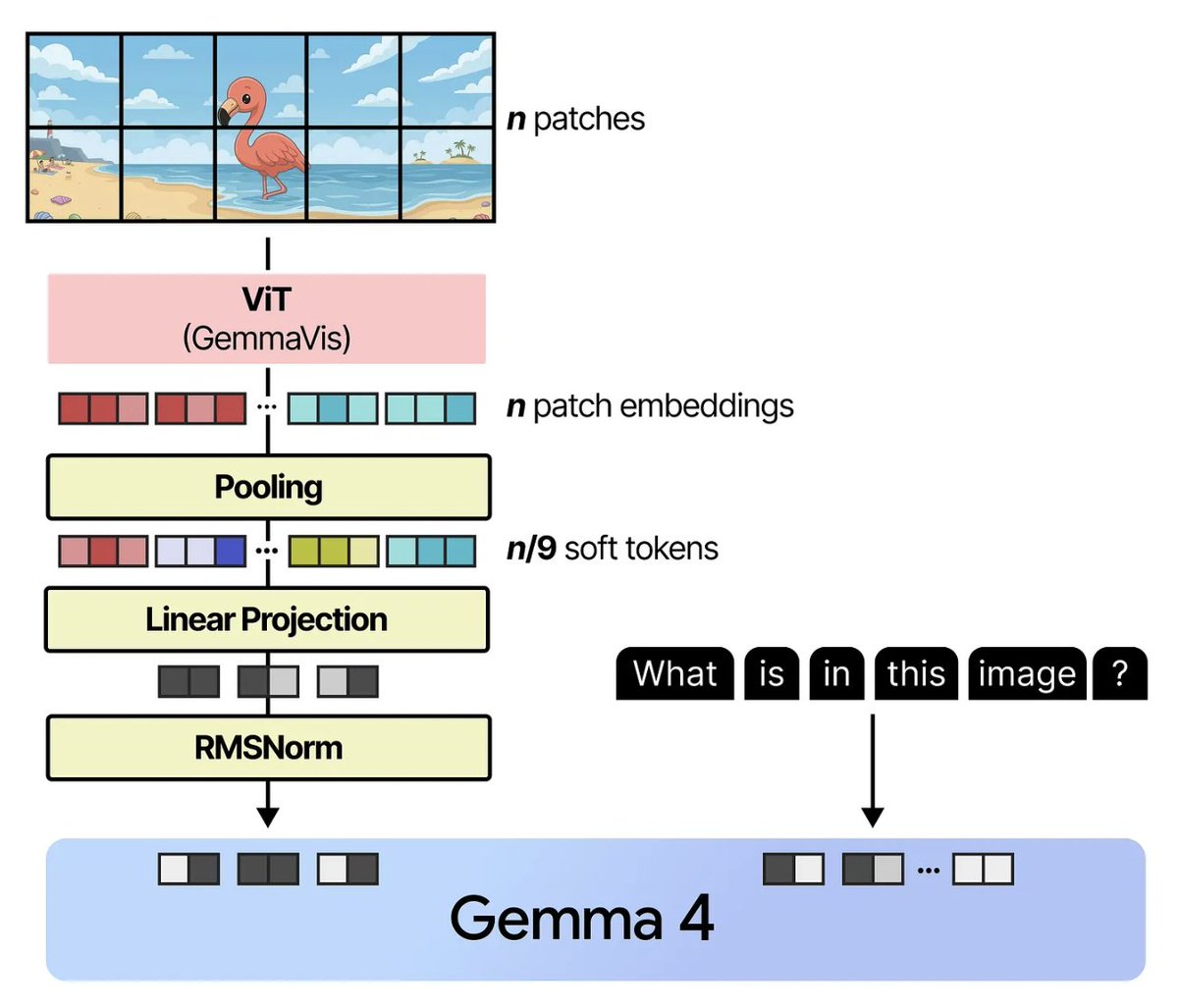
We released Gemma 4 last week, and seeing the community's response has been amazing! 🚀 Honored to lead the vision efforts in which we made huge performance leaps from Gemma 3, I wanted to help you make the most of the new capabilities. Deep dive 🧵
Aishwarya Kamath tweet media
English
27
108
906
46K
Hugging Science がリツイート
Georgia Channing
Georgia Channing@cgeorgiaw·
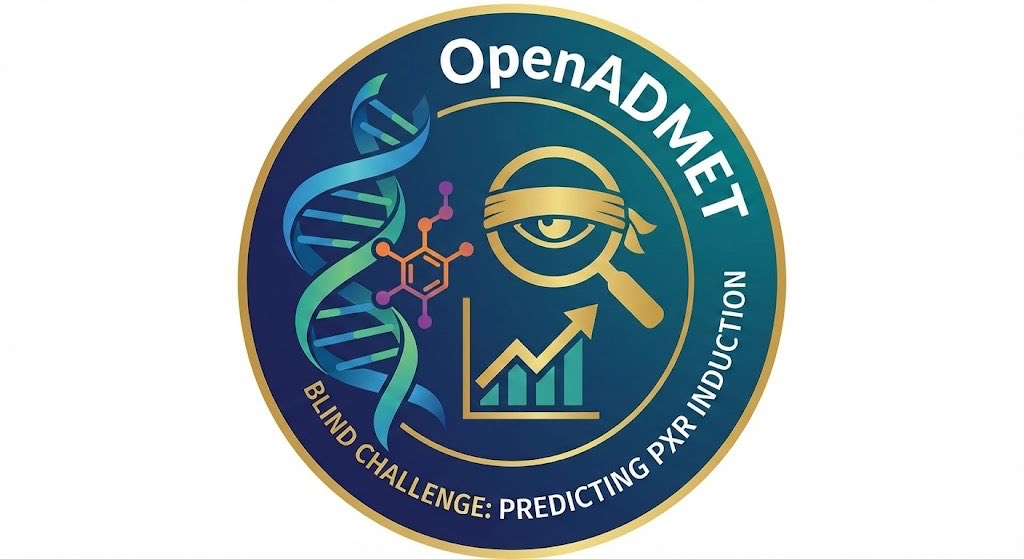
The next OpenADMET blind challenge is about to launch. This one is will predict Pregnane-X Receptor (PXR) induction. PXR is a nuclear hormone receptor and master regulator of drug-metabolizing enzymes and transporters. This challenge comes with a PXR dataset of more than *11,000* compounds sourced from two Enamine libraries (Discovery Diversity 10 set and FDA Approved Drugs set) profiled through a rigorous multi-step assay flow reminiscent of an on-target drug discovery program.
Georgia Channing tweet media
English
1
9
25
3.2K
Hugging Science がリツイート
Georgia Channing
Georgia Channing@cgeorgiaw·
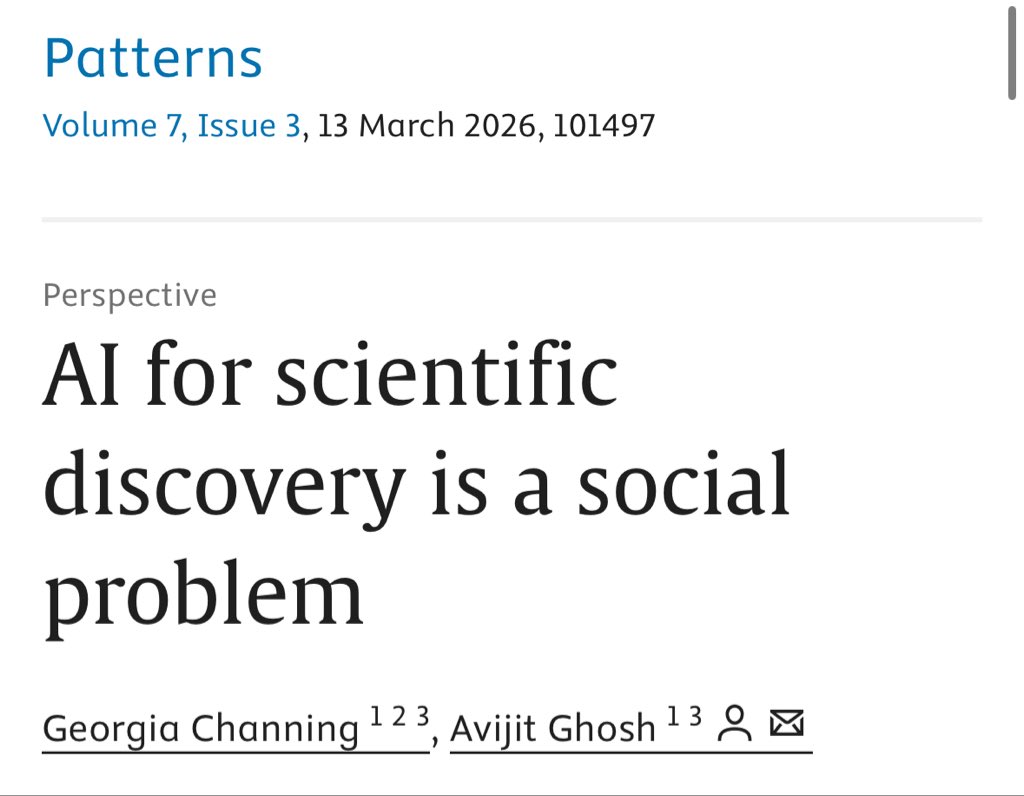
I’ve been at a small conference this week, one where the AI people have been presenting early in the week and the domain science people will be presenting later in the week. At the end of the talks last night, the conversation turned very doomer with all the AI people talking about how well Claude Code or Codex can do hill-climbing AI research and how we (the AI people) are maybe all about to lose our jobs! The domain science people expressed their shock at this attitude because, though Claude Code can be let loose to complete lots of banal hill-climbing AI research projects, basically no experimental science is hill-climbing or even metric driven. Most scientific fields are about much more taste-driven exploration that is incredibly difficult to make metrics for or to parameterize, and this misunderstanding from the AI community is one of the most damaging things to the realization of great science with AI. Seems like we’re actually pretty far from having AI models do that… Over the summer, @evijit and I wrote about this (and some other things hindering AI for science) at a bit more length, and today that work is out in Patterns! So, if you care about these problems and the real challenges in bringing AI to science in the real work, I recommend giving it a read!
Georgia Channing tweet media
English
23
94
604
81.2K
Hugging Science がリツイート
Yulu Gan
Yulu Gan@yule_gan·
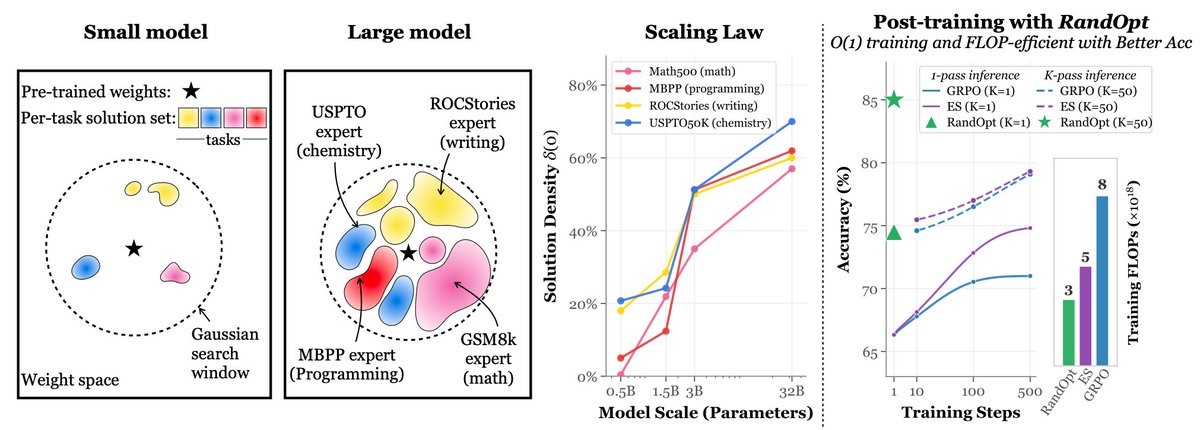
Simply adding Gaussian noise to LLMs (one step—no iterations, no learning rate, no gradients) and ensembling them can achieve performance comparable to or even better than standard GRPO/PPO on math reasoning, coding, writing, and chemistry tasks. We call this algorithm RandOpt. To verify that this is not limited to specific models, we tested it on Qwen, Llama, OLMo3, and VLMs. What's behind this? We find that in the Gaussian search neighborhood around pretrained LLMs, diverse task experts are densely distributed — a regime we term Neural Thickets. Paper: arxiv.org/pdf/2603.12228 Code: github.com/sunrainyg/Rand… Website: thickets.mit.edu
Yulu Gan tweet media
English
87
436
3K
683.8K
Hugging Science がリツイート
Mohammed AlQuraishi
Mohammed AlQuraishi@MoAlQuraishi·
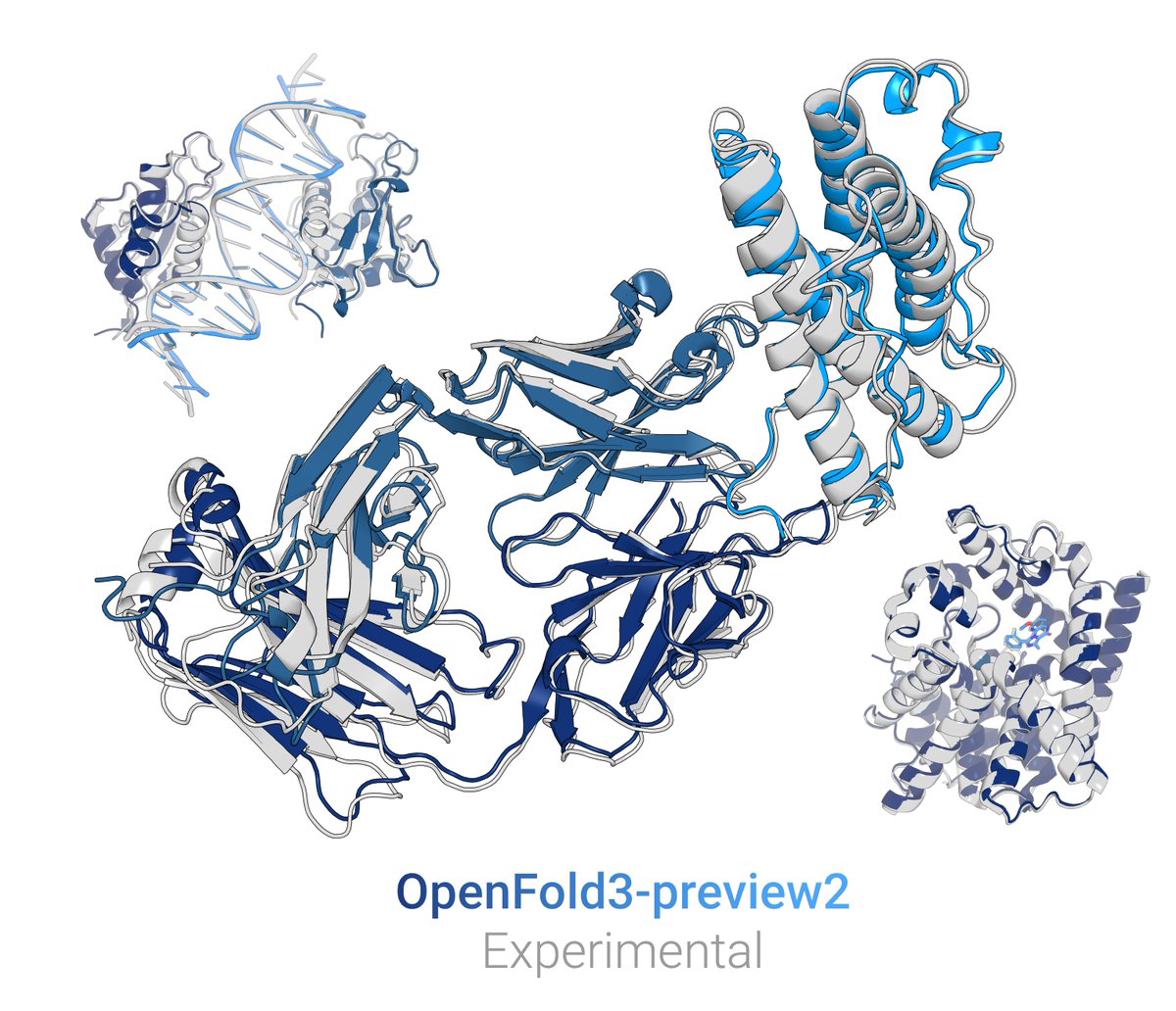
New OpenFold3 preview out! (OF3p2) It closes the gap to AlphaFold3 for most modalities. Most critically, we're releasing everything, including training sets & configs, making OF3p2 the only current AF3-based model that is functionally trainable & reproducible from scratch🧵1/9
Mohammed AlQuraishi tweet media
English
8
183
675
54.4K
Hugging Science がリツイート
Georgia Channing
Georgia Channing@cgeorgiaw·
Absolutely killer new blog from one of the OGs in open protein engineering, @amelie_iska. This is the only piece of writing I've come across that explains to someone in non-specialist language why you need each of these models and what role they all have to play in making sure that your protein design pipeline isn't actually splitting out garbage that you'll only discover after spending tens of thousands on wetlab validation. She does a deep dive on how to build a full-stack protein design sequence model with all the appropriate filters so that we, in her words, "do not merely reconstruct plausible sequences, but actively sample diverse, high-value protein variants under a multi-fidelity oracle stack." This blog covers all the big models that are used in industry for these kinds of generative pipelines (i.e., SPURS, BioEmu, UMA, GraphKcat, KcatNet, and MMKat) and why you need them all.
English
1
22
134
8.3K
Hugging Science がリツイート
Georgia Channing
Georgia Channing@cgeorgiaw·
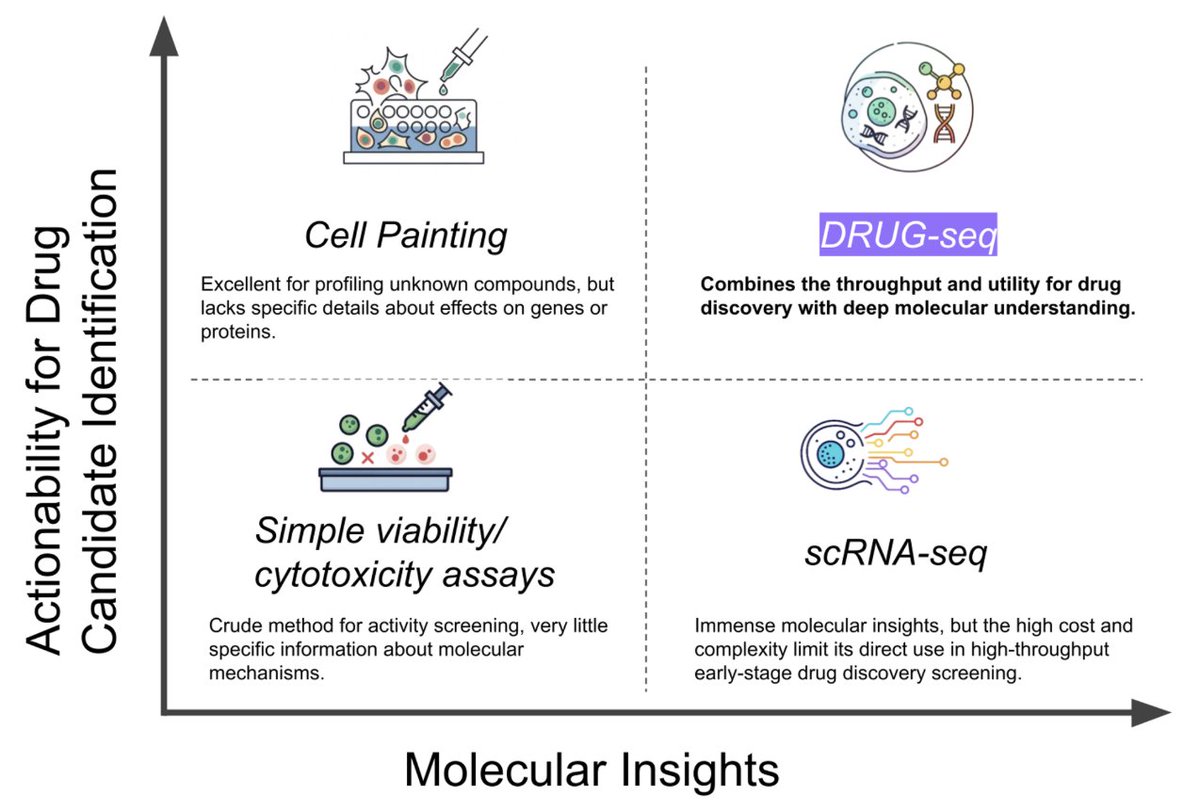
💊💊💊 @Ginkgo just dropped GDPx4 💊💊💊 29.9 MILLION rows of DRUG-seq data, perfect for benchmarking + large-scale perturbation modeling critical for anyone who can't afford their own high-throughput lab a little more in 🧵
Georgia Channing tweet media
English
2
55
320
28.3K
Hugging Science がリツイート
Georgia Channing
Georgia Channing@cgeorgiaw·
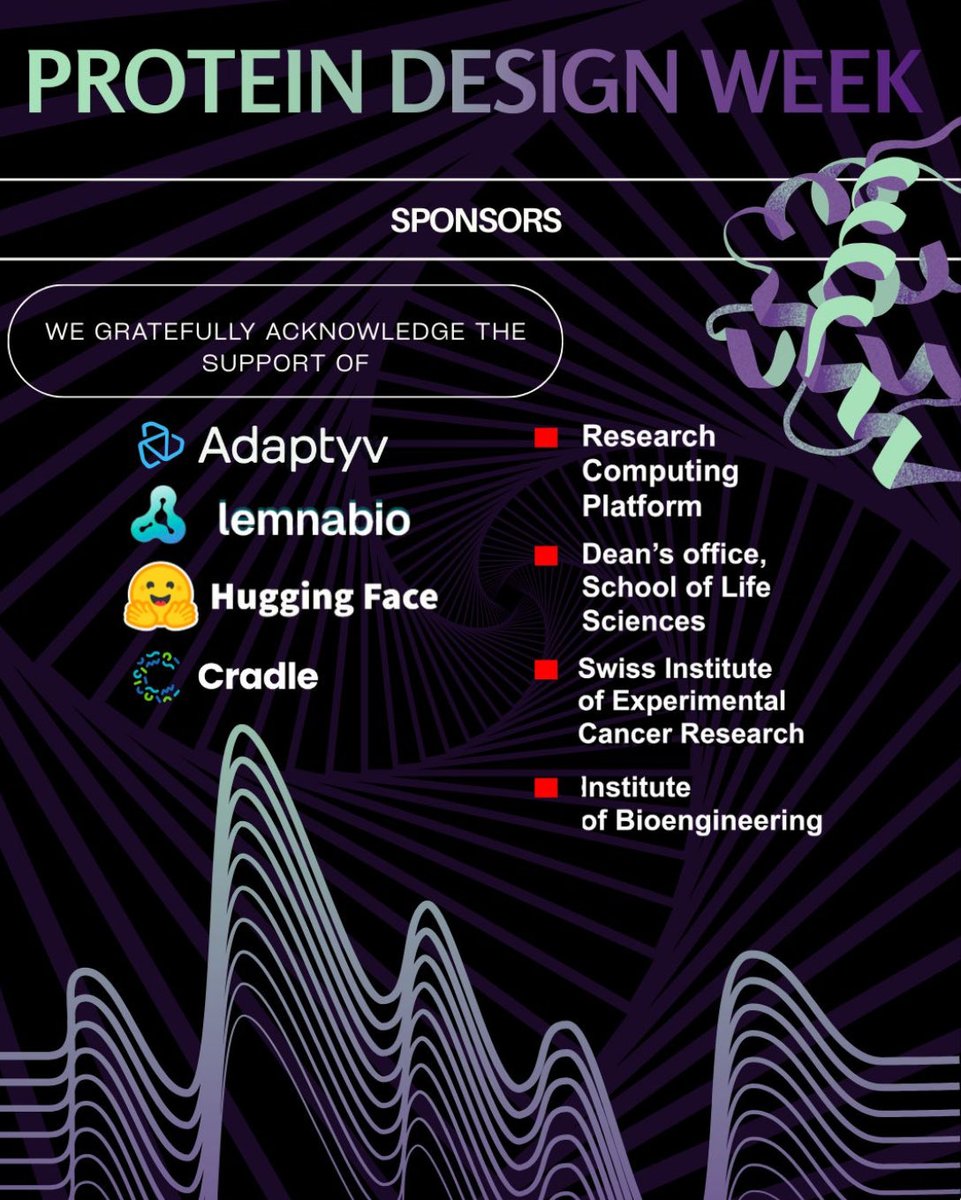
Zero code to protein pipeline now on @huggingscience 🤗 As a part of the PDW hackathon, the organizers built inference spaces for: 🧬 RFDiffusion 🧬 RosettaFold3 🧬 BoltzGen2 (+ soon to be MCP servers)
Georgia Channing tweet media
English
4
45
227
20.7K
Hugging Science がリツイート
Georgia Channing
Georgia Channing@cgeorgiaw·
thanks so much to everyone who came out to the @huggingscience bar takeover last night in San Diego amazing community with epic science coming out of it if you have any photos/videos, plz drop in the thread 🧫🧬🔭🔬💛
English
3
4
58
2.8K
Hugging Science がリツイート
Thomas Wolf
Thomas Wolf@Thom_Wolf·
At NeurIPS next week. AI × Science afterparty. 800+ people on registration. See you there!
Thomas Wolf tweet mediaThomas Wolf tweet media
English
14
10
260
34.6K
Hugging Science がリツイート
Jack D. Carson
Jack D. Carson@mtlushan·
I would say my biggest takesway from spending the last 8 months singlemindedly studying bioML is that understanding the biology actually is important
English
30
43
526
134.6K
Hugging Science がリツイート
Sakana AI
Sakana AI@SakanaAILabs·
Sakana AI will be at #NeurIPS2025! 🐟🐟🐟 We’re pleased to announce that Sakana AI is co-hosting “AI for Science: Algorithms to Atoms” panel event alongside NeurIPS. Join our CEO, @hardmaru, and other industry leaders as we explore the future of AI-driven scientific discovery. • Featured panelists: Yann LeCun (Meta), Bill Dally (NVIDIA), Anima Anandkumar (Caltech), David Ha (Sakana AI), Max Welling (CuspAI) • In collaboration with: NVIDIA, CuspAI, Sakana AI, and Samsung Next. • Dec 5 | 3:30pm PT. If you'll be at NeurIPS San Diego, here is the link to join: luma.com/AI-for-Science…
hardmaru@hardmaru

I’m co-organizing an “AI for Science: Algorithms to Atoms” social event during #NeurIPS2025 with Yann LeCun, Anima Anandkumar, Bill Dally, and Max Welling If you want to talk about AI Scientist, World Models and the future of AI-driven discovery, please come on Dec 5 3:30pm PT!
English
12
36
190
56.2K