

Jack Welding
112 posts

What are seed stage startups (DE C corp) using for bookkeeping + federal tax filings these days? I used Bench previously but it shut down.
Anyone have a service they like?
English
Jack Welding がリツイート

Actually a great take. Tldr imo is its now a blitz for everyone (but especially software companies) to build robust horizontal layers using AI. If you can sell a customer on 3,4,5,6 products they’re locked in with you - margins might compress by product (bc AI enables immense product competition) but overall ACV expansion (due to multi-product growth) will make up for those dips.
When you hear about companies like Klarna churning from salesforce because AI enabled them to ‘quickly’
build their own crm its noise and them hiding their struggles under the rug - ie creating buzz about something that has nothing to do with creating value for their customers.
That said, I am a huge believer in building (instead of buying) when what you’re building is directly involved in value creation for your customers. Which is exactly why instead of buying Pylon @usehaven we built our own CS tooling because we’re a full stack AI SERVICES company - delivering accounting and financial SERVICES.
Software isn’t dead but point solutions most definitely are - if your customers use you for 1 product (AI product or not) you’re in trouble.
Michael Bloch@michaelxbloch
English
Jack Welding がリツイート

Building a full-stack AI company removes this headache. We ride the model curve and increase our capabilities with each update. Our moat is in the 1P data and its flywheel, not in our ability to build an AI DCF builder.
Yishan@yishan
My AI investment thesis is that every AI application startup is likely to be crushed by rapid expansion of the foundational model providers. App functionality will be added to the foundational models' offerings, because the big players aren't slow incumbents (it is wrong to apply the analogy of "fast startup, slow incumbent" here), they are just big. Far more so than with any other prior new technology, there is a massive and fast-moving wave that obsoletes every new app almost as fast as it can be invented. There is almost no time to build a company and scale it. There are two ways AI application startup founders can make money: - Make a flash-in-the-pan app that generates a ton of cash and bank the cash (my estimate is that you have about 12-18 months cashflow generation) - Make a good enough app that you get acquired by one of the big players for sufficient equity The situation is highly unstable - we don't know if it's going to crash or go to the moon but both scenarios make it very unlikely that any AI application startup will independently become a generational supercompany (baseline odds are low to begin with). The best odds are finding an application niche in a highly specialized field with extremely unique and specific data barriers, ideally ones relating to real atoms (hardware or world-related) data and not software/finance.
English
Jack Welding がリツイート
Jack Welding がリツイート

Men used to go to war, now they tear brands a new asshole in the "feedback" section when they churn from a terrible SaaS tool
English
Jack Welding がリツイート
@claudeai is the second brain living in my head this week, and it's earning the free rent.
English
Jack Welding がリツイート
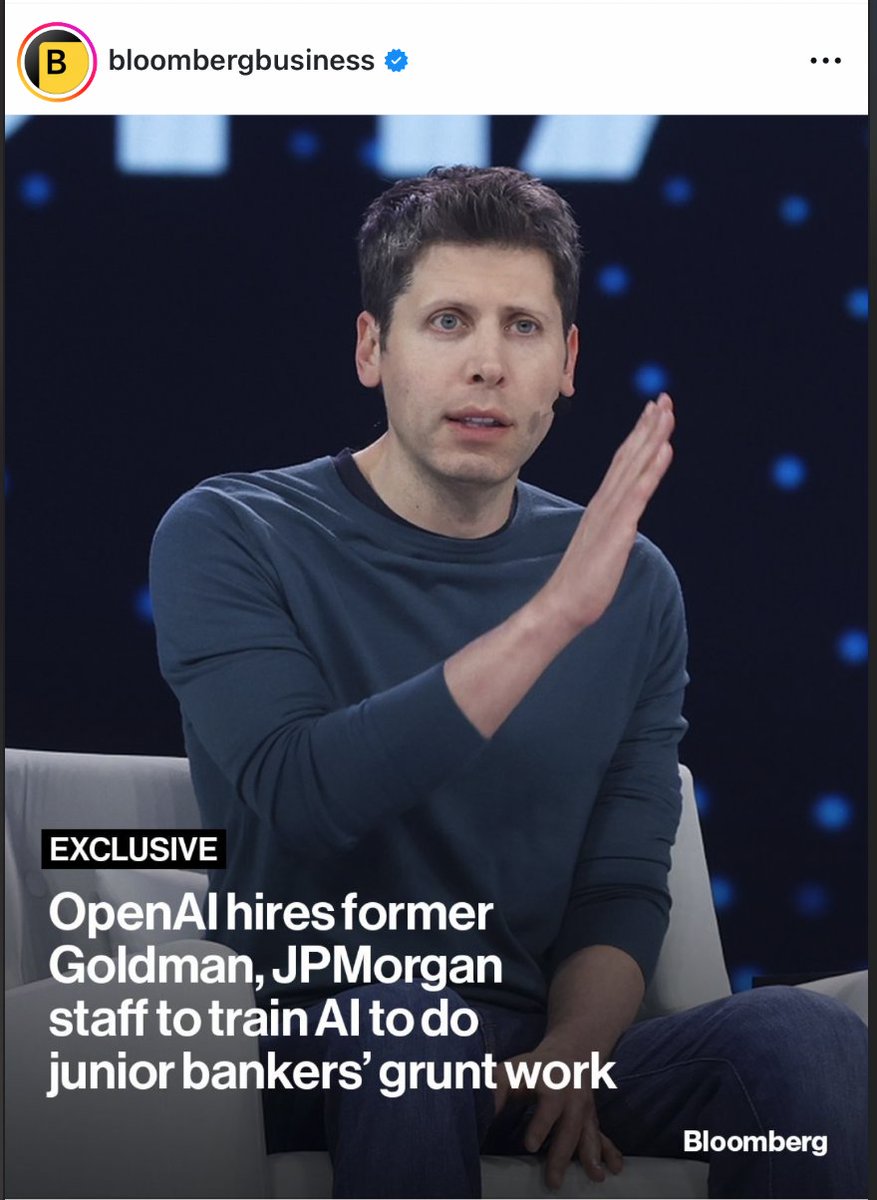
Been getting lots of messages on this morning. Some thoughts:
Sam Altman has said this countless times - build with the assumption that the models will keep getting radically better. Spending months building scaffolding to patch current model limitations has been a losing bet for most. The ground shifts too quickly.
At OffDeal, we've built our business around that reality - every new model unlocks new capabilities for us. This OpenAI announcement further validates our thesis.
From day one, instead of betting on a 'tech moat', we've invested heavily into compounding a powerful data flywheel. With each new rep, we can better predict which companies will sell, to whom, and for how much. Every deal we execute trains our systems to be smarter for the next one, creating a cycle of continuous improvement that directly benefits our clients.
Excited to continue riding this curve!
English
Jack Welding がリツイート
@Kalshi sharp ad, feels like I’m in a black mirror episode.
Fear the day I get off the 2 train and see did Jacob forget his computer charger at home

English
Jack Welding がリツイート

I left JPMorgan to join an AI investment bank. It was a calculated risk, and I have no regrets. trib.al/Mllvm6B
English
RT @leveredvlad: These are the stats for PE outreach in the landscaping industry.
The main takeaway is that whoever is running that surve…
English
Jack Welding がリツイート
Alright so if you're not on the WW3, Jimmy Kimmel, or NFL Start Sit Week 4 part of the algorithm, this might be interesting...
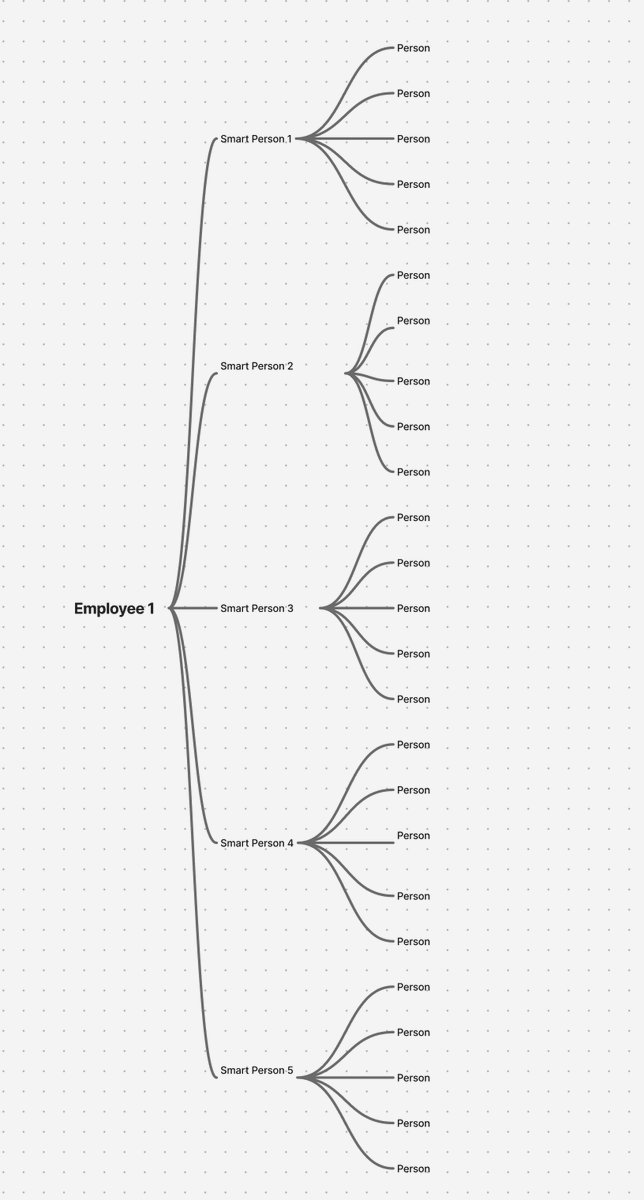
When recruiting, you can ask 1 employee to name the 5 smartest people they know. If that employee asks these 5 smart people for their top 5 smartest contacts, you suddenly have 25 potential candidates. Scale this across just 4 employees, and you can build an applicant pool of 100+ in <1 week.
English

Jack Welding がリツイート
Building in the AI space with an SMB ICP has to be one of the most unique spaces to play.
context switching between tasks reaches new heights, it's not "let's build a media distro plan and then hop on a partnerships call". Rather, it's "let me use claude's feedback on how to optimize a lead magnet flow, build a spec in v0/Figma and then teach someone how to join a zoom call.
English
Jack Welding がリツイート
I think about this a lot - people of my ‘vintage’ are now becoming MDs in finance - what are the 2nd order effects? Will the fresh blood beat out century old ‘traditions’ / ‘culture’? I hope so.
Anthony Pompliano 🌪@APompliano
There is something very important happening in finance. An entire generation of young people who grew up on the internet are now ascending to positions of power and influence. They have access to capital and they have technology at their fingertips. The speed at which they receive information, analyze insights, and make decisions is different than those who came before them. The appetite for risk, the pursuit of volatility, and the addiction to playing the game 24/7 gives them a distinct advantage. Add in the fact that many of them have a megaphone with reach previously thought impossible. Faster, bigger, louder, more concentrated. The internet generation has arrived to capital markets and things will never be the same.
English
Jack Welding がリツイート
If teens and twenty somethings can start and build multi billion dollar companies, surely some of them can also run a $3M ebitda sell side.
To me this is almost entirely a talent quality issue - both at the top and the bottom of the org - rather than about their age.
One Man LBO@OneManLBO
Can someone please explain to me how Benchmark International lets Class of 2022 undergrads run point on $3M EBITDA deals
English
Jack Welding がリツイート
Aaron is precisely right. In most industries, but especially finance, people have a very hard time seeing how AI models WILL outperform humans on most tasks, especially those that involve processing large amounts of granular data.
With every model update these people have less and less legs to stand on, and I’m already seeing conversation steering towards ‘taste’ as something models will never have.
Imo human relationships, EQ etc is the only truly defensible moat in high trust environments like deal making - and junior bankers do not get to work on either of those for the first 7 years of their career.
Aaron Levie@levie
It's sometimes hard to grasp the significance of the reasoning and logic updates that are starting to emerge in powerful models, like GPT-5. Here's a *very simple* example of how powerful these models are getting. I took a recent NVIDIA earnings call transcript document that came in at 23 pages long and had 7,800 words. I took part of the sentence "and gross margin will improve and return to the mid-70s" and modified "mid-70s" to "mid-60s". For a remotely tuned-in financial analyst, this would look out of place, because the margins wouldn't "improve and return" to a lower number than the one described as a higher number elsewhere. But probably 95% of people reading this press release would not have spotted the modification because it easily fits right into the other 7,800 words that are mentioned. With Box AI, testing a variety of AI models, I then asked a series of models "Are there any logical errors in this document? Please provide a one sentence answer." GPT-4.1, GPT4.1 mini, and a handful of other models that were state of the art just ~6 months ago generally came back and returned that there were no logical errors in the document. For these models, the document probably seems coherent and follows what it would expect an earnings transcript to look like, so nothing really stands out for them on what to pay attention to - sort of a reverse hallucination. GPT-5, on the other hand, quickly discovered the issue and responded with: "Yes — the document contains an internal inconsistency about gross-margin guidance, at one point saying margins will “return to the mid-60s” and later saying they will be “in the mid-70s” later this year." Amazingly, this happened with GPT-5, GPT-5 mini, and, remarkably, *even* GPT-5 nano. Bear in mind, the output tokens of GPT-5 nano are priced at 1/20th of GPT-4.1's tokens. So, more intelligent (at this use-case) for 5% the cost. Now, while doing error reviews on business documents isn't often a daily occurrence for every knowledge worker, these types of issues show up in a variety of ways when dealing with large unstructured data sets, like financial documents, contracts, transcripts, reports, and more. It can be finding a fact, figuring out a logical fallacy, running a hypothetical, or requiring sophisticated deductive reasoning. And the ability to apply more logic and reasoning to enterprise data becomes especially critical when deploying AI Agents in the enterprise. So, it's amazing to see the advancements in this space right now, and this is going to open up a ton more use-cases for businesses.
English
Jack Welding がリツイート
A lot of discussion online on what we do - seems like people assume that we throw a bunch of text into a chatbot and let it rip.
Our guys are working 80+ hours/ week, spend enormous resource on outreach to buyers, buyer calls, DDQs etc - and these are people that worked at proper firms.
We are yet to lose a single engagement, we won multiple bakeoffs against traditional firms, and multiple of our active clients already referred their friends to us.
We are laser focused on a 10x customer experience - immediate responses and follow ups to both sellers and buyers, etc.
We spend tons of time on the phone with our clients - something we are actually able to do because a lot of the minutia is largely automated.
We genuinely care about our customers, and work really hard to deliver the best possible outcome to them - we don't even charge upfront fees to fully align incentives.
Compare that to a business broker (who's really a former real estate guy), charging non-refundable retainers, no formal training in corporate finance, and who take a week to turn around an NDA. It's not even close.
In any case, the market will always determine who is right, and if we don't do well by our customers, we won't be around for long.
English
Jack Welding がリツイート
The easy way to avoid this trap is for founders to build a company that benefits from 'riding the wave' - i.e. your product / service gets better and better with each new product release from the frontier labs.
Very few people seem to do this.
Jaya Gupta@JayaGup10
Foundation model providers like @OpenAI and @AnthropicAI have abandoned the pure infrastructure play. They're vertically integrating at unprecedented speed: OpenAI's Agent Mode, Claude Code, Deep Research. Your startup's success becomes their product roadmap. Build something that works? They'll clone it, crush it, or acquire it for pennies. The platform that powers you can steamroll you.
English
Jack Welding がリツイート
It's kinda funny to see banks SCRAMBLING to retain talent. Just make the job more palatable for people christ.
For people interested in investment banking without the bs / loyalty tests, we're hiring lots of bankers!
litquidity@litcapital
Interesting to see the way IBs are combating PE recruiting. Basically if you recruit and disclose, you’ll be moved to a diff business segment. Kinda defeats the point of PE funds recruiting early and expecting analysts to gain deal experience. Still seems like the best move for analysts is to simply recruit and stfu about it. No other way around it
English
Jack Welding がリツイート
NFL hardknocks but make it 3 seed stage AI companies trying to ship product, raise, and get on @tbpn and @sourceryvc
English