

Kimura
8.6K posts

Kimura
@jostaldi
Everything can be resolved in life .otherwise mawashi geri or armbar are allowed
Miami Beach, FL 参加日 Temmuz 2009
4.9K フォロー中351 フォロワー

Kimura がリツイート

Made this sprite design for #DesignASprite, hope Fortnite adds it to the game!
What it does is that every storm circle its abilities change, that are: low gravity, damage boost, speed boost, stamina boost, and defense boost with every level up, the abilities become 10% stronger.

English
Kimura がリツイート

Todavía lo releo cada semana.
Es, sin exagerar, uno de los artículos más valiosos que he leído sobre cómo cambiar tu vida.
DAN KOE@thedankoe
Español
Kimura がリツイート

🚨 TWO BULGARIANS JUST KILLED THE STREAMING INDUSTRY.
It's called Stremio + Torrentio. You get 4K content from Netflix, Disney+, Hulu, and HBO Max — combined — for free.
Here's how it works.
Stremio is the player. Polished interface. Works on Windows, macOS, Linux, Android, iOS, and TV. Install it once and it looks like any premium streaming app.
Torrentio is the addon. Add it to Stremio in one click. It scrapes every major torrent provider simultaneously and delivers the best available stream straight to your player. 720p, 1080p, 4K. You choose the quality. It finds the source.
→ No account required
→ No subscription
→ Works on every device
→ 4K and HDR supported
→ Subtitles built in
Netflix can't touch this. There is no central server to seize. No company to sue. No domain to kill. It lives on your device and pulls from the open internet.
The entire streaming industry runs on one assumption. That you'll keep paying $70/month instead of spending 5 minutes on GitHub.
That assumption just died in Sofia, Bulgaria.
MIT License. 100% Open-source.
Get the addon here: stremio-addons.com/torrentio.html

English
Kimura がリツイート


Kimura がリツイート

A Russian psychologist spent 10 years proving that the act of talking to yourself out loud is one of the most powerful cognitive tools the human brain has, and almost nobody outside his field has read the work.
His name was Lev Vygotsky.
He worked in Moscow in the 1920s and died of tuberculosis in 1934 at the age of 37. He had no laboratory, no funding, almost no English readers, and a body of work that the Soviet government suppressed for two decades after he died.
He produced the foundational theory of how human cognition actually develops, and the central piece of that theory was a behavior almost every adult is faintly embarrassed about.
Vygotsky noticed that young children talk to themselves constantly. They narrate their own actions, they argue with imaginary opponents, they instruct themselves through tasks out loud.
The dominant theory at the time, from the Swiss psychologist Jean Piaget, said this was a sign of cognitive immaturity that children would eventually grow out of as they learned to think properly.
Vygotsky said the exact opposite.
He argued that this self-directed speech was the most important cognitive event in the entire developmental window, because it was the moment a child first started to use language as a tool to control their own mind. The child was not failing to think. The child was learning how to think by externalizing the process and listening to themselves do it.
He predicted that as children matured, this out-loud self-talk would not disappear. It would go underground. It would become silent inner speech, which is the running monologue every adult has inside their own head for the rest of their life.
The voice you hear when you read this sentence is the direct descendant of a four-year-old narrating their own block tower.
For 50 years almost nobody outside Russia had access to his work, and the few researchers who did pick it up could not get funding to test it. Then in the early 2000s the experiments finally started to pile up, and what they found was that Vygotsky had been right about something even more important than he knew.
The first major study came from Gary Lupyan at the University of Wisconsin and Daniel Swingley at the University of Pennsylvania in 2012. They ran a simple visual search experiment. Participants were shown 20 images at once and asked to find a specific object, like a banana or a chair. In one condition they searched silently. In the other condition they were told to say the name of the object out loud to themselves while looking for it.
The participants who spoke the target name out loud found the object significantly faster, with higher accuracy, than the participants who searched in silence. The effect was strongest when the spoken word matched a familiar object the brain already had a strong category for.
Saying the word out loud literally tuned the visual system to detect that thing better. The researchers called it the label feedback effect, and the implication was that the act of vocalizing a goal physically changes how the brain processes the world while pursuing it.
The second major study came out of the University of Michigan and Michigan State in 2017. The lead researchers were Ethan Kross and Jason Moser, and they used both EEG and fMRI to record what happens inside the brain when people talk to themselves while emotionally upset.
They asked participants to recall painful autobiographical memories and reflect on them in two different ways. Some used the first person, saying things like "why am I feeling this way." Others used the third person, referring to themselves by their own name, saying things like "why is John feeling this way."
The brain scans showed that the simple act of switching from first person to third person, even silently, decreased activity in the medial prefrontal cortex, the region responsible for rumination and self-referential pain. Within a single second of using their own name instead of the word I, participants showed measurably lower emotional reactivity. The shift required no extra cognitive effort. It cost the brain nothing. And it worked.
Kross described the mechanism in his interviews. Talking to yourself by name creates a small amount of psychological distance from your own experience. Your brain processes the situation more like a problem belonging to someone else, which means it can analyze it instead of drowning in it.
What Vygotsky had intuited in 1934 turned out to be even more powerful than the developmental theory he built it into. The voice you use to talk to yourself is not background noise. It is one of the most precise cognitive tools the brain has, and you can change how it works just by changing the pronoun you use.
People who talk through problems out loud are not anxious or unstable. They are running an externalized version of a process the rest of us are running silently and worse. The kindergartener narrating their block tower, the surgeon muttering through a procedure, the engineer pacing a hallway describing a bug to nobody, the athlete repeating a cue to themselves before a free throw, they are all using the same ancient mechanism that builds and steers human thought.
You can run the experiment yourself the next time you are stuck on something hard. Stop trying to solve it silently in your head. Say it out loud. Describe what you are seeing. Walk yourself through the steps as if you were explaining it to a colleague who is not in the room.
And when something genuinely upsets you, switch to your own name. Ask why this person is feeling this way, instead of why I am feeling this way.
The voice you have been told to keep quiet your entire life is one of the oldest pieces of cognitive technology you own.
Most people are still embarrassed to use it.

English
Kimura がリツイート

🚨Acaban de lanzar una IA que literalmente puede dirigir una empresa entera por ti.
Y esto cambia TODO.
Se llama Pancake.
Una IA que aprende cómo funciona tu negocio…
y luego empieza a operar de forma autónoma.
Qué puede hacer:
→ crear el “cerebro” completo de tu empresa
→ coordinar ejércitos de agentes IA
→ gestionar marketing, ventas y operaciones
→ automatizar tareas de ingeniería
→ tomar decisiones entre agentes usando OpenClaw
La visión detrás de esto es una locura:
Convertir cualquier startup en una “autonomous company”.
Una sola persona…
compitiendo contra empresas de 500 empleados.
No porque no pueda contratar.
Sino porque ya no lo necesitará.
La era del “one-man business” acaba de empezar 👀
Español
Kimura がリツイート

🚨 El neurocientífico más famoso del mundo dice: El estrés crónico es el “asesino silencioso” que muchos médicos ignoran.
En un podcast que ha superado millones de visualizaciones, reveló 6 hábitos “naturales” que hacemos todos los días, pero que destruyen el sueño, el estado de ánimo y el sistema nervioso.
1. Repites una y otra vez las conversaciones y situaciones en tu cabeza todo el tiempo..
Hilo:

Español
Kimura がリツイート

En lugar de perder una hora viendo una película, mira esto.
En solo 14 minutos, un ingeniero de Anthropic, autor de Building Effective Agents, te enseñará más sobre cómo construir agentes de IA correctamente que lo que muchos desarrolladores descubren por su cuenta en meses.
Posiblemente la parte más compleja de toda la IA.
(Guárdalo, te será muy útil)
Español
Kimura がリツイート

Rolling Stone eligió los mejores solos de guitarra de la historia y este fue el inesperado número uno concierto.cl/2026/05/rollin…
Español
Kimura がリツイート

Anthropic ha publicado un taller sobre cómo construir una empresa solo con Agentes IA.
Agentes trabajando entre ellos, repartiéndose tareas y ejecutando procesos.
Gratis. Del equipo de Claude.
Lo he subtitulado al español.
Si quieres que la IA trabaje por ti, guarda esto 🔖
Español
Kimura がリツイート

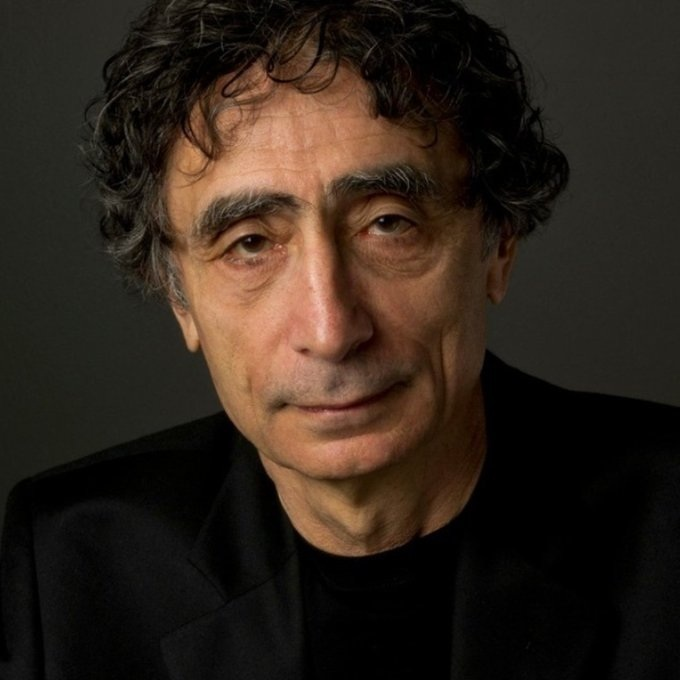
The man who heals what medicine can't:
Dr. Gabor Maté.
This 80-year-old physician says true healing comes from nervous system regulation, not drugs or meditation.
Here are his 7 forgotten laws for ending chronic stress at the root: 🧵
English
Kimura がリツイート

Deja de decirle a Claude “haz esto”.
Deja de decirle a Claude “escribe código”.
Deja de decirle a Claude “corrige este error”.
En realidad estás tratando a una IA avanzada como a un becario junior.
Aquí tienes 8 prompts que puedes copiar y pegar directamente:
Español
Kimura がリツイート
Robert Sapolsky is a Stanford neuroscientist who proved chronic stress is the silent killer doctors ignore.
On Chris Williamson's podcast, he revealed 10 "normal" habits you do every day that wreck your sleep, mood, and nervous system:
1) Replay conversations in your head
English
Kimura がリツイート

When simulation becomes the norm, it weakens the human capacity for discernment. As a result, our social bonds close in upon themselves, forming self-referential circuits that no longer expose us to reality. We thus come to live within bubbles, impermeable to one another. Feeling threatened by anyone who is different, we grow unaccustomed to encounter and dialogue. In this way, polarization, conflict, fear and violence spread. What is at stake is not merely the risk of error, but a transformation in our very relationship with truth.
English
Kimura がリツイート

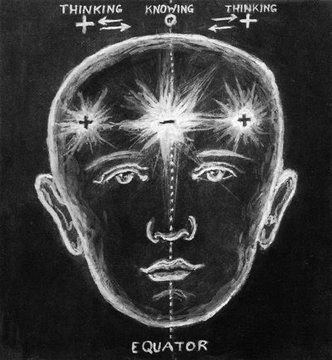
El segundo secreto oculto de los Vedas: si al despertar por la mañana lo primero que hacen es esto, obtendrán éxito en 24 horas sin falta.
Si al despertar por la mañana logran hacer esta única acción, el efecto comienza a notarse en 24 horas. No es magia, sino la ciencia de utilizar correctamente los procesos naturales de su mente y cuerpo.

Español
Kimura がリツイート

En 2019, el profesor del MIT Patrick Winston dio una charla legendaria: “How to Speak”.
Tiene más de +18M de visualizaciones por algo.
Su framework:
· Tus ideas son como hijos
· Regla de los 5 minutos
· Por qué los chistes fallan al inicio
15 lecciones sobre comunicación:
Español
Kimura がリツイート

"¿Cómo entender la infraestructura intelectual del trumpismo?"
Entrevista a Laura K. Field
Qué tradiciones alimentan los imaginarios de la derecha radical, pese a su aparente antiintelectualismo? ¿Cómo se combinan estas corrientes entre sí?
nuso.org/articulo/trump…
Español
Kimura がリツイート

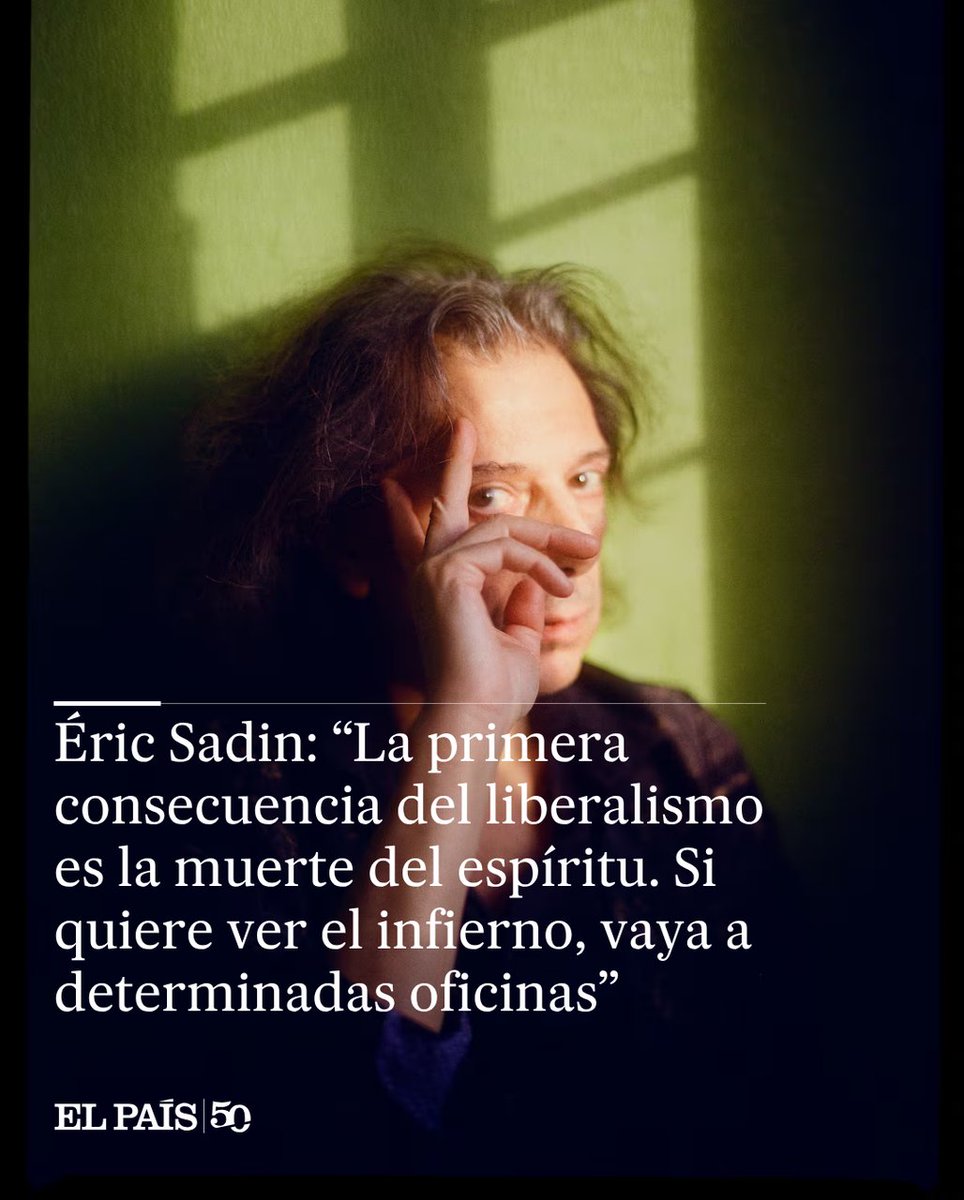
El filósofo francés Éric Sadin, voz de referencia en la resistencia ante el cambio tecnológico desbocado, cree que la IA es una catástrofe: amenaza la creatividad, el talento y el intelecto, es decir, las bases de la civilización humana. Lee la entrevista social.elpais.com/jmr1pp
Español