kubesimplify

4.5K posts

kubesimplify banner
kubesimplify

kubesimplify

@kubesimplify

Simplifying cloud native for all | for sponsorship queries contact [email protected]

India 参加日 Mart 2022
3 フォロー中12.3K フォロワー
固定されたツイート
kubesimplify
kubesimplify@kubesimplify·
Learn Kubernetes Today! In this course you learn about the core concepts including demos of CNI, kube proxy & CoreDNS. A project based learning where you deploy multi microservices app with db. Go learn today & do not forget to subscribe to Kubesimplify. youtu.be/EV47Oxwet6Y?si…
YouTube video
YouTube
English
0
3
20
5.4K
kubesimplify
kubesimplify@kubesimplify·
OpenViking just hit 16k stars on GitHub in under six weeks, and if you are building with OpenClaw, this is the most important project to watch right now. *What Openviking actually is* Most AI agents rely on flat-vector RAG, where every file, memory, and resource gets embedded into one undifferentiated pool. Retrieval is slow, expensive, and prone to context confusion. OpenViking, released open-source by ByteDance's Volcengine division, replaces this with a Context Database. Memory is organized into a hierarchical folder structure using a custom viking:// protocol, and the agent navigates it the same way a user navigates a filesystem, using commands like ls, find, and tree. *Why it matters for OpenClaw* *Tiered context loading*. OpenViking uses an L0/L1/L2 system:one sentence abstract(approx 100-tokens), under 2,000-token overview/summary and the full document. The agent reads the summaries first and only pulls the full file into context when strictly necessary, cutting token consumption substantially on long sessions. *Directory-recursive retrieval*. Rather than searching a flat embedding space globally, OpenViking runs semantic search to locate the right directory, then drills recursively into subdirectories. This eliminates the "lost in the middle" failure mode where the correct document exists but never surfaces. *Persistent self-iterating memory*. At the end of each session, OpenViking reflects on task outcomes and writes updated memory back into the appropriate folders, including preferences, past errors, and tool-use patterns. The agent's knowledge compounds across sessions rather than resetting. *Observability*. OpenViking exposes a full retrieval trajectory showing exactly which directories were traversed and which files were selected, making memory behavior auditable instead of opaque. ByteDance open-sourced enterprise-grade memory infrastructure, and the community is already building direct integration plugins for OpenClaw.
kubesimplify tweet media
English
1
0
1
135
kubesimplify
kubesimplify@kubesimplify·
The AI loop just closed. Most people haven’t noticed yet. We’re entering a phase where AI doesn’t just execute tasks. It designs experiments, runs them, evaluates outcomes, and improves itself in continuous cycles. MiniMax’s M2.7 is one of the clearest early signals of this shift. What makes it different from “just a better model” *The self-evolution loop* Instead of humans driving iteration, the model operates a loop: design → execute → evaluate → refine → repeat. In internal settings, this runs for dozens of cycles and delivers measurable performance gains without manual intervention at each step. *The agent harness* Think in system terms, LLM as the reasoning core surrounded by memory, tools, workflows, and execution logic. This is not just tool usage. The model can construct new capabilities, integrate them into its workflow, and reuse them. That is recursive capability expansion. *Multi-agent collaboration* Work is decomposed into roles such as planner, executor, critic, and researcher. Each role maintains boundaries, challenges assumptions, and contributes to decision-making, similar to effective human teams. *Real engineering capability* This goes beyond code generation. The system can correlate logs, trace failures, query infrastructure, and propose fixes grounded in system behavior. It reflects production-grade reasoning, closer to SRE workflows than autocomplete. The larger shift: AI is moving from being a feature inside systems to becoming the system operator. Future products will not just include AI. They will rely on AI to monitor, debug, and optimize themselves continuously. This is still an early stage. Goals are human-defined and autonomy is bounded by infrastructure. But the direction is clear. The relevant question is no longer whether this will happen. It is whether your systems are being designed for it. #AI #MachineLearning #AgentSystems #SoftwareEngineering #AIAgents #FutureOfWork #ProductDevelopment
English
0
0
2
116
kubesimplify
kubesimplify@kubesimplify·
We love to chit-chat with the community. Look what @PriteshKiri has to say about Chaos engineering.
English
0
0
0
101
kubesimplify
kubesimplify@kubesimplify·
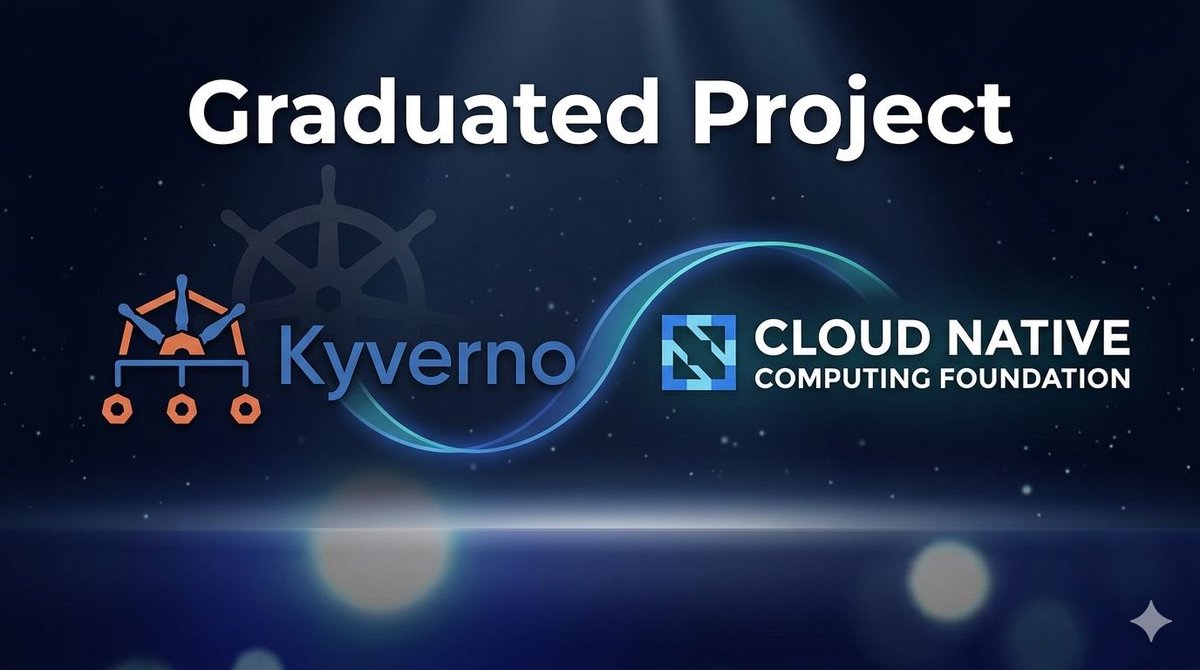
Kyverno officially graduated as a CNCF project on March 16, 2026. From joining the CNCF Sandbox in 2020, to Incubating in 2022, to Graduated today, the journey reflects what good open source looks like: real-world adoption, strong governance, and a community that kept showing up. Kyverno lets platform and security teams enforce policies across Kubernetes environments using plain YAML, with no new language to learn. Validate, mutate, generate, and clean up resources, all through a native Kubernetes experience. Since incubation, the project has seen nearly 10x growth in downloads and gained over 2,000 GitHub stars. Congratulations to Nirmata , the maintainers, and every contributor who made this happen. If policy as code is still on your backlog, graduation is a good reason to move it up. #Kyverno #CNCF #CloudNative #Kubernetes #PolicyAsCode #DevSecOps #PlatformEngineering #OpenSource
kubesimplify tweet media
English
2
0
5
194
kubesimplify
kubesimplify@kubesimplify·
Hear what Suman has to say about MLOps and AiOps..
English
1
3
4
233
kubesimplify
kubesimplify@kubesimplify·
The Linux Foundation launched the Agentic AI Foundation (AAIF), a neutral, open home for the projects defining how AI agents operate at scale. Founding contributions include three projects that have rapidly become industry cornerstones: • Anthropic’s Model Context Protocol (MCP), the universal standard for connecting AI models to tools, data, and apps • Block’s goose, an open source, local-first AI agent framework • OpenAI’s AGENTS.md, a universal standard giving AI coding agents reliable, project-specific guidance Platinum members span the industry: AWS, Anthropic, Block, Bloomberg, Cloudflare, Google, Microsoft, and OpenAI. For agentic AI to reach its potential, the infrastructure has to be open, transparent, and community-driven. The AAIF is driving that foundation. #AI #OpenSource #AgenticAI #MCP #LinuxFoundation
kubesimplify tweet media
English
1
1
8
203
kubesimplify
kubesimplify@kubesimplify·
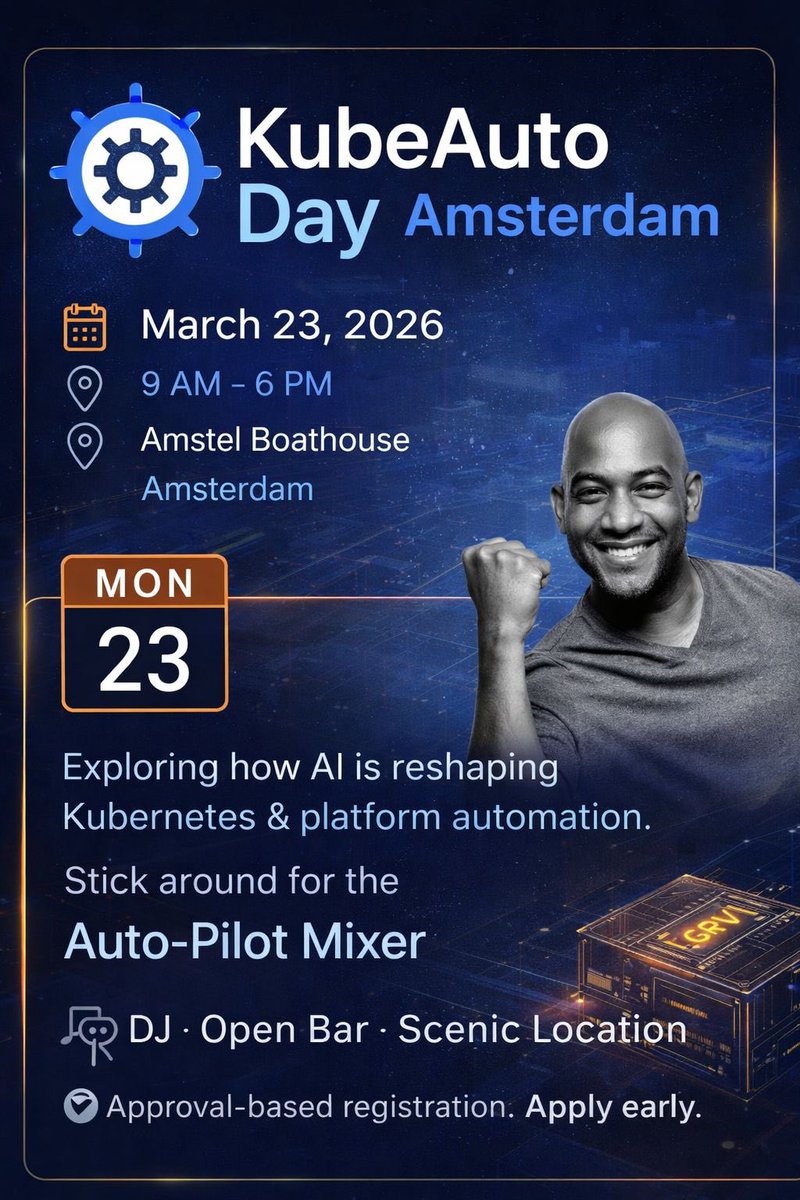
Attending KubeCon Amsterdam? This might be something you should consider adding to your schedule. If you’re exploring how AI is reshaping Kubernetes and platform engineering, KubeAuto Day Amsterdam is worth checking out. 📅 March 23, 2026 ⏰ 9:00 AM – 6:00 PM (GMT+1) 📍 Amstel Boathouse, Amsterdam Featuring Kelsey Hightower This event brings together people working on AI-driven automation in Kubernetes , from scaling workloads to smarter operations and design. And it doesn’t end there the Auto-Pilot Mixer (Day-0 After Party) kicks off right after 6:00 PM – 10:00 PM DJ, open bar, and a great space to connect with others in the ecosystem. Registration is approval-based, so make sure to apply early and secure your spot. Link in the comment section!
kubesimplify tweet media
English
1
0
4
198
kubesimplify
kubesimplify@kubesimplify·
Modern infrastructure leads to modern problems! Do you all also think the same? Look what Abhishek Veeramalla and Prianshu Mukherjee have to say on this.
English
0
1
7
238
kubesimplify
kubesimplify@kubesimplify·
The energy at CLOUDxAI Conference 2026 on March 14 in Bengaluru was incredible, with hundreds of builders, platform engineers, and AI practitioners coming together to talk about where cloud and AI are heading next. From deep technical talks on AI-driven infrastructure, autonomous operations, and cloud-native systems, to hands-on workshops and hallway conversations, the event truly captured what this ecosystem is about: builders learning from builders. As a community partner, KubeSimplify was proud to support an event that brought together engineers, educators, and innovators shaping the future of Cloud + AI infrastructure. Huge appreciation to the organizers, speakers, and everyone who showed up with curiosity, questions, and ideas. Events like this are what keep the ecosystem vibrant and moving forward. The future of infrastructure is clearly becoming more intelligent, more automated, and more community-driven, and gatherings like this help us build that future together. Looking forward to supporting more such events in the future. #AI #devops #conference #cloudxai
kubesimplify tweet mediakubesimplify tweet mediakubesimplify tweet mediakubesimplify tweet media
English
0
0
6
159
kubesimplify がリツイート
Saiyam Pathak
Saiyam Pathak@SaiyamPathak·
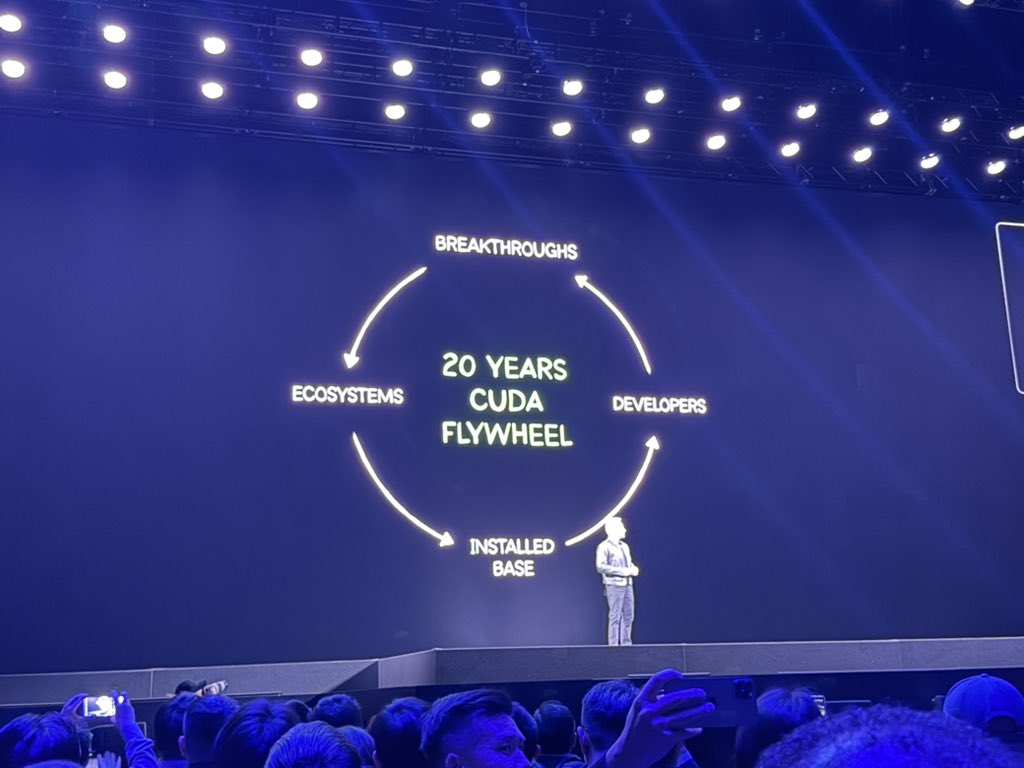
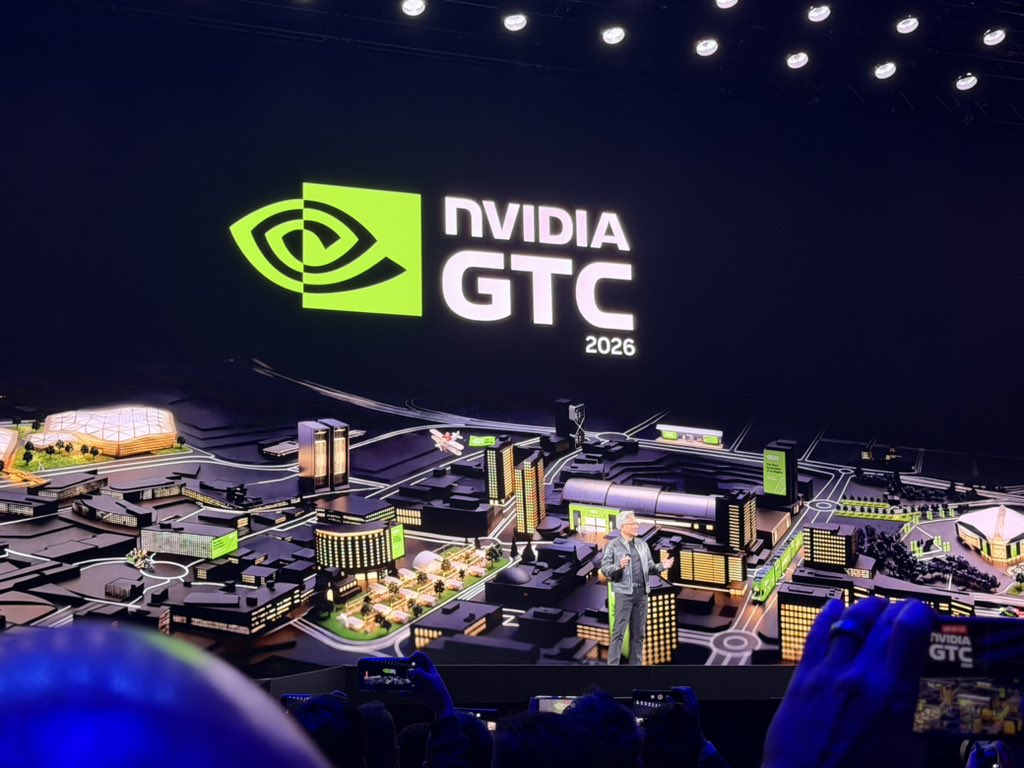
20 years of CUDA
Saiyam Pathak tweet mediaSaiyam Pathak tweet mediaSaiyam Pathak tweet media
English
0
1
9
311
kubesimplify
kubesimplify@kubesimplify·
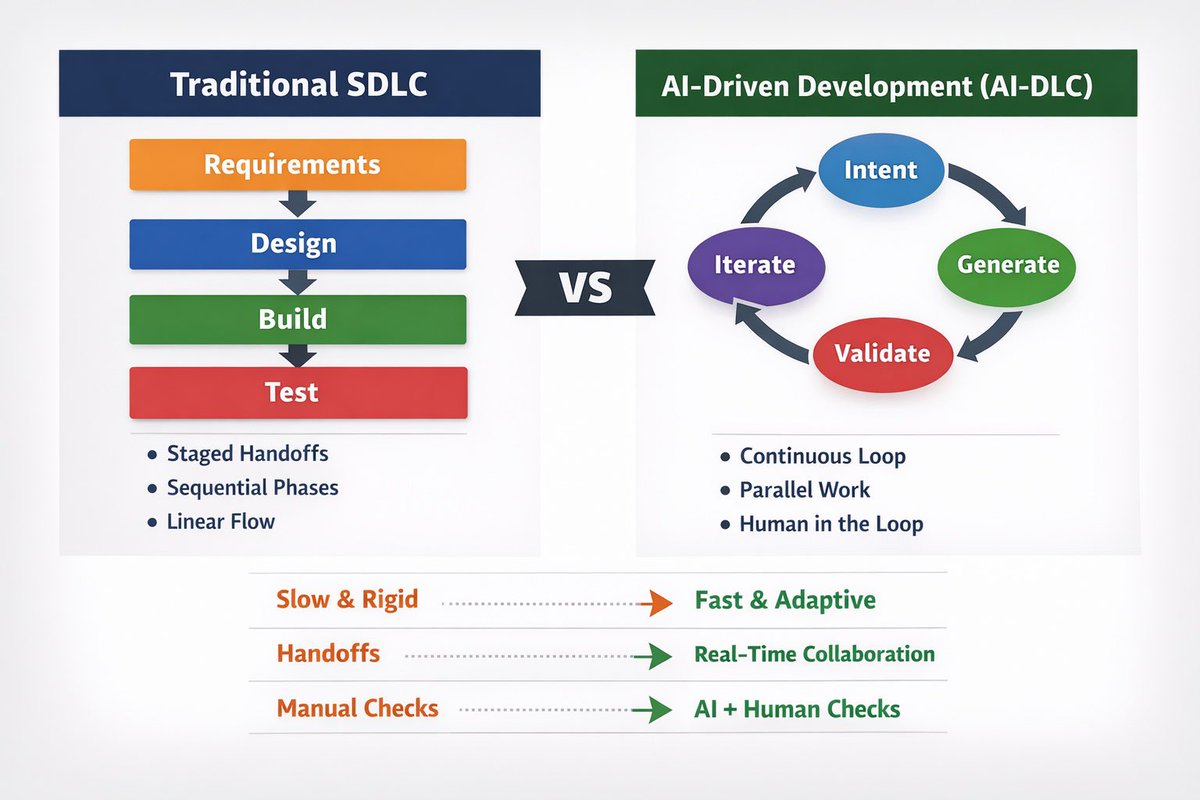
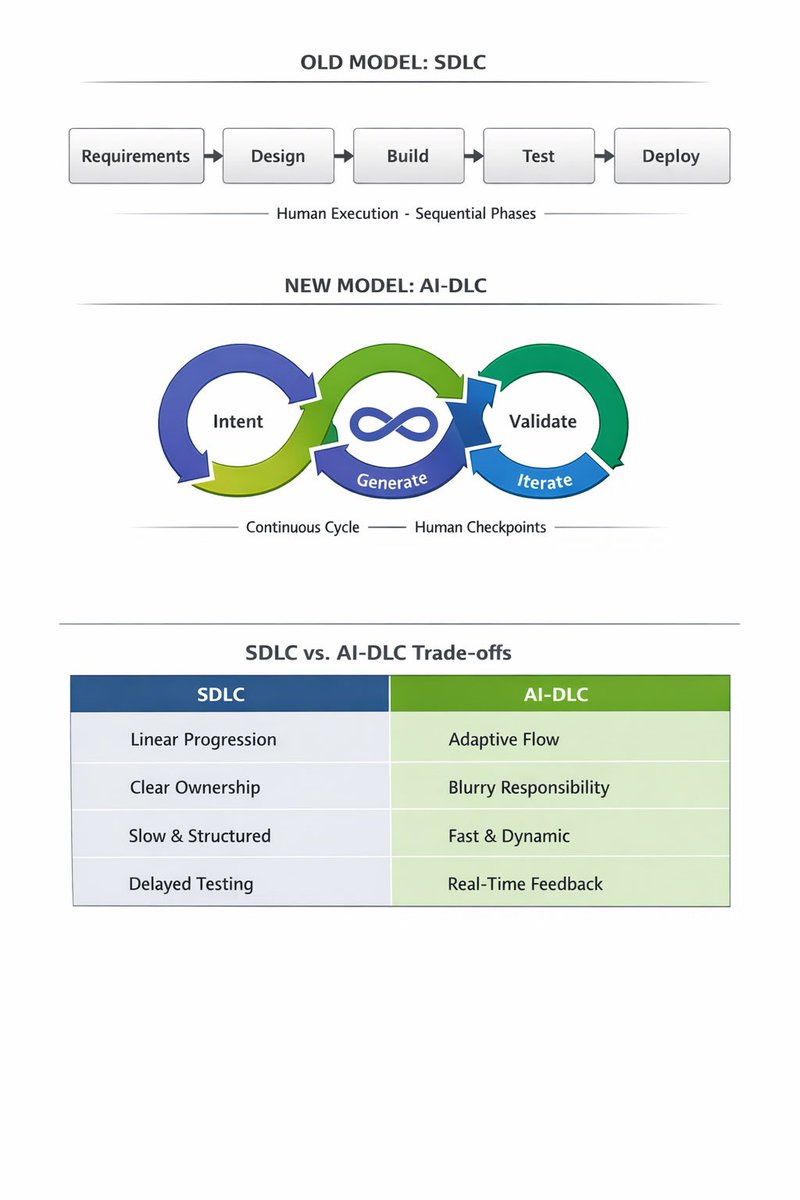
*AI-DLC: Why Your SDLC Is Already Obsolete* AI is no longer a tool it’s part of the development loop. We generate code, tests, architectures, and refactors using AI. But it breaks the assembly line. Traditional SDLC was built on one assumption: humans execute, sequentially, one phase at a time. → Requirements → Design → Build → Test → Deploy AI shattered that model the moment intent could become code instantly. The Real Problem Nobody's Naming Most teams bolted AI onto their existing workflow. The result? → Faster output, blurrier ownership → More code, less confidence → Speed without structure You didn't change the process. You just turbocharged the chaos. What AI-DLC Actually Changes AI-DLC isn't a tool upgrade. It's a structural redesign. *Old model (SDLC):* Sequential phases → Human execution → QA after the fact → Rigid timelines *New model (AI-DLC):* Intent → Generate → Validate → Iterate — continuously No hard handoffs. No rigid phases. Just a live development system with human checkpoints. The Division of Labor That Actually Works AI drives execution. Humans own decisions. AI handles: * Task decomposition & parallel workstreams * Code, test, and refactor generation * Real-time feedback loops & issue detection Humans handle: * Architecture and trade-offs * Risk, validation, and business alignment * Defining intent clearly 6 Shifts Already Happening ① Driver Human execution → Autonomous agents Engineers set intent. Agents handle execution. ② Planning Fixed scope → Evolving goals Requirements aren't locked upfront — they're refined as the system builds. ③ Dev Speed Sequential handoffs → Parallel sub-agents Multiple workstreams run simultaneously. No more waiting on the previous phase to close. ④ Testing Post-dev QA → Continuous Tests run alongside development, not after it. Bugs surface in minutes, not sprints. ⑤ Adaptability Mid-cycle chaos → Real-time replanning When requirements shift, agents replan. The build doesn't break — it adjusts. ⑥ Feedback End-of-project retros → Live monitoring Issues are caught by the system before they reach a human. Retros become optional, not survival. Without AI-DLC: speed increases, control decreases. With AI-DLC: speed is sustainable, quality is governed, ownership is explicit. AI-DLC isn't theoretical it's already emerging in how the best teams operate. The question isn't whether to adopt it. It's whether you'll design for it or keep reacting to it. How to start: Automate testing first, it's the fastest win Write sharper PRDs , agents execute exactly what you define Break large tasks into parallel sub-agent workstreams Review outcomes, not every line of code Build feedback loops, agents should catch issues before you do The future of software isn't just faster coding. It's agent-driven systems building software while you set the direction.
kubesimplify tweet mediakubesimplify tweet mediakubesimplify tweet media
English
0
1
11
372
kubesimplify がリツイート
Saiyam Pathak
Saiyam Pathak@SaiyamPathak·
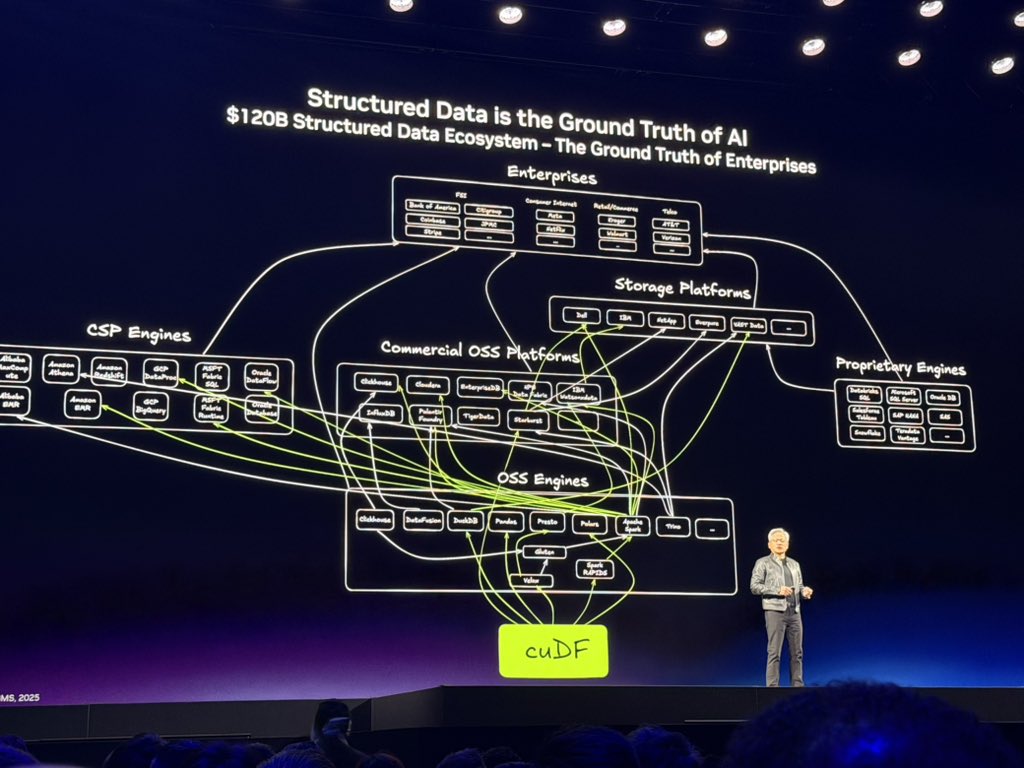
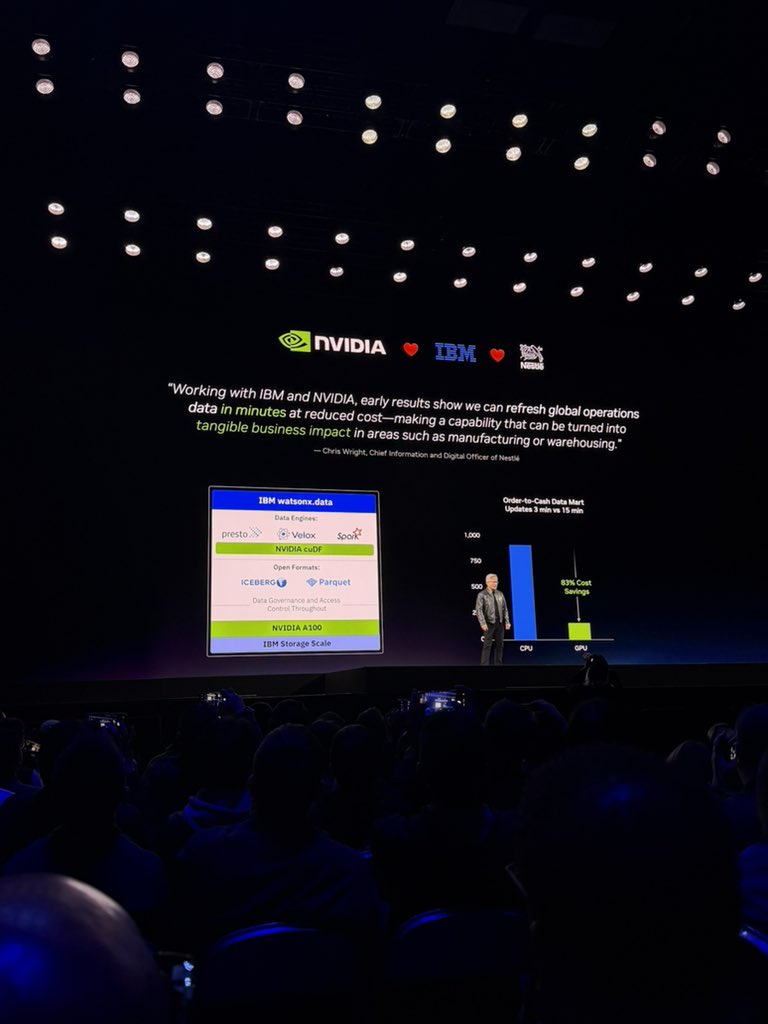
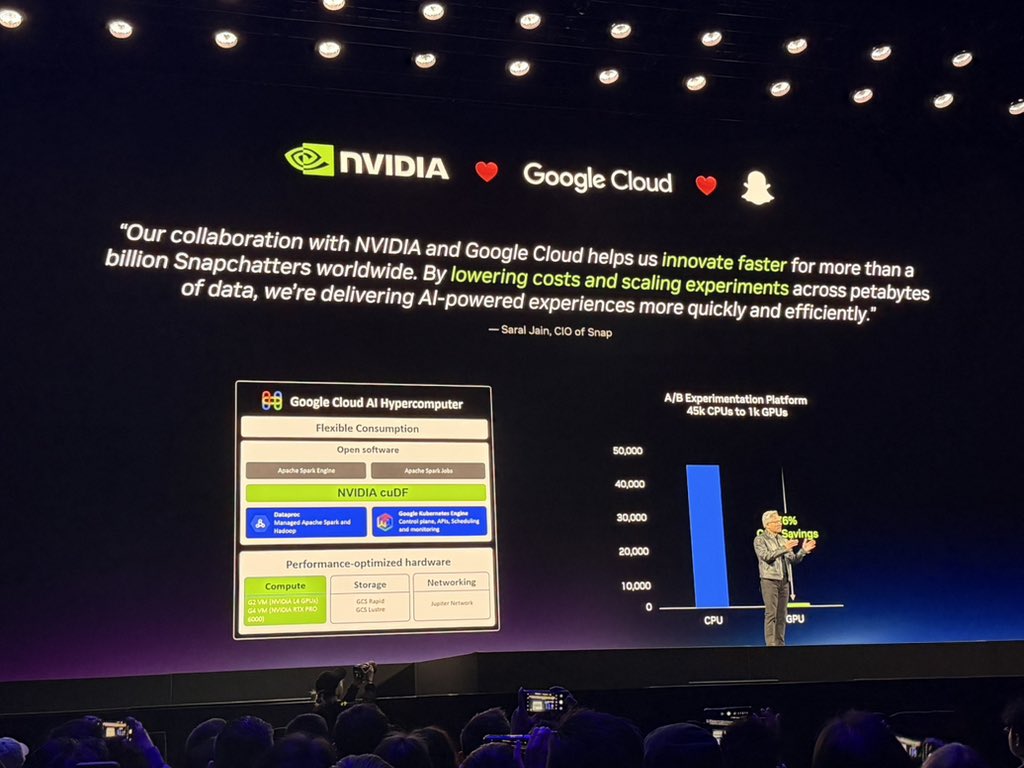
accelerated computing for the era of AI cuVS and cuDF examples and acceleration of data processing gives you benefit of soeed scale and cost. like 76% cost saving is massive.
Saiyam Pathak tweet mediaSaiyam Pathak tweet media
Saiyam Pathak tweet media
English
2
3
14
963
kubesimplify
kubesimplify@kubesimplify·
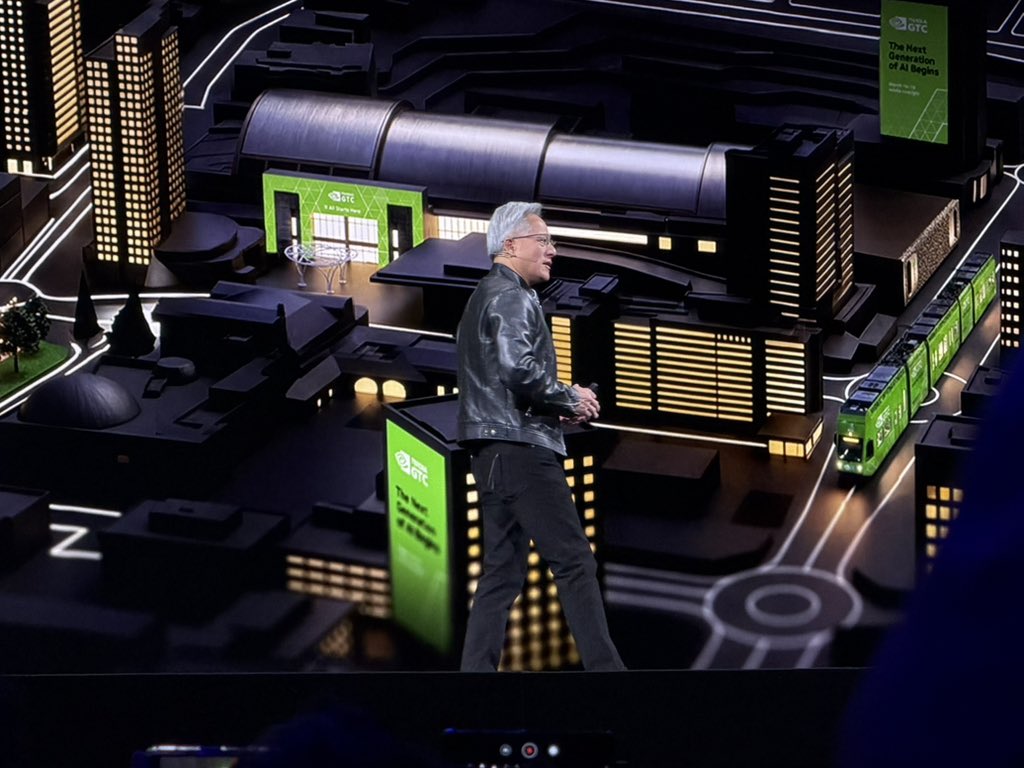
Running AI agents locally shouldn’t take hours of setup. ClawSpark makes it possible to spin up a fully private AI assistant on your own hardware with a single command. It automatically: • Detects your hardware (DGX, Jetson, RTX,etc) • Picks the right model using hardware-aware selection • Installs OpenClaw + Ollama • Enables local voice with Whisper • Deploys a chat UI and metrics dashboard No cloud APIs. No subscriptions. Your data stays on your machine. If you're attending NVIDIA GTC, stop by the Vcluster booth and meet Saiyam Pathak, he can spin up a quick demo of ClawSpark running live on DGX Spark. Worth checking out if you're exploring local AI agents, self-hosted LLMs, or edge AI deployments. #nvidia #gtc #2026 #dgx #conference
kubesimplify tweet media
English
0
0
5
186
kubesimplify
kubesimplify@kubesimplify·
Running AI agents locally shouldn’t take hours of setup. ClawSpark makes it possible to spin up a fully private AI assistant on your own hardware with a single command. It automatically: • Detects your hardware (DGX, Jetson, RTX,etc) • Picks the right model using hardware-aware selection • Installs OpenClaw + Ollama • Enables local voice with Whisper • Deploys a chat UI and metrics dashboard No cloud APIs. No subscriptions. Your data stays on your machine. If you're attending NVIDIA GTC, stop by the Vcluster booth and meet Saiyam Pathak, he can spin up a quick demo of ClawSpark running live on DGX Spark. Worth checking out if you're exploring local AI agents, self-hosted LLMs, or edge AI deployments. #nvidia #gtc #2026 #dgx #conference
kubesimplify tweet media
English
0
1
4
169
kubesimplify
kubesimplify@kubesimplify·
Kubesimplify is excited to be at CLOUDxAI tomorrow. Say hi to Prianshu Mukherjee if you are looking to collaborate with us or want to learn more about Kubesimplify.
English
2
1
4
226