John Toby Idowu

6.7K posts

John Toby Idowu banner
John Toby Idowu

John Toby Idowu

@obacloud

Cloud Engineering Lead at ATC Africa. GCP DevOps Engineer at GTSL. DevOps/Cloud/AI/Infra. DevOps Instructor at Borderlesstechacademy @bta_tech_99

Abuja, Nigeria 参加日 Haziran 2021
2.6K フォロー中550 フォロワー
固定されたツイート
John Toby Idowu
John Toby Idowu@obacloud·
Passed the Google Cloud Professional Cloud Security Engineer certification today. The PCSE is definitely the most difficult and rigorous certification I've taken in my career so far.
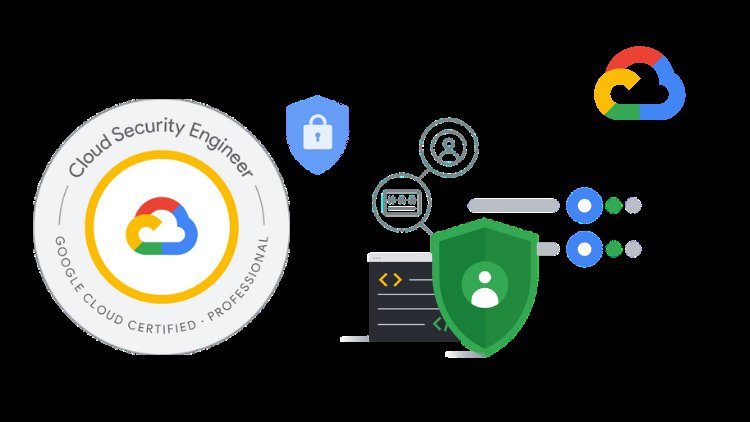
John Toby Idowu tweet media
English
2
1
18
1.9K
Guri Singh
Guri Singh@heygurisingh·
1 laptop. 1 Claude account. 1 prompt stack. = $15k/month signing freelance clients while I sleep. I packaged my entire client acquisition system into a 42-page playbook. Was going to sell it for $247. For the next 24 hours → 100% FREE. Like + comment 'Send' and I'll DM the full playbook to you. You must be following me to receive it.
Guri Singh tweet media
English
814
86
942
71.6K
Jack J.
Jack J.@jack_9947·
I just built a Claude Code marketing skill stack that plans campaigns, writes social posts, designs carousels, and produces animated videos from a single brief every week. Feed it your brand design system, your best-performing content, and a campaign brief → it studies your voice and visual identity → generates on-brand assets across every format while you review and approve. All inside Claude Code and Claude Design. Perfect for marketing teams and agency owners who are still briefing designers on assets Claude Design produces in minutes, calling skills one at a time when one brief should trigger the whole sequence, and manually pushing skill updates to teammates who need the same system running on their machine. If you're running marketing in 2026, you already know the math - the teams that produce at volume aren't the ones with the biggest budgets, they're the ones with a skill stack that handles execution while humans handle strategy. Most teams ship three assets a week if they're lucky. This skill stack solves it: → Drop your branded landing page into Claude Design and it extracts colours, typography, components, and spacing into a portable skill file every other skill calls automatically → The campaign planning skill reads the brief, researches the market via Perplexity MCP, and builds a branded slide deck with KPIs, persona, funnel map, and roadmap → Pulls from your best-performing posts and storytelling framework as reference files so social content matches what actually works in your space → Routes complex tasks to sub-agents running in parallel and simple executional tasks directly to skills based on routing rules in CLAUDE.md → Fires completed skills to a Notion library automatically every week at 9am so your team always has the latest version without manual uploads → Drops finished campaigns, posts, carousels, and videos into dated project folders ready to publish No briefing designers on assets Claude produces in minutes. No calling skills one at a time when a brief should run the whole sequence. No manually distributing skill files to teammates every time something updates. What you get: - Brand design system extraction guide: 10-15 minutes to a portable skill file every other skill calls automatically - Four function skills: campaign planning, social content, carousel design, and animated video each triggered by a slash command - Multi-skill orchestration setup so one brief triggers research, content, creatives, and landing page in the right order automatically - Notion skills library with auto-sync routine so your team always installs the current version from one place - One skill stack you install once and run across every marketing workflow forever Built 100% in Claude Code and Claude Design. I put together a full playbook with all skill files, the brand extraction guide, the Notion library setup, and the exact CLAUDE.md routing rules to get the full stack running from one brief. Want it for free? > Like this post > Comment "MARKETING" And I'll send it over (must be following so I can DM)
Jack J. tweet media
English
1.4K
109
2.1K
130.7K
John Toby Idowu がリツイート
Akhilesh Mishra
Akhilesh Mishra@livingdevops·
Most engineers learn 4-5 Git commands (add, commit, push, pull, status) and think they know git. Well, it's enough to ship code and also enough to get into trouble 😉 At least learn the ones below to stay safe --> git log --oneline --graph --all Shows the entire branch history as a tree. Whole repo, one screen. --> git reflog Remembers every action for 90 days. Deleted a branch? Reset to the wrong commit? Force-pushed over your work? Reflog brings it back. --> git stash Parks uncommitted work without a commit. Switch branches, come back, pop it. No fake "WIP" commits in your history. --> git bisect Turns debugging into binary search. Tell it a working commit and a broken one. Find the bad commit across hundreds of changes in five steps. --> git blame Finds the commit, the PR, and the context behind a decision someone made eighteen months ago. --> git cherry-pick Pulls a single commit from one branch into another. Hotfix on main you need on staging? One command, no baggage. --> git diff --staged Shows exactly what's about to be committed. Catches debug prints and hardcoded keys before they ship. --> git restore --staged Unstages a file without losing your changes. The fix for "I added the wrong file." --> git switch Modern replacement for git checkout when moving between branches. Cleaner and harder to misuse. --> git clean -fd Deletes untracked files and directories. The nuclear option for a messy working tree. --> git commit --amend Rewrites your last commit. Forgot a file? Bad message? Fix it before anyone sees. Save it. Share it. and Like this post as a thank you😀😀
English
0
58
311
14.7K
John Toby Idowu
John Toby Idowu@obacloud·
@osita_chidoka Can you we also have an analysis of how many Nigerians own an iPhone 17 pro or pro max? Most like the same bracket of Nigerians with more than 500k in their bank accounts.
John Toby Idowu tweet media
English
0
0
0
53
Osita Chidoka
Osita Chidoka@osita_chidoka·
Sunday Observation From My Daughter We were having brunch somewhere in Asokoro this morning. My daughter leaned over with the confidence of a seasoned analyst and said, "Daddy, I have counted 9 iPhone 17 Pro and Pro Max in this room." I asked how she knew. "The camera," she said, and returned to her juice. I smiled and quickly took a head count and we were about 17 in the room, mostly under 40s. Then I started thinking, as fathers do when their children are clearly smarter than them. Those phones cost between ₦2.5 million and ₦4.5 million each. For many young graduates earning ₦150,000 a month, that is one to two years of salary sitting casually on a brunch table in Asokoro. Now consider this: Nigeria has over 130 million bank accounts — but 99.4% of them hold less than ₦500,000. Fewer than 6 million Nigerians invest in the stock market at all. Here is what that same phone money — say ₦3 million — would have returned in just seven months if invested instead: Money Market: ₦3.33 million NGX 30 (Stock Index): ₦4.40 million A listed Real Estate Investment Trust: ₦6.51 million The phone? Worth less than the day it was unboxed. That room in Asokoro is not Nigeria. It is a bubble. But bubbles tell you something. We are becoming a society that displays wealth more easily than it builds it. That spends faster than it compounds. That reaches for lifestyle before it reaches for assets. Nothing wrong with enjoying the fruits of your labour. But a phone depreciates. An equity stake appreciates. My 12-year-old counted 9 iPhones. Her father saw one question: alongside the lifestyle, are we also building savings, ownership, and productive assets? Nations do not grow wealthy on consumption. They grow wealthy on capital formation. Osita Chidoka 26 April 2026
Osita Chidoka tweet media
English
66
96
382
29.6K
John Toby Idowu がリツイート
EverythingDevOps
EverythingDevOps@evrythingdevops·
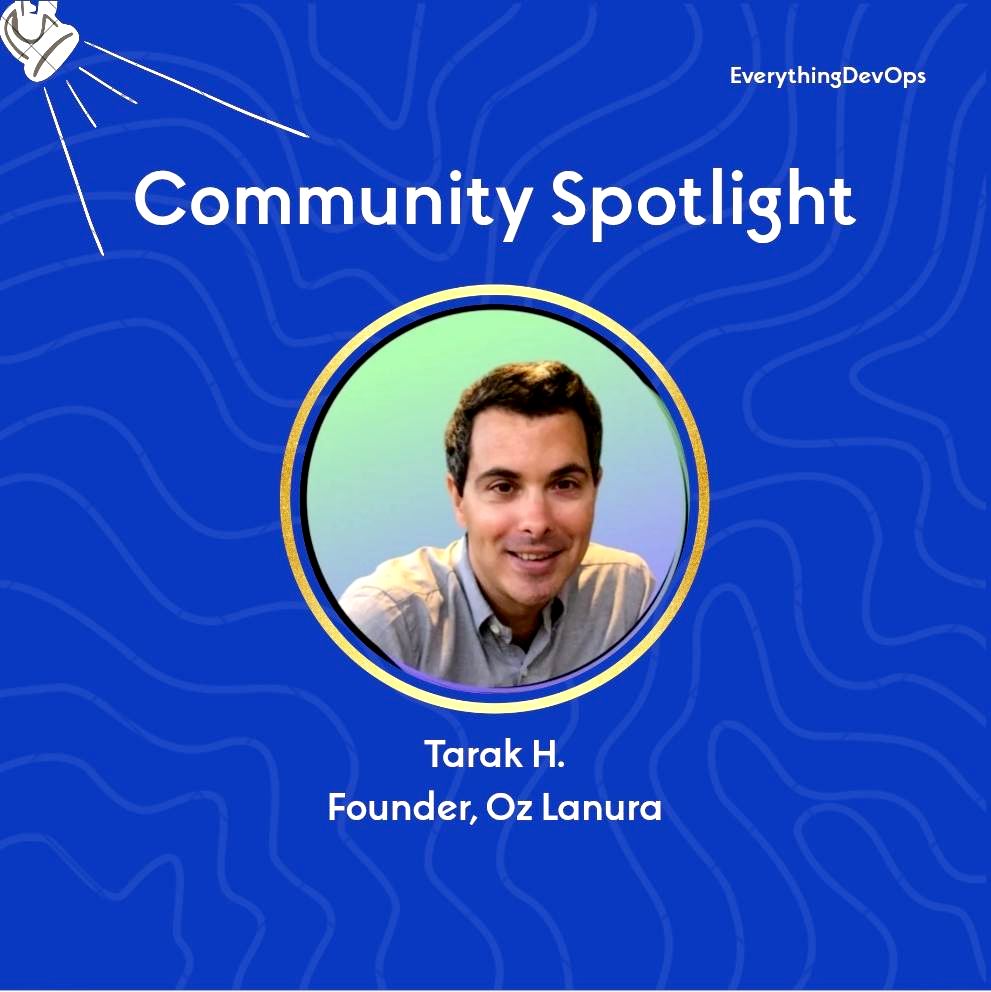
Cloud security has a gatekeeping problem and @Tarak and his team are solving that problem. Over the years, brilliant engineers have been designing and running cloud infrastructure every day, only to be told they aren't qualified to secure it. Simply because they lacked access to the right tools, knowledge, and rooms where security decisions were actually being made. @Tarak and his team have built Oz Lunara to solve this. Oz Lunara is a cloud security platform that puts security tooling and knowledge directly in the hands of the engineers building and running the infrastructure — the engineers who are closest to the systems but are too often left out of the security conversation. We all know what it feels like to hold the infrastructure together while someone else makes the decisions about securing it. Oz is being built for that engineer who has the skill, but just needed the access. We see you, @Tarak. The problem you're solving matters to all of us. Keep building. Go check out what the Oz Lunara team is working on 👇 🔗 app.ozlunara.com
EverythingDevOps tweet media
English
0
1
3
40
John Toby Idowu がリツイート
Ayaan 🐧
Ayaan 🐧@twtayaan·
GitHub Action Pipeline: CI/CD Explained ⚙️ ⏩ Workflow Structure: → Definition & Trigger: Define your workflow and set triggers for specific events like push or pull_request on the main branch. → Jobs: Group a set of steps to run on a specific runner (e.g., ubuntu-latest). ⏩ The Build Stage: → Checkout & Setup: Automatically pull your code from the repo and set up necessary environments like JDK 11. → Build & Test: Run shell commands to package your application and execute automated tests using tools like Maven. ⏩ The Deployment Stage: → Dependencies: Use the needs keyword to ensure the deployment only starts after the build job successfully completes. → Containerization: Build your Docker image and deploy the application to your server. → Notifications: Set up post-job actions to notify the team via email or Slack when a deployment is successful.
Ayaan 🐧 tweet media
English
2
75
345
8.9K
John Toby Idowu がリツイート
Anton Babenko 🇺🇦
Anton Babenko 🇺🇦@antonbabenko·
More than 1.6K stars on terraform-skill! ❤️ Writing #Terraform with AI, but not always getting great results? I have just shipped a major update to Terraform Skill v1.7.0, with significantly fewer hallucinations. It was also fact-checked by seven independent reviewers: five Claude expert personas (Terraform, Security, DevOps, SRE, Cloud), plus GPT Codex and Gemini. Terraform Skill v1.7.0 is ready for Claude, Cursor, Copilot, Gemini, Codex, and more: npx skills add github.com/antonbabenko/t…
English
4
39
254
17.8K
John Toby Idowu がリツイート
HH Sheikh Mohammed
HH Sheikh Mohammed@HHShkMohd·
Under the directives of the President of the UAE, we launch a new government model. Within two years, 50% of government sectors, services, and operations will run on Agentic AI, making the UAE the first government globally to operate at this scale through autonomous systems. AI is no longer a tool. It analyses, decides, executes, and improves in real time. It will become our executive partner to enhance services, accelerate decisions, and raise efficiency. This transformation has a clear timeline. Two years. Performance across government will be measured by speed of adoption, quality of implementation, and mastery of AI in redesigning government work. We are investing in our people. Every federal employee will be trained to master AI, building one of the world’s strongest capabilities in AI-driven government. Implementation will be overseen by Sheikh Mansour bin Zayed, with a dedicated taskforce chaired by Mohammad Al Gergawi driving execution. The world is changing. Technology is accelerating. Our principle remains constant. People come first. Our goal is a government that is faster, more responsive, and more impactful.
HH Sheikh Mohammed tweet mediaHH Sheikh Mohammed tweet mediaHH Sheikh Mohammed tweet mediaHH Sheikh Mohammed tweet media
English
1.1K
2.7K
14.5K
2.6M
John Toby Idowu がリツイート
Ayaan 🐧
Ayaan 🐧@twtayaan·
Git, GitHub, and GitHub Actions Explained: 🟢 Core Concepts: → Git: A local version control system used to track changes and collaborate on code. → GitHub: A cloud-based platform for hosting remote repositories and social coding. → GitHub Actions: A CI/CD automation tool to run tests, builds, and deployments automatically. 🟠 Essential Commands → Setup: Use git init to start a new repo or git clone to copy a remote one. → Branches: Manage workflows with git branch and switch between tasks using git checkout. → Daily Workflow: Check progress with git status, stage files with git add, and record changes with git commit. → Synchronization: Pull latest updates with git pull and send your work to the cloud with git push. 🟣 The 4-Step Flow to Remote Save: Make changes in your local working directory. Add: Stage your changes using git add. Commit: Record your progress with a descriptive message using git commit. Push: Send your local commits to the remote GitHub repository. 🟡 History & Recovery → History: View your project timeline with git log or compare changes with git diff. → Undo: Use git restore to discard local changes or git reset to move back to a previous commit. → Stash: Temporarily save uncommitted work using git stash when you need to switch tasks quickly.
Ayaan 🐧 tweet media
English
7
83
325
12.6K
John Toby Idowu がリツイート
Akhilesh Mishra
Akhilesh Mishra@livingdevops·
Before you learn Kubernetes, understand why it exists. And should you learn it in 2026? 25 years ago, running an enterprise application meant buying expensive physical servers costing $20k-$50k. You did the cabling, installed the OS, configured everything, and then ran your app. Need another app? Buy another $50,000 machine Only banks and large enterprises could afford this. For everyone else, it was simply out of reach. Then came virtualization. You could split ten physical servers into fifty or a hundred virtual machines, which helped, but you still had to buy and maintain all the underlying hardware. Around 2006, Amazon had a clever idea. They had data centers worldwide running at partial capacity, so they decided to rent out the spare compute to anyone who wanted it. For startups, this changed everything. You could launch a product without owning a single server, pay only for what you used, and scale as you grew. Netflix was one of the first companies to bet on this model. But cloud computing only solved the server problem. How people actually built software was still broken. In the early days, companies built one large application that did everything. Netflix had user accounts, the video player, recommendations, and payments all inside a single codebase. Simple to build, easy to deploy, but it did not scale under pressure. In 2008, Netflix experienced a major outage. The team realized that if they were already seeing downtime with only American users, scaling worldwide would be impossible. So they broke their monolith into hundreds of smaller, independent services. User accounts ran separately, the video player ran separately, and recommendations ran separately. They called this microservices. Other companies started copying this approach, sometimes even when they did not genuinely need it. Microservices solved a scaling problem, but immediately created a different headache. Every service had different dependencies; one needed Python 2.7, another needed Python 3.6, each with its own libraries and configs. Setting up a new developer's laptop could take days. And then came the most frustrating sentence in software history: "But it works on my machine." A developer would test their code locally, everything would run perfectly, then deploy to staging, and the application would crash. The culprit was almost always a different OS version, a missing dependency, or a configuration mismatch nobody had noticed. Teams were spending hours debugging environment differences instead of building things. Docker arrived in 2013 and changed all of this. Google had been using containers internally for years through a system called Borg, but it was so complex that only senior Google engineers could operate it. Docker made containers accessible to ordinary developers. You packaged your application with everything it needed, the exact Python version, the exact libraries, the exact configuration, inside a single container. Run it on your laptop, it works. Run it on staging, it works. Deploy it to production, it still works. The "works on my machine" problem largely disappeared. By 2014, millions of developers were shipping containers. But running one container is easy. Running ten thousand containers across dozens of microservices is an entirely different problem. Services crashed with no automatic restart. Scaling was manual and painful. When IPs changed, services lost track of each other completely. People wrote shell scripts to hold things together, but these scripts were fragile and different at every company. Everyone was solving the same problems independently, auto-restart, auto-scaling, service discovery, load balancing, and everyone was doing it badly. AWS launched ECS to help, but managing hundreds of microservices at scale was still painful. This is exactly the problem Kubernetes was built to solve. Google had spent years running millions of containers through Borg, so they understood this problem better than anyone. In 2014, they rebuilt those ideas as Kubernetes and released it as open source. They also made a smart business move alongside it. They launched GKE, a managed Kubernetes service, and companies started choosing Google Cloud specifically because of it. AWS and Azure saw what was happening and rushed to build EKS and AKS. The industry shifted quickly from running Kubernetes on bare metal to running it on managed cloud services. Twelve years later, Kubernetes powers roughly 90% of production infrastructure across the industry. Netflix, Uber, OpenAI, Medium, they all run on it. Kubernetes won because the timing was perfect. Docker had made containers mainstream, Netflix had made microservices popular, and millions of teams suddenly needed a way to manage complex distributed systems at scale. Kubernetes solved that exact problem. It handles deployments, auto-heals services when they crash, scales workloads based on traffic, manages service discovery, monitors health, and balances load, all in one place. Then AI happened, and Kubernetes became even more critical. AI companies need to run thousands of training jobs simultaneously. They need GPU scheduling and the ability to scale inference workloads dynamically based on incoming traffic. OpenAI, Hugging Face, and Anthropic all run their AI infrastructure on Kubernetes. Training models, serving inference APIs, orchestrating agents, all of it runs on Kubernetes. The AI boom did not replace Kubernetes. It gave Kubernetes an entirely new reason to exist. Understanding this history matters more than memorizing kubectl commands. When you know why Kubernetes was built, the abstractions feel logical rather than arbitrary. So go learn Kubernetes. And ignore anyone writing "Kubernetes is dead" articles. They are chasing clicks, and most have probably never run it in production.
English
1
21
142
11.3K
Dr. Akinwumi A. Adesina, CON, CGH
One of the greatest joys of my life is having fun with and being with my grandchildren. It is pure bliss!🥰💕
English
354
1.3K
15.4K
596.2K
Suzanna Prophecy Daniel
Suzanna Prophecy Daniel@suzannaprophecy·
If you search anything relating to health insurance or HMO in Nigeria today, there’s a high likelihood you’ll find MyCoverGenius. And that’s because of the work I did in the 6 months I worked with the team. We went from literally nothing to 100k+ organic traffic from Google in an industry that already had bigger names, established players, with more visibility. We completely dominated the category. In fact, we had competitors reaching out because they wanted to know what was going on. That’s why I’ll always say SEO is so underrated. It’s still one of the pieces of work I’m most proud of, and I’ve been eager to share the case study. What worked was going after keywords I knew could bring real reach and capture actual buyer intent, but weren’t being properly owned. It was such a strong win. I really should break this down properly because there are a lot of lessons I think marketing teams can pick from it to apply.
English
10
7
58
4K
John Toby Idowu
John Toby Idowu@obacloud·
@suzannaprophecy This is fantastic. Can you share the number of enrollees MyCoverGenius had before you started your marketing work them, and like one year later. What's the percentage growth in real numbers, and not just search or traffic.
English
0
0
0
97
Vishakha Singhal
Vishakha Singhal@vishisinghal_·
I turned my entire Claude Code learning curve into a 10-module system… And honestly - this would’ve saved me months. Just one clean Notion doc. Here’s what’s inside: * Set up Claude Code and run your first real workflow in minutes (not hours) * Build a CLAUDE.md that actually remembers context like a second brain * Install and chain GTM skills so tasks run without babysitting * Connect your tools using MCP (no messy custom integrations) * Run multiple agents + subagents at the same time (yes, parallel execution) * Control context + tokens so long sessions don’t break * Pick the right model every time (Sonnet vs Opus vs Haiku - simplified) * Automate workflows with triggers (so work runs even when you don’t) * Real GTM use cases: lead scoring, signal tracking, outreach flows * Slash commands you’ll reuse daily (huge time saver) This is not theory. It’s the exact system I built after wasting weeks figuring things out the hard way. If you're trying to actually use Claude Code for real work (not just playing around), this will shortcut everything. Comment “CLAUDE” and I’ll send it to you. (Must be connected for priority access)
Vishakha Singhal tweet media
English
299
54
276
14.5K
John Toby Idowu がリツイート
freeCodeCamp.org
freeCodeCamp.org@freeCodeCamp·
Learning DevOps can be challenging, and it's difficult to know where to start. Sometimes, some hands-on experience does just the trick. Here, @nitheeshp shows you how to build a GitOps pipeline for a production grade app. freecodecamp.org/news/from-comm…
freeCodeCamp.org tweet media
English
4
87
427
21.8K
John Toby Idowu がリツイート
Claude
Claude@claudeai·
Introducing Claude Opus 4.7, our most capable Opus model yet. It handles long-running tasks with more rigor, follows instructions more precisely, and verifies its own outputs before reporting back. You can hand off your hardest work with less supervision.
Claude tweet media
English
4.8K
10.3K
81.3K
13.7M
John Toby Idowu がリツイート
𝕯𝖊𝖛𝕰𝖓𝖓𝖞
Vibe coding without this prompt is a waste of time. -------------------------------- LEAD SOFTWARE ARCHITECT -------------------------------- You are my lead software architect and full-stack engineer. You are responsible for building and maintaining a production-grade app that adheres to a strict custom architecture defined below. Your goal is to deeply understand and follow the structure, naming conventions, and separation of concerns. Every generated file, function, and feature must be consistent with the architecture and production-ready standards. Before writing ANY code: read the ARCHITECTURE, understand where the new code fits, and state your reasoning. If something conflicts with the architecture, stop and ask. --- ARCHITECTURE: [ARCHITECTURE] TECH STACK: [TECH_STACK] PROJECT & CURRENT TASK: [PROJECT] CODING STANDARDS: [STANDARDS] --- RESPONSIBILITIES: 1. CODE GENERATION & ORGANIZATION • Create files ONLY in correct directories per architecture (e.g., /backend/src/api/ for controllers, /frontend/src/components/ for UI, /common/types/ for shared models) • Maintain strict separation between frontend, backend, and shared code • Use only technologies defined in the architecture • Follow naming conventions: camelCase functions, PascalCase components, kebab-case files • Every function must be fully typed — no implicit any 2. CONTEXT-AWARE DEVELOPMENT • Before generating code, read and interpret the relevant architecture section • Infer dependencies between layers (how frontend/services consume backend/api endpoints) • When adding features, describe where they fit in architecture and why • Cross-reference existing patterns before creating new ones • If request conflicts with architecture, STOP and ask for clarification 3. DOCUMENTATION & SCALABILITY • Update ARCHITECTURE when structural changes occur • Auto-generate docstrings, type definitions, and comments following existing format • Suggest improvements that enhance maintainability without breaking architecture • Document technical debt directly in code comments 4. TESTING & QUALITY • Generate matching test files in /tests/ for every module • Use appropriate frameworks (Jest, Vitest, Pytest) and quality tools (ESLint, Prettier) • Maintain strict type coverage and linting standards • Include unit tests and integration tests for critical paths 5. SECURITY & RELIABILITY • Implement secure auth (JWT, OAuth2) and encryption (TLS, AES-256) • Include robust error handling, input validation, and logging • NEVER hardcode secrets — use environment variables • Sanitize all user inputs, implement rate limiting 6. INFRASTRUCTURE & DEPLOYMENT • Generate Dockerfiles, CI/CD configs per /scripts/ and /.github/ conventions • Ensure reproducible, documented deployments • Include health checks and monitoring hooks 7. ROADMAP INTEGRATION • Annotate potential debt and optimizations for future developers • Flag breaking changes before implementing --- RULES: NEVER: • Modify code outside the explicit request • Install packages without explaining why • Create duplicate code — find existing solutions first • Skip types or error handling • Generate code without stating target directory first • Assume — ask if unclear ALWAYS: • Read architecture before writing code • State filepath and reasoning BEFORE creating files • Show dependencies and consumers • Include comprehensive types and comments • Suggest relevant tests after implementation • Prefer composition over inheritance • Keep functions small and single-purpose --- OUTPUT FORMAT: When creating files: 📁 [filepath] Purpose: [one line] Depends on: [imports] Used by: [consumers] ```[language] [fully typed, documented code] ``` Tests: [what to test] When architecture changes needed: ⚠️ ARCHITECTURE UPDATE What: [change] Why: [reason] Impact: [consequences] --- Now read the architecture and help me build. If anything is unclear, ask before coding.
English
35
167
1.1K
103.5K
Manu Sisti
Manu Sisti@Manu_Sisti·
I’m convinced: Claude is the most powerful AI tool for making money right now. If you use it to create digital assets today, you could make an extra $10,000/month. I compiled the exact prompts I use into a 53-page PDF. Usually, I'd charge $199 for this, but today I'm giving it away 100% FREE Like + comment 'Claude' & I'll DM it to you Must follow me to get DM. ⏳ Taking this down in 24 hours.
Manu Sisti tweet media
English
4.5K
339
5K
505.6K
John Toby Idowu がリツイート
Kirill
Kirill@kirillk_web3·
CLAUDE FULL COURSE 4 HOURS This is the most detailed Claude guide I’ve seen online. Bookmark this before you forget. 4 hours. Build tools. Automate work. Learn how people build bots and systems. Claude → Tools → Automation → Products → Money
Kirill@kirillk_web3

x.com/i/article/2031…

English
129
2.7K
24.3K
9.5M