固定されたツイート
Nick Manteris
205 posts

Nick Manteris
@thecostofwork
Why a regular paycheck used to cover a regular life and doesn't anymore. Restaurant server. Reader. Writing about what the economic debate keeps leaving out.
Texas 参加日 Nisan 2026
53 フォロー中26 フォロワー

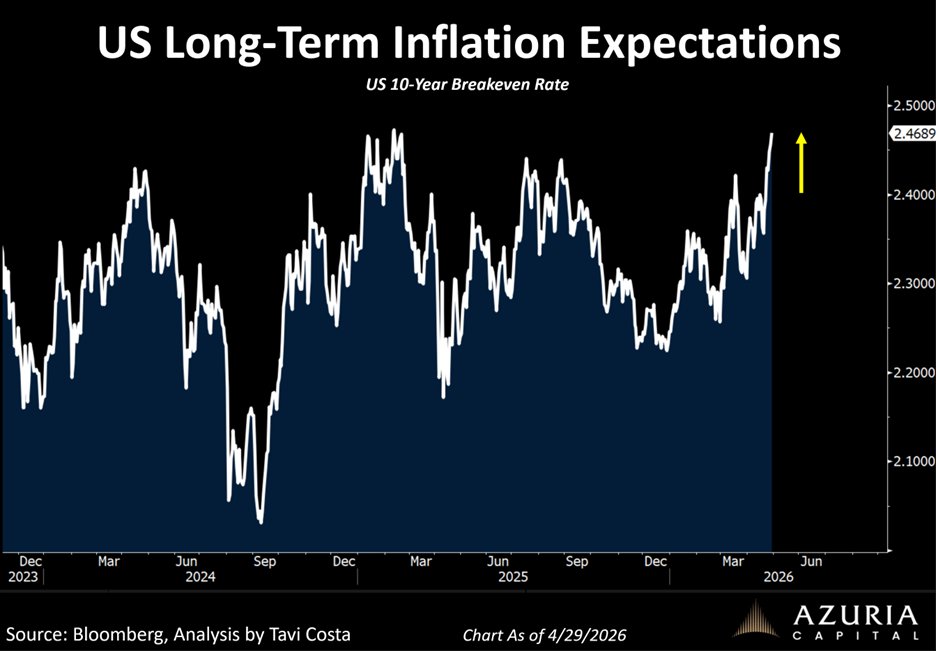
@TaviCosta The choice between crushing the system and tolerating inflation has been on the table since 1913. The institution has chosen the same option every time. That's not a loss of independence. It's the design working as intended.
English

The Powell saga is a distraction.
The Fed’s independence has been gone for a while.
To be fair, what did people expect?
Inflation is still elevated while debt service is already at unsustainable levels.
You either crush the system with high rates, or you tolerate inflation and force rates lower.
This isn’t a debate. It’s math.
Meanwhile, in almost perfect timing:
Long term inflation expectations just jumped to two year highs today.
tavicosta.substack.com/p/the-end-of-f…

English

The list is right. The pattern underneath it is the part nobody pays attention to. Every item on that list is denominated in dollars. The dollars lost most of their purchasing power over the last 50 years. Wages rose. The dollar they're paid in bought less. That's why the list keeps growing and the fixes never hold.
English

I’m not sure how much longer Americans are going to handle rising prices… I can say with certainty that:
My gasoline bill has doubled
My electrical bill increased significantly
Rent still hasn’t come down/stabilized
Interest rates are still sky-high
Meat/groceries are unaffordable
Health insurance premiums rising again
Home prices are outrageous & rising
Car prices are still outrageous and rising
And the wild part is that nobody seems to be doing anything to fix a single problem…
English

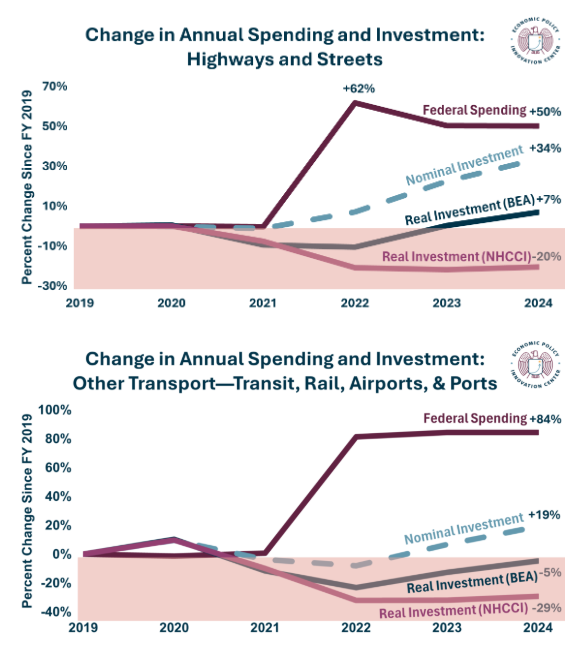
@scottlincicome Federal spending up 84%. Real investment down 29%. More money buying less road. This is what happens when the unit the spending is denominated in loses value faster than the appropriation grows.
The spending isn't the problem. The dollar is.
English

New research from EPIC finds the IIJA's "historic" increase in federal spending on infrastructure coincided with a decline in actual, inflation-adjusted investment in US roads, bridges, transit, etc:
epicforamerica.org/federal-budget…

English

Zoning is real. But London, Sydney, Toronto, Auckland, Amsterdam and Berlin all produced the same affordability collapse across the same period. Different zoning laws. Different city councils. Same monetary architecture. The pattern that appears in twenty countries isn't a local regulation problem.
English

Maybe it’s not that the younger generation gave up on the American Dream.
Maybe the Dream was made illegal by zoning boards, city councils, and state legislatures that prohibited small-lot starter homes.
Gallup@Gallup
The share of U.S. non-homeowners who expect to buy a home within five years has dropped to 25%, the lowest Gallup has measured in seven readings since it began asking the question in 2013.
English

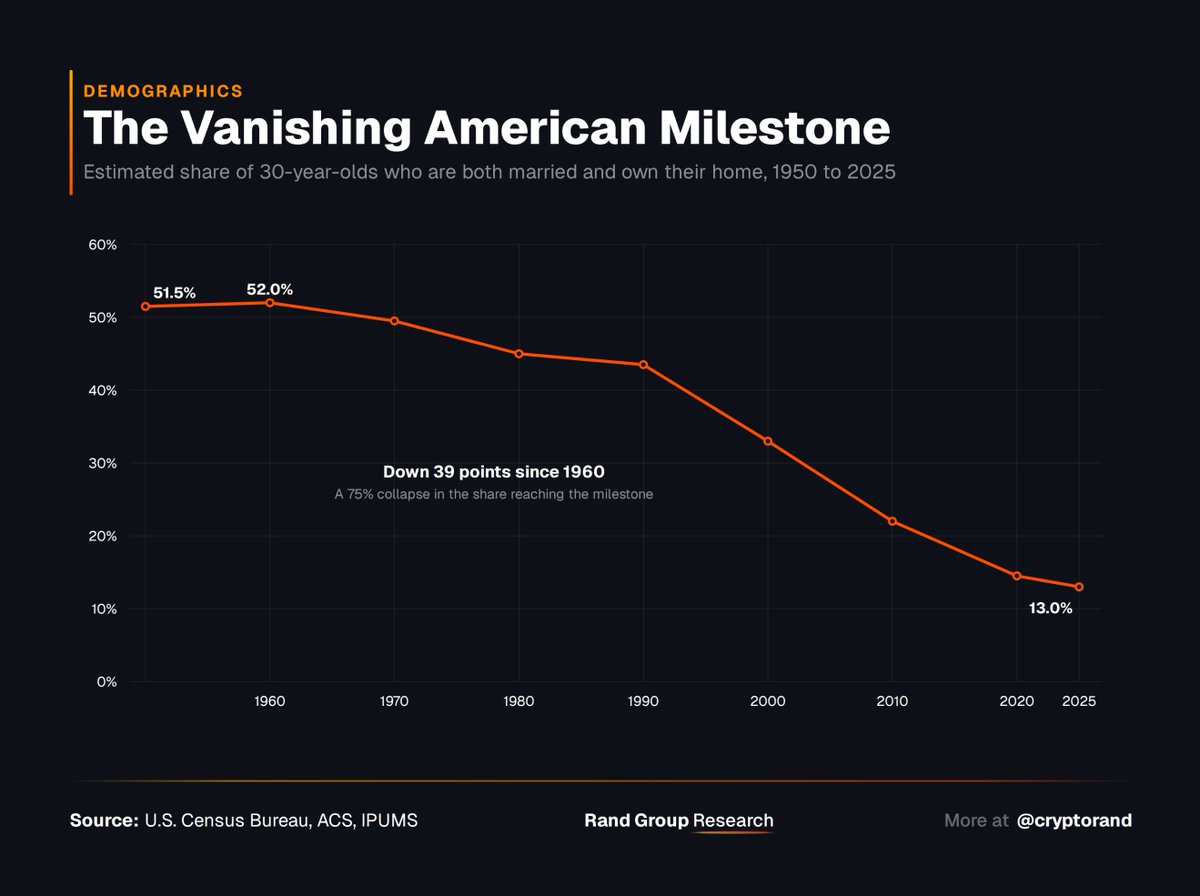
@cryptorand The milestone didn't vanish. It got repriced. In 1960 the median home cost 2.4 times median income. Today it costs over 5. The 30-year-old didn't change. The cost of being 30 did.
English

@Fxhedgers The $827 billion assumes the fix is cuts or taxes. It doesn't account for the third option, which is the one they've always chosen: create the money, let the purchasing power loss pay for it, and send no invoice. That's not a future risk. It's been running since 1971.
English

THE NATIONAL DEBT FIX WOULD COST $827 BILLION—ROUGHLY WHAT AMERICA SPENDS ON ITS ENTIRE MILITARY
The U.S. would need to cut spending or raise taxes by $827 billion, roughly what it spends on defense, just to keep the national debt burden from doubling by 2054, according to a new report.
A report published Wednesday from think tank Cato Institute finds that to maintain the 98% debt-to-GDP ratio figure that the U.S. hit in 2024, the U.S. would have to enact spending cuts or increase taxes equal to 2.87% of GDP, or about $827 billion. That’s close to the U.S.’s defense budget requests, which totaled $892 billion for fiscal year 2026, and $850 billion in fiscal year 2025.
Full article:
msn.com/en-us/money/ma…

English

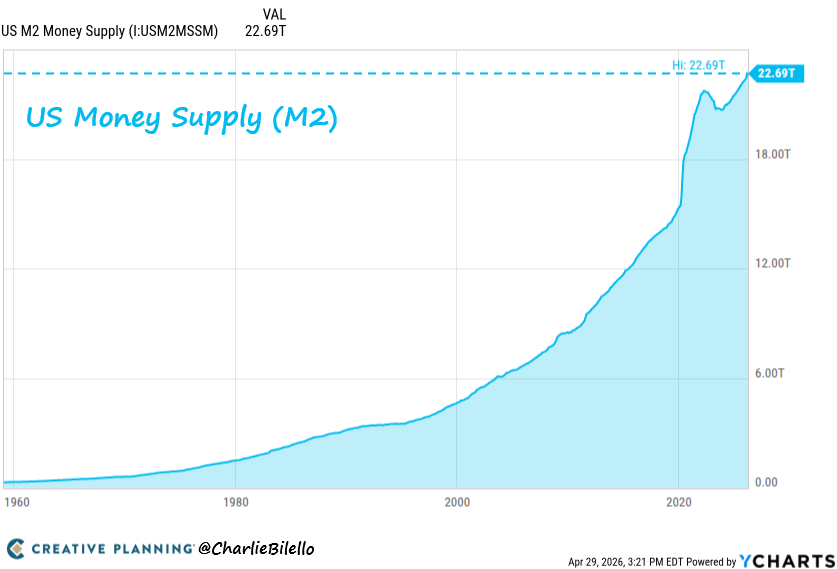
@charliebilello The chart looks the same under every Fed chair since 1971. The money supply expanded under all of them. Not because they were bad at the job. Because the job is expansion. Supply shocks made it worse. They didn't make it happen.
English

The Fed expanded the money supply by nearly $9 trillion under Powell.
Inflation has averaged >4% per year over the past 6 years.
Powell's explanation? It was nearly all due to rolling “supply shocks" over which the Fed has no control.
The truth: this inflation was made in Washington as it always is - from too much government borrowing/spending and too much government creation of money.

English

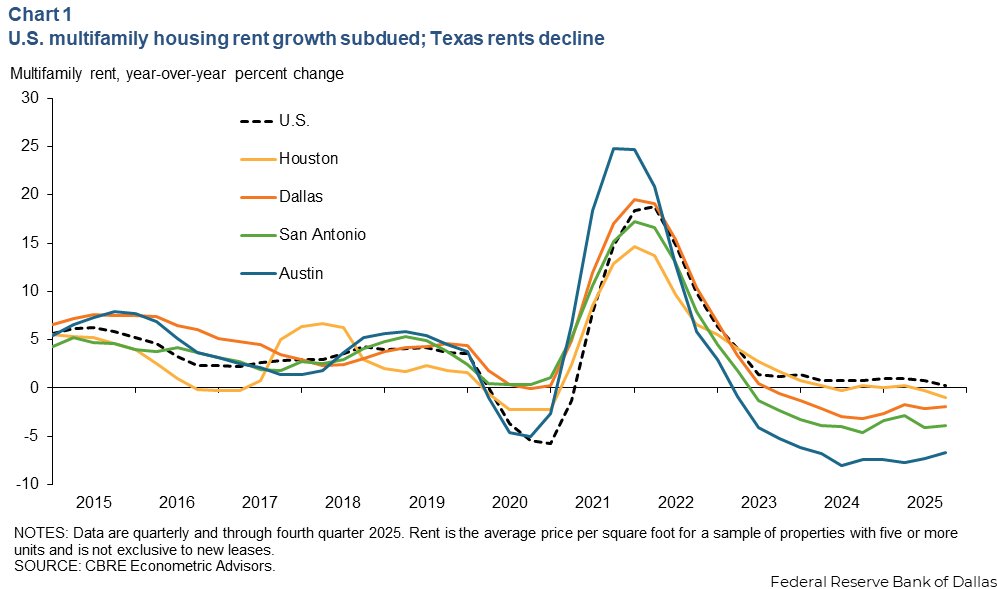
@scottlincicome Austin rents spiked 25% in 2021-2022 during the cheap-money building boom. Now they're negative. The same cities that had the most credit-fueled construction are the ones where rents are falling. Supply matters. What funded the supply matters more.
English

"Rents have declined across Texas due to excess rental property supply (Chart 1). The sharpest rent drops in the state have been in Austin, San Antonio and Dallas." dallasfed.org/research/swe/2…

English
Nick Manteris がリツイート

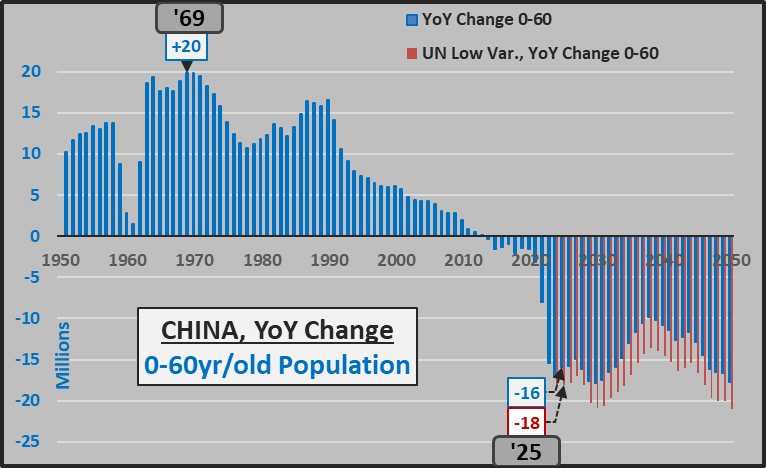
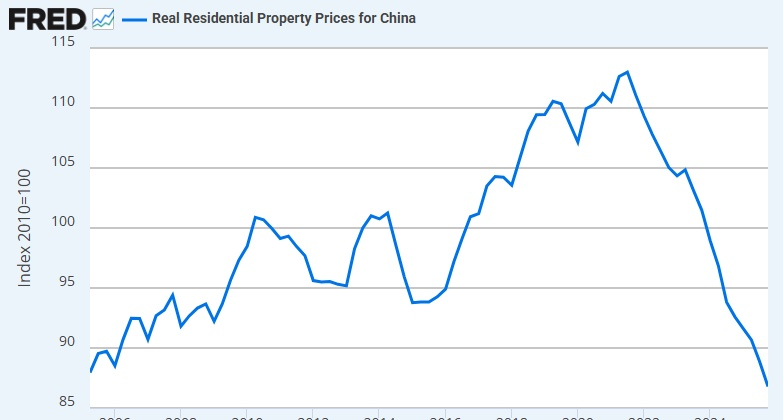
Credit expansion inflated the asset. Demographic collapse removes the buyers. Both forces run in the same direction now. The families who concentrated 70% of their wealth in real estate during the boom are holding an asset with a shrinking pool of future buyers. The pattern isn't Chinese. It's monetary.
English

@jacksonhinklle tell me when this price decline stops based on massive oversupply and collapsing potential inhabitants?

English

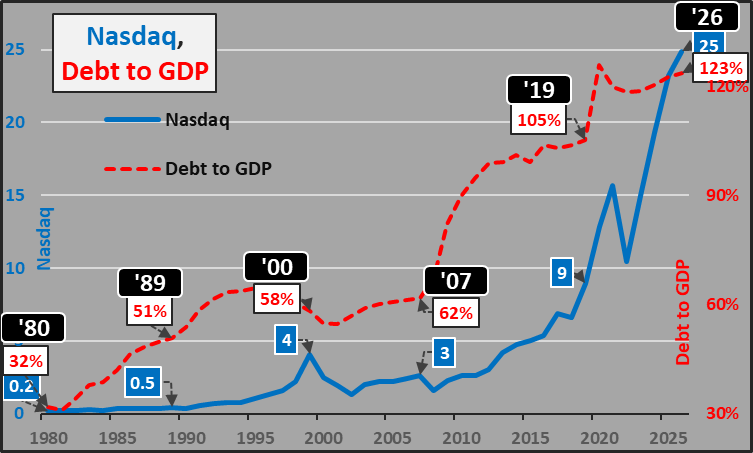
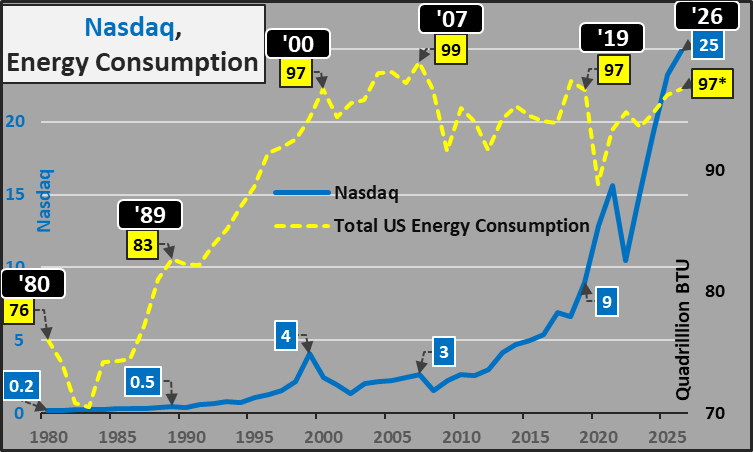
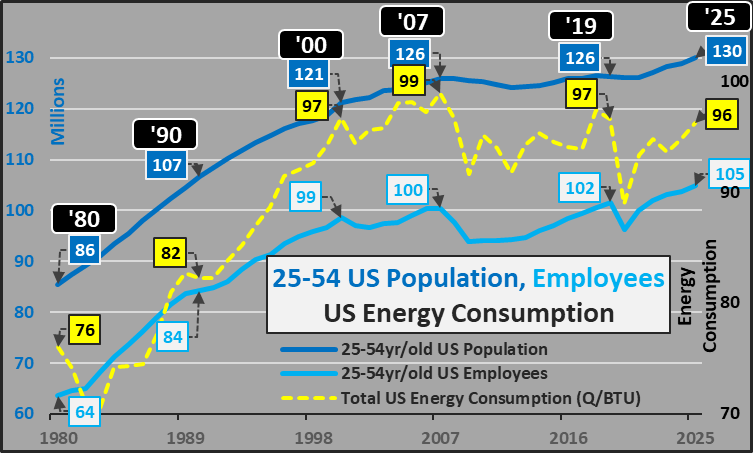
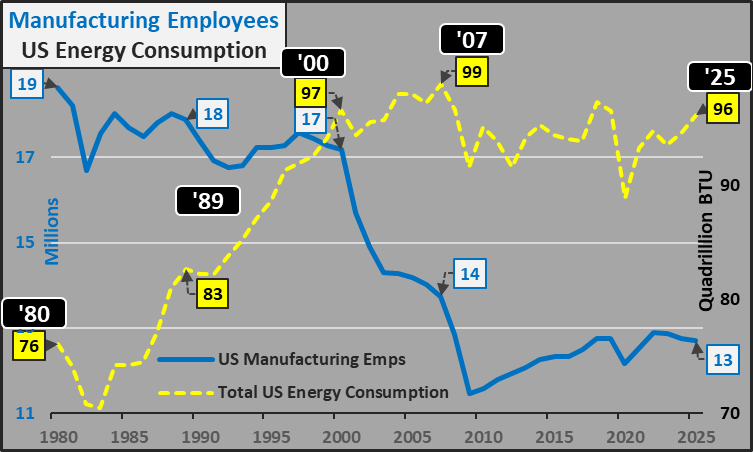
The top left chart is the one. Nasdaq tracks debt-to-GDP, not energy, not population, not manufacturing employment. Asset prices are measuring money creation, not economic activity. Meanwhile, wages track the real indicators while the cost of living tracks the financial ones. That's the gap nobody can close from the inside.
English

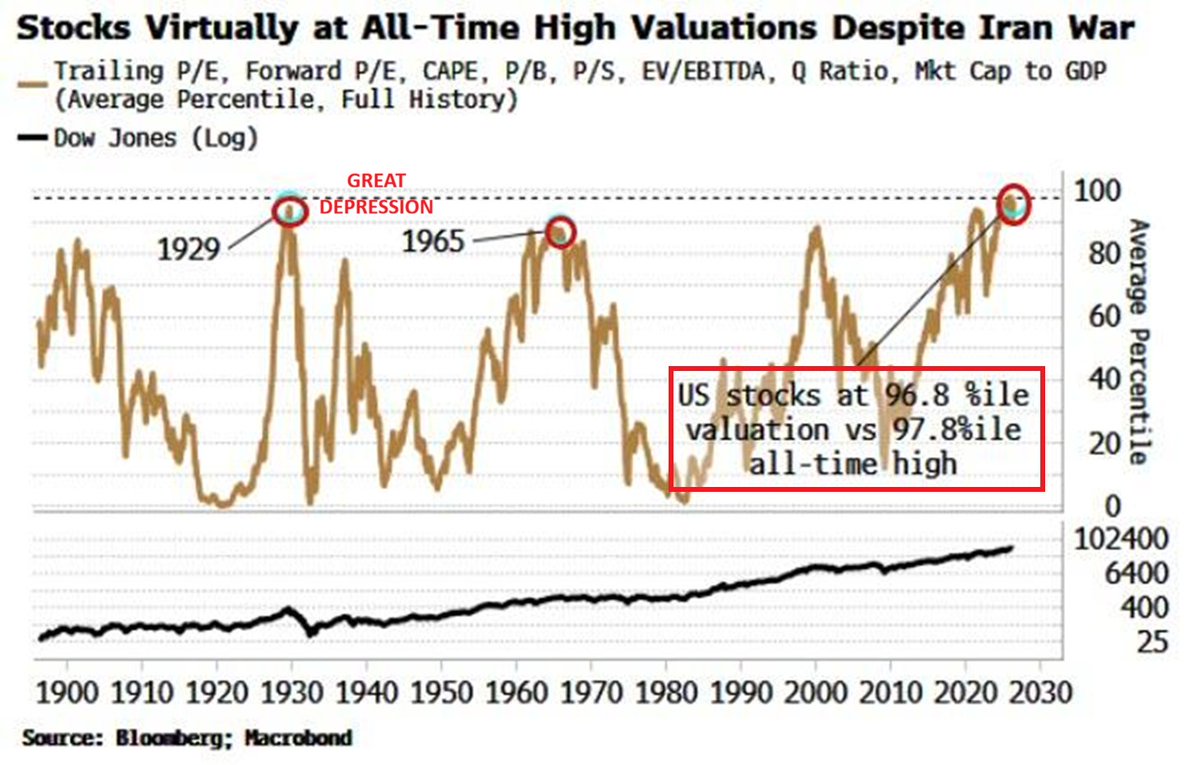
The chart asks 'how does it all resolve?' but notice what drives each peak.
1929 followed a decade of credit expansion. 1965 preceded the inflation that ended Bretton Woods. Today follows the largest monetary expansion in history. Valuations aren't stretched because companies are overpriced. They're stretched because the unit they're priced in was expanded faster than the economy underneath it.
English

🚨US stocks are nearly as expensive as they have ever been:
US stock valuations are now more stretched than 96.8% of all readings in market history.
This composite valuation score averages 7 key metrics, including the trailing P/E, forward P/E, CAPE, price-to-book, price-to-sales, EV/EBITDA, and market cap to GDP.
The only two times valuations were comparably STRETCHED were in 1929, before the Great Depression, and 1965, before the Great Inflation period started.
Both periods preceded prolonged and PAINFUL market drawdowns.
At these levels, there is very little margin for error if earnings disappoint or interest rates go higher for longer.
How does it all resolve?

English

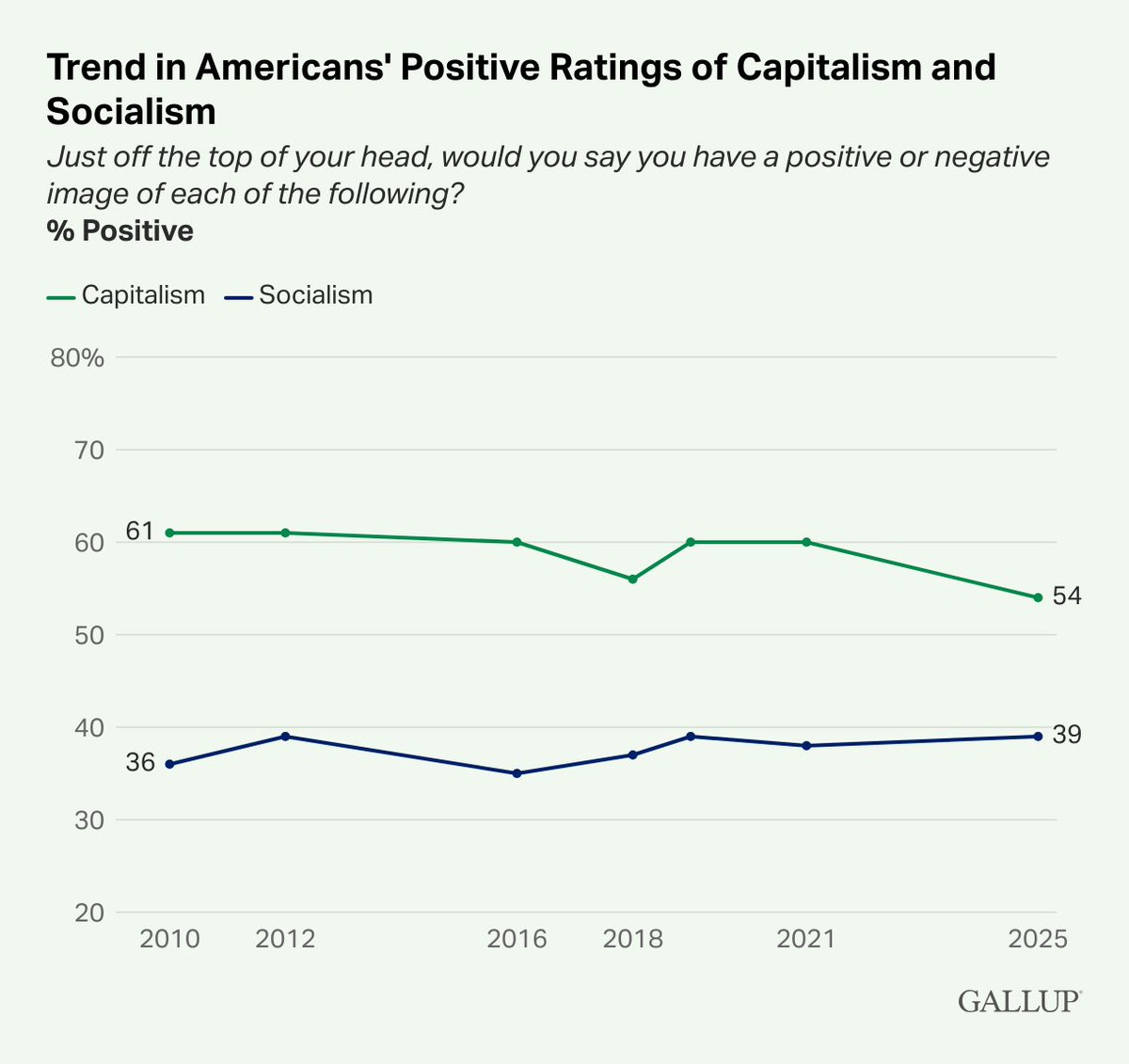
People don't dislike free exchange. They dislike what they're experiencing.
When 'capitalism' means your rent doubles while your landlord's costs didn't change, the word stops meaning free markets and starts meaning whatever this is.
The gap between 95% liking small business and 54% liking capitalism is the gap between the system they believe in and the system they live under.
English

"Favorable views of capitalism in the United States have fallen from 61% in 2010 to 54% in 2025, according to Gallup. Yet in that same 2025 survey, 95% of Americans viewed small business positively, and 81% viewed free enterprise positively."

Marian L Tupy@Marian_L_Tupy
People dislike capitalism but like free markets. Go figure. profectusmag.com/building-a-bet…
English

@AndrewYang “Generally speaking, if you tax something you get less of it; if you subsidize something you get more of it.”
~Jack Kemp (1977)
English

If we want more jobs, why are we taxing human labor? blog.andrewyang.com/p/tax-the-bots
English

'AI will reduce prices and make wages worth more.'
Every productivity gain in the last 50 years should have done that. Manufacturing output per worker tripled. Electronics got thousands of times cheaper to produce. Prices in those sectors fell. Housing, healthcare and education got cheaper to deliver too. Those prices rose. The question isn't whether AI will increase output. It will. The question is whether the gains reach the household or get absorbed before they arrive. The track record is not encouraging.
English

Yang is wrong. You don't get more jobs by incentivizing work. You get more jobs by incentivizing job creation.
When AI starts replacing jobs, there will be two natural incentives to work: unemployment and the fact that AI will increase economic output, reduce prices, and make wages worth more.
There will be no need to reduce personal income taxes to incentivize work. Instead, we should reduce business and capital gains taxes to incentivize job creation.
Andrew Yang🧢⬆️🇺🇸@AndrewYang
If we want more jobs, why are we taxing human labor? blog.andrewyang.com/p/tax-the-bots
English

In 2013, 45% expected to buy within five years. Now it's 25%. The 'not in the foreseeable future' line just crossed above both. Homes didn't get scarcer. They got more expensive relative to wages. The same house requires twice the work hours it did in 1970. People aren't giving up on homeownership. The math is giving up on them.
English

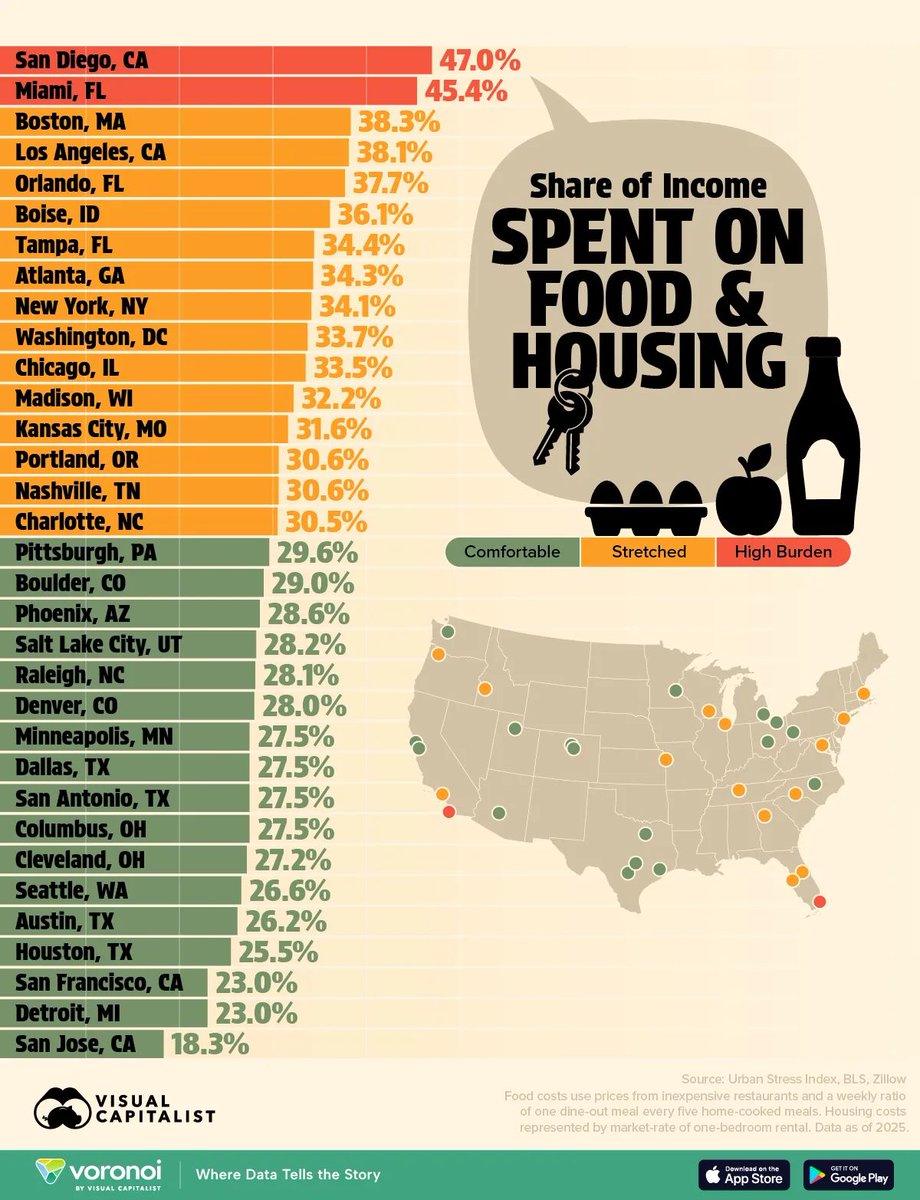
"Ranked: U.S. Cities by Share of Income Spent on Food and Housing" visualcapitalist.com/ranked-u-s-cit…

English

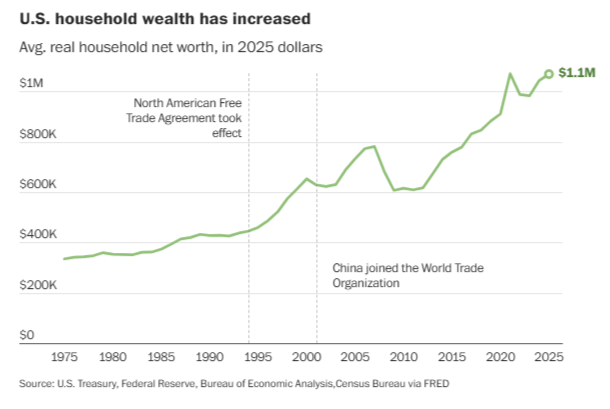
Average net worth is driven by asset prices. The top 10% holds 67% of all household wealth. When home prices and stocks rise, the average rises even if the median household gained nothing. Median net worth for households under 35 tells a different story.
The average is real. It's also misleading.
English

"If trade deficits drain wealth from a country, Americans’ average real net worth would have fallen over the past half-century. Instead, even after accounting for growing government debt, it has risen significantly." 😮washingtonpost.com/opinions/2026/…

English

@CatoInstitute @HumanProgress Resources got more abundant. So why does the median family feel more squeezed?
Because abundance measures what the economy produces. It doesn't measure who gets it. Production rose. Prices didn't fall.
The gap between those two facts is the whole story.
English

For every 1% increase in global population, population-level resource abundance grew by about 6.3% — according to @HumanProgress's new Simon Abundance Index.
More people doesn’t mean more scarcity; it means more ideas, innovation, and problem-solving capacity.
Learn more from @Marian_L_Tupy.
ow.ly/wbmN50YPtgJ
English

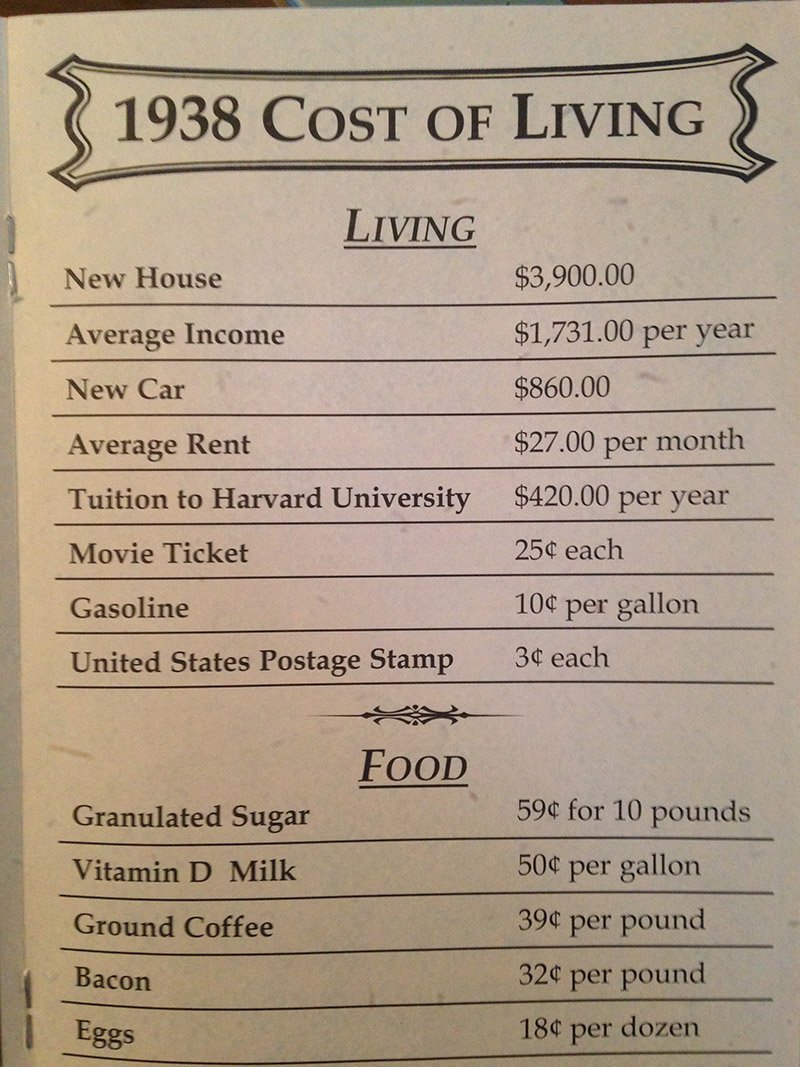
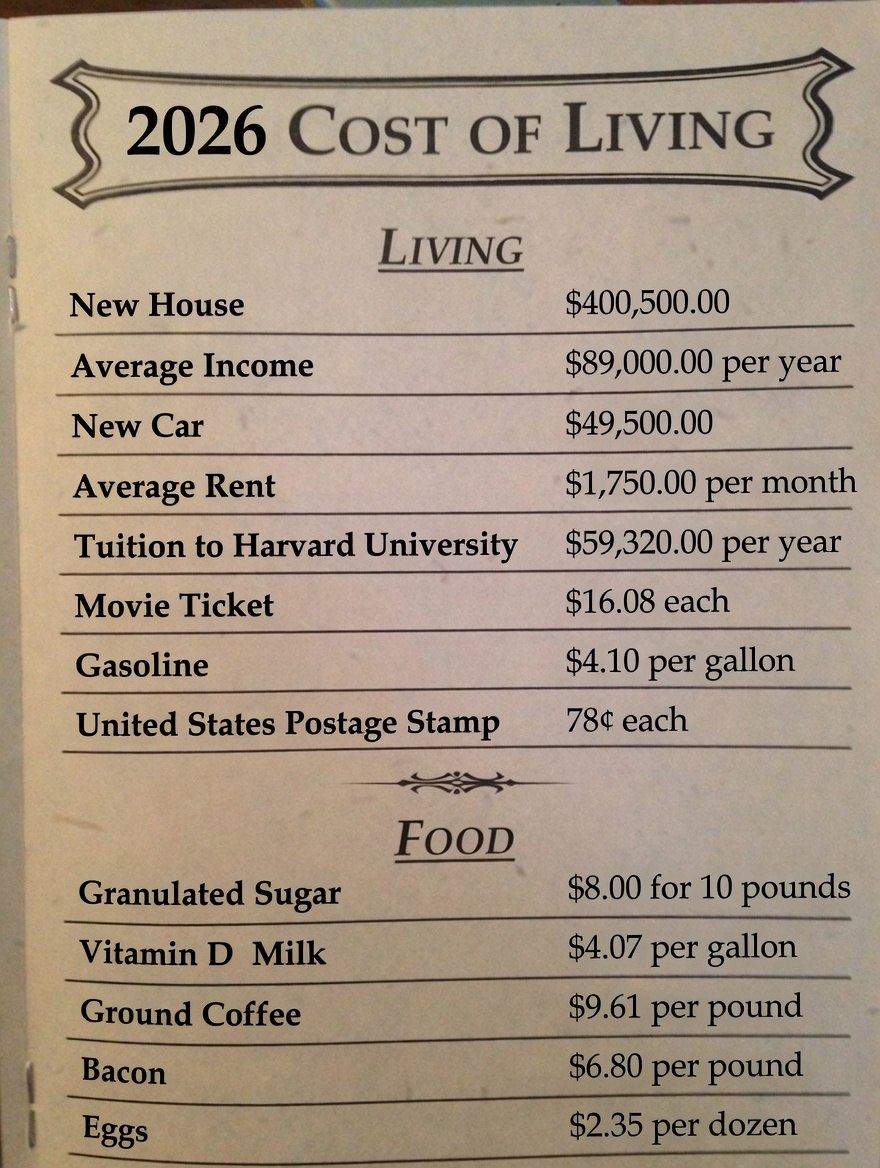
@eyezenhour The items that rose the most (housing, tuition, cars) are all financed with credit. The items that rose the least (food, stamps) are paid in cash. The gap between the two groups isn't random. It tracks which sectors the financial system touches most.
English

The American Dream isn't dead
It's just not realistic for 99% now
Cost of Living Difference over 88 years:
📈 New House: 10,169%
📈 New Car: 5,655%
📈 Average Rent: 6,381%
📈 Harvard Tuition: 14,023%
📈 Movie Ticket: up 6,332%
📈 Gasoline: 4,000%
📈 Stamp: up 2,500%
📈 Sugar: up 1,255%
📈 Milk: 714%
📈 Ground Coffee: 2,364%
📈 Bacon: 2,025%
📈 Eggs: 1,205%
Meanwhile, income only increased 5,041%
Income kept pace on paper
Life didn’t
Housing, rent, cars, and college exploded far beyond wages. So people earn more, but the milestones got harder to reach
No wonder ever gen Z kid is trying to gamble their way out on Polymarket or sports betting or memecoins


English