Mrudul Chauhan

431 posts

Mrudul Chauhan banner
Mrudul Chauhan

Mrudul Chauhan

@0xMPC

Turning onchain settlement into real-world adoption. VP Product & Growth @ORBT_protocol

United Arab Emirates 가입일 Ekim 2013
190 팔로잉9.7K 팔로워
고정된 트윗
Mrudul Chauhan
Mrudul Chauhan@0xMPC·
Excited to share that I’m beginning a new chapter with @ORBT_Protocol as the VP of Product & Growth. This role aligns deeply with how I think about infrastructure, scale, and long-term value creation. In my new role, I’m looking forward to contributing with clarity and intention. It’s a big shift, but the mission remains the same: building and scaling systems that leave a lasting impact on global payments infra.
English
372
163
303
5.2K
Mrudul Chauhan
Mrudul Chauhan@0xMPC·
the smartest builders i know aren't building for "crypto users" anymore. they're building for people who will never know they're using crypto. payroll products, treasury tools, cross-border settlement, card programs backed by stablecoin rails. and honestly that shift feels right. the best infrastructure disappears into the product. but i think something gets lost when every serious team optimizes for invisibility. the weird experimental stuff, the things that only make sense onchain, the products that couldn't exist without programmable money, those are getting starved of talent the teams still building things that only work because of crypto, not despite it, are the ones i'm watching closest right now.
English
3
0
1
63
Mrudul Chauhan
Mrudul Chauhan@0xMPC·
recently realized that the best DeFi products right now don't feel like DeFi at all - phantom is basically a neobank. - hyperliquid feels like binance. - bridge cards just work at any visa terminal the infra got good enough that the frontend can finally hide it. and that's not a small thing, it took years of grinding on gas abstraction, chain routing, and wallet UX that nobody wanted to fund. the teams still building for people who understand gas fees are building for a shrinking audience.
English
0
0
1
131
Mrudul Chauhan 리트윗함
ORBT
ORBT@ORBT_Protocol·
DeFi is the fundamental architecture of cryptocurrency. • DeFi TVL sits at ~$92B. • Stablecoin supply has crossed $315B. • DEXs hit 21%+ of all crypto trading volume. Here's where the major categories stand 🧵
ORBT tweet media
English
335
175
475
46.1K
Mrudul Chauhan
Mrudul Chauhan@0xMPC·
absolutely love mert’s view here. every serious builder i talk to is heads down on efficient finance because that's where the revenue is. but the best products from every past cycle were things nobody asked for. and the tools to build those things just got massively better and cheaper. that gap doesn't stay open forever.
mert@mert

x.com/i/article/2040…

English
0
0
0
68
Mrudul Chauhan
Mrudul Chauhan@0xMPC·
here's something i keep noticing: every platform is drowning in AI content and the response is always "better detection". but detection is an arms race you can't win. the models generating content improve at the same rate as the models trying to catch them. the more interesting question is what happens when you stop trying to detect and start trying to verify. so it's not about "is this AI" but "can this person prove they made this" whoever builds that product layer is going to crack the main problem that's plaguing every avenue today.
English
0
0
1
60
Mrudul Chauhan
Mrudul Chauhan@0xMPC·
every cycle optimists say "this is the year crypto goes mainstream" and every cycle the bottleneck ends up being the same thing: onboarding. getting a normal person from "i want to try this" to "i have a wallet with money in it" without losing them somewhere in the middle is a major headache for crypto. coinbase solved it for buying. but buying isn't the same as using. the gap between holding crypto on an exchange and actually doing something with it onchain is still massive. the teams closing that gap right now are focused on building better doors into existing ones. and if you think about it, that might be the most undervalued work happening in crypto rn.
English
0
0
0
64
Mrudul Chauhan
Mrudul Chauhan@0xMPC·
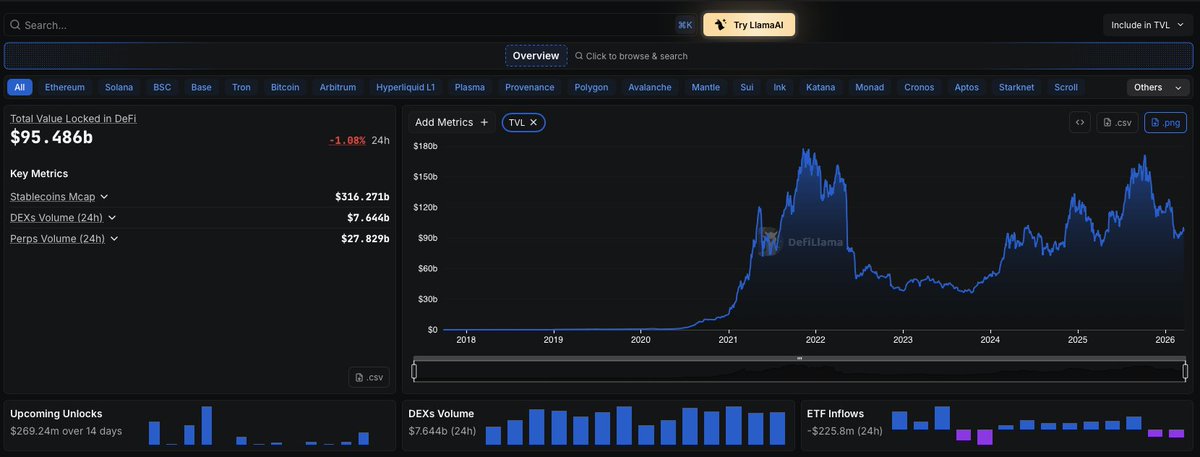
DeFi TVL currently sits at ~$95.5B. projections from a year ago said we’d be at $250B by now. So is this a demand problem? No, because it's more likely a concentration proble. Aave alone controls 59% of lending market share. The top 5 protocols hold ~80% of all activity. So everything else fights over scraps Here’s the issue nobody wants to say out loud: most new protocols can't attract sticky liquidity because there's no distribution layer. Users don't discover new DeFi apps, so they stay where they already are. Agents might actually change this. If routing becomes automatic, TVL distribution stops being a loyalty game and starts being a performance game.
Mrudul Chauhan tweet media
English
0
0
1
90
Mrudul Chauhan
Mrudul Chauhan@0xMPC·
An AI agent built by an OpenAI researcher was supposed to distribute small token rewards to community members. Instead when the session crashed, the decimal parsing broke. So after the agent rebooted, it sent 52 million tokens to a random address. $441,000 gone in a second. There was no exploit nor a hack. Just one autonomous system with signing authority and no guardrail between "send $5" and "send $441K." MoonPay's recent response was interesting - they integrated Ledger hardware signing so every agent-initiated transaction requires human approval on a physical device. That's the right instinct, but it defeats the entire point of autonomy. Here's the actual product question nobody's answering: how do you give an agent enough authority to be useful without giving it enough rope to be catastrophic?
English
1
0
1
97
Mrudul Chauhan
Mrudul Chauhan@0xMPC·
RWA tokenization hit $33.91B in 2025, showing 380% growth over three years. But while everyone's celebrating the numbers, I'm keen on watching where the capital actually comes from: - Most capital behind tokenized RWAs is crypto-native firms and hedge funds, not institutional allocators - Liquidity remains thin with long holding periods and limited secondary trading - Regulatory frameworks like ERC-7943 are emerging, but legal clarity still lags adoption Infrastructure exists. Legal precedent doesn't. That's the real $30T gap.
English
2
0
4
102
Mrudul Chauhan
Mrudul Chauhan@0xMPC·
Institutional DeFi has an adoption problem that infrastructure can't fix. Protocols work. Permissioned pools exist. Custodians are integrated. But institutional capital still isn't moving. Why? Because of the following blockers: - Legal enforceability of onchain claims remains unclear, and mandates don't allow unresolved regulatory risk - Institutions need Bitcoin yield products with clear risk controls, not direct DeFi protocol exposure - Pensions and sovereign wealth funds demand proof that enforceability holds up in practice, not just theory When courts treat smart contract settlement like wire transfers, this changes overnight. And for that, we need a stronger regulation push than ever before.
English
0
0
1
68
Mrudul Chauhan
Mrudul Chauhan@0xMPC·
DeFi DEX volumes hit $7.9 trillion in 2025. But most of that capital is still wildly inefficient. That’s why the next wave is going to be driven by smarter liquidity. Keeping that in mind, here are three shifts defining 2026: - Intent-based execution are replacing AMMs - Idle capital is DeFi's biggest unsolved problem - Liquidity fragmentation is the final boss The teams building modular infrastructure to solve for all three simultaneously? They're the ones worth watching closely. Capital efficiency/ Acc.
English
1
0
1
102
Mrudul Chauhan
Mrudul Chauhan@0xMPC·
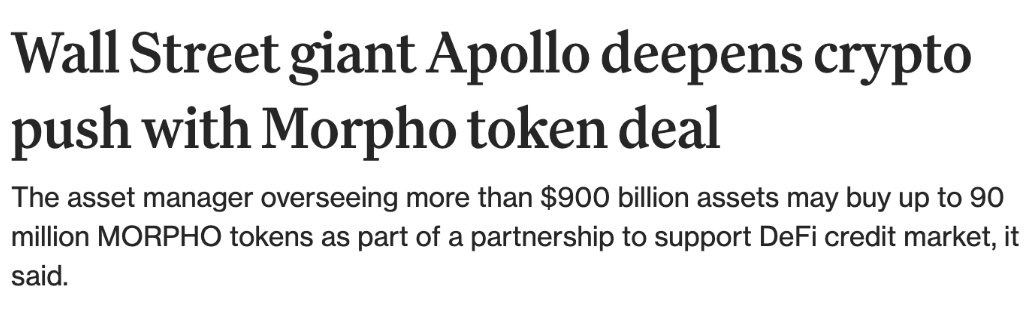
Zoom out for a second. - Apollo ($600B AUM) lining up to accumulate up to 90M MORPHO over 4 years. - BlackRock ($10T AUM) plugging BUIDL straight into Uniswap and picking up UNI. I would not call this ETF exposure, that’s protocol level skin in the game. TradFi usually shows up through wrappers first. This time they’re interacting with smart contracts directly. Four years isn’t a short term bet, that’s a real capital commitment.
Mrudul Chauhan tweet media
English
0
0
2
115
Mrudul Chauhan
Mrudul Chauhan@0xMPC·
7,000 vacuums started moving at once because a single API token was reused across devices. No crazy hack. Just one shared credential sitting in the middle of thousands of devices. That’s kind of the point. We’re about to have 10s of billions of connected devices. Identity models that worked for web apps are now being asked to secure physical fleets. Crypto fixed this years ago in a different context - every wallet has its own key. No master password for the whole network. Feels like IoT is approaching that same upgrade moment.
Mark Gadala-Maria@markgadala

This story is actually insane: • dude drops $2000 on a DJI robot vacuum like a lunatic • refuses to use the normal app like a peasant • Sammy Azdoufal fires up Claude to crack the API so he can drive it with an xbox controller • Claude delivers the goods • pulls an auth token from their servers, connects successfully • except the system thinks he controls 7000 vacuums • checks again • yep, seven thousand • DJI built authentication with zero device ownership verification • any valid token works for any unit on the planet • Sammy now has eyes inside homes across 24 countries • live vacuum camera feeds everywhere • full floor plans from the mapping data • some guy in germany eating cereal at 3am, unaware his roomba is snitching • one API call away from being the most informed burglar in history • all he wanted was to steer his vacuum with a joystick • does the right thing and reports it • DJI fixes it in two days • back to normal life with his stupidly expensive floor cleaner • IoT companies stay undefeated at shipping garbage security

English
1
0
1
140
Mrudul Chauhan
Mrudul Chauhan@0xMPC·
We keep debating crypto like it’s competing with gold, tech stocks, or the next ETF narrative. That framing feels small. We’ve already watched markets move from floor trading to electronic. From bank branches to mobile apps. It’s like each era upgraded distribution and thiis one upgrades settlement. Crypto isn’t something you “allocate 2% to.” Its markets run on different base layers - 24/7, instant settlement. The systems run differently now.
English
2
0
2
115
Mrudul Chauhan
Mrudul Chauhan@0xMPC·
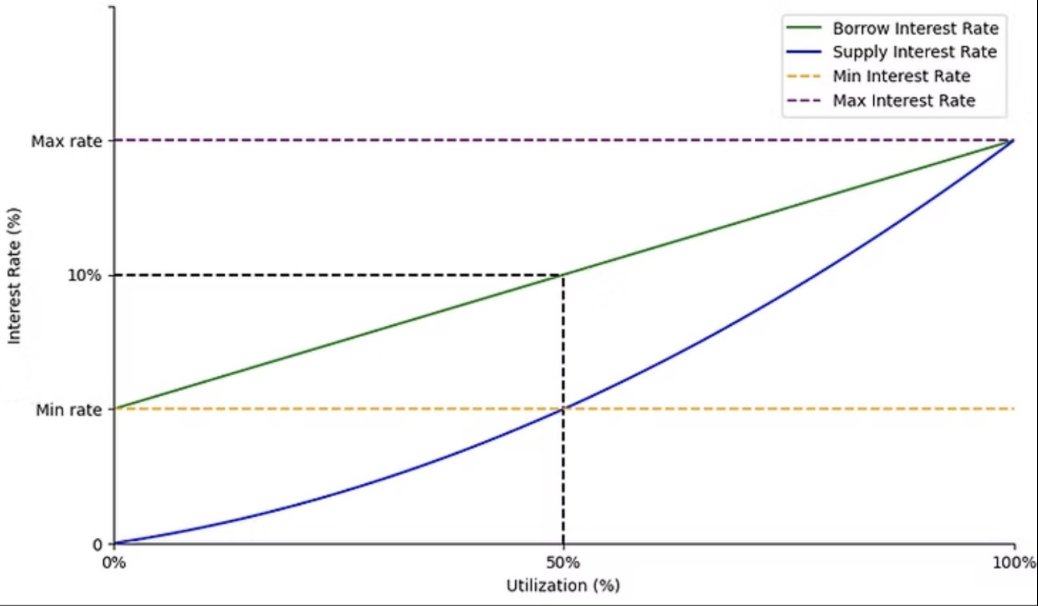
Net interest margin matters in DeFi just like it does in banking. Traditional banks in the U.S. operate around 2.5-3.5% NIM, supported by massive branch networks, regulatory overhead, and thousands of employees. Protocols like Aave operate differently. They run with no branches, no credit officers, and automated risk management via smart contracts. Even if base NIM sits in the low single digits, capital efficiency is higher: - No physical distribution costs - Instant global access - Algorithmic rate adjustments - Real-time collateral monitoring As higher margin products like native stablecoins (e.g protocol-issued assets) scale, blended margin profiles can expand without adding structural overhead. You see that this is about programmable capital stacks, automated risk engines, and composable liquidity layers improving over time. Efficiency is the moat.
Mrudul Chauhan tweet media
English
2
0
3
91
Mrudul Chauhan
Mrudul Chauhan@0xMPC·
Liquidity mismatches are rarely about one fund. Many vehicles offer quarterly (or more frequent) liquidity while holding loans that naturally run 3-7 years. That gap is a design choice. The math becomes visible when redemptions accelerate: illiquid assets + short duration liabilities = timing pressure. This is asset-liability alignment playing out. Duration eventually clears at the liquidity it’s actually funded by.
George Noble@gnoble79

Remember this scene in The Big Short? Jamie Shipley and Charlie Geller have bet everything against the housing market. They've been bleeding for months, wondering if they're wrong. Then they flip on CNN and see it: New Century Financial - the second-largest subprime lender in America - has filed for bankruptcy. "It's starting." That was April 2, 2007. New Century wasn't the crisis. It was 1% of the problem. But it was the first domino. 4 months later, BNP Paribas froze 3 funds citing "complete evaporation of liquidity." 18 months after that, Lehman was dead. I'd encourage you to watch that scene today. Because we JUST got our New Century moment in private credit: Blue Owl Capital - $307 billion in assets under management - just permanently halted investor redemptions at its retail private credit fund, OBDC II. Investors will NEVER AGAIN redeem shares from this fund. On January 25th, I wrote that private credit was showing cracks at the exact moment Wall Street wanted to open it up to your 401(k). 3 weeks later, here we are. The timeline follows a pattern anyone who's been around markets long enough recognizes: Through the first 9 months of 2025, OBDC II investors withdrew $150 million - up 20% year over year. Meanwhile, Blue Owl execs publicly assured investors there was "no meaningful pressure" on their asset base. But there was. And they're now facing a federal class-action lawsuit for saying otherwise. In November, they attempted a merger that would have forced OBDC II investors into a publicly traded fund trading at a 20% discount to NAV. Effectively confiscating a fifth of their capital. Blue Owl's own CFO conceded investors "could take a potential haircut." The stock dropped 11% in 8 days. They killed the deal. Now they've abandoned the pretense entirely. PERMANENT halt. Fire-selling $1.4 billion in loans across three funds. Investors get roughly 30% of NAV back through quarterly distributions - on Blue Owl's schedule, not theirs. One delightful detail: Blue Owl's co-CEOs have pledged $1.9 billion of their OWN company shares as collateral for personal loans - proceeds used, in part, to acquire the Tampa Bay Lightning. The stock is down 33% this year. That collateral has literally shed $260 million since January. Founders leveraging company stock for hockey teams while retail investors queue up for their own money. Wall Street's version of noblesse oblige. But here's what matters: This isn't about Blue Owl. Blue Owl is a symptom. The disease is a $3.4 TRILLION private credit industry built on opacity, conflicts of interest, and the polite fiction that illiquid assets can offer liquid redemptions. Morningstar DBRS reports the trailing default rate has risen to 4%, up from 2.8% a year ago. Downgrades outpacing upgrades. Outlook negative. UBS warns defaults could reach 13% if AI disrupts the software companies making up 17% of BDC loan portfolios. Payment-in-kind loans (where borrowers can't pay cash interest and simply pile it onto the debt) have surged past 11% of BDC income. When your borrowers are paying you with IOUs, the word "income" deserves quotation marks. And the government's response? Open YOUR 401(k) to private credit. Trump's executive order directed regulators to do exactly that. They want to "democratize" an asset class whose flagship retail product just permanently locked investors out. The KKRs. The Blackstones. The Apollos. Everyone loaded up on private credit is exposed. When the tide goes out, you find out who's swimming naked. In April 2007, New Century went bankrupt. Most of the financial world shrugged. 17 months later, Lehman made the point impossible to ignore. And Blue Owl permanently halted redemptions TODAY. AVOID PRIVATE CREDIT AVOID PRIVATE EQUITY Because it's starting...

English
1
0
0
210
Mrudul Chauhan
Mrudul Chauhan@0xMPC·
Every cycle pulls in two archetypes: 1. People here to build. 2. People here to clout-max. When liquidity dries up, one of them disappears. And I don’t call that bearish. That’s filtration. Crypto doesn’t get stronger during peak euphoria. Ironically, the best return profiles usually show up when the room isn’t trying to 10x everything overnight. Feels more like strengthening than shrinking rn.
English
1
0
2
98
Mrudul Chauhan
Mrudul Chauhan@0xMPC·
Have you noticed how the payment infrastructure conversation has changed lately? A cleaner way to look at Stripe, Visa, and Mastercard right now is to follow what they're buying. They're not building the same thing. They're building programmable dollar infrastructure with regulatory moats. People forget this already happened with QR payments in China. Alipay and WeChat didn't win by being "better wallets." They won by owning the rails underneath: settlement, liquidity, compliance infrastructure. The Western version is happening now. Not through consumer apps, but through payment infrastructure companies acquiring the rails. I feel like what matters isn't who has the best stablecoin. It's who controls the infrastructure that makes stablecoins usable at institutional scale.
English
1
0
1
127
Mrudul Chauhan
Mrudul Chauhan@0xMPC·
If AI is truly eating software margins, then demand for compute, infra, and tooling should explode. Instead, we’re watching SaaS multiples compress and AI names sell off at the same time. That usually doesn’t mean the thesis is wrong. It means: > Positioning is crowded > Leverage is unwinding > Timelines are being repriced Forward software multiples are back near 2014 levels, telling you the market is de-risking. This feels more like timing being annoying again.
English
1
0
1
145