Mario Nawfal@MarioNawfal
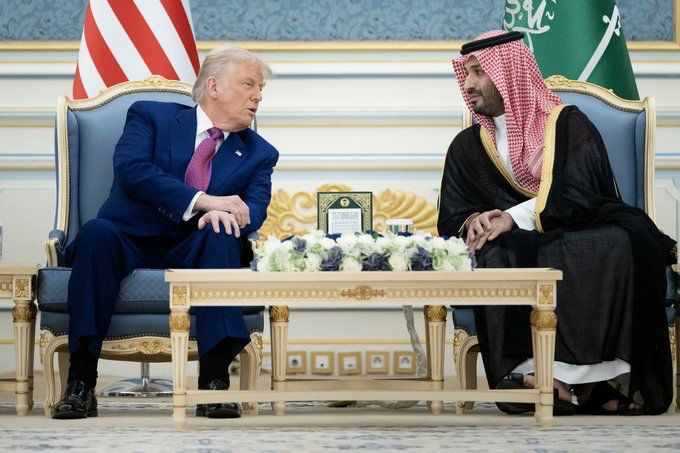
🚨🇮🇷🇮🇱 Did Netanyahu just admit Israel’s real objective in this war?
“I think that what has to be done is… just have oil pipelines, gas pipelines going west… right up to Israel, right up to our Mediterranean ports.”
That wasn’t a leaked memo, it was Netanyahu saying the quiet part out loud.
For years, every Middle East conflict comes wrapped in the same official packaging: security, deterrence, existential threats.
And to be fair, when it comes to Iran, those concerns are real. Nuclear ambitions from a regime that wants to wipe Israel off the map is a genuine concern.
But this isn’t just about centrifuges and missiles, it’s about maps.
Energy maps.
The Middle East runs on choke points, the Strait of Hormuz and the Bab el-Mandeb Strait, narrow arteries where a single flare-up can send oil prices into orbit.
Netanyahu’s idea? Bypass them entirely.
Build pipelines across the Arabian Peninsula. Route energy through Israel. Turn Mediterranean ports into the West’s new fuel tap.
No choke points. No bottlenecks. No leverage for rivals.
And suddenly, the question is: who benefits from redrawing the region’s energy map?
Iran sits astride the current system of chokepoints and influence. Weakening Iran weakens that system.
A weakened system makes alternative routes, like the ones Netanyahu is describing, a lot more attractive.
Now layer in the timing.
Every escalation with Iran gets framed as preemption, stop the threat before it materializes. But it also reshapes the strategic landscape in ways that just happen to align with this pipeline vision.
Because if you can turn your country into the region’s energy corridor, the place where oil flows safely, predictably, profitably, you’re buying influence, leverage, and relevance.
So is the Iran conflict all about this plan? Probably not.
Security concerns are real. Ideology is real. Power struggles are real.
But to pretend energy isn’t sitting in the background, quietly shaping incentives, quietly rewarding certain outcomes, is to ignore how the modern Middle East actually works.