AIAlchemy

581 posts

AIAlchemy banner
AIAlchemy

AIAlchemy

@AiLchemy

AI news. Giving people new information on AI, scalable systems, LLMs, sometime politics too. Studying amazing models and learning new stuff to share daily.

New Jersey 가입일 Kasım 2024
512 팔로잉186 팔로워
고정된 트윗
AIAlchemy
AIAlchemy@AiLchemy·
AI didn’t emerge out of nowhere—it’s the result of decades of work by brilliant minds. I’m starting a journey to explore the stories and contributions of those who shaped AI into what it is today. Stay tuned to learn about the trailblazers who turned science fiction into reality. #AIPioneers
English
2
3
6
1.1K
AIAlchemy
AIAlchemy@AiLchemy·
def slidingWindowTemplate(s: str): # 1. Initialize pointers and state variables left = 0 best_result = 0 # Use float('inf') if looking for a minimum # State tracking: Could be a dictionary, an integer sum, a counter, etc. # e.g., window_counts = {}, current_sum = 0 # 2. Expand the window by moving the right pointer for right in range(len(s)): # --- A. ADD TO WINDOW STATE --- # Update your state variables with the new character/element at s[right] # e.g., window_counts[s[right]] = window_counts.get(s[right], 0) + 1 # 3. Shrink the window # The condition here depends on the problem constraint. # - If finding MAX window: while the window is INVALID # - If finding MIN window: while the window is VALID while condition_to_shrink_window: # --- B. RECORD MINIMUM RESULT (If applicable) --- # If the problem asks for the SHORTEST valid window, # update your best_result inside this while loop before you shrink. # e.g., best_result = min(best_result, right - left + 1) # --- C. REMOVE FROM WINDOW STATE --- # Update your state variables to remove the character/element at s[left] # e.g., window_counts[s[left]] -= 1 # Move the left pointer forward to shrink left += 1 # --- D. RECORD MAXIMUM RESULT (If applicable) --- # If the problem asks for the LONGEST valid window, # update your best_result outside the while loop, once the window is valid again. # e.g., best_result = max(best_result, right - left + 1) return best_result
English
0
0
1
4
AIAlchemy
AIAlchemy@AiLchemy·
To design an optimal storage system, we first need to understand the scale and the nature of the read/write traffic. -> Capacity Estimation For 800 million videos, we can estimate the storage required for the metadata of a single video: Video ID: 8 bytes Title: 100 bytes Description: 1000 bytes Creator ID: 8 bytes Metrics (Views, Likes, Dislikes): 24 bytes Timestamps & Flags: ~50 bytes The total metadata size per video is roughly 1.2 KB. For 800 million videos, the total storage requirement is roughly 960 GB to 1 TB. While 1 TB easily fits on a single modern hard drive, a single node cannot handle the massive concurrent read and write traffic of a platform at this scale. Database Architecture Selection-> The system is heavily read-heavy for fetching titles and descriptions, but write-heavy for updating dynamic metrics like views and likes. Core Storage (Relational Database with Sharding):--> A sharded relational database, such as MySQL managed by a system like Vitess (which YouTube actually uses), is ideal. It provides the necessary ACID guarantees for user data and allows horizontal scaling by sharding the database based on the Video_ID or Creator_ID. The Counter Service Challenge: Updating a MySQL row every time a video gets a view or a like will quickly lead to row-level locking bottlenecks. You need a dedicated, in-memory counter service (like Redis or a specialized Cassandra cluster) to ingest the firehose of metric updates. This service aggregates the views and likes in memory and flushes them to the main database in batches (e.g., every few seconds or minutes) to drastically reduce write load. Caching Layer --> The vast majority of queries will be for a small percentage of viral or newly released videos. Implementing a distributed caching layer (like Memcached or Redis) in front of the database to hold the metadata of popular videos will absorb 80-90% of the read traffic, significantly protecting the primary database.
AIAlchemy tweet media
English
0
0
0
9
AIAlchemy
AIAlchemy@AiLchemy·
How would you design the storage for YouTube's video metadata" (title, description, views, likes for 800M videos)?
English
1
0
1
7
AIAlchemy
AIAlchemy@AiLchemy·
🚀 𝗜𝗻𝘁𝗿𝗼𝗱𝘂𝗰𝗶𝗻𝗴 𝗔𝗱𝘃𝗶𝘀𝗼𝗿𝗔𝗜 (advisoraii.web.app) : 𝗧𝗵𝗲 𝗮𝗰𝗮𝗱𝗲𝗺𝗶𝗰 𝗮𝗱𝘃𝗶𝘀𝗼𝗿 𝘄𝗲 𝘄𝗶𝘀𝗵 𝘄𝗲 𝗵𝗮𝗱. When we joined Stevens Institute of Technology, we noticed something frustrating. Students spend hours digging through scattered university pages for course codes, professor info, and program requirements. Or wait weeks for advising appointments just to ask a simple question. That didn’t make sense in the 𝗮𝗴𝗲 𝗼𝗳 𝗔𝗜. So instead of complaining about the system, 𝘄𝗲 𝗯𝘂𝗶𝗹𝘁 𝗔𝗱𝘃𝗶𝘀𝗼𝗿𝗔𝗜. An 𝗔𝗜-𝗽𝗼𝘄𝗲𝗿𝗲𝗱 𝗮𝗰𝗮𝗱𝗲𝗺𝗶𝗰 𝗮𝗱𝘃𝗶𝘀𝗼𝗿 that understands Stevens and answers complex questions instantly. But we didn’t want to build just another chatbot wrapper. 🧠 𝗪𝗵𝗮𝘁 𝗺𝗮𝗸𝗲𝘀 𝗔𝗱𝘃𝗶𝘀𝗼𝗿𝗔𝗜 𝗱𝗶𝗳𝗳𝗲𝗿𝗲𝗻𝘁 • 𝗠𝘂𝗹𝘁𝗶-𝗔𝗴𝗲𝗻𝘁 𝗥𝗲𝗮𝘀𝗼𝗻𝗶𝗻𝗴 • 𝗗𝗼𝗺𝗮𝗶𝗻-𝗦𝗽𝗲𝗰𝗶𝗮𝗹𝗶𝘇𝗲𝗱 𝗟𝗟𝗠 • 𝗘𝗻𝘁𝗶𝘁𝘆-𝗔𝘄𝗮𝗿𝗲 𝗥𝗲𝘁𝗿𝗶𝗲𝘃𝗮𝗹 • 𝗦𝗲𝗹𝗳-𝗥𝗲𝗳𝗹𝗲𝗰𝘁𝗶𝗼𝗻 𝗟𝗮𝘆𝗲𝗿 More than a chatbot, 𝗔𝗱𝘃𝗶𝘀𝗼𝗿𝗔𝗜 𝗶𝘀 𝗲𝘃𝗼𝗹𝘃𝗶𝗻𝗴 𝗶𝗻𝘁𝗼 𝗮 𝗰𝗼𝗺𝗽𝗹𝗲𝘁𝗲 𝘀𝘁𝘂𝗱𝗲𝗻𝘁 𝗶𝗻𝘁𝗲𝗹𝗹𝗶𝗴𝗲𝗻𝗰𝗲 𝗹𝗮𝘆𝗲𝗿: 💬 Real-time academic advising 🔍 Deep course & professor exploration 💼 Job & internship discovery 📂 Portfolio hub for students to showcase their work 🔗 𝗘𝘅𝗽𝗹𝗼𝗿𝗲 𝘁𝗵𝗲 𝗽𝗿𝗼𝗷𝗲𝗰𝘁 𝗟𝗶𝘃𝗲: advisoraii.web.app 𝗚𝗶𝘁𝗛𝘂𝗯: lnkd.in/eYUu_r_9 𝗙𝗶𝗻𝗲-𝘁𝘂𝗻𝗶𝗻𝗴 𝗥𝗲𝗽𝗼: lnkd.in/eG8g2F_p 𝗠𝗼𝗱𝗲𝗹: lnkd.in/e7h24Tef 𝗗𝗮𝘁𝗮𝘀𝗲𝘁: lnkd.in/eBabDRN7 𝗗𝗲𝗺𝗼: lnkd.in/eWQufw3g 𝗕𝘂𝗶𝗹𝘁 𝘄𝗶𝘁𝗵 𝗽𝗮𝘀𝘀𝗶𝗼𝗻 𝗯𝘆 Nitin Chaube | Keval Sompura | Paras Jadhav Our goal is simple: 𝗧𝘂𝗿𝗻 𝗱𝗮𝘁𝗮 𝗶𝗻𝘁𝗼 𝘀𝗼𝗺𝗲𝘁𝗵𝗶𝗻𝗴 𝘀𝘁𝘂𝗱𝗲𝗻𝘁𝘀 𝗰𝗮𝗻 𝗮𝗰𝘁𝘂𝗮𝗹𝗹𝘆 𝗶𝗻𝘁𝗲𝗿𝗮𝗰𝘁 𝘄𝗶𝘁𝗵. 📊 𝗪𝗲 𝗮𝗹𝘀𝗼 𝗼𝗽𝗲𝗻-𝘀𝗼𝘂𝗿𝗰𝗲𝗱 𝘁𝗵𝗲 dataset and model • A fine-tuned Stevens academic LLM • An 87K university advising dataset #AI #LLM #RAG #FineTuning #OpenSource #MachineLearning #StudentsBuilding #BuildInPublic
English
0
0
1
19
Polymarket
Polymarket@Polymarket·
BREAKING: Taiwan reportedly detected 26 Chinese military aircraft near its airspace on Saturday.
English
132
222
2.8K
173.6K
AIAlchemy
AIAlchemy@AiLchemy·
The most difficult parts of LLM development are often not the math, but the meso-scale mystery and the infrastructure bottlenecks: - The Meso-Scale Problem: As Terence Tao explains, the "real mystery" is that while the underlying math (linear algebra/calculus) is simple, we lack the mathematical rules to predict why models succeed at some tasks and fail at others. - In training, the challenge is orchestrating thousands of GPUs. A single hardware failure can stall the entire process, making fault tolerance a primary hurdle. - LLM inference is memory-bound. The "KV Cache" for long contexts consumes massive VRAM, and the GPU often sits idle waiting for data to move from memory to the compute cores. - Finding enough high-quality, non-synthetic data to continue scaling is becoming harder than the engineering itself. x.com/rohanpaul_ai/s…
English
0
0
2
561
Rohan Paul
Rohan Paul@rohanpaul_ai·
Terence Tao explains the math behind today’s LLMs is actually simple. Training and running them mostly uses linear algebra, matrix multiplication, and a bit of calculus, material an undergraduate can handle. We understand how to build and operate these models. The real mystery is why they work so well on some tasks and fail on others, and why we cannot predict that in advance. We lack good rules for forecasting performance across tasks, so progress is largely empirical. A key reason is the nature of real-world data. Pure noise is well understood, perfectly structured data is well understood, but natural text sits in between, partly structured and partly random. Mathematics for that middle regime is thin, similar to how physics struggles at meso-scales between atoms and continua. Because of this gap, we can describe the mechanisms but cannot yet explain capability jumps or give reliable task-level predictions. That mismatch, simple machinery versus hard-to-predict behavior, is the core puzzle. ---- Video from 'Dr Brian Keating' YT Channel (Link in comment)
Rohan Paul@rohanpaul_ai

Terence Tao on AI in Math. AI can synthesize a million papers and brute-test ideas. Humans can check just 5 examples and see the pattern. But as systems move toward world models, causal reasoning, and active learning, this efficiency gap will narrow.

English
70
605
4K
503.3K
AIAlchemy
AIAlchemy@AiLchemy·
India secured a unique exemption from Iran for LPG carriers like Shivalik while others wait. True sovereignty? Negotiating with both US & Iran to ensure energy for 1.4B Indians. Protecting 10M Indians in Gulf & $80B remittances via calculated diplomacy. Opposition relies on manipulated videos for false narratives. This is #IndiaFirst diplomacy, not kneeling.
English
0
0
1
471
AIAlchemy
AIAlchemy@AiLchemy·
@GalaxEye Space is a Bengaluru-based spacetech startup and an IIT Madras incubator success story that is pioneering "all-weather" Earth observation. Some facts about them: - Unlike standard optical satellites that are blinded by clouds or darkness, GalaxEye's SAR sensors can penetrate smoke and clouds, while the MSI sensors provide high-resolution, intuitive color visuals. - By capturing both data streams in a single pass on the same platform, the data is perfectly synchronized, eliminating the complex post-processing usually required to "stitch" together images from different satellites. - They use AI algorithms to make grainy radar data look like clear optical imagery, making it easier for human analysts to use. - Their flagship satellite, weighing 160 kg, is slated for launch in early 2026. It is currently India’s largest and highest-resolution privately built satellite, offering 1.5-meter resolution. - GalaxEye is already developing a second satellite targeting 0.5-meter resolution with a revisit time of under three days to meet global demand for high-precision geospatial data. - The company recently secured a $14.1M Series A round in March 2026, with backing from major investors like Infosys, Speciale Invest, and Rainmatter. - They have partnered with SpaceX for their satellite launches and use ISRO’s orbital platforms (POEM) for testing prototypes in space environments. #Spacetech #DeepTech #MadeInIndia #SatelliteImaging #AgriTech #DefenseTech #SyncFusion
English
0
0
1
72
Runtime
Runtime@RuntimeBRT·
🚨 Indian startup @GalaxEye is gearing up to launch the world's first satellite with both MSI and SAR, enabling perfectly synchronised Earth observation.
English
6
81
437
30.8K
AIAlchemy
AIAlchemy@AiLchemy·
this made me check the projects @GoogleDeepMind is currently working on and it feels so much: 1- @GeminiApp gemini 2.5 pro and pro thinking 2 - Project Genie for 3D virtual environments. 3 - Project Astra: a multimodal agent that lives in your devices 4- AlphaFold3: it now predicts the structure and interactions of molecules 5- AlphaGeometry2 and proof: AI that solves olympiad problems 6- GNoME: discovering new, stable materials for use in solar cells and batteries 7- AlphaQubit: to corrects errors inside quantum computers 8 - Veo 3: Most advanced video generation model 9- Lyria 3: Best music generation tool for 30 second tracks @sundarpichai I wonder, how are you even managing all these stuff?
English
0
0
6
494
AshutoshShrivastava
AshutoshShrivastava@ai_for_success·
Google DeepMind is destined to win the AI race.
English
181
84
2.2K
583K
AIAlchemy
AIAlchemy@AiLchemy·
The parallel between PreNorm dilution in deep Transformers and the old RNN bottleneck is a brilliant observation. Moving from depth-wise linear accumulation to depth-wise softmax attention feels like the 'missing link' for scaling model depth without the usual diminishing returns. It’s essentially turning the residual stream into a searchable memory bank for every subsequent layer.
English
0
0
2
281
Shubham Saboo
Shubham Saboo@Saboo_Shubham_·
China's Kimi AI just dropped a paper that talks about the part of the Transformer nobody touched in 10 years. Attention Residuals. The h = h + f(h) from the original ResNet paper in 2015. Every modern LLM uses them. GPT, Gemini, Claude, LLaMA. All of them. As you go deeper in the network, each layer's output gets added to a running sum with a fixed weight of 1. Layer 1 counts the same as layer 50. The sum keeps growing. Each new layer's contribution gets diluted. By layer 50, the hidden state has accumulated so much that deeper layers are forced to learn increasingly large outputs just to stay relevant. Researchers call this PreNorm dilution. It's why a significant fraction of layers in most LLMs can be pruned with minimal loss. Kimi noticed this is the exact same bottleneck RNNs had over sequences before Transformers replaced them with attention. RNNs compressed all prior tokens into a single state. Residual connections compress all prior layers into a single state. So they applied the same solution. Each layer now gets a learned query vector that computes softmax attention over all preceding layer outputs. Layers selectively retrieve what they need instead of blindly summing everything. Standard residuals are depth-wise linear attention. Attention Residuals is depth-wise softmax attention. The same linear-to-softmax transition that made Transformers work over sequences now works over depth. The practical version (Block AttnRes) groups layers into ~8 blocks and attends over block summaries. Drop-in replacement. Under 2% inference overhead. Less than 4% training slowdown. Results across a 48B parameter model pre-trained on 1.4T tokens: improved on every single benchmark. GPQA-Diamond +7.5. Math +3.6. HumanEval +3.1. Equivalent to 1.25x more compute for free.
Shubham Saboo tweet media
English
23
28
186
12.5K
AIAlchemy
AIAlchemy@AiLchemy·
Since Block AttnRes uses block summaries to keep overhead under 2%, how does the model determine the optimal 'summary' representation for a block? Is it a simple mean-pooling of the hidden states, or is there a specific learned pooling mechanism to ensure the most salient features are preserved for the higher-level attention?
English
0
0
3
319
AIAlchemy
AIAlchemy@AiLchemy·
Cuba is experiencing a severe humanitarian and energy crisis: - Millions of people are without power, with many areas facing up to 20-hour daily outages. The collapse of the energy grid has led to the closure of schools and universities and has paralyzed public transportation. -A U.S. led oil blockade has effectively halted petroleum shipments, causing critical shortages of fuel needed for harvesting crops, pumping water, and collecting garbage. This has resulted in food scarcity and rising prices. - Desperation has triggered frequent street protests, where citizens bang pots and pans (cacerolazos) in the dark. In some instances, tensions have boiled over, with reports of protesters storming and torching government buildings. - President Trump has intensified a "maximum pressure" campaign aimed at regime change, while simultaneously engaging in historic diplomatic talks with Cuban President Miguel Díaz-Canel to address the crisis. - The United Nations has warned of a "man-made humanitarian crisis," as hospitals struggle to operate life-saving equipment and cancer treatments are disrupted due to the lack of electricity. youtube.com/watch?v=tYAk28…
YouTube video
YouTube
English
0
0
2
415
AIAlchemy
AIAlchemy@AiLchemy·
@Dexerto Hey @grok , Tell us how could chatGPT would have helped this man in selling his house?
English
1
0
1
258
Dexerto
Dexerto@Dexerto·
Florida man sold his house in just 5 days after letting ChatGPT handle the entire process instead of a real estate agent The AI handled pricing, marketing, showings, and even helped draft the contract
Dexerto tweet mediaDexerto tweet media
English
960
1.5K
31.7K
19.5M
AIAlchemy
AIAlchemy@AiLchemy·
I was just reading on this, so sharing some stuff: - Scientists trained the AI using paired datasets. They took the same tissue sample and imaged it twice, once as a standard H&E slide (the input) and once using expensive Multiplex Immunofluorescence (mIF) or CODEX (the ground truth). The AI learned to recognize the subtle visual "fingerprints" in the H&E slide that correspond to specific proteins like PD-L1 or CD8. - The model trained on 40 million cells can now "digitally stain" a standard slide to predict the expression of 40+ biomarkers simultaneously. It turns a $10 slide into a high definition molecular map that would normally cost thousands of dollars and weeks of lab time. - Unlike older AI that looked at cells in isolation, these multimodal models use Transformer-based architectures to analyze the "neighborhood." They understand how immune cells behave based on their distance from tumor cells, allowing them to map the complex "grammar" of the tumor microenvironment. - In a study of over 30,000 patients, this "virtual" data was 22% more accurate at predicting survival and 24 to 39% better at predicting who would respond to immunotherapy compared to traditional method - Because this runs on standard digital slides, it removes the need for high-tech "wet labs." A clinic in a rural area or a developing country can now access the same level of deep molecular insight as a top-tier research hospital.
Satya Nadella@satyanadella

We’ve trained a multimodal AI model to turn routine pathology slides into spatial proteomics, with the potential to reduce time and cost while expanding access to cancer care.

English
0
0
2
92
AIAlchemy
AIAlchemy@AiLchemy·
I was just reading on this, so sharing some stuff: - Scientists trained the AI using paired datasets. They took the same tissue sample and imaged it twice, once as a standard H&E slide (the input) and once using expensive Multiplex Immunofluorescence (mIF) or CODEX (the ground truth). The AI learned to recognize the subtle visual "fingerprints" in the H&E slide that correspond to specific proteins like PD-L1 or CD8. - The model trained on 40 million cells can now "digitally stain" a standard slide to predict the expression of 40+ biomarkers simultaneously. It turns a $10 slide into a high definition molecular map that would normally cost thousands of dollars and weeks of lab time. - Unlike older AI that looked at cells in isolation, these multimodal models use Transformer-based architectures to analyze the "neighborhood." They understand how immune cells behave based on their distance from tumor cells, allowing them to map the complex "grammar" of the tumor microenvironment. - In a study of over 30,000 patients, this "virtual" data was 22% more accurate at predicting survival and 24 to 39% better at predicting who would respond to immunotherapy compared to traditional method - Because this runs on standard digital slides, it removes the need for high-tech "wet labs." A clinic in a rural area or a developing country can now access the same level of deep molecular insight as a top-tier research hospital.
English
0
0
2
357
Satya Nadella
Satya Nadella@satyanadella·
We’ve trained a multimodal AI model to turn routine pathology slides into spatial proteomics, with the potential to reduce time and cost while expanding access to cancer care.
English
431
1.9K
11.3K
2.7M
AIAlchemy
AIAlchemy@AiLchemy·
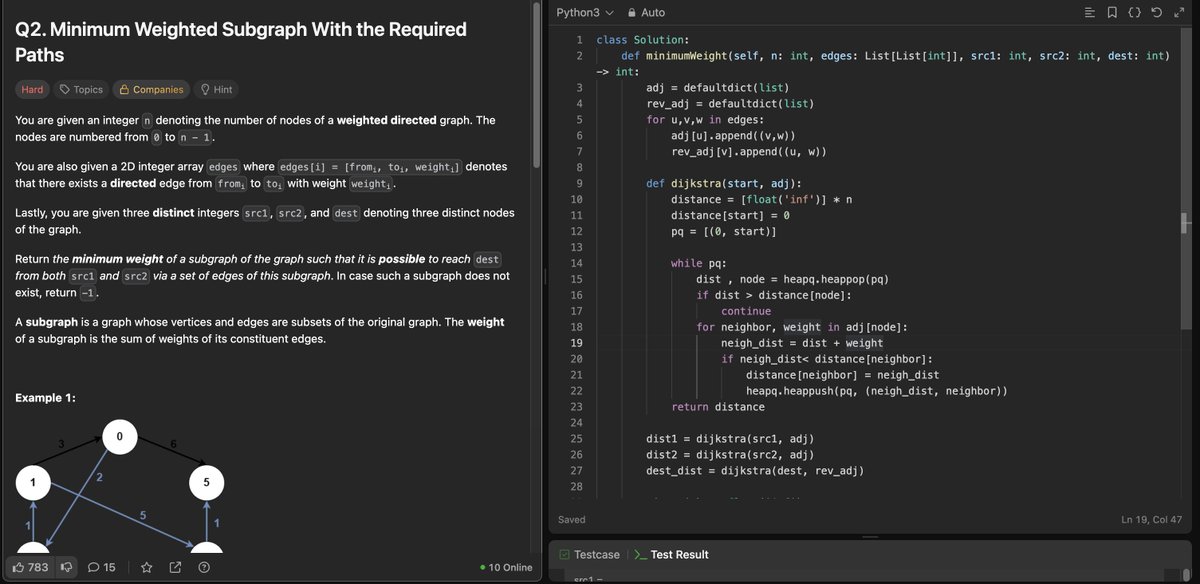
Day 2 of my "please don't let my brain turn to mush by vibe coding the whole day" LeetCode streak. 🛠️ Solved Minimum Weighted Subgraph With the Required Paths leetcode.com/problems/minim…
AIAlchemy tweet media
English
0
0
1
32
AIAlchemy
AIAlchemy@AiLchemy·
It is incredibly big of you to forgive the Indian people for an attack their government didn't even commit! 😭 Just a quick factual reality check: The Indian government you 'still don't like' is the exact same one that actually granted emergency sanctuary to your other warships (like the IRIS Lavan docking safely at Kochi port), keeping those sailors completely safe. Blaming the Indian government for what happened to the IRIS Dena in international/Lankan waters is like furiously yelling at the lifeguard who just rescued two of your friends because a shark bit the third one three beaches over. You might want to reconsider your news sources next!"
English
0
0
2
70
AIAlchemy
AIAlchemy@AiLchemy·
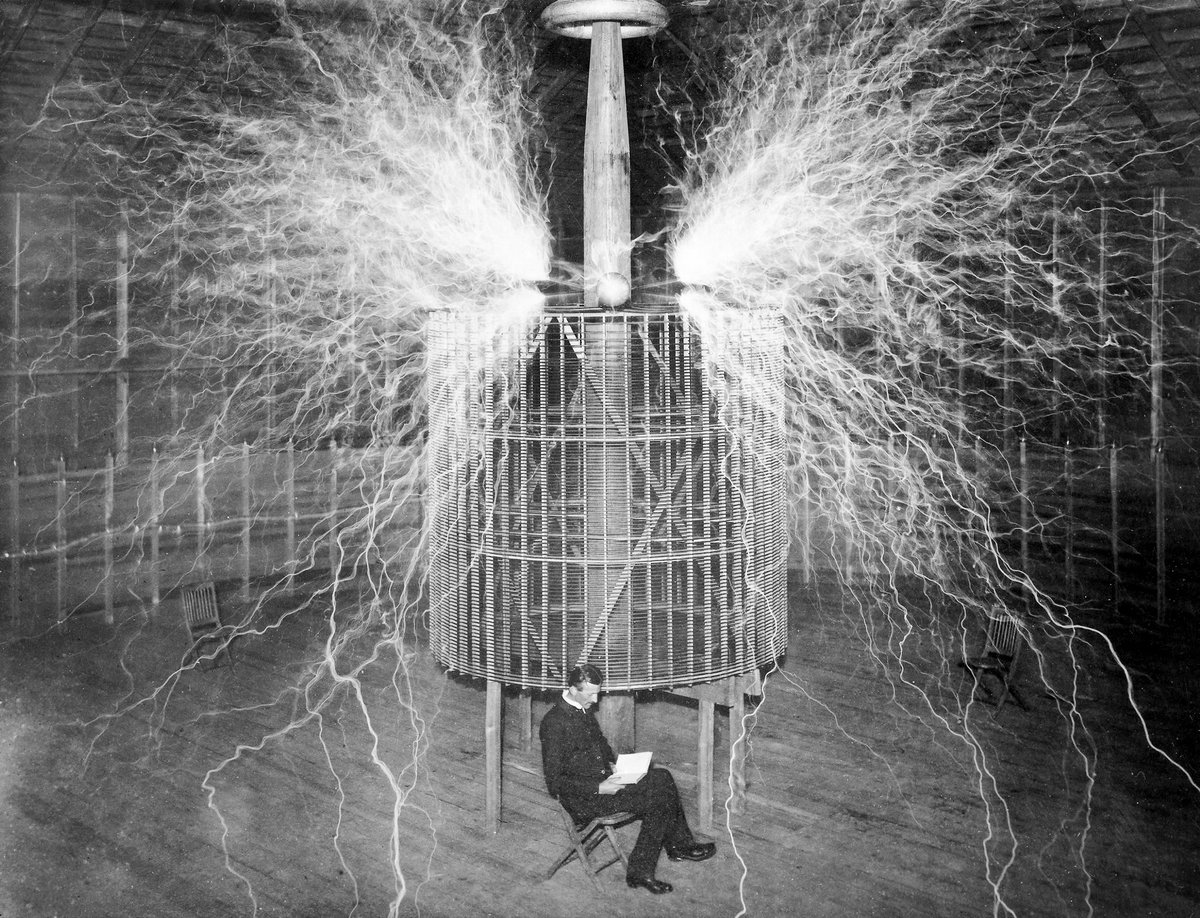
@NightSkyToday It’s pretty easy to 'be alone' when your reading lamp is a giant, sparking, million-volt death trap. I'm pretty sure everyone else just had the common sense to stand outside! ⚡
English
0
0
1
42
Night Sky Today
Night Sky Today@NightSkyToday·
“Be alone, that is the secret of invention; be alone, that is when ideas are born.” — Nikola Tesla
Night Sky Today tweet media
English
58
388
1.8K
46.4K
AIAlchemy
AIAlchemy@AiLchemy·
Here is the short version of how the rumor spread: -- Unverified reports claimed Netanyahu was injured or killed, which gained traction when his usually highly active son, Yair, abruptly stopped posting online. -- The Israeli government released a video of Netanyahu speaking. Due to poor lighting, shadows, and video compression, a blurry frame made it look like he had a "sixth finger." -- Conspiracy theorists and social media users immediately jumped on the visual glitch, claiming it was an AI deepfake used to cover up his death. -- Within days, video experts and fact-checkers confirmed the footage was authentic and the "extra finger" was merely an optical illusion. Netanyahu’s office put the rumors to rest with a statement: "The Prime Minister is fine." x.com/i/status/20324…
English
0
1
3
1.5K
Leading Report
Leading Report@LeadingReport·
BREAKING: Netanyahu’s office says “The Prime Minister is fine.”
English
753
485
8.6K
3.3M