Nelson Djalo | Amigoscode

362 posts

Nelson Djalo | Amigoscode banner
Nelson Djalo | Amigoscode

Nelson Djalo | Amigoscode

@AmigosCode

Founder of Amigoscode | Helping millions of people break into Software Engineering and DevOps 🤝 Building @portfollyio

가입일 Ocak 2018
34 팔로잉23.5K 팔로워
고정된 트윗
Nelson Djalo | Amigoscode
Nelson Djalo | Amigoscode@AmigosCode·
💻 Welcome to Amigoscode 💻 In 2010, Nelson started uploading YouTube videos while he was studying at university to help other students struggling with their coding experience. 10 years later, Nelson has amassed over 500k+ subscribers, with over 28+ million views. Nelson is one of the most popular and influential entities globally and is at the forefront of the coding community. With this being said, we are so excited to finally present Nelson's latest merchandise collection for all his amazing community. To this day, thousands of people have benefitted from the teaching method and content provided by Nelson, which has landed them in top-tier positions in companies such as Google, Amazon, Spotify and much more! We hope to see you follow this journey and become top-tier coders through the help of Nelson's courses!
English

13
17
202
51.1K
Nelson Djalo | Amigoscode
Nelson Djalo | Amigoscode@AmigosCode·
Java Crash Course - youtu.be/l3N_Uf-z8zE In this quick crash course, I’ll teach you the Java programming language from scratch. Whether you’re a beginner or just curious about how Java works, this video covers everything you need to know to get started — fast. 👍🏿 Join our free community to learn and grow - bit.ly/3VFWcGw #java #coding #interviewtips
YouTube video
YouTube
Nelson Djalo | Amigoscode tweet media
English
2
1
18
1.5K
Nelson Djalo | Amigoscode
Nelson Djalo | Amigoscode@AmigosCode·
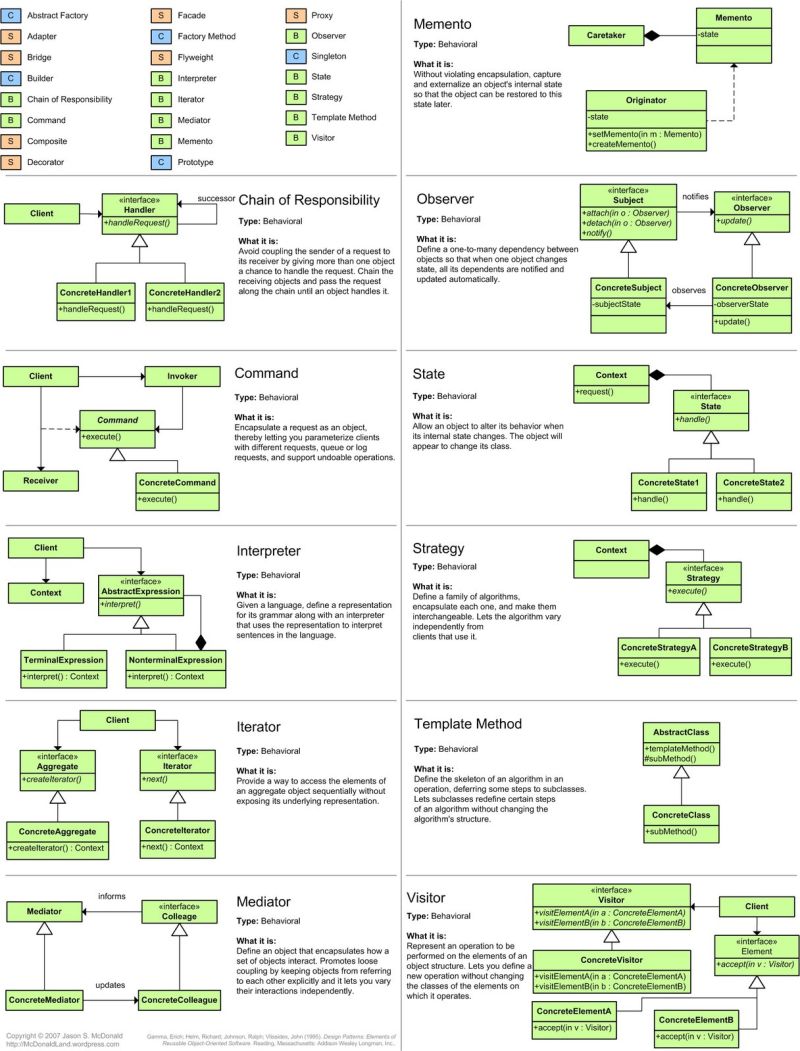
12 Essential Behavioral Design Patterns Every Software Engineer Should Know 1 - Memento: Capture and restore an object’s internal state without violating encapsulation. 2 - Chain of Responsibility: Pass requests along a chain of handlers until one handles them. 3 - Observer: Define a dependency so when one object changes state, dependents are notified automatically. 4 - Command: Encapsulate a request as an object to support parameterization, queuing, and undo operations. 5 - State: Allow an object to change its behavior when its internal state changes. 6 - Interpreter: Define a grammar and interpret sentences in that language. 7 - Strategy: Define a family of algorithms, encapsulate them, and make them interchangeable. 8 - Iterator: Access elements of a collection sequentially without exposing its internal structure. 9 - Template Method: Define the skeleton of an algorithm, letting subclasses fill in the steps. 10 - Mediator: Encapsulate how a set of objects interact to promote loose coupling. 11 - Visitor: Represent operations to perform on elements of an object structure without changing their classes. Which one do you most use? #systemdesign #coding #interviewtips
Nelson Djalo | Amigoscode tweet media
English
0
4
18
2.3K
Nelson Djalo | Amigoscode
Nelson Djalo | Amigoscode@AmigosCode·
🚀 New Video: How to Build APIs Using Spring AI, ChatGPT, and OpenAI - youtu.be/wExWF6VtN2E AI is reshaping the future of software — and now you can bring that power into your Java applications. In this video, I walk you through how to integrate ChatGPT with Spring Boot using Spring AI and OpenAI's API. 🔧 You’ll learn: - How Spring AI simplifies working with LLMs - Setting up your Spring Boot backend - Connecting to ChatGPT via OpenAI’s API - Building intelligent, production-ready APIs Whether you're a Java dev exploring generative AI or building smarter backend systems — this tutorial is for you. 📺 Watch here: youtu.be/wExWF6VtN2E Let me know what you think — and if you'd like to see more AI + Java content! #springai #springboot #chatgpt #openai #java #backenddevelopment #generativeai #llm #api #javadeveloper
YouTube video
YouTube
Nelson Djalo | Amigoscode tweet media
English
1
9
54
3.3K
Nelson Djalo | Amigoscode
Nelson Djalo | Amigoscode@AmigosCode·
Most Spring Boot developers make these REST API mistakes... Are you one of them? 📺 Watch the full video here: youtu.be/EgQJRB9Vs3Y After reviewing dozens of Java backend projects, I noticed the same issues again and again: ❌ Inconsistent resource naming ❌ Wrong HTTP status codes ❌ Exposing entities instead of using DTOs ❌ Missing pagination, validation, and security ❌ No API versioning or documentation So I put together a video showing the Top 10 Spring Boot REST API Best Practices every developer should follow in 2025. ✅ Clean architecture ✅ Proper status codes ✅ Global exception handling ✅ Secure and scalable APIs 🎯 Whether you're a beginner or shipping production apps, this will level up your backend game. #java #springboot #coding #interviewtips
YouTube video
YouTube
Nelson Djalo | Amigoscode tweet media
English
0
7
81
3.5K
Nelson Djalo | Amigoscode
Nelson Djalo | Amigoscode@AmigosCode·
Hey Amigos, 🚀 Want to take your coding skills to the next level? Join Amigoscode in collaboration with STEM Muslims Imperial College London at Imperial College London for an exciting workshop, designed to take you from idea to production. What’s in Store? 🔹 Build & Deploy an App from Scratch – Learn the step-by-step process of software development, from setting up an API to deploying a fully functional app. 🔹 Live Coding Demo & Interactive Exercises – Follow along as we walk through coding a real project, with opportunities to code live during the session. 🔹 DevOps & Cloud Technologies – Gain insights into modern software deployment techniques. 🔹 Exclusive Giveaways – Sneakpeek into some amazing resources available. 🎯 Who Should Attend? University students looking to build practical skills in software engineering. ​Anyone wanting a project to showcase on their resume or in technical interviews. ​Anyone looking to build out their idea from 0 to 100 🦾 📢 Limited Spots Available – Sign Up Now lu.ma/k9jdcmh3 ​📍Location Sir Alexander Fleming Building. Imperial College Rd, South Kensington, London SW7 2AZ, UK See you there iA! 💻🔥 #systemdesign #coding #interviewtips
Nelson Djalo | Amigoscode tweet media
English
0
1
9
3K
Nelson Djalo | Amigoscode
Nelson Djalo | Amigoscode@AmigosCode·
We’re excited to introduce brand new coding courses on Amigoscode 2.0! From beginner to advanced, dive into our comprehensive developer tracks and start building your skills today. ✅ Web Development ✅ Backend Development ✅ DevOps ✅ Full-Stack Lock in your access now! Pre-order today and level up your dev skills for life. 👉 Pre-order NOW - bit.ly/4fbH7V0 #systemdesign #coding #interviewtips
Nelson Djalo | Amigoscode tweet media
English
2
6
44
3.4K
Nelson Djalo | Amigoscode
Nelson Djalo | Amigoscode@AmigosCode·
🚀 A Year in the Making: Developer Learning Platform – Built by Developers, for Developers! 💻 It's been an incredible journey building a platform designed to empower developers, and I couldn’t have done it without the amazing support from my team and community. A huge shoutout to: 🙌 @OuhraOmar 🙌 @Amine0mari 🙌 @imadoualla As we prepare for a major shift to a monthly subscription model, this is your LAST CHANCE to get lifetime access at an unbeatable price! 🕒 🎯 What’s Coming Next: 🔥 Brand New Courses 🔥 Expert Instructors 🔥 Enhanced Learning Experience Lock in your access now! Pre-order today and level up your dev skills for life. 👉 Pre-order NOW - bit.ly/4fbH7V0 #systemdesign #coding #interviewtips
English
0
9
53
4.4K
Nelson Djalo | Amigoscode
Nelson Djalo | Amigoscode@AmigosCode·
SQL Joins YOU MUST KNOW 1. Inner join: Retrieves only matching records from both tables. 2. Left join: Retrieves all records from the left table and matches from the right table. 3. Left join with NULL check: Retrieves records from the left table with no match in the right table. 4. Right join: Retrieves all records from the right table and matches from the left table. 5. Right join with NULL check: Retrieves records from the right table with no match in the left table. 6. Full outer join: Retrieves all records where there is a match in either table. 7. Full outer join with NULL check: Retrieves records with no match in either table. 👍🏿 Subscribe to our newsletter - bit.ly/3x4j5dT #systemdesign #coding #interviewtips
GIF
English
0
7
40
1.8K
Nelson Djalo | Amigoscode
Nelson Djalo | Amigoscode@AmigosCode·
🚀 Understanding SQL Query Execution Order 🚀 In SQL, the order in which different clauses are processed can significantly impact the results of your queries. Here’s a breakdown of the typical execution order: 1. Source: This is where the data originates. It includes the tables involved in the query. 2. Merged: The `FROM` and `JOIN` clauses are processed here, merging data from different sources. 3. Filtered: The `WHERE` clause is applied to filter out unwanted rows, ensuring only relevant data moves forward. 4. Grouped: When we need aggregates, the `GROUP BY` clause groups the filtered data. 5. Having: The `HAVING` clause is used to filter groups based on aggregate conditions. 6. Selected: The `SELECT` statement determines which columns to return in the final result. 7. Ordered: The `ORDER BY` clause sorts the final result set according to specified columns. 8. Limited: Finally, the `LIMIT` and `OFFSET` clauses are applied to control the number of rows returned. Understanding this execution order helps in writing efficient queries and debugging issues. Keep this in mind next time you're working with SQL💡 👍🏿 Subscribe to our newsletter - bit.ly/3x4j5dT #systemdesign #coding #interviewtips
GIF
English
0
7
33
1.9K
Nelson Djalo | Amigoscode
Nelson Djalo | Amigoscode@AmigosCode·
Something BIG is coming to Amigoscode. Get ready to take your coding career to the next level! Stay tuned for an exciting announcement... 👀
Nelson Djalo | Amigoscode tweet media
English
1
1
23
1.8K
Nelson Djalo | Amigoscode
Nelson Djalo | Amigoscode@AmigosCode·
This is how SQL get Executed by DB engines ✅ Coding Order (How SQL Queries are Written) 1. SELECT: Specifies the columns or expressions to retrieve from the database. 2. FROM: Indicates the table(s) to query and the source of the data. 3. WHERE: Filters the rows based on specified conditions before any grouping or aggregation occurs. 4. GROUP BY: Aggregates rows that share the same values in specified columns into summary rows. 5. HAVING: Filters groups based on a condition, similar to `WHERE` but applied after grouping. 6. ORDER BY: Sorts the result set based on specified columns or expressions. 7. LIMIT: Restricts the number of rows returned by the query. ✅ Execution Order (How SQL Queries are Processed) 1. FROM: The query starts by gathering data from the source tables. 2. WHERE: Filters the rows from the `FROM` step based on given conditions. 3. GROUP BY: Organizes filtered rows into groups defined by specified columns. 4. HAVING: Applies conditions to these groups to filter out those that don’t meet the criteria. 5. SELECT: Selects the specific columns or expressions to include in the result set. 6. ORDER BY: Sorts the selected rows according to specified columns. 7. LIMIT: Limits the number of rows returned, based on a specified number. 👍🏿 Subscribe to our newsletter - bit.ly/3x4j5dT #systemdesign #coding #interviewtips
GIF
English
2
65
360
17.8K
Nelson Djalo | Amigoscode
Nelson Djalo | Amigoscode@AmigosCode·
Save this SQL Commands Cheatsheet Understanding the core categories of SQL commands is essential for mastering database management and data analysis. Whether you're defining the structure of your database, controlling transactions, querying data, or managing access, each SQL command plays a critical role. Let's break down these commands and functions to see how they empower you to interact with your database efficiently. 1. DDL (Data Definition Language): Commands to define and manage the structure of database objects. 2. TCL (Transaction Control Language): Commands to manage transactions in the database. 3. DQL (Data Query Language): Commands to query and retrieve data from the database. 4. DCL (Data Control Language): Commands to control access to data within the database. 5. DML (Data Manipulation Language): Commands to manipulate data stored in the database. Functions - Aggregate Functions: Functions that perform calculations on a set of values and return a single value (e.g., SUM, AVG, COUNT). - Window Functions: Functions that perform calculations across a set of table rows that are related to the current row, without collapsing the result into a single value (e.g., ROW_NUMBER, RANK, LEAD). 👍🏿 Subscribe to our newsletter - bit.ly/3x4j5dT #systemdesign #coding #interviewtips
GIF
English
0
16
113
5.6K
Nelson Djalo | Amigoscode
Nelson Djalo | Amigoscode@AmigosCode·
Network Protocols You MUST KNOW In the world of networking, various protocols ensure that data is transferred seamlessly and securely. Here's a quick look at some of the most common network protocols: - HTTP (Hypertext Transfer Protocol): The foundation of data communication on the web, HTTP allows web pages to be requested and delivered across the internet. - HTTPS (Hypertext Transfer Protocol Secure): An extension of HTTP, HTTPS adds a layer of security by encrypting data, making it safer for sensitive transactions online. - FTP (File Transfer Protocol): A protocol used to transfer files between computers over a network, FTP is essential for managing and sharing large amounts of data. - TCP (Transmission Control Protocol): Ensures that data sent over the internet arrives intact and in the correct order, making it reliable for most applications. - IP (Internet Protocol): The addressing system for the internet, IP assigns unique addresses to devices, enabling them to be identified and communicate with each other. - UDP (User Datagram Protocol): A faster but less reliable protocol compared to TCP, UDP is ideal for applications where speed is critical, like gaming and video streaming. - SMTP (Simple Mail Transfer Protocol): The protocol responsible for sending emails across networks, ensuring messages reach their intended recipients. - SSH (Secure Shell): A protocol that provides secure access to remote computers, widely used for system administration and secure data transfers. - IMAP (Internet Message Access Protocol): Allows users to access and manage their email on a remote server, making it easier to sync messages across multiple devices. These protocols are the unsung heroes of the internet, ensuring that our online interactions are efficient, secure, and reliable. Understanding them is key to grasping how the internet functions at its core. 👍🏿 Subscribe to our newsletter - bit.ly/3x4j5dT #systemdesign #coding #interviewtips
GIF
English
0
31
166
8.5K