

Clive Bourke
29 posts

AI does 90% of our initial GTM strategy formulation all in just these 6 prompts.
This has been a MASSIVE unlock for speed to winning GTM for our diverse client base.
Here’s what these prompts cover:
1/ Deep Market Research
This prompt pulls all relevant information specific to what would be useful for GTM knowledge for the company you're looking to develop a GTM strategy for.
The purpose of generating this information is to use it as context for future prompting.
2/ TAM Mapping
This prompt will discover all relevant industries & sub-industries that your company could work with, plus statistics on general market size, industry value, and industry growth rates.
Outputs from this prompt will also be useful context for other prompts.
3/ ICP Validation
This prompt will develop ICPs from the industries uncovered from the TAM Mapping output.
It will score each industry segment from highest to lowest priority, find the best fit personas from each industry segment, outline their specific needs & pain points, and craft some messaging ideas around this information.
4/ Company Account Sourcing
This deep research prompt will find unique databases for any set of company data that you are looking for.
From online directories, to scraping methods, to other niche paid databases - this prompt will give you a list of best fit options for your particular targeting case.
5/ Targeting Keywords Generation
This prompt will generate a list of relevant industry and persona keywords to use for specific database filtering for when your developing lists in tools like Apollo.
These keywords are typically a lot more accurate than using the general industry filtering.
6/ Messaging Creation
This prompt will create multiple email script variations based on the context generated from previous prompts.
It'll create unique variations on length of the emails, different offers, pain points, case studies, and complexity.
Want these copy-and-paste prompts for yourself?
🔥 Like + Comment "Prompts" and I'll DM you a document with all of the prompts.
(Must be following to receive)

English
Clive Bourke 리트윗함
'Speak Now' youtu.be/Vwhaqnno1ac?si… from @BanjomanFilms @elkfilms encourages us to discuss organ donation with our family. The film sets the scene of a bride being escorted down the aisle by an organ recipient thanks to her late father’s generosity as an organ donor #Havethechat
YouTube
English
Clive Bourke 리트윗함

The world's most beautiful towns and cities at Christmas - a thread 🧵
1. Dresden, Germany 🇩🇪

English
Clive Bourke 리트윗함
I used to be embarrassed to say I went to Harvard--I didn't want people to think I was an arrogant D-bag. Thanks to the President of Harvard's testimony, that's changed. I'm now embarrassed because I don't want them to think I'm a bigoted d-bag.
English
Clive Bourke 리트윗함

Clive Bourke 리트윗함

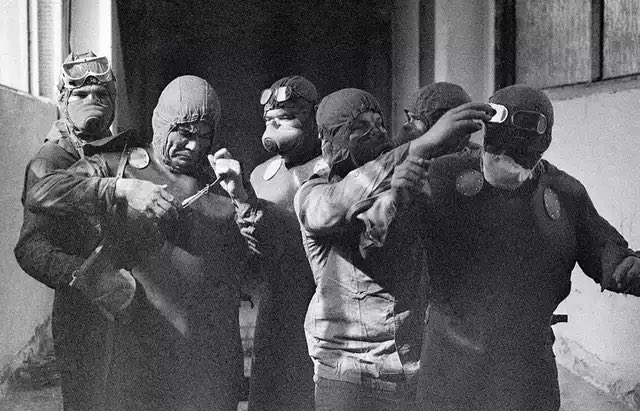
The three heroes gearing up to save Europe from nuclear fallout: Alexei Ananenko, Valeri Bezpalov, Boris Baranov, 1986.
10 days after the Chernobyl accident, engineers learned of impending nuclear steam explosions. The plant's water-cooling system had failed, and a pool of water had formed directly under the reactor. Without any cooling, it was only a matter of time before the reactor's core dropped into the pool, setting off massive steam explosions, shooting radiation high into the sky and spreading it across Europe and even parts of Asia and Africa.
Only one man knew the location of the release valve, and his name was Alexei Ananenko, one of the plant's engineers. He, along with another engineer Valeri Bezpalov and shift supervisor Boris Baranov, were asked to take on the suicide mission. The men were given the option to refuse; however, Ananenko simply replied, "How could I do that when I was the only person on the shift who knew where the valves were located?"
They entered Chernobyl via the reactor's chamber, standing in waist-high radioactive waters in total darkness. Baranov's diving light was reportedly dim and periodically flickering on and off. Every minute spent in the facility was another minute that isotopes freely ravaged their bodies. The light eventually burned out permanently, but not before they saw a familiar pipe that they knew led to the valves they were looking for. They grabbed the pipes and followed it until they found the two gate valves, which they twisted open to let the water out. The pool quickly began to drain.
Many news sources reported that all three men died within a few weeks due to radiation sickness. However, according to Andrew Leatherbarrow, author of the 2016 book "Chernobyl 01:23;40," Ananenko continues to work in the nuclear energy industry, and Bezpalov was also found to be alive. Baranov died in 2005 of heart failure at the age of 65.
It is believed that the water absorbed much more radiation than initially believed and ultimately saved their lives.
English
Clive Bourke 리트윗함

UBI critics: If we give people money without conditions, people will stop working.
UBI pilot: Turns out the UBI group worked more than the control group.
UBI critics: Well of course giving people more money works. But it costs too much.
UBI pilot: Turns out the money spent on UBI reduced other costs greater than the UBI.
UBI critics: Yeah but people will stop working.
GIF
English
Clive Bourke 리트윗함

1970 to 1988 is often referred to as Disney's "Dark Age."
During the "Dark Age," Disney's animated films were mostly critical and commercial failures.
Then, in the late 1980s, a story consultant named Chris Vogler wrote a 7-page memo that helped spur "The Disney Renaissance."
In 1978, Chris Vogler was a film student at USC. For one of his classes, Vogler was reading "The Hero With A Thousand Faces" by the mythologist Joseph Campbell.
That year, the first Star Wars movie was released. Vogler saw it in the theaters, and he was almost certain Star Wars was putting Campell’s ideas to work.
Vogler distilled Campbell’s complex ideas into a term paper that identified how George Lucas was using mythic elements throughout Star Wars.
A few years later, Vogler was hired as a story consultant at Disney where "memos were a big part of the corporate identity...following the example of [CEO, Jeffrey] Katzenberg, an absolute master [of "the memo art form"].
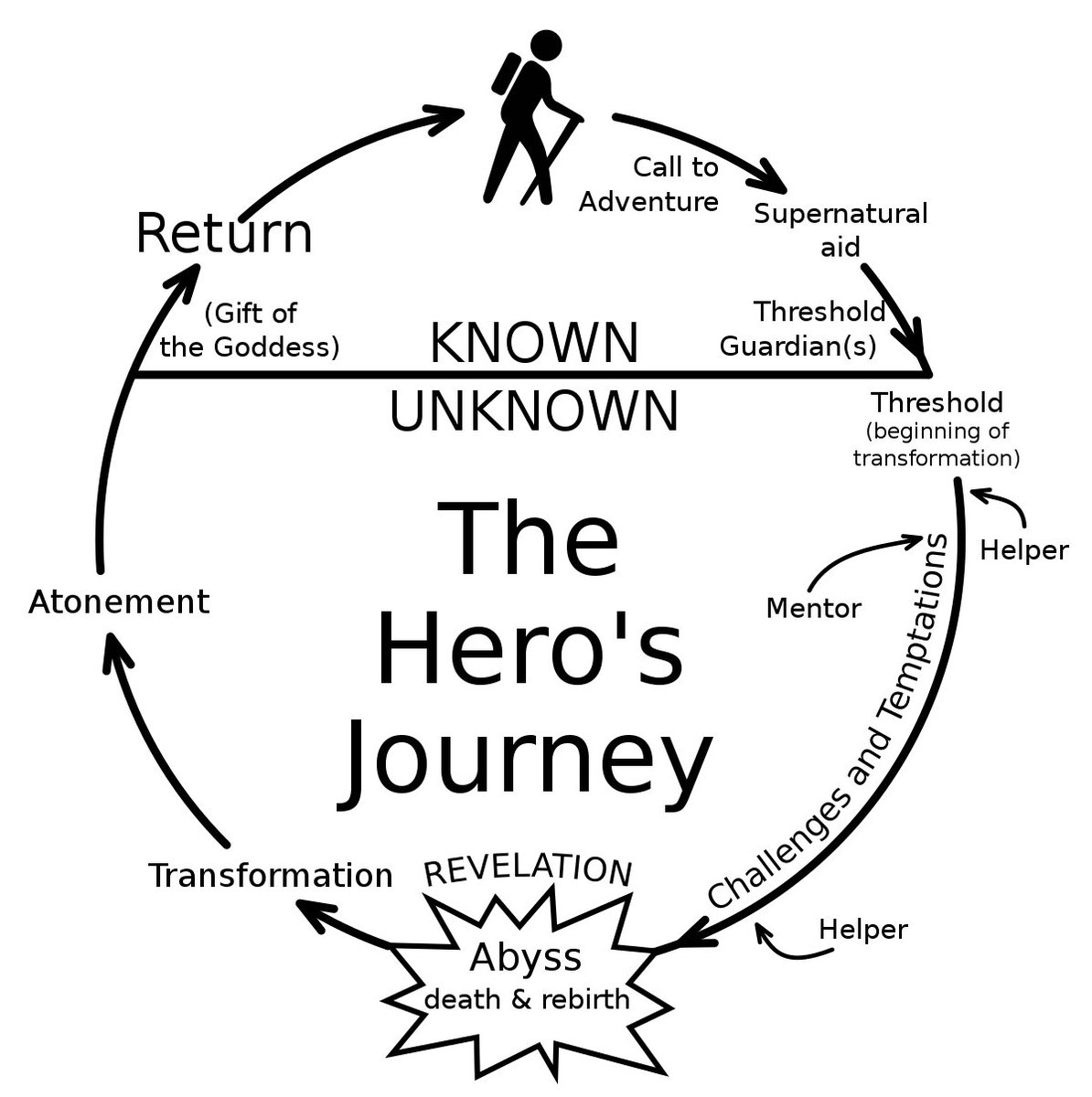
So Vogler adapted that term paper into a 7-page memo, in which he outlined “the twelve stages of the hero’s journey.”
The hero's journey, Vogler summarizes, goes like this:
The hero is introduced in his ORDINARY WORLD where...
The hero receives the CALL TO ADVENTURE.
The hero, reluctant at first, REFUSES THE CALL.
The hero MEETS A MENTOR and is encouraged to CROSS THE THRESHOLD where...
The hero encounters TESTS, ALLIES, and ENEMIES.
The hero reaches the INNERMOST CAVE where he endures the SUPREME ORDEAL.
The hero SEIZES THE SWORD or the treasure and...
The hero starts to take THE ROAD BACK. Along the way...
The hero is RESURRECTED and transformed by their experience, and then...
The hero RETURNS to his ordinary world with a TREASURE, BOON or ELIXIR to benefit their world.
Vogler's memo was read by CEO Jeffrey Katzenberg.
Katzenberg made it required reading for everyone in the company, and then, he sent Vogler to work with the Animation team working on "King of the Jungle"—what would become "The Lion King."
On a corkboard, the team pinned the storyboard for "The Lion King," "with the twelve stages of the Hero's Journey clearly marked as signposts."
Using this 12-step program as a roadmap, "The Lion King" was released in 1994 and became the most successful animated film ever, and for a while, the most profitable film in history.
Takeaway 1:
The comedian Hasan Minhaj likes to say that his job is to distill coffee into espresso:
"My job is to distill coffee into espresso...to take complicated things and make it simple so people can walk away after twenty minutes with a clear take and perspective.”
Vogler wasn't the first to come across Joseph Campbell's complex ideas. He was the first to distill them into a practical guide for storytellers.
Takeaway 2:
Vogler was right. George Lucas did indeed read Joseph Campbell before bending the story of Luke Skywalker to follow the twelve steps of the hero’s journey.
In fact, Lucas calls Campbell his Yoda. Not just him. Not just Star Wars. Toy Story, Finding Nemo, Aladdin, Harry Potter, Mulan, Moana,...
Once you know the 12 steps, you see the hero with a thousand faces everywhere.
---
“There are only two or three human stories, and they go on repeating themselves as fiercely as if they had never happened before.” — Willa Cather
English
Clive Bourke 리트윗함

Clive Bourke 리트윗함

Clive Bourke 리트윗함

In 2022, my tweets had over 1 billion impressions.
On careers, relationships, business, decision making, health, time, and more.
My 10 most popular pieces from the year:
English
Clive Bourke 리트윗함
20 significant mental errors (you don’t know you’re making):
English
Clive Bourke 리트윗함

Waking up every morning to the realization that we are going to the World Cup may be the best feeling I ever had ☘️🇮🇪

English
Clive Bourke 리트윗함
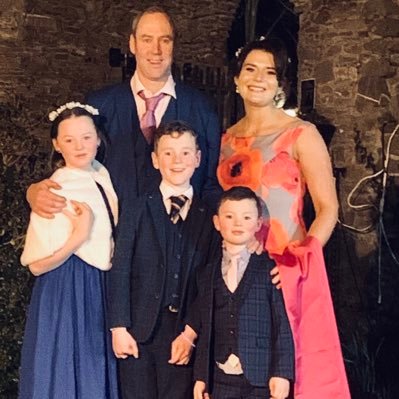
@snoxyy14 I’m his Mammy. To everyone there who cheered him, stood for him and came up to him afterwards, you’ll never know how happy you made him. He’s been singing Christy since before he could talk, and Christy has replied to every letter Míceál wrote him. Christy is a living legend.
English
Clive Bourke 리트윗함

Leadership job interview is ultra-competitive.
But those who prepare stand out no matter what.
THREAD: 15 UNCOMMON interview questions asked at Google, Amazon and Netflix and what they really mean:
English
Clive Bourke 리트윗함
Clive Bourke 리트윗함

Clive Bourke 리트윗함

If you haven't read these 21 books, you shouldn't be leading anyone.
THREAD:
English
Clive Bourke 리트윗함

Driving home last night while stopped at a red light, a man tried to get into my car. He was with 3 men. They had a jeep with a horse box. There were no other people or cars around. A locked door and quick acceleration saved me. I’ll never forget the excitement in their faces.
English
Clive Bourke 리트윗함
I recently found out I'm going to be a father.
Here are the principles I want to teach my child to live by:
English