“It will sound strange that a minister of the Church of Scotland who had passed through the usual curriculum in the Divinity Hall, should have only had a casual knowledge of a group of theologians who are held by competent judges to be second to none in the Scottish Church. Indeed, one of them, Dr. John Forbes of Corse, is regarded as the greatest theologian that our country has produced.”
~ D. Macmillan, The Aberdeen Doctors, ch. II
"[W]e may distinguish of the person that is said to be justified; either he is a sinner, in the state of nature; or a believer, in a state of grace; whence ariseth the two-fold justification here mentioned. The justification of a sinner, in the remission of his sins through the imputation of Christ’s righteousness, and acquitting him from the condemnation of the law, is the justification properly so called, and which Paul speaks so much of; and this is by faith only. The justification of a believer, is his absolution from condemnation by the gospel, and the charge of infidelity, or hypocrisy, and is no other than that declarative justification James speaks of, or an asserting and clearing up the truth and reality of the former justification, which is done by good works, as the signs and fruits of the faith, by which that former is obtained: and this is but improperly called justification. The former is an absolution from the general charge of sin, this from the special charge of hypocrisy, or infidelity. A sinner’s great fear (when first awakened to a sense of his sin and misery) is of a holy law, and a righteous Judge ready to condemn him for the violation of that law; and so his first business is to look to Christ by faith for righteousness, and remission of sin. But when he is justified by that righteousness, men may charge him with hypocrisy or unbelief, and so may the devil and conscience too, when faith is weak, or a temptation strong; and therefore his next work is to clear himself of this imputation, and to evidence the truth and reality of his faith and justification in God’s sight, which must be done by producing his obedience and good works, as the indications of his faith; and hereby he proves that he hath indeed closed with the promise of the gospel, and so is clear of the charge of not believing it, which was false; as well as (by consequence) is justified from the charge of sin against the law, which was true."
~ Matthew Poole, Commentary on James 2:24
“[N]o one is justified before God by the merits of works whether internal or even external, but by faith alone. As we taught prolixly above. But we openly preach that solitary and dead faith cannot justify. Just as the hand of a man alone apprehends, but not solitary, only the eyes see, but not solitary, the ear alone hears, but not solitary. For although each member exercises its proper operations in the body, yet separated, or existing apart from the rest of the members, it would not be fit for exercising that operation.”
~ John Forbes of Corse, Historico Theologie, VIII. XXV. 2.
I am once again begging Protestants to go back to their own sources. This whole "good works necessary to salvation" slop is tiresome. Yes. They are. We have historically said as much:
anglicanaesthetics.substack.com/p/the-necessit…
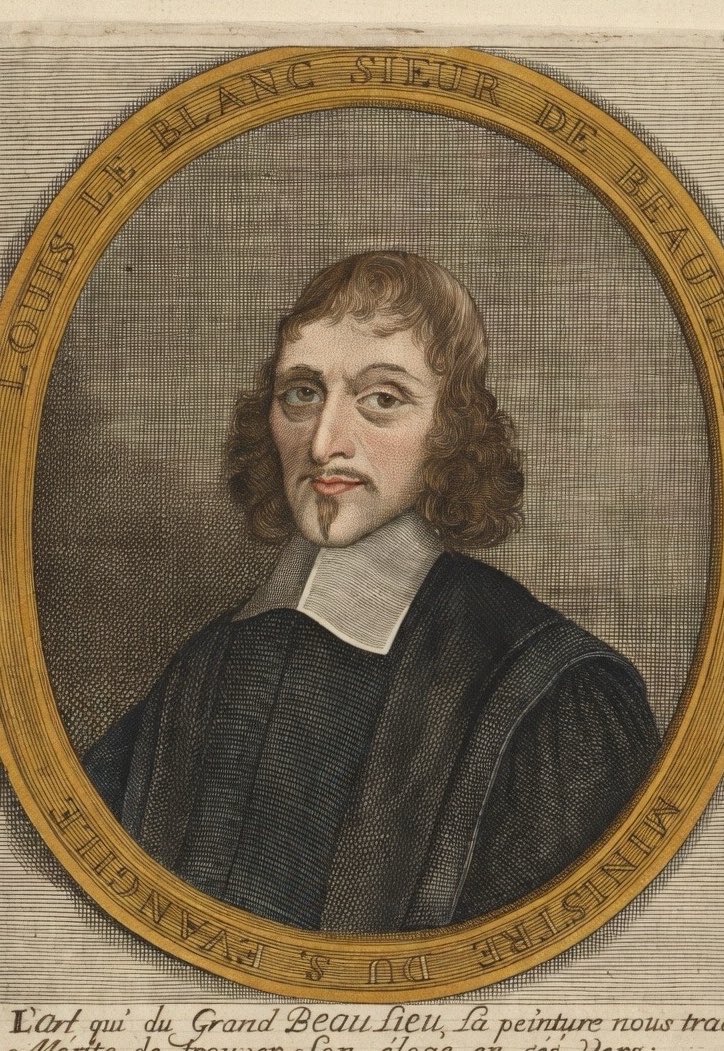
“[T]he ability to do good and to perform actions that are pleasing and acceptable to God is a certain perfection that can be absent from a free agent while the nature and essence of freedom remain intact. For by all consensus, freedom in action remains in demons and the angels of darkness, nor is it entirely lost in humans condemned to eternal damnation by God, and yet neither the Devil nor the condemned humans can do good or perform any action that is approved by God. Indeed, neither in this life can a person corrupted by sin and devoid of God's grace perform anything that is truly good and pleasing to God, according to the saying of our Lord, "Without me you can do nothing," and the corresponding statement of the Apostle, "Not that we are sufficient of ourselves to think anything as of ourselves: but our sufficiency is from God." Yet the hardened and utterly forsaken person retains their freedom in action. John 15:5; 2 Corinthians 3:5.”
~ Louis Le Blanc, Theological Theses, Free Will: Part 1, §XXXIV
Richard Baxter's exposition on the 11th Article of the 39 Articles: Of the Justification of Man.
"Art. 11. We are accounted righteous before God only for the Merit of our Lord and Saviour Iesus Christ, and not for our own works or deservings: wherefore that we are justified by Faith only, is a most wholesom Doctrine, &c.]
Expos. Tho' he that doth righteousness is righteous, and the Scripture throughout and frequently mentioneth an inherent personal Righteousness necessary to Salvation, yet this is no Universal Righteousness, nor such as will justifie us according to the Law of Innocency or Works; but is meerly subordinate to the Merit and Efficacy of the Sacrifice and Righteousness of Christ, which only meriteth for us as a Price, our Faith being only the requisite (yet given) moral qualification for the reception of the free gift of Pardon, Justification and Adoption, and hath not the least part of the Office or Honour of Christ; yet are Christ's words true, That by mens words they shall be justified or condemned: And all men shall be judged according to their works: And James truly saith, that by works a men is justified, and not by faith only: Not by works of perfection or of Moses Law, nor any that as a price or commutation do make the reward to be of Debt, and not of Grace; but by a practical Faith or Christianity: such Acts as Faith it self is, and prove our Belief to be such as Christ hath promised Justification and Salvation to; such as by justifying Belief to be sincere, do justifie the person against the Charge of Infidelity, Hypocrisie, Impenitence and Ungodliness, Christianity is that Faith which Paul opposeth to Works." (R. Baxter's sence of the subscribed articles of religion, pg. 7-8.)
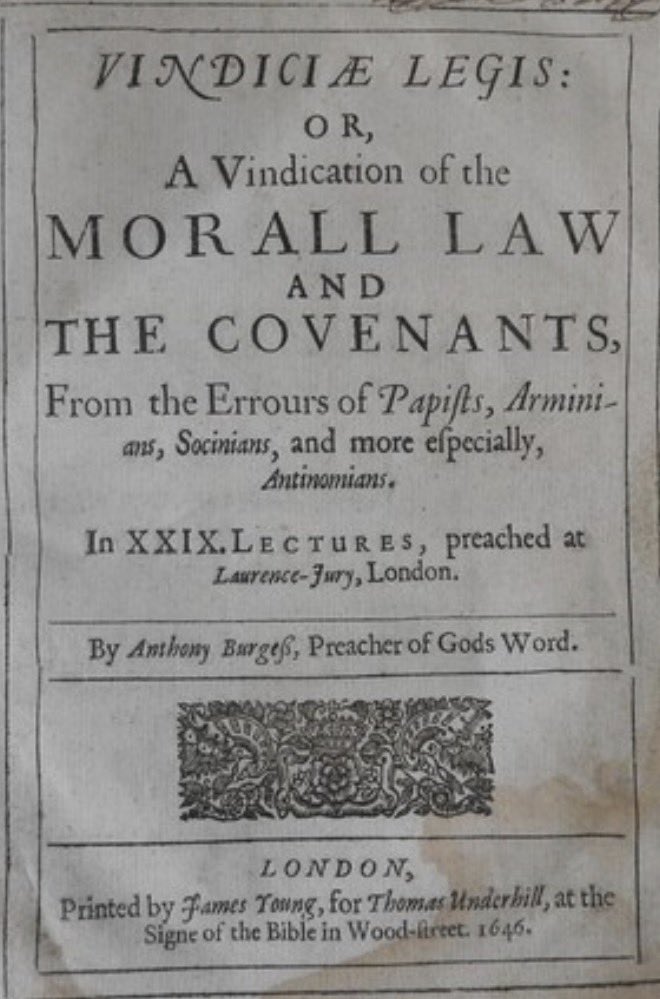
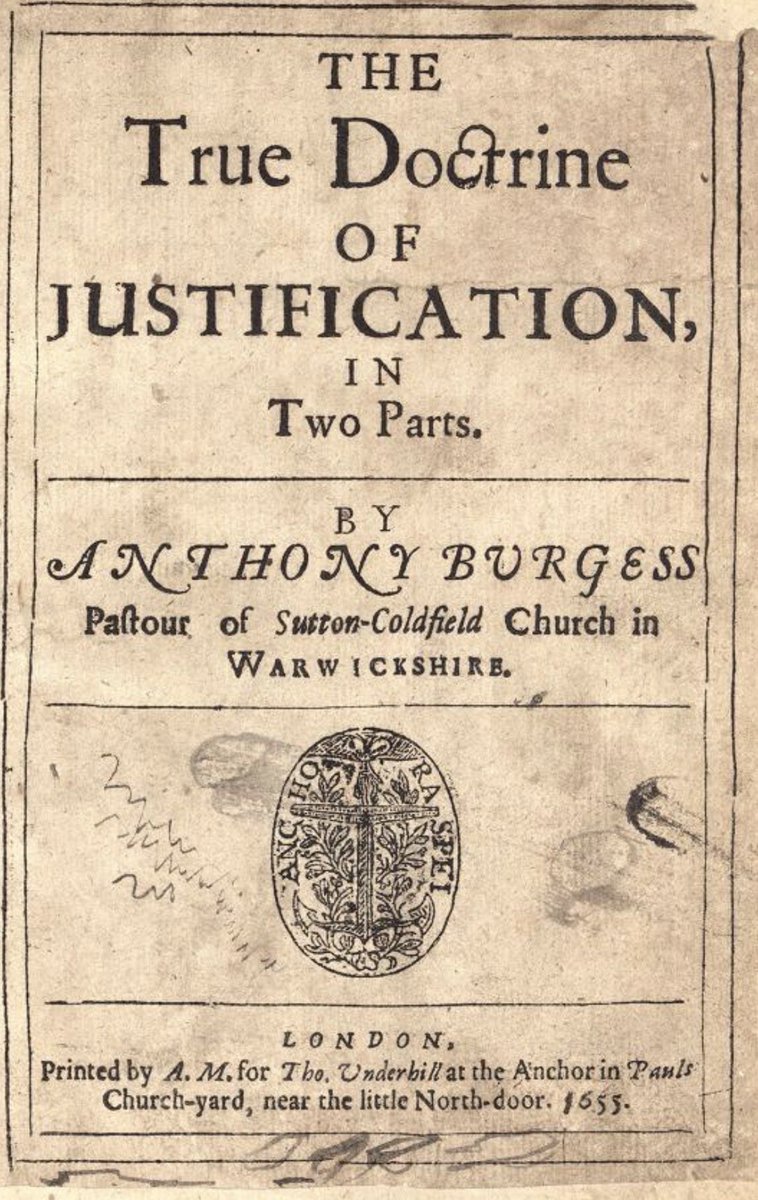
Westminster divine Anthony Burgess, on the conditionality of good works for salvation:
“Good works are a condition without which a person cannot be saved. While a man cannot deduce the cause of his salvation from their presence, their absence may lead to the conclusion of damnation. Therefore, the Antinomian's assertion that good works do not profit us, and bad works do not hinder us, as Islebius claimed, is inexcusable.”
-Anthony Burgess, 𝑉𝑖𝑛𝑑𝑖𝑐𝑖𝑎𝑒 𝐿𝑒𝑔𝑖𝑠, Lecture 4
“Amphibology is an ambiguous construction, making the sense
doubtful. Such as:
- Faith alone justifies.
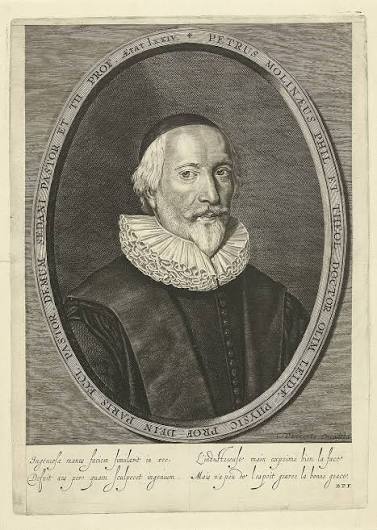
It cannot be known whether the meaning is that faith *being alone* justifies; or else that faith justifies *only.* In the first sense it is false; for faith alone without good works is no true faith, and by consequent justifies not. But in the second sense, it is true that faith only justifies, because it only has the property to justify. So it is true in one sense, that the eye alone sees, but it is false in another sense that the eye sees alone. For an eye that is out of the head does not see.” — Pierre Du Moulin, Elements of Logic Bk. 6. Ch. 1
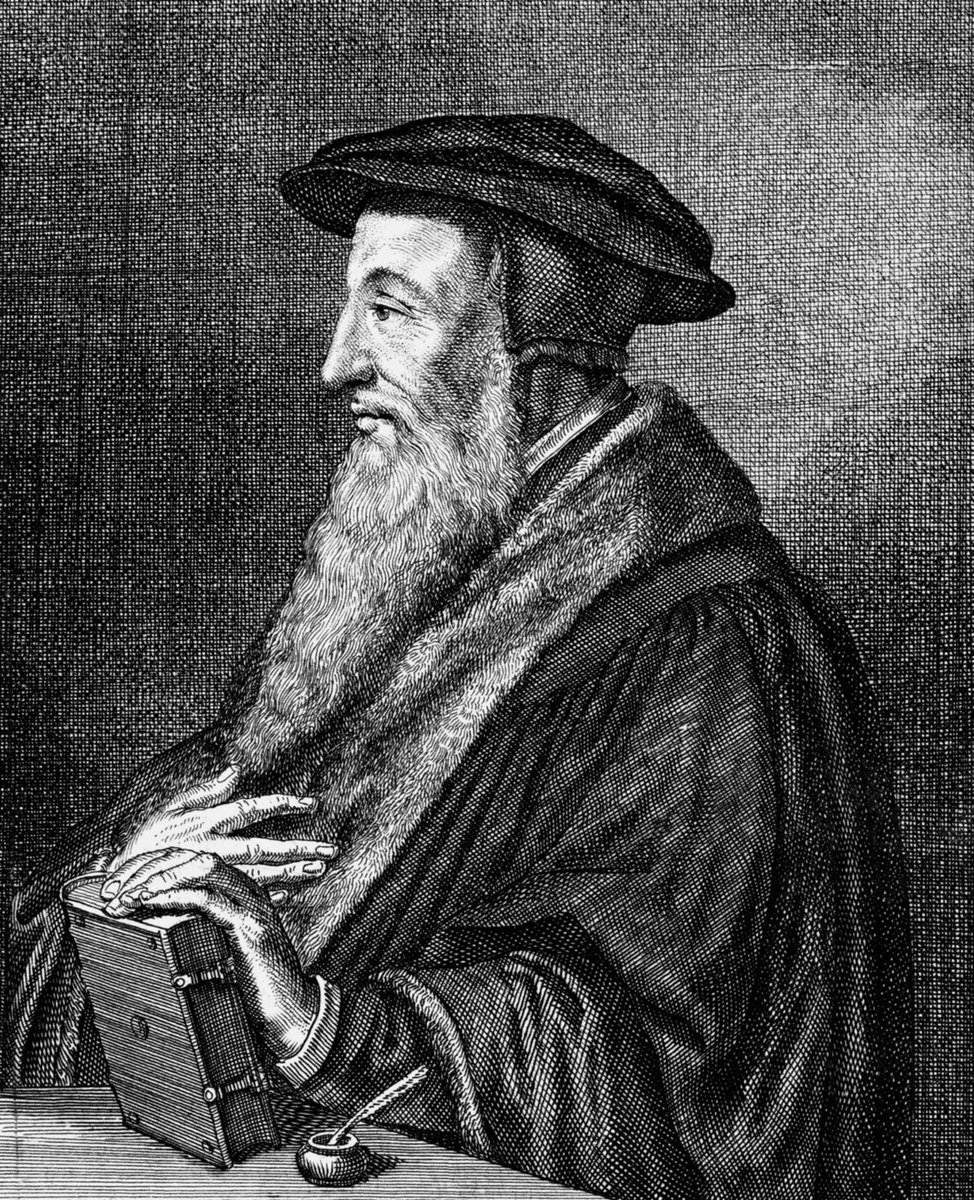
John Calvin teaching that God also rewards good works with eternal life, as opposed to those who teach eternal life is gifted to faith alone:
"It is the doctrine of Scripture, moreover, that our good works are constantly covered with numerous stains by which God is justly offended and made angry against us, so far are they from being able to conciliate him, and call forth his favor towards us; and yet because of his indulgence, he does not examine them with the utmost strictness, he accepts them just as if they were most pure; and therefore rewards them, though undeserving, with innumerable blessings, both present and future. For I admit not the distinction laid down by otherwise learned and pious men, that good works merit the favors which are conferred upon us in this life, whereas eternal life is the reward of faith only. The recompense of our toils, and crown of our contest, our Lord almost uniformly places in heaven."
—John Calvin, Institutes, 3.15.4
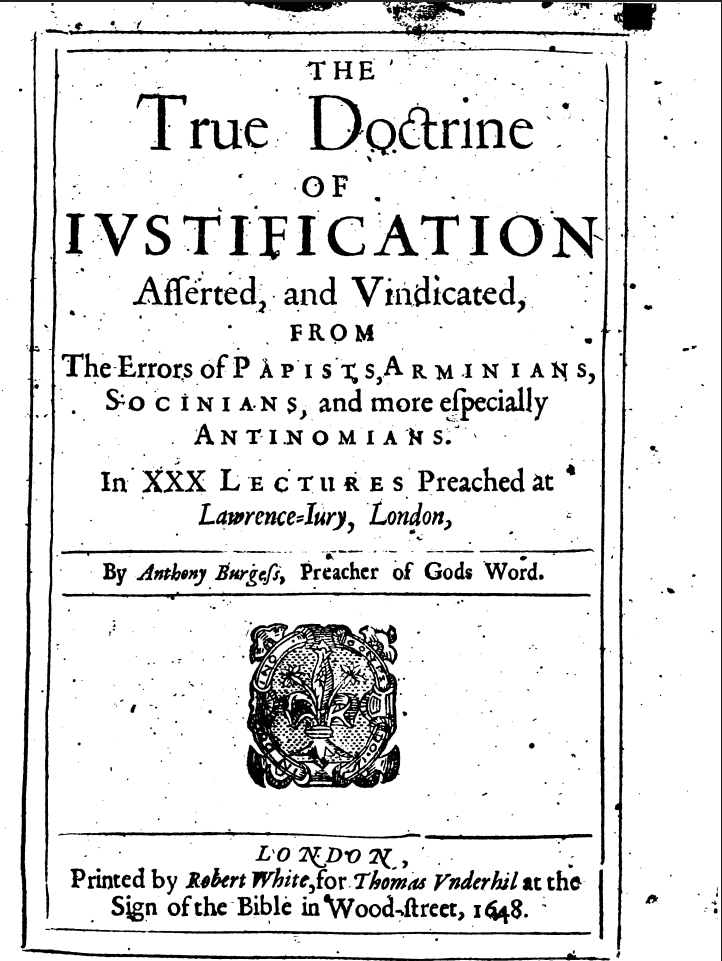
Westminster Divine Anthony Burgess on the increasing & reiteration of our Justification and Pardon:
"It is true, in some sense learned men say,
Justification may increase, viz. extensive, not intensive, as they express it, by way of extension, when more sins are pardoned, not intensively in its own nature. Even as the soul of a man in its information of the body, admits of no increase intensively, but it doth extensively, the more the parts of the body grow, the further doth its information extend."
—Anthony Burgess, True Doctrine of Justification, Lect. XXIX
“This Justification of us is not necessary at first only, while we are coming out of our sin, but in the whole progress of our Sanctification… Justification for the particular acts of it, remitting of sin, and imputing of Christ's righteousness, [is] daily and continually performed: Even as in our natural life, though we be not daily created, yet we need a constant preservation in that life we were created in… Hence in the text it is, ὁ δικαιῶν, God that is continually justifying of us.”
—ibid. Serm. XIV
“Particular acts of pardon, and imputing of Christ's righteousness, are continually by God communicated unto us: neither may we think, That our sins past, present and to come, are all taken away by one sentence, so that there is no new or iterated pardon… It is true according to the Antinomian Divinity, which saith, there is no sin now in the Church, this Prayer [‘Forgive us our sins’] doth no more belong to us than to the Angels in heaven: therefore the Antinomian makes not the meaning of this Prayer to be as if we prayed for the forgiveness which we had not before, but only for more full and rich assurance of it.”
—ibid. Lect XIV
"[T]his covering [imputation of righteousness] is limited to those sins which are past, and repented of; not to new sins committed; they are not covered without a new gracious act of God's favor. David before this sin committed that is spoken of in the Psalm, he had his former sins covered, but this was not covered, till he did acknowledge it, and then saith he, Thou forgavest the iniquity of my sin: Though therefore God should not see the sins past, yet the new ones committed, they are taken notice of by him."
~ Anthony Burgess, True Doctrine of Justification, Lect. XXV
“For though Christ's obedience was truly and properly so, being under a command of God, yet not only as he was God, but as he was man, he was, ársipaçós, and, ávauápintos, impeccable, or free from the temptation of sin. Therefore its detestable blasphemy of Durand and other Schoolmen, saying, Christ might have sinned,”
— Anthony Burgess, True Doctrine of Justification, Lecture XII
"[W]e also thereby believe that the Holy Virgin was temporally & perhaps yet in the womb renewed by the Spirit of God & born again: sin was forgiven unto her through the merit of her Saviour, so that in her remained no damnation or dominion of sin: She, after her regeneration, never committed any wilful, intentional sin or vice & was more sanctified, more freed from sinful frailties than even any of the most holy children of God. And it would herewith be a very inapt, yea, if it happened out of intentional malice, a godless speech, if someone would want to say: “The holy Virgin Mary was a woman like other women.” Then, not to mention, that no other woman bore the Saviour unto the world: thus, you can well hope it, but are not certain, that this or that woman be a child of God & of salvation, while Holy Writ itself testifies such of the Holy Virgin. Moreover, no other woman, not even the pious Sarah, Rebecca, Deborah, Hannah, Elizabeth, or others who are remembered in God’s Word, was adorned with such high gifts & graces, faith & virtues, as the Holy Virgin & Mother of God. A true Christian should herewith guard himself very diligently from suchlike erroneous speeches."
~ Johann Heinrich Heidegger, Short Instruction On The holy & highly lauded Virgin Mary, q.22
"Last autumn, Nicolaus Serarius and I were at the salt water fountains of Schwalbach. There we conveniently met David Pareus, a Calvinist and a professor at Heidelberg. We greeted the man in a humane fashion, and he did so in turn. As we walked, he amicably and modestly objected to me that, in a certain disputation, I … wrote that the “God of the Calvinists is the author of sin.” I responded that it was solidly proved by me from the words and opinions of Calvin. In response, Pareus said, “Let it be that this is the opinion of Calvin but not of the Calvinists.” Smiling, Serarius proposed the following: “Lord Pareus, this quarrel between you [and Becanus] will be settled easily [once] the "ists" [in Calvinists] is expunged.” This [solution] was pleasing to Pareus."
~ Martin Becanus, Summa theologiae scholasticae, vol. 1: De Deo, attributisque divinis, sanctissima Trinitate, angelis et daemonibus, operibus sex dierum, ac statu innocentiae (Paris: François Jacquin, 1622), 355. Cited in Beyond Dordt and De Auxillis
“Paul also considers another thing, viz., that because the Law requires a perfect righteousness, it cannot be received by any mortal fruitfully; for however any one may study to obey God, yet he will still be far from perfection; and, therefore, it is necessary to come to the Gospel, wherein that rigorous requirement is relaxed, because, through the interposition of pardon, the will to obey is pleasing to God instead of perfect obedience.”
—John Calvin, Harmony of the Law, commentary on Deut. 30:11
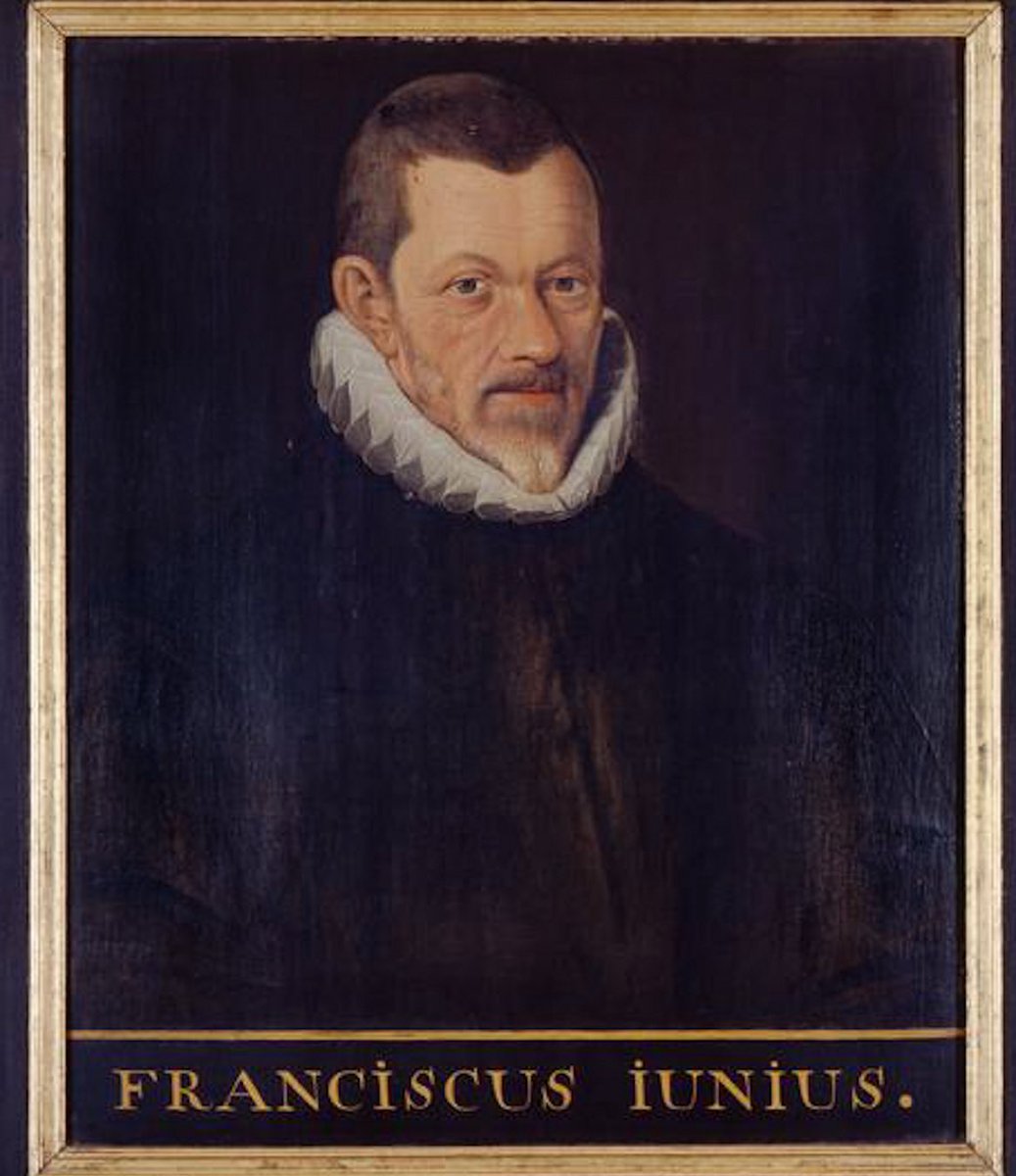
“[T]here are three views in reference to that subject, [predestination] which have their defenders among the doctors of our church. The first is that of Calvin to Beza; the second that of Thomas Aquinas and his followers; the third that of Augustine and those who agree with him. They all agree in this, that they alike hold that God, by an eternal and immutable decree, determined to bestow upon certain men, the rest being passed by, supernatural and eternal life, and those means which are the necessary and efficacious preparation for the attainment of that life”
~ Fransicus Junius, A Friendly Discussion Between James Arminius & Francis Junius, Concerning Predestination, First Proposition
"But the word [justification] is used with that specialized meaning when it concerns the judgment of God as He absolves the sinner who stands before his judgment seat (Psalm 143:2; Romans 5:16 and 8:33–34). And so this entire act of justification is depicted as a forensic process. Yet we still grant that justification sometimes appears also to include sanctification as its consequence because of the very strong, close connection between the two (Romans 8:30; Titus 3:7, etc.)."
~ Antonius Thysius, *Synopsis of Purer Theology* Disp. 33. Thesis 3
"[B]ecause the most holy ones that are in this militant church do daily sin, even to the last end of their lives, so that they have still need of new forgiveness of their sins, and also of new repentance, and new faith to apprehend forgiveness of sins in Christ; and that faith and repentance is stirred up by the ministry of the Word and sacraments. Therefore we believe that remission of sins is dispensed and bestowed perpetually in the church by the ministry of the Word and sacraments, and that the ecclesiastical ministry which is perpetual in the church is ordained thereunto."
~ Girolamo Zanchi, Confessions ch. XXVII
“Now it seems to me that this divine testimony [of the Apostle Paul in 2 Cor 1:12] consists in three convictions. For we ought to believe, in the first place, that we cannot obtain the pardon of our sins otherwise than through the mercy of God; secondly, that we are powerless to do any good work whatever except by His grace; thirdly, that by no works of ours can we merit eternal life, unless it is His good pleasure to bestow upon us this also as a free gift.”
~ Bernard of Clairvaux, Sermon I for the Annunciation of the Virgin Mary