
CopperViolette

2.2K posts

CopperViolette banner
CopperViolette

CopperViolette

@CopperViolette

C'mon now. Enough of this ruckus. It's getting late. 🌎🌠🌘 Current Research Focus: The Eastern Archaic and the Megalithic Builders (10,000 - 1177 B.C.E.)

가입일 Kasım 2022
171 팔로잉178 팔로워
CopperViolette 리트윗함
CopperViolette
CopperViolette@CopperViolette·
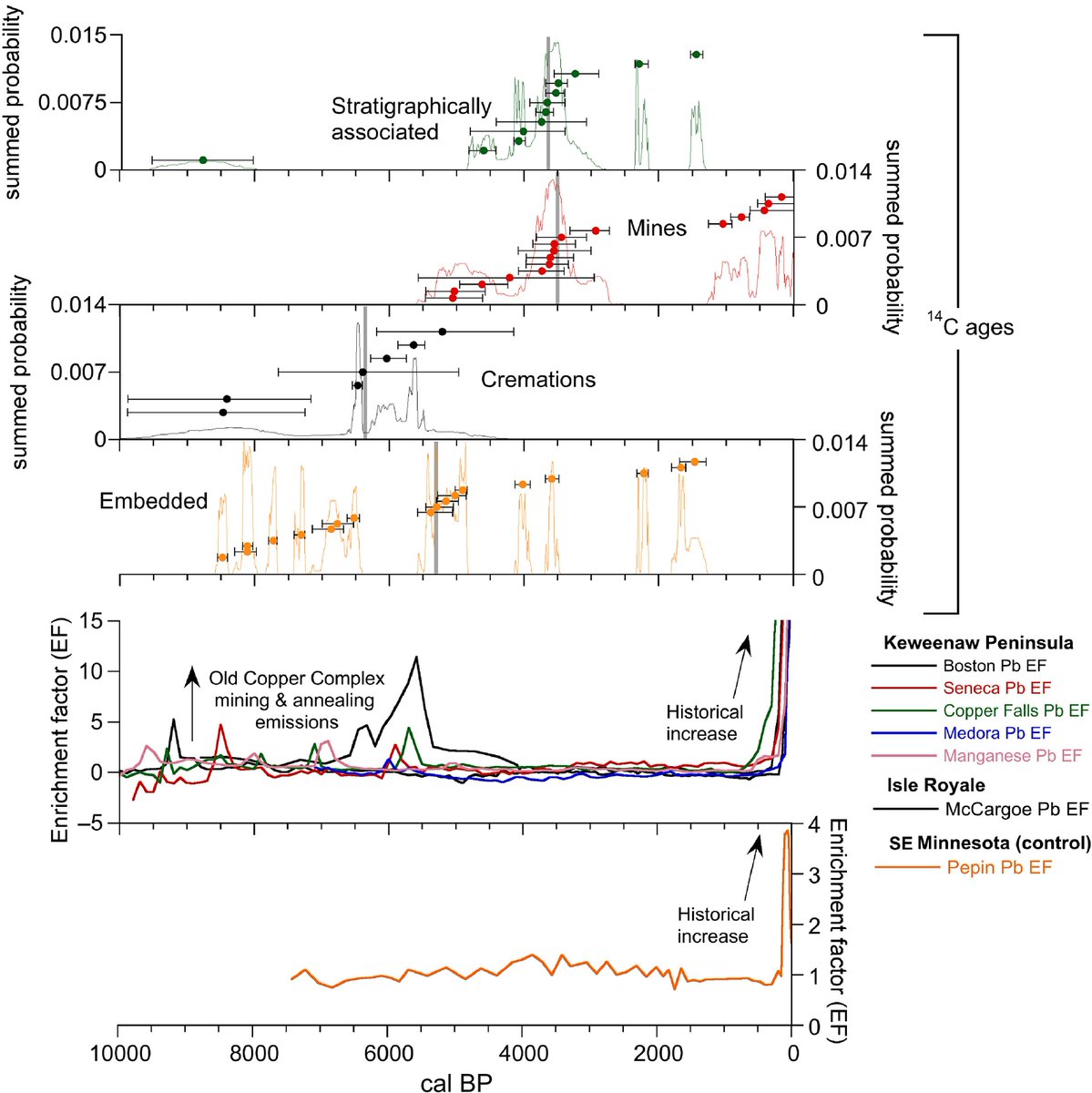
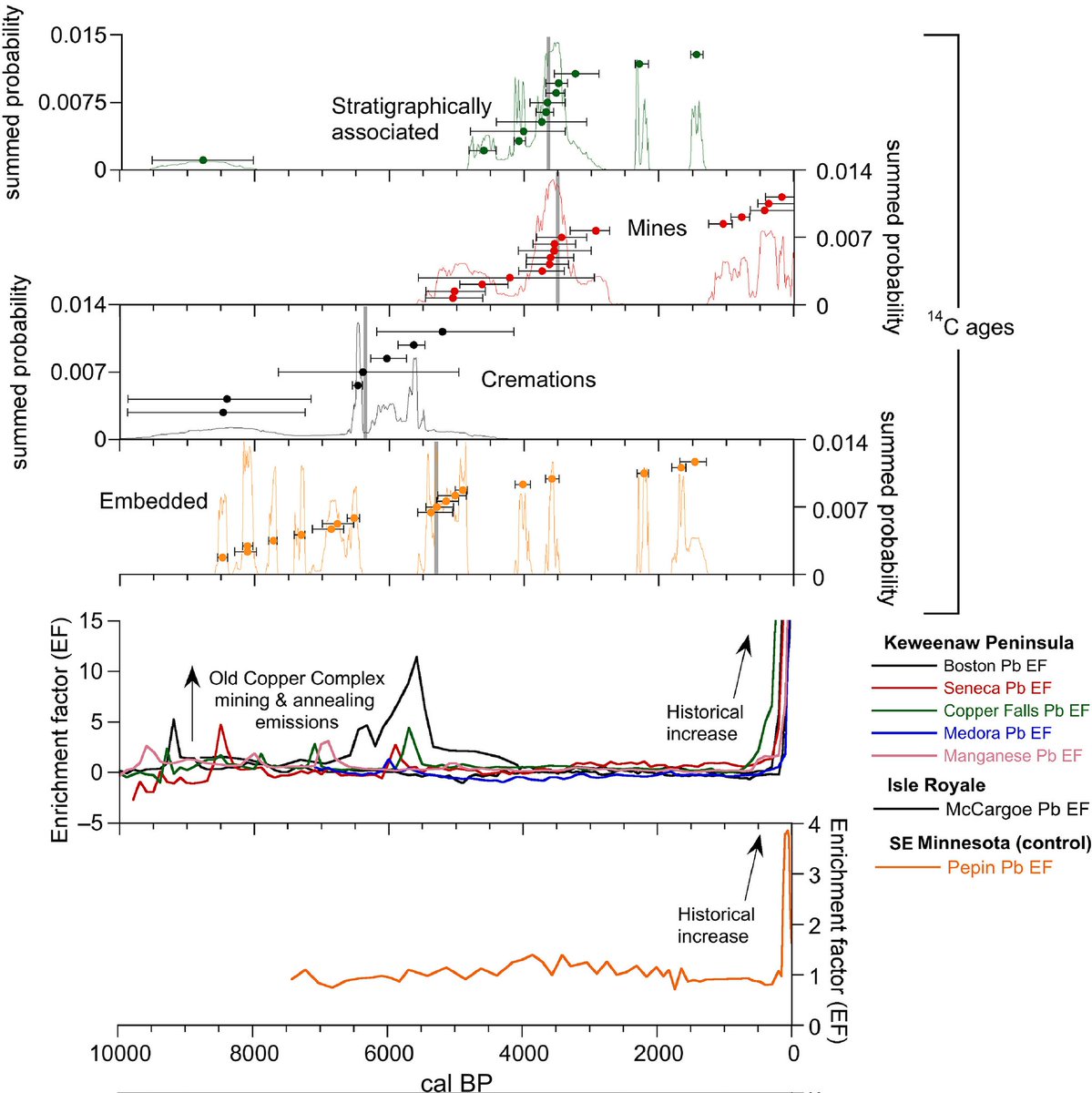
Old Copper Complex mining pollution data from sites around Lake Superior. David Pompeani (the lead author of the study) and I have talked about this, and we both agree it strongly suggests we've all underestimated the scale of those ancient metalworkers. He's compared the emissions to what you'd expect for Rome or ancient China. This is one reason among several why I'm viewing them as complex hunter-gatherer-fishers. Source is Pompeani et al., "ON THE TIMING OF THE OLD COPPER COMPLEX IN NORTH AMERICA: A COMPARISON OF RADIOCARBON DATES FROM DIFFERENT ARCHAEOLOGICAL CONTEXTS," 2021
CopperViolette tweet mediaCopperViolette tweet media
English
2
7
22
494
CopperViolette
CopperViolette@CopperViolette·
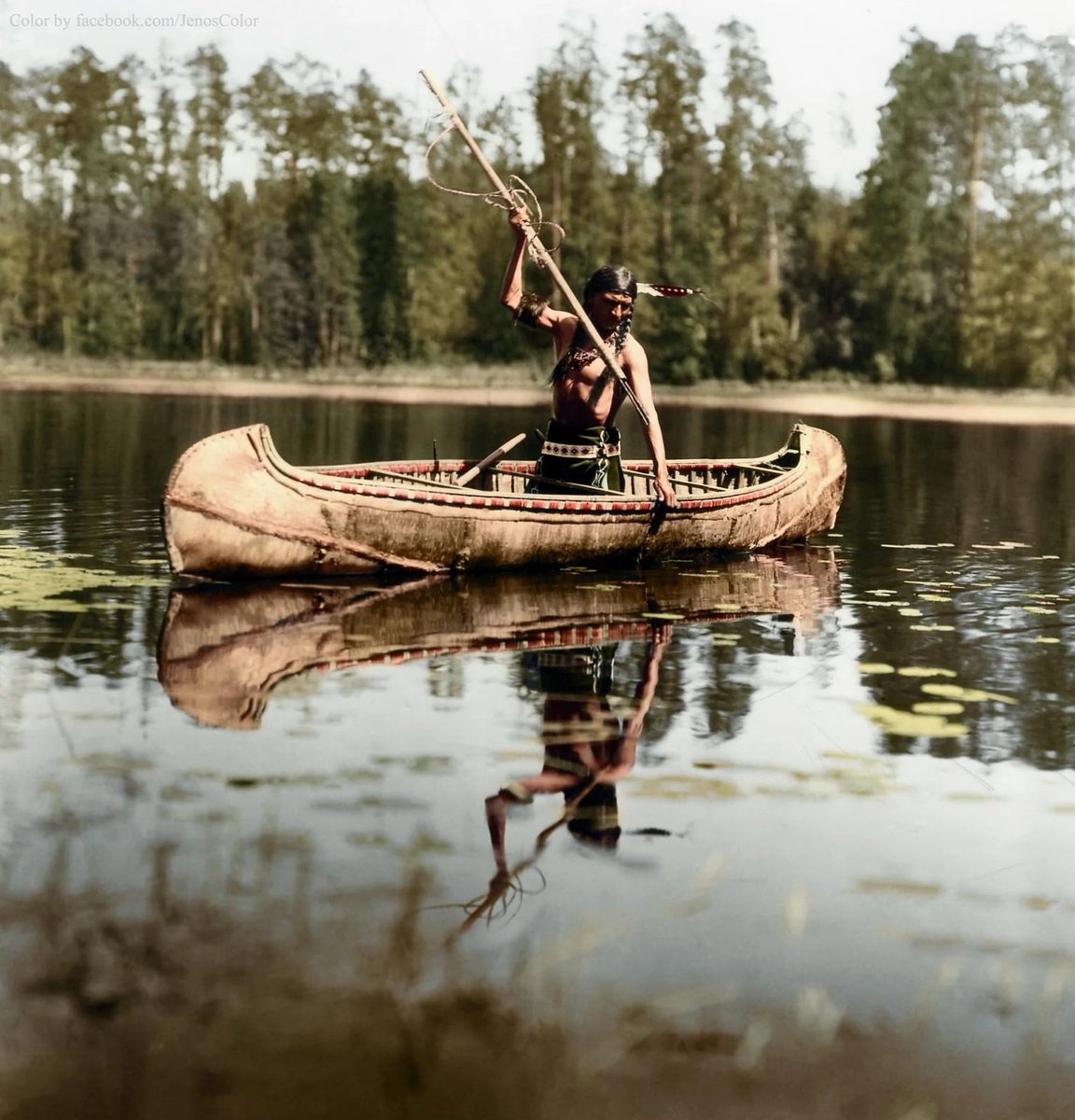
An Ojibwe man spearfishing in Minnesota, 1908. Colorized photograph from Alone with the Past: The Life and Photographic Art of Roland W. Reed, 2012.
CopperViolette tweet media
English
0
20
115
1.9K
CopperViolette
CopperViolette@CopperViolette·
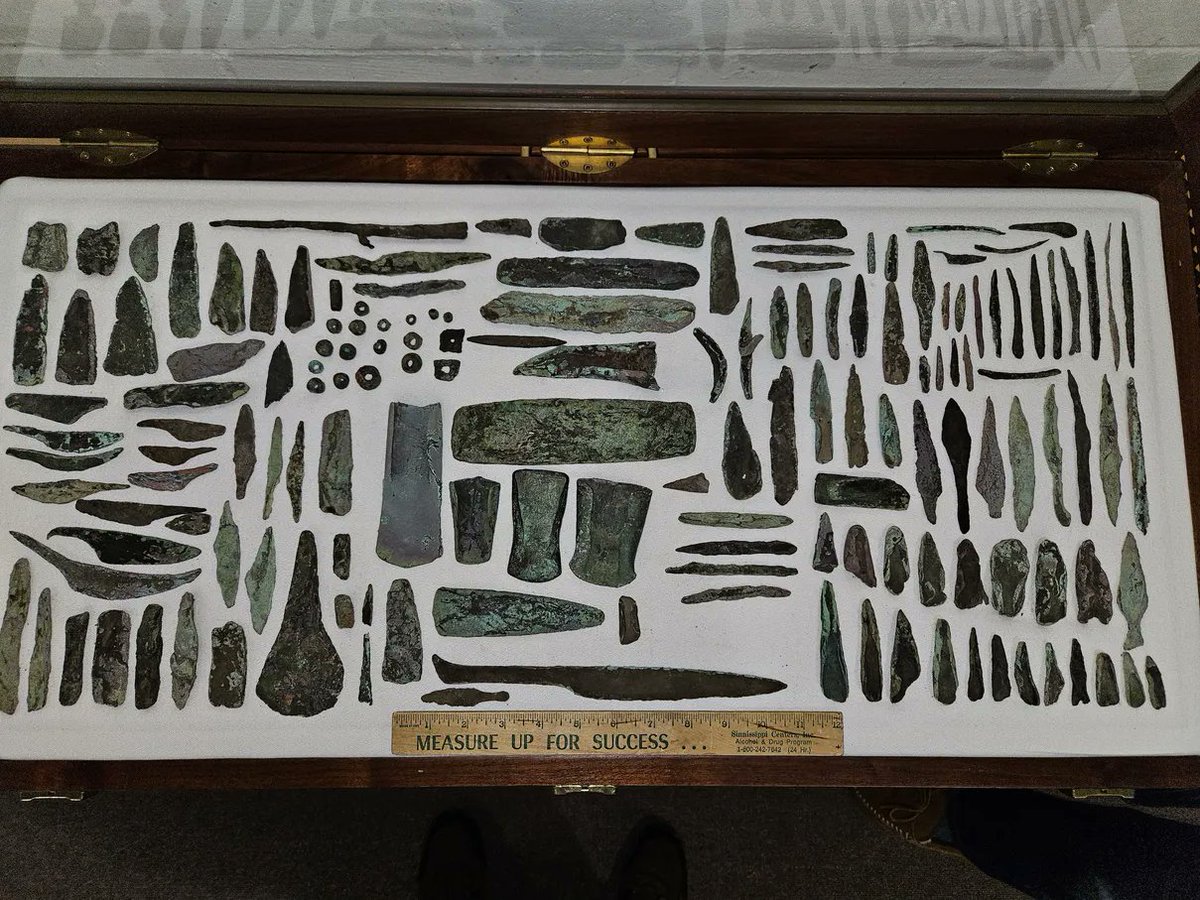
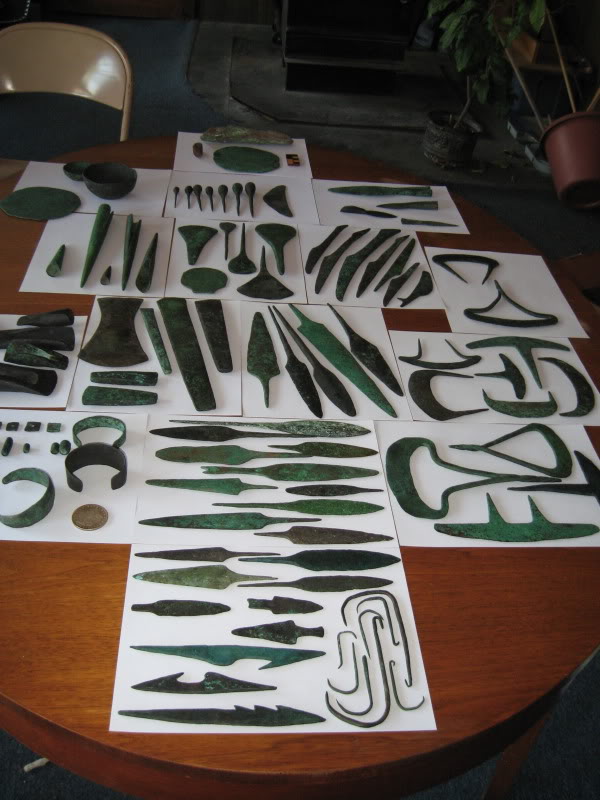
Old Copper Complex (ca. 8000-1000 B.C.E.) | Artifact Collection #3
CopperViolette tweet media
English
0
7
20
629
CopperViolette
CopperViolette@CopperViolette·
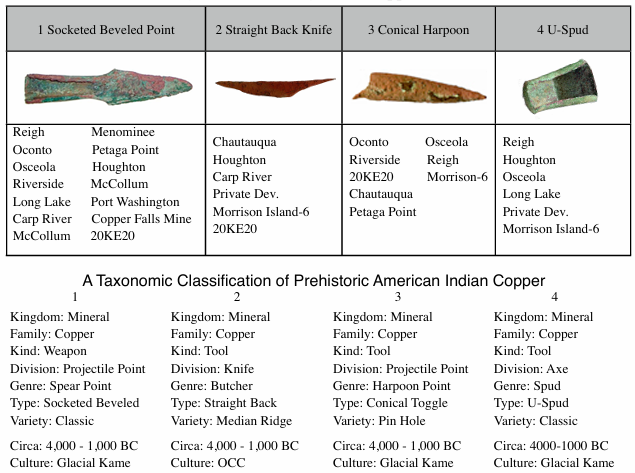
Some diagnostic Old Copper Complex (OCC) artifacts from sites around the Great Lakes. These items are arranged by culture, with OCC and Glacial Kame associated with many. Both were contemporary between 4000-1000 B.C.E. Glacial Kame is known for copper use (just like the OCC), but with more emphasis on axes, beads, marine and freshwater shells (whole shells, beads, pendants, gorgets), and burials in flexed positions covered in red ochre or rarely yellow ochre. They're linked with the Shell Mound Archaic (SMA) from Kentucky, Tennessee, and northern Alabama. Glacial Kame mainly originates from interactions between the OCC and the SMA during the Middle Archaic (ca. 6000-3000 B.C.E.), with most of their sites south of the Great Lakes, especially in Ohio. The diagram's source is Don Spohn's Prehistoric Copper Artifact Journal, Vol. 8, No. 1, 2012
CopperViolette tweet media
English
0
3
11
196
CopperViolette 리트윗함
Saganism
Saganism@Saganismm·
Carl Sagan, Pale Blue Dot
Saganism tweet media
HT
5
24
84
2.4K
CopperViolette 리트윗함
CopperViolette
CopperViolette@CopperViolette·
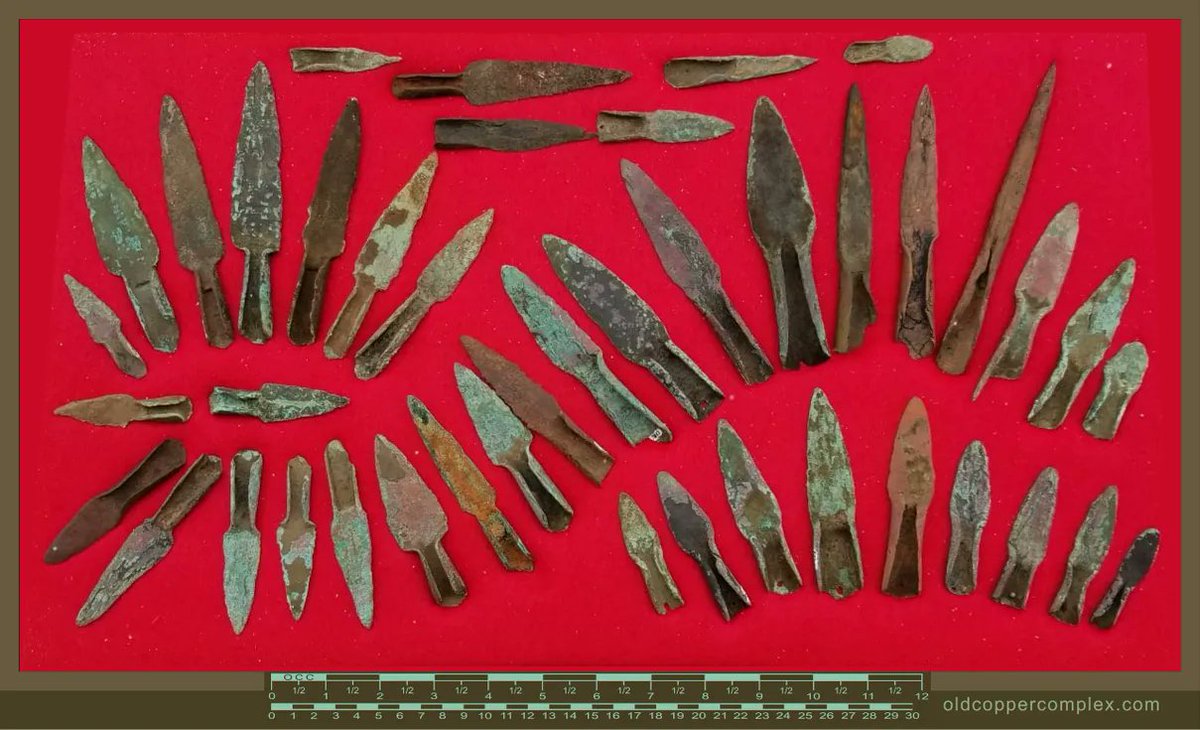
Old Copper Complex (ca. 8000-1000 B.C.E.) | Artifact Collection #2
CopperViolette tweet media
English
1
10
22
865
CopperViolette
CopperViolette@CopperViolette·
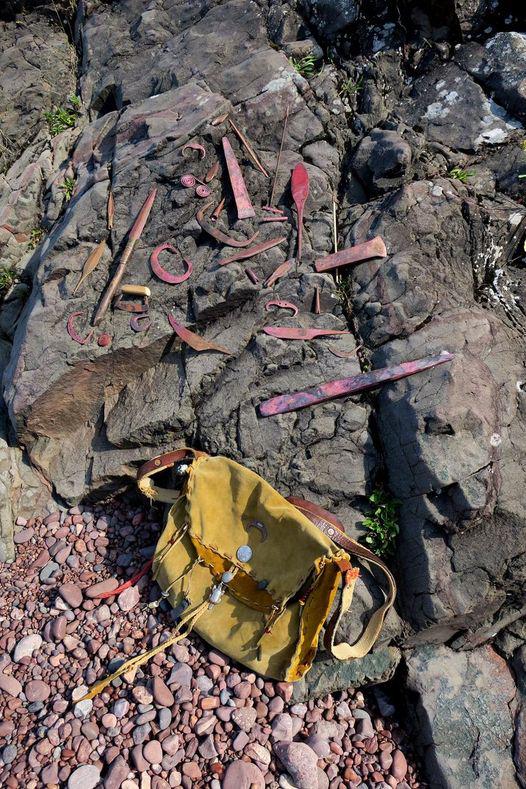
Old Copper Complex (ca. 8000-1000 B.C.E.) | Artifact Collection #1
CopperViolette tweet media
English
2
7
28
3.5K
CopperViolette
CopperViolette@CopperViolette·
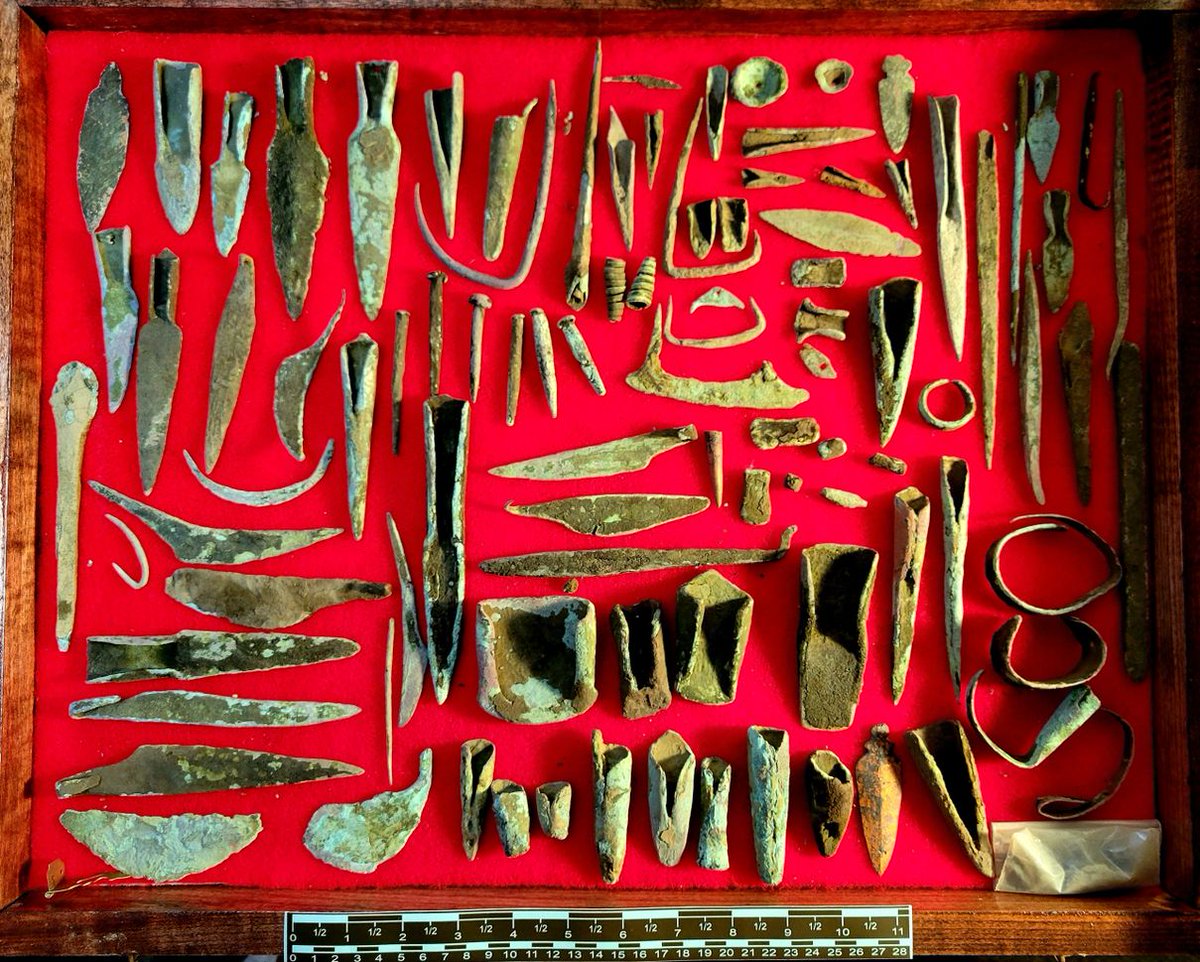
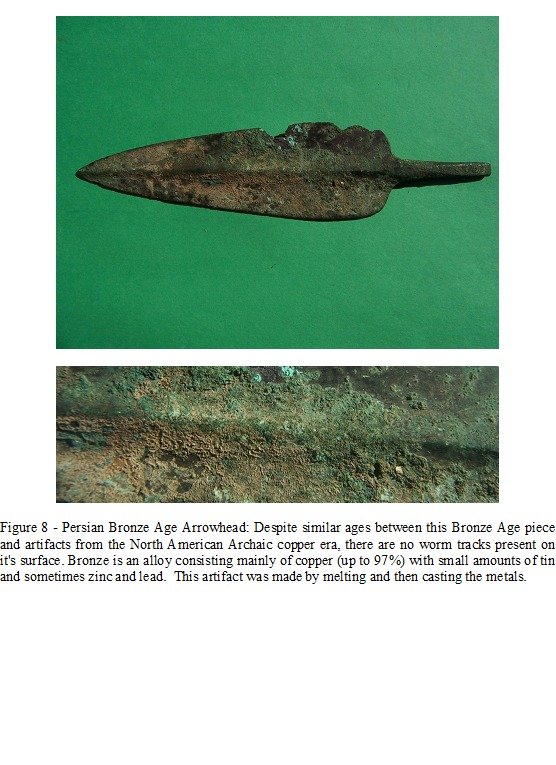
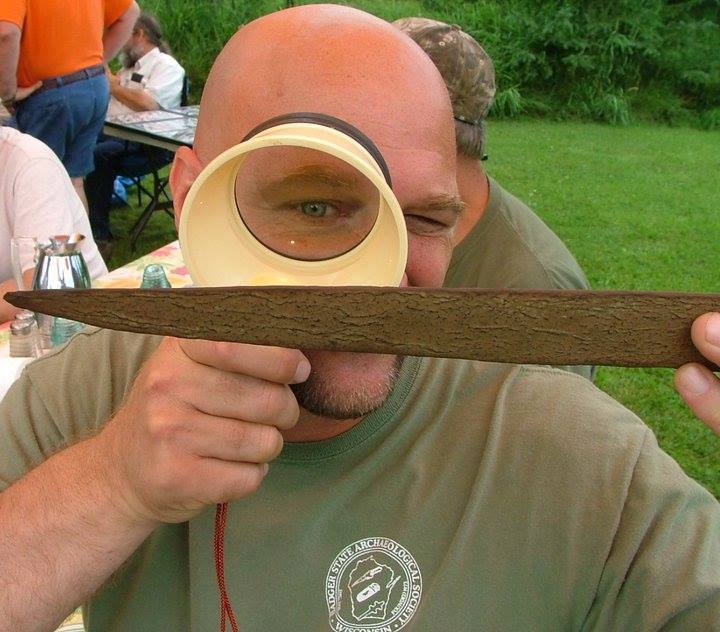
You're welcome. Here are some more images for your files. The first shows a Persian Bronze Age arrowhead/spearhead. Similar OCC items are known, but notice the patina. Different than copper, and no worm tracks. Smelted items won't have worm tracks. Some have tried passing these on as authentic OCC items, but don't be fooled. The second is an infamous "collection" of "OCC artifacts." They look real to people unfamilar with patinas and ancient copper items, but they're all fake. Reproductions made by a lady's son. They went on to claim authenticity, but later admitted that they're fake. Good for general education, but not for selling as authentic. The third image shows David Peterson (an avocational, OCC researcher, and metaldetectorist) examining an authentic OCC knife (21") found in Northern Ontario over 10 years ago. All those dark, squiggly lines are worm tracks.
CopperViolette tweet mediaCopperViolette tweet mediaCopperViolette tweet media
English
1
1
1
17
Bridger
Bridger@mclo_Bridger·
@CopperViolette So kind of you...I will copy and save this to my files...thank you
English
1
0
1
9
CopperViolette
CopperViolette@CopperViolette·
Yes, the available info shows this. Over in Anatolia (Turkey), groups were making jewelry between 10,000-8000 B.C.E. and experimenting with copperworking (suggested from some sites). Around the Great Lakes, people were making simple spearheads, knapping tools, and knives between 8000-6000 B.C.E., long before Eurasia used copper for anything functional. The Clovis culture might've made some fluted copper points, but the only one known hasn't been examined since it was shown at an artifact show many years ago. We don't know where it is now.
CopperViolette tweet mediaCopperViolette tweet media
English
0
0
1
16
Bridger
Bridger@mclo_Bridger·
@CopperViolette I have read, the Old Copper Culture in the western Great Lakes region reveals the oldest known use-mining, and hammer forging of copper in world history
English
1
0
1
13
CopperViolette
CopperViolette@CopperViolette·
These are not my items; only sharing what others have found. Collectors occasionally sell their items, typically for a lot (hundreds to over $10,000). LiveAuctioneers sometimes has OCC items, but know that patinas can be faked. There are ways to tell real copper artifacts from fake ones. Real OCC items usually have "worm tracks," which are dark, squiggly lines caused by errosion. Decay removes softer parts from harder parts (caused during hammering and annealing), leaving the squiggly lines. If you buy an OCC artifact, keep track of everything known about it and don't lose any documents.
CopperViolette tweet media
English
1
1
1
16
CopperViolette 리트윗함
CopperViolette
CopperViolette@CopperViolette·
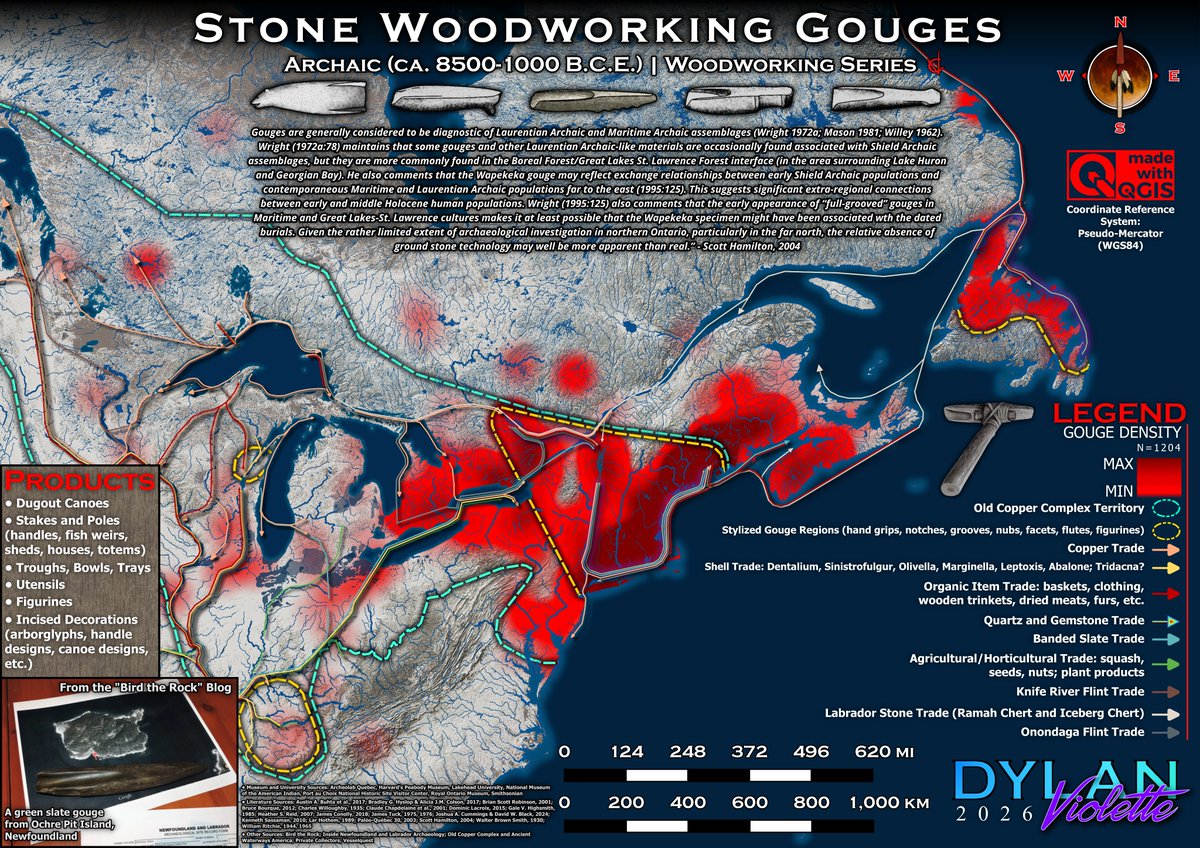
Archaic (ca. 8500-1000 B.C.E.) | Stone Woodworking Gouges Stone woodworking gouges are considered diagnostic items for North America's Lake Forest Tradition, which includes the Old Copper Complex, the Laurentian Archaic, and possibly the Maritime Archaic. The earliest known gouges appear along the east coast by 8000-7000 B.C.E. before spreading inland, into New England, and up into the Canadian Maritimes. The main production phase is thought to stretch between ca. 4500-2000 B.C.E. before fading. A unique category of stylized gouges are known in the region between the Ottawa River and New England, suggesting these items were valued beyond their utilitarian purposes. Supporting this is the high-quality finishes on most gouges, whether or not they're stylized, suggesting large time investments for pecking, grinding, and polishing these groundstone tools. After the Archaic period, cultures in the northeast stopped using groundstone gouges almost entirely, with later appearances likely being repurposed, older gouges. Sources used for this map are included in the map's lower left corner. academia.edu/164658879/Arch…
CopperViolette tweet media
English
0
3
14
8.4K
CopperViolette 리트윗함
Maqzara
Maqzara@Maqitzara·
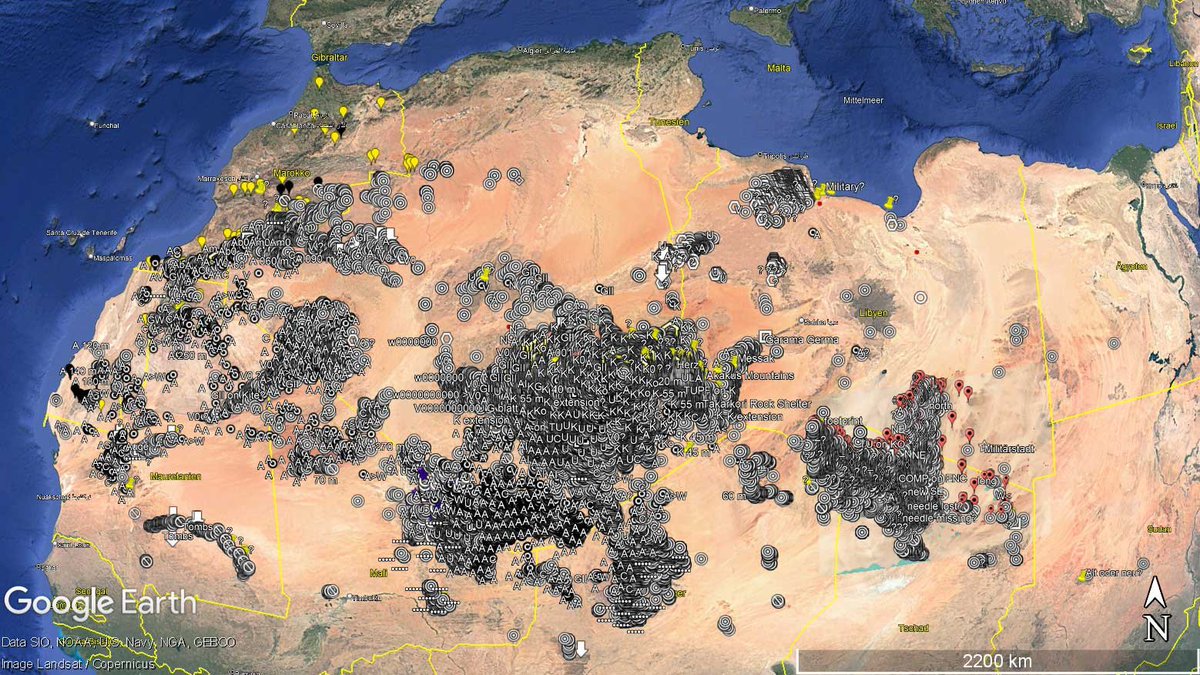
The amount of Neolithic to late antiquity structures in the Sahara is insane lol
Maqzara tweet media
English
142
1K
15.4K
1.1M
CopperViolette
CopperViolette@CopperViolette·
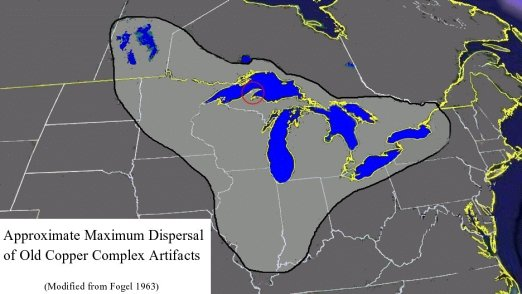
Absolutely, many Old Copper Complex items have been lost from the patination process. A couple sites where this is visible are the Eriksdale site east of Lake Manitoba and the Port au Choix site along western Newfoundland's coast. These are both burial sites, and their copper artifacts decayed to leave a green stain. We don't know what those copper items were, only that they were buried with some. This is a reason why avocationals and some professionals are very interested in surveying lakes and wetlands around Lake Superior. The more artifacts that are found, the better our understanding of the OCC's true scale will be.
English
1
1
1
27
Rickdalgetty
Rickdalgetty@Rickdalgetty1·
@CopperViolette If I may a question, seen copper artifacts, specifically some of embossed plates at Etowah that are corroded by what I assume to be bronze disease, shifting water tables, presence of alkaline soil, do you think a percentage of the old copper culture artifacts could have vanished?
English
1
0
1
41