고정된 트윗

Anticipating Price Action on Stocks with Alternate Cashless Warrants
As alternate cashless warrants become more prevalent, we felt it was necessary to provide a more in depth explainer on what kind of price action to expect.
Alternate cashless warrants are fast becoming a go-to tool for desperate nano-cap companies seeking cash. These deals let warrant holders receive extra shares without any cash payment. Initially, the warrants come with a 1–3× multiplier. However, if the stock dips, reset clauses kick in—lowering the exercise price to the lowest recent VWAP (with a set floor) and can often boost the multiplier up to 10–30× of the original amount.
The result? A potential death spiral dilution effect.
We dissect the timeline into 3 distinct phases:
• Phase 0: Before any offering with cashless warrants, the stock might slowly decline if the market anticipates possible offering with cashless warrants.
• Phase 1: The announcement of an offering with alternate cashless warrants triggers an immediate price drop. However, since the cashless warrants still require shareholder approval in most cases, there can be technical bounces during this phase as traders wait for more clarity (e.g. if approvals are delayed).
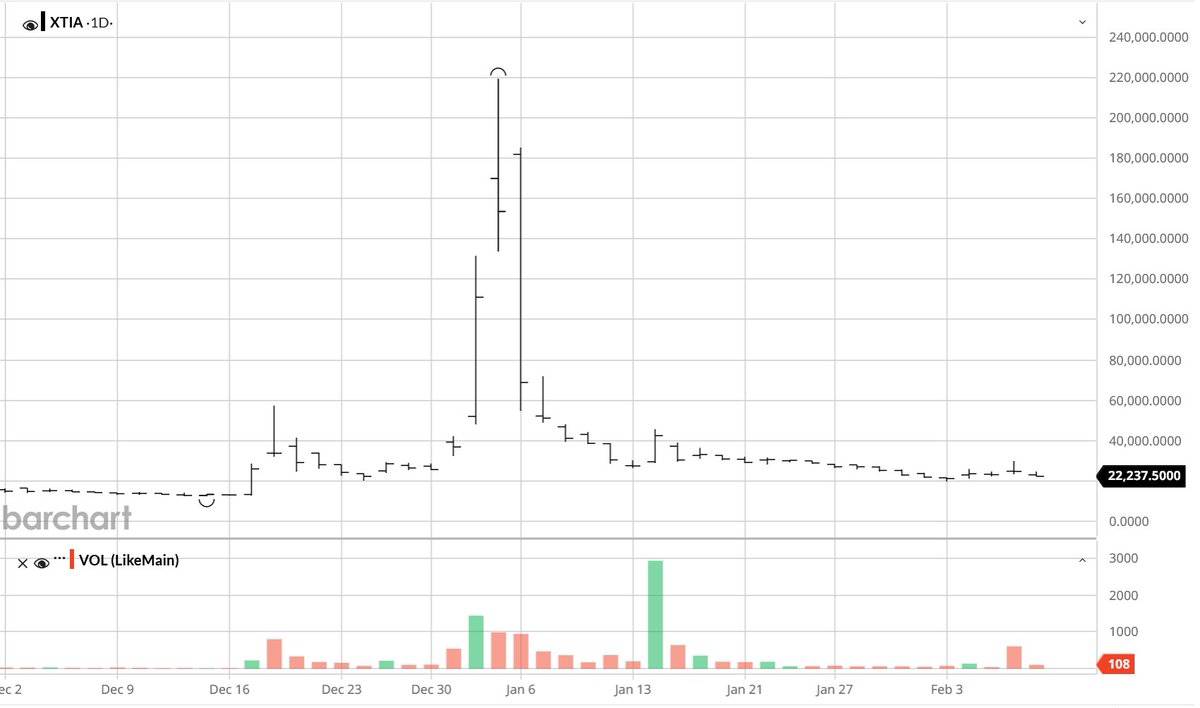
• Phase 2: Once approval is in place (often coupled with a reverse split), the reset clauses activate. For example, AEON/ACON saw up to >9M extra shares hit the market—pushing the price down dramatically (up to a 95% drop).
• Phase 3: After the heavy selling finishes, the stock may experience a technical bounce as it overshoots to new equilibrium levels.
Understanding these phases and clearly delineating their start and finish can offer opportunities for both longs and shorts.
Full blog post linked here: knowledge.dilutiontracker.com/en/articles/10…
List of current tickers and their current phases:
Phase 1 (warrants pending approval/reset/registration):
GNLN, PSTV, ZCAR, STSS, RNAZ, PTPI, SUNE, LGMK, HCTI, EFSH, DGLY, FMTO, APDN, AGMH, HEPA, RSLS
Phase 2 (active selling of cashless warrants):
SPGC, ICON, NVNI, ACON
Phase 3 (selling complete):
AEON, GCTK, REVB, RIME, UOKA, HMR (MGOL)

English