Gregory Falco

26 posts

Gregory Falco banner
Gregory Falco

Gregory Falco

@GregFalco

Aerospace Security & Autonomy Professor @Cornell University, @MIT PhD

Ithaca, New York 가입일 Şubat 2012
73 팔로잉168 팔로워
Gregory Falco
Gregory Falco@GregFalco·
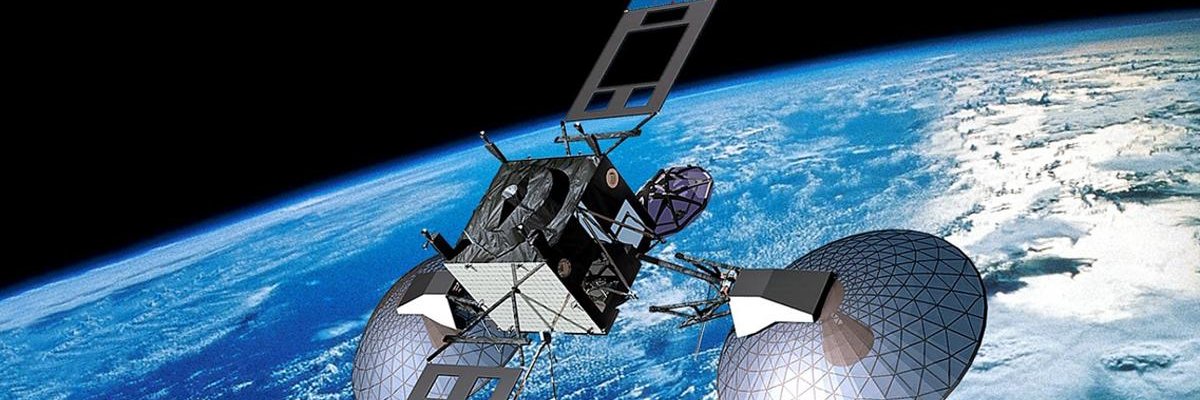
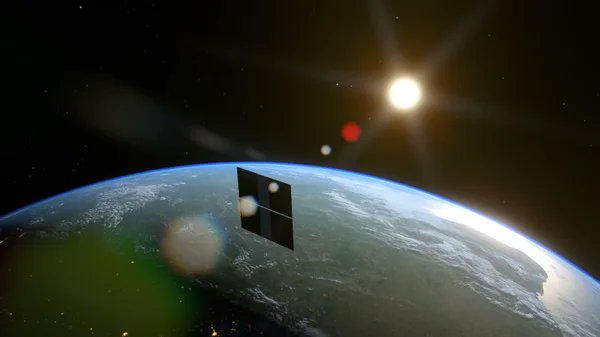
@MarioNawfal Just FYI - Orbital data centers don't make sense most of the time. We did the math.
English
0
0
0
5
Mario Nawfal
Mario Nawfal@MarioNawfal·
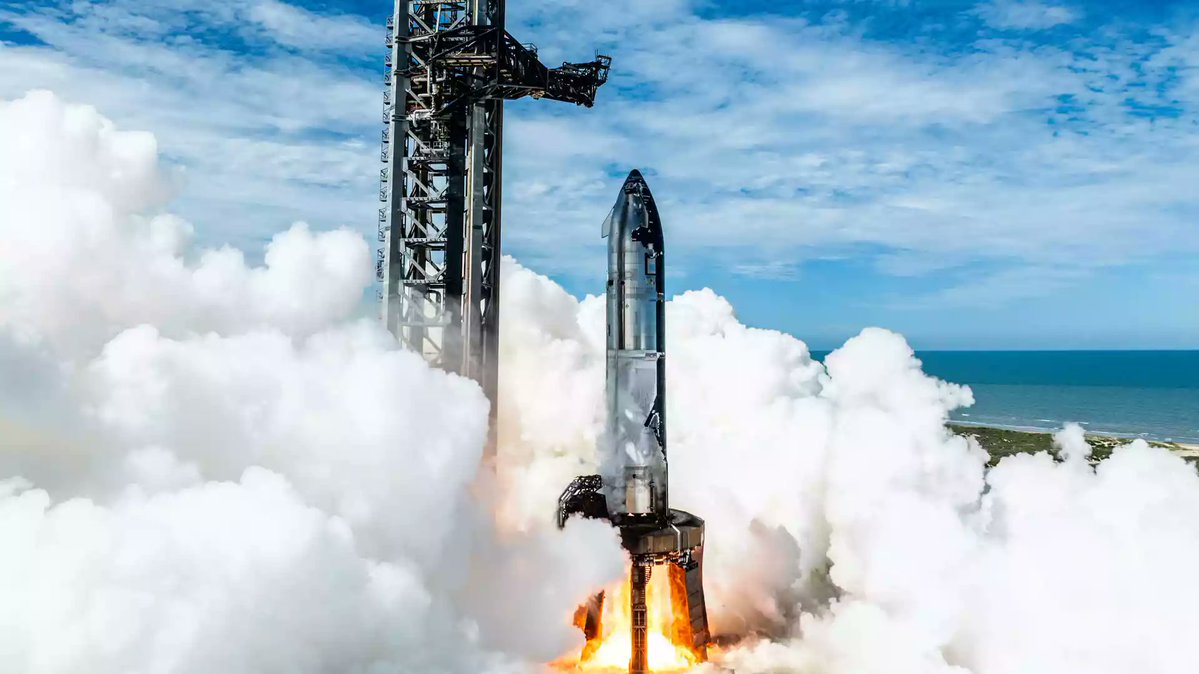
🚨🇺🇸 ELON AND BEZOS RACE TO PUT DATA CENTERS IN ORBIT - BECAUSE EARTH'S POWER GRID CAN'T HANDLE AI SpaceX is raising $30 billion at a $1.5 trillion valuation to build space-based data centers. Blue Origin's had a team working on orbital AI infrastructure for over a year. Sam Altman tried buying rocket startup Stoke Space this summer to join the race. The pitch: move power-hungry AI compute into low Earth orbit where there's unlimited solar energy 24/7, natural cooling from the vacuum of space, and no real estate costs. Earth's electrical grids can't scale fast enough for AI's exponential compute demands. Space sidesteps the constraint entirely. Here's the economics that might actually work: Terrestrial data centers face three brutal costs-power, cooling, and land. A 300 GW data center on Earth requires massive electrical infrastructure, cooling systems that consume 40% of total power, and expensive real estate near power sources. In orbit: solar panels generate continuous power with no weather or nighttime. Space's near-zero thermal environment cools chips passively. No land to buy. And SpaceX's reusable rockets just made launch costs drop by 90%. Google and Planet Labs are testing satellite-mounted AI chips in 2027. Early systems will need thousands of satellites to match one large terrestrial data center's capacity-but that's the starting point, not the limitation. Why SpaceX wins this race: Elon controls the only operational heavy-lift reusable rocket system on the planet. Starship-when fully operational-will drop launch costs another order of magnitude. China, Russia, and Blue Origin can't match that deployment speed or cost structure. SpaceX also has Starlink's existing orbital mesh network. They're planning to use upgraded Starlink satellites as AI compute nodes-leveraging existing infrastructure instead of building from scratch. Bezos has Blue Origin and AWS but no operational heavy-lift capability yet. Altman has capital but no launch system. Elon has both the rocket and the AI company (xAI) and the satellite network. That's a structural advantage nobody else can replicate quickly. The actual technical challenges nobody's discussing: Latency. Speed of light from orbit to Earth creates baseline delays that kill real-time applications. High-frequency trading? Autonomous vehicles? Not happening from space. This works for batch processing, model training, long-inference tasks-not interactive applications. Maintenance. A failed server on Earth gets swapped in hours. A failed satellite needs a service mission or replacement launch. You can't hot-swap components in orbit easily or cheaply yet. Scale. Thousands of satellites needed to match one terrestrial data center. That's massive coordination, space traffic management, and collision avoidance complexity. Plus space debris concerns multiply. Upfront capital. Building and launching thousands of compute satellites costs tens of billions before first revenue. Only a handful of entities can finance that. But here's why it might actually work: AI training runs are getting so massive they're consuming entire power grids. Microsoft just bought a nuclear power plant to run data centers. Google’s considering building dedicated power plants. At some point, moving compute off-planet becomes cheaper than building more Earth-based infrastructure. Launch costs are dropping exponentially. Starship aims for $10-20 per kg to orbit-versus thousands per kg on traditional rockets. At that price, space-based compute becomes economically competitive for specific workloads. Solar is unlimited and free once panels are deployed. No fuel costs. No grid dependency. No outages from weather or infrastructure failures. Within 5 years, we'll see the first operational orbital data centers handling AI training workloads that can tolerate latency. Within 10, they could represent 10-20% of global AI compute capacity. This isn't science fiction anymore people. The economics are approaching viability. The technology exists. The capital is mobilizing. And Elon controls the critical bottleneck-cheap access to orbit. The wildest part? If this works, the next step is lunar data centers with even more power and cooling advantages. And yes, crypto mining on the moon becomes economically rational once you have cheap transport and abundant solar. Welcome to the era where space isn't just exploration-it's infrastructure. Earth's power constraints just created a $100+ billion orbital industry. Source: Bloomberg, WSJ, ZeroHedge, @elonmusk, @SpaceX
Mario Nawfal tweet mediaMario Nawfal tweet media
English
123
225
1K
71.6K
Gregory Falco
Gregory Falco@GregFalco·
The Safety of AI-enabled systems is critical to our future. We need to govern this in a scalable way. Check out our paper Governing AI Safety through Independent Audits published in @NatMachIntell with an amazing set of international coauthors. FREE ACCESS rdcu.be/cpgDK
English
1
2
8
0
Gregory Falco
Gregory Falco@GregFalco·
@BenjaminSchafer Now maybe people will finally read my dissertation on negotiating with critical infrastructure cyber terrorists 🤣
English
0
0
3
0
Gregory Falco
Gregory Falco@GregFalco·
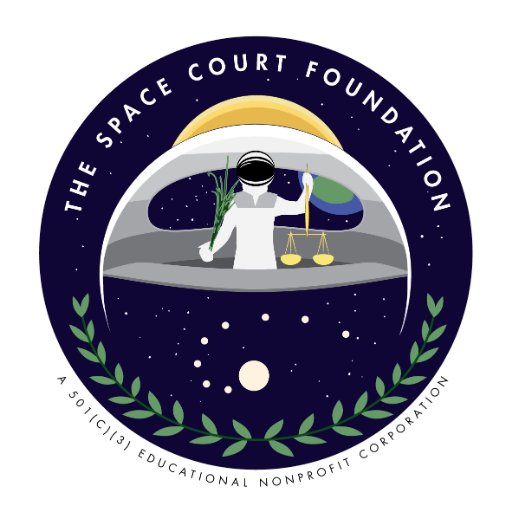
@StanfordCISAC @StanfordCyber @JohnsHopkinsIAA like @WatermanReports shared - let's keep pace with the tech world this time around. @SpaceandCyber #spacelasers #spacecyber
Shaun Waterman@WatermanReports

@Stanford scholar @GregFalco tells @Via_Satellite CyberSatDigital virtual event that we mustn't allow technology and tech companies to run ahead of the public policy conversation/regulation in #space the way they did w #IoT #cybersecurity. "We have to start asking the questions"
English
0
2
2
0
Space & Cybersecurity Project Group
We're excited to announce that we have TWO papers accepted for #IAC2021 @iafastro 🥳 The title's of our papers are: - 'Space as NATO's Operational Domain: The Case of the Cyberthreats against GNSS' - 'Ground Station as a Service: A Space Cybersecurity Analysis'
English
1
0
5
0
Gregory Falco 리트윗함
Space & Cybersecurity Project Group
@gregfalco is prof at Johns Hopkins’ Institute for Assured Autonomy (IAA). His research entitled Cybersecurity Principles for Space Systems was highly influential in the recent Space Policy Directive-5, which shared the same title. 🚀 Register here ⬇️⬇️
English
1
1
3
0
Gregory Falco 리트윗함
Breaking Defense
Breaking Defense@BreakingDefense·
RUMINT: Former Sen. Bill Nelson (Fla.) is said to be Biden admin pick for NASA administrator, killing several birds with one stone: strong relationship with POTUS, congressional savvy. Pam Melroy is on deck as his deputy, bringing technical chops to bear. @Genevaexpat
English
40
103
477
0
Erica Fischer
Erica Fischer@erica_fischer·
"A computer hacker gained access to the water system of a city in Florida and tried to pump in a "dangerous" amount of a chemical." Water is a critical lifeline for communities. I hope we can understand what happened here to protect towns worldwide. bbc.com/news/world-us-….
English
1
0
7
0
Cathie Wood
Cathie Wood@CathieDWood·
We should have an open discussion about censorship in this country.
English
741
832
5.5K
0