the people who will build generational wealth in the next 2 to 4 years are already moving. if you’re not in the loop, you’re not late. I wrote this for the ones who refuse to be left behind
read it. then go build something
This woman scandalized all of Europe.
Then she said something even more dangerous on live TV.
What the Church did next you'd never believe.
The story of Simone de Beauvoir, the most censored philosopher of the 20th century:
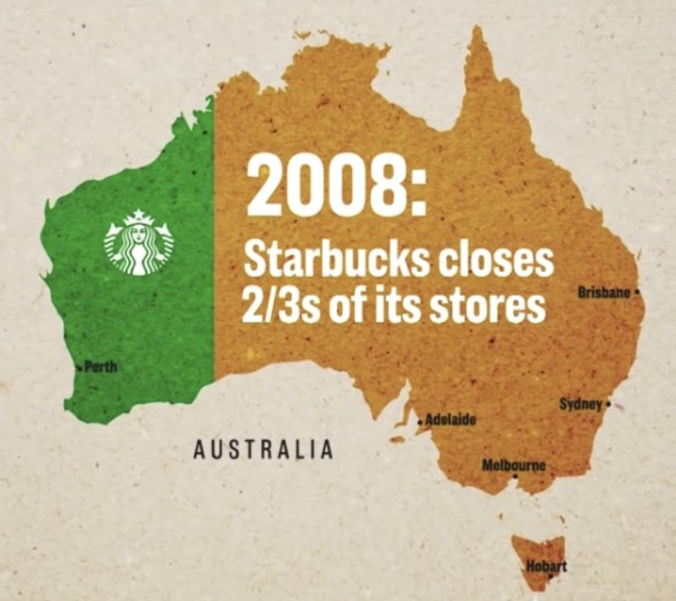
In the 2000s, Starbucks expanded aggressively into Australia, opening 87 stores in just a few years. Then it collapsed just as fast.
Most people think they know why.
“The coffee was already too good.”
“Local cafés were better.”
“Australians didn’t like American chains.”
There’s a deeper reason most breakdowns miss.
Starbucks entered a market that was already fully built.
By the time it arrived, Australia had a strong café culture shaped by European influence. Independent cafés were part of daily routines. Baristas knew regulars. Quality coffee was expected everywhere, not treated as a premium upgrade.
Starbucks came in with a system designed for a different environment.
In the US, it works as an “affordable luxury.” A space between home and work where people linger, customize drinks, and pay a little extra for the experience.
In Australia, that role was already filled by local cafés with stronger community ties and higher perceived authenticity.
The positioning didn’t connect.
Then came the scale problem.
Starbucks expanded rapidly, opening dozens of locations before building familiarity or trust with local customers. The brand became highly visible, but not deeply understood.
In a market that values local identity, that kind of growth can feel out of place.
By 2008, Starbucks closed most of its Australian stores and lost millions in the process.
Today, it still operates in Australia with a quieter strategy.
Fewer stores. More focus on tourists. Slower expansion.
Same company, adjusted playbook.
The takeaway is simple.
Success in one market doesn’t transfer automatically to another. Especially when the culture around the product is already deeply established.
---
Thanks for reading!
Enjoyed this post?
Follow @BigBrainMkting for more content like this.
Someone told me recently: "When I die, I want to come back as you."
I understand why they said it.
The adventures. The freedom to wake up on a Tuesday and know that the day belongs to me. The Porsches. The travel. The people I get to work with. A career that looks like it was designed on purpose.
It was. Every piece of it.
And that is the part most successful professionals miss. You have the money. You have the credentials. You have the network. Everything you need to build an extraordinary life is already available to you.
What you do not have is your own permission.
You are still running the programme your parents installed. The one that says comfort is earned through sacrifice. That wanting more is ungrateful. That stability is the highest form of success.
So you build a life that looks impressive on paper and feels quietly incomplete on the inside. You tell yourself you will get to the adventures later.
After the next milestone. After the kids are older. After you feel ready.
The life you want is available to you right now. The only cost is the discomfort of choosing it.
Breaking: Google just changed how Gemini API works.
You can now combine Search, Maps, and your own custom tools in a single prompt. The context flows between them automatically.
This is what it means for anyone building agent workflows:
Harvard has been studying what makes people healthy and happy for 87 years.
It's the longest study of adult life ever conducted.
The #1 predictor of health at 80 wasn't diet, exercise, or cholesterol.
It was something most people completely overlook:
In 1633, Japan banned all foreign contact. But one crack in the wall quietly rewrote history. This is the story of the island that changed Japan forever:
For 200 years, Japan shut its doors to the world.
Foreign ships, missionaries, and ideas were all banned. Violators were executed on sight.
But Japan left one door open.
A single Dutch trading post on a tiny artificial island called Dejima, anchored off the coast of Nagasaki.
The Dutch earned this privilege because they were the only Europeans who kept their mouths shut about religion. When a Christian rebellion erupted at Shimabara in 1637, the Dutch even supplied the shogunate with gunpowder to crush it. They proved they were merchants first, and nothing else.
So Japan let them stay.
Dutch traders were confined to Dejima and forbidden from spreading their faith. But what Japan couldn't control was the knowledge that slipped through with every shipment.
Books. Instruments. Ideas.
In 1720, the shogun lifted the ban on foreign books. Japanese scholars began translating Dutch texts on medicine, physics, and astronomy. They called it Rangaku, meaning "Dutch learning."
What followed was remarkable.
In 1774, Sugita Genpaku published Japan's first Western anatomy book. In 1804, Hanaoka Seishu performed the world's first recorded surgery under general anesthesia. Western doctors wouldn't achieve the same for another 40 years.
Japan was absorbing the West before the West ever arrived.
When American warships forced Japan open in 1853, the world expected a feudal nation scrambling to catch up. Instead, Japan industrialized faster than any nation in history.
200 years of Rangaku had been quietly building to this moment.
The world thought Japan's doors were closed.
But knowledge has a way of finding the smallest opening.
---
Thanks for reading!
Enjoyed this post?
Follow @BigBrainHistori for more content like this.
Today we're introducing the world's first real AI Super Agent "Chatly."
One that actually works. We're on a mission to make every person 20X more efficient.
Try it now at chatlyai.app
By 2030, 92 million jobs will be lost to AI.
But a small group will benefit the most:
The ones using it.
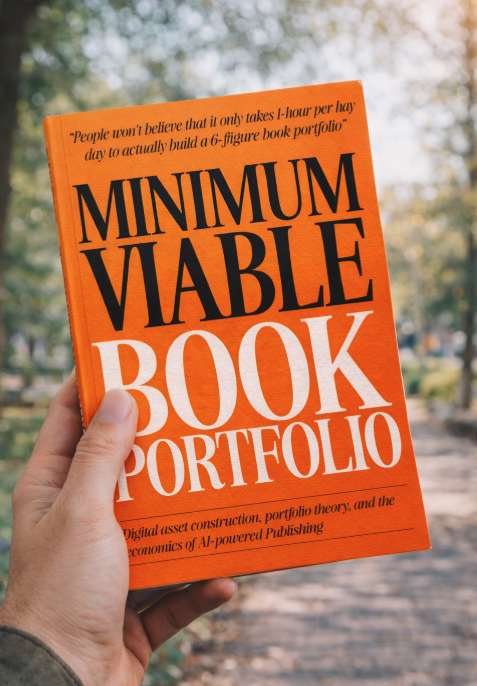
I use AI to create 100–120 page non-fiction books...
And sell them on Amazon KDP.
One book in my portfolio recently did $39,000 in a single month.
No luck or guesswork.
I’ve been doing this for 6+ years.
So I broke my system down into a simple 12-page doc.
Inside, you’ll learn how to:
• Find topics people already pay for
• Stack multiple books that pay you daily
• Turn a few books into predictable monthly income (even starting from zero)
Like + comment “Book” and I’ll send it over.
(Follow so I can DM)
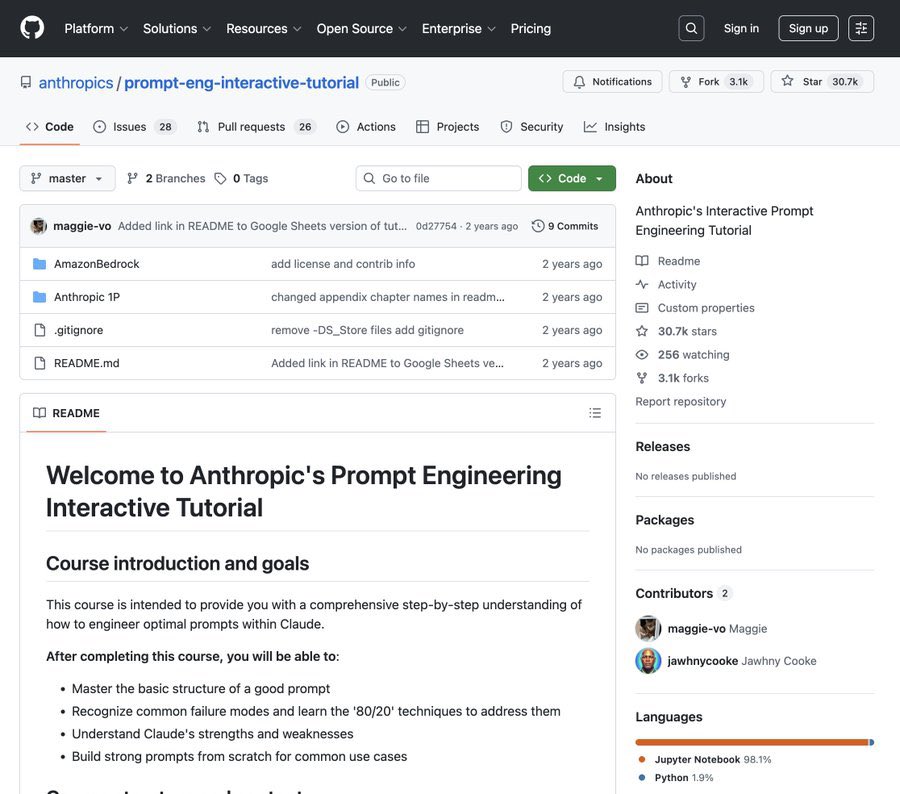
🚨 BREAKING: Anthropic just released their official prompt engineering course and it's free.
Interactive Jupyter notebooks covering:
→ Basic to advanced prompting techniques
→ Chain-of-thought and tool use
→ Real agent patterns from the Claude team
12,200 stars (+2,459 this week).
The only prompt engineering course you actually need
CREATINE is the most POWERFUL legal supplement in the world.
But most men have no idea what it really does,
Or how to use it correctly,
To boost energy, brain power, and extend lifespan.
This thread will change that for you:
You can't reason people out of their incentives.
Leaders often mistake resistance for misunderstanding. They think more data will change minds.
But when incentives or identity are at stake, logic rarely works. Facts get filtered to fit the existing reward structure.
The team isn't being difficult. They're being rational actors in a system you designed.
If you hold onto control, you incentivize passivity. If you reward late-night firefighting, you incentivize waiting until things fail. If you avoid uncomfortable truths, you incentivize comfortable narratives.
Arguing endlessly with people committed to misunderstanding doesn't convert them. Instead, it makes you look more ineffective.
If someone's incentives are aligned with the status quo, they will find a problem for every solution you propose.
Recognize when you're trying to sell a vision to an audience whose buy-in would actually cost them their local power or comfort.
Your team mirrors the system you built.
Stop trying to persuade them out of it.
Fix the incentives.
Everyone wants to control how long they live.
But most longevity advice are flat-out wrong.
Here are 9 doctor’s advice to live longer & look younger:
1. Build muscle mass
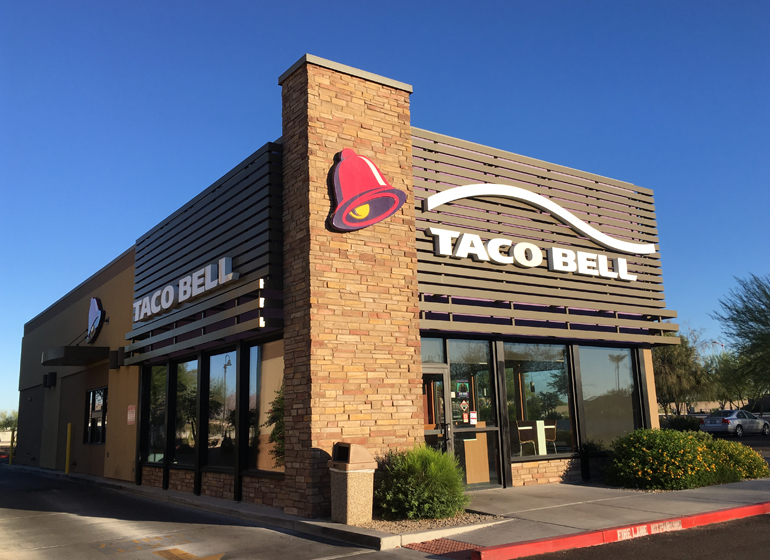
Every major fast food chain saw sales drop last year.
Taco Bell grew 14%.
$15 billion in system sales. Over $1 billion in profit for the first time ever.
Here's how Taco Bell is keeping Gen Z obsessed:
Most AI tools give you an answer and leave you to figure out if it's right.
MiroThinker-1.7 was built specifically to solve that problem.
Here's how it works: ↓
Everyone should have a Faceless YouTube Channel that makes $375 per day.
Usually, I charge $87 for this killer guide, but today I'm giving it away completely FREE.
Like + Comment 'YT' & I'll send you my in-depth guide for FREE.
Must follow me to get DM.
FREE for 48 hours.