ILISP

6.7K posts

ILISP banner
ILISP

ILISP

@Ilisp_org

Defendemos os direitos à vida, liberdade e propriedade. Vencedores dos prêmios Latin America Liberty Award 2023 e Smart Bets 2024.

가입일 Şubat 2016
123 팔로잉51.4K 팔로워
ILISP 리트윗함
Matt Loszak
Matt Loszak@MattLoszak·
Nuclear-powered shipping is so obviously the right solution, it pains me we didn’t go this direction decades ago: - 10,000x fuel-density: less space for fuel, more cargo, more revenue. - 5-10 yrs between refuels: less stops, longer or new routes, higher uptime. - 7,600 U.S. military naval reactor-years: nuclear at sea is already proven. - 440 civilian land reactors: no reason civilians can't do it at sea as well. - Already proven with NS Savannah. - No dirty exhaust. Can't wait to see what Nick and his team do to push this forward.
Nick Touran@whatisnuclear

I've been obsessed with the vast and untapped potential of civilian nuclear power at sea forever. I'm now the Chief Nuclear Officer at an exciting new company bringing nuclear power to maritime applications. There's much to do, so I'm looking for passionate and highly-skilled people who want to embark on this journey with me. Hit me up if you or someone you know may be interested. We need a Nuclear Licensing expert first, but will have many more openings in the pipeline. *The company is currently operating in stealth mode

English

408
686
8.1K
607.3K
ILISP 리트윗함
Handre
Handre@Handre·
The Japanese railway privatization of 1987 stands as one of the most devastating defeats ever dealt to statist transportation mythology. The government split the bloated Japan National Railways into seven regional companies, sold them off, and watched private ownership transform a bankruptcy-bound disaster into the world's most efficient rail system. JNR hemorrhaged money for decades before privatization. By 1987, the state railway carried debt equivalent to $200 billion in today's money while delivering mediocre service plagued by strikes and inefficiency. Politicians treated it as a jobs program rather than a transportation service. The predictable result: chronic losses, deteriorating infrastructure, and customer service that reflected government monopoly arrogance. Private ownership changed everything overnight. The new JR companies slashed operating costs by 40% within five years while dramatically improving service quality. JR East alone now generates annual profits exceeding $3 billion. These companies invest billions in cutting-edge technology, maintain punctuality rates above 99%, and operate the world's most advanced high-speed rail networks. They achieved this without a single yen of operational subsidies. The transformation reveals a core dynamic of transportation infrastructure: private companies must satisfy customers to survive, while government monopolies need only satisfy politicians. JR companies diversified into real estate, retail, and hospitality around their stations, creating integrated profit centers that cross-subsidize rail operations. Government railways never innovate this way because bureaucrats face no market pressure to generate returns. Meanwhile, Amtrak burns through $2 billion in annual subsidies while delivering third-world service across most routes, and European state railways require massive taxpayer bailouts every few years to stay solvent.
Handre tweet media
English
687
3.8K
14.1K
1.4M
ILISP 리트윗함
Austin Justice
Austin Justice@AustinJustice·
NYC is proving that shoplifting is a simple repeat-offender problem. And an easily solvable one. Shoplifting increased 64% from 2019 to 2023. It was the same 300 people committing a third of the shoplifting in the city. But only a small portion of retail complaints led to arrests, so retailers stopped calling police and just put their deodorant behind plexiglass, or have you press a button and wait four minutes to buy toothpaste. It's been stupid. Now the city and state are going after those repeat offenders with a few key tactics: 1) The state now lets prosecutors aggregate thefts across incidents, so five $200 shoplifts from the same Rite Aid becomes a serious felony, not misdemeanor slaps. 2) NYPD started banning serial shoplifters from stores with trespass affidavits so they prosecutors can stack charges when they came back 3) NYPD used data to put foot patrols in commercial corridors and officers at subway stops shoplifters used as escape routes. 4) NYPD encouraged retailers to call them about the thieves who show up everyday to steal small stuff, and then they followed through with arrests. Thanks to these measures, retail theft is down 20% in the first quarter of 2026, with double-digit declines in every borough. And the recidivism rate dropped from 20% to 13%. The NYC economy was hemorrhaging $4.4 billion a year to shoplifting. They're now reversing it pretty cheaply, just by tracking repeat offenders, arresting them, and upgrading their charges to make it easier for prosecutors to punish them.
Austin Justice tweet media
English
110
417
4.1K
1.1M
ILISP 리트윗함
Handre
Handre@Handre·
Soviet chandelier factories received production quotas measured in tons, not quality or function. Factory managers responded rationally to the incentive structure: they packed chandeliers with extra metal, concrete, and lead weights to hit their tonnage targets. The heavier the chandelier, the better their performance metrics looked to central planners in Moscow. Apartment dwellers across the USSR paid the price. Chandeliers weighing hundreds of pounds crashed through ceilings, destroying furniture and injuring families below. Reports from the 1970s and 1980s document dozens of ceiling collapses in Kiev, Leningrad, and Moscow as these industrial monstrosities proved too heavy for residential construction. Factory managers got their bonuses while citizens dodged falling light fixtures. The system worked exactly as designed. When you divorce production decisions from market prices and consumer preferences, you get perverse outcomes. Central planners measured success through crude metrics they could track from their desks, not through the satisfaction of end users. Factory managers optimized for the measurement system, not for making chandeliers that actually functioned as lighting. You see identical dynamics today wherever bureaucrats substitute their judgment for market mechanisms. Public school systems optimize for standardized test scores rather than education. Hospitals game Medicare reimbursement codes rather than focus on patient outcomes. Police departments chase arrest quotas rather than reducing crime. The Soviet chandelier problem lives on in every corner of the administrative state. The market solves the chandelier problem instantly through profit and loss. Customers refuse to buy chandeliers that destroy their homes, driving bad producers out of business and rewarding those who build functional products.
Handre tweet media
English
153
766
4.2K
419.6K
ILISP 리트윗함
MATOPIBA AGRO 🌾🇧🇷
MATOPIBA AGRO 🌾🇧🇷@matopiba_agro·
Você conhece a diferença entre o algodão Egípcio, Peruano e Brasileiro? Esse vídeo explicativo da Associação Brasileira dos Produtores de Algodão ficou muito bom. O algodão brasileiro tem evoluído muito em qualidade. Já temos algumas variedades de fibra longa, embora ainda seja uma produção de nicho por aqui.
Português
17
86
626
17.4K
ILISP 리트윗함
Milton Friedman Quotes
Milton Friedman Quotes@MiltonFriedmanW·
“We will not solve our problem by electing the right people. We will only solve our problem by making it politically profitable for the wrong people to do the right thing.” — Milton Friedman
English
36
644
3.2K
404.1K
ILISP 리트윗함
Enio Viterbo
Enio Viterbo@EnioViterbo·
Uma fonte disse a Malu Gaspar um dos maiores absurdos da história do STF: Como Alessandro Vieira e Romeu Zema não têm processos no STF para serem pressionados por Moraes, Gilmar Mendes quis criar essa situação. Por isso, ele fez uma representação por abuso de autoridade contra Vieira (que já disse que não tem medo de Gilmar) e também acionou Zema (que reforçou as críticas a Gilmar). Isso apenas reforça nossa tese: O STF hoje é o maior utilizador de Lawfare do Brasil. Hoje, a ameaça contra a democracia não é um cabo e um soldado, mas um juiz que usa o processo penal para fins político-partidários.
Enio Viterbo tweet media
Português
136
2.9K
13.5K
208.1K
ILISP 리트윗함
KingoftheCoast
KingoftheCoast@kingofthecoastt·
It is well known that Europeans spend less hours at work than the US. What's less well-known: the vast majority of this gap is offset by their greater hours spent in home production. Due to high taxes, Europeans in-source many services things that Americans buy in the market.
KingoftheCoast tweet media
English
64
188
1.7K
270.3K
ILISP 리트윗함
el hombre pulpo
el hombre pulpo@coproduto·
Tiradentes é um feriado engraçado pq é tipo um mano falou "galera e se a gente não pagasse imposto"aí todo mundo falou "po daora mano" aí a galera que coletava os impostos foi lá e enforcou ele e agora a gente não trabalha pra comemorar que ele foi enforcado
Português
73
1.5K
16.7K
175K
ILISP 리트윗함
Estadão 🗞️
Estadão 🗞️@Estadao·
EDITORIAL | A AGU contra a liberdade de expressão – “A pretexto de combater o que chama de ‘desinformação’, a AGU tenta exercer no Brasil uma espécie de arbitragem estatal da ‘verdade’ no debate público”. Leia o texto completo em > x.gd/T0Ay4 (via @opiniao_estadao)
Estadão 🗞️ tweet media
Português
291
822
2.5K
42.2K
ILISP 리트윗함
Inimigo do otimismo
Inimigo do otimismo@elrojodelPI·
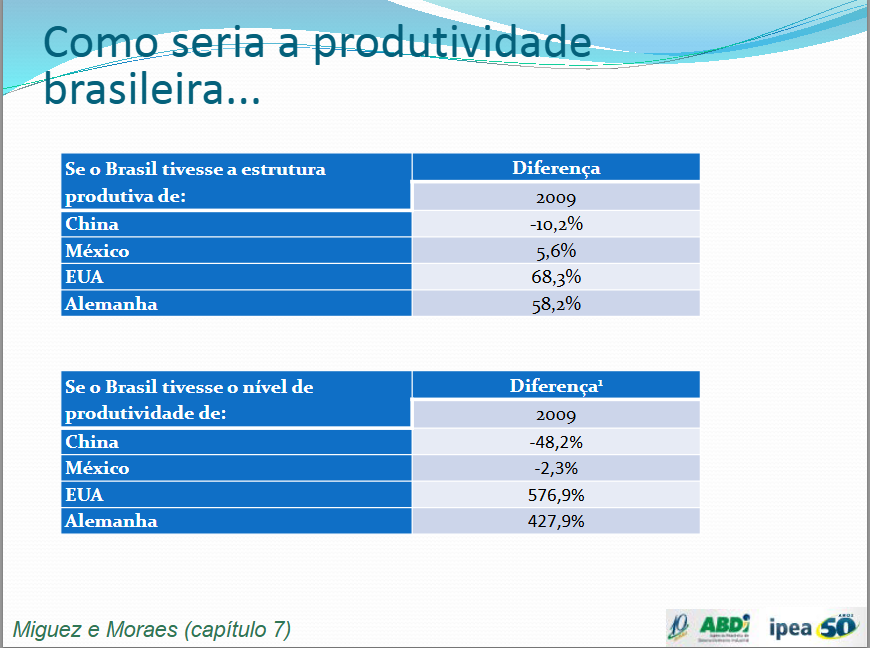
Uma das descobertas legais da pesquisa aplicada em economia brasileira das últimas duas décadas foi a de que o problema de produtividade da economia brasileira, muito mais que um problema de "pouca gente na indústria de transformação", é um problema GENERALIZADO de baixa produtividade entre os setores de produção. Simulações com dados de produtividade e ocupação setorial de 2009, p ex, mostram que nossa produtividade subiria 68% se tivéssemos a mesma estrutura ocupacional que os EUA, e incríveis 577% se mantivéssemos a nossa estrutura ocupacional, mas com a produtividade média desses setores nos EUA. Forçar mais gente na indústria de transformação (através de subsídios, ainda mais protecionismo tarifário etc) vai provocar inflação e pode até subir um pouco a produtividade média, mas às custas do empobrecimento de quem não receber um emprego industrial -- possivelmente, p ex, da maioria da população trabalhadora no Nordeste. Faz muito tempo que tá ~passando do tempo~ de o Brasil (e o conjunto das forças sociais nele interessadas no progresso das forças produtivas, incluindo aí fundamentalmente os representantes da maioria da população trabalhadora) virar a página da mera narrativa e perseguir uma estratégia eficaz pro aumento da produtividade do trabalho. Fizemos certo progresso nisso até, como mostra a reforma da tributação indireta, esperada por 4 décadas e que saiu imperfeita, mas saiu. Falta agora realizar as outras reformas que, sendo necessárias, entretanto implicam enfrentar interesses de lobbies muito bem organizados que chupinham renda do orçamento público e do mercado interno -- e fazer isso de uma forma que seja convincente para a maioria da população trabalhadora, secularmente cansada de levar chicotada no lombo pelos projetos de modernização econômica da elite (e excluída de boa parte dos benefícios desses processos). Topam? OBS. Pra material de qualidade sobre o problema de produtividade do Brasil, confiram isso aqui: drive.google.com/drive/u/0/fold…
Inimigo do otimismo tweet media
Português
2
18
106
4K
ILISP 리트윗함
Impera | ₿
Impera | ₿@imperabtc·
Imposto no litro de gasolina: 34% Imposto no carro novo: 30% a 48% Impostos e encargos estatais na conta de luz: 44% Carga tributária média no Brasil: 32% do PIB Tua raiva não é com o capitalismo. É com o Estado que chega antes de todo mundo e ainda te convence de que o problema é quem produz...
Português
66
464
2.3K
32.5K
ILISP 리트윗함
Anish Moonka
Anish Moonka@anishmoonka·
A parasite that has been eating people for 3,500 years is about to be wiped off the planet. It infected 3.5 million people in 1986. Last year, it infected 10. And I have not seen it make a single front page. It is called Guinea worm. You drink contaminated water from a pond in a poor village. A year later, a worm up to three feet long starts coming out of your leg through a burning blister. There is no pill that stops it and no surgery that works. You wrap the worm around a stick and pull it out slowly, over days or weeks, inch by inch. If you rush, the worm breaks inside you and causes a fresh infection. Guinea worm is ancient. Preserved worms have been pulled out of Egyptian mummies from around 1000 BCE. The Ebers Papyrus, an Egyptian medical scroll from 1550 BCE, describes pulling the worm out with a stick. For three and a half thousand years, that was the best humans could do. Then in 1986, public health workers decided to kill the parasite off. They had no vaccine and no drug. What they had was cheap cloth water filters and a small army of volunteers willing to walk from village to village for decades. The plan was simple. Give everyone who drinks from a pond a cloth filter to strain out the tiny water fleas that spread the parasite. Then send volunteers walking house to house, year after year, teaching people how to use the filters and keeping anyone with an emerging worm out of the water. It worked. From 3.5 million cases a year to 10. Four were in Chad, four in Ethiopia, two in South Sudan. The other four countries where the worm used to be common, Angola, Cameroon, the Central African Republic, and Mali, had zero human cases for the second year in a row. The World Health Organization has already certified 200 countries as Guinea worm free. Six are left. The last hurdle is dogs. Cameroon had 445 infected animals last year and Chad had 147, so a lot of the remaining work is on animals, not humans. Strays get leashed, and crews treat ponds to kill any remaining worms. The campaign keeps watching until the number hits zero. When Guinea worm hits zero, it becomes the second human disease ever erased from the planet. The first was smallpox. It will also be the first parasite humans have ever wiped out, and the first disease ever ended without a single dose of medicine. Volunteers walked village to village with cloth filters for 40 years. Now a plague from the age of the pharaohs is about to be gone.
ً@prinkasusa

Give me the kind of good news from around the world that nobody ever talks about... but should.

English
733
20.7K
129.6K
7.9M
ILISP 리트윗함
Eli Vieira
Eli Vieira@elivieira·
Quem é o liberal da história, você? Liberal não defende Estado de exceção e juiz tirânico até depois de ele derrubar uma rede social inteira, alegando que o déspota de toga “não tinha escolha”.
Pedro Doria@pedrodoria

No Ponto de Partida, a conversa começa com um dado da Atlas: Lula e Flávio Bolsonaro empatados tecnicamente num eventual segundo turno. Isso nos obriga a fazer uma pergunta desconfortável: o que significa, para um liberal, defender a democracia quando o risco não é teórico?

Português
7
61
583
8.8K
ILISP 리트윗함
Milton Friedman Quotes
Milton Friedman Quotes@MiltonFriedmanW·
Milton Friedman: “I believe in free markets, but that doesn’t mean I’m a defender of big enterprises.” “I want competition. The essence of a free market economy is that it prevents enterprises from exploiting anybody else.”
English
40
448
2.1K
81.4K