BEA takes on measuring human capital in a new research paper. The paper treats formal education as an asset rather than a current expense. It is the latest step toward a better picture of the economy and, hopefully, better policy.
bea.gov/research/paper…
Reliable statistics are an important intangible asset. Data seen as unreliable increases uncertainty; increased uncertainty causes decision makers to adopt a more conservative approach toward investment and hiring, reducing economic growth.
intangibleeconomy.wordpress.com/2026/05/19/rel…
Goldman Sachs tells clients that AI investments are understated because spending on intangible capital such as workflow reorganization, is treated as a pure cost. Once again, traditional accounting fails to capture what is really going on in the economy.
intangibleeconomy.wordpress.com/2026/05/12/fai…
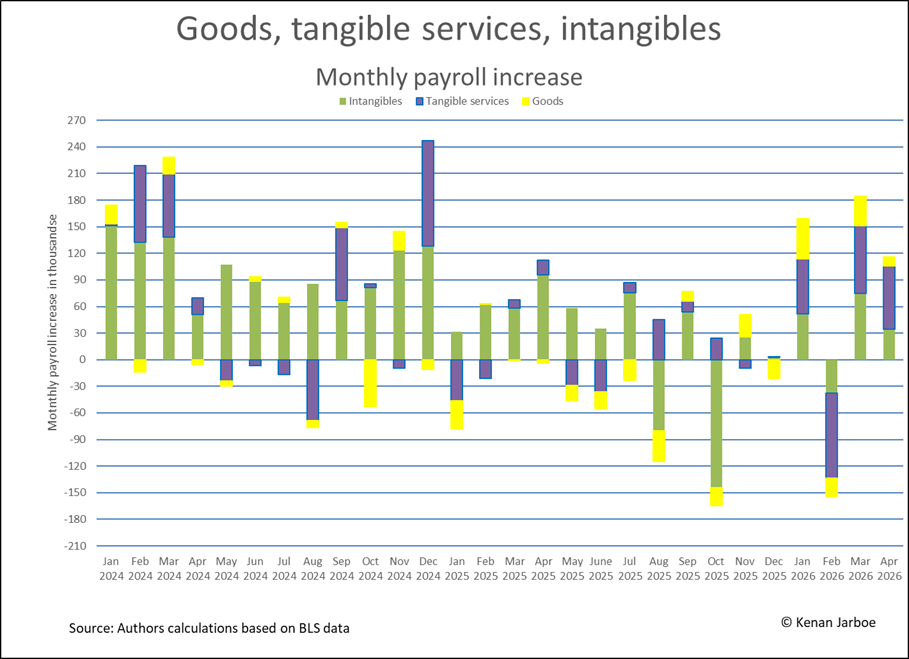
April jobs data shows a twist on the tangible-intangible split. Job growth was powered by tangible services specifically in Trade, Transportation & Utilities while almost all the growth in intangible payrolls came from Educational & Health Services intangibleeconomy.wordpress.com/2026/05/08/ano…
Similar to February, the overall deficit grew by $2.5 billion to $60.3 billion in March and the surplus in intangibles grew. The good news was the reversal of last month’s decline in the trade balance in intellectual property. intangibleeconomy.wordpress.com/2026/05/05/non…
Great example of how the tangible and intangible economies are intertwined. “The tangible AI economy: Caterpillar as AI darling” #story2" target="_blank" rel="nofollow noopener">axios.com/newsletters/ax… #axiosam
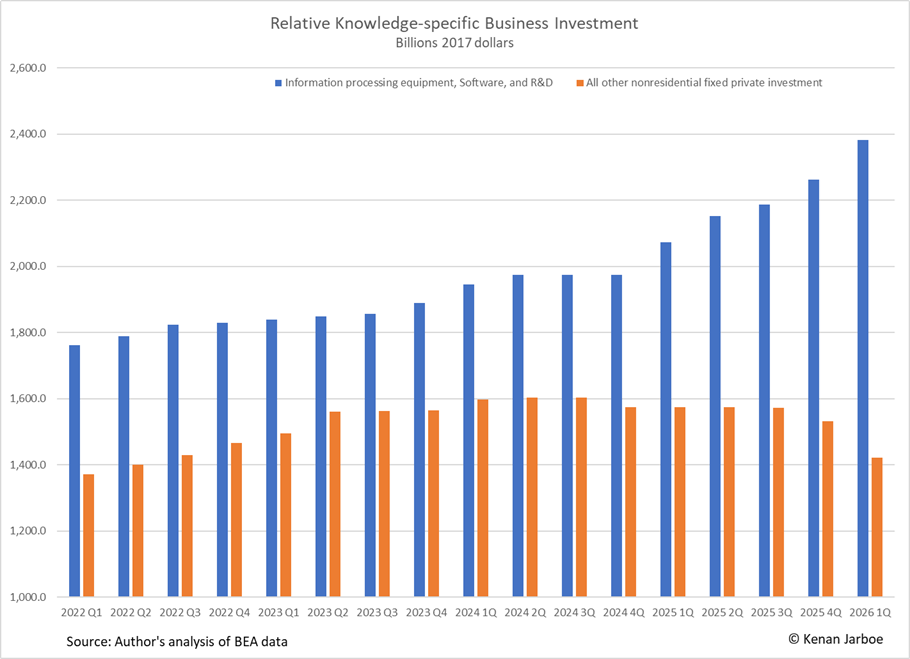
I estimate that without the surge in knowledge-related investments (i.e. these investment growing by the save amount as in 4Q25), the GDP growth rate would be 1.2%
Knowledge-related investment surge powers the 1Q26 2% growth. This tracks with what we have been hearing about investments in AI and data centers. Overall other business investments declined, mostly due to a drop in manufacturing facilities investments. intangibleeconomy.wordpress.com/2026/04/30/kno…
Not surprisingly, intangible-producing companies have higher AI usage (almost 25%) compared to only 10% of tangible-producing companies. And AI adoption still has to go with over 60% saying AI was not applicable to their industry. intangibleeconomy.wordpress.com/2026/04/28/ai-…
Can a building be an intangible asset? Yes, if the building in part of the company’s story and the story is an important part of the company’s intangibles.
intangibleeconomy.wordpress.com/2026/04/13/can…
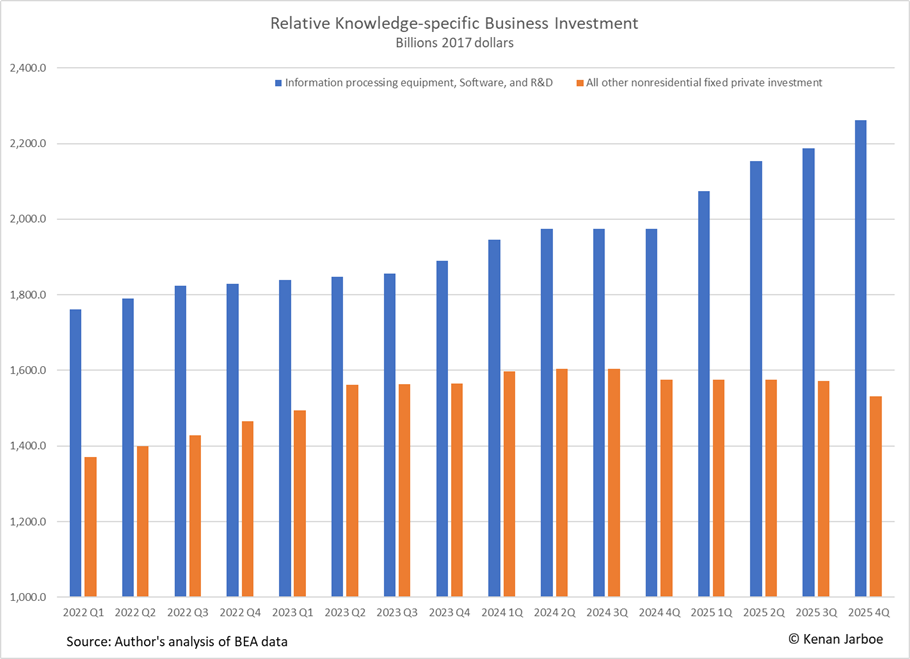
Here we go again. GDP revisions reveal a weak, unbalanced economy. BEA revised 4Q25 downward to show a growth rate of only 0.5% - but while business investment is weak, knowledge-based investment continues. intangibleeconomy.wordpress.com/2026/04/09/onc…
Unfortunately, we do not yet have the vocabulary to clearly articulate this new production structure. The drafting of the National Strategic Plan for Advanced Manufacturing is an opportunity to change the narrative.
intangibleeconomy.wordpress.com/2026/04/06/tho…
Thoughts on a National Strategic Plan for Advanced Manufacturing. Manufacturing strategy needs to be about more than manufacturing and embrace new realities:
· fusion of manufacturing and services
· importance of intangible assets
· shift from making things to making value