Libya Desk

3.2K posts

Libya Desk banner
Libya Desk

Libya Desk

@LibyaDesk

Helping companies stay informed, mitigate risk, and achieve results in #Libya. Follow @TheGeoPolDesk for global coverage.

London, England 가입일 Nisan 2019
1.4K 팔로잉9.6K 팔로워
고정된 트윗
Libya Desk
Libya Desk@LibyaDesk·
𝗟𝗶𝗯𝘆𝗮 𝗗𝗲𝘀𝗸 𝗠𝗮𝗿𝗸𝘀 𝗦𝗲𝘃𝗲𝗻 𝗬𝗲𝗮𝗿𝘀 In political risk, longevity is proof of capability. It reflects the ability to navigate complexity, adapt to constant change, and deliver through uncertainty. Over the past seven years, we have supported clients across due diligence, market entry, project delivery, and political risk advisory, operating at the centre of Libya’s most challenging environments. Alongside this, we have maintained consistent output, with seven years of political reporting and five years of energy reporting through our flagship subscription products, widely read by stakeholders and those operating in Libya. A track record built on consistency, access, and delivery. Thank you to our clients and partners for your continued trust.
Libya Desk tweet media
English
0
2
8
2K
Libya Desk 리트윗함
Libya Desk
Libya Desk@LibyaDesk·
𝗟𝗶𝗯𝘆𝗮 𝗗𝗲𝘀𝗸 𝗠𝗮𝗿𝗸𝘀 𝗦𝗲𝘃𝗲𝗻 𝗬𝗲𝗮𝗿𝘀 In political risk, longevity is proof of capability. It reflects the ability to navigate complexity, adapt to constant change, and deliver through uncertainty. Over the past seven years, we have supported clients across due diligence, market entry, project delivery, and political risk advisory, operating at the centre of Libya’s most challenging environments. Alongside this, we have maintained consistent output, with seven years of political reporting and five years of energy reporting through our flagship subscription products, widely read by stakeholders and those operating in Libya. A track record built on consistency, access, and delivery. Thank you to our clients and partners for your continued trust.
Libya Desk tweet media
English
0
2
8
2K
Libya Desk 리트윗함
The Geopolitical Desk
The Geopolitical Desk@thegeopoldesk·
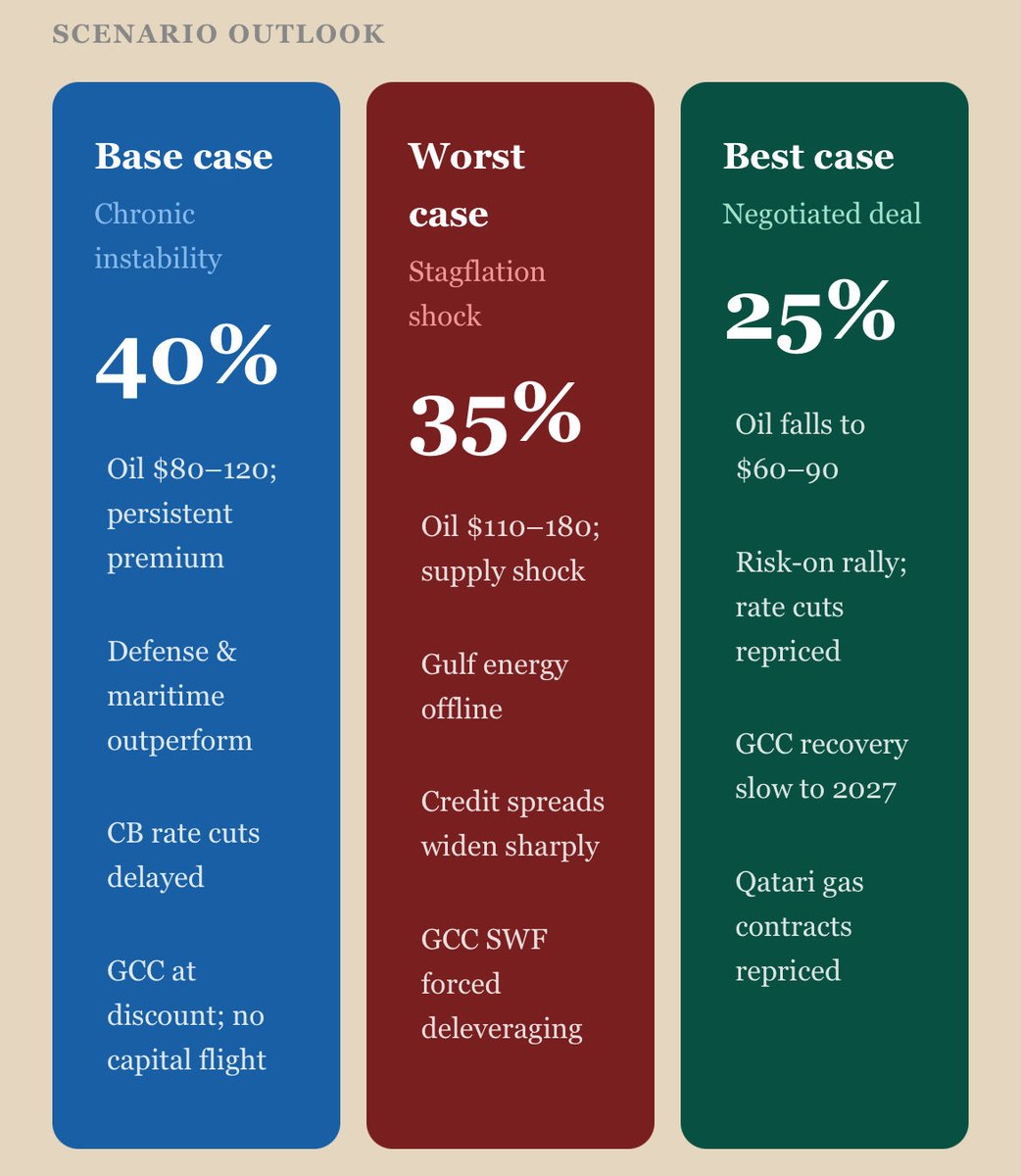
What if the real risk isn’t escalation… but mispricing it? Our latest Iran war scenario mapping shows a dangerous disconnect between market pricing and reality: 🔹Hormuz & Bab al-Mandeb disruption → probable + intolerable → Oil $110–180, global trade shock, inflation spike 🔹GCC infrastructure strikes → escalation trigger → multi-year energy disruption, capital flight, stagflation risk 🔹U.S. ground involvement → low control, high consequence → global repricing of geopolitical risk Yet markets continue to treat this as episodic. Our base case (40%) is already chronic instability: no full war, no resolution, just a permanent risk premium across energy, trade, and capital flows. The takeaway: This is not a crisis to trade. It’s a new baseline to price. We’re entering a world where geopolitics overrides macro.
The Geopolitical Desk@thegeopoldesk

🔴𝐅𝐫𝐨𝐦 𝐑𝐢𝐬𝐤 𝐄𝐯𝐞𝐧𝐭 𝐭𝐨 𝐌𝐚𝐫𝐤𝐞𝐭 𝐁𝐚𝐬𝐞𝐥𝐢𝐧𝐞: 𝐎𝐮𝐫 𝐋𝐚𝐭𝐞𝐬𝐭 𝐈𝐫𝐚𝐧 𝐀𝐬𝐬𝐞𝐬𝐬𝐦𝐞𝐧𝐭 Our Iran Desk has published its 𝐰𝐞𝐞𝐤𝐥𝐲 𝐮𝐩𝐝𝐚𝐭𝐞 𝐭𝐨 𝐨𝐮𝐫 𝐬𝐜𝐞𝐧𝐚𝐫𝐢𝐨 𝐦𝐚𝐩𝐩𝐢𝐧𝐠 — a conflict guide for clients and subscribers. We argue that markets must now price instability 𝐜𝐨𝐧𝐭𝐢𝐧𝐮𝐨𝐮𝐬𝐥𝐲, 𝐧𝐨𝐭 𝐩𝐞𝐫𝐢𝐨𝐝𝐢𝐜𝐚𝐥𝐥𝐲. What was once episodic risk is now a 𝐬𝐭𝐫𝐮𝐜𝐭𝐮𝐫𝐚𝐥 𝐛𝐚𝐬𝐞𝐥𝐢𝐧𝐞. We assess three pathways: • 𝐁𝐚𝐬𝐞 (𝟒𝟎%): chronic instability without systemic breakdown • 𝐖𝐨𝐫𝐬𝐭 (𝟑𝟓%): uncontrolled escalation and a stagflationary global shock • 𝐁𝐞𝐬𝐭 (𝟐𝟓%): partial political reset and negotiated de-escalation 𝐄𝐧𝐞𝐫𝐠𝐲 𝐢𝐬 𝐭𝐡𝐞 𝐩𝐫𝐢𝐦𝐚𝐫𝐲 𝐭𝐫𝐚𝐧𝐬𝐦𝐢𝐬𝐬𝐢𝐨𝐧 𝐜𝐡𝐚𝐧𝐧𝐞𝐥. Oil volatility will determine inflation and growth across all scenarios. Our probability-weighted expectation sits at $101/bbl, with a pronounced asymmetric risk toward $145+. 𝐓𝐡𝐞 𝐒𝐭𝐫𝐚𝐢𝐭 𝐨𝐟 𝐇𝐨𝐫𝐦𝐮𝐳 𝐢𝐬 𝐭𝐡𝐞 𝐜𝐫𝐢𝐭𝐢𝐜𝐚𝐥 𝐜𝐡𝐨𝐤𝐞𝐩𝐨𝐢𝐧𝐭. Iran retains structural leverage over global energy flows regardless of the conflict’s military trajectory. 𝐍𝐨 𝐚𝐜𝐭𝐨𝐫 𝐜𝐨𝐧𝐭𝐫𝐨𝐥𝐬 𝐞𝐬𝐜𝐚𝐥𝐚𝐭𝐢𝐨𝐧. The US seeks withdrawal, Israel seeks to sustain pressure, and Iran prioritises deterrence and regime survival. This misalignment is the core escalation driver. 𝐖𝐡𝐚𝐭’𝐬 𝐬𝐡𝐢𝐟𝐭𝐢𝐧𝐠 𝐬𝐭𝐫𝐮𝐜𝐭𝐮𝐫𝐚𝐥𝐥𝐲: • GCC safe-haven status weakening, with assets trading at a geopolitical discount • Capital reallocating toward Turkey, India, and Southeast Asia • Supply chains and capital repricing toward resilience over efficiency 𝐄𝐧𝐝 𝐬𝐭𝐚𝐭𝐞: a faster transition toward a 𝐦𝐮𝐥𝐭𝐢𝐩𝐨𝐥𝐚𝐫 𝐞𝐧𝐞𝐫𝐠𝐲 𝐨𝐫𝐝𝐞𝐫 Winners: Americas, North Africa, Russia China strengthens in renewables Asian importers face the sharpest exposure 👉 𝐖𝐡𝐚𝐭 𝐰𝐞 𝐜𝐨𝐯𝐞𝐫: scenario pathways, market implications, escalation dynamics, and forward indicators 📩 Subscribe online to read the full report: 🔗 thegeopoliticaldesk.com/reports/iran-d… Or get in touch via email for a sample insights@thegeopoliticaldesk.com

English
0
4
3
829
Libya Desk
Libya Desk@LibyaDesk·
📣 New report 👇🏽
The Geopolitical Desk@thegeopoldesk

🔴𝐅𝐫𝐨𝐦 𝐑𝐢𝐬𝐤 𝐄𝐯𝐞𝐧𝐭 𝐭𝐨 𝐌𝐚𝐫𝐤𝐞𝐭 𝐁𝐚𝐬𝐞𝐥𝐢𝐧𝐞: 𝐎𝐮𝐫 𝐋𝐚𝐭𝐞𝐬𝐭 𝐈𝐫𝐚𝐧 𝐀𝐬𝐬𝐞𝐬𝐬𝐦𝐞𝐧𝐭 Our Iran Desk has published its 𝐰𝐞𝐞𝐤𝐥𝐲 𝐮𝐩𝐝𝐚𝐭𝐞 𝐭𝐨 𝐨𝐮𝐫 𝐬𝐜𝐞𝐧𝐚𝐫𝐢𝐨 𝐦𝐚𝐩𝐩𝐢𝐧𝐠 — a conflict guide for clients and subscribers. We argue that markets must now price instability 𝐜𝐨𝐧𝐭𝐢𝐧𝐮𝐨𝐮𝐬𝐥𝐲, 𝐧𝐨𝐭 𝐩𝐞𝐫𝐢𝐨𝐝𝐢𝐜𝐚𝐥𝐥𝐲. What was once episodic risk is now a 𝐬𝐭𝐫𝐮𝐜𝐭𝐮𝐫𝐚𝐥 𝐛𝐚𝐬𝐞𝐥𝐢𝐧𝐞. We assess three pathways: • 𝐁𝐚𝐬𝐞 (𝟒𝟎%): chronic instability without systemic breakdown • 𝐖𝐨𝐫𝐬𝐭 (𝟑𝟓%): uncontrolled escalation and a stagflationary global shock • 𝐁𝐞𝐬𝐭 (𝟐𝟓%): partial political reset and negotiated de-escalation 𝐄𝐧𝐞𝐫𝐠𝐲 𝐢𝐬 𝐭𝐡𝐞 𝐩𝐫𝐢𝐦𝐚𝐫𝐲 𝐭𝐫𝐚𝐧𝐬𝐦𝐢𝐬𝐬𝐢𝐨𝐧 𝐜𝐡𝐚𝐧𝐧𝐞𝐥. Oil volatility will determine inflation and growth across all scenarios. Our probability-weighted expectation sits at $101/bbl, with a pronounced asymmetric risk toward $145+. 𝐓𝐡𝐞 𝐒𝐭𝐫𝐚𝐢𝐭 𝐨𝐟 𝐇𝐨𝐫𝐦𝐮𝐳 𝐢𝐬 𝐭𝐡𝐞 𝐜𝐫𝐢𝐭𝐢𝐜𝐚𝐥 𝐜𝐡𝐨𝐤𝐞𝐩𝐨𝐢𝐧𝐭. Iran retains structural leverage over global energy flows regardless of the conflict’s military trajectory. 𝐍𝐨 𝐚𝐜𝐭𝐨𝐫 𝐜𝐨𝐧𝐭𝐫𝐨𝐥𝐬 𝐞𝐬𝐜𝐚𝐥𝐚𝐭𝐢𝐨𝐧. The US seeks withdrawal, Israel seeks to sustain pressure, and Iran prioritises deterrence and regime survival. This misalignment is the core escalation driver. 𝐖𝐡𝐚𝐭’𝐬 𝐬𝐡𝐢𝐟𝐭𝐢𝐧𝐠 𝐬𝐭𝐫𝐮𝐜𝐭𝐮𝐫𝐚𝐥𝐥𝐲: • GCC safe-haven status weakening, with assets trading at a geopolitical discount • Capital reallocating toward Turkey, India, and Southeast Asia • Supply chains and capital repricing toward resilience over efficiency 𝐄𝐧𝐝 𝐬𝐭𝐚𝐭𝐞: a faster transition toward a 𝐦𝐮𝐥𝐭𝐢𝐩𝐨𝐥𝐚𝐫 𝐞𝐧𝐞𝐫𝐠𝐲 𝐨𝐫𝐝𝐞𝐫 Winners: Americas, North Africa, Russia China strengthens in renewables Asian importers face the sharpest exposure 👉 𝐖𝐡𝐚𝐭 𝐰𝐞 𝐜𝐨𝐯𝐞𝐫: scenario pathways, market implications, escalation dynamics, and forward indicators 📩 Subscribe online to read the full report: 🔗 thegeopoliticaldesk.com/reports/iran-d… Or get in touch via email for a sample insights@thegeopoliticaldesk.com

English
0
0
1
279
Libya Desk 리트윗함
The Geopolitical Desk
The Geopolitical Desk@thegeopoldesk·
🔴𝐅𝐫𝐨𝐦 𝐑𝐢𝐬𝐤 𝐄𝐯𝐞𝐧𝐭 𝐭𝐨 𝐌𝐚𝐫𝐤𝐞𝐭 𝐁𝐚𝐬𝐞𝐥𝐢𝐧𝐞: 𝐎𝐮𝐫 𝐋𝐚𝐭𝐞𝐬𝐭 𝐈𝐫𝐚𝐧 𝐀𝐬𝐬𝐞𝐬𝐬𝐦𝐞𝐧𝐭 Our Iran Desk has published its 𝐰𝐞𝐞𝐤𝐥𝐲 𝐮𝐩𝐝𝐚𝐭𝐞 𝐭𝐨 𝐨𝐮𝐫 𝐬𝐜𝐞𝐧𝐚𝐫𝐢𝐨 𝐦𝐚𝐩𝐩𝐢𝐧𝐠 — a conflict guide for clients and subscribers. We argue that markets must now price instability 𝐜𝐨𝐧𝐭𝐢𝐧𝐮𝐨𝐮𝐬𝐥𝐲, 𝐧𝐨𝐭 𝐩𝐞𝐫𝐢𝐨𝐝𝐢𝐜𝐚𝐥𝐥𝐲. What was once episodic risk is now a 𝐬𝐭𝐫𝐮𝐜𝐭𝐮𝐫𝐚𝐥 𝐛𝐚𝐬𝐞𝐥𝐢𝐧𝐞. We assess three pathways: • 𝐁𝐚𝐬𝐞 (𝟒𝟎%): chronic instability without systemic breakdown • 𝐖𝐨𝐫𝐬𝐭 (𝟑𝟓%): uncontrolled escalation and a stagflationary global shock • 𝐁𝐞𝐬𝐭 (𝟐𝟓%): partial political reset and negotiated de-escalation 𝐄𝐧𝐞𝐫𝐠𝐲 𝐢𝐬 𝐭𝐡𝐞 𝐩𝐫𝐢𝐦𝐚𝐫𝐲 𝐭𝐫𝐚𝐧𝐬𝐦𝐢𝐬𝐬𝐢𝐨𝐧 𝐜𝐡𝐚𝐧𝐧𝐞𝐥. Oil volatility will determine inflation and growth across all scenarios. Our probability-weighted expectation sits at $101/bbl, with a pronounced asymmetric risk toward $145+. 𝐓𝐡𝐞 𝐒𝐭𝐫𝐚𝐢𝐭 𝐨𝐟 𝐇𝐨𝐫𝐦𝐮𝐳 𝐢𝐬 𝐭𝐡𝐞 𝐜𝐫𝐢𝐭𝐢𝐜𝐚𝐥 𝐜𝐡𝐨𝐤𝐞𝐩𝐨𝐢𝐧𝐭. Iran retains structural leverage over global energy flows regardless of the conflict’s military trajectory. 𝐍𝐨 𝐚𝐜𝐭𝐨𝐫 𝐜𝐨𝐧𝐭𝐫𝐨𝐥𝐬 𝐞𝐬𝐜𝐚𝐥𝐚𝐭𝐢𝐨𝐧. The US seeks withdrawal, Israel seeks to sustain pressure, and Iran prioritises deterrence and regime survival. This misalignment is the core escalation driver. 𝐖𝐡𝐚𝐭’𝐬 𝐬𝐡𝐢𝐟𝐭𝐢𝐧𝐠 𝐬𝐭𝐫𝐮𝐜𝐭𝐮𝐫𝐚𝐥𝐥𝐲: • GCC safe-haven status weakening, with assets trading at a geopolitical discount • Capital reallocating toward Turkey, India, and Southeast Asia • Supply chains and capital repricing toward resilience over efficiency 𝐄𝐧𝐝 𝐬𝐭𝐚𝐭𝐞: a faster transition toward a 𝐦𝐮𝐥𝐭𝐢𝐩𝐨𝐥𝐚𝐫 𝐞𝐧𝐞𝐫𝐠𝐲 𝐨𝐫𝐝𝐞𝐫 Winners: Americas, North Africa, Russia China strengthens in renewables Asian importers face the sharpest exposure 👉 𝐖𝐡𝐚𝐭 𝐰𝐞 𝐜𝐨𝐯𝐞𝐫: scenario pathways, market implications, escalation dynamics, and forward indicators 📩 Subscribe online to read the full report: 🔗 thegeopoliticaldesk.com/reports/iran-d… Or get in touch via email for a sample insights@thegeopoliticaldesk.com

The Geopolitical Desk tweet media
English
0
4
2
1K
Libya Desk 리트윗함
The Geopolitical Desk
The Geopolitical Desk@thegeopoldesk·
🇺🇸🇱🇾 The U.S. is no longer treating the Muslim Brotherhood as a single entity, but as a flexible political tool. We’ve already seen this in Sudan, where the label is being used to sanction and sideline problematic figures under the banner of counterterrorism. This is a structural shift. It’s not about ideology alone, but leverage. Libya could be next. With Washington now targeting networks, influence and proximity rather than formal affiliation, figures like Mahmoud Hamza are increasingly exposed. The key question: where does counterterrorism end, and political engineering begin? Our latest ⬇️ thegeopoliticaldesk.com/exclusive-coul…
English
2
7
29
4.5K
Libya Desk 리트윗함
The Geopolitical Desk
The Geopolitical Desk@thegeopoldesk·
🔴 Regime change in Iran won’t deliver instant renewal As strikes reshape Iran’s military landscape, a parallel narrative is gaining ground: that removing the Islamic Republic will unlock a rapid transition to stability and prosperity. This piece serves as a necessary reality check to that assumption. The vision is appealing and not entirely unfounded. Iran’s younger generations show real dynamism, and the foundations for renewal do exist. But the expectation of a swift transformation rests on a dangerous simplification. Much of the optimism draws on flawed comparisons to post-war Germany and Japan, ignoring the extraordinary conditions that enabled their recovery. Iran faces a far more complex reality, shaped by entrenched economic structures, fragile infrastructure, and long-term demographic pressures. The country’s economy is deeply embedded in crony networks that will not disappear with regime change. Rapid liberalisation risks hollowing out what remains of its productive base, while already strained energy and water systems, compounded by war damage and sanctions, will slow reconstruction. Even with political change, recovery will be constrained. An ageing population, years of underinvestment, and a weakened workforce will weigh heavily, while internal political tensions may intensify rather than resolve. Iran may well have the ingredients for renewal. But this is not a story of instant recovery. It is far more likely to be a prolonged, fragile, and contested transition. Read the full analysis: thegeopoliticaldesk.com/regime-change-…
English
0
1
5
353
Libya Desk 리트윗함
The Geopolitical Desk
The Geopolitical Desk@thegeopoldesk·
🇺🇸🇮🇷 U.S. “energy dominance” was meant to insulate Washington from global shocks. Instead, it is redrawing the map of risk for oil and gas investors. What happened is that U.S. escalation against Iran has triggered cascading disruptions across the Gulf, pushing oil prices higher, tightening LNG flows, and creating pressure from Europe to Asia to U.S. consumers. What most are missing is that energy independence has not reduced exposure, it has changed how the U.S. uses energy as leverage. Washington is reshaping alliances, opening upstream opportunities through intervention, and tying energy flows more directly to security policy. But these opportunities are being created by geopolitics, not stability, from Iraq to Syria to the Eastern Mediterranean. Why it matters is that upstream investments operate on multi-decade timelines. Deals enabled by military and diplomatic pressure today may not survive the governments or systems that emerge tomorrow. The split between Chevron’s expansion and ExxonMobil’s caution reflects a deeper uncertainty about long-term investability. The bottom line is that hard power can open doors, but it cannot guarantee returns. For investors, the real risk is not missing opportunity, but being locked into assets shaped by instability rather than strategy. thegeopoliticaldesk.com/energy-dominan…
English
0
1
4
335
Libya Desk 리트윗함
The Geopolitical Desk
The Geopolitical Desk@thegeopoldesk·
🇺🇸 A shift is coming inside Trump’s foreign policy team, and North Africa is at the centre of it. According to our sources, Massad Boulos may soon be moved into a new role, with the North Africa file likely shifting to Steve Witkoff. Trump’s team had viewed North Africa as a space for quick wins. That has not materialised. No process between Morocco and Algeria Sudan remains all talks, no substance Libya’s core files are still stuck Boulos has lost his shimmer with regional leaders. For Arab governments, what matters is proximity. Witkoff, constantly at Trump’s side, carries weight Boulos never did. For North African officials, this is decisive. Witkoff signals seriousness and direct White House attention. Boulos came to be seen as a channel without influence. Even before the Iran war, Witkoff had been in contact with regional leaders and was positioning to take over the file by May. Officials in the Maghreb, particularly on Morocco-Algeria, told us they are more likely to engage once Witkoff is leading the file. Read more: thegeopoliticaldesk.com/power-struggle…
English
0
12
24
7.9K
Libya Desk 리트윗함
The Geopolitical Desk
The Geopolitical Desk@thegeopoldesk·
Is Belqasim Haftar’s fund pushing Libya’s economy to breaking point? What began as post-Derna reconstruction is now one of Libya’s most powerful financial actors. The LDRF’s ballooning budget, opaque spending, and expanding reach are reshaping not just state finances, but how power is exercised through money. • A 69bn LYD allocation in a fragile, oil-dependent economy • A widening gap between official and parallel exchange rates • Growing concerns over unpaid contractors and weak governance • Increasing pressure on the Central Bank and national reserves For international firms, the risk is no longer theoretical. Payment delays, contract uncertainty, and political exposure are becoming the norm. For Libya, the stakes are even higher. This is no longer just mismanagement. It is a structural shift accelerating economic deterioration, deepening inequality, and fragmenting the state’s financial system. The real question is no longer whether Libya can afford this model. It is whether the economy can survive it. Read more: thegeopoliticaldesk.com/belqasims-spen…
English
0
2
7
1.1K
Libya Desk 리트윗함
The Geopolitical Desk
The Geopolitical Desk@thegeopoldesk·
🇬🇧 Britain is stepping into Benghazi. And the LNA is ready. With the UK’s intelligence chief concluding a visit to Benghazi, the message is clear: engagement with eastern Libya is accelerating. This is not happening in isolation. Saddam Haftar has spent the past year building ties across Turkey, Pakistan, Italy, the United States and beyond, steadily reshaping the LNA’s foreign policy footprint. Now, London is next in line. Our March analysis breaks down what this shift means and why the LNA may be drifting westwards in ways many are still underestimating. thegeopoliticaldesk.com/is-the-libyan-…
English
0
3
24
2.4K
Libya Desk 리트윗함
The Geopolitical Desk
The Geopolitical Desk@thegeopoldesk·
🇩🇿 The global energy crunch is accelerating and Algeria is moving to capitalise. With Europe scrambling for supply, Algiers is positioning itself as a key solution and preparing a new upstream bidding round. For traders and IOCs, this is a market shift worth watching. To learn more, get in touch. thegeopoliticaldesk.com/algerias-new-b…
English
0
1
4
454
Libya Desk 리트윗함
The Geopolitical Desk
The Geopolitical Desk@thegeopoldesk·
🇱🇾 Belqasim Haftar’s spending spree is pushing Libya’s economy to the brink No oversight. No transparency. No clarity on who is awarded contracts, what they’re for, or how much is being spent. Sources tell GPD over 70bn dinars have already been deployed, and now Belqasim is pushing for another budget, alongside access to the NOC’s development fund. We break down how Libya got here, the risks to the economy, the growing public outrage, and the dilemmas facing those who partnered with the fund. Read more: thegeopoliticaldesk.com/belqasims-spen…
English
0
3
8
1.5K
Libya Desk 리트윗함
The Geopolitical Desk
The Geopolitical Desk@thegeopoldesk·
🇺🇸 Trump sold this war as strength. It’s turning into a political liability. His Iran gamble rested on a fantasy: a quick decapitation strike, no real retaliation, and a forced deal. Instead, Tehran escalated, dragged the war regional, and hit what matters most to him, the economy. Now he’s stuck between escalation and exit, with neither politically viable. At home, the damage is already done. His coalition was fragile, this war is breaking it. Independents are drifting over rising costs, “America First” voters are questioning an “Israel-first” war, and even parts of MAGA are split. Only ~25% supported the strikes. Approval was already ~40–45%. There’s little upside from here. Even in a best-case scenario, energy prices are likely to remain volatile through the summer, prolonging pressure on consumers and limiting any political recovery. Even if he pulls out, the political cost will linger. With oil prices rising and midterms approaching, Republicans risk losing at least one chamber. Bottom line: this war doesn’t project strength, it exposes strategic confusion, weakens Trump domestically, and could define the limits of his presidency. Read more: thegeopoliticaldesk.com/trumps-ill-pla…
English
0
2
4
290
Libya Desk 리트윗함
The Geopolitical Desk
The Geopolitical Desk@thegeopoldesk·
🔴 From the 12-Day War to the escalation unfolding today. We’ve gathered all our reporting and strategic analysis on the US-Israeli war on Iran in one place. While checking our site, subscribe to our newsletter for time-sensitive updates and analysis. thegeopoliticaldesk.com/tag/israel-ira…
English
0
2
2
1K