Mars Base Zero

1.2K posts

Mars Base Zero banner
Mars Base Zero

Mars Base Zero

@MarsBaseZero

2 surviving, fictional astronauts exploring a Martian lifestyle and commenting on spaceflight. | Posting daily | Click ‘Follow’ for the latest.

Mars 가입일 Kasım 2025
346 팔로잉102 팔로워
고정된 트윗
Mars Base Zero
Mars Base Zero@MarsBaseZero·
Are NASA's CHAPEA missions too soft to be useful? I see what the CHAPEA missions are trying to do, however, I have some very serious questions. They're designed to be a pragmatic, low-risk starting point for gathering data on human factors like team dynamics, cognitive performance, and basic habitability under controlled isolation for Mars missions. However, let's be real here. How can they claim to prepare crews when their "habitat" is a spacious Earth bunker with private rooms and lounges… while ignoring the bone-crushing confinement of an 8 month transit, the stress of atmospheric entry and then years in a cramped Mars hab where every inch screams isolation and death lurks in the shadows—every moment of every day? What good are scripted malfunctions and reversible drills when there isn’t a safety net or reset button? Why skimp on the soul-shattering, mind-fracking psychology? I’m talking about where a someone’s mistake means burying your crew mates, watching trust fracture into paranoia over days. I’m talking about real performance effecting issues which need to be studied, not some cushy, year-long cosplay. If NASA's not dialing up the raw terror of no-rescue scenarios, aren’t they just breeding false confidence? Lives are on the line. And another thing: Why aren’t they using actual astronaut candidates for these programs? Not meaning to offend… Just being honest.
NASA Space Operations@NASASpaceOps

On Jan. 27, the Crew Health and Performance Exploration Analog (CHAPEA) Mission 2 crew members hit the 100-day mark of NASA's year-long Mars simulation. On this week's #HWHAP episode, hear from the crew as they share insights on their mission from inside the 3D-printed habitat @NASA_Johnson. 👂here: nasa.gov/podcasts/houst…

English
1
0
3
126
NASA Artemis
NASA Artemis@NASAArtemis·
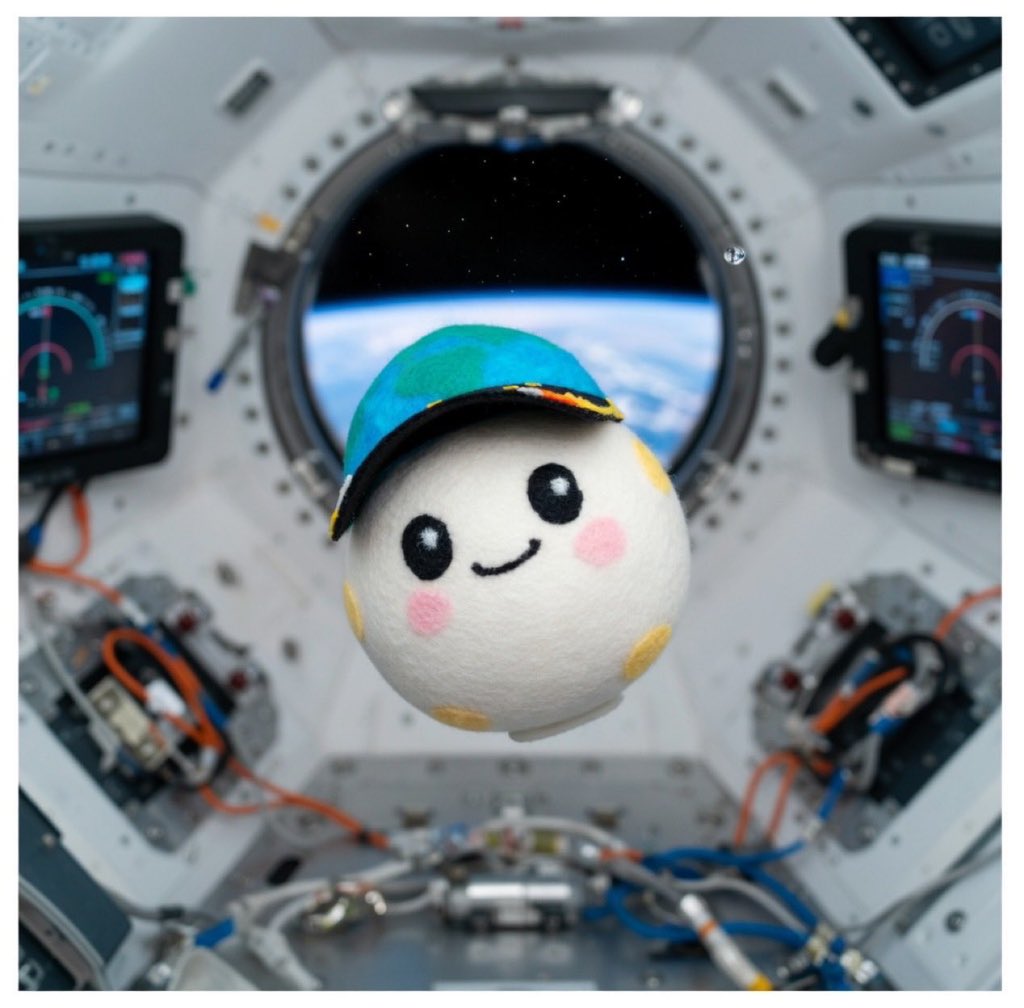
Hi! I’m Rise! About a week ago, I launched aboard the Artemis II mission with four of my besties. Since then, I have been serving a very important purpose aboard the Orion spacecraft… I float. (And I look cute.) Today, I am taking over the Artemis social media accounts! -Rise
English
872
6K
48K
1.6M
Kevin Dalton
Kevin Dalton@TheKevinDalton·
Just picked up my son from elementary school and was blown away that ZERO parents or kids were aware of the Artemis II launch. Have we lost complete interest in space travel?
English
2.9K
468
8.8K
1.4M
Canraptor ☄️
Canraptor ☄️@canraptor_·
WHAT THE FUCK This proposal is essentially a return to the Constellation program In Constellation, the separately launched Altair Lunar Lander docked to Orion and did the Translunar Injection by itself In this case, Orion docks to Starship HLS, and Starship does the TLI. This would be insane, and a very wise cost-saving move.
Canraptor ☄️ tweet media
English
23
16
174
3.3K
Bluntly Put Philosopher (BPP)
Bluntly Put Philosopher (BPP)@SocraticScribe·
The Sunbird Fusion Rocket from Pulsar Fusion echoes ideas long explored by propulsion pioneer Paul Czysz, using advanced propulsion to transform deep-space travel. Fusion rockets could cut Mars trips to weeks and open the outer solar system.
English
47
218
1.5K
86.7K
Mars Base Zero
Mars Base Zero@MarsBaseZero·
@orionlensguy @Cmdr_Hadfield @NASA It proves kinetic impactors COULD work, not that they will. Dimorphos was a tiny rubble pile compared to the floating mountains that we would have to move. We’ve made a step forward, but we are no where near safe.
English
0
0
0
27
Chris Hadfield
Chris Hadfield@Cmdr_Hadfield·
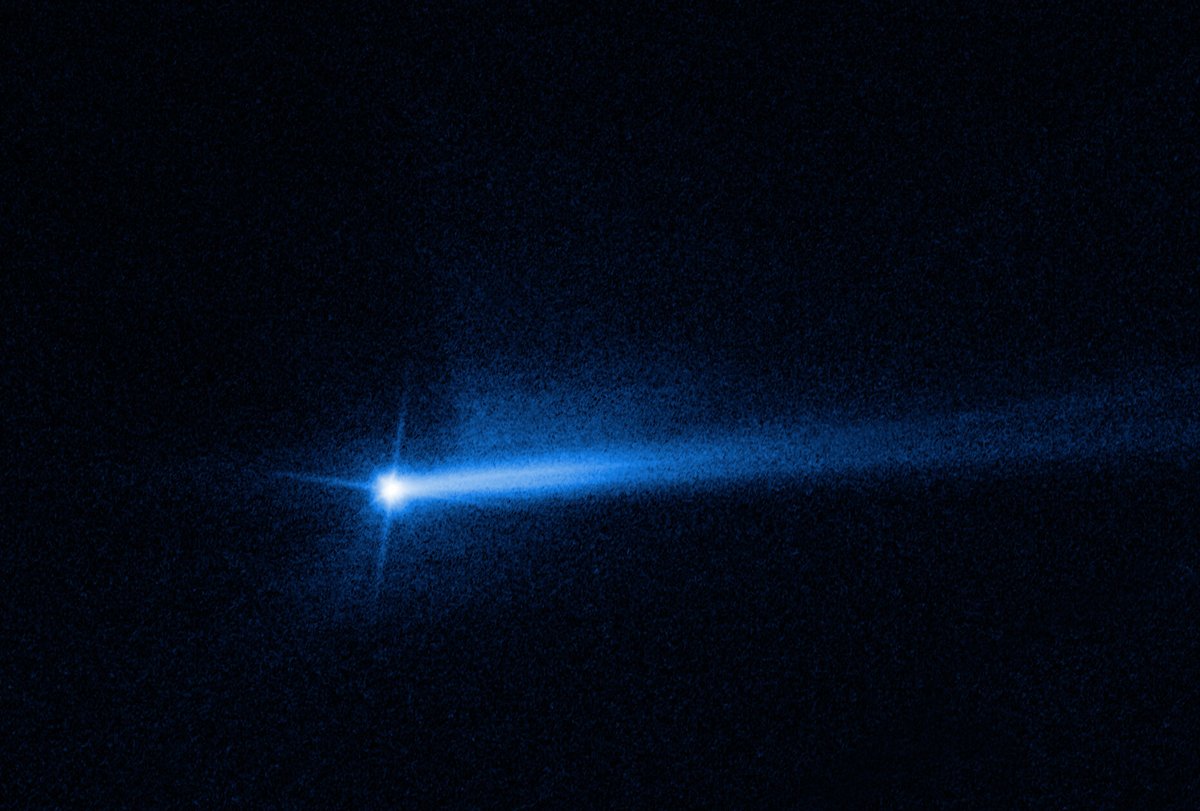
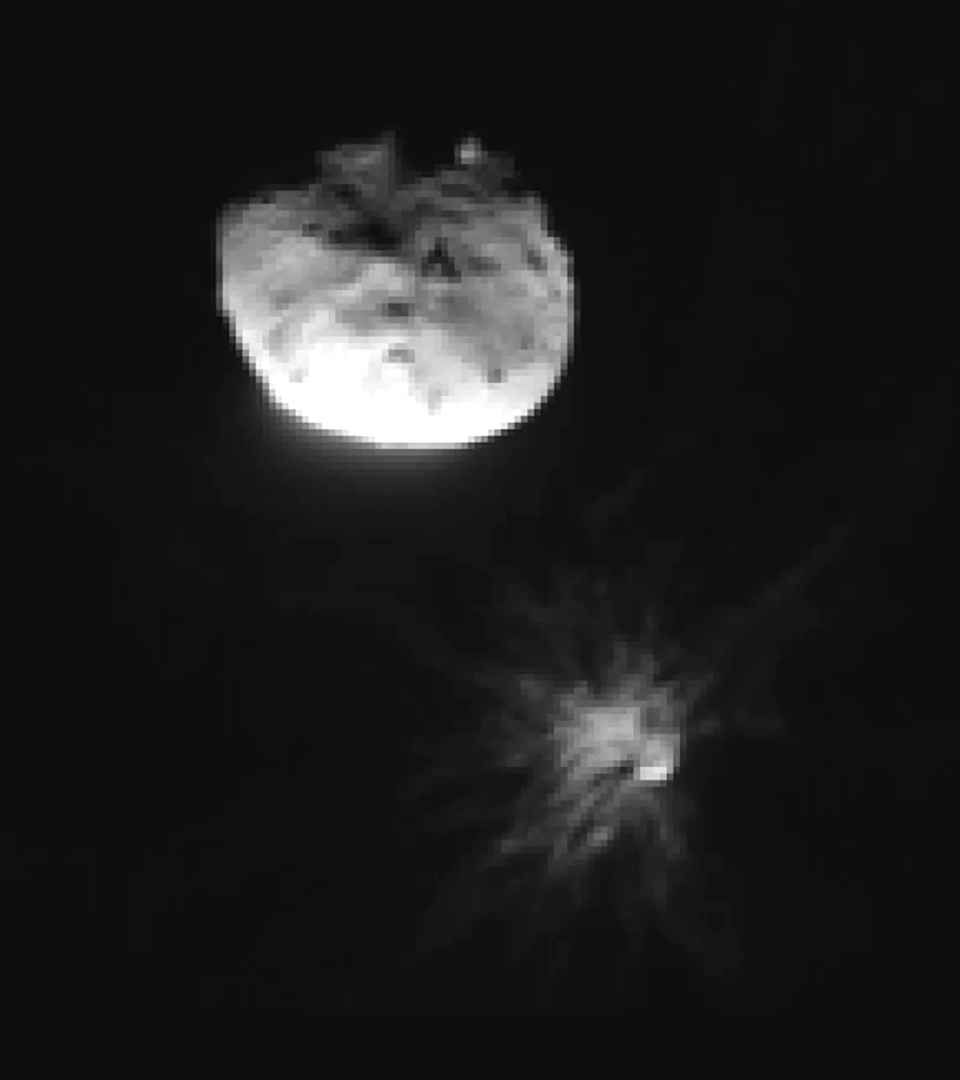
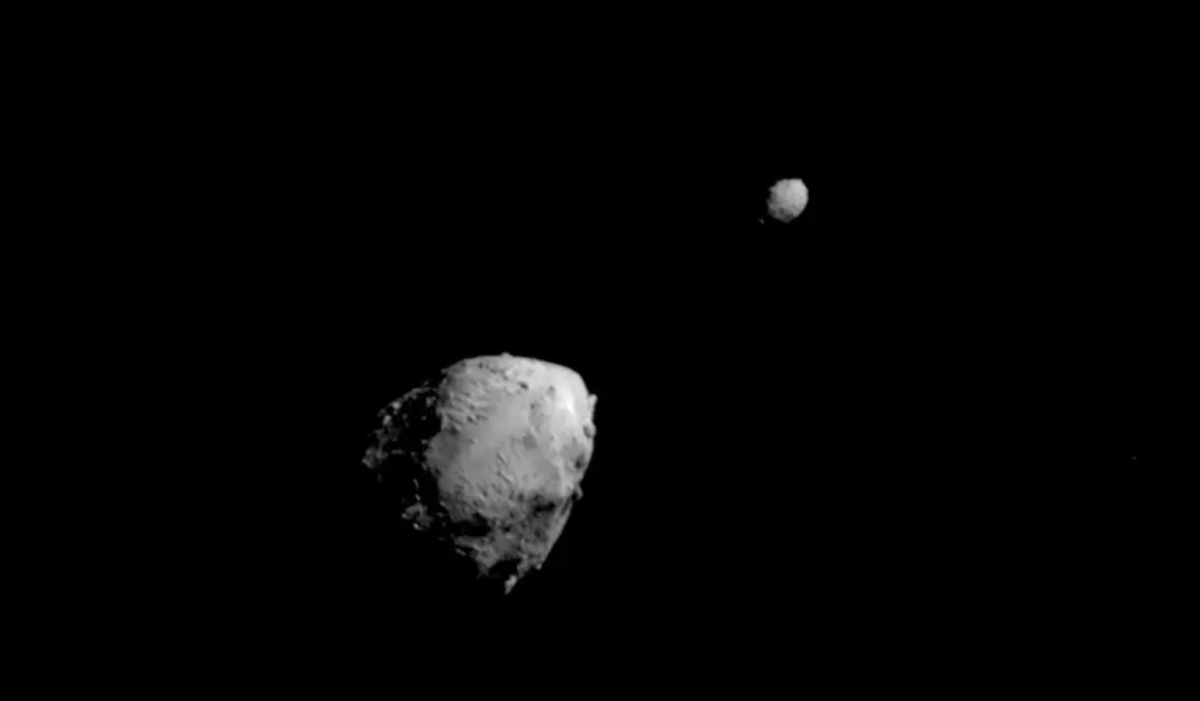
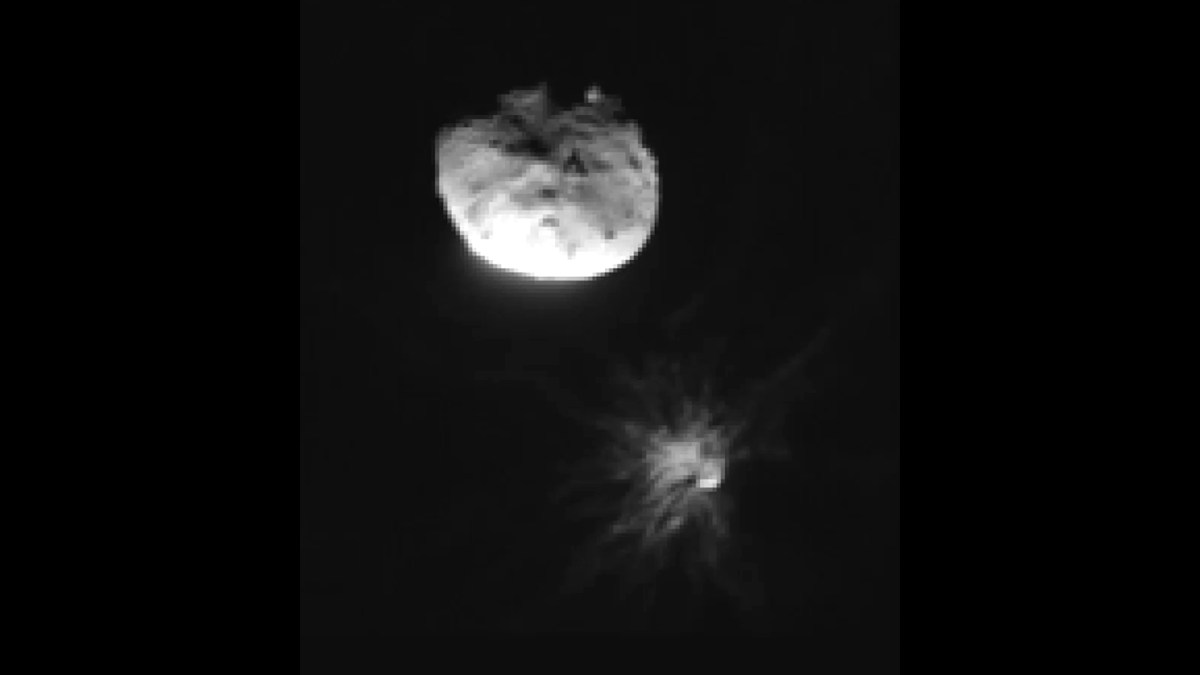
We have just proven that we can deflect asteroids. Ever since @NASA crashed the DART probe into this asteroid's little moon, we've been tracking the result. Now we know its 770-day orbit around the Sun changed by a fraction of a second. That's enough to defend our Earth. The dinosaurs wish they'd had a space program! details: jpl.nasa.gov/news/nasas-dar…
Chris Hadfield tweet mediaChris Hadfield tweet mediaChris Hadfield tweet media
English
57
254
1.6K
54.9K
Mars Base Zero
Mars Base Zero@MarsBaseZero·
@draken1721 @Cmdr_Hadfield @NASA Correction, humans can deflect small space rocks. An asteroid the size and composition of Dimorphos would never a be a serious threat to Earth. We need more practice. Earth is still in very real danger from significantly bigger and faster moving rocks.
English
0
0
1
35
Michael McNeil
Michael McNeil@MichaelEMcNeil·
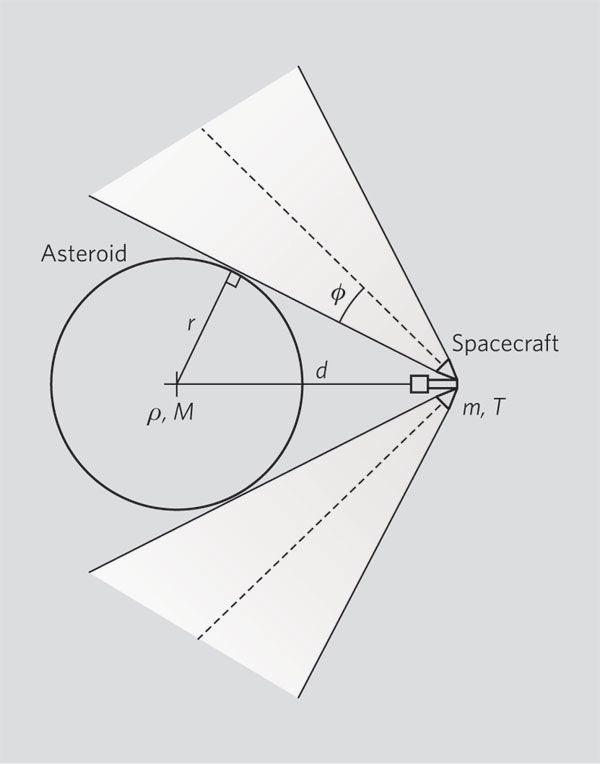
Do the same thing to an asteroid which is not a “rubble pile” (as with asteroid Bennu, 1st below) and likely get a very different result . I like the gravity tractor concept [2nd below], which will (quite gently) work regardless of the target asteroid's internal consistency—to wit. —— Attached [2nd] is a diagram from an article in the journal Nature explaining how the gravitational tractor works: {quoting…} Towing geometry of a gravitational tractor. The asteroid (assumed to be spherical) has radius r, density ρ and mass M. The spacecraft has mass m, total thrust T and an exhaust-plume half-width φ. It hovers at distance d from the asteroid's centre, where its net thrust balances its weight. The thrusters are tilted outwards to prevent exhaust impinging on the asteroid surface. {/unQuote} (Edward T. Lu and Stanley G. Love, “Gravitational tractor for towing asteroids,” Nature, Vol. 438, pp. 177–178 (10 November 2005); doi:10.1038/438177a) nature.com/articles/43817…
Michael McNeil tweet mediaMichael McNeil tweet media
English
2
0
4
698
Mars Base Zero
Mars Base Zero@MarsBaseZero·
Are you so sure about that Chris? Dimorphos is tiny and relatively slow moving compared to real Earth threatening asteroids, which we have yet to demonstrate the ability to move. We’ve made a step forward, yes. But as of right now, we’re still in very real danger. Before we declare the ability to defend Earth, don’t we need quite a bit more practice?
English
0
0
3
504
Mars Base Zero
Mars Base Zero@MarsBaseZero·
Interesting perspective. Nuclear Thermal Propulsion (NTP) could enable "faster trips in non-optimal alignment windows"? How many more launches do you think would it enable? 3x-4x more? 900–2,800 additional Starship flights? Holy cow, that could build a colony fast. Is @SpaceX even considering this?
Mission Status🚀💫@ARealRocketMan

x.com/i/article/2020…

English
0
0
2
19
Mars Base Zero
Mars Base Zero@MarsBaseZero·
@ARealRocketMan Interesting perspective. It could enable "faster trips in non-optimal alignment windows"? How many more launches do you think would it enable? 3x-4x more? 900–2,800 additional Starship flights? Holy cow, that could build a colony fast.
English
1
0
1
12
Mars Base Zero
Mars Base Zero@MarsBaseZero·
I'm curious to hear the MarsForge Collective view on CHAPEA Missions. Are they a waste of time and money if they aren't taken seriously? My hot take: x.com/MarsBaseZero/s…
Mars Base Zero@MarsBaseZero

Are NASA's CHAPEA missions too soft to be useful? I see what the CHAPEA missions are trying to do, however, I have some very serious questions. They're designed to be a pragmatic, low-risk starting point for gathering data on human factors like team dynamics, cognitive performance, and basic habitability under controlled isolation for Mars missions. However, let's be real here. How can they claim to prepare crews when their "habitat" is a spacious Earth bunker with private rooms and lounges… while ignoring the bone-crushing confinement of an 8 month transit, the stress of atmospheric entry and then years in a cramped Mars hab where every inch screams isolation and death lurks in the shadows—every moment of every day? What good are scripted malfunctions and reversible drills when there isn’t a safety net or reset button? Why skimp on the soul-shattering, mind-fracking psychology? I’m talking about where a someone’s mistake means burying your crew mates, watching trust fracture into paranoia over days. I’m talking about real performance effecting issues which need to be studied, not some cushy, year-long cosplay. If NASA's not dialing up the raw terror of no-rescue scenarios, aren’t they just breeding false confidence? Lives are on the line. And another thing: Why aren’t they using actual astronaut candidates for these programs? Not meaning to offend… Just being honest.

English
0
0
2
14
Mars Base Zero
Mars Base Zero@MarsBaseZero·
@SciGuySpace Although they were sent last year to loiter at Lagrange Point 2, would NASA’s ESCAPADE twin orbiter mission technically be within the 2026 transfer window, though?
English
0
0
0
12
Mars Base Zero
Mars Base Zero@MarsBaseZero·
@is_OwenLewis @NASA So deviations at that scale on a more critical impactor threat could save Earth? I’m guessing we’re going to need some more practice?
English
0
0
1
5
Owen Lewis
Owen Lewis@is_OwenLewis·
NASA's DART mission didn't just nudge Dimorphos, it tweaked the whole binary system's solar orbit too. The first time humans have ever pulled that off. Back in 2022, DART slammed into the asteroid moonlet Dimorphos, shortening its 12 hour orbit around bigger sibling Didymos by 33 minutes. Now, fresh analysis (using radar, telescopes, and 22 stellar occultations from 2022-2025) reveals the impact's debris ejection changed the pair's 770 day path around the Sun by 0.15 seconds (shorter), speeding them up by 11.7 microns per second (1.7 inches/hour). Lead author Rahil Makadia: “Over time, such a small change in an asteroid’s motion can make the difference between a hazardous object hitting or missing our planet.” This cements kinetic impactors as a solid planetary defense tool, at least for binaries, and stresses early detection for maximum effect. Asteroid deflection is an important skill to master if we don't want to one day end up like the dinosaurs.
Owen Lewis tweet mediaOwen Lewis tweet media
English
3
3
30
1.5K
Mars Base Zero
Mars Base Zero@MarsBaseZero·
@konstructivizm Bummer. Always a shame to lose a tool earlier than expected. I'm guessing we've learned how to better forecast solar activity than we did in 2010.
English
1
2
12
1.7K
Black Hole
Black Hole@konstructivizm·
A 600-kilogram NASA satellite will enter Earth's atmosphere tomorrow. The Van Allen Probe A research satellite, weighing approximately 600 kilograms and launched in 2011, is scheduled to enter Earth's atmosphere on March 11. The spacecraft operated until 2019, after which it gradually lowered its orbit. Upon reentry, most of its structure will burn up, and only small fragments will reach the surface, most likely impacting the ocean. The spacecraft and its twin were originally expected to remain in orbit until 2034, but increased solar activity accelerated their deorbit.
Black Hole tweet media
English
17
24
82
9.9K
Mars Base Zero
Mars Base Zero@MarsBaseZero·
@SPACEdotcom I think the upper stage change will work out just fine. Anyone else?
English
0
0
0
309
Everyday Astronaut
Everyday Astronaut@Erdayastronaut·
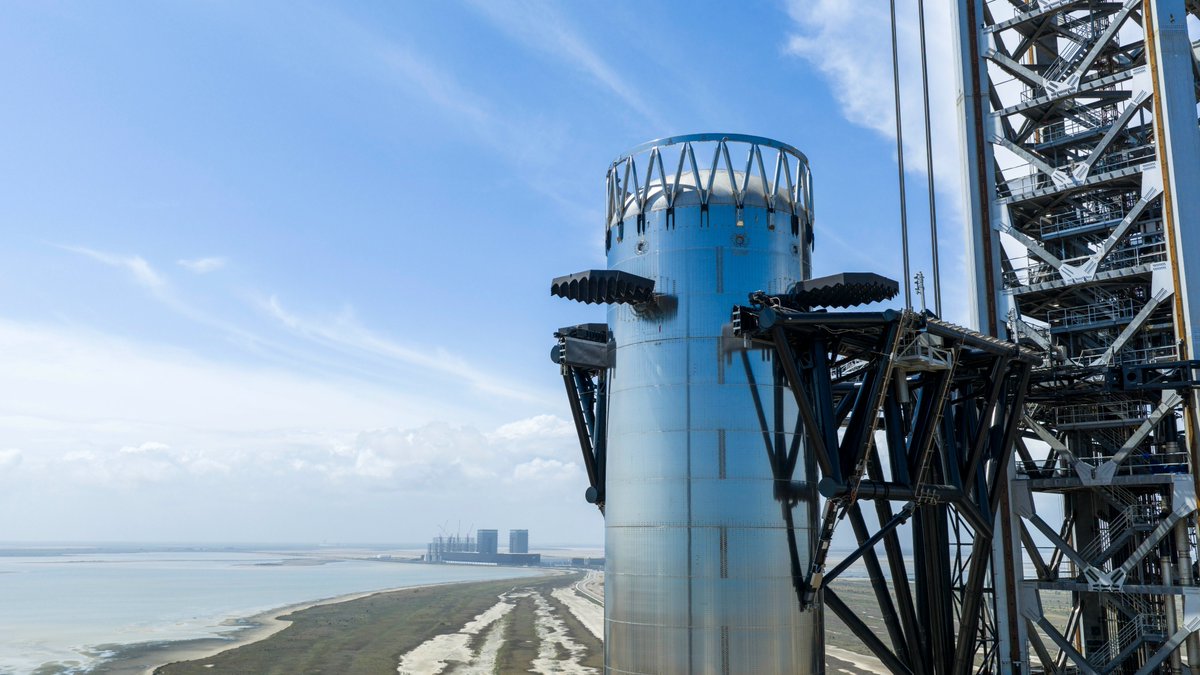
Look at how close to the edges of the chopsticks the new booster is on Pad 2! I guess they sure have confidence in their landing accuracy! That's wild!
Everyday Astronaut tweet media
English
89
163
3.7K
129.5K