ÖsiMom

11.9K posts

ÖsiMom banner
ÖsiMom

ÖsiMom

@OesiMom

가입일 Ağustos 2020
6K 팔로잉908 팔로워
ÖsiMom 리트윗함
Russian warship, go f*** yourself
Russian warship, go f*** yourself@JonezinWidJonez·
@sotontimes "the prosecution alleges he was stabbed" Alleges???! He died of massive blood loss due to multiple stab wounds
English
6
55
2.1K
26.1K
ÖsiMom 리트윗함
Unfiltered
Unfiltered@quotesdaily100·
30 EUROPEAN TRAINS WORTH MISSING WORK FOR: 1. Glacier Express, Switzerland — Eight hours, 291 bridges, 91 tunnels and the most scenic rail route in the world. 2. Bernina Express, Switzerland to Italy — Crosses the Alps through a UNESCO landscape with viaducts that defy belief. 3. Bergen Railway, Norway — Oslo to Bergen through snow plateaus, fjord country and the most dramatic Norwegian scenery. 4. Flåm Railway, Norway — One hour of pure descent through waterfalls and mountain farms into a fjord. Nothing compares. 5. Caledonian Sleeper, Scotland — Board in London, wake up in the Highlands with mountains outside your cabin window. 6. Venice Simplon Orient Express — 1920s carriages, white tablecloths, cocktails at dusk and Europe sliding past in elegance. 7. Cinque Terre coastal train, Italy — Five villages, one line, sea views between every tunnel and always too short. 8. Transalpine, Austria to Switzerland — Alpine meadows, mountain passes and a journey that crosses borders effortlessly. 9. Douro Valley train, Portugal — Follows the wine river east from Porto through terraced vineyards all the way to Spain. 10. El Transcantábrico, Spain — Narrow gauge luxury train across northern Spain's green coast from San Sebastián to Santiago. 11. Rheingold route, Germany — Along the Rhine through castle country, vineyard slopes and the most storied river in Europe. 12. Interrail across the Balkans — No fixed route, cheap tickets, unexpected friendships and Europe at its most unpolished. 13. Eurostar through the Channel Tunnel — London to Paris in two hours and sixteen minutes. Still feels slightly miraculous every time. 14. Palermo to Messina, Sicily — Trains loaded onto ferries, coast hugging track and a journey through the soul of Sicily. 15. Semmering Railway, Austria — World's first mountain railway, UNESCO listed and still running through the Vienna Woods. 16. Harz Narrow Gauge, Germany — Steam trains through a forested mountain range that looks borrowed from a fairy tale. 17. Rhaetian Railway, Switzerland — The whole network is UNESCO listed. Every single line is worth riding. 18. Piraeus to Olympia, Greece — Slow, rattling, unreliable and one of the most characterful rail experiences in Europe. 19. West Highland Line, Scotland — Fort William to Mallaig, over the Glenfinnan Viaduct and through the wildest British landscape. 20. Cintra Line, Portugal — Lisbon to Sintra through suburbs that give way to palaces emerging from forested hillsides. 21. Prague to Český Krumlov — Two hours through Bohemian countryside ending at the most fairy tale town in Central Europe. 22. Lisbon to Porto, Portugal — Atlantic coast, salt flats, fishing towns glimpsed from the window and always too fast. 23. Barcelona to Valencia, Spain — Hugs the Mediterranean coast through orange groves and arrives into a city worth the trip. 24. Edinburgh to London Kings Cross — East Coast Main Line, North Sea glimpses, Northumberland castles and four relaxing hours. 25. Vienna to Budapest — Danube valley, border crossing, three hours and two of Europe's greatest cities connected simply. 26. Sarajevo to Mostar, Bosnia — Two hours through river canyons, Ottoman bridges and the most dramatic scenery in the Balkans. 27. Tallinn to Tartu, Estonia — Flat Estonian landscape, birch forests and a quiet journey between the country's two greatest cities. 28. Amalfi to Naples, Italy — Coastal cliffs, lemon groves, tunnels through rock and the sea always on your left. 29. Trans-Siberian western leg, Russia — Moscow to Yekaterinburg crosses the Urals through forests that never seem to end. 30. Dublin to Galway, Ireland — Green fields, stone walls, the Irish midlands opening into the wild Atlantic west.
English
9
145
845
75.2K
ÖsiMom 리트윗함
Hannah Davis
Hannah Davis@ahandvanish·
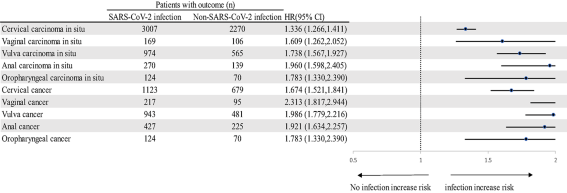
3 years after infection, women who had COVID have higher risk of pre-cancerous & invasive HPV-related cancers. Invasive cancer risk increased by 67% for cervical, 131% for vaginal, 98% for vulvar, 92% for anal, & 78% for oropharyngeal cancer. link.springer.com/article/10.100… #LongCovid
Hannah Davis tweet media
English
3
1.1K
2.5K
415.9K
ÖsiMom 리트윗함
Dr. med. H. Schiffers, MD, MBA, Lean Sensei
Während der Pandemie habe ich dem @rki_de früh mitgeteilt, das Patienten die nachts Luftfilter am Bett und damit keine 8h täglich mit kontinuierlicher Virus Reinhalation hatten, deutlich mildere #covid Verläufe hatten. Nun bestätigt sich dieser Weg anhand von CT Bildern
Deutsch
19
311
1.5K
55.4K
ÖsiMom
ÖsiMom@OesiMom·
@BoringBiz_ It's a change like the Industrial Revolution. That wasn't a bubble either, was it.
English
0
0
0
115
Boring_Business
Boring_Business@BoringBiz_·
Gavin Baker on why the AI bubble talks might be overblown this time around "I am optimistic that we may avoid a bubble this time. The reason we are going to avoid it is because we have fundamental shortages of watts and wafers." The supply side is so constrained while demand continues to grow exponentially. This is nothing like the dark fiber of the dot com era where build out was happening with the expectation of demand on the other end. The demand is already here. Today. It is happening now in AI.
English
59
77
746
272.5K
ÖsiMom 리트윗함
Yvonne Kussmann
Yvonne Kussmann@YveK22·
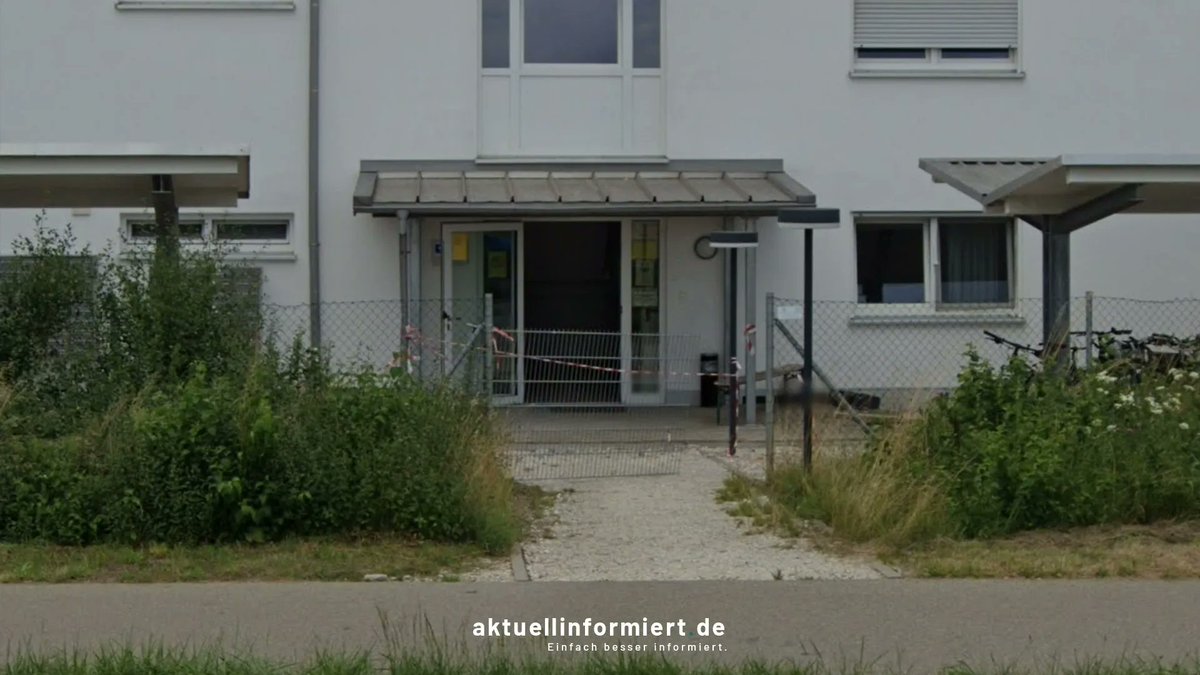
Nochmal zum Fall des getöteten Jungen in Memmingen. Eigentlich war der Mörder von Jermaine einer Asylunterkunft in Senden zugewiesen. Aber die Behörden wissen nicht einmal, ob er sich jemals da aufgehalten hat. Es ist ein brandgefährlicher Kontrollverlust, wenn selbst abgelehnte, ausreisepflichtige und straffällig gewordene Personen sich völlig unkontrolliert frei unter uns bewegen können. Jetzt ist ein 14-jähriger Junge tot. aktuellinformiert.de/getoeteter-14-…
Yvonne Kussmann tweet media
Deutsch
101
1.6K
5.7K
38.5K
ÖsiMom 리트윗함
Falk ♂︎ ✞ ✠ 𖦏 ✌︎
#Amokfahrt in #Modena: Deutsche Touristin verliert beide Beine In der norditalienischen Stadt Modena ist am Samstag ein Mann mit seinem Auto in eine Gruppe von Fußgängern im Stadtzentrum gerast. Dabei wurden acht Menschen verletzt, vier davon schwer, darunter eine deutsche Touristin. Sie wurde gegen eine Schaufensterscheibe geschleudert und verlor dabei beide Beine. Auch einem zweiten Opfer mussten im Krankenhaus beide Beine amputiert werden. Der Täter, der 31-jährige italienische Staatsbürger marokkanischer Herkunft, Salim El Koudri, stieg nach der Tat aus dem Auto aus und griff Passanten mit einem Messer an. Mutige Bürger konnten ihn überwältigen, bis die Polizei eintraf. Allen voran stellte sich der Italiener Luca Signorelli dem Angreifer entgegen. Später berichtete der sichtlich gezeichnete Signorelli, der Angreifer habe versucht, ihm gezielt ins Herz und in den Kopf zu stechen.
Deutsch
17
83
298
5.9K
ÖsiMom 리트윗함
Don Alphonso
Don Alphonso@_donalphonso·
"Ihr christlichen Bastarde": Das wird Euch jetzt genauso überraschen wie mich, aber Salim El Koudri, der in Modena in eine Menschenmenge fuhr und angeblich psychisch krank ist, hatte einen Hass auf Christen. roma.corriere.it/notizie/cronac…
Deutsch
166
1.4K
6.1K
71.3K
ÖsiMom 리트윗함
Ihtesham Ali
Ihtesham Ali@ihtesham2005·
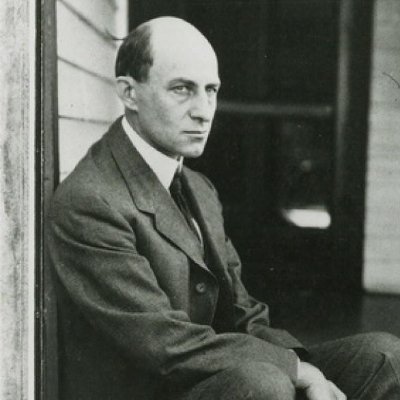
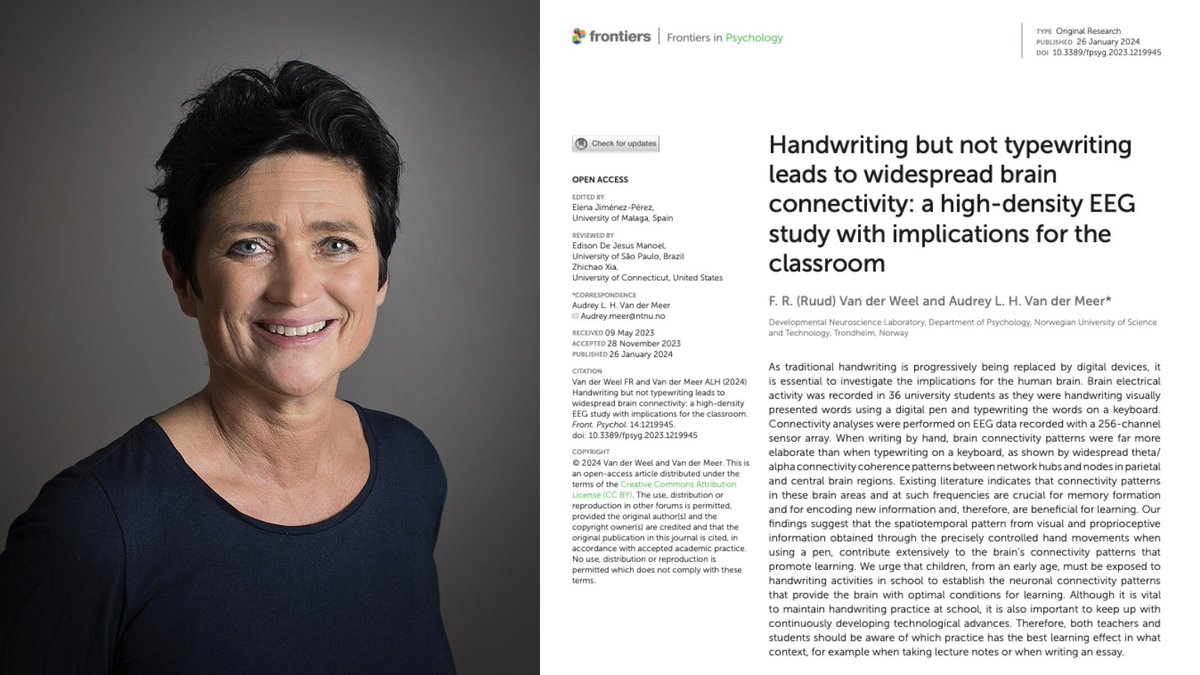
A Norwegian neuroscientist spent 20 years proving that the act of writing by hand changes the human brain in ways typing physically cannot, and almost nobody outside her field has read the paper. Her name is Audrey van der Meer. She runs a brain research lab in Trondheim, and the paper that closed the argument was published in 2024 in a journal called Frontiers in Psychology. The finding is brutal enough that it should have changed every classroom on Earth. The experiment was simple. She recruited 36 university students and put each one in a cap with 256 sensors pressed against their scalp to record brain activity. Words flashed on a screen one at a time. Sometimes the students wrote the word by hand on a touchscreen using a digital pen, and sometimes they typed the same word on a keyboard. Every neural response was recorded for the full five seconds the word stayed on screen. Then her team looked at the part of the data most researchers had ignored for years, which is how different parts of the brain were communicating with each other during the task. When the students wrote by hand, the brain lit up everywhere at once. The regions responsible for memory, sensory integration, and the encoding of new information were all firing together in a coordinated pattern that spread across the entire cortex. The whole network was awake and connected. When the same students typed the same word, that pattern collapsed almost completely. Most of the brain went quiet, and the connections between regions that had been alive seconds earlier were nowhere to be found on the EEG. Same word, same brain, same person, and two completely different neurological events. The reason turned out to be something nobody had really paid attention to before her work. Writing by hand is not one motion but a sequence of thousands of tiny micro-movements coordinated with your eyes in real time, where each letter is a different shape that requires the brain to solve a slightly different spatial problem. Your fingers, wrist, vision, and the parts of your brain that track position in space are all working together to produce one letter, then the next, then the next. Typing throws all of that away. Every key on a keyboard requires the exact same finger motion regardless of which letter you are pressing, which means the brain has almost nothing to integrate and almost no problem to solve. Van der Meer said it plainly in her interviews. Pressing the same key with the same finger over and over does not stimulate the brain in any meaningful way, and she pointed out something that should scare every parent who handed their kid an iPad. Children who learn to read and write on tablets often cannot tell letters like b and d apart, because they have never physically felt with their bodies what it takes to actually produce those letters on a page. A decade before her, two researchers at Princeton ran the same fight using a completely different method and ended up at the same answer. Pam Mueller and Daniel Oppenheimer tested 327 students across three experiments, where half took notes on laptops with the internet disabled and half took notes by hand, before testing everyone on what they actually understood from the lectures they had watched. The handwriting group won by a wide margin on every question that required real understanding rather than surface recall. The reason was hiding in the transcripts of what the two groups had actually written down. The laptop students typed almost word for word, capturing more total content but processing almost none of it as they went, while the handwriting students physically could not write fast enough to transcribe a lecture in real time, which forced them to listen carefully, decide what actually mattered, and put it in their own words on the page. That single act of choosing what to keep was the learning itself, and the keyboard had quietly skipped the choosing and skipped the learning along with it. Two studies. Two countries. Same answer. Handwriting makes the brain work. Typing lets it coast. Every note you have ever typed instead of written went into your brain through a thinner pipe. Every meeting, every book highlight, every idea you captured on your phone instead of on paper was processed at half depth. You did not forget those things because your memory is bad. You forgot them because typing never woke the part of the brain that would have made them stick. The fix is the thing your grandmother already knew. Pick up a pen. Write the thing down. The slower road is the faster one.
Ihtesham Ali tweet media
English
2.5K
44.7K
120.8K
10.1M
Alyssa Schwartz
Alyssa Schwartz@alyssaschwartz·
Guess everyone who said the outbreak was over was jumping the gun. Eight-week incubation periods are tricky like that.
CP24@CP24

#BREAKING: Hantavirus-stricken cruise passenger in B.C. has tested positive, top doctor says cp24.com/news/canada/20…

English
61
515
4.7K
88.1K
ÖsiMom 리트윗함
Robyn Urback
Robyn Urback@RobynUrback·
Public health officials keep saying this strain requires “prolonged close contact” for transmission. When these people disembarked, Canadian public health said they had no known direct contact with anyone infected. So, uh, shouldn’t the assumption about transmission change?
CP24@CP24

#BREAKING: Hantavirus-stricken cruise passenger in B.C. has tested positive, top doctor says cp24.com/news/canada/20…


English
135
334
2.1K
203.1K
ÖsiMom 리트윗함
R A W S A L E R T S
R A W S A L E R T S@rawsalerts·
🚨 #BREAKING: Canadian cruise passenger isolating in British Columbia tests positive for hantavirus.
English
388
285
2.8K
493.9K
ÖsiMom 리트윗함
Zephyr
Zephyr@zephyr_z9·
Jensen was super pissed
English
48
50
1.2K
145.7K
ÖsiMom 리트윗함
Bettina Punkt
Bettina Punkt@Taykra·
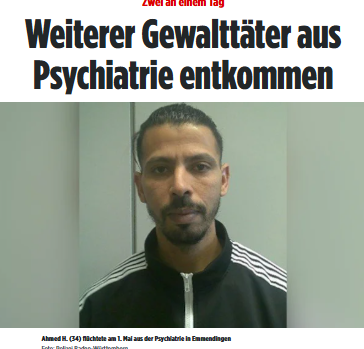
Zwei an einem Tag! Die Fahndung nach dem potenziell hochgefährlichen Sofiane O. (26) läuft noch, da wird bekannt: Am selben Tag wie er flüchtete ein zweiter Gewalttäter aus der geschlossenen Psychiatrie #Emmendingen: Der Marokkaner Ahmed H. (34). bild.de/regional/baden…
Bettina Punkt tweet media
Deutsch
73
371
875
10.9K
ÖsiMom 리트윗함
Ole Lehmann
Ole Lehmann@itsolelehmann·
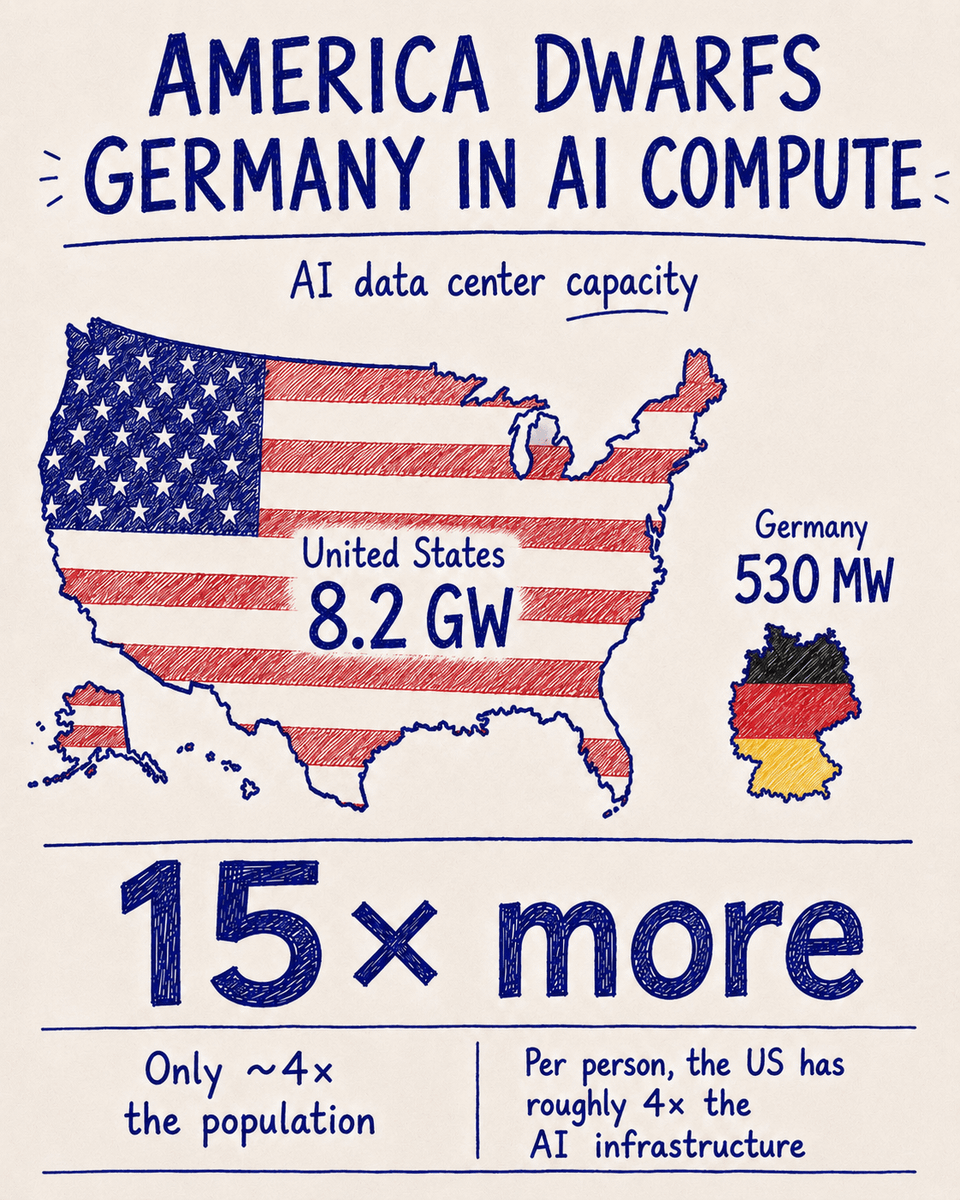
I'm German. Germany's ENTIRE AI data center capacity is less than 1/2 of just one site being built in Texas. We have 530 megawatts of AI data center capacity in the entire country. The US has 8.2 gigawatts. That's 15x more compute on a country with only 4x the people. Per German, the US has roughly 4x the AI infrastructure. One university computer at MIT is 4x faster than Germany's most important commercial AI facility. The obvious reaction here is "so what, German companies can just rent compute from AWS." But that's the same logic Germany applied to Russian gas for two decades. Roughly 70% of German enterprise AI today runs on American cloud providers like AWS, Microsoft, and Google. Which means it runs under American law. Every AI tool running in German hospitals, courts, ministries, banks, and factories sits on a foreign platform. Here's why this can actually become problematic. Imagine these scenarios: > The next GPU generation launches and American companies get access first because they own the data centers. German firms wait 12 months and pay 2-3x more for what's left. > A frontier AI model gets released and US export controls block it from being deployed in Germany. SAP and Siemens watch American competitors integrate it for a year before they can. > And in the worst case, a US president decides to use AI access as leverage in a trade dispute. German companies get cut off from the models their American competitors are still running. All of them are compounding problems that will negatively impact the German economy (and everyone's standard of living/jobs etc). None of this is hypothetical. > The US pulled Starlink as leverage with Ukraine in March 2025 > Chip exports to China have been throttled for three years > And the CLOUD Act lets the US demand any data stored by American cloud providers (even when the customer is a German company and the servers are physically in Germany). Germany doesn't have an answer for any of those scenarios today because the infrastructure that would make those answers possible isn't built yet. Now look at why this is actually happening on the ground. In the last 3 months Germany rejected 3 AI data center projects in a row: > Groß-Gerau, February: Vantage Data Centers, €2.5 billion, 174 MW. Voted down 18-14 by the local council > Maintal: EdgeConnex, €1 billion, 170 MW. Blocked over a backup gas generator the developer needed because grid connections in Germany take 7-10 years and a data center is built in 2 > Freyenstein, Brandenburg, April: 700 MW AI campus. Killed by protests before construction €3.5 billion in AI infrastructure turned away in one quarter. And the situation is more urgent than it looks because compute is getting harder to access, not easier. NVIDIA's Blackwell GPUs are already allocated through the second half of 2027. The American hyperscalers locked in the bulk of new production with forward orders placed in 2025. TSMC's advanced packaging lines (the actual bottleneck) are sold out through 2026. Germany has no hyperscaler of its own. That means German industry sits at the back of the queue, and the gap compounds every quarter that goes by. Where Germany is falling short right now comes down to three things: > Public backlash, because the case for what AI data centers actually do for a country has never been made to the people voting on them > Industrial electricity at €0.16-0.18 per kWh vs about $0.08 in Texas. For a 1 GW campus that's $700-900 million extra per year just for power > Grid connections taking 7-10 years for large facilities when the data center itself is built in 2. No serious operator runs on math where the wait is longer than the build And the first one is the biggest. Electricity policy and grid timelines are fixable. Public consent isn't, until someone makes the case that this infrastructure isn't nice-to-have. It's the foundation everything else runs on. The average person only feels the downside (noise, rising electricity cost, terror attack vector) We have a big messaging and marketing problem around data centers and why they are critical for everyone's future. Germany still has the foundation to win this if it moves now. Germany adopted its first national data center strategy in March 2026. 28 concrete measures, annual progress reports, doubling overall capacity and quadrupling AI capacity by 2030. The plan exists. The Industriestrompreis launched on January 1st of this year. It targets 5 cents per kWh for half of an industrial user's annual consumption. If data centers get cleanly pulled into that framework, the electricity cost gap with Texas gets significantly closer. Deutsche Telekom turned on 10,000 NVIDIA Blackwell GPUs in Munich in Q1. One facility increased Germany's available AI compute by roughly 50% overnight. And the demand is already domestic. SAP, Siemens, BMW, BASF. The German industrial anchors that benefit most from AI are German companies. The customers are at home, the infrastructure should be at home too. And this is the thing that most people forget. Germany won the second industrial revolution. By 1900 German chemical output had passed Britain's, Siemens was wiring the world, and BASF and Bayer were inventing industries that didn't exist before they built them. The companies that came out of those decisions are still the largest employers in Germany 130 years later. Germany sat out the third industrial revolution, the software one, and that was survivable because software didn't run factories. But AI runs factories. It runs hospitals, logistics, courts, and financial markets. This one is infrastructure in the same category as railways and chemical plants. The plan is written and the money is ready. The only question left is whether the country will let it get built. There's a lot of work left to do, but I'm staying optimistic.
Ole Lehmann tweet media
English
202
297
1.3K
92.7K
ÖsiMom
ÖsiMom@OesiMom·
@FritzVahrenholt 0,0145 Grad - Bei solchen Größenordnungen, wenn die Rechnung so jetzt denn stimmt, über einen Zeitraum von 75 Jahren ist jede Prognose unseriös.
Deutsch
0
0
0
6
Vahrenholt
Vahrenholt@FritzVahrenholt·
Der Weltklimarat zieht die Katastrophenszenarien mit einer Erwärmung von 3-5 Grad zurück und kommt in seinem wahrscheinlichsten Szenario auf eine Erwärmung von noch nur zusätzlich 1,1 Grad bis 2100. Deutschland mit einem CO2-Anteil von 1,45 % am Welt-CO2 trägt dann nur noch 0,0145 Grad zur Erwärmung bis 2100 bei. Wann gibt es eine Sondersitzung des Deutschen Bundestages, der die CO2-Abgabe, das Verbrennerverbot und das Heizungsgesetz kassiert?welt.de/mediathek/talk…
Deutsch
632
6.1K
17.3K
428.4K
Lepidoptera 🦋👩🏻‍🦰🦋
🧚‍♀️Man muss sich mal bildlich vorstellen was sich da in unserer Hauptstadt abspielt. Eine #Frau wird von mehreren Männern vergewaltigt und springt aus dem Fenster, ist schwer verletzt und diese Primitivlinge schleppen das #Opfer mit Schädel Hirn Trauma zurück in die Wohnung. Das sind Leute denen jede Art von Menschlichkeit fremd ist, Tiere machen sowas allerdings auch nicht. Wenn man regelmäßig die Nachrichten liest hat man den Eindruck unsere Hauptstadt verwahrlost komplett. Das niemand verhaftet wurde wundert auch keinen mehr. In einer zivilisierten Welt findet sowas nicht statt. Jede einzelne dieser Nachrichten ist eine Schande für unser Land. #PoltikDesGrauens #SexuelleGewalt marzahn-hellersdorf.com/hellersdorf-fr…
Lepidoptera 🦋👩🏻‍🦰🦋 tweet mediaLepidoptera 🦋👩🏻‍🦰🦋 tweet media
Deutsch
147
1.2K
3.8K
58K
ÖsiMom 리트윗함
Joe Gallagher
Joe Gallagher@joedgallagher·
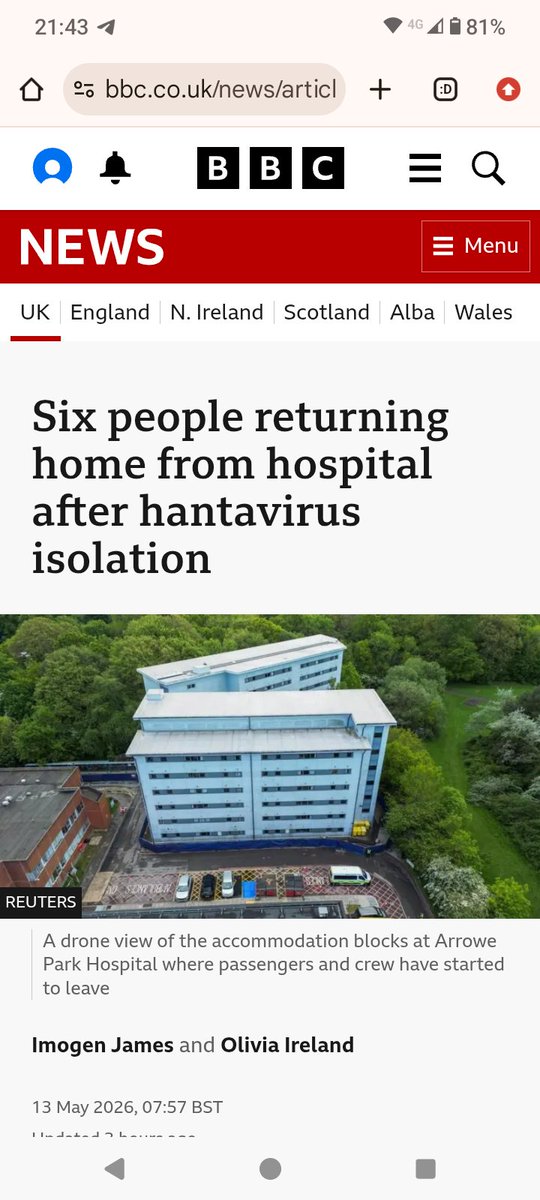
that'll be 24 people loose by tomorrow without any legal restrictions; each person could spread the virus asymptomatically for up to 7 more weeks until they are quarantined and contact tracing commences. whether this leads to a major outbreak or not is being left purely to chance
Joe Gallagher tweet media
English
44
235
1.2K
23.2K
ÖsiMom 리트윗함
Outbreak Updates
Outbreak Updates@outbreakupdates·
CDC not requiring hantavirus cruise passengers to isolate at home
English
67
341
1.7K
82.1K