Triumph of Rome ☦️

31K posts

Triumph of Rome ☦️ banner
Triumph of Rome ☦️

Triumph of Rome ☦️

@OrthodoxTriumph

The restoration of the right-believing Christian faith is the only hope of salvation for ourselves individually or our civilization.

가입일 Nisan 2019
2K 팔로잉553 팔로워
Triumph of Rome ☦️
Triumph of Rome ☦️@OrthodoxTriumph·
@kengakusha1 The kind of person who takes a trip to Japan and misbehaves is the kind of liberal who views nothing as sacred and hates civilization because it imposes duties upon them, and their definition of “freedom” is to destroy all unchosen bonds. They act this out when visiting Japan.
English
0
0
0
10
我楽多🇯🇵
我楽多🇯🇵@kengakusha1·
ひょっとして日本で迷惑行為をしている白人は母国で迫害されていてストレスが溜まっているため 安く来れる日本で羽を伸ばしているのか? それは迷惑でしかないし 日本を舐めすぎだと思う 実際のところどうなんだろう ここにいる保守のみんなはどう思う?
日本語
410
17
307
13.7K
Tom
Tom@IamTom1975·
@AlanRMacLeod @DalrympleWill It is even more incredible how normal it has become in the United States and Europe that ethnic cleansing is something that Israel just does. It’s totally bizarre.
English
1
1
59
942
Alan MacLeod
Alan MacLeod@AlanRMacLeod·
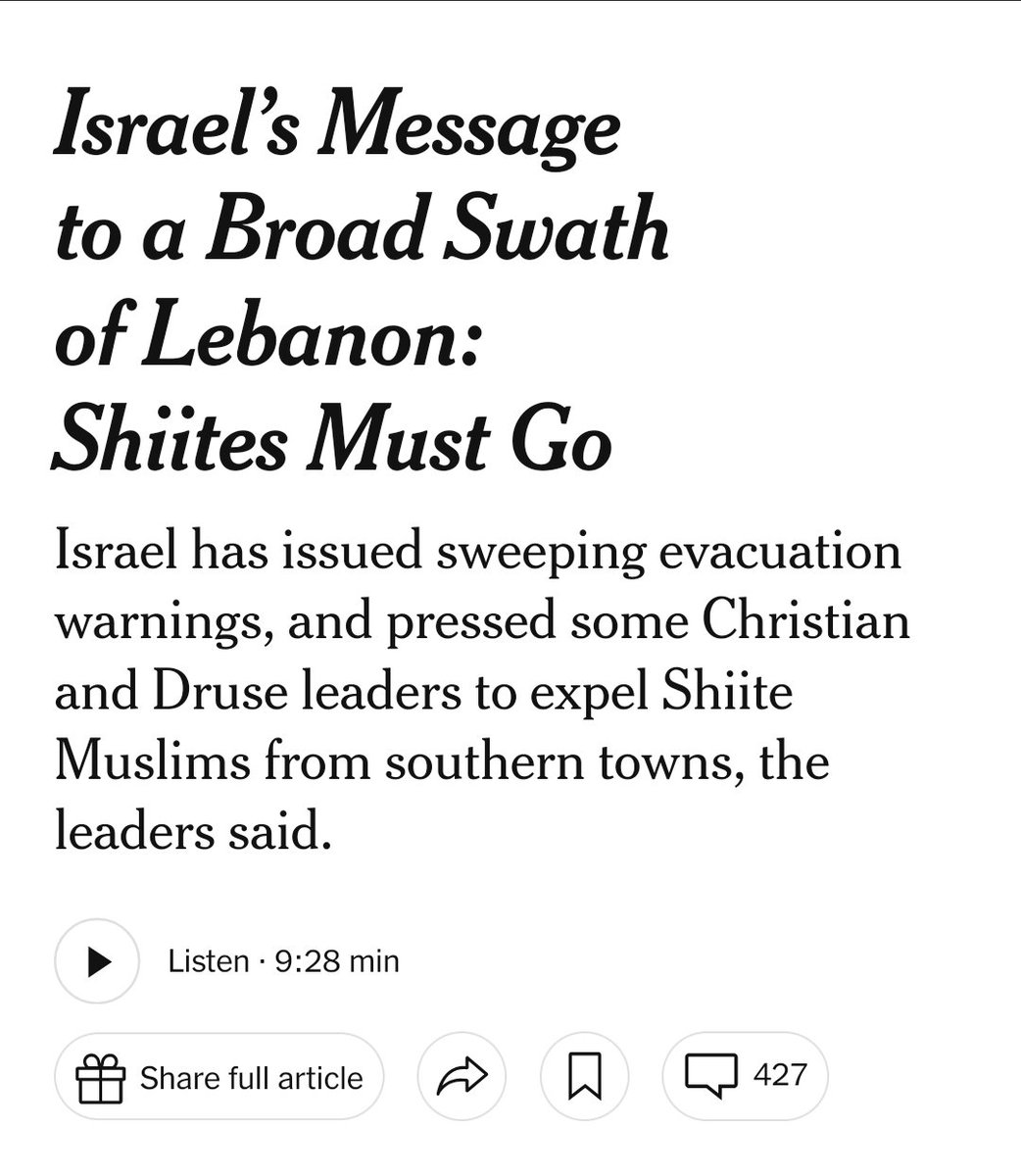
It's incredible watching the New York Times having to describe ethnic cleansing without ever using the phrase.
Alan MacLeod tweet media
English
90
2.7K
8.3K
157.8K
Triumph of Rome ☦️
Triumph of Rome ☦️@OrthodoxTriumph·
@hosi8huru It’s the difference between correcting something that is partially broken but good and worth loving and fixing, and something to be destroyed in hatred.
English
0
0
0
6
Triumph of Rome ☦️
Triumph of Rome ☦️@OrthodoxTriumph·
@hosi8huru Also Orthodox Christians have been far less quick than most to label things “pagan” and try to exterminate them. For example, the totem poles used by the Tlingit people of Alaska. Often assumed idols—in fact story aids in the curriculum of virtue stories to teach children.
English
1
0
0
11
エステル✝️🇯🇵永遠のいのちの鍵🗝✨
私はたとえ異教の物であっても、他者を尊重するゆえ彼らの大切な物も尊重する。 それは真の神、主が私たちの自由意志を尊重してくださっていることと同じ思いだ。 しかし福音を通して、偶像崇拝を神は嫌うと神の思いを伝える。 世界のクリスチャンはこの件をどのように考えますか?
🇯🇵砂川 泉🎌@26ers_bp115

世界の皆さんへ 日本の神社は聖域です。 神社にある鳥居は鉄棒ではありません。 このような行為は日本人が最も嫌います。 絶対にやめて下さい。

日本語
96
14
294
11.3K
Triumph of Rome ☦️ 리트윗함
Homer Pavlos
Homer Pavlos@HomerPavlos·
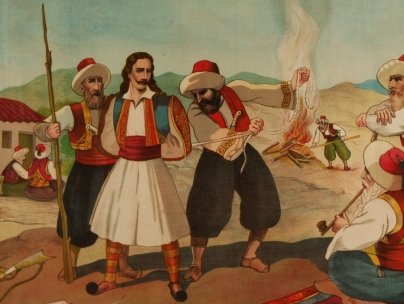
The Muslim Turks loved flaying (skinning) alive Christians. They applied it mainly against Greek rebels to deter and discipline others. As usual, the Christian victim was beaten, publicly humiliated, and tied to a special scaffold for immobilization. Then, skilled executioners removed his skin with sharp knives before the crowd. Here are 3 characteristic cases. The first concerns Dionysios, Greek Bishop of Larisa and Trikki, who lived in the 16th–17th centuries. An enlightened hierarch with brilliant studies in philosophy, medicine, theology, and more at major Western universities, he earned the title "Philosopher." In the early 17th century (1601 and 1611), he initiated two revolutionary movements in Thessaly and Epirus. Both failed, and in 1611 he was captured alive. In Ioannina's central square, before a crowd, he was skinned alive in a martyrdom lasting five hours, aged around 70. The vandalism continued: his flayed body was thrown to dogs, while his skin was stuffed with straw and bran, dressed in archiepiscopal vestments, and paraded through the city with music for days. Finally, it was sent to the Sultan and ended up discarded in the royal stables. Another well-known case is that of Daskalogiannis. On June 17, 1771, he was led to a central square in Chandax (Heraklion). A wooden scaffold with a special seat had been erected. Tied tightly to it, he was flayed starting from the head by a monstrous executioner who threw pieces of skin to the crowd, saying: "Take leather for your boots!" A second executioner periodically showed him his flayed face in a mirror, mocking: "Look, captain, how well the red suits you!" Relatives (brother and daughter) in the crowd went mad at the sight. He endured steadfastly and died when the flaying reached his shoulder blades. His flayed body remained exposed in the June heat for days in that square (now named in his honor) until the stench forced the Turks to bury it. The third case is that of the Venetian Marco Antonio Bragadin. He was executed by flaying in August 1571 in Famagusta, Cyprus, after defending the island alongside the Greeks. They first cut off both of Bragadin’s ears and his nose. While he was in captivity, a massacre of all the remaining Christians in the city took place. After being left in prison for two weeks with his wounds festering, he was dragged around the city walls carrying sacks of earth and stone on his back. Next, he was tied to a chair and hoisted to the yardarm of the Turkish flagship, where he was exposed to the taunts of the sailors. Finally, he was taken to the main square, tied naked to a column, and flayed alive. Bragadin’s quartered body was then distributed as war trophies among the army, while his skin was stuffed with straw, sewn back together, reinvested with his military insignia, and exhibited riding an ox in a mocking procession through the streets of Famagusta. In 1580, his skin was stolen by Girolamo Polidori and brought back to Venice, where it remains today in the Basilica di San Giovanni e Paolo. The martyrdom of flaying (skinning alive) is ancient. Herodotus mentions that it was originally practiced by the Scythians. He describes how Scythian warriors treated conquered foes, using their enemies' skin to manufacture leather trophy items. Archaeology has recently confirmed Herodotus' account. Scalp flaying was called "periskythismos" due to this Scythian custom. It was always a sign of barbarity and fortunately an exception rather than the rule. The punishment was also used by the Romans during persecutions of Christian martyrs, the best-known case being the apostle Bartholomew. - Homer Pavlos
Homer Pavlos tweet media
Homer Pavlos@HomerPavlos

When Muslims killed Greek Bishop Gerasimos of Rethymno in 1821, they opened his chest, removed his heart, and sprinkled their banners with its blood in order to achieve victories against the infidels. The entire description of the incident directly evokes cannibalism from a primitive era. (Theochares Detorakis, "History of Crete") Apart from the official executions, there were also the mass slaughters of Christian populations in cases where the Islamic-Ottoman state wanted to demonstrate its power. The main pretext for the massacres was reprisals against revolutionary movements. Alongside the official figures who were publicly executed (bishops, notables, etc.), unruly hordes of Janissaries would rush into Christian homes, break down doors, kill anyone they found in front of them, and then plunder the house, seizing whatever they liked. When leaving, in many cases they also set the house on fire. Now, the hooks or "tsigkelia", as the Muslim Turks called them. On the walls of cities or on specially erected scaffolds, large hooks with sharp, sharpened points were fixed. The naked victim was thrown onto the hooks from high up on the walls or was hoisted up with special pulleys and dropped onto the hooks of the scaffolds. There he remained impaled for days, tormented by terrible pains until he finally expired. If, moreover, the hooks had not pierced a vital organ, the torture could last several days. Historical accounts mention the presence of such a scaffold with hooks in the central square of Heraklion (Candia), where many Cretans, mainly rebels, met their tragic end. One torture that the Muslim Turks carried out when they had no time for anything else was the breaking of limbs. They usually did this to prisoners they had captured in the countryside and did not want to transport to the city for something "more entertaining," either because they were in a hurry or because they did not want to take on the risks of a possible transfer. With an axe they smashed the main joints of the victim's limbs (shoulder, elbow, hip, knee) and several bones (humerus, femur, tibia). The victim was then unable to move at all, while terrible pains shook his body from the shattered joints. The executioners left him helpless and departed, so that he would die a few hours or at most two days later, or become prey to wild animals in the wilderness. An equally torture is that of beheading. The Ottoman lords even had a well-known proverb on their lips: "A head that does not bow falls." The execution of the sentence was carried out in public view by a specialized executioner called "makelaris" (a Greek-Byzantine word meaning "butcher" that derives from ancient Greek), with the well-known curved Ottoman sword, the "yataghan". The victim arrived at the place of slaughter ridiculed and publicly shamed. Before the execution he had, as a rule, been beaten and often mutilated. The punishment itself was painless and instantaneous, but the entire preceding process made it agonizing. The body and head remained exposed for days, just as in the other tortures we mentioned earlier. Often the victim's head was impaled on a pole and paraded through the city, especially if the victim happened to be an officially wanted person (e.g., Ali Pasha). Other times it was preserved and sent to the Sultan himself, as happened with the head of Ali Pasha. Still other times the head remained hung or impaled in a prominent position for days, until the natural decomposition of its features began. The torture of beheading is naturally connected with the fate of the Four Martyrs. The Synaxarion of the Saints confirms everything I have said so far. After harsh tortures and public humiliation through the streets of Rethymno, the Saints (Manuel, Angelos, George and Nicholas) ended up in the square of the Great Gate, which today bears their name in their honor, to be beheaded. This is recent history. Tortures ended almost 200 years before when we destroyed the Ottoman Empire. And if you think they changed, you should start reading their comments on my posts or the reposts. This is who they are. This is Islam - Homer Pavlos

English
119
959
2.6K
276.8K
Triumph of Rome ☦️ 리트윗함
Homer Pavlos
Homer Pavlos@HomerPavlos·
The Muslim Turks, in order to terrorize the Greeks, impaled and roasted alive Athanasios Diakos. But, they gave him a chance: “Will you become a Turk, Diakos? Will you change your faith? Will you pray in the mosque and abandon the church?” He replied to them: “Go away, you and your faith, may you perish, you renegades! I was born a Greek, and as a Greek I shall die.” According to eyewitness accounts from the time, two Turks lit a fire next to the stable and placed an iron grate and a large copper cauldron filled with oil over it. Then they lifted Diakos, still bound as he was, and made him sit on an old wooden stool. They raised his legs. The Turks began to mock him, asking him various questions. For every negative nod, they drove nails into his feet. Afterwards, they took the boiling oil and first poured it over his bare feet. When they saw that he did not react, they tore his clothing and began pouring it on his back and chest. He groaned silently in pain, and the soldiers, under orders not to kill him, used needles to burst the blisters that had formed on his skin from the boiling oil. This continued for hours, until the next morning. Exhausted as he was, they dragged him through the town to execute him. His execution was carried out in public view with the permission of Halil Bey, so that the Greeks would be warned about what would happen to anyone who dared to revolt. Testimonies state that even Diakos’s mother was present at his torture. After tying him backwards onto a saddle with his legs spread apart, the executioner began pushing the sharp tip of a wooden stake into his groin area and then slowly drove it deeper, going all the way through his body until it emerged near his right ear. The executioner moved carefully, as he had orders not to kill him quickly; with every push of the stake, Diakos’s screams confirmed he was still alive. Once the executioner had finished his work, the Turks tied the body tightly with the stake so that the skin would not tear, and they propped him up, almost upright, against a tree. As he was dying, it is said that he uttered these sorrowful verses: “Look at the time Death has chosen to take me, now, when the branches are blossoming and the earth brings forth grass.” Halil Bey gave the order to light a fire beneath him and to turn him slowly, so that he would be roasted alive like an animal. After many hours of torture, the Greek chieftain passed away on April 24, 1821. However, this had the opposite effect from what the Turks had expected. When the Greeks learned of his story and his martyrdom, they were filled with even greater rage and strength to liberate themselves from the barbarous Muslims and Islam. Athanasios Diakos is one of the most important heroes in the Greek history.
Homer Pavlos tweet mediaHomer Pavlos tweet media
Homer Pavlos@HomerPavlos

The Muslim Turks loved flaying (skinning) alive Christians. They applied it mainly against Greek rebels to deter and discipline others. As usual, the Christian victim was beaten, publicly humiliated, and tied to a special scaffold for immobilization. Then, skilled executioners removed his skin with sharp knives before the crowd. Here are 3 characteristic cases. The first concerns Dionysios, Greek Bishop of Larisa and Trikki, who lived in the 16th–17th centuries. An enlightened hierarch with brilliant studies in philosophy, medicine, theology, and more at major Western universities, he earned the title "Philosopher." In the early 17th century (1601 and 1611), he initiated two revolutionary movements in Thessaly and Epirus. Both failed, and in 1611 he was captured alive. In Ioannina's central square, before a crowd, he was skinned alive in a martyrdom lasting five hours, aged around 70. The vandalism continued: his flayed body was thrown to dogs, while his skin was stuffed with straw and bran, dressed in archiepiscopal vestments, and paraded through the city with music for days. Finally, it was sent to the Sultan and ended up discarded in the royal stables. Another well-known case is that of Daskalogiannis. On June 17, 1771, he was led to a central square in Chandax (Heraklion). A wooden scaffold with a special seat had been erected. Tied tightly to it, he was flayed starting from the head by a monstrous executioner who threw pieces of skin to the crowd, saying: "Take leather for your boots!" A second executioner periodically showed him his flayed face in a mirror, mocking: "Look, captain, how well the red suits you!" Relatives (brother and daughter) in the crowd went mad at the sight. He endured steadfastly and died when the flaying reached his shoulder blades. His flayed body remained exposed in the June heat for days in that square (now named in his honor) until the stench forced the Turks to bury it. The third case is that of the Venetian Marco Antonio Bragadin. He was executed by flaying in August 1571 in Famagusta, Cyprus, after defending the island alongside the Greeks. They first cut off both of Bragadin’s ears and his nose. While he was in captivity, a massacre of all the remaining Christians in the city took place. After being left in prison for two weeks with his wounds festering, he was dragged around the city walls carrying sacks of earth and stone on his back. Next, he was tied to a chair and hoisted to the yardarm of the Turkish flagship, where he was exposed to the taunts of the sailors. Finally, he was taken to the main square, tied naked to a column, and flayed alive. Bragadin’s quartered body was then distributed as war trophies among the army, while his skin was stuffed with straw, sewn back together, reinvested with his military insignia, and exhibited riding an ox in a mocking procession through the streets of Famagusta. In 1580, his skin was stolen by Girolamo Polidori and brought back to Venice, where it remains today in the Basilica di San Giovanni e Paolo. The martyrdom of flaying (skinning alive) is ancient. Herodotus mentions that it was originally practiced by the Scythians. He describes how Scythian warriors treated conquered foes, using their enemies' skin to manufacture leather trophy items. Archaeology has recently confirmed Herodotus' account. Scalp flaying was called "periskythismos" due to this Scythian custom. It was always a sign of barbarity and fortunately an exception rather than the rule. The punishment was also used by the Romans during persecutions of Christian martyrs, the best-known case being the apostle Bartholomew. - Homer Pavlos

English
152
1.7K
6.7K
250.9K
Triumph of Rome ☦️
Triumph of Rome ☦️@OrthodoxTriumph·
@MtR22g5zxUvvqp9 Do you have a living master to learn from, or are you trying to learn/recreate the movements from written sources? I do research into European longsword, knife-fighting, and grappling. I’ve looked fairly extensively at kobudo to help with context from a living art.
English
1
0
1
129
猫毛玉
猫毛玉@MtR22g5zxUvvqp9·
またフォロワーが増えたので 自己紹介をします 槍の研究を生業として 趣味でサラリーマンをしてます フォローしてくれた皆さんにはXでは珍しい槍の世界を見せましょう #槍
日本語
173
260
4.5K
61.9K
Triumph of Rome ☦️ 리트윗함
Skely
Skely@123skely·
Everyone wants political change but no body wana bribe no heavy ass politicians.
English
3
8
111
6K
Triumph of Rome ☦️
Triumph of Rome ☦️@OrthodoxTriumph·
@mikeyoooo5811 @MtR22g5zxUvvqp9 In the Western European analogy it’s much closer to something like a knight/man-at-arms/landschnecht wielding a halberd. Yaris were used as massed spear formations as far as I understand, but these were lightly-armored levies.
English
1
0
1
11
MikeyOoooo5811🇺🇸
MikeyOoooo5811🇺🇸@mikeyoooo5811·
@MtR22g5zxUvvqp9 Were these used in a Phalanx style formation? They look like they are so long and able to give the user alot of stand off distance! Very interesting
English
1
0
1
19
猫毛玉
猫毛玉@MtR22g5zxUvvqp9·
ニ間槍こそ武芸者の槍よ #槍
猫毛玉 tweet media
日本語
3
19
162
5.5K
Triumph of Rome ☦️ 리트윗함
🇯🇵星空音夢🇯🇵チーズ警察👮
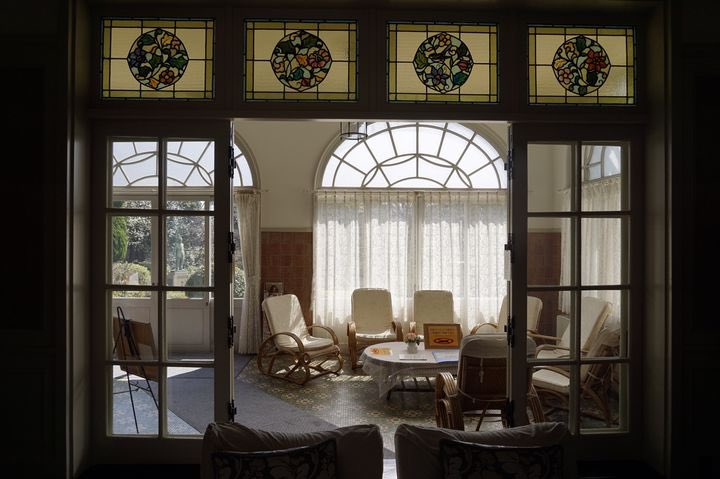
アメリカ人の皆さんに質問です。 日本には「大正ロマン」と呼ばれる、西洋と日本の伝統が融合した芸術様式があります。アメリカ人の方々には、このスタイルはどのように映るのでしょうか? 個人的にはこのスタイルがとても好きです。😊
🇯🇵星空音夢🇯🇵チーズ警察👮 tweet media🇯🇵星空音夢🇯🇵チーズ警察👮 tweet media🇯🇵星空音夢🇯🇵チーズ警察👮 tweet media🇯🇵星空音夢🇯🇵チーズ警察👮 tweet media
日本語
887
2.3K
31.3K
1.5M
Triumph of Rome ☦️
Triumph of Rome ☦️@OrthodoxTriumph·
@VaubanBooks Seeing how much insane stuff is going on with Japan, would it be possible to put out a Japanese translation of Camp of the Saints?
English
1
0
1
12
Triumph of Rome ☦️
Triumph of Rome ☦️@OrthodoxTriumph·
@ankoromochuu @paturious When this happened 50 years ago, people thought the “liberation” was a dispute over land, and that giving them land would end the dispute. Now we see that they just import the barbarians by the millions to the West and Japan to try to exterminate all civilization.
English
0
0
1
16
Triumph of Rome ☦️
Triumph of Rome ☦️@OrthodoxTriumph·
@ankoromochuu @paturious The process already happened in many American city centers—this is why New York and Chicago are no longer clean and orderly like Tokyo, when a hundred years ago they would have been about the same.
English
1
0
1
23
うさこ🐰🌸
うさこ🐰🌸@ankoromochuu·
白人の皆さんが、このポストに感動してることに正直驚いています… 欧米でここまで白人が悪者扱いされていることを、私は知らなかった。 多くの日本人が知らないと思う。 白人は「自分が悪者」と左翼に洗脳されています。 その洗脳は白人を弱体化するためだ。 そんな左翼とは早く離れて!
うさこ🐰🌸@ankoromochuu

白人がいなかったら、私たちは今こうやって交流することもできてないよ。 私が今持っているのはスティーブ・ジョブズのiPhoneだし、イーロンが翻訳機能をXにつけたくれた。 他にもたくさんある。 白人がいない世界は寂しいよ。

日本語
405
1.2K
11.8K
325.9K
Triumph of Rome ☦️ 리트윗함
Triumph of Rome ☦️
Triumph of Rome ☦️@OrthodoxTriumph·
@rickraguso @curtis_yarvin This vision of America as a racial caste system is doomed for the same reason all attempts at racial imperium fail: the incentive is always there to seek power by championing the masses, and over time populations living in the same area always slowly intermingle.
English
0
0
0
17
Curtis Yarvin
Curtis Yarvin@curtis_yarvin·
This is like how when you’re on a train and the train moves, it seems like you’re sitting there and the world is moving. Of course they didn’t get their shit together. Rather, America descended to their level. And kept going, of course. So it’s hard to see
Scrub Jay@scrubjay__

@curtis_yarvin White American inter-ethnic ribbing aside (it's all in good fun, one hopes), America as a pan-European project was wildly successful compared to what's come after. Ellis Islanders just took some time to get their shit together.
English
8
6
107
8.1K