PMRI post mortem

3.3K posts

PMRI post mortem banner
PMRI post mortem

PMRI post mortem

@PMRIpostmortem

The strong do what they want to do, and the weak must suffer what they must. – Thucydides, The Peloponnesian War

가입일 Temmuz 2025
359 팔로잉66 팔로워
고정된 트윗
PMRI post mortem
PMRI post mortem@PMRIpostmortem·
Start up the rotors
English
0
0
7
853
Луганчанин 🇺🇦
Поляки зі своїми 100-200к вбитих на Волині, нагадують трампа з боргом 350-500 млрдів, тільки він деменційний дебіл, а чому поляки масово несуть цю хуйню, коли розкопки не підтвердили більше 15к Вони знають, що пиздять, але продовжують, ще й ображаються, коли їх в це тикають носом
Українська
25
5
66
2.2K
пан БаклОжан мобілізований 🗡️🔪⚔️🐷🐶⚔️🔪🗡️
@PMRIpostmortem @AM_Zukowska Задам іще тобі питання. Скільки поляків вбили чи побили в Україні за те що вони поляки за останні 30 років? І скільки українців вбили і побили в польші за останній рік за те що вони українці? Навіщо мені історія 100 років тому, якщо ви зраз робите те саме?
Українська
1
0
0
4
Anna-Maria Żukowska 💁🏻‍♀️
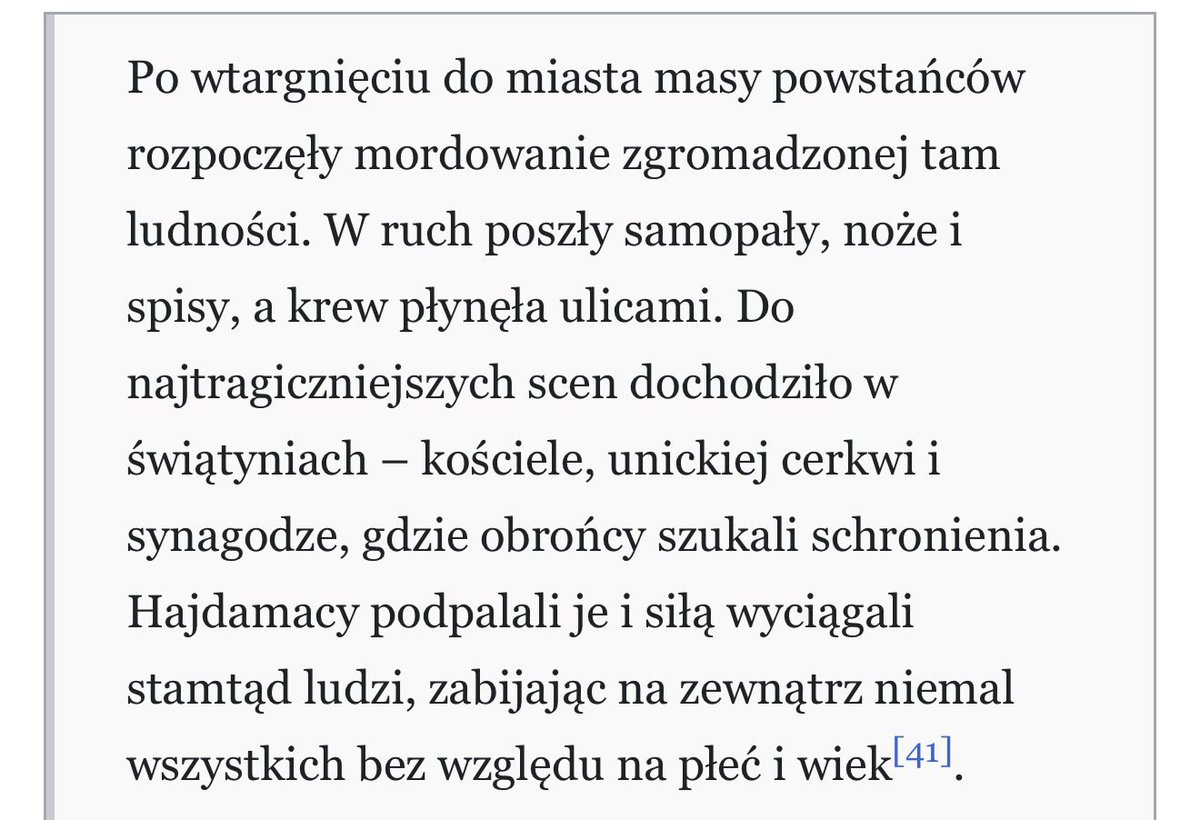
Ukraińscy symetryści będą dążyć do zrównania Akcji Wisła i podboju Kresów Wschodnich z Rzezią Wołyńską. Że w sumie były rachunki krzywd i każdy dostał kary po równo. Jest to ahistoryczne i etycznie dosyć naciągane, bo w epoce tej kolonizacji mieliśmy jeszcze choćby takie wydarzenie, jak Koliszczyzna - kolejne min. 100 tys. ofiar [dlaczego w obu rzeziach Ukraińcy masowo mordowali Żydów? To też za ucisk szlachty i kolonizację? Otóż nie. To było powstanie o charakterze wojny religijnej. Tabliczki z napisem „Lach, Żyd i sobaka, wse wira odnaka” pojawiały się w ciągu całej koliszczyzny, ofiary zaś wieszano razem z psem]. Wydaje się, że Ukraińcy nie rozumieją w nas jednej rzeczy. Że my nawet nie tak bardzo przeżywamy konkretne liczby zamordowanych, co sposób w jaki zostali zamordowani i że z historii wyłania się pewien wzorzec tego sposobu - NB nieodbiegający od modelu znanego z buntów chłopskich, np. Rabacji Galicyjskiej (słynne „Mego dziadka piłą rżnęli” z Wesela). Że towarzyszyły mu potworne tortury poprzedzające sam akt zabicia, który często miał miejsce w niedzielę. Nie wiem, czy Ukraińcy dostrzegają ten element dyskursu o Rzezi Wołyńskiej i czy są w stanie wziąć go pod uwagę w rozmowach o przeszłości.
Anna-Maria Żukowska 💁🏻‍♀️ tweet mediaAnna-Maria Żukowska 💁🏻‍♀️ tweet media
Mariia Kramarenko@KramarenkoMari3

If I can add my two cents, I think true historical reconciliation requires symmetry. Over the years, Ukrainian presidents have repeatedly asked for mutual forgiveness for the Volhynia massacres using the formula, "we forgive and ask for forgiveness." Today, Ukraine's exhumation moratorium is completely lifted, with joint archaeological teams actively operating across western Ukraine under newly issued state permits. Yet, the diplomatic lens remains entirely asymmetrical. Poland has never formally apologized for centuries of colonization, an era its historiography still romanticizes as a multi-ethnic "golden age." Nor has there been an apology for the brutal 1930 Pacification Campaign, which the state still frames as a justifiable police action against saboteurs. Even Operation Vistula (1947) - the forced deportation of over 140,000 Ukrainians, remains deeply contested. While the Polish Senate condemned it in 1990, the Sejm never did. Adding to the friction, Poland’s Institute of National Remembrance (IPN) recently ruled the deportations were merely a "preventive and protective" measure, not a crime against humanity. Similarly, there has been no formal apology for the estimated 10,000 Ukrainian civilians killed by Polish underground units in wartime reprisals. These tragedies are consistently framed as wartime defense, with Warsaw refusing to categorize them symmetrically with Ukrainian nationalist actions. Maintaining this rigid, asymmetrical stance presents severe long-term security risks. While Ukraine is fighting for its survival, creating new history, and forging a fresh pantheon of modern heroes on the battlefield, Poland risks locking itself into a structurally stagnant narrative that feeds entirely on past victimhood. Allowing national identity to be defined by historical score-settling rather than future-oriented leadership only jeopardizes Poland's own security buffer and plays directly into russia's strategic goal of fracturing Western unity.

Polski
96
49
735
49.5K
PMRI post mortem
PMRI post mortem@PMRIpostmortem·
@franksa08816899 @radek2303 @roman_paliwoda Nie razem z tylko w jednym więzieniu. Natomiast warunki przebywania byłu różnie. Bandera przebywał w dwupokojowym "apartamencie" z meblami, firankami, zastawą stołową a inni w białych celach. Nie ma porównania.
Polski
0
0
0
6
Roman_Paliwoda
Roman_Paliwoda@roman_paliwoda·
Wiedzieliście, że brata Bandery bili w Oświęcimiu ze szczególnym okrucieństwem polscy kapo? To już wiecie… 🚑🚑🚑
Roman_Paliwoda tweet media
Polski
11
9
115
3.3K
PMRI post mortem
PMRI post mortem@PMRIpostmortem·
@radek2303 @roman_paliwoda To jest bardzo istotne, ponieważ był w więzieniu dla vip-ów, razem z premierem Francji Daladierem, który swoich pamiętnikach opisywał, iż bandera miał tam warunki niemal hotelowe. Mies,kał w pokoju, nie celi, mógł dostawać prasę i codziennie widywać się z łącznikami oun.
Polski
2
0
0
33
radek2303
radek2303@radek2303·
@PMRIpostmortem @roman_paliwoda Gdzieś czytałem o Sachsenhausen, niemniej to mniej istotne gdzie. Istotne, że dotrwał końca wojny i jeszcze wiele lat później w Niemczech w stanie nienaruszonym.
Polski
2
0
0
65
PMRI post mortem 리트윗함
Marta Havryshko
Marta Havryshko@HavryshkoMarta·
Another 🇺🇦soldier is repeating what has become a mainstream slogan in Ukraine: "Our Land — Our Heroes." Though these days the reality is: "Your money — our heroes." Your weapons. Your intelligence. Your air defense systems. But somehow, our fascist heroes. Cut off the funding, and they can spend all the time they want digging up and reburying their Nazi collaborators. Let them run that archaeological project at their own expense!
Marta Havryshko tweet media
English
33
69
417
8.6K
radek2303
radek2303@radek2303·
@roman_paliwoda Ciekawe, bo sam Stepan siedział sobie komfortowo w Sachsenhausen i włos mu z głowy nie spadł...
Polski
2
0
26
373
PMRI post mortem
PMRI post mortem@PMRIpostmortem·
@roman_paliwoda Ponoć zrobili mu "gumowego Aliego". Odwrócili dupą do góry i wlali w "serce ukrainy" stopioną gumę od opony samochodowej.
Polski
0
0
0
167
FunnyKnightsTemplar непріоритетний бюджетник
Блядь, в мене угорці в Корюківці вбили майже всю родину по материнській лінії, я ж, сука не бігаю по інтернету й не розказую шо всі мадяри - підараси. Ці фантомні болі поляків, вже заєбали, якшо чесно. Ця вічна хуйня Львув - польське място... Чого тоді Бреслау - не німецьке?
Українська
128
185
2.7K
40.7K
PMRI post mortem
PMRI post mortem@PMRIpostmortem·
@wPolityce_pl @donaldtusk Na wszystkie! Ponoć bulanda, aby mogła wziąć kredyt z safe na ukrainę podpisała z Francją i Anglią umowy, na mocy których oni będą przysyłać nam swoich inżynierów i doktorów.
Polski
0
0
0
27
Selian
Selian@Selianski·
Polska powinna dziś uhonorować Bohdana Staszynskiego - człowieka, który zabił mordercę polskich dzieci, ukraińca Banderę.
Selian tweet media
Polski
92
473
2.7K
34.8K
PMRI post mortem
PMRI post mortem@PMRIpostmortem·
@MelaniePodolyak A mamy przecież tylu wspólnych bohaterów, jak Jarema Wiśniowiecki czy Bogdan Staszyński.
Polski
0
0
0
166
Косатка Костя
Косатка Костя@MelaniePodolyak·
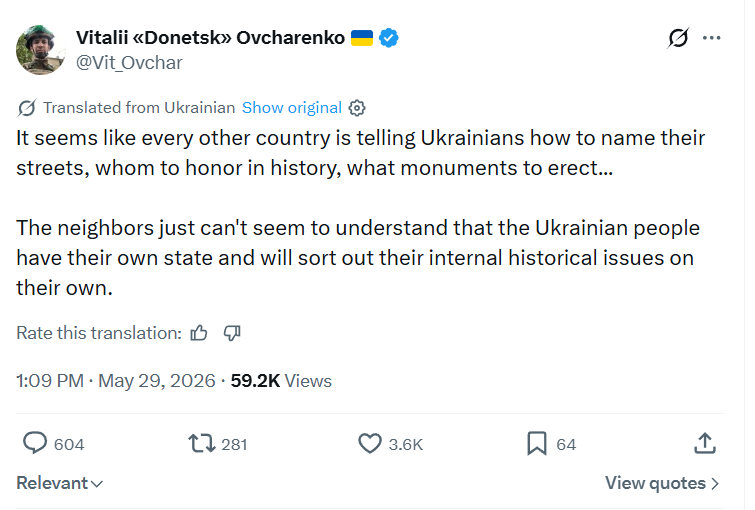
Поляк в інтернеті запитує «чому замість того, щоб будувати пантеон з сучасних героїв, Україна повертається до персоналій з минулого» і не бачить взагалі проблеми в цьому питанні
Українська
123
17
1K
39.8K
PMRI post mortem
PMRI post mortem@PMRIpostmortem·
@MatL1916 @Selianski Nikt tego nie powiedział. Ale to nie znaczy, że przez to gdzie wstąpił, że mamy być nieuczciwi wobec tego pięknego czynu.
Polski
1
0
0
86
M(L)1916
M(L)1916@MatL1916·
@Selianski Teraz w zamian mamy czcić sowieckich bandytów z KGB? Jebać kurwy sowieckie.
Polski
4
0
6
1.1K
Patryk Spaliński
Patryk Spaliński@spalinskipatryk·
Trochę mnie śmieszą te wpisy odnośnie Paryża, w których jest napisane, że imigranci rozwalają stolicę. Imigranci? Przecież to obywatele Francji, z francuskim paszportem, już urodzeni w tym kraju. Wnioski pozostawiam wam.
Polski
144
46
2.2K
85K
Serhiy
Serhiy@STARIKSU98·
Юзеф Пілсудський проводив жорстку політику етноциду проти українського населення, що фактично є формою геноциду, проте жодних офіційних вибачень за це Україна так і не отримала. Ба більше, у Польщі він є національним героєм, чиїм ім'ям названі сотні вулиць, площ тощо. При цьому українська влада на офіційному рівні ніколи не влаштовувала через це ніяких демаршів — на відміну від того, які політичні вистави зараз організовує польський президент Кароль Навроцький.
Serhiy tweet media
Українська
405
247
1.1K
77.2K
🇺🇦Khatsanovsky🔰
🇺🇦Khatsanovsky🔰@khatsanovsky·
Полякам треба вибачитись перед українцями, визнати і шанувати всіх наших Героїв. Бо повага до Героїв, які протягом століть боролись за Україну - це повага до України та українців. Неповага до них - це неповага до нас.
Українська
1.7K
89
1.1K
145.2K
PMRI post mortem 리트윗함
WW2 The Eastern Front
WW2 The Eastern Front@ShoahUkraine·
THE GENOCIDE OF POLES IN VOLHYNIA AND EASTERN GALICIA This is the first installment of a deep dive into one of the darkest chapters of the Second World War: the genocide of Poles in Volhynia and Eastern Galicia between 1943 and 1945. Roughly 100,000 people, the overwhelming majority of them unarmed women, children, and the elderly, were murdered in a deliberate campaign to eradicate the Polish presence from the region. Over the coming installments, I will examine it piece by piece: the land and its people, the long roots of the conflict, the ideology that drove the killings, and the course of the massacres themselves. This is where it begins. Part 1 Between 1943 and 1945, the Polish population of Volhynia and Eastern Galicia was subjected to a sustained campaign of mass murder and ethnic cleansing. The killings were planned and carried out chiefly by the Ukrainian Insurgent Army (UPA), the military arm of the Bandera faction of the Organization of Ukrainian Nationalists (OUN-B), often with the participation of local Ukrainian villagers. Their goal was the permanent elimination of Poles from territories the nationalist movement intended to incorporate into a future, ethnically homogeneous Ukrainian state. The campaign was distinguished not only by its scale but also by its extraordinary cruelty. Entire communities were destroyed in coordinated dawn attacks. Victims were killed with axes, scythes, pitchforks, knives, saws, and firearms. Churches and farm buildings crowded with people were set ablaze, and bodies were often mutilated to terrorize survivors and discourage any thought of return. The overwhelming majority of those killed were unarmed civilians: women, children, the elderly, and farming families. Historians' estimates of the Polish death toll vary, but the most widely cited figures place the total at roughly 100,000 across all affected regions, with approximately 50,000 to 60,000 killed in Volhynia and a further 30,000 to 40,000 in Eastern Galicia and the neighboring southeastern voivodeships. Geographic and Demographic Setting: Volhynia and Eastern Galicia lay within the Kresy Wschodnie (Eastern Borderlands), the multiethnic eastern provinces of interwar Poland. Volhynia corresponded to the Wołyń Voivodeship in the northwestern part of present-day Ukraine. Eastern Galicia comprised the Lwów, Tarnopol, and Stanisławów voivodeships farther south. For centuries, these lands had been home to an intermingled population of Ukrainians (Ruthenians), Poles, Jews, and smaller communities of Czechs, Germans, Armenians, and Russians. The demographic structure was decisive in shaping what followed. In Volhynia, Ukrainians formed a large rural majority, accounting for around two-thirds of the population, while Poles, at roughly one-sixth, were concentrated in towns, administrative and professional positions, and among landowners and recent agricultural settlers. In Eastern Galicia, the Polish proportion was larger, and Poles predominated in the cities, above all in Lwów, while Ukrainians dominated the surrounding countryside. The Ukrainian population of Volhynia was largely Orthodox, while that of Galicia was predominantly Greek Catholic (Uniate).
WW2 The Eastern Front tweet media
English
83
1.7K
5.1K
76.7K