Drew Mitchell (He/Him)

8.4K posts

Drew Mitchell (He/Him)

Drew Mitchell (He/Him)

@PhysLitGuy

CEO of Sport for Life and Physical Literacy for Life - Inspire and develop more movement - purposeful, skill based, confidence building movement for all!

Penticton, BC, Canada 가입일 Ocak 2015
953 팔로잉1.9K 팔로워
Drew Mitchell (He/Him) 리트윗함
Mr PitBull Stories
Mr PitBull Stories@MrPitbull07·
Remember Dan Price...that CEO who took a pay cut so he could pay all his employees a minimum annual wage of $70,000? Here’s what happened next: “Six years later after the decision that others said would destroy his business, Dan reports that revenue has tripled, the customer base has doubled, 70% of his employees have paid down debt, many bought homes for the first time, 401(k) contributions grew by 155% and turnover dropped in half. His business is now a Harvard Business School case study.” In his own words: “6 years ago today I raised my company's min annual salary to $70k. Fox News called me a socialist whose employees would be on bread lines. Since then our revenue tripled, we're a Harvard Business School case study & our employees had a 10x boom in homes bought. Always invest in people.” Courtesy of Craig Henley
Mr PitBull Stories tweet media
English
647
10.1K
41.1K
1.9M
Drew Mitchell (He/Him) 리트윗함
Jon Beck
Jon Beck@CoachJonBeck·
Youth athletic parents:🚨 "Stats show that only about 10 % of elite 10-year-old athletes are still elite at age 18. Only 8 % of Nobel Prize winners & world champions were child prodigies. In fact, the only thing that early success guarantees is… early success" ~ John O'Sullivan
English
1
14
58
8.3K
Drew Mitchell (He/Him) 리트윗함
TinyWildTales
TinyWildTales@beautiberds·
The Purple Mini Hummingbird 💜🐦 Tiny wings, endless charm.
English
264
3.2K
16K
393.9K
Drew Mitchell (He/Him) 리트윗함
Aakash Gupta
Aakash Gupta@aakashgupta·
The Kelce brothers accidentally explained one of the longest-running training mistakes in professional sports in under 30 seconds. A pitcher's delivery takes 1.5 seconds. The rest period before the next pitch is roughly 20 seconds. A starter who throws 100 pitches in a game produces somewhere between 2 and 3 minutes of total physical exertion across a 3-hour window. The work-to-rest ratio is approximately 1:20. That ratio maps almost perfectly to the ATP-CP energy system, the anaerobic pathway that powers movements lasting under 10 seconds. Sprinting. Jumping. Swinging a bat. Throwing a 97 mph fastball. Every meaningful action in baseball lives in this system. Distance running trains the opposite system. Aerobic metabolism. Slow-twitch muscle fibers. Type I fibers that are smaller, produce less force, and prioritize fatigue resistance over power output. Elite sprinters carry 60-80% fast-twitch fibers. Elite endurance athletes carry 60-95% slow-twitch. A 2008 study on collegiate baseball players found that combining endurance training with power training produced measurable drops in power output. You are literally remodeling the engine in the wrong direction. Training the aerobic system when every sport-specific action runs on anaerobic fuel. The tradition started decades ago because games last 3 hours and coaches confused game duration with physical demand. A game lasting 3 hours does not mean the athlete is exerting for 3 hours. A pitcher standing on the mound between pitches is recovering, not working. The correct training analog is a sprinter who runs 100 meters, walks back, and goes again. Driveline Baseball, Eric Cressey, and every major sports science program has been publishing this data for over a decade. Strength coaches at the MLB level largely moved to sprint-based and med ball protocols years ago. But the foul-pole-to-foul-pole jog still persists at the high school and college level because the coaches who played in the 90s trained that way and never updated. The Kelces just explained it to 3 million people faster than any journal ever could.
Gerry DeFilippo@Challenger_ST

Jason & Travis Kelce talking about the ridiculousness of baseball conditioning… “It makes no sense.” “You should be running SPRINTS or doing base running. Not running foul pole to foul pole.” STOP treating baseball players like marathoners

English
128
284
3.9K
2.1M
Drew Mitchell (He/Him) 리트윗함
Calgary Adapted Hub powered by Jumpstart
UCalgary Breaking Barriers Day is back! Open to UCalgary faculty, staff, and trainees Wednesday, June 10 | 8:00 AM to 4:00 PM In-person at Foothills Campus or join online Ready to be part of the shift toward more inclusive spaces!
Calgary Adapted Hub powered by Jumpstart tweet media
English
0
1
1
46
Drew Mitchell (He/Him) 리트윗함
Sport for Life
Sport for Life@SportForLife_·
Haven’t registered for the Sport for Life Summit in Granby yet? Register today to secure your spot and don’t miss the French sport event of the year in Canada. Join leaders, practitioners, and organizations from across the sport, recreation, education, and health sectors for inspiring conversations, practical learning, and meaningful connections — all in French. Register now: buff.ly/myocG70
Sport for Life tweet media
English
0
1
1
136
Drew Mitchell (He/Him) 리트윗함
Sport for Life
Sport for Life@SportForLife_·
This International Women's Day we celebrate the strength, leadership, and impact of women and girls in sport and physical activity and beyond. We also recognize that there’s still work to do. Creating equitable, inclusive spaces means continuing to listen, learn, and take action so every woman and girl has the opportunity to participate, lead, and thrive. Here’s to progress, to pushing boundaries, and to supporting one another — today and every day.
Sport for Life tweet media
English
0
1
1
131
Drew Mitchell (He/Him) 리트윗함
Sport for Life
Sport for Life@SportForLife_·
All of March: 25% off certifications, on-demand learning, and live workshops on the Sport for Life Campus. No code needed. buff.ly/1xtowAh
Sport for Life tweet media
English
0
2
3
188
Drew Mitchell (He/Him) 리트윗함
Greg Berge
Greg Berge@GregBerge·
This is a Mindset MUST-watch. Bookmark and share. 📌 We can become exactly who we want to become. We can control our thoughts. We can control our mind. We can make that 8-year version of us proud! Having this perspective at age 22 is just awesome. 🥇
English
132
1.7K
9.5K
561.3K
Drew Mitchell (He/Him) 리트윗함
Wayne Goldsmith
Wayne Goldsmith@waynegoldcoach·
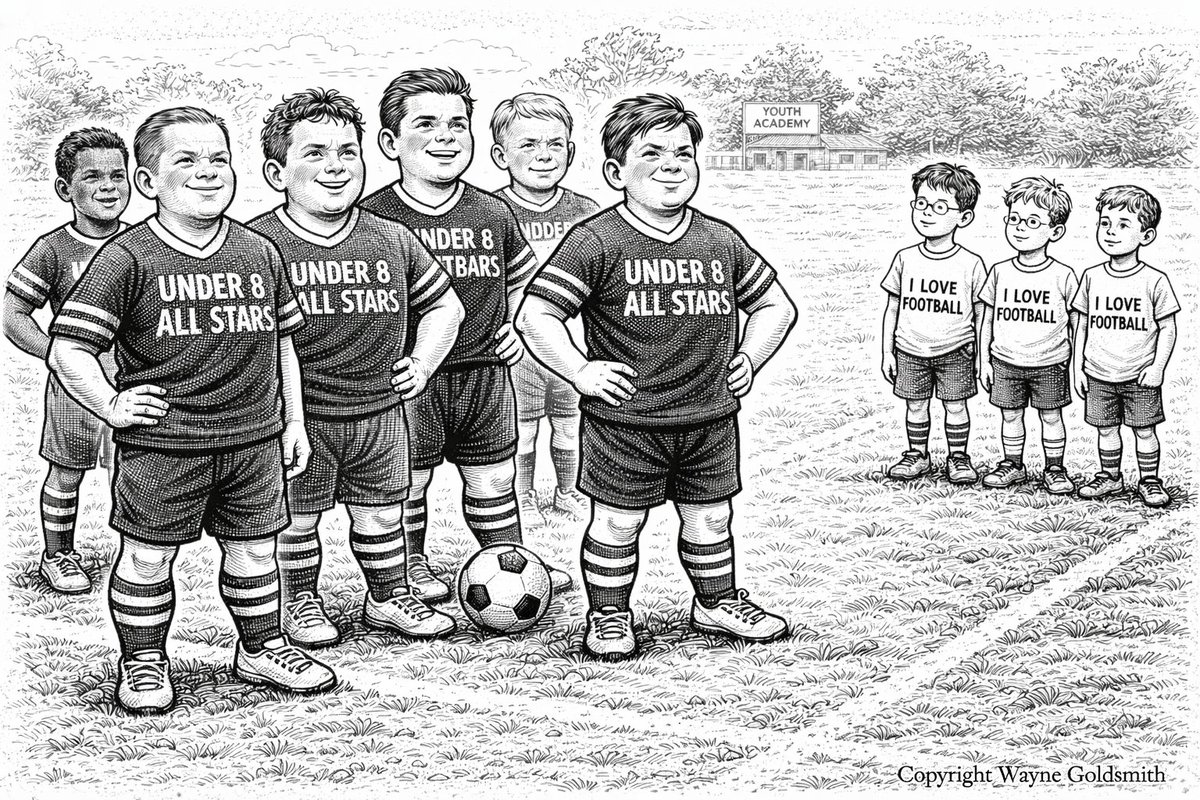
I was on live radio about the Norway sport model. Host asked: "What's the ONE thing you'd change about sport?" My answer: Get rid of ALL junior rep teams, elite academies and "high performance programs" for kids under 14. They hurt participation. They hurt elite development. 50 years of research proves it. So what are they for? So 10-year-olds can wear a blazer? What would YOU change? #norwaymodel #youthsport #earlyspecialization #playlikeyourplace #sportsthoughts #waynegoldsmith
Wayne Goldsmith tweet media
English
12
19
82
31K
Drew Mitchell (He/Him) 리트윗함
GP Q
GP Q@argosaki·
Stanford breakthrough could regrow cartilage and end joint replacements Scientists at Stanford may have delivered a revolutionary blow to the $65 billion knee and hip replacement industry. They have developed a method that could regrow aging cartilage and reverse arthritis, offering a real alternative to joint replacements that have long been considered the only solution for worn or damaged joints. The innovation uses advanced bioengineering to stimulate the body’s own cells to repair and rebuild cartilage naturally. Instead of removing joints and replacing them with artificial implants, this therapy encourages tissues to regenerate, restoring mobility and reducing pain. Early lab and animal tests have shown remarkable results, with cartilage thickness and joint function improving significantly in a short period. This discovery challenges the traditional assumptions of orthopaedics, where surgery was seen as inevitable once cartilage wore down. For millions of people suffering from osteoarthritis, joint degeneration, or chronic pain, this could mean regaining mobility without invasive surgery, long recovery periods, or lifelong dependence on implants. It also promises to reduce healthcare costs and complications associated with prosthetics, while promoting natural healing. The breakthrough highlights the growing power of regenerative medicine to reshape how we treat ageing and injury. Imagine a world where arthritis no longer forces joint replacements, and aging joints can heal themselves. Science is pushing the limits of the human body, turning what was once thought permanent damage into repairable tissue. This milestone is a reminder that the future of medicine is not just about replacing what is broken, but restoring it completely—offering hope, mobility, and freedom for millions around the world. #DiscoverTheUniverse #Discover #RegenerativeMedicine #ArthritisCure #Bioengineering
GP Q tweet media
English
17
234
559
12.6K
Drew Mitchell (He/Him)
Drew Mitchell (He/Him)@PhysLitGuy·
They have 5 million people compared to 320 million in the US which is really the comparable here. They have produced quite impressive results with a very small population but I would suggest that their secret sauce is their culture around sport - it is intentional!
Steven Quartz PhD@StevenQuartz

Claiming that Norway's Olympic dominance is due to their youth sports program is a textbook example of motivated storytelling > evidence. First, using the U.S. as the comparator introduces massive confounds. Seriously evaluating this claim requires appropriate comparisons: other Nordic countries like Sweden, Finland, Denmark. They have similar youth sports approaches, but don't dominate like Norway. So right away using the right comparator shows the claim that youth sports philosophy explains Norway’s dominance is suspect. Second, look at medal distribution. Norway’s profile is overwhelmingly winter-skewed - 70% of their medals are in winter events. That's the opposite of Sweden. It's what's driving Norway's success vs comparator nations: extreme winter specialization where they can compound their historical, cultural, and geographical advantages. What about 'rebutting' that Norway has some stars in non-winter sports? That's actually a self-own. If the youth model were driving broad elite superiority, you’d expect a more balanced winter–summer Olympic medal profile. You don’t see that. A few standout athletes don’t change the aggregate pattern, so that rebuttal fails. Norway may well have a healthy youth system worthy of emulation. But the evidence doesn’t show it’s the cause of Olympic dominance. And you don’t need to engage in uncritical storytelling about Olympic dominance to defend child-centered youth sport.

English
0
0
1
135
Drew Mitchell (He/Him)
Drew Mitchell (He/Him)@PhysLitGuy·
Seems like common sense to me - let's actually "develop" a proper pathway for our children and youth! Don't let type A parents run the show with little to no knowledge.......
Steve Magness@stevemagness

Norway is once again dominating the winter Olympics. And this is their youth sports program: Participation trophies for all kids. No keeping score until 13. No national travel competitions in youth sports. No posting youth results online. Motto: “Joy of Sport for All.” They let kids be kids. And it works. But…it’s the winter Olympics,right? Recently, they have had tremendous success in summer sports. Karsten Warholm demolished the 400 meter hurdles world record. Kristian Blummenfelt broke the Ironman triathlon record and won Olympic gold. His training partner, Gustav Ivan, won the 2022 Ironman World Championship. Casper Ruud reached world number two in tennis. Viktor Hovland is a top ten golfer in the world. Erling Haaland set the record for the most goals in a season in the Premier League. Beach volleyball champs, a surge of elite runners. By any metric, Norway’s elite athletes are achieving on a global stage. Yet, if we turn to their youth sports, their programs are the opposite of the US. Norway doesn’t allow for official scorekeeping until the age of thirteen. They dissuade early national travel teams in favor of local leagues. You can’t even post the results of youth games online without being fined. And almost sacrilegious in certain American circles, Norway doesn’t allow trophies unless everyone gets one. As Tore Ovrebo, Norway’s director of elite sport, told USA Today writer Dan Wolken, “We think the biggest motivation for the kids to do sports is that they do it with their friends and they have fun while they’re doing it and we want to keep that feeling throughout their whole career.” Their youth sporting model can be summed up with their chosen slogan, “Joy of Sport for All.” But not keeping score, giving out trophies, not being “win at all costs”...that’s anti-American! How can they be competitive? Research backs their approach up. 1. The fire has to come from within If you look at ​research​ on prodigies who eventually become standout adult performers, a deep intrinsic drive is paramount. Researchers found that intrinsically motivated football players were 3.5x more likely to make it to the next level, and athletes in general 2x more likely. The problem is that early success often pulls young people away from this inner drive. Kids start playing soccer (or violin or chess—this isn’t just about sports) because it is exciting and fun. As they improve, they gain accolades and praise from their parents, coaches, and teachers. They start winning trophies or seeing their names in online commentary. Without even realizing it, their intrinsic drive gets replaced by external validation and a need to please and impress others. The quickest way to kill that internal motivation? Hype achievements and be a crazy controlling parent or coach. The best way to create and maintain intrinsic motivation is to let kids dabble, explore, and find something with which their interests and talents align. Then, let them enjoy it without an undue emphasis on success. Praise effort, character, and teamwork, not results. This is easy to talk about but hard to do. Find ways to reward and incentivize the values you want to instill. That means not taking the easy road and talking about who set a new mile best or scored the most points, but instead highlighting who hustled during the fourth quarter, rallied after it seemed like the match was over, or displayed exemplary sportsmanship. 2. Go Broad over Specialization Even if the entire point of youth sports was to create future champions (which it’s not), we’d still adopt something similar to the Norwegian model. An ​analysis​ of over 6,000 athletes explored what separates athletes who reached world class and those who came up short. Those who reached world-class had during their youth: -More multi-sport than specialized practice -Started their primary sport later -Accumulated less overall formal practice -Initially progressed slower than national class peers Those who performed well when young, but didn’t progress: -Started their primary sport earlier -Specialized, engaging in more practice in one sport -Made quicker initial progress Norway doesn’t have 300 plus million people and an NCAA system to funnel talent. They have to develop theirs. And they realize the best way to do that is keep as many people in the system as possible. Why? Because you can’t predict talent development very well! Just go look at the age group record books. It’s easy to fool yourself into thinking early performance equals talent and potential. The kid running a 6-minute mile at 10 looks way better than the one running 6:45. But if the faster one is at track practice 5 days a week and the slower one rolls out of gym class in jeans and runs it off “fitness” from just playing, well I’m betting on the slower one! When we assess performance early on, we’re not measuring talent, we’re looking at training age and opportunity. And we’re crowning winners based on who started grinding first. America gets away with the insane achievement model because we can burn out 9 kids to get 1 survivor. Norway can’t afford to do that. They take the longer, more sustainable model. Rethinking Youth Sports: The whole point of youth sports should be for kids to learn, develop, have fun, and want to come back and play again next season! The best chance of developing a D1 scholarship athlete is essentially to do the exact opposite of what our current youth sports fiasco promotes. Even the poster child for early specialization, Tiger Woods, ​acknowledged​ it’s not a good thing for parents to push their kids too hard: “Don’t force your kids into sports,” he says. “I never was. To this day, my dad has never asked me to go play golf. I ask him. It’s the child’s desire to play that matters, not the parent’s desire to have the child play. Keep it fun.” While youth sports in America aren’t going to adopt the Norwegian model anytime soon, we can rebalance the equation. As I outlined in my book, it’s not getting rid of competitiveness, it’s rebalancing the equation to make sure that crazy mom, dad, or coach don’t extinguish the fire that makes great competitors (and sport fun!). In research on performance orientation and grades in school, a teaching environment that supported and emphasized mastery[PA1] , where students focused on the process of learning and comprehension instead of a comparison to others, was also linked to better grades. But it wasn’t the direct relationship that an outcome orientation had. Instead, in one study on college students, a mastery approach was linked to challenge-seeking, which in turn predicted end-of-the-year grades. In another study, mastery goals predicted higher levels of interest and enjoyment. Mastery works on our approach system without activating avoidance. It frees us up to take on a challenge and pursue our interests without getting bogged down by the pressure or judgment that often comes with an obsession with outcomes. The same findings hold true when looking at sport or the workplace. In a large meta-analysis that analyzed the impact of goal setting in sports, process-orientated goals had a large effect on performance. Outcome goals had little to no effect. These two paths represent a fast versus slow road to success. Both a mastery or outcome focus can lead to better performance, but the latter is akin to taking a shortcut. Obsession over outcomes is the most direct path to improvement, but it comes with some downsides that shift us toward avoidance. The slow path takes a longer, indirect route. It helps improve our performance not by focusing on the results themselves but by supporting the foundation that ultimately leads to better performance. It stokes the fire of enjoyment and interest to sustain our curiosity and work ethic over the long haul. It pushes us toward challenge-seeking so that when we inevitably hit a roadblock, we’ll take it on instead of trying to protect our ego. Both approaches work. One is more sustainable, providing success with less angst. Society has thrown us so far out of balance that we can’t even see the slow route right in front of us. We can either instill a love of sport in our youth, or we can turn sport into a burden where kids are exhausted, stressed, and scared. We’ve seen this go both ways, and the results couldn’t be more different. One leads to happy, healthy, and better young athletes. The other leads to burnout, family tension, mental health challenges, and quitting. As parents, volunteers, coaches, and community members, let’s all do what we can to minimize the latter and champion the former. -Steve

English
0
0
1
196
Drew Mitchell (He/Him) 리트윗함
Jan Rosenow
Jan Rosenow@janrosenow·
A reminder: ICE vehicles waste a whopping 80% of energy in their fuel. EVs are propelled by entirely different mechanisms. Energy enters the vehicle as electricity, which directly powers the drivetrain making it 3-4x more efficient.
Jan Rosenow tweet media
English
177
185
650
47.5K
Drew Mitchell (He/Him) 리트윗함
Paul Beckwith
Paul Beckwith@PaulHBeckwith·
HUGE!!! China’s CO2 emissions flat or falling for 21 months straight. In 2025: >Solar output up 43% >Wind output up 14% >Storage capacity added 75GW (beating peak demand growth by 20GW) Renewables covered all new electricity demand, coal dropped 1.9% carbonbrief.org/analysis-china…
English
37
104
322
13.1K
Drew Mitchell (He/Him) 리트윗함
Jesse D. Jenkins
Jesse D. Jenkins@JesseJenkins·
Anyone betting against EVs is betting on a loser... Lithium Manganese semi solid state battery with 2x the energy density of current Li-ion cells. share.google/O2exA10Ra3hLCS… Battery tech and electric motors are the new prime mover of the 21st century. And they're just getting started. (Don't even get me started on axial flux motors...)
English
34
84
350
26K