RadiantFilm

1.6K posts

RadiantFilm banner
RadiantFilm

RadiantFilm

@RadiantFilm

Directors Talk Directors and more. Catching a glimpse into the minds behind the films we love.

United States 가입일 Ağustos 2024
2K 팔로잉5K 팔로워
고정된 트윗
RadiantFilm
RadiantFilm@RadiantFilm·
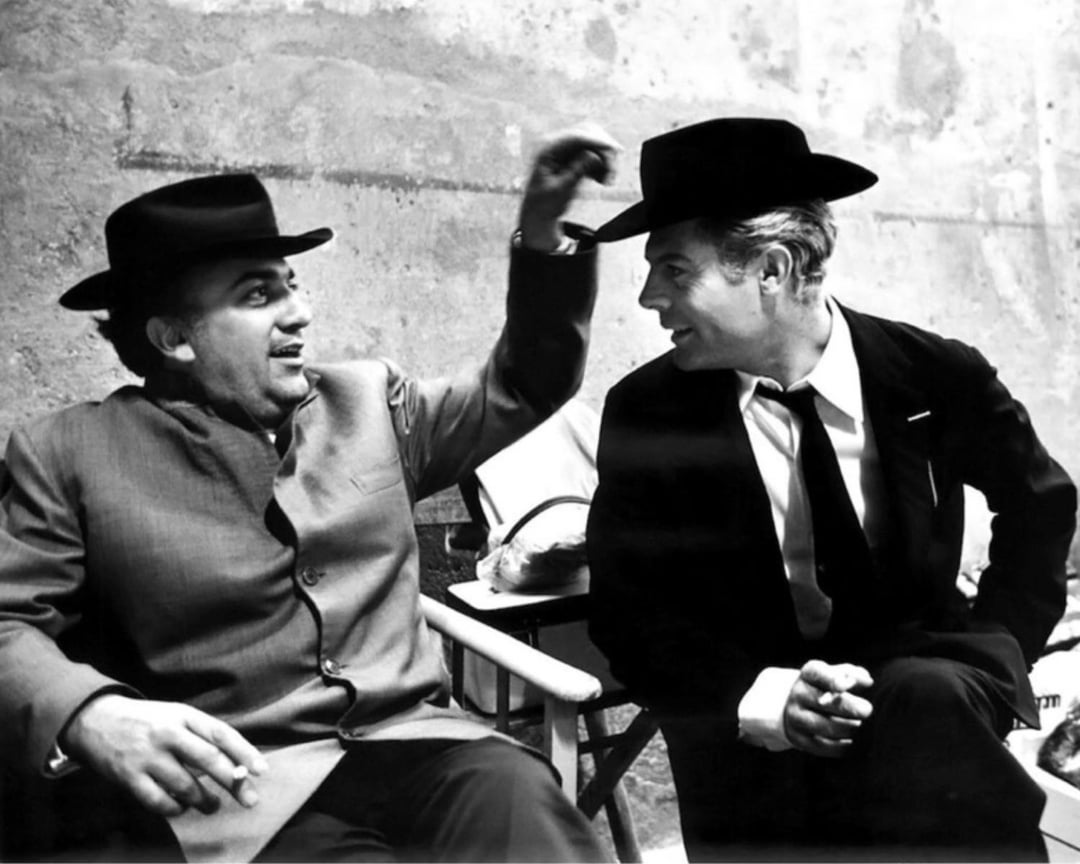
Federico Fellini on making 8½ (1963): "It’s difficult enough to remember the films I have made, the motifs even. Anyway, for some time I had had in mind the idea of making the portrait of a man in its many layers: his memories, fantasies, dreams, his everyday life, a character who as yet had no professional or personal identity (at the beginning he wasn’t a film director). I wanted to recount the multi-dimensionality of a day, a conscious and an unconscious life unfolding like a spiral, without defining boundaries, abandoning any idea of plot in favour of a free narration, a chat. The idea was to restore the sense of a time where past, present, and future, dreams, memories, and desires were blended together. It was a very ambitious project, so much so that I couldn’t express it. Then I went to Chianciano, a spa town, to take a cure, and this environment—its ritual queuing with a glass waiting for health to be restored, the grandiosity of the spa, the purgatorial sense which is always present when a collective of people are united in the same ritual, like a ballet—this brought to me the background for these meditations: a man caught in a moment of suspension in his daily rhythms, there because there is a threat, perhaps an illness. But I didn’t know my character. I had thought of a writer, a lawyer, a journalist: I couldn’t make up my mind, and these memories, these meditations without a face were fading into nothing. Perhaps this was the great lesson of 8½: at some point I told myself, “Get the engine started, get everybody on board, somebody will provide, force other people to make you do something.” So I did. I started the construction of the set, put the actors under contract, and the film took off. In the beginning, I didn’t have a script, only some notes, a scene or two written with Tullio Pinelli and Ennio Flaiano, and my inexhaustible, endless chattering about what I wanted to do. We started to build the scenery of the farmhouse, and after two months of intense work I realised that I didn’t know what I wanted. I would go every day to the studios and spend all day in my office, drawing, making calls, but the film was no longer there." 1/2
RadiantFilm tweet media
English
3
76
377
22.7K
RadiantFilm
RadiantFilm@RadiantFilm·
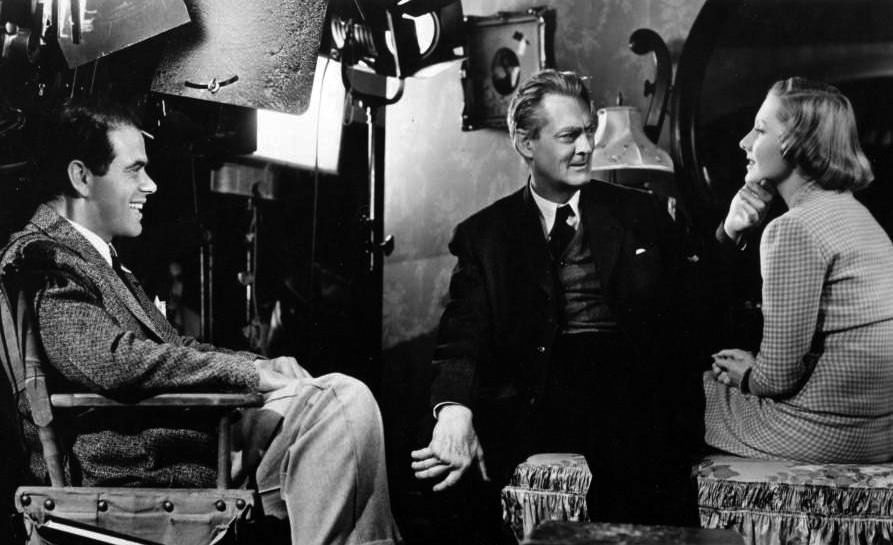
Frank Capra on his films defending the individual against the "abuse of capitalism" and political ideologies: "Capitalism is not really against the individual. Capitalism is supposedly free enterprise. Supposedly about the free individual. But capitalism itself is so massive that the guy on the street gets caught in paying rent, taxes, and he doesn’t own himself at all. You Can’t Take It With You (1938) is against the abuse of capitalism. Because making money, getting yourself status in this world is not everything at all. But it has become everything in America. That you really have to get going and keep up with the Jones’. Get a house and a car and other things. And pretty soon you’re stymied. Things own you. That’s the trouble with capitalism. Things own you. With communism and fascism—ideas own you. One idea and you can’t have any other. Deeds was a statement against all the isms in which the individual is captive and not allowed to be free. This is why you get knocks on every side with this kind of stuff. Most of these ideologies are not based on the individual—no matter what they say. There are these peoples’ democracies, nationalism—they’re all dictatorships. And I think any kind of dictatorship is bad for the individual. That’s one of the reasons why my pictures have been knocked from all sides. But loved by the people." — Frank Capra, interviewed by Emma Brown, Andrew Bressan and Michael Moran, Interview Magazine (June 1972 issue) ⬇️ Frank Capra with Lionel Barrymore and Jean Arthur on the set of You Can’t Take It With You (1938).
RadiantFilm tweet media
English
0
3
22
728
RadiantFilm
RadiantFilm@RadiantFilm·
Hou Hsiao-hsien on hanging out at Edward Yang’s home and the influence Breathless (1960) had on The Boys from Fengkuei (1983): "When I was young, a group of filmmakers and I would hang out at Edward Yang’s home. It was a Japanese-style home, and we’d be sitting around on these Japanese mats. At the time we weren’t young in age, but we were young as filmmakers, so we felt very fresh, very eager, and very ambitious about the films we were about to make. The films that we watched had been made after World War II in different countries. So you had films being made in Italy with neorealism, including Bicycle Thieves. In France you had Godard with Breathless and François Truffaut’s The 400 Blows, and in Germany you had this new cinema with Rainer Werner Fassbinder. These were films we would watch and discuss. We were all filmmakers who had gone abroad to study film, but Yang was an anomaly because he had actually studied science, and was working with computers, but gave up those practices to make films in Taiwan. Breathless definitely had a huge influence on how I put together my film The Boys from Fengkuei—and while I was editing this film with my collaborators, we actually saw Breathless. It really inspired us to incorporate jump cuts into the editing process, because in the past, the conventional way was to start with a long shot and end up with a close-up. But here, with the exact same position, you can do these jump cuts to somehow bring out the emotions of the characters and the stories you want to portray." — Hou Hsiao-hsien on the Films That Changed His Life by Hillary Weston, The Criterion Collection (October 20, 2015) ⬇️ From left to right: Wu Nien-jen, Hou Hsiao-hsien, Edward Yang, Chen Kuo-fu, and Chan Hung-chih.
RadiantFilm tweet media
English
0
32
131
8.5K
RadiantFilm
RadiantFilm@RadiantFilm·
Jean-Luc Godard on Kenji Mizoguchi: "Gallantry and metaphysics If poetry is manifest in each second, each shot filmed by Mizoguchi, it is because, as with Murnau, it is the instinctive reflection of the film-maker’s creative nobility. Like the director of Sunrise, the director of Ugetsu Monogatari can describe an adventure which is at the same time a cosmogony.    His heroines are all the same, strangely resembling Hardy’s Tess of the d’Urbervilles. The most terrible adventures befall them, one after the other. And if Mizoguchi shows a marked predilection for brothels, he refuses — unlike Kurosawa, who is merely a more elegant Ralph Habib — to become trapped by the false glitter of the picturesque. When he re-creates old Japan, he goes beyond tinsel and anecdote to give us the unvarnished truth with a mastery equalled only by a Francesco, giullare di Dio. Never have we seen, seen with our own eyes, the Middle Ages exist with such intensity of atmosphere. A revolutionary technique of simplicity    Efficacity and sobriety are the characteristics of great film-makers. And Kenji Mizoguchi does not belie this rule. As Philippe Demonsablon pointed out in a pertinent article on The Life of O’Haru, his art is to abstain from any solicitation irrelevant to its object, to leave things to present themselves without intervention from the mind except to efface its traces, thus increasing a thousandfold the efficacity of the objects it presents for our admiration. It is, therefore, a realist art, and the mise en scéne will be realist.    This simplicity is not without paradox, for it must achieve its austerity through an accumulation of matter. The compositions are guided initially by the laws of movement. But there is no Baroque embellishment, no purpose other than to allow the substance itself to reach us. No image is comic, tragic, fanciful, erotic in itself, and yet is all these things at once. Mizoguchi’s art is the most complex because it is the simplest. Camera effects and tracking shots are rare, but when they do suddenly burst into a scene, the effect is one of dazzling beauty. Each crane shot (here Preminger is easily outstripped) has the clean and limpid line of a brush-stroke by Hokusai." — Godard on Godard: Critical Writings by Jean-Luc Godard, edited by Jean Narboni and Tom Milne (1972; Da Capo Press edition, 1986)
RadiantFilm tweet media
English
0
87
441
19.6K
RadiantFilm
RadiantFilm@RadiantFilm·
Kiyoshi Kurosawa on how Cure (1997) breaks from American detective films: "Cure is indeed a psycho thriller and a detective story and I borrowed these genre styles from the American conventions. And indeed the first half probably fits very much into that framework. However, with the American genre of films along these lines of detective stories, it seems that the protagonist, the detective, does not change throughout the film. There is a problem, a mystery that needs to be solved and that solution doesn't involve him as a character changing at all. I think that's one convention about the American detective genre [that I tried to avoid]. But when I make films, and perhaps this is because I am Japanese, but my characters have to change. I believe that individuals change when something around them changes and if it's a drastic change then the character, appropriately, changes drastically, as well. That, at least, is the sense I get from my own experiences. My characters do have to change and that's probably where my films become different from American films. In borrowing from the detective genre, what I really wanted to convey was the relationship the protagonist has to his wife, to his daily life, to the society that surrounds him and the world that surrounds him. That, essentially, is the theme that I was most interested in. In Cure the conflict between the protagonist and the society that surrounds him, what essentially happens at the conclusion is that he finds complete freedom by cutting himself off from the society. That is the main conclusion that I try to posit." — Kiyoshi Kurosawa, interviewed by Spence D., IGN Filmforce (May 20, 2012)
RadiantFilm tweet media
English
2
137
752
41.3K
RadiantFilm
RadiantFilm@RadiantFilm·
Leo McCarey on The Awful Truth (1937) and Make Way for Tomorrow (1937): "The Awful Truth, which brought me an Oscar, was a film whose shooting gave me real pleasure. Irene Dunne, Cary Grant and Ralph Bellamy never posed a problem for me. It was one of the films I shot most rapidly. And what also pleases me is that I told, somewhat, the story of my life (don’t repeat it: my wife will want to kill me...). But the few scenes turning on the question of faithfulness, I should hasten to say, were not at all autobiographical: my imagination alone is responsible. Make Way For Tomorrow, in spite of all the humor in it, was the saddest story I ever filmed. There was much “pathos”; it is the adventure of a couple who have five children, raise them and, following money troubles, find themselves reduced to living off their children who, themselves, have problems and endlessly quarrel amongst themselves on the subject of their parents... It was at the same time very funny and very dramatic. It is difficult for me to talk any more about it, but I believe that it was very beautiful to look at. After this film, I received many telegrams saying I had won the Academy Award for the lesser of my two films and I, too, prefer Make Way For Tomorrow  to The Awful Truth. If I really have talent, this is where it appears." — Leo McCarey, interviewed by Serge Daney and Jean-Louis Noames, Cahiers du Cinéma no. 163 (February 1965), translated in Cahiers du Cinéma in English no. 7 (January 1967)
RadiantFilm tweet media
English
0
4
24
1.1K
RadiantFilm
RadiantFilm@RadiantFilm·
Hiroshi Teshigahara on Woman in the Dunes (1964): "In Woman in the Dunes, the sand represents for me the society in which we live. Usually, sand and dunes are a placid, romantic landscape, which may appear to us as somewhat fantastic. But in my film, I tried to highlight the other aspect of sand, that which blocks, which interferes with human activity, because this material also has a harmful side . . ." — Hiroshi Teshigahara, interviewed by Max Tessier, Le cinéma japonais au présent: 1959-1984, translated by Allison Dundy
RadiantFilm tweet media
English
0
28
85
5.3K
RadiantFilm
RadiantFilm@RadiantFilm·
Howard Hawks on making The Big Sleep (1946): "During the making of The Big Sleep, I found out, for the first time, that you don't have to be too logical. You really should just make good scenes. You follow one scene with another and stop worrying about hooking them together. The script was written by Leigh Brackett and Faulkner. Leigh, I thought, was a man's name, and in walked this fresh-looking girl who wrote like a man. Faulkner didn't know anything [technically] about screenwriting. I put the two together; they did the whole script in eight days. And they said they didn't want to change things because the stuff was so good; there was no sense in making it logical. So we didn't. Once during the picture Bogart said, "Who killed this fellow?" And I said, "Well, it probably was ... I don't know." So we sent a wire to the author, Raymond Chandler, and asked him and he told us the name of the fellow. And I wired him back and I said, "He was down at the beach when that happened. It couldn't be done that way." So nobody knew who killed that bird. It didn't hurt the picture. You asked why scenes take certain turns that are maybe unusual. As we work on scenes, I always go back and say, "How would it be if it were directly opposite?" and sometimes it leads to very interesting things, because there is no particular reason that they have to run in a straight line— they can take a jog. We do that as a matter of course. I teach writers who work with me to do it. We just keep on doing it. Sometimes you carry it clear onto the set. You haven't realized that there are other ways, and sometimes you get out on the set and try it the other way. If you've got a good man, good girl, competent people, it's easy. For example, in The Big Sleep, Bogart did this little innocuous scene of entering a bookstore. He looked at me and said, "What's the matter?" I said, "It seems like it's going to be kind of dull. [I wonder] if we could get a different way of going in there." He said, "Roll 'em again." We rolled it. He pushed his hat up like this, and adapted a kind of prissy air, and entered, and played it exactly as if he were one of those flying boys, and the scene became rather interesting." — The Men Who Made the Movies: Interviews with Frank Capra, George Cukor, Howard Hawks, Alfred Hitchcock, Vincente Minnelli, King Vidor, Raoul Walsh, and William Wellman by Richard Schickel (1975) ⬇️ Howard Hawks with Humphrey Bogart and Lauren Bacall on the set of The Big Sleep.
RadiantFilm tweet media
English
2
39
138
8K
RadiantFilm
RadiantFilm@RadiantFilm·
Yoshishige Yoshida on Nagisa Ōshima and the Japanese New Wave: "We never thought of ourselves as a movement, then or ever. Even though Oshima and myself are probably, more than others, known as the leading members of this Nouvelle Vague, if you ask me about any sort of communication between us, well, we actually had almost no communication with each other at all. One reason for this is that Oshima and I met only by chance. I entered Shochiku in 1955, and Oshima one year earlier in 1954. I was selected to work in the same team as Oshima, and so we met. At the time, as we were both assistant directors, we probably went drinking together from time to time, but philosophically speaking, we had no real communication with each other. I guess that the biggest difference in our personalities originates in our backgrounds. Oshima graduated from The University of Kyoto, where he studied, I believe, at the department of law. It is possible that he wanted to become a politician then. For me it was completely the opposite; while I cannot say that I had no interest in politics, I had absolutely no interest in becoming a politician... Although we did go out drinking a couple of times, it was only because this is what we usually did anyway during this period, since both of us liked drinking. However, it wasn't something that we often did just the two of us, but rather, we drank with the entire filming crew after work. Going with him only was no fun since he was bad when he got drunk." — Yoshishige Yoshida, interviewed by Alexander Jacoby and Rea Amit, MidnightEye (2010) ⬇️ Yoshishige Yoshida • Nagisa Ōshima.
RadiantFilm tweet media
English
1
48
116
8.5K
RadiantFilm
RadiantFilm@RadiantFilm·
Paul Schrader on what ties his films together: "Well, the thing that ties them all together is, you know, how I began, with Taxi Driver and this idea of this lonely sort of fella—keeps his own company, meditates in his own thoughts, and wears a mask, and his mask is his profession. And that idea evolves from attacking a taxi driver to a gigolo to a drug dealer to a poker player to a gardener to a philosophy professor. Mishima is a little different from that, in that he’s a historical figure. But he is a kind of historical figure I would have made, created as a fictional creation if he didn’t actually exist." — Paul Schrader, interviewed by Nick Newman, The Film Stage (2025) ⬇️ Paul Schrader (photo by Scott A Garfitt) • Mishima: A Life in Four Chapters (1985) • The Card Counter (2021).
RadiantFilm tweet media
English
1
26
115
6.3K
RadiantFilm
RadiantFilm@RadiantFilm·
François Truffaut on John Ford and Howard Hawks: Interviewer: "Like many American critics, I'm surprised by your admiration for Howard Hawks and John Ford. Would you explain why you like them?" Truffaut: "Originally, I didn't like Ford—because of his material: for example, the comic secondary characters, the brutality, the male-female relationships typified by the man's slapping the woman on the backside. But eventually I came to understand that he had achieved an absolute uniformity of technical expertise. And his technique is the more admirable for being unobtrusive: His camera is invisible; his staging is perfect; he maintains a smoothness of surface in which no one scene is allowed to become more important than any other. Such mastery is possible only after one has made an enormous number of films. Questions of quality aside, John Ford is the Simenon of directors. Hawks, on the other hand, is the greatest cinematic intelligence among American directors. He isn't a cinema addict, nor is he anguished or obsessed. Rather, he loves life in all its manifestations, and because of this harmony with life in general, he was able to make the two or three greatest examples of every genre of film (except perhaps comedy, in which you have Lubitsch etc.). To be specific: Hawks made the three best Westerns (Red River, The Big Sky, and Rio Bravo), the two best aviation films (Only Angels Have Wings and Air Force), and the three best thrillers (The Big Sleep, To Have and Have Not, and Scarface)." Interviewer: "M. Truffaut, Hawks' very versatility might be called an indication that he lacks a single vision of life or of cinema. Yet it is precisely that lack which you condemn in your French predecessors." Truffaut: "Hawks does have a vision of life and cinema! For example, he is the first American director to show women as equal to men (think of his handling of Lauren Bacall vis-à-vis Humphrey Bogart in The Big Sleep). He always knows what he is doing. When he decided to make Scarface, realizing the danger of a film about sordid mobsters, he instructed his scriptwriter, Ben Hecht, to join him in constantly thinking about the history of the Borgias so as to give the film some tragic stature. It is to this that we owe the nearly incestuous love between George Raft and his sister in the film." — François Truffaut, interviewed by Charles Thomas Samuels (September 1970) ⬇️ François Truffaut – John Ford – Howard Hawks.
RadiantFilm tweet media
English
6
90
363
27.6K
RadiantFilm
RadiantFilm@RadiantFilm·
Luis Buñuel on The Milky Way (1969): "The idea of making a film about Christian heresies first came to me just after my arrival in Mexico, when I read Menendez Pelayo’s Historia de los heterodoxos espanoles. Its accounts of martyred heretics fascinated me—these men who were as convinced of their truths as the orthodox Christians were of theirs. In fact, what’s always intrigued me about the behavior of heretics is not only their strange inventiveness, but their certainty that they possess the absolute truth. As Breton once wrote, despite his aversion to religion, the surrealists had “certain points of contact” with the heretics. Everything in The Milky Way is based on authentic historical documents. The archbishop whose corpse is exhumed and publicly burned (when personal papers tinged with heretical ideas are found after his death) was in fact a real Archbishop Carranza of Toledo. We did a great deal of research for this film, primarily in Abbé Pluquet’s Dictionnaire des hérésies. Carriére and I wrote the first draft in the fall of 1967 at the Parador Cazorla in the Andalusian mountains, where the road ended at the door of our hotel and where the few hunters around left at dawn and returned at nightfall, bringing back the occasional corpse of an ibex. We spent days discussing the Holy Trinity, the dual nature of Christ, and the mysteries of the Virgin Mary, and we were both happily surprised when Silberman agreed to the project. The script was finished at San José Purua during February and March 1968, and although filming was temporarily delayed by the commotion of that May, we finished the shoot in Paris during the summer. Paul Frankeur and Laurent Terzieff played the two pilgrims walking to Santiago de Compostela who meet, on their way, a series of characters from all ages and places representing the principle heresies of our culture. The title comes from the idea of the original name of the Milky Way—Saint John’s Way, so called because it directed wayfarers from all over northern Europe to Spain. Once again, I worked with Pierre Clementi, Julien Bertheau, Claudio Brook, and Michel Piccoli, but I also discovered Delphine Seyrig, whom I'd bounced on my knee when she was a little girl in New York during the war. And for the second and last time I also put Christ himself, played by Bernard Verley, on camera. I wanted to show him as an ordinary man, laughing, running, mistaking his way, preparing to shave—to show, in other words, all those aspects so completely alien to our traditional iconography. Christ occupies a disproportionately privileged place in relation to the two other figures in the Holy Trinity. God the Father still exists, of course, but he’s become vague and distant; and as for the unfortunate Holy Ghost, no one bothers with him at all anymore. He must be begging at roadsides by now. Despite the difficulty of the subject, the public seemed to like the film, thanks largely to Silberman’s superlative public relations work. Like Nazarin, however, it provoked conflicting reactions. Carlos Fuentes saw it as an antireligious war movie, while Julio Cortazar went so far as to suggest that the Vatican must have put up the money for it. These arguments over intention leave me finally indifferent, since in my opinion The Milky Way is neither for nor against anything at all. Besides the situation itself and the authentic doctrinal dispute it evokes, the film is above all a journey through fanaticism, where each person obstinately clings to his own particle of truth, ready if need be to kill or to die for it. The road traveled by the two pilgrims can represent, finally, any political or even aesthetic ideology." — My Last Sigh by Luis Buñuel, translated by Abigail Israel (1983) ⬇️ Luis Buñuel on set of The Milky Way.
RadiantFilm tweet media
English
1
20
115
4.6K
RadiantFilm
RadiantFilm@RadiantFilm·
Federico Fellini, "Films are written in light": "Light is the very substance of a film. In film—I have said this before—light is ideology, feeling, color, tone, profundity, atmosphere, storytelling. Light is what adds, cancels out, reduces, exalts, enriches, creates nuances, underlines, alludes to; it makes the fantastic and the dream believable and acceptable or, on the other hand, makes reality fantasy and turns everyday drabness into mirage; it adds transparency, suggests tensions and vibrations. Light excavates a face or smooths it out, creates expression where none exists, endows dullness with intelligence, makes the insipid seductive. Light outlines the elegance of a body, glorifies a countryside which may be nothing by itself, gives a background magic. Light is the premier special effect, a kind of makeup, a sleight of hand, an enchantment, an alchemist’s shop, a mechanism for marvels. Light is the hallucinatory salt which, burning, unleashes visions. Whatever lives on film lives by means of light. The most elementary or crudely made set design can by means of light reveal unexpected perspectives or steep the story in a hushed, brooding atmosphere. Or merely by replacing a powerful light source with shadows, change of light can dissolve a sense of agony and turn everything serene, familiar, reassuring. Films are written in light, their style expressed by means of light." — Federico Fellini: Comments on Film, edited by Giovanni Grazzini, translated by Joseph Henry (1988)
RadiantFilm tweet media
English
1
59
217
8.9K
RadiantFilm
RadiantFilm@RadiantFilm·
Orson Welles on Buster Keaton: "Keaton, one of the giants! What about The General—that’s a truly great movie, isn’t it? Now, finally, Keaton’s been “discovered.” Too late to do him any good, of course—he lived all those long years in eclipse, and then, just as the sun was coming out again, he died. I wish I’d known him better than I did. A tremendously nice person, you know, but also a man of secrets. I can’t even imagine what they were." — This is Orson Welles by Orson Welles and Peter Bogdanovich (1992)
RadiantFilm tweet media
English
6
71
381
15.4K
RadiantFilm
RadiantFilm@RadiantFilm·
"It was absolutely necessary to give weight to Alex's brutality, otherwise I think there would be moral confusion with respect to what the government does to him. If he were a lesser villain, then one could say: 'Oh, yes, of course, he should not be given this psychological conditioning; it's all too horrible and he really wasn't that bad after all.' On the other hand, when you have shown him committing such atrocious acts, and you still realise the immense evil on the part of the government in turning him into something less than human in order to make him good, then I think the essential moral idea of the book is clear. It is necessary for man to have choice to be good or evil, even if he chooses evil. To deprive him of this choice is to make him something less than human — a clockwork orange." — Stanley Kubrick, interviewed by Philip Strick & Penelope Houston, Sight and Sound (Spring 1972)
RadiantFilm tweet media
English
1
3
25
2.4K
RadiantFilm
RadiantFilm@RadiantFilm·
Stanley Kubrick on A Clockwork Orange (1971): "The film explores the difficulties of reconciling the conflict between individual freedom and social order. Alex exercises his freedom to be a vicious thug until the State turns him into a harmless zombie no longer able to choose between good and evil. One of the conclusions of the film is, of course, that there are limits to which society should go in maintaining law and order. Society should not do the wrong thing for the right reason, even though it frequently does the right thing for the wrong reason." — Stanley Kubrick, interviewed by Michel Ciment (1972)
RadiantFilm tweet media
English
2
22
83
6K
RadiantFilm
RadiantFilm@RadiantFilm·
Alfred Hitchcock on creating suspense: "All suspense, you see, or audience preoccupation is based on knowledge. The word "mystery" often creeps into [descriptions of my movies, but] they're not mysteries. The essential fact is, to get real suspense, you must let the audience have information. Now, let's take the old-fashioned bomb [plot]. You and I are sitting talking, we'll say, about baseball. We're talking for five minutes. Suddenly a bomb goes off and the audience have a ten-second terrible shock. Now. Let's take the same situation. Tell the audience at the beginning that under the table—and show it to them—there's a bomb and it's going to go off in five minutes. Now we talk baseball. What are the audience doing? They're saying, "Don't talk about baseball! There's a bomb under there! Get rid of it!" But they're helpless. They can't jump out of their seats up onto the screen and grab hold of the bomb and thrown it out. But one important factor: if you work the audience up to this degree, that bomb must never go off and kill anyone. Otherwise, they will be extremely angry with you. I made a mistake in an early film by having a long bomb-suspense thing and I let the bomb go off and kill a little boy. I remember I was at the press show and a very sophisticated press woman came at me with raised fists and said, "How dare you do that? I've got a five-year-old boy at home." And she was furious with me. What must happen is that a foot must touch it and they say, "My God, it's a bomb! Pick it up and throw it out of the window." The moment it's out of the window, off it goes. But we inside are all safe and sound. Sometimes the audience have no feeling for the victim, but they want [the thief] not to be caught. You see, it's the eleventh commandment—thou shalt not be found out. For example, supposing there's a burglar in a bedroom stealing jewelry from a woman. The woman has gone out, but suddenly she comes back and comes in the front door. What does the audience say? "Quick, burglar—get out, get out. You'll get caught." Frenzy you have the man in the potato truck. You see, you build up all the suspense—will he get the tie pin out of the girl's hand in time before he's caught? So we show the truck stopped a couple of times, he hides, and eventually he achieves it. But we're rooting for him all the time to get that tie pin back." — The Men Who Made the Movies: Interviews with Frank Capra, George Cukor, Howard Hawks, Alfred Hitchcock, Vincente Minnelli, King Vidor, Raoul Walsh, and William Wellman by Richard Schickel (1975)
RadiantFilm tweet media
English
0
23
85
6.3K
RadiantFilm
RadiantFilm@RadiantFilm·
David Lynch on Sunset Boulevard (1950): "Sunset Boulevard just has the greatest mood; you're immersed in it like a dream. It catches a Hollywood story that connects the golden age of Hollywood with the present day. But it's a truthful movie, and so it carries through to today. It has a lot of sadness in it, and beauty. And mystery. And dreams. Beauty, beauty, beauty and more dreams." — David Lynch, Dazed & Confused, Cult Vault #20 (December 2011)
RadiantFilm tweet media
English
3
66
449
19.2K
RadiantFilm
RadiantFilm@RadiantFilm·
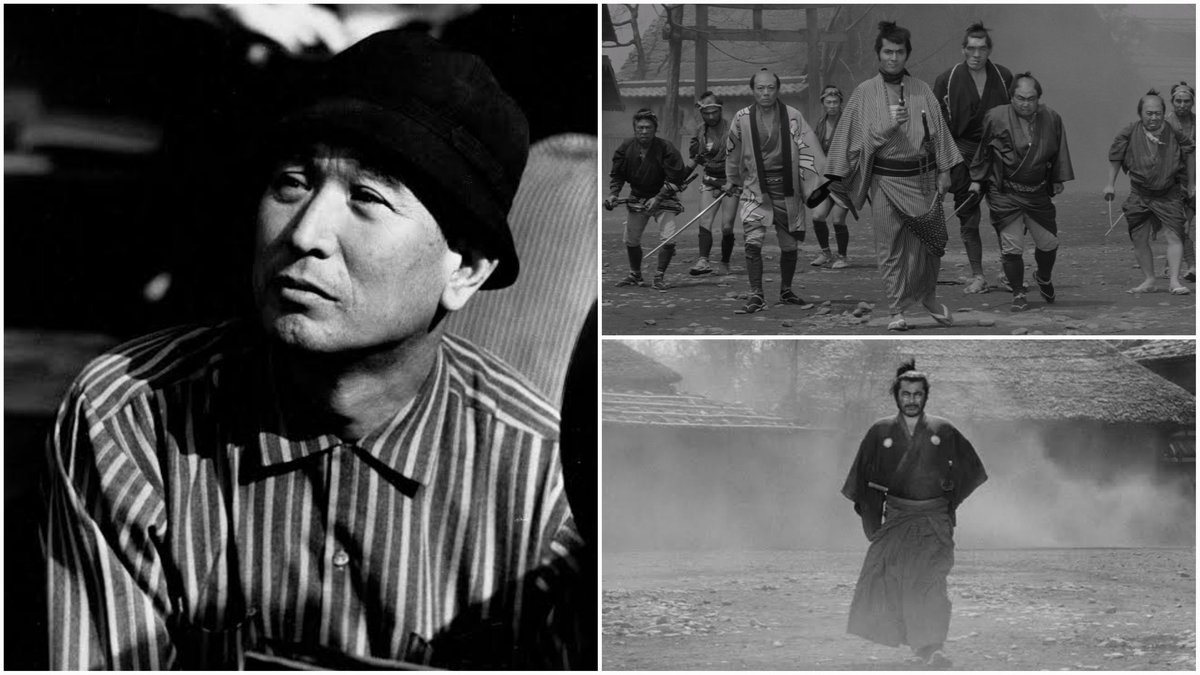
Akira Kurosawa on Yojimbo (1961): "For a long time I'd wanted to make a really interesting film. It finally turned into this picture. The story is so ideally interesting that it's surprising no one else ever thought of it. The idea is about rivalry on both sides, and both sides are equally bad. We all know what this is like. Here we are, weakly caught in the middle, and it is impossible to choose between the evils. Myself, I’ve always wanted somehow or other to stop these senseless battles of bad against bad, but we're all more or less weak—I’ve never been able to. And that is why the hero of this picture is different from us. He is capable of standing squarely in the middle, and stop the fight. And it is this—him—that I thought of first. That was the beginning of the film in my mind." — The Films of Akira Kurosawa by Donald Richie (1965)
RadiantFilm tweet media
English
5
23
141
5.4K
RadiantFilm
RadiantFilm@RadiantFilm·
Allegedly, and as far as The Glass Key is concerned, no one has ever provided any quote by Kurosawa citing it as an influence. When asked about the similarities between Red Harvest and Yojimbo, film critic and prominent Kurosawa scholar Donald Richie stated: "I think the similarity in themes is just coincidence. Kurosawa has always acknowledged his sources." — Donald Richie, interviewed by Allen Barra, Metro Silicon Valley (1996)
English
1
0
1
167