What the Artemis II astronauts did over the last 10 days was a testament to their bravery. And the fact that they traveled farther from Earth than anyone ever has, re-entered our atmosphere at more than 24,000 mph, and splashed down safely was a testament to human ingenuity. Thanks to everyone at @NASA for making this mission possible, and for taking us along for the ride.
To think that we aren't just going "to the Moon," but rather traveling to meet it at an exact point in space... changes everything.
It all comes down to orbital mechanics: arriving at the precise location, at the precise moment.
One tiny error... and it simply doesn't happen
BREAKING: In response to huge cuts in Trump's budget request, NSF is closing its social sciences directorate. Staff will be transferred elsewhere in NSF, and "grants that align with Administration priorities" will be kept.
W/ @dangaristo for @Naturenature.com/articles/d4158…
JUST IN: Iran threatened to hit Jubail for decades. It never needed to. The Strait of Hormuz did the job.
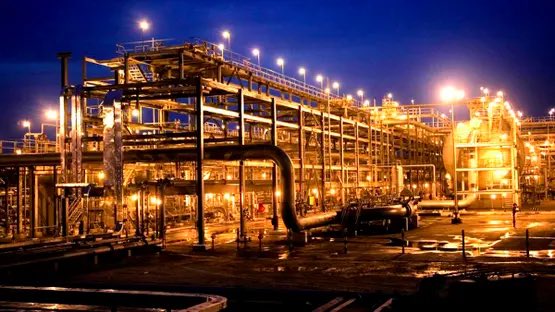
Sadara Chemical Company, the $20 billion joint venture between Saudi Aramco and Dow Chemical, has indefinitely shut down all production at its Jubail complex in eastern Saudi Arabia. Every line halted. Every cracker cold. Every reactor idle. The company says it cannot provide a resumption date, calling it “contingent on domestic and international factors,” which is corporate language for: we do not know when the strait will reopen, and neither does anyone else.
Sadara is one of the largest integrated petrochemical facilities on earth. Its cracker produces 1.5 million tonnes of ethylene per year. Its 26 downstream units convert that into 750,000 tonnes of polyethylene for packaging and pipes, 350,000 tonnes for films and coatings, 360,000 tonnes of ethylene oxide for detergents, plus propylene, polyols, and isocyanates feeding construction, automotive, textiles, and agriculture across three continents. Total capacity exceeds three million tonnes. All of it offline. Not because a missile hit the plant. Because the feedstock arrives by sea through a passage the IRGC now controls with a toll, a clearance code, and a $2 million fee in yuan.
This is what economic chokepoint warfare looks like when it works. No warhead. No crater. No dramatic satellite imagery of burning infrastructure. Just a phone call from the operations manager to the board saying we cannot source naphtha and the cracker cannot run without naphtha and the naphtha cannot arrive because the strait is not open and the strait is not open because a war that started 4,000 kilometres away has turned the most important waterway on earth into a permissioned corridor. The plant is intact. The plant is also useless.
Asia is hit first and hardest. China, India, South Korea, and Taiwan are the primary importers of Gulf polyethylene and ethylene derivatives. Packaging plants are already rationing. Polyethylene spot prices in Asia and Europe spiked 10 to 15 percent within hours of the announcement. Construction supply chains that depend on polyethylene pipe and insulation are extending lead times. Automotive interiors, textiles, consumer electronics casings, and agricultural films all trace back to the same cracker that is now sitting cold in the Saudi desert because the molecule that feeds it cannot pass through a strait 1,500 kilometres away.
The 2026 financial results for both Aramco and Dow will be materially impacted. Sadara cost $20 billion to build over a decade of construction. Its output feeds global supply chains that generate multiples of that value downstream. The shutdown is not a line item. It is a systemic event that demonstrates what happens when one geological chokepoint controls the feedstock for an entire industrial ecosystem.
Iran did not fire a single missile at Jubail. The toll regime, the insurance bifurcation, the yuan payment system, and the selective clearances achieved what a barrage of Shaheds could not: the indefinite closure of a facility that took a decade to build and serves customers in 50 countries. It cannot restart until a strait that nobody controls is declared “open, free, and clear” by a president who posted on Truth Social that the alternative is the Stone Ages.
The plant is intact. The plant is silent. And the molecule that would make it run is sitting in a tanker that cannot move.
open.substack.com/pub/shanakaans…
MIT's Nobel Prize-winning economist just published a model with one of the most alarming conclusions in the AI literature so far.
If AI becomes accurate enough, it can destroy human civilization's ability to generate new knowledge entirely.
Not gradually degrade it. Collapse it.
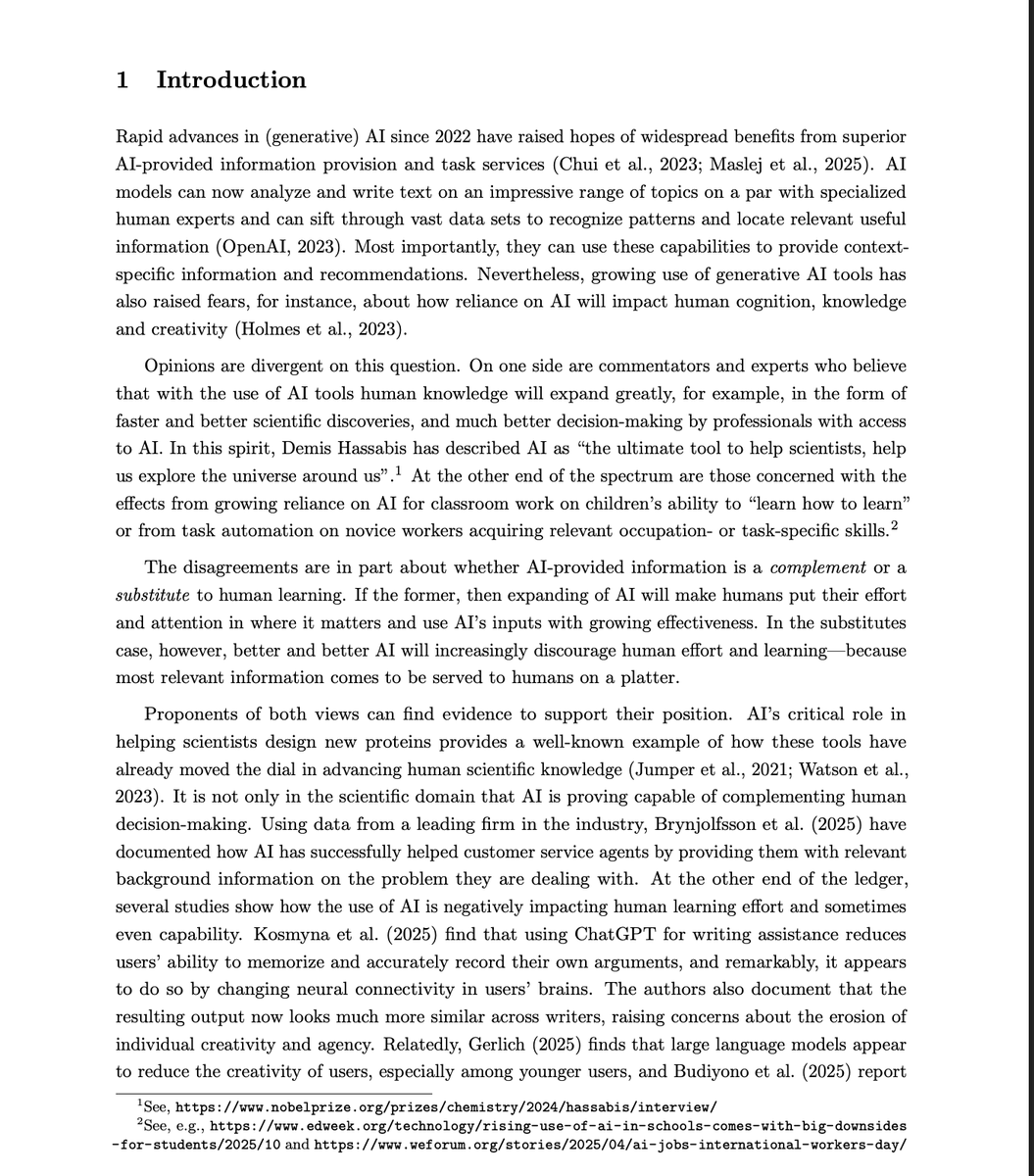
The paper is called AI, Human Cognition and Knowledge Collapse.
Authors: Daron Acemoglu, Dingwen Kong, and Asuman Ozdaglar. MIT. Published February 20, 2026.
Acemoglu won the Nobel Prize in Economics in 2024. He is not a doomer blogger. He is the most cited economist of his generation, and his models tend to be taken seriously by the people who set policy.
Here is the argument in plain terms.
Human knowledge is not just a collection of facts stored in individuals. It is a living system that requires continuous reproduction. People learn things. They apply them. They teach others. They build on prior work to generate new work. The entire engine of science, medicine, technology, and innovation runs on this cycle of active human cognition.
What happens when AI provides personalized, accurate answers to every question people would otherwise have to learn themselves?
Individually, each person is better off. They get correct answers faster. They make fewer errors. Their immediate outcomes improve.
But they stop doing the cognitive work that sustains the collective knowledge base.
Acemoglu's model shows this produces a non-monotone welfare curve.
Modest AI accuracy: net positive. AI helps at the margin, humans still do enough learning to sustain collective knowledge, everyone gains.
High AI accuracy: net catastrophic. AI is accurate enough that learning yourself feels unnecessary. Human learning effort collapses. The knowledge base that AI was trained on is no longer being refreshed or extended. Innovation stalls. Then stops.
The model proves the existence of two stable steady states.
A high-knowledge steady state where human learning and AI assistance coexist productively.
A knowledge-collapse steady state where collective human knowledge has effectively vanished, individuals still receive good personalized AI recommendations, but the shared intellectual infrastructure that enables new discoveries is gone.
And the transition between them is not gradual.
It is a threshold effect. Below a certain level of AI accuracy, society stays in the high-knowledge equilibrium. Above that threshold, the system tips. And once it tips, the collapse is self-reinforcing.
Because the people who would have learned the things that would have pushed the frontier forward never learned them. And the AI cannot push the frontier on its own. It can only recombine what humans already knew when it was trained.
The dark irony at the center of the model:
The AI does not fail. It keeps giving accurate, personalized, useful answers right through the collapse.
From the individual's perspective, nothing looks wrong. You ask a question, you get a correct answer.
But the collective capacity to ask questions nobody has asked before, to build the frameworks that generate new knowledge rather than retrieve existing knowledge, that capacity is quietly disappearing.
Acemoglu has been the most prominent mainstream economist skeptical of transformative AI productivity claims. His prior work found that AI's actual measured productivity gains were much smaller than the technology industry projected.
This paper is a different kind of warning. Not that AI will fail to deliver promised gains.
But that if it succeeds too completely, it will undermine the human cognitive infrastructure that makes long-run progress possible at all.
The welfare effect is non-monotone.
That is the sentence worth sitting with.
Helpful until it is not. Beneficial until it crosses a threshold. And past that threshold, the same accuracy that made it so useful is precisely what makes it devastating.
Every student who uses AI instead of working through a problem is a data point.
Every researcher who uses AI instead of developing intuition is a data point.
Every generation that grows up with accurate AI answers and no incentive to develop deep domain knowledge is a data point.
Individually rational. Collectively catastrophic.
Acemoglu proved this is not just a cultural concern or a vague anxiety about screen time.
It is a mathematically coherent equilibrium that a sufficiently accurate AI system will push society toward.
And there is no visible warning sign before the threshold is crossed.
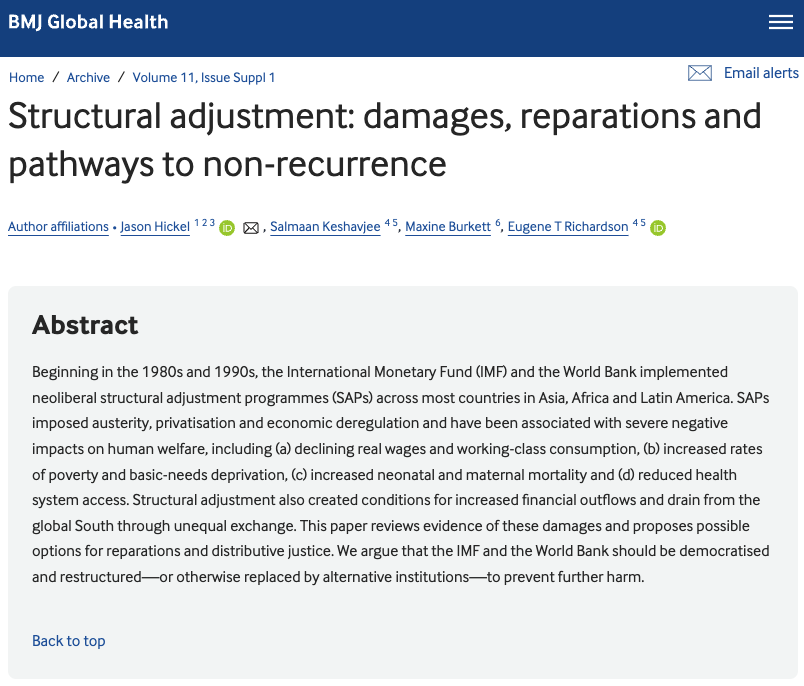
I'm happy to announce this new paper — we compile evidence on the extraordinary harms caused by IMF and World Bank structural adjustment programmes in the global South since the 1980s.
The empirical record is devastating: documented negative impacts on wages, poverty, inequality, maternal mortality, infant mortality, healthcare access, etc.
SAPs inflicted misery on the periphery in order to curtail their consumption, scupper independent development, and make labour and resources more cheaply available for the core.
gh.bmj.com/content/11/Sup…
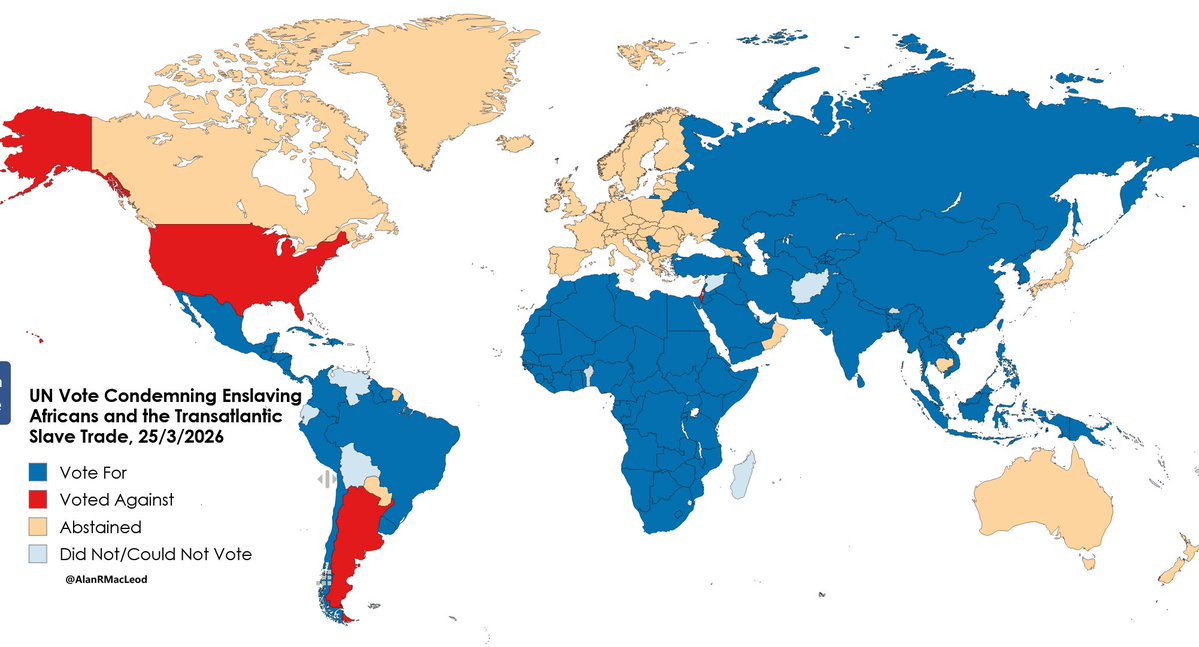
BREAKING: The United Nations has voted 123-3 in favor to condemn the enslavement of millions of Africans and the trans-Atlantic slave trade.
The three countries voting against it?
🇺🇸 USA
🇮🇱Israel
🇦🇷 Argentina
Nearly all of Europe abstained.
🇺🇸🇮🇱 The "Blame Israel" Strategy is Part of YEARS of US Policymaking Regarding a UNITED STATES WAR ON IRAN
▪️Israel is a US proxy and 100% dependent on and an extension of the US - it is AS GUILTY as the US in all of its crimes including genocide and wars of aggression;
▪️Like all US proxies - it is created and propped up specifically to do Washington's dirty work, accept all the blame AND all the retaliation;
▪️Washington and Wall Street are mobilizing their media and fake "alternative media" while coaxing many unwitting accomplices in creating a "rogue Israel" narrative in which a 100% dependent proxy somehow has "taken control of" the US or is somehow operating "beyond America's control;"
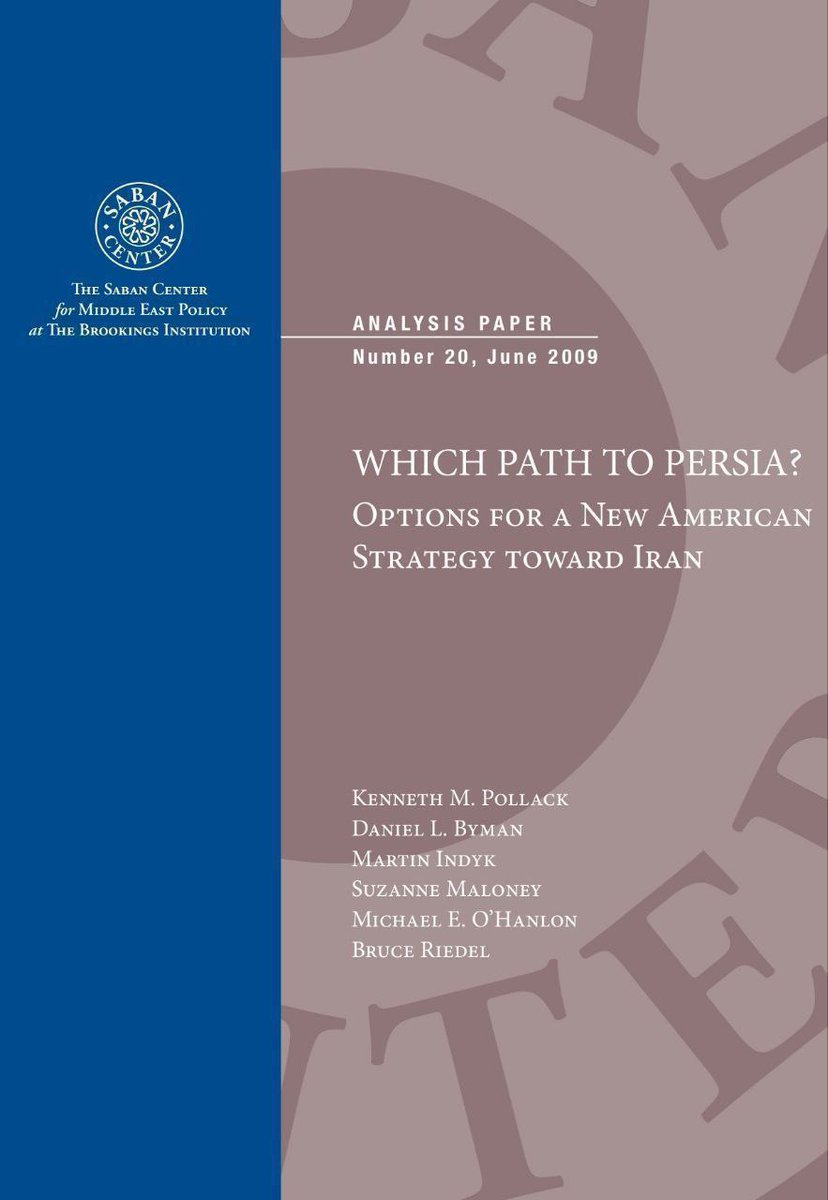
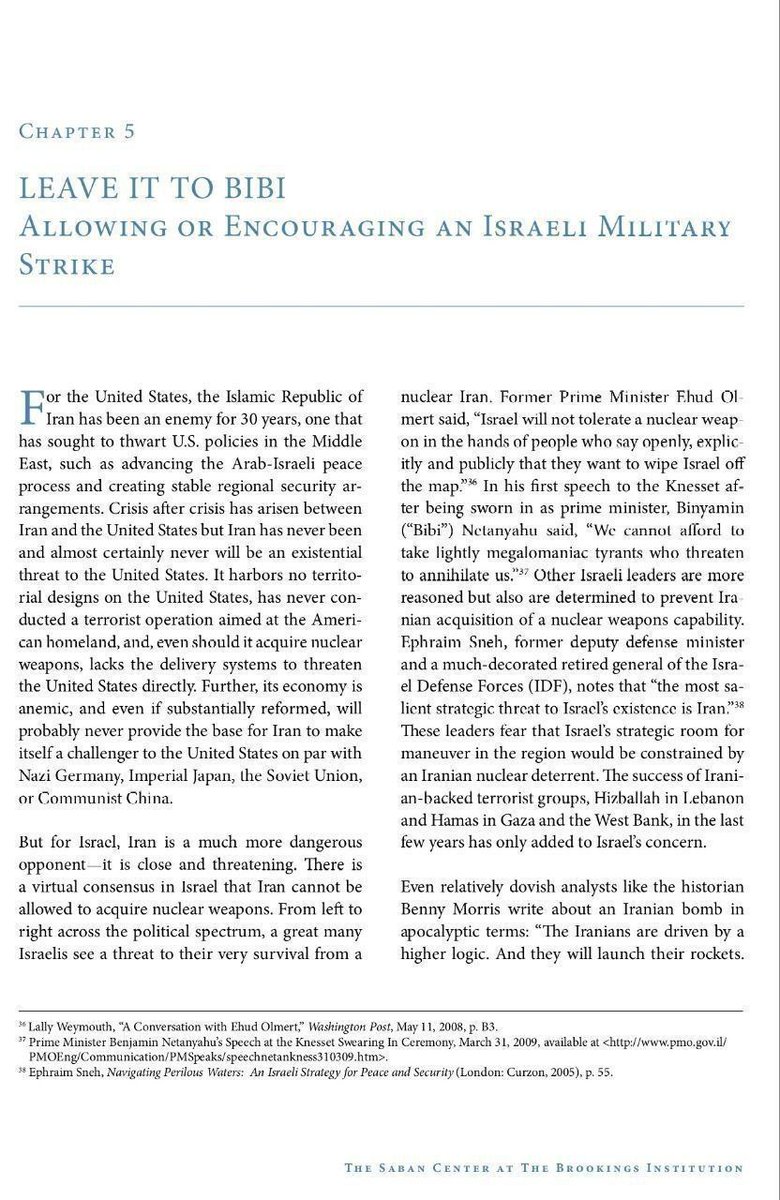
▪️This allows THE UNITED STATES to carry out any crime up to and including dropping nuclear weapons on Iran and blame it on "Israel" - not only is it obvious at face value - there are literally ENTIRE CHAPTERS about this in US policy papers including this one from 2009 titled "LEAVE IT TO BIBI";
▪️If the US really wanted to stop Israel it would simply cut its billions in money, munitions, military equipment, ISR, refueling, and all other support that keeps Israel artificially propped up in the Middle East - but it doesn't - nor does it stop its many other wars around the world connected DIRECTLY TO the war on Iran - which are ALL ultimately wars on China;
▪️This is no different than the US attacking Russia and blaming "Ukraine" when Ukraine is likewise a whole-cloth creation and extension of the US which wouldn't exist without constant US support;
The City is Alive: The Population of Manhattan, Hour-by-Hour.
Manhattan's nighttime population is 1.6 million, but around 2:00 PM every workday, the island is home to about 4 million people - if Manhattan were a state, it'd be roughly the 28th most populous in the US every afternoon, ranking just above Oklahoma.
Illustration via Joey Cherdarchuk / Darkhorse Analytics