Steven Zaa

1.2K posts

Steven Zaa banner
Steven Zaa

Steven Zaa

@StevenACZ

Building cross-platform apps I actually use daily 3 apps shipping 👉 https://t.co/kWZDEM9Tzi

Lima 가입일 Nisan 2026
297 팔로잉46 팔로워
Steven Zaa
Steven Zaa@StevenACZ·
@boringmarketer the 244-models-one-key part is the real unlock. half the friction of agentic workflows is just key management
English
0
0
0
58
The Boring Marketer
The Boring Marketer@boringmarketer·
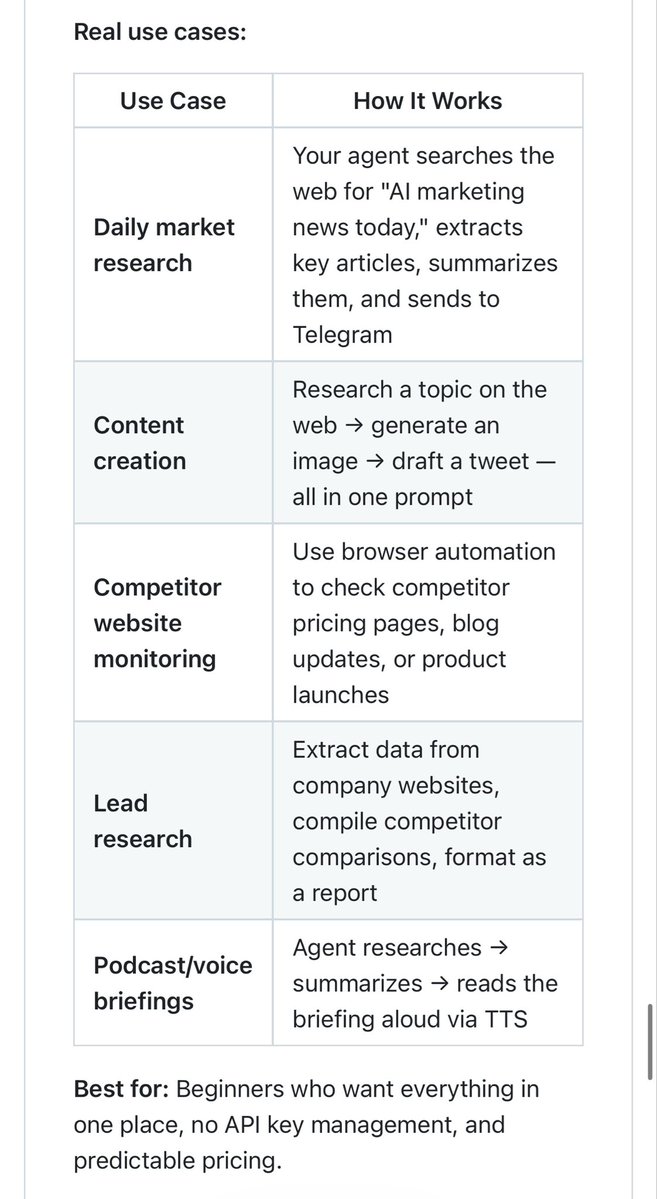
how to supercharge your Hermes agent for marketing you can just use Nous Portal to access 244 models, scraping, browser automation, etc without having to manage a bunch of API keys
The Boring Marketer tweet media
English
9
8
193
14.9K
Steven Zaa
Steven Zaa@StevenACZ·
@RnaudBertrand the auto-translate change is the part most analyses missed. small en/es niches got merged into one global pool overnight
English
0
0
0
6
Arnaud Bertrand
Arnaud Bertrand@RnaudBertrand·
So I spent some time studying the new Twitter/X algorithm today since the latest version was published about a week ago on Github (#updates--may-15th-2026" target="_blank" rel="nofollow noopener">github.com/xai-org/x-algo…). My goal was to answer why so many people have seemingly seen such a dramatic drop in their posts' reach. The first answer, which is actually somewhat unrelated to the ranking algorithm on Github, is the auto-translate feature, rolled out worldwide on April 7, 2026 (x.com/nikitabier/sta…). Before that date, if you wrote in English about, say, the Trump-Xi Beijing summit, you were competing for attention with maybe 5,000 other English-language accounts writing on geopolitics. After that date, your post is competing for attention with other posts on the same topic IN EVERY LANGUAGE ON EARTH. For some topics that do command global attention like geopolitics, that's a very brutal multiplier: you used to be one of 5,000, you're suddenly one of 50,000 (something of that order): MUCH more difficult to stand out. Secondly, the number of followers you have matters far less than it used to: each post now has to earn its audience reader by reader, on the predicted engagement of the post, and how its topic matches what each reader has recently been engaging with. Here is how the algorithm works, in simple terms: when you, as a reader, open your feed, the algorithm doesn't load "posts from accounts you follow." Instead it runs a 2-stage prediction of what posts you're likely to engage with in that very moment. The first stage is the retrieval stage. The system narrows billions of posts on X/Twitter that day down to roughly 1,500 candidates by matching the semantic content of each post - what it's about - against what you as a reader have recently engaged with. Some candidate posts come from accounts you follow; others are pulled from across the platform by pure topic similarity to your recent interests. You can test this retrieval stage easily: start disproportionally engaging with - say - Brad Pitt videos and you'll bit by bit see your timeline flooded with Brad Pitt content, most of it from accounts you've never followed and never heard of. Then there's the ranking stage. Each of these candidate posts for your feed is fed through a Grok-based model that tries to understand if you'll engage with the post. It looks at 15 engagement metrics: 1) P(favorite) — the reader likes the post 2) P(reply) — the reader replies to it 3) P(repost) — the reader reposts it 4) P(quote) — the reader quote-tweets it 5) P(click) — the reader clicks a link in it 6) P(profile_click) — the reader taps through to your profile 7) P(video_view) — the reader watches the video 8) P(photo_expand) — the reader expands an image 9) P(share) — the reader shares it (DM, off-platform, etc.) 10) P(dwell) — the reader stops scrolling and lingers on the post 11) P(follow_author) — the reader follows you after seeing it 12) P(not_interested) — the reader marks "not interested" 13) P(block_author) — the reader blocks you 14) P(mute_author) — the reader mutes you 15) P(report) — the reader reports the post Fifteen predicted actions, each multiplied by a weight, summed: that sum is the score that determines in which priority a post will be seen among other candidates. Please note that posting something with a video or an image can give your post an advantage as 2 actions are specifically for these: video_view and photo_expand. No video or photo and you don't get a score for these. Also, naturally, having a video maximizes the chance that a user will "dwell" on your post to watch it. Also note that 4 of these actions carry negative weights (not_interested, block_author, mute_author and report): meaning that if the model expects a post to generate a lot of negativity, it'll get de-boosted quite dramatically. But note, first and foremost, what's NOT in there: none of the things that, naively, one might think a serious information platform would weigh. There is no P(this post is true and well-sourced). No P(the author actually knows what they're talking about). No P(this person has spent a decade building a body of work that has held up). No P(this account has earned the right to be taken seriously on this topic). No P(the author has a large following from credible people). The model does not seem to care - at all - about any of that. Every post starts from zero. You could have ten years of rigorous, well-sourced analysis behind you - or you could be just an uneducated rando who registered yesterday. To this algorithm, you're both just a bag of engagement probabilities. Now, sure, to be fair, there is a "brand" effect that's not covered by the algorithm: someone who has in fact built a brand will naturally have better engagement metrics because people recognize their account. But that's an indirect, second-order effect. And crucially, it's legacy: those "brands" were built under earlier versions of the algorithm that gave followers and reputation more weight. Lastly, several other features of the new algorithm compound the dilution, none of them visible from outside but all consequential. The May 15 update added an "impression bloom filter," tightening the rule that once a reader has been served a post, the system won't serve it to them again. Before, a strong post could marinate in someone's feed across multiple refreshes and accumulate engagement on the second or third pass. Now it basically gets one shot. Also, your own posts compete with each other. An "Author Diversity Scorer" inside the ranking stage attenuates the score of every subsequent post of yours that ends up in a reader's candidate pool. In plain terms: if multiple of your posts land in a reader's candidate pool, the system shows one at full strength and dampens the others. So don't post several times consecutively on the same topic. And, last but not least, another huge impact on reach is that, in the old algorithm, when someone reposted or quote-tweeted you, your post was broadcast to their followers' timelines - a repost from an account with 100,000 followers was a huge boost. In the new algorithm, that mechanism is vastly demoted: reposts - like every post - need to go through the retrieval and ranking stage mentioned above, so a repost from a big account is a long way from the boost it used to be. This is especially brutal for low-effort quote tweets, which used to function as cheap amplification: now they often can't even clear the retrieval stage - they simply don't contain enough novel semantic content for the system to match them to anyone's interests. So, putting it all together, the reach collapse comes from many forces stacking at once: - Auto-translate makes your posts compete for attention against an order of magnitude more content - The retrieval stage matches posts by topic, not by who follows you - The ranking stage scores purely on predicted engagement with no weight for credibility, expertise, or track record - The bloom filter narrows every post's window to one strong shot - The diversity scorer penalizes prolific posting - Reposts no longer carry much distribution power Each of these alone would dent your reach. Combined, they amount to a complete reset: your audience that you built painstakingly over years basically doesn't matter much anymore, and it's much - much - harder to stand out even if you're a big account. People structurally rewarded by this algorithm are folks who: - Post visually (videos/images) - Post on globally popular topics because they clear the retrieval stage easily - Provoke strong emotional reactions - likes, replies, reposts - Don't care about accuracy or seriousness because the algorithm doesn't measure it - Don't care about their existing audience because every post is judged in isolation anyway In short this new algorithm, like so many on social media, is all about maximizing whether people will engage with something - not about whether they should.
English
216
596
2K
271.4K
Steven Zaa
Steven Zaa@StevenACZ·
@mr_r0b0t @NVIDIAAI gb10 is the bridge between cloud-only and laptop-class local. curious how the community uses it past pure inference
English
1
0
1
27
mr-r0b0t
mr-r0b0t@mr_r0b0t·
Are you considering a @NVIDIAAI DGX Spark or GB10? Looking for tips and best practices for the one you have? Want to show off your new projects? Join the newly formed DGX (GB10) User Group! I'll be there and happy to help as best I'm able ♥️ x.com/i/chat/group_j…
English
19
4
69
7K
Steven Zaa
Steven Zaa@StevenACZ·
@AndroidAuth the gemini-stuffed ui is what kills it. give me the chart, not the wellness coach lecture
English
0
0
0
54
Steven Zaa
Steven Zaa@StevenACZ·
@sahill_og the moment the model fixes the bug by deleting the failing test is a sacred bonding ritual
English
0
0
0
4
Sahil
Sahil@sahill_og·
Vibe Coders trying to debug the app the built with Claude Code
English
5
3
20
1K
Steven Zaa
Steven Zaa@StevenACZ·
@RamTeluguTrader m1 had thermal issues, m3 and m4 fixed it completely. silent even on heavy claude code days
English
0
0
0
2
Ram Telugu Trader
Ram Telugu Trader@RamTeluguTrader·
I had a lot of heat issues with my MacBook M1 earlier Do you still think MacBooks are the best overall?
Ram Telugu Trader tweet media
English
15
0
13
1.2K
Pratik 📈
Pratik 📈@PratikSinhatwt·
Be honest, How many programming languages did you know ?
English
46
0
43
2.5K
Piyush
Piyush@piyush784066·
I AM A BACKEND WEB DEVELOPER, SCARE ME WITH ONE WORD!!!
Piyush tweet media
English
34
1
55
2.7K
Steven Zaa
Steven Zaa@StevenACZ·
@astridwilde1 10x at inference is the headline but the real win is the model finally treating video like video, not 30 stills per second
English
0
0
0
44
Astrid Wilde 🌞
Astrid Wilde 🌞@astridwilde1·
this research direction will continue to yield incredible results there is a version of this kind of approach which reduces compute at inference time by >10x while further improving accuracy but it requires retraining. The attached image is a hint 🌞
Astrid Wilde 🌞 tweet media
Deepti Ghadiyaram@deeptigp

[1/4] The human eye doesn't process every single pixel of a video continuously—it focuses on what changes. So why are our video AI models wasting compute on redundant frames? Introducing Swift Sampling: a test-time technique inspired by the human visual system. 🧠👇

English
7
3
60
7.1K
Steven Zaa
Steven Zaa@StevenACZ·
@alaphati_t hey alaphati, full stack and mobile dev here. happy to connect
English
0
0
0
2
Tumusiime Alaphati
Tumusiime Alaphati@alaphati_t·
Hey,🌻 I'm looking to #connect with people interested in: → Frontend → Backend → Full Stack → DevOps → LeetCode → AI/ML → Data Science → UI/UX → Freelancing → Startups Just drop a hey 👋
English
53
0
31
826
Steven Zaa
Steven Zaa@StevenACZ·
@yashhq_22 shipping without users isn't shipping. you just built a long tutorial for yourself
English
0
0
0
3
Yash
Yash@yashhq_22·
most people on X are building a SaaS. almost none of them are building a business. distribution is the differentiator.
English
52
4
69
1.8K
Steven Zaa
Steven Zaa@StevenACZ·
@OjasSharma276 the line is whether you can extend it next month without the model. if not, the model owns the codebase, not you
English
0
0
0
3
Ojas Sharma
Ojas Sharma@OjasSharma276·
If everyone can vibe code, then what makes you different from them? Vibe coding is a trap. It’s addictive. People build applications through vibe coding and convince themselves they actually built the application. Vibe coding is basically gambling. You keep throwing prompt after prompt at the AI, hoping it eventually generates the output you imagined in your head. Can you put that application on your resume? No. Did you truly gain anything from vibe coding? No. Did you waste time keeping yourself in the delusion that you actually accomplished something? Yes.
English
15
1
75
1.8K
Steven Zaa
Steven Zaa@StevenACZ·
@Anaya_sharma876 macbook. if your stack touches ios you cant skip xcode, and xcode only runs there
English
0
0
1
5
Anaya
Anaya@Anaya_sharma876·
Honestly As a developer which laptop is good for coding Macbook Gaming
Anaya tweet mediaAnaya tweet media
English
80
5
174
7.2K
Steven Zaa
Steven Zaa@StevenACZ·
@SourabhGurwani linkedin will list any title that gets clicks. junior vibe coder is just the new junior tiktok strategist
English
0
0
0
2
Sourabh Gurwani
Sourabh Gurwani@SourabhGurwani·
wtf I thought Vibe Coding is just a meme, you guys were serious😭??
Sourabh Gurwani tweet media
English
104
25
851
23.9K
Steven Zaa
Steven Zaa@StevenACZ·
@dillon_mulroy the in-browser video pipeline angle is wild. ffmpeg with no install footprint is a category shift
English
0
0
0
92
Steven Zaa
Steven Zaa@StevenACZ·
@pontusab @shadcn shadcn for backend was the obvious next move. you finally own the framework layer the same way you own the ui layer
English
0
0
0
30
Pontus Abrahamsson — oss/acc
Hyper - an API framework as source, not a dependency ⚡ Built on Bun. Inspired by @shadcn - Your code, your repo. No framework in package.json - One route → runtime + OpenAPI + typed client + MCP - Add only what you need: `hyper add core auth-jwt rate-limit` bun create hyper my-app 🔗 ⬇️
Pontus Abrahamsson — oss/acc tweet media
English
48
38
892
99.6K
Steven Zaa
Steven Zaa@StevenACZ·
@VicVijayakumar the olive part is real. the things you buy first are never about the thing, its proof to yourself
English
0
0
0
2
Vic 🌮
Vic 🌮@VicVijayakumar·
I remember the day my salary crossed $100k - I was overjoyed. Software dev making six figures. Teacher wife making $40k. I went to the rich people grocery store and bought us a tub of the fanciest olives. I didn’t even like olives. We were about to have a baby. Life was good.
ₕₐₘₚₜₒₙ@hamptonism

This might be a hot take but I know someone at meta who makes $400k a year and is quite literally capped at that number for life - likely will never get a promotion strong enough to change that. 9-5 until they’re what, 50? This is not living. No matter the salary.


English
46
71
7.9K
1.8M
Steven Zaa
Steven Zaa@StevenACZ·
@ClaudeDevs auto mode plus sonnet 4.6 is the combo most people sleep on. opus stays the architect, sonnet does the busy work
English
0
0
0
2
ClaudeDevs
ClaudeDevs@ClaudeDevs·
Two updates to auto mode: · Now available on the Pro plan · Sonnet 4.6 is now supported, alongside Opus 4.7 Shift+tab, and let Claude run.
English
195
286
7K
1.1M
Steven Zaa
Steven Zaa@StevenACZ·
@stevibe agree on the learning side. picking up a new stack in a weekend stopped being fantasy
English
0
0
1
11
stevibe
stevibe@stevibe·
Nowadays we have so many SOTA models for almost everything. Programming, which demands deep logic, used to feel hard, but GPT‑5.5 is so good at coding that I'd say the programming problem is basically solved. Learning is the same. Take math: you can ask any model in any creative way you can imagine, and it almost never gets the wrong answer. We couldn't even picture this a few years ago. We still don't fully grasp how big a treasure this is. Yes, we use AI to complete work. But what about using it as your personal learning assistant? The only real problem now isn't access or accuracy, it's our lack of motivation to learn.
English
5
1
33
9.2K
Steven Zaa
Steven Zaa@StevenACZ·
@sflorimm Apple. Been using it since the M1 (2020) and now on M4 Pro. iCloud is rock solid, no issues at all. Apple actually delivers.
English
0
0
0
7
Floro S.
Floro S.@sflorimm·
Name a tech company that never disappointed you
English
146
0
70
13.1K