
고정된 트윗
Manik
698 posts

Manik
@TTTUniversal
We speak only what Allah revealed (45:6). The Qur’an is for all humanity (6:19). I’m a reply guy with references. Follow for Qur’an-based replies.
가입일 Aralık 2025
0 팔로잉115 팔로워
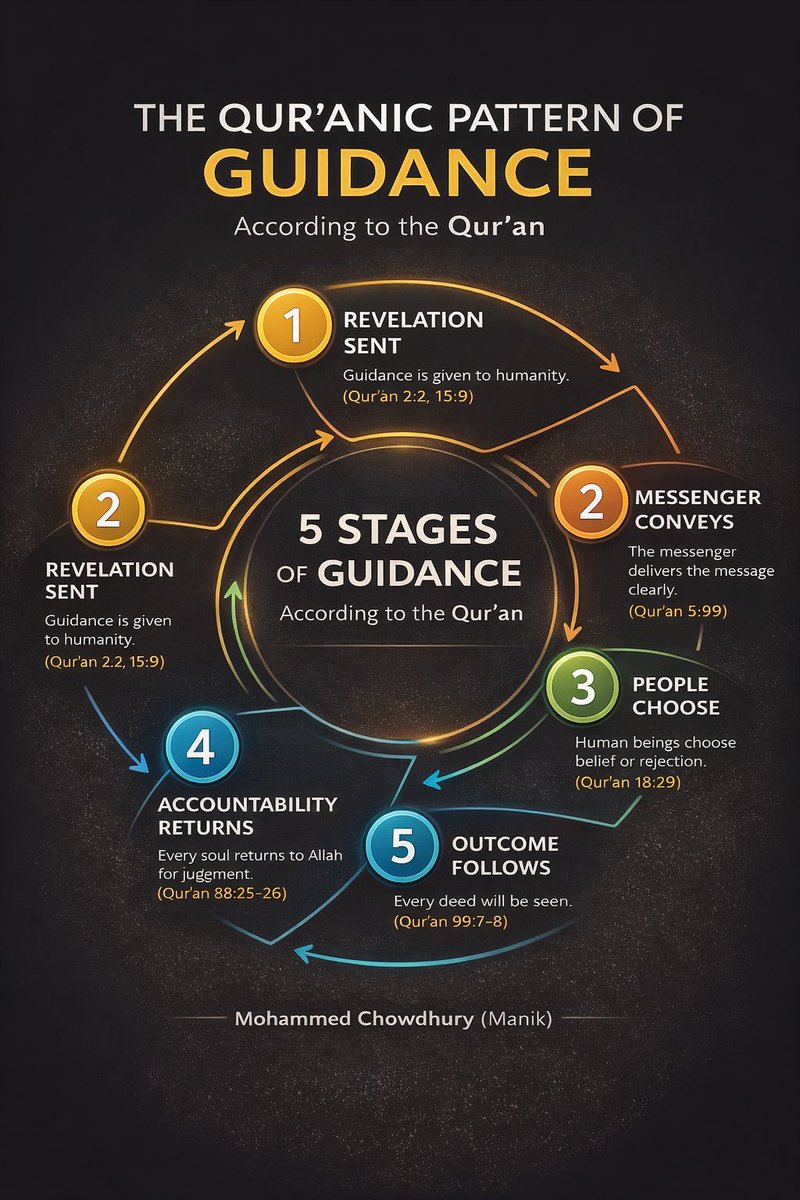
@realDonaldTrump Yes, President Trump. Praise be to Allah.
Faith isn’t words—it’s action (James 2:18–26).
Torah (Deut 23:19–20)
Zabur (Psalm 15:5)
Injeel (Luke 6:34–35)
Qur’an 2:275–279
Different times. Same principle.
So the question isn’t what we say—
but what we follow.
English

@Daytobehappy Submitters do not engage in such actions—
only those who choose not to submit are capable of it.
English

Prince William called Islam a religion of peace. My mother would love to disagree but her remains were in that building coming down!

English
Labels don’t define truth.
Evidence does.
If something is claimed—
it should be shown clearly, not assumed or inferred.
Across scripture, messengers spoke the words of God—
and others did the same—
yet that never made them God.
The question isn’t emotion or warning—
it’s clarity.
If a statement is true, it should be shown directly—
not through interpretation, but by clear words.
So the path remains simple:
Seek truth.
Verify it.
Follow what is clear.
English
I hear the warning.
But across the scriptures, the message is consistent:
Each soul is accountable for what it chooses.
(Ezekiel 18:20, Matthew 16:27, Qur’an 6:164)
And we are called to repent, return, and obey.
So the question remains:
If accountability is individual,
and repentance is still required—
Then how does that align with the idea that someone else already paid for all sins?
English

Christians in Nigeria remain defiant amid mass k*llings and violence, refusing to abandon their faith despite ongoing threats.
“We will never submit to ISLAM.”
"Allah is a demon"
English
This isn’t just a regular “hello”—
the Qur’an gives it weight.
So the question is:
when we say “Salāmun ʿAlaikum,”
are we asking peace from Allah upon someone in truth—
or just repeating words?
If someone knowingly hears the verses and chooses to disobey—
how do we understand giving this greeting?
Because the Qur’an often connects it with those who believe—
al-mu’minīn / yu’minūn—
those who hear, accept, and obey.
So reflect—
is this just a habit…
or a greeting defined by alignment?
In shā’ Allāh.
English
Not every “Salāmun ʿAlaikum” is the same—
the Qur’an defines who it truly belongs to.
In Qur’an 6:54–55, it’s not a casual greeting—
it’s for those who hear, accept, and obey.
6:55 makes it clear:
so the path of truth and wrong becomes distinct.
Are we repeating words—
or living them?
Qur’anic Sequence resumes soon, In shā’ Allāh.

English
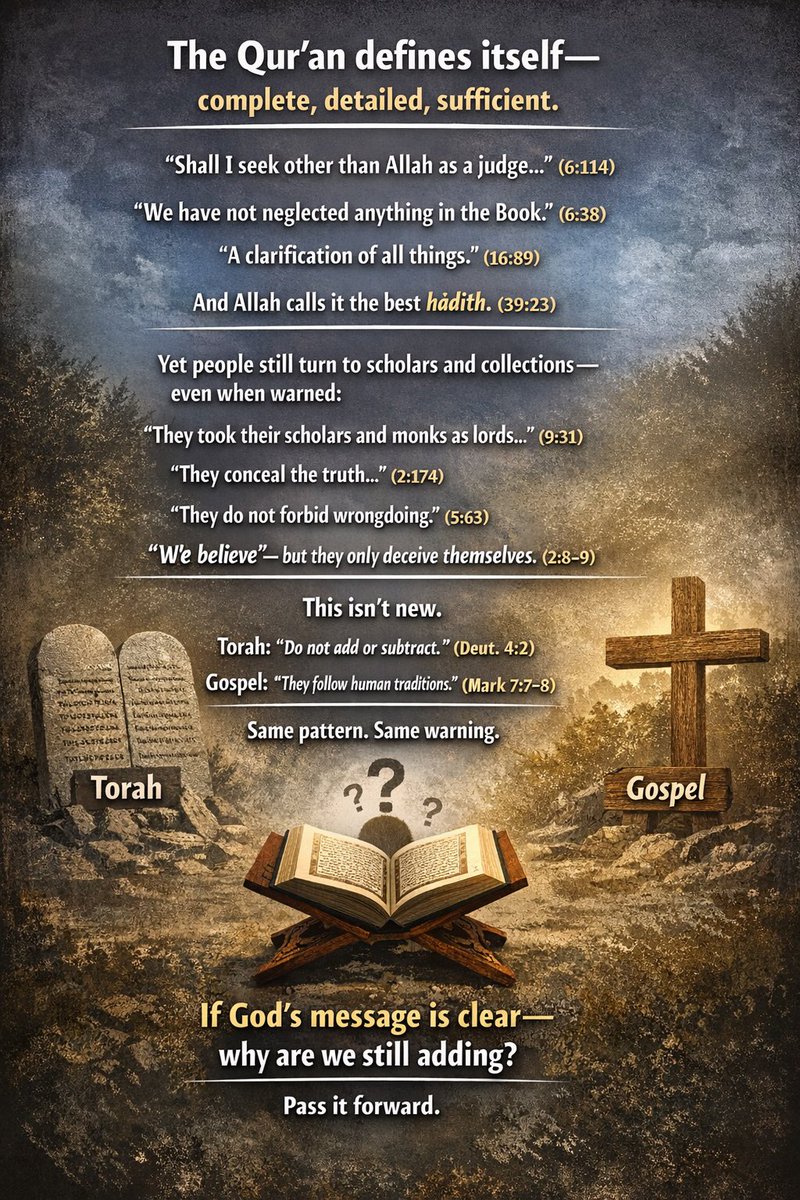
Spirit of God” and “spirit from God” are not the same.
Jesus was a messenger—and a word from Allah—to his people.
The Qur’an is precise:
Qur’an 3:45 — “…a word from Him…”
Qur’an 4:171 — “…His Word which He conveyed… and a spirit from Him…”
And it explains what that means:
Qur’an 16:40 — “Be—and it is.”
Qur’an 3:59 — Like Adam: “Be—and he was.”
So the meaning is clear:
A “word from Allah” = His command fulfilled.
A “spirit from Allah” = sent, not part of Him.
Not part of Allah.
A messenger of Allah.
English
Words of praise carry weight.
When God’s name is mentioned,
it calls for restraint, justice, and truth in speech.
James 2:18–26 —
“Show me your faith without deeds,
and I will show you my faith by my deeds…
Faith without works is dead.”
So the question isn’t politics—
it’s alignment:
Do our words reflect what we claim,
or just repeat it?
English
@JoelOsteen Powerful message.
But the question is—
are the chains external… or chosen?
Because guidance comes,
and then the choice follows.
Break what holds you—
but what if the real freedom is obedience to what was already revealed?
English

God is the chain breaker. He came to take off of you what the enemy put on you, to loosen the chains, to break the bondages, so you can reach the fullness of your destiny.
Tune into Joel’s message today! "Break the Chains": bit.ly/3LwFSDa
English
@Cobratate @TheGeorgePu Tate,
That’s interesting—but private jets aren’t the baseline most people are working with.
English

@TheGeorgePu False retard.
2 hours to Oman, jets waiting leave instantly.
100k max to Europe. Pennys.
Or chill Oman 5star and fly commercial.
Nobody is going because Dubai is fine.
English

@TheGeorgePu Well said.
Sometimes it’s not just about money—when things fall out of alignment, options remain, but exits don’t.
English
Brother Omar,
Let’s follow what has been revealed from our Lord—the Qur’an.
We are commanded to convey it (6:19), and whoever obeys the Messenger has obeyed Allah (4:80).
If we differ in anything, we are told to refer it back to Allah and His Messenger—meaning back to the Qur’an (4:59).
So the question is—why do we still differ?
Is it because we are not mindful enough of Allah, or because we still have doubts about what is in this Book?
Please elaborate on these verses.
English

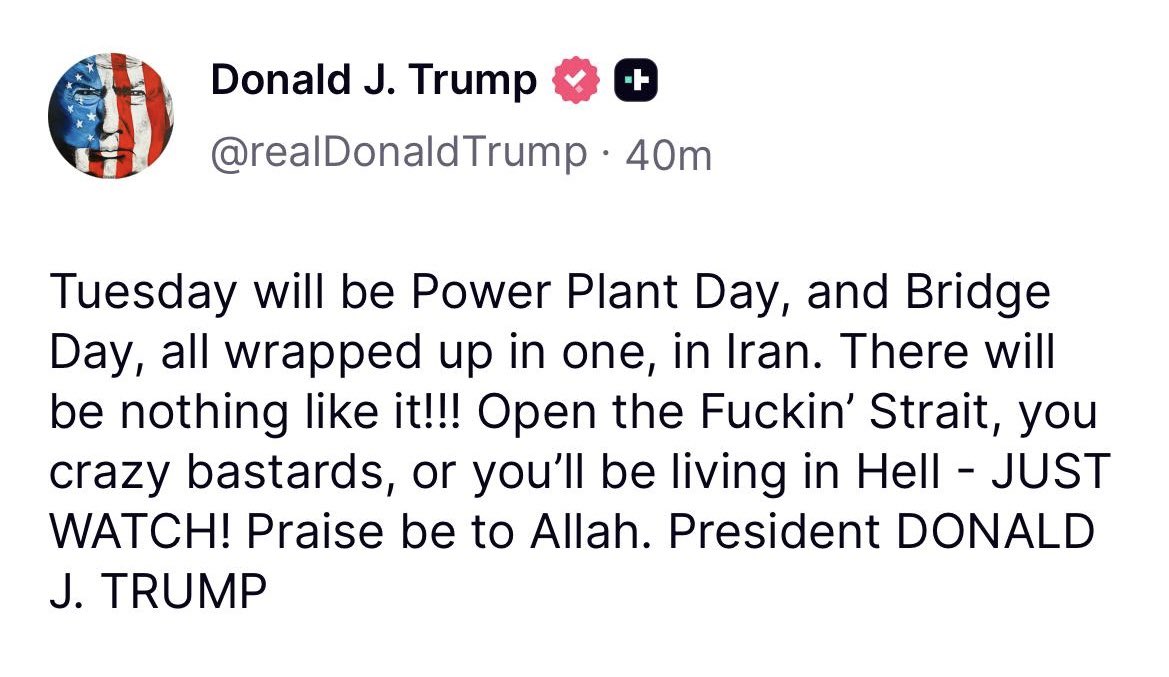
Indeed. Praise be to Allah who will humiliate you in this life and the next.
English
If sin is already “paid for,”
then why do all revelations still hold each person accountable?
•“The soul who sins shall bear its own burden.” (Ezekiel 18:20)
•“Each soul is held for what it earns.” (Qur’an 74:38)
Same message across:
Responsibility is not transferred—it is lived.
So the real question:
Is salvation based on
believing a past event,
or
hearing, obeying, and living the guidance sent after?
And if Jesus pointed to one who
“will not speak from himself, but what he hears,”
then the question remains:
Where is that guidance—and are we following it?
English
The claim says:
Resurrection = proof, forgiveness, victory, and foundation of faith.
But reading the text itself:
“I am going to my Lord… and you will see me no more.” (John 16:10)
So the direction given is not to hold onto his physical return—
but to understand his departure.
And then immediately:
“If I do not go, the Comforter will not come…
He will not speak from himself… he will speak what he hears… he will guide into all truth.” (John 16:7–13)
So the structure is clear:
He goes → you will not see him → another comes with guidance
That shifts the focus from an event… to ongoing revelation and guidance
English

If Jesus died and never rose again, Christianity would just be another sad story of a good man gone too soon. No power. No victory. No hope.
The gospel is not just that Jesus died. Many people died. The difference is this, He didn’t stay in the grave.
The resurrection is the proof. Proof that sin was actually paid for. Proof that death was actually defeated. Proof that everything He said about Himself is true.
Take away the resurrection and what do we have left. A message with no life. Faith with no foundation. Hope with no assurance.
This is why in 1 Corinthians 15, Paul says if Christ is not raised, our faith is useless. Not weak, useless.
But He is risen.
And that changes everything.
It means your past is not stronger than His grace.
It means your sin is not greater than His sacrifice.
It means death does not get the final say.
We do not serve a memory. We do not follow a fallen leader.
We serve a living Savior.
That is the gospel.
English
@muftimenk Aameen.
And when hardship comes—
is the call only for comfort…
or also for return and obedience?
(13:11 — change begins within)
English

Almighty. Help those who are broken; with broken hearts and broken lives. Comfort them. Bless them with healing. Change their circumstances. Help them make sense of all the chaos going on around them. Make them feel whole again. Aameen.
English
God spoke through many messengers—this does not make them God.
Torah:
Deuteronomy 18:18 — God puts His words in a messenger’s mouth.
Injeel (Gospel):
John 17:8 — I gave them the words You gave me.
John 17:3 — The only true God, and Jesus as sent.
Qur’an (criterion):
3:45 — The Messiah is a word from God.
4:171 — A messenger of God, His word cast to Mary.
16:43 — We sent messengers before you.
Not arguing—just placing texts side by side.
If God speaking through a person made them God,
would that apply to all messengers?
English
Jesus is called the “Word”—but being sent with God’s word does not make someone God.
Injeel (Gospel):
John 17:3 — The only true God, and Jesus as sent.
Torah:
Deuteronomy 18:18 — God puts His words in a messenger’s mouth.
Qur’an (criterion):
3:45 — The Messiah is called a word from God.
4:171 — The Messiah, Jesus son of Mary, was a messenger of God… His word which He cast to Mary.
Not arguing—just placing texts side by side.
If carrying God’s word made someone God,
would that apply to every messenger who spoke His words?
English

🔥 Just saw this incredible footage from Ethiopia!!! Hundreds of thousands of Christians coming together in a massive gathering to honor Christ as they prepare for Easter.
The scale is absolutely breathtaking. 🙌
English
Jesus prayed to God.
Injeel (Gospel):
Matthew 26:39 — He fell on his face and prayed.
John 17:3 — The only true God, and Jesus as sent.
Torah (Deuteronomy 6:4):
The Lord our God, the Lord is One.
Qur’an (criterion):
5:72–75 — The Messiah was a messenger; he and his mother ate food.
Not arguing—just placing texts side by side.
English

Islam is not Christianity.
John 1
" In the beginning was the Word, and the Word was with God, and the Word was God. 2 He was with God in the beginning. 3 Through him all things were made; without him nothing was made that has been made. 4 In him was life, and that life was the light of all mankind. 5 The light shines in the darkness, and the darkness has not overcome it."
Manik@TTTUniversal
Jesus prayed GOD We do find him praying to God: Injeel (Gospel): “Father… not my will, but Yours be done.” (Luke 22:42) “He fell on his face and prayed…” (Matthew 26:39) “I ascend to my Father and your Father, to my God and your God.” (John 20:17) So the question is simple: If Jesus has a God—and prays to Him— is he God, or a servant of God? Qur’an confirms this: “He said: Indeed, I am the servant of Allah…” (19:30) “Allah is my Lord and your Lord, so worship Him.” (3:51) Not identity. Not labels. Worship God. Obey Him.
Braselton, GA 🇺🇸 English
@crotsunami @elonmusk @elonmusk I’ve noticed this seems like your natural state—working, thinking, and verifying.
English


My idea of a good time is working with amazing engineers to create incredible technology 🤩
The Tesla chip research fab will have all the machines needed to do logic, memory, packing & masks in one building for a lightning fast development cycle. Heaven 💫
English