TokenOps.xyz

707 posts

TokenOps.xyz banner
TokenOps.xyz

TokenOps.xyz

@TokenOps_xyz

Manage token vesting, unlocks, airdrops and staking. Compatible with @Superfluid_HQ, @sablier, @hedgeyfinance, @llamapay_io and any custom smart contract

in the trenches 가입일 Şubat 2023
334 팔로잉850 팔로워
고정된 트윗
TokenOps.xyz
TokenOps.xyz@TokenOps_xyz·
Congrats @ShreyRastogi1 @odang75 and the @KAIO_xyz team on the $KAIO TGE. The first institutional token distribution with allocations encrypted on-chain. KAIO is building the open infrastructure layer for tokenised real-world assets that is auditable and compliant. For an institutional RWA project, distribution had to be self-custodial, fully auditable, with FHE keeping the sensitive numbers private. TokenOps built the airdrop portal and smart contract on @zama. First live FHE distribution since $ZAMA in January. First ever for an institutional RWA protocol. Read the full case study: tokenops.xyz/resources/the-…
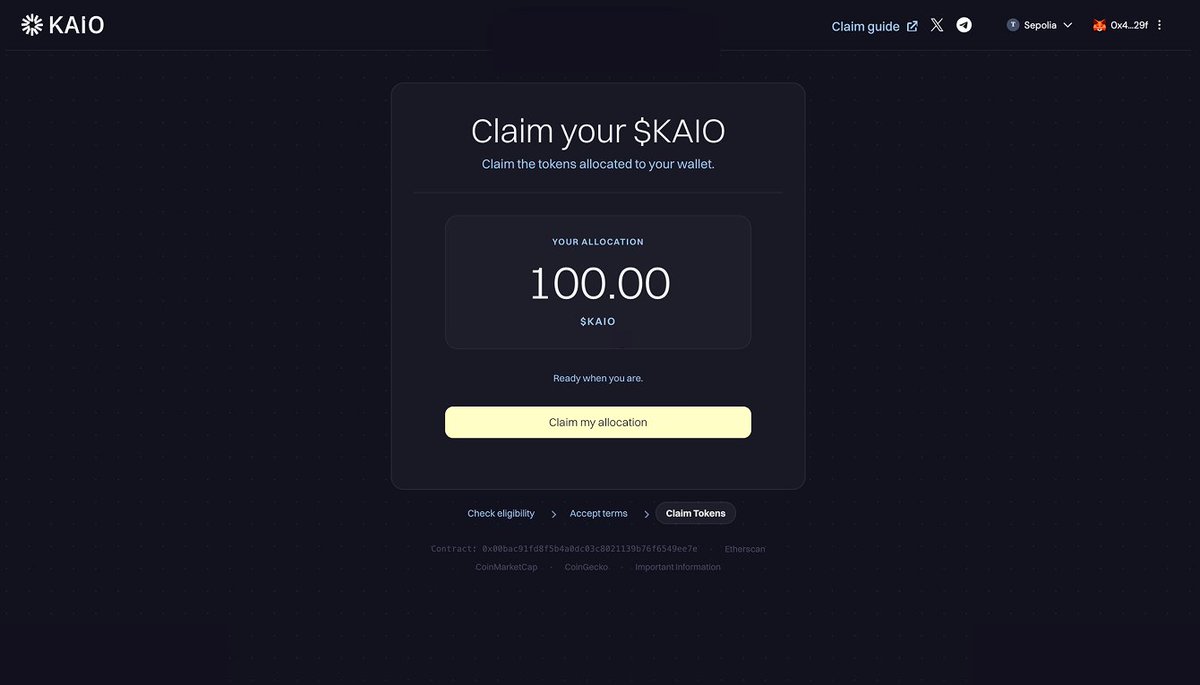
TokenOps.xyz tweet media
English
2
12
128
8.6K
TokenOps.xyz 리트윗함
Fabio Mancini
Fabio Mancini@0xFabioM·
1/ TokenOps has been acquired by @Zama to bring confidentiality to token operations. We started TokenOps 3+ years ago, in the aftermath of FTX. VC money had dried up. A handful of angels believed in us, plus dear friends carrying us emotionally and logistically.
Fabio Mancini tweet media
English
30
10
94
9K
TokenOps.xyz 리트윗함
Rand
Rand@randhindi·
I am very excited to announce that @zama has acquired @TokenOps_xyz, a full-stack solution for token distribution and vesting that has been used to distribute over $2b so far. Here is why we made the deal and what it means for the Zama Protocol. # The problem TokenOps is solving When a company or foundation launches a token, they typically distribute a large portion to their team, early investors and treasury. The issue with doing this on public chains is that every allocation and wallet is visible to everyone. This is a lose-lose situation for everyone involved: - long-term holders who believe in the project get penalized by bots who front-run token unlocks and push the price down - team members become targets for hackers and criminals who use tools like Arkham to check how much they hold in their wallets. France alone had 60 kidnappings of crypto founders, employees and family members since the start of the year! - early investors get flagged on social media and front-run by bots the instant they move tokens to exchanges, leading them to lose a lot of upside. And if investors don't make good returns, they'll imply stop investing and you won't anyone funding new projects in the future. - treasuries and foundations cannot effectively manage their assets, and often have to split holdings across hundreds of wallets, creating massive operational overhead TokenOps solves exactly this. By using the Zama Protocol, they enable token issuers to distribute, vest and manage allocations privately, while remaining fully onchain and self-custodial. Each team member and investor can have a single wallet receiving an encrypted amount of tokens. From the outside, you only see that the wallet received tokens and what the vesting terms are, but you no longer know the amount itself. Beyond confidential distribution and vesting, we are also working on enabling confidential swaps directly within TokenOps, so that anyone receiving an allocation can buy and sell tokens seamlessly without anyone knowing the size or direction. This turns vesting from a static product into an active venue for OTC, treasury management and hedging on compliant rails. And just like we used our own technology to run our token sale, we will of course use it to distribute allocations to our team and investors. In the coming months, we will shield the entire supply earmarked for team and investors, and distribute it through TokenOps' confidential onchain vesting contracts. # How this benefits the Zama Protocol 1. it's a great use case of the technology, and it solves a real problem in the market that no transparent solution can address. 2. it creates extremely sticky TVS (Total Value Shielded) for the protocol. Whenever someone gets a vested allocation, they become a user of the Zama Protocol for the duration of their lockup, which is typically 2-4 years. That gives us 2-4 years to build utility for them so they never have to unshield their tokens and leave Zama. 3. it generates real revenue for the Zama Protocol. Every distribution, every claim, every confidential swap generates onchain fees, and all of these fees accrue directly to the protocol and are used to buy back and burn $ZAMA. Over the next few months, we will turn TokenOps from a SaaS product into a fully onchain platform, owned entirely by the Zama Protocol. Anyone will be able to permissionlessly build on top of it and add confidential distribution and vesting features to their own apps. If you plan to issue a token, take it for a spin at tokenops.xyz!
English
27
35
179
10.4K
TokenOps.xyz
TokenOps.xyz@TokenOps_xyz·
6/ Why this matters The future of onchain finance won't run on fully transparent infrastructure. It requires programmable confidentiality at the protocol level. Zama is building that protocol. Token lifecycle management is now part of it. Same team. Same products. The scale is what changes.
English
1
0
6
251
TokenOps.xyz
TokenOps.xyz@TokenOps_xyz·
JUST IN 🧵 1/TokenOps is joining @zama, to roll out confidential and fully compliant token distributions, airdrops and vesting across public blockchains. Public blockchains just became viable for institutional capital.
English
5
9
39
2.6K
TokenOps.xyz
TokenOps.xyz@TokenOps_xyz·
Bringing confidentiality to token operations ✅ 🟨
Zama@zama

At the Zama Builder Villa, some ecosystem builders presented their project built on FHE: @Matteomanzi09 (@OrionFinanceAI): confidential vault strategies @OpenZeppelin: confidential Solidity + ERC-7984 @0xFabioM (@TokenOps_xyz): confidential token management @Cheelax_ (@zKorp_): Onyx, encrypted payroll & financial flows The future of confidential blockchain using FHE is real, and bright.

English
1
10
41
6.1K
vitalik.eth
vitalik.eth@VitalikButerin·
There have recently been some discussions on the ongoing role of L2s in the Ethereum ecosystem, especially in the face of two facts: * L2s' progress to stage 2 (and, secondarily, on interop) has been far slower and more difficult than originally expected * L1 itself is scaling, fees are very low, and gaslimits are projected to increase greatly in 2026 Both of these facts, for their own separate reasons, mean that the original vision of L2s and their role in Ethereum no longer makes sense, and we need a new path. First, let us recap the original vision. Ethereum needs to scale. The definition of "Ethereum scaling" is the existence of large quantities of block space that is backed by the full faith and credit of Ethereum - that is, block space where, if you do things (including with ETH) inside that block space, your activities are guaranteed to be valid, uncensored, unreverted, untouched, as long as Ethereum itself functions. If you create a 10000 TPS EVM where its connection to L1 is mediated by a multisig bridge, then you are not scaling Ethereum. This vision no longer makes sense. L1 does not need L2s to be "branded shards", because L1 is itself scaling. And L2s are not able or willing to satisfy the properties that a true "branded shard" would require. I've even seen at least one explicitly saying that they may never want to go beyond stage 1, not just for technical reasons around ZK-EVM safety, but also because their customers' regulatory needs require them to have ultimate control. This may be doing the right thing for your customers. But it should be obvious that if you are doing this, then you are not "scaling Ethereum" in the sense meant by the rollup-centric roadmap. But that's fine! it's fine because Ethereum itself is now scaling directly on L1, with large planned increases to its gas limit this year and the years ahead. We should stop thinking about L2s as literally being "branded shards" of Ethereum, with the social status and responsibilities that this entails. Instead, we can think of L2s as being a full spectrum, which includes both chains backed by the full faith and credit of Ethereum with various unique properties (eg. not just EVM), as well as a whole array of options at different levels of connection to Ethereum, that each person (or bot) is free to care about or not care about depending on their needs. What would I do today if I were an L2? * Identify a value add other than "scaling". Examples: (i) non-EVM specialized features/VMs around privacy, (ii) efficiency specialized around a particular application, (iii) truly extreme levels of scaling that even a greatly expanded L1 will not do, (iv) a totally different design for non-financial applications, eg. social, identity, AI, (v) ultra-low-latency and other sequencing properties, (vi) maybe built-in oracles or decentralized dispute resolution or other "non-computationally-verifiable" features * Be stage 1 at the minimum (otherwise you really are just a separate L1 with a bridge, and you should just call yourself that) if you're doing things with ETH or other ethereum-issued assets * Support maximum interoperability with Ethereum, though this will differ for each one (eg. what if you're not EVM, or even not financial?) From Ethereum's side, over the past few months I've become more convinced of the value of the native rollup precompile, particuarly once we have enshrined ZK-EVM proofs that we need anyway to scale L1. This is a precompile that verifies a ZK-EVM proof, and it's "part of Ethereum", so (i) it auto-upgrades along with Ethereum, and (ii) if the precompile has a bug, Ethereum will hard-fork to fix the bug. The native rollup precompile would make full, security-council-free, EVM verification accessible. We should spend much more time working out how to design it in such a way that if your L2 is "EVM plus other stuff", then the native rollup precompile would verify the EVM, and you only have to bring your own prover for the "other stuff" (eg. Stylus). This might involve a canonical way of exposing a lookup table between contract call inputs and outputs, and letting you provide your own values to the lookup table (that you would prove separately). This would make it easy to have safe, strong, trustless interoperability with Ethereum. It also enables synchronous composability (see: ethresear.ch/t/combining-pr… and ethresear.ch/t/synchronous-… ). And from there, it's each L2's choice exactly what they want to build. Don't just "extend L1", figure out something new to add. This of course means that some will add things that are trust-dependent, or backdoored, or otherwise insecure; this is unavoidable in a permissionless ecosystem where developers have freedom. Our job should make to make it clear to users what guarantees they have, and to build up the strongest Ethereum that we can.
English
2.6K
1.7K
9.9K
6.4M
TokenOps.xyz
TokenOps.xyz@TokenOps_xyz·
We’ve upgraded our Timelock Vesting Contracts with Partial Funding - a more flexible way to manage on-chain token vesting. Create vesting streams without funding the full token allocation upfront. Deposit tokens over time and add funds to vesting allocations as needed. What this unlocks: ✅ Deposit when cliffs or unlocks begin → lower treasury risk ✅ 100% consolidated on-chain history (cleaner audits) ✅ Zero recipient disruption - withdrawals work as usual Use cases: token payroll • contributor & advisor compensation Launching a token in 2026? Ping us here → tokenops.xyz
English
1
1
6
177
TokenOps.xyz
TokenOps.xyz@TokenOps_xyz·
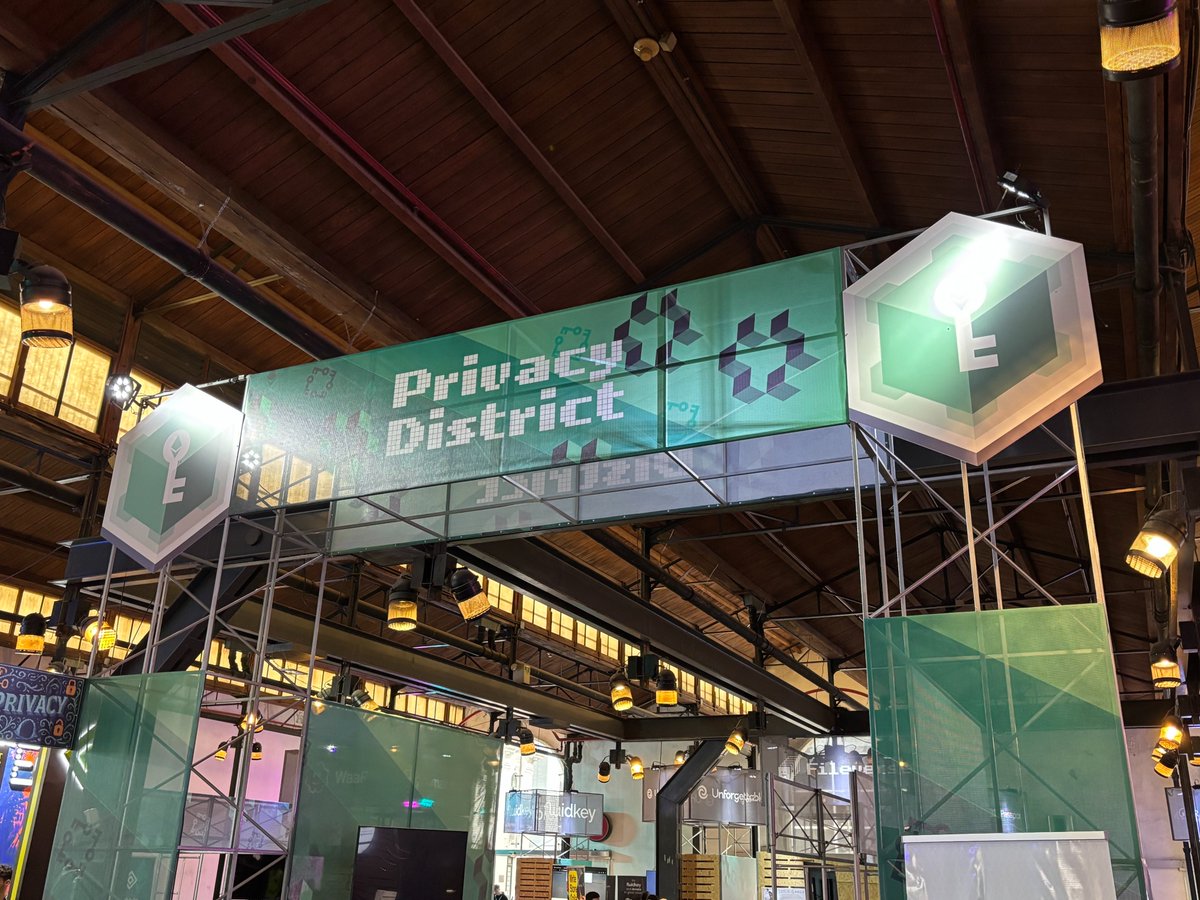
Devconnect Buenos Aires was ALL about privacy! From the Privacy District vibes to FHE deep dives
TokenOps.xyz tweet media
English
1
0
5
235