고정된 트윗
Wellora Health
4.8K posts

Wellora Health 리트윗함

Correct answer: ✅ B. Malrotation with midgut volvulus
Why?
🚨 Bilious vomiting in a newborn is a surgical emergency until proven otherwise. The first diagnosis to rule out is malrotation with midgut volvulus because it can rapidly compromise the blood supply to the intestine, leading to bowel ischemia, necrosis, perforation, sepsis, and death if not treated urgently.
Explanation of each option:
✅ B. Malrotation with midgut volvulus — Correct
Most time-critical diagnosis.
Presents with sudden bilious (green) vomiting, abdominal pain/distension, and sometimes shock.
Requires urgent upper GI contrast study (if stable) and emergency surgery (Ladd procedure).
A. Duodenal atresia
Also causes bilious vomiting, usually within the first 24 hours of life.
Classic X-ray: "Double bubble" sign.
Requires surgery, but it is generally less immediately life-threatening than midgut volvulus.
C. Hirschsprung disease
Typically presents with failure to pass meconium (>48 hours), abdominal distension, constipation, and sometimes bilious vomiting.
Diagnosis: Rectal biopsy showing absence of ganglion cells.
D. Meconium ileus
Often the first manifestation of cystic fibrosis.
Presents with abdominal distension, failure to pass meconium, and bilious vomiting.
X-ray may show dilated bowel loops with a soap-bubble appearance.
High-yield takeaway 💡
🟢 Any neonate with bilious vomiting should be assumed to have malrotation with midgut volvulus until it is excluded.
Answer: ✅ B. Malrotation with midgut volvulus
Haji Siyamuddin ANSARI@DrsansariOrd
🚼 A newborn presents with bilious vomiting. Which diagnosis should be ruled out first❓ A. Duodenal atresia B. Malrotation with midgut volvulus C. Hirschsprung disease D. Meconium ileus 💡 Remember: Bilious vomiting in a neonate is a surgical emergency until proven otherwise. What's your answer❓ 👇🩺
English

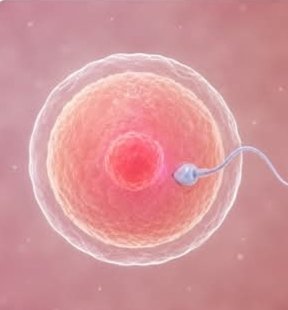
✅ Correct Answer: C. Zygote
Explanation:
A fertilized egg is called a zygote. It is the first single diploid (2n) cell formed when a sperm fuses with an ovum during fertilization.
Why the other options are incorrect:
A. Fetus ❌ – The developing baby from 9 weeks after fertilization until birth.
B. Embryo ❌ – The developing organism from implantation up to the end of the 8th week.
D. Placenta ❌ – A temporary organ that develops during pregnancy to provide nutrition, oxygen, and waste exchange between the mother and fetus.
High-yield timeline 🧠
🥚 Fertilization → Zygote (Day 0)
🔬 Weeks 1–8 → Embryo
👶 Week 9 to birth → Fetus
✅ Final Answer: C. Zygote
Haji Siyamuddin ANSARI@DrsansariOrd
Fertilized egg is called❓ A) Fetus B) Embryo C) Zygote D) Placenta
English
Wellora Health 리트윗함
Wellora Health 리트윗함
Wellora Health 리트윗함
Wellora Health 리트윗함
Wellora Health 리트윗함
Wellora Health 리트윗함
Wellora Health 리트윗함
Wellora Health 리트윗함

✅ Correct Answer: B) Urea
Explanation:
Ammonia (NH₃) is a highly toxic byproduct of protein and amino acid metabolism. The liver protects the body by converting ammonia into urea through the Urea cycle (also called the ornithine cycle).
Urea is much less toxic than ammonia and is transported in the blood to the kidneys, where it is excreted in urine.
Why the other options are incorrect:
❌ A) Glucose – Glucose is produced by processes such as gluconeogenesis, not from ammonia detoxification.
✅ B) Urea – Correct. The liver converts toxic ammonia into urea.
❌ C) Bile – Bile helps digest fats and excretes bilirubin and cholesterol; it is not the primary product of ammonia metabolism.
❌ D) Fat – Ammonia is not converted into fat.
High-Yield Pearl 🌟
Ammonia + CO₂ → Urea (in the liver) → Excreted by the kidneys
In Liver failure, this conversion is impaired, leading to elevated ammonia levels and Hepatic encephalopathy.
🩺 Final Answer: ✅ B) Urea
Haji Siyamuddin ANSARI@DrsansariOrd
Liver converts ammonia into❓ A) Glucose B) Urea C) Bile D) Fat
English

✅ Correct Answer: B) Urea
Explanation:
Ammonia (NH₃) is a highly toxic byproduct of protein and amino acid metabolism. The liver protects the body by converting ammonia into urea through the Urea cycle (also called the ornithine cycle).
Urea is much less toxic than ammonia and is transported in the blood to the kidneys, where it is excreted in urine.
Why the other options are incorrect:
❌ A) Glucose – Glucose is produced by processes such as gluconeogenesis, not from ammonia detoxification.
✅ B) Urea – Correct. The liver converts toxic ammonia into urea.
❌ C) Bile – Bile helps digest fats and excretes bilirubin and cholesterol; it is not the primary product of ammonia metabolism.
❌ D) Fat – Ammonia is not converted into fat.
High-Yield Pearl 🌟
Ammonia + CO₂ → Urea (in the liver) → Excreted by the kidneys
In Liver failure, this conversion is impaired, leading to elevated ammonia levels and Hepatic encephalopathy.
🩺 Final Answer: ✅ B) Urea
English
Wellora Health 리트윗함

✅ Correct Answer: C. Zygote
Explanation:
A fertilized egg is called a zygote. It is the first single diploid (2n) cell formed when a sperm fuses with an ovum during fertilization.
Why the other options are incorrect:
A. Fetus ❌ – The developing baby from 9 weeks after fertilization until birth.
B. Embryo ❌ – The developing organism from implantation up to the end of the 8th week.
D. Placenta ❌ – A temporary organ that develops during pregnancy to provide nutrition, oxygen, and waste exchange between the mother and fetus.
High-yield timeline 🧠
🥚 Fertilization → Zygote (Day 0)
🔬 Weeks 1–8 → Embryo
👶 Week 9 to birth → Fetus
✅ Final Answer: C. Zygote
English
Wellora Health 리트윗함
Wellora Health 리트윗함
Wellora Health 리트윗함
Wellora Health 리트윗함
Wellora Health 리트윗함