MNM

1.2K posts

MNM banner
MNM

MNM

@ZimbabweMake

I’m just a rural guy who’s hustled his way forward

Canterbury, England 가입일 Aralık 2024
312 팔로잉533 팔로워
MNM
MNM@ZimbabweMake·
@thatsKAIZEN Catholicism is a religion different from Christianity. The two are different things.
English
0
0
0
4
Kaizen D. Asiedu
Kaizen D. Asiedu@thatsKAIZEN·
I was raised Catholic, became an atheist, rediscovered God, and am forming a relationship with Jesus Christ. Here are some thoughts on whether one should believe in the resurrection of Jesus Christ. Happy Easter.
English
305
362
4.6K
78.6K
Rutendo Matinyarare
Rutendo Matinyarare@matinyarare·
𝗖𝗔𝗡 𝗪𝗘 𝗚𝗜𝗩𝗘 𝗧𝗛𝗜𝗦 𝗜𝗡𝗖𝗢𝗠𝗣𝗘𝗧𝗘𝗡𝗖𝗘 𝗔𝗡𝗢𝗧𝗛𝗘𝗥 𝗧𝗪𝗢 𝗬𝗘𝗔𝗥𝗦? President Mnangagwa’s government went and acquired new fire trucks in Belarus in the last 6 years, but they already don’t have hoses to put out fires. So, can we reward the President, Councillors and MPs with another two years in office for this level of incompetence? We say no to CAB3.
English
122
288
742
41.2K
MNM
MNM@ZimbabweMake·
@llakamuch @matinyarare Don’t compare Paul with nonsense. Paul was not promised $4 million to suddenly change from Judaism to Christianity. We are talking about people like Balaam here—prophets for hire for the highest bidder. Zero-moral people who serve their stomachs.
English
0
0
0
11
Play Stupid Games Win Stupid Prizes
@ZimbabweMake @matinyarare Why did Paul who was chief persecutor of Jesus followers become the chief apostle of Christianity ? Did you know changing your opinion and views is a higher sign of intelligence than holding on to the same views ?
English
1
0
0
15
MNM
MNM@ZimbabweMake·
@Jamwanda2 Zimbabwe has all these but lacks one ingredient: patriotism from both the leaders and the people. It’s a pity!
English
0
0
0
15
MNM
MNM@ZimbabweMake·
@llakamuch @matinyarare You miss the whole point here. The question is why, suddenly, after he has been praising Zanu and telling the good story about it, he has’nt seen all these things? Was he blind to them? Wasn’t he saying all the inefficiencies in the government were due to sanctions?
English
1
0
0
24
MNM
MNM@ZimbabweMake·
@Insane_Econ You need a 3D mind to get the concept here lol
English
0
0
0
563
MNM
MNM@ZimbabweMake·
@shanaka86 How did an aircraft sent to the battlefield suddenly malfunction? Were these machines not tested for fitness before being deployed? I used to read your tweets, but sadly you’re turning out to be another MAGA propagandist.
English
5
0
7
1.3K
Shanaka Anslem Perera ⚡
JUST IN: Iranian state television is broadcasting footage of American military wreckage on Iranian soil. Two Black Hawk helicopters and one C-130 transport, burned in the mountains of southern Isfahan. Iran says it shot them down. The United States says it blew them up itself. The full story is that American special forces were stranded inside Iran after their aircraft failed, destroyed their own machines to protect their secrets, and waited for a second wave to take them home. The sequence, reconstructed from Fox News and the New York Times citing senior US officials, is this. After the F-15E was shot down on April 3, JSOC operators and Pararescuemen inserted into the Dehdasht mountains via Night Stalker helicopters to extract the evading weapons systems officer. Two C-130 transports landed at a remote forward arming and refuelling point inside Iran to support the operation. Both aircraft became immobilised. Whether the cause was terrain, enemy fire, mechanical failure under combat load, or some combination is not publicly confirmed. What is confirmed is that the aircraft could not leave. The operators faced the decision that defines the difference between this war and every press conference about it. Leave the aircraft intact and let the IRGC capture American avionics, encrypted communications, night-vision technology, and classified software. Or destroy the aircraft, strand themselves deeper inside enemy territory, and trust that a second rescue would come for the rescuers. They chose the second option. Three additional transports arrived under fire. The stranded operators, the Pararescuemen, and the WSO boarded. They flew out of Iran. Zero casualties. The operation that began as a rescue of one man became a rescue of the rescuers, and all of them made it out because nobody in the chain decided the mission was too broken to complete. The footage Iran is showing tonight is real. American military hardware, destroyed on Iranian territory. But it was not destroyed by Iran. It was destroyed by Americans who flew it there, because the secrets inside the machines were worth more than the machines, and because the operators trusted their country would send more aircraft into hostile territory to bring them home after they blew up their ride. The last time American aircraft were destroyed on Iranian soil was Desert One, 1980. A helicopter collided with a C-130. Eight Americans died. The mission aborted. The wreckage was paraded on Iranian television for weeks. Forty-six years later, American aircraft were destroyed on Iranian soil again. This time the destruction was deliberate. Nobody died. The man they came for came with them. And the footage Iran broadcasts as a victory is evidence of operators who chose to sacrifice hardware rather than secrets, and a chain of command that sent three more planes into the same airspace to finish what the first wave started. The wreckage is real. What it represents depends on who is looking. Iran sees downed American aircraft. America sees a rescue that succeeded despite losing its ride home. The truth is in the burning metal: a war that was supposed to be easy just required the most complex combat extraction in decades, and the men who pulled it off had to destroy their own helicopters to do it. open.substack.com/pub/shanakaans…
Shanaka Anslem Perera ⚡@shanaka86

He climbed a ridge. That is where the story turns. When the F-15E was hit on Friday morning, both crew members ejected over the mountains of Kohgiluyeh and Boyer-Ahmad Province in southwestern Iran. The pilot was located first and extracted by HH-60 rescue helicopters within hours, under small arms fire that wounded crew aboard the recovery aircraft. The weapons systems officer landed deeper in hostile terrain. He was alone on the ground in a country where state television was broadcasting a bounty for his capture and Basij militia were flooding the mountain roads below. According to reports now confirmed by Fox News citing two senior US officials, the WSO used his SERE training, the survival, evasion, resistance, and escape doctrine drilled into every American combat aircrew. He moved on foot through rugged terrain. He climbed to an elevated ridge near the city of Dehdasht. He activated his encrypted emergency beacon. And he waited. The beacon was the thread. Everything that followed pulled on it. US Joint Special Operations Command launched a night extraction package. Reports indicate Delta Force operators and Pararescuemen from the 24th Special Tactics Squadron inserted via helicopters from the 160th Special Operations Aviation Regiment, the Night Stalkers, the unit that flew the Bin Laden raid. A-10 Warthogs from the 355th Wing provided close air support, running gun passes on IRGC and Basij convoys advancing toward the WSO’s position. HC-130J tankers kept the package airborne. Multiple aircraft were dispatched to establish a temporary fire zone around Dehdasht, a no-entry perimeter enforced with precision strikes on a telecommunications tower and approaching vehicles. Iranian local officials reported at least four killed and several wounded from the strikes. Then the operation went sideways. According to reports corroborated by Fox News’s confirmation that US forces destroyed “aircraft which have sensitive equipment,” two C-130 transports landed at a remote forward arming and refuelling point inside Iran to support the extraction. Both became stuck. Rather than allow the aircraft and their classified systems to fall into IRGC hands, American forces destroyed both planes on the ground. The deliberate destruction of two US military aircraft inside Iran to deny equipment to the enemy is the detail that separates a clean extraction from an operation that nearly failed before it succeeded. Additional transports arrived under A-10 cover. The Delta operators and Pararescuemen who were now themselves stranded at the destroyed landing zone loaded the WSO and extracted under ongoing fire. Fox News reported that the WSO “and the members of the rescue team are all safely out of Iran.” Zero American casualties. Desert One in 1980 ended when a helicopter collided with a C-130 on a remote Iranian airstrip, killing eight Americans before the mission reached Tehran. Forty-six years later, C-130s were destroyed on Iranian soil again. This time the destruction was deliberate. This time the team got out. This time the man they came for came with them. The operation confirms two truths that cannot be separated. American special operations forces can penetrate, fight inside, and extract from Iran. And the war that was supposed to be over required the most elite soldiers in the US military to fight a ground battle in Iranian mountains to recover one man from a country with no air defences. Both statements are true. The rescue proves American capability. The need for the rescue proves Iranian capability. And the 48-hour countdown is still running. open.substack.com/pub/shanakaans…

English
241
754
2.8K
1.5M
MNM
MNM@ZimbabweMake·
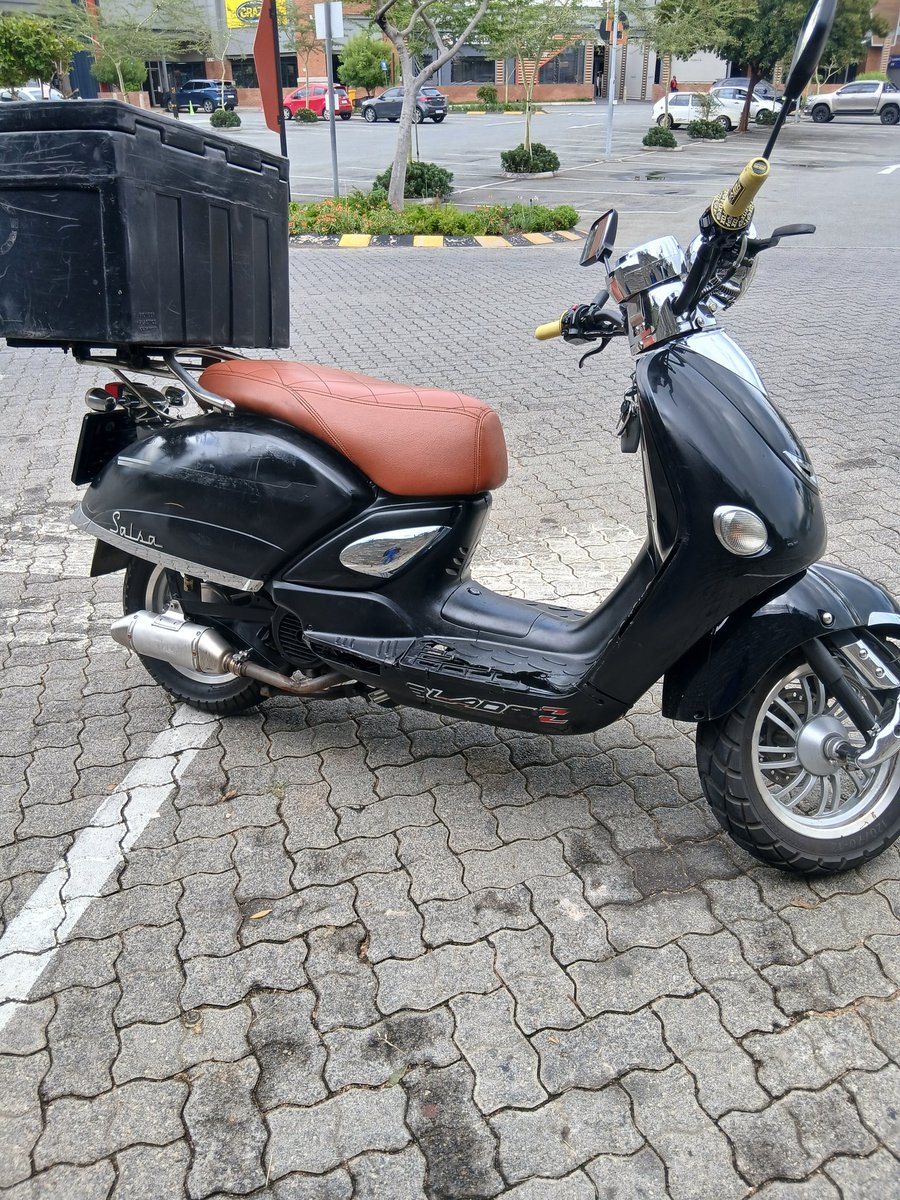
@MKAYMAMPONE Okay, but you’ve exposed yourself to a greater risk. Bikes killed more people than airplanes and cars combined.
English
0
0
0
7
Nokuthula Mkay
Nokuthula Mkay@MKAYMAMPONE·
Got retrenched last year. Joined Takealot to do deliveries with my car. But it was a lot on petrol. So I decided to switch to an automatic bike. I went from spending R400 to R150 per day on petrol. Plus I make more orders than I did with a car. #Takealot #Hustling #petrolrelief
Nokuthula Mkay tweet mediaNokuthula Mkay tweet media
English
338
1.5K
13.9K
457.4K
MNM
MNM@ZimbabweMake·
2/. Now with AI: Coding is like commercial farming. You still need skill, but now you have leverage. Tractors, scale, speed. You produce more, faster. The edge shifts from effort to judgment: knowing what to ask, what to trust, and how to refine.
MNM tweet media
English
0
0
0
19
MNM
MNM@ZimbabweMake·
A simple story about coding before and after AI: 1/. Coding before AI feels like subsistence farming. You rely on your own tools, your own strength, and your own knowledge. Progress is steady but slow. Every line is deliberate. Every bug is personal.
MNM tweet media
English
1
0
0
26
MNM
MNM@ZimbabweMake·
@KhoaVuUmn Macroeconomics = f(every economic subfields) + \epsilon_{t} lol
Română
0
0
0
55
MNM
MNM@ZimbabweMake·
2/ The frontier moves fast. Topics change, tools evolve, buzzwords come and go. But the real question is: are we not chasing hype and leaving the most crucial research problems? I think in the long run, depth beats hype and economics is about structure, not fashion.
English
0
0
0
10
MNM
MNM@ZimbabweMake·
1/ When I started my PhD in Econ, Central Bank Digital Currency (CBDC) was a hot area for research. At a summer school at GSE in Barcelona, almost everyone I encountered was working on it. Now, as I head to the job market, AI is the new frontier.
MNM tweet media
English
1
0
0
29
MNM
MNM@ZimbabweMake·
@JesusFerna7026 @OxfordFrom Wise words, Jesus! Maybe we need a paper on "Skill Complementarity in the AI Era and Structural Transformation." I provided the title, lol.
English
0
0
1
53
Jesús Fernández-Villaverde
Jesús Fernández-Villaverde@JesusFerna7026·
My car has a full self-drive mode that works really well. When I drive to Penn from home, the car drives itself about 95% of the time. The self-drive mode isn’t perfect. The car sometimes refuses to take a side street, a few yards after leaving home, that could shorten the commute by a few minutes. Just before I arrive, I override the system, turn left onto my desired street, and then engage self-driving mode again. Once I reach Penn, the car can't handle the parking lot, so I park it myself. Overall, though, the self-drive mode makes the commute much more pleasant and less tiring. For instance, I can concentrate much more on the audiobook I am listening to. I love it. This little anecdote highlights an important point about AI that is often overlooked. You should view AI as a complement to your skills, not as a replacement. The goal isn’t to ask Claude for a literature review and accept whatever it provides. Instead, you ask for a review, then verify the papers yourself, identify what’s missing, push back, and keep working until you’re confident you understand the relevant work. Similarly, you might get a first version of Python code from an LLM, but then you test, modify, and refine it yourself. Most horror stories about LLMs come from people who blindly trusted the model, not from those who used it as a highly capable assistant. In economic terms, AI is complementary capital to your human capital, not a substitute. Your goal should be to reorganize your workflow to maximize the elasticity of complementarity between AI and your skills, and to accumulate further skills that are complementary to AI. My life has been revolutionized over the last three years. I drive to school with AI, I research for papers with AI, I learn new material with AI, I prepare my lectures with AI, I handle email with AI, I shop for groceries with AI, I pick movies to watch with AI, I search for new books to read with AI, I plan my travels with AI, and yes, I write on X with AI. Without AI, I would not be active on X because I refuse to spend three hours in the morning agonizing over how to make each sentence flow correctly or to generate a nice figure illustrating my point. I started writing this post at 9.15 am, and I am about to post it at 9.38 am: this was only possible due to AI. Being against AI is like being against electricity because a moron electrocuted himself using a hairdryer in the shower.
Jesús Fernández-Villaverde tweet media
English
22
93
518
39K