

Elder Stateman
84.4K posts


Elder Stateman 리트윗함

The foundation of the entire journey rests on Isaac Newton's idea.
Objects do not need engines to keep moving. Once something is in motion, it stays in motion unless a force changes it.
In space, that force is mostly gravity.
A spacecraft does not fly the way an airplane does. It falls, it is always being pulled, mostly by Earth at first, then increasingly by the Moon, what keeps it from crashing is its speed.
Moving fast enough sideways means it keeps missing the surface it is falling toward.
That balance is what we call orbit.
Gravity follows a rule that is simple in form but powerful in effect, every object pulls on every other object. The strength of that pull depends on size and distance.
Earth pulls strongly because it is massive and close. The Moon pulls less, but as the spacecraft travels farther from Earth, that pull becomes more relevant. The Sun, far away but enormous, adds its own subtle influence. None of these forces are random. They can be measured and predicted.
What makes the journey elegant is that it does not try to fight these forces, but uses them.
Engineers design a path where gravity does most of the work. The spacecraft is sent toward the Moon at a precise speed and angle so that the Moon’s gravity bends its path. Done correctly, this creates what is known as a free-return trajectory. The spacecraft loops around the Moon and naturally falls back toward Earth.
So even without major corrections, the physics itself guides it home. It's why a mission like Apollo 13, despite severe onboard failure, still had a path back. The route had been shaped by gravity from the start.
Still, nothing in this system stands still and tracking everything at once would be overwhelming, so scientists change perspective depending on the moment. Sometimes they treat Earth as the center of the problem. At other times, they shift to the Moon’s point of view.
This way of thinking, refined by Albert Einstein, allows complex motion to be broken into simpler pieces and instead of solving everything at once, they solve what matters in each frame.
Now for returning to Earth, the spacecraft must enter the atmosphere at a narrow angle. Too steep, and the heat becomes destructive. Too shallow, and the spacecraft skips off the atmosphere and drifts away. Between those extremes lies a thin corridor where the atmosphere slows the spacecraft safely. This is calculated in advance, based on speed, angle, and how air behaves at extreme velocities.
There is also a moment when all connection is lost. As the spacecraft passes behind the Moon, communication with Earth disappears completely, no signals get through and for a brief period, there is only silence. Yet the crew knows exactly where they are supposed to be. Every second of that path has been predicted before launch.
If nothing has gone wrong, they will reappear on the other side, right on schedule.
The universe, for all its motion, follows rules that can be trusted.
OLA 🇨🇦@danielholkss
I don’t really understand the maths it takes to send humans behind the Moon and bring them back safely. And the more I sit with that, the more it genuinely messes with my head even tho my love for physics and my knowledge of physics is astounding to a point Somebody had to work out a path where the Moon’s gravity is pulling you in, the Earth is pulling you back, and you’re moving just fast enough and not slow enough not to get trapped by either. They had to figure out the exact angle to come back into Earth’s atmosphere too. Too steep, you burn up. Too shallow, you bounce off and drift into space. And they had to get all of that right at the same time, for real people sitting in a small metal capsule about 400k kilometres away from home. Nothing in that system is standing still. The Moon is moving. The Earth is moving. Even the Sun is pulling on everything. And still, some people looked at all of that motion, all of that chaos, and turned it into numbers you can follow. Go here. Adjust here. Come back here. And unlike nepa light, it infact works. There’s also that moment in the journey where the crew passes behind the Moon. No contact with Earth. No signal. Just silence, with a massive rock blocking everything they’ve ever known. The only reason they can stay calm in that moment is because someone, somewhere, did the maths and proved they’ll come out the other side. I don’t know what it feels like to trust something that much. To put your life in an equation when you’re that far away from everything. But I do know this for sure, whatever that level of thinking is, whatever it takes to reach it, it might be one of the most extraordinary things human beings have ever done...
English
@luwatofunmi I was surprised the day I knew not all ladies get simulations from their nipple
English

Am I the only one that doesn’t get stimulated from the nipple?
good rabbit🐰@ari_tetsss
nipple orgasms>>>>
English
Elder Stateman 리트윗함

Elder Stateman 리트윗함
agajn you guys don’t hate your leaders enough
Sxnti@PeakSxnti
I really need to be outside this summer.
English



Elder Stateman 리트윗함

@dammiedammie35 E get where they don ever do this thing in real life before apart from their annual training?
English

The Nigerian Police SIS conducts a rappelling simulation using the Fast Rope Insertion Extraction System (FRIES) to deploy teams into tight zones earlier today in Abuja.
English

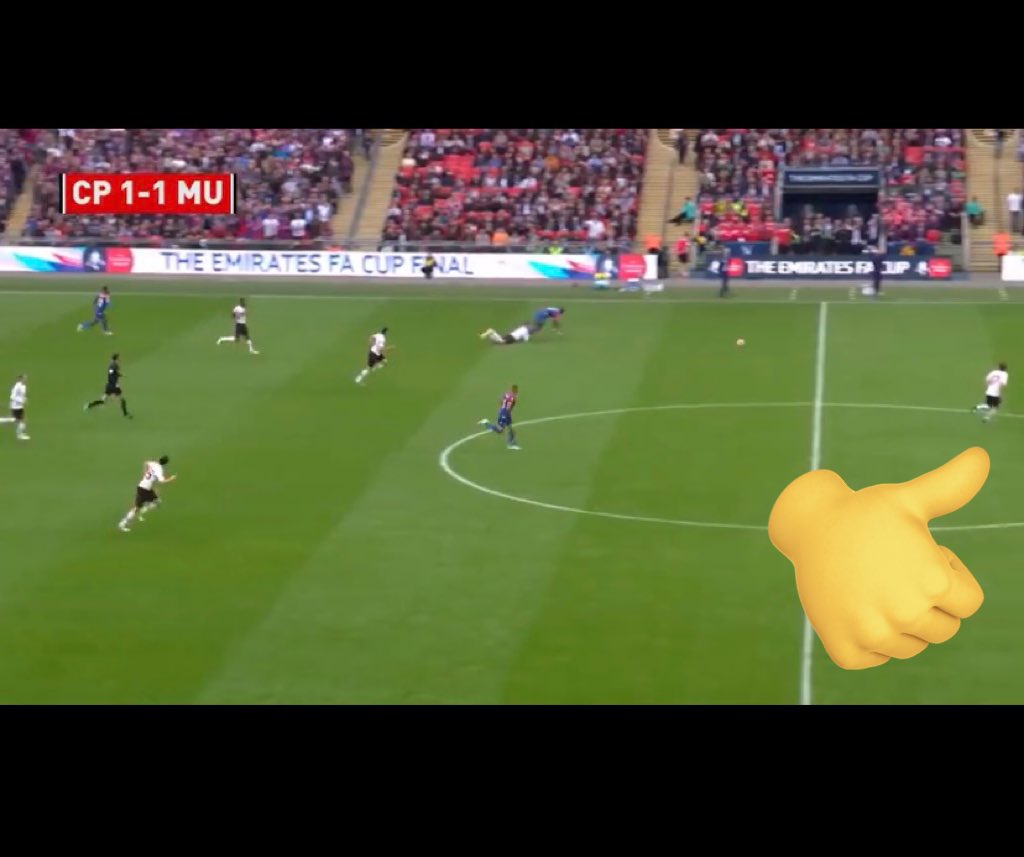


FA cup final 2016 when Alan Pardew danced after Puncheon's opener only for United to pull a comeback and win the trophy 😂
King™️@UTDxKing
What's your favourite "never celebrate early against man utd" moment?
English
@Waleturnerk9 @notyourhom60332 @Elefante0422 @zbetty_spring @Mikedotcoza Shey I talk am
Some people too gullible
English


English

Perhaps Nigeria is a very terrible country in ways we fail to understand. You cannot celebrate to leave your home country in this manner.
Demii🪐@deminolovathome
My Visa has been Approved ❤️❤️❤️❤️❤️❤️❤️❤️❤️😭❤️❤️❤️❤️❤️❤️❤️❤️😊❤️❤️❤️❤️❤️❤️❤️❤️
English

@_dami5 When it's about NASA it unwillingly becomes garbage.
English
Looking at these two photos side by side reveals a striking inconsistency with what we are told about the Moon's size and the geometry of space.
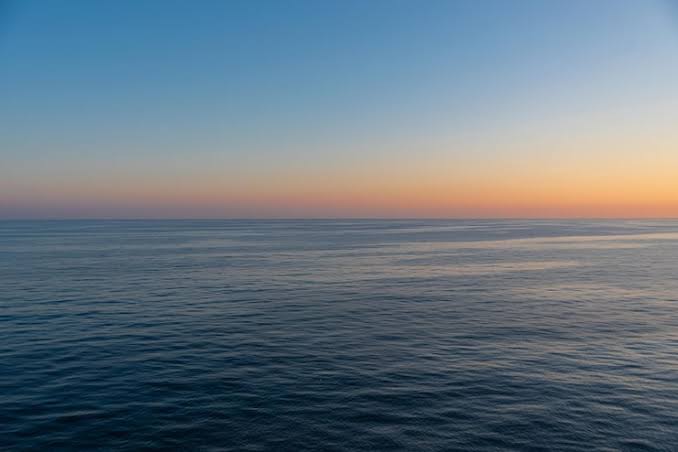
Photo 1 (Earth horizon over the ocean):
The horizon stretches wide across the frame. Even from sea level or low altitude, Earth's horizon shows a gentle, broad curve that continues far left and right. The sky gradients smoothly from blue to orange at sunset, and the water meets the sky along a long, extended line. This matches what we expect from a large planet with a circumference of roughly 40,000 km – the horizon distance and curvature behave according to basic geometry for a sphere of Earth's scale.
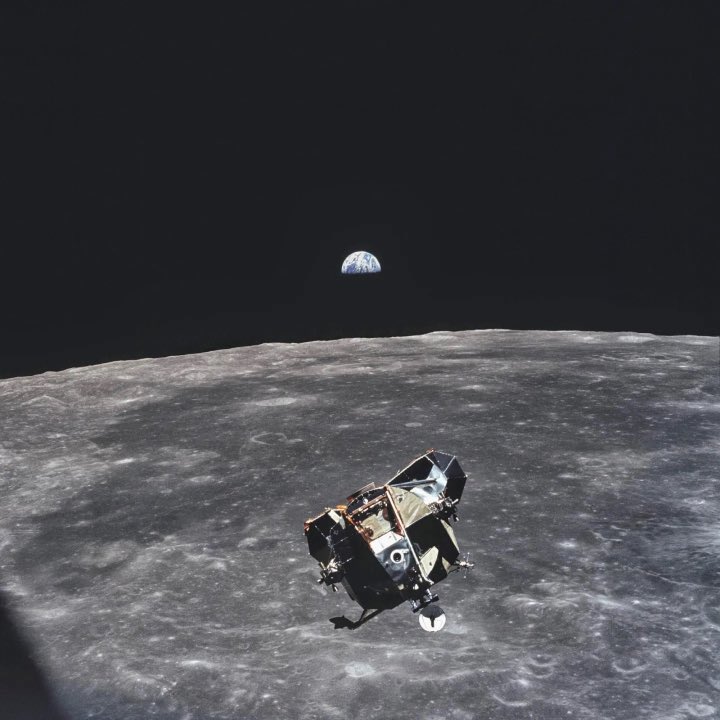
Photo 2 (Alleged Apollo image from the Moon, attributed to Michael Collins):
This image supposedly shows the lunar module on the Moon's surface with Earth rising in the black sky. The Moon's horizon appears dramatically different. It ends abruptly with a sharp, sudden interception rather than a wide, gradual curve. The shooting angle is slightly elevated (not perfectly parallel to the surface), yet the horizon line still cuts off much more sharply than the Earth's horizon in the first photo.
The Moon is officially claimed to have a diameter of about 3,474 km – roughly 27% of Earth's diameter (12,742 km). From the surface of the Moon, the horizon should actually feel farther away and appear less curved than on Earth because the Moon is smaller, meaning its curvature drops away more slowly relative to a person's height on the surface. On a smaller sphere, for the same eye height, the horizon distance is shorter, but the apparent curvature (how quickly it bends) is gentler compared to a larger body when viewed from the surface.
Yet in the Apollo photo, the lunar horizon looks tighter and more abruptly cut off, as if the Moon is even smaller than claimed or, more critically, as if the entire scene was filmed on a confined soundstage set where the artificial horizon simply ends at the edge of the constructed surface.
The horizon behavior in the Moon photo should not look so dramatically "clipped" compared to Earth's, especially given the camera's slight upward angle. The sudden termination of the lunar horizon suggests an artificial boundary rather than natural planetary curvature.
This raises serious questions about the authenticity of the Apollo lunar surface photography and this is only the slight one. The stark difference in how the horizons are rendered one vast and natural, the other abruptly truncated is difficult to explain without considering the possibility of a controlled studio environment (soundstage) being used for at least some of the imagery.
English
English
@_dami5 @notyourhom60332 @Elefante0422 @zbetty_spring @Mikedotcoza Yes, because they have programmed them for crumbs.
English
Elder Stateman 리트윗함

"If a car is stòlèñ anywhere around you, report it immediately on the official Nigeria Police vehicle tracking portal: cmris.npf.gov.ng.
Once reported, the vehicle is flagged nationwide, making it easier for law enforcement to identify and recover it quickly.
Be your neighbour’s keeper, don’t keep vital information to yourself.
Speak up, take action, and help keep your community safe."
Kindly repost
© Obasi Nzubechi
English
@notyourhom60332 @Elefante0422 @zbetty_spring @Mikedotcoza Even tho I’d like to agree with this
But there are lots of idiots that still supports the nonsense administration
English

English
NASA has released a full galaxy of images of the moon captured by Artemis II
This is more than extraordinary 🌚
English
Elder Stateman 리트윗함

There's a physicist at Stanford named Safi Bahcall who modeled this exact principle and the math is wild.
He calls it "phase transitions in human networks." When you're stationary, your probability of a lucky event is limited to your existing surface area: the people you already know, the places you already go, the ideas you've already been exposed to. Your opportunity window is fixed.
When you move, your collision rate with new nodes in a network increases nonlinearly. Double your movement (new conversations, new cities, new projects) and your probability of a serendipitous encounter doesn't double. It roughly quadruples. Because each new node connects you to their entire network, not just to them.
Richard Wiseman ran a 10-year study at the University of Hertfordshire tracking self-described "lucky" and "unlucky" people. The single biggest differentiator wasn't IQ, education, or family money. Lucky people scored significantly higher on one trait: openness to experience. They talked to strangers more, varied their routines more, and said yes to invitations at nearly twice the rate.
The "unlucky" group followed the same routes, ate at the same restaurants, and talked to the same 5 people. Their networks were closed loops. No new inputs, no new collisions.
Luck isn't random. Luck is surface area. And surface area is a function of movement.
The lobster emoji is doing more work than most people realize. Lobsters grow by shedding their shell when it gets too tight. The growth requires a period of total vulnerability. No protection, no armor, soft body exposed to the ocean.
That's the cost of movement nobody posts about. You have to be uncomfortable first. The new shell only hardens after you've already moved.
dو@D9vidson
a moving man will meet his luck 🥀
English