Brain Cancer Canada

658 posts

Brain Cancer Canada banner
Brain Cancer Canada

Brain Cancer Canada

@braincancercan

Accelerate | Advocate | Transform Dedicated to funding research and neurosurgical technologies for pediatric and adult primary brain cancers.

Canada 가입일 Kasım 2020
715 팔로잉591 팔로워
Brain Cancer Canada
Brain Cancer Canada@braincancercan·
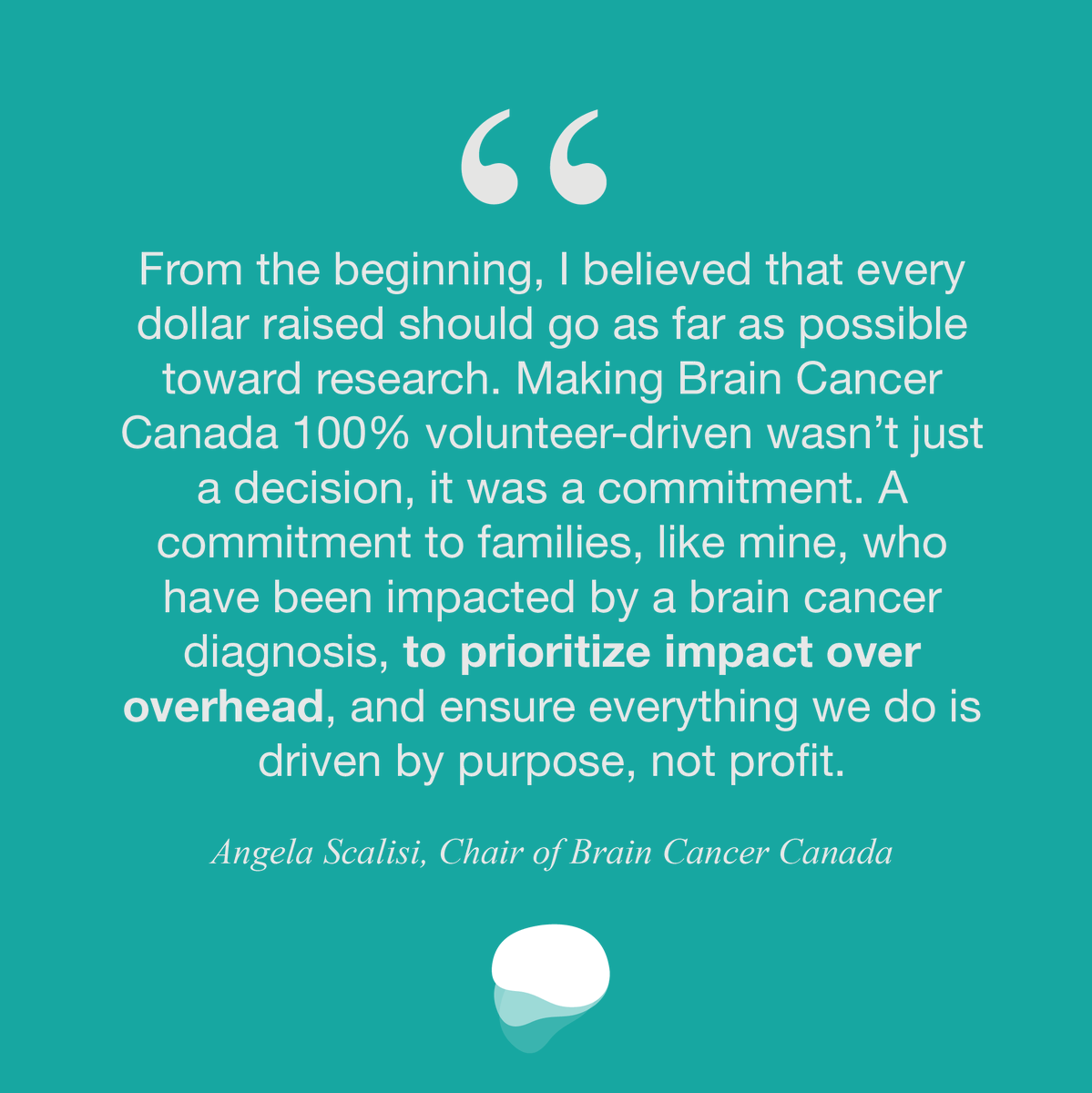
At Brain Cancer Canada, volunteers aren’t just part of what we do, they are EVERYTHING we do. With more than 50 dedicated Board Directors and Ambassadors across the country, not a single individual receives a wage or salary. As the only 100% volunteer-driven national charity dedicated to funding brain cancer research🧠🔬, every initiative, every event, and every dollar raised is powered by people who give their time, energy, and expertise because they’ve been personally impacted, or because they recognize the urgent need for greater research investment and improved treatment options. “From the beginning, I believed that every dollar raised should go as far as possible toward research. Making Brain Cancer Canada 100% volunteer-driven wasn’t just a decision, it was a commitment. A commitment to families, like mine, who have been impacted by a brain cancer diagnosis, to prioritize impact over overhead, and ensure everything we do is driven by purpose, not profit.” -Angela Scalisi Brain cancer remains one of the most underfunded and challenging areas in oncology. Progress depends on action. Volunteers are driving it forward every single day. This National Volunteer Week, we honour the people behind Brain Cancer Canada’s mission: those organizing, advocating, fundraising, and pushing for change. These are the individuals who believe in, and are working toward, a future without brain cancer🧠. #NationalVolunteerWeek #VolunteerDriven #BrainCancerCanada #BrainCancerAwareness #EndBrainCancer
Brain Cancer Canada tweet mediaBrain Cancer Canada tweet media
English
0
0
2
47
Brain Cancer Canada
Brain Cancer Canada@braincancercan·
Today, on National Doctor’s Day🥼🗓, we honour the physicians whose expertise, compassion, and dedication shape the very foundation of patient care, with a special focus on those advancing brain cancer. To our neurologists, neurosurgeons, oncologists, radiologists, pathologists, researchers, and scientists: your work is among the most complex and emotionally demanding in medicine. Every day, you face difficult diagnoses, evolving challenges, and, too often, heartbreaking loss. Yet, you continue by pushing the boundaries of research, working to develop life-saving treatments, and standing beside patients and families through some of the most uncertain moments of their lives. Your commitment goes far beyond the clinic or operating room and is reflected in the long hours, personal sacrifices, and resilience to keep moving forward even when outcomes are not what you hoped for. Today, we recognize not only what you do, but what you carry. For this, we thank you. Your dedication, strength, and humanity do not go unnoticed. Today, and every day, Brain Cancer Canada is proud to support doctors in the fight against brain cancer by funding innovative and breakthrough research. We are committed to equipping them with the tools needed to reduce challenges and, above all else, to move them closer to a future where every patient can receive a more hopeful and optimistic prognosis. 💬Is there a doctor who made a difference in your life or the life of someone you love? Tell us in the comments and help us celebrate their impact. #NationalDoctorsDay #Gratitude #BrainCancerAwareness #BrainCancerHeroes
Brain Cancer Canada tweet mediaBrain Cancer Canada tweet media
English
0
1
0
60
Brain Cancer Canada 리트윗함
Dr. James Perry 🧠
Dr. James Perry 🧠@gliomadoc·
Gord gave Canada so much. His legacy will be measured over years and decades. Rapid Availability of this new drug (vorasidenib) for Canadians with brain cancer was aided directly by his courageous quest for advocacy on many issues. thewhig.com/news/this-drug…
English
0
1
9
262
Brain Cancer Canada
Brain Cancer Canada@braincancercan·
Tickets are selling fast. Don't miss your opportunity to attend Canada’s most impactful night for brain cancer research. DATE Friday, May 22, 2026 VENUE Paramount EventSpace, Vaughan, ON MASTER OF CEREMONIES Catherine Wreford KEYNOTE SPEAKER Dr. Cynthia Hawkins FEATURES Live Band: Soular Incredible Live & Silent Auction Items Antipasto Bar Curated 3-Course Meal Premium Open Bar Grappa Tasting Mission-inspired Swag ITINERARY 6:30 Antipasto Bar 7:30 Dinner & Keynote Speakers 8:30 Live Auction 9:00 Live Music & Dancing TICKET PRICE $250.00 Tickets: braincancercanada.akaraisin.com/ui/Gala2026/ti… 10 SPONSORSHIPS REMAINING 6 sponsorship opportunities secured, 10 spots remaining! Don’t miss your chance to support life-changing brain cancer research and gain visibility among healthcare, business, and community leaders. Explore the remaining sponsorship opportunities and see how your contribution can make an impact: braincancercanada.akaraisin.com/ui/Gala2026/sp… #GalaForBrainCancerResearch #Charity #Fundraiser #BrainTumour #BrainCancer
Brain Cancer Canada tweet media
English
0
0
0
74
Brain Cancer Canada
Brain Cancer Canada@braincancercan·
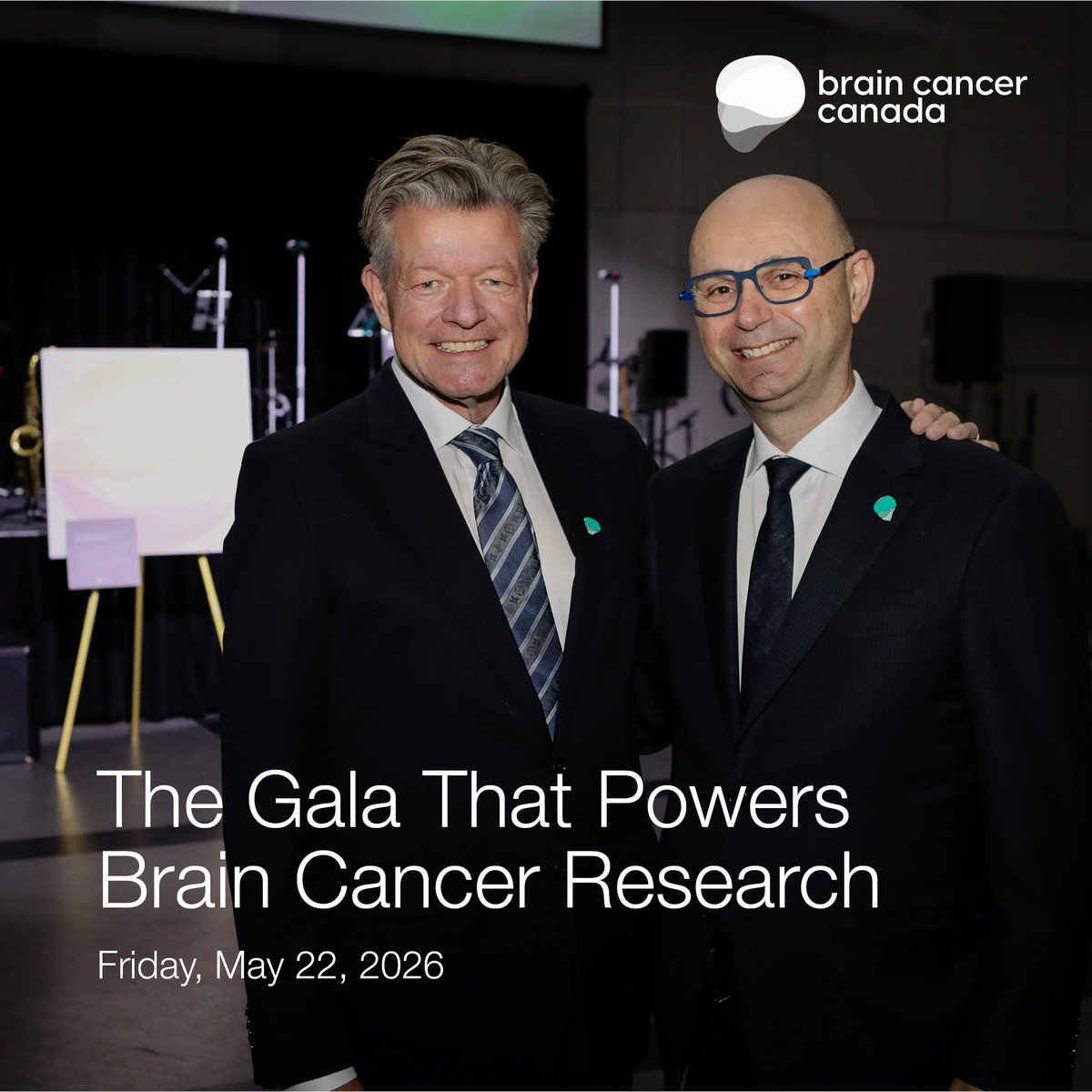
The Gala For Brain Cancer Research is off to a strong start. With only two months to go, we’re already 25% sold.🎟🧠🔬 Thank you to our guests and sponsors for their early support. This enthusiasm speaks volumes about a community coming together to advance brain cancer research. Secure your place and be part of an unforgettable evening of hope & possibility. Join us on Friday, May 22, at Paramount Event Space in Vaughan, for Canada’s most impactful brain cancer gala of the year. 🔗Click the link below for tickets and sponsorship opportunities: braincancercanada.akaraisin.com/ui/Gala2026/ev… 📷Photo L to R: Dr. James Perry, neuro-oncologist at Sunnybrook, and Dr. Michael Cusimano, neurosurgeon at St. Michael's Hospital. In 2017, they received Brain Cancer Canada’s first two research grants. They remain leaders in the brain cancer community and continue to dedicate their lives to improving outcomes for brain cancer patients. Photo Credit Valeria Mitsubata Photography #GalaForBrainCancerResearch #CharityFundraiser #CharityEvent
Brain Cancer Canada tweet media
English
0
0
5
123
Brain Cancer Canada
Brain Cancer Canada@braincancercan·
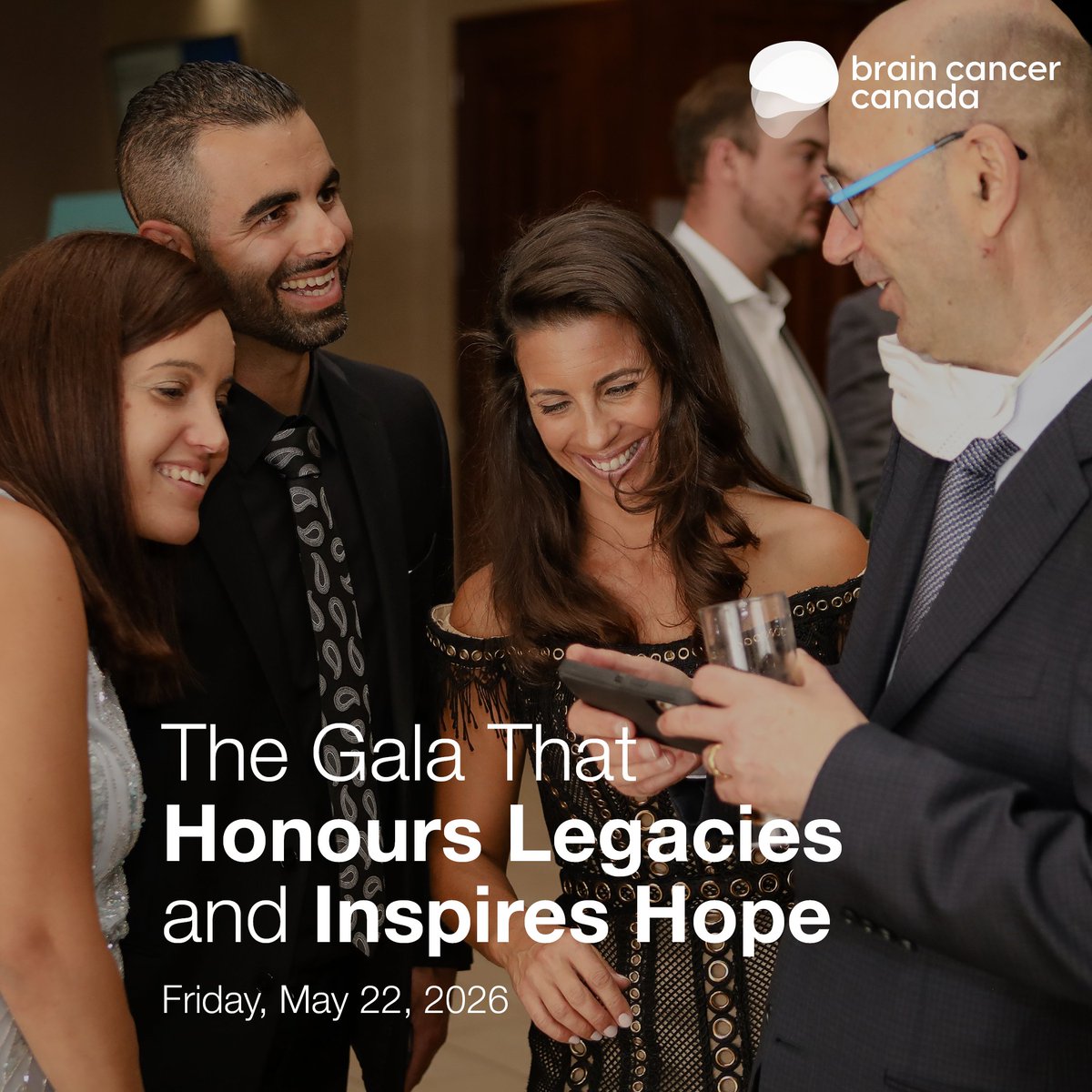
The annual Gala For Brain Cancer Research honours the legacies of those we have lost to brain cancer by funding research that wasn’t available during their journey, so it can be available for the next family impacted. It all began with Bernardo Scalisi, the impetus and inspiration behind Brain Cancer Canada, after learning he had a cancerous brain tumour just after his 26th birthday. As one of the first Brain Cancer Canada Ambassadors, he believed deeply that the brain cancer community deserved better. For as long as he could, he gave back by giving hope, inspiring everyone around him with his courage, determination, and fearless approach to his illness. Though Bernardo is no longer with us, his legacy lives on in every breakthrough, every research grant, and every moment of hope we create. Angela Scalisi, co-founder and Chair of Brain Cancer Canada and Bernardo’s sister, shared: "The Gala For Brain Cancer Research is for every person who has walked my brother’s path and for their families. We carry their memory with us as we continue the work my brother inspired." Since 2015, the annual Gala has brought together scientists, researchers, donors, and families, all united by one mission: to advance brain cancer research and bring hope to patients and families affected by this devastating disease by funding new treatments and improving access to them. Join us this May for the Gala for Brain Cancer Research, as we honour legacies, inspire hope for those living with the disease and support the next generation of brain cancer breakthroughs. Click the link below for tickets and sponsorship opportunities. braincancercanada.akaraisin.com/ui/Gala2026 Photo L to R: Bernardo Scalisi, Yendi Lobato, Angela Scalisi and Dr. Michael Cusimano at the 2019 annual Gala for Brain Cancer Research. Credit: Valeria Mitsubata Photography #GalaForBrainCancerResearch #ResearchForHope #Legacies #Hope
Brain Cancer Canada tweet media
English
0
0
1
65
Brain Cancer Canada
Brain Cancer Canada@braincancercan·
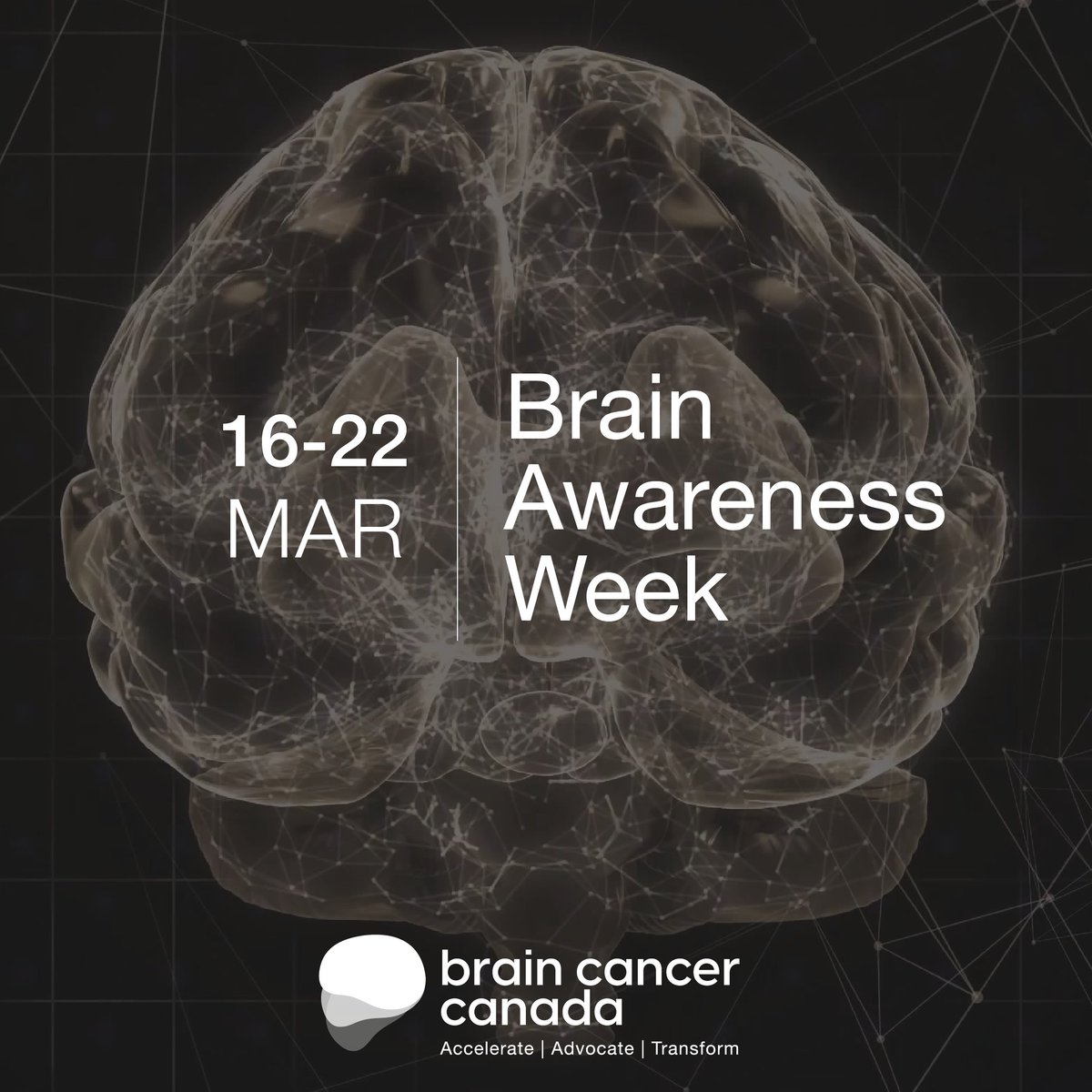
The brain🧠. Arguably the most intricate and complex organ in the human body. It controls how we think, feel, move, and experience the world around us. Every memory, every emotion, every action begins in the brain. Yet brain diseases, including brain cancer, remain among the most challenging conditions to understand and treat. A challenge compounded by insufficient research funding. During Brain Awareness Week, we recognize the importance of advancing brain research that helps scientists better understand this remarkable organ. At Brain Cancer Canada, we are proud to support brilliant researchers across the country who are working to unlock the brain’s mysteries and develop better treatments for brain cancer, because, when we invest in #research, we invest in hope, possibility, and the future of every patient and family affected. #BrainAwarenessWeek #BrainResearch #BrainTumour #BrainCancer
Brain Cancer Canada tweet media
English
0
0
1
45
Brain Cancer Canada
Brain Cancer Canada@braincancercan·
🧠🔬31 Grants. One Goal: Discover New Treatments for Brain Cancer.  Since 2015, Brain Cancer Canada has invested in 31 formidable, high-impact research grants across Canada, targeting the most lethal pediatric and adult brain cancers. These grants fund innovative studies that bring hope to patients and families, moving us closer to better treatments, and, ultimately, a cure. But we can’t stop here. Every breakthrough depends on continued support. To learn more visit: braincancercanada.ca/projects #BrainCancerCanada #BrainTumour #BrainCancer #BrainCanadaResearch #CanadianResearch
Brain Cancer Canada tweet media
English
0
0
1
93
Brain Cancer Canada
Brain Cancer Canada@braincancercan·
💲400,000.00 INVESTED IN BRAIN CANCER RESEARCH🧠🔬🩶 With the support of our incredible donors, Brain Cancer Canada is proud to announce the awarding of six new research grants across Canada. 👤Angela Scalisi, Chair of Brain Cancer Canada, says: "All year round, our community works tirelessly to raise funds for brain cancer research. Now it’s time to celebrate the impact of that hard work. Every single dollar raised represents a community determined to see better treatment options for brain cancer. At Brain Cancer Canada, we don’t just believe research is the only way forward; we are proving it." Since 2015, Brain Cancer Canada has invested in a total of 31 research grants🧠🔬. We owe this progress in research, and our achievements, to our incredible donors, whose support is transforming scientific discoveries into hope and possibility for families affected by brain cancer. Congratulations to our 2025/26 Research Grant Recipients👇 💲75,000 👤 Dr. Magimairajan Issai Vanan, University of Manitoba 🔬Investigating the role of cytoneme-mediated signaling in therapy response and tumor micro-environment in diffuse midline glioma of the pons (DMG-P). 💲75,000 👤Dr. Sheila Singh, @McMasterU 🔬Dual Targeting of glioblastoma with CAR-T and viral immunotherapies. 💲75,000 👤Dr. Jaime Godoy Santin, @Sunnybrook 🔬TEMPO trial: Daily Temozolomide for Elderly patients with unmethylated MGMT- Promoter newly diagnosed GliOblastoma. 💲75,000 👤Dr. Thomas Hillen, University of Alberta 🔬The role of tumor microtubes for the growth, invasion, and treatment of glioblastoma: a mathematical modelling study. 💲50,000 👤Dr. Ian Lorimer, Ottawa Research Hospital 🔬Improving glioblastoma immunotherapy by selectively blocking macrophage activity. 💲50,000 👤Dr. Kevin Wang, @PMResearch_UHN 🔬Unlocking immunotherapy for IDH‑mutant gliomas by mapping and reprogramming the tumour immune microenvironment. Stay tuned for full grant details this May, during Brain Cancer Awareness Month, and hear directly from the doctors, researchers, and scientists who have dedicated their lives to finding a cure🧠 #BrainCancer #ResearchGrants
Brain Cancer Canada tweet media
English
0
1
2
131
Brain Cancer Canada
Brain Cancer Canada@braincancercan·
Over the past year, more than 2,500 people have joined our social communities, growing this community of support and advocacy. Welcome to our new followers. While we are grateful to see this growing support, we also understand what it often means. Many of you are here because brain cancer has touched your life in some way, whether through your own diagnosis, a loved one’s, or a desire to help change the future of this disease. So we wanted to take a moment to introduce ourselves. Brain Cancer Canada is a 100% volunteer-driven national charity dedicated to raising and investing funds in research for adult and pediatric cancerous brain tumours. The most common and aggressive form of brain cancer, glioblastoma (GBM), remains among the deadliest cancers, with survival still measured in months, rarely years. For families facing this diagnosis, and other aggressive brain cancers, the stakes could not be higher. Today, we are a 50+ person volunteer organization (no wages or salaries), the majority of whom have been personally impacted by this disease and have chosen to turn pain into purpose. Your support helps drive critical hashtag#research to discover more effective treatments, accelerate the development of new therapies, and ensure that brain cancer patients have the same chance at survival as those facing better-funded cancers. Thank you for being part of this community. When we stand together, we show what’s possible. Visit our site to learn more: braincancercanada.ca #BrainCancer #BrainTumour #Research #CancerousBrainTumour
Brain Cancer Canada tweet media
English
0
0
1
45
Brain Cancer Canada
Brain Cancer Canada@braincancercan·
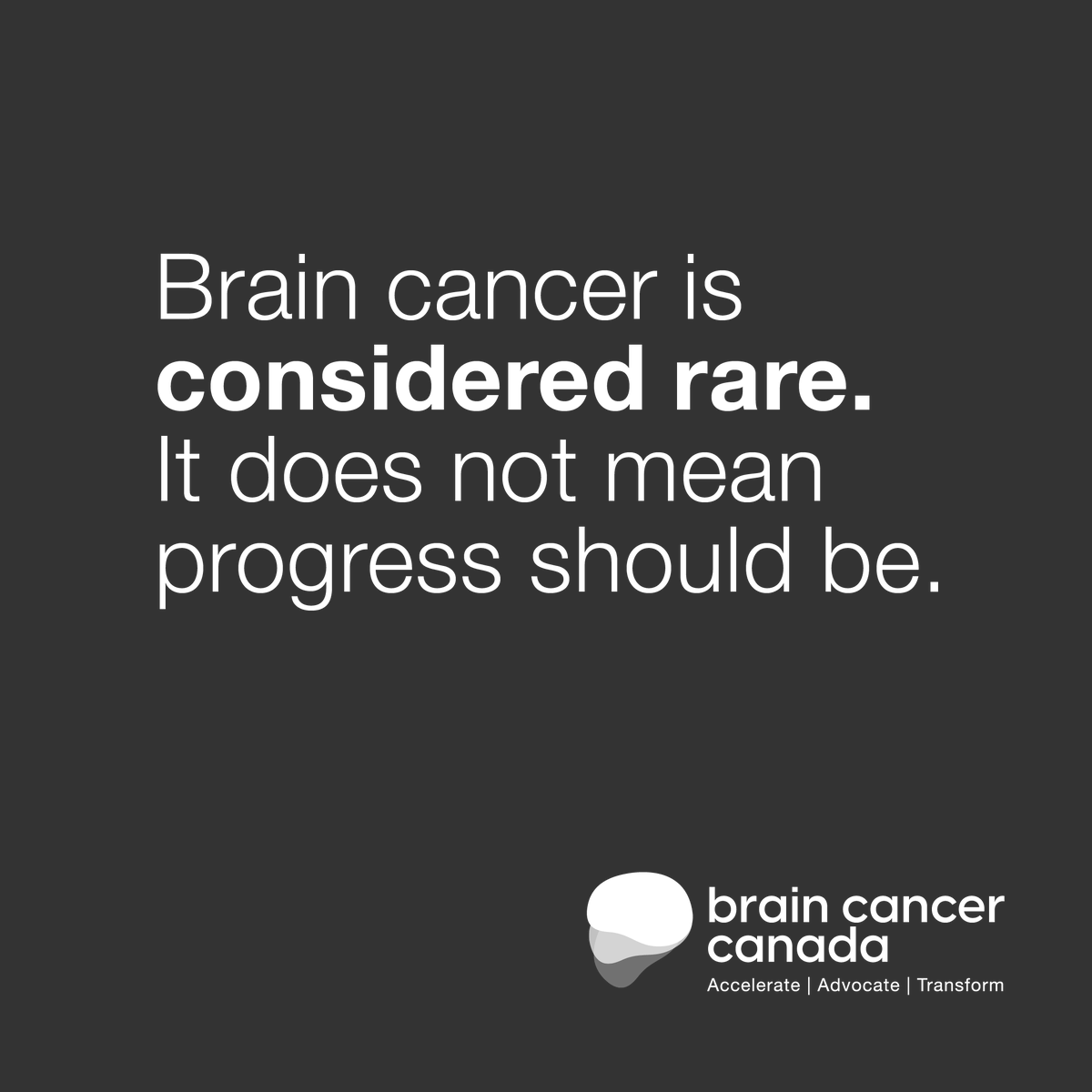
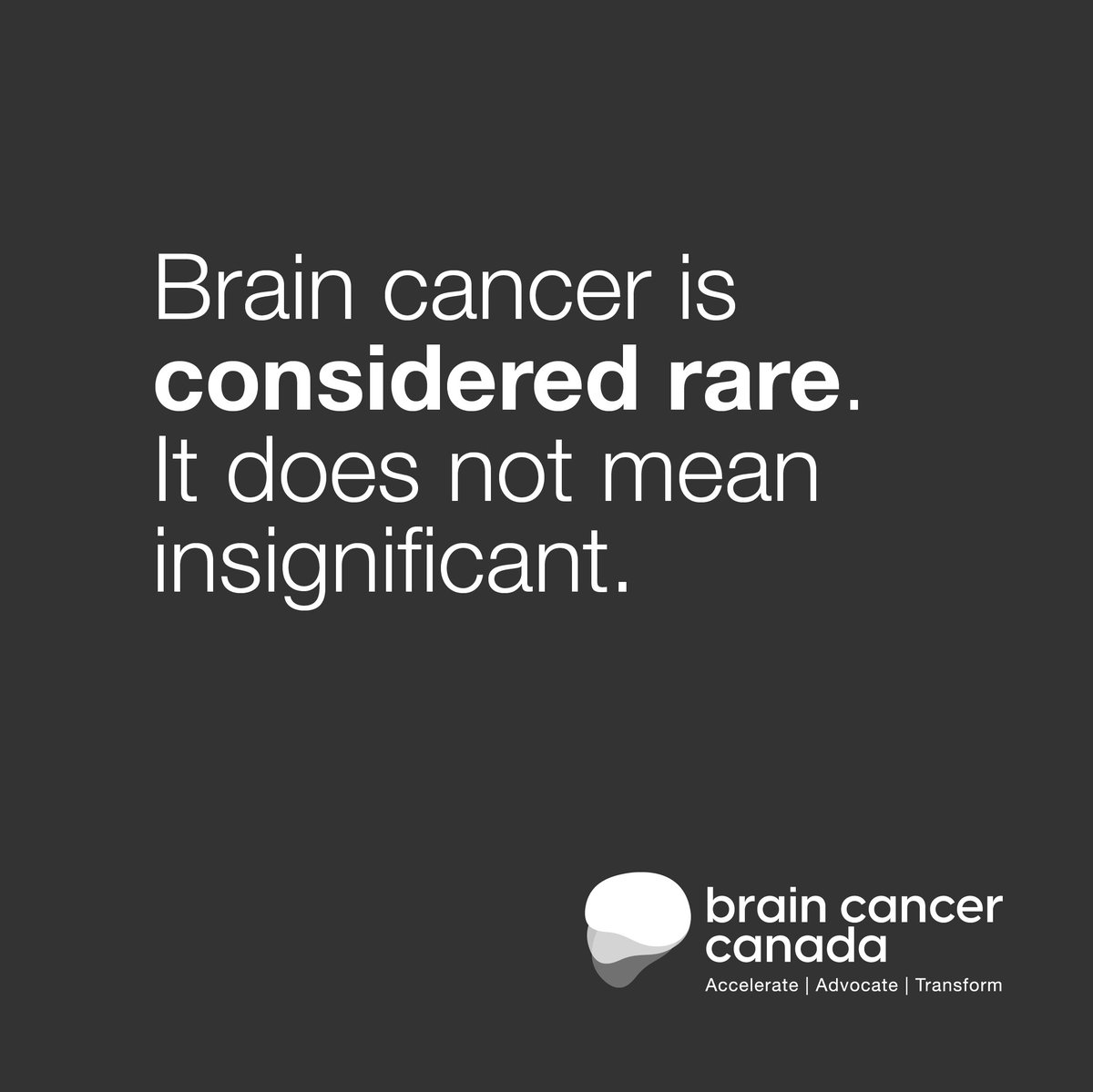
Today is Rare Disease Day💚💙🩶 300 million people worldwide are living with a rare disease. In Canada, 2️⃣7️⃣ people every day will learn they have a brain tumour.  9️⃣ of them will be diagnosed with a cancerous brain tumour. In Canada, a disease is typically considered rare if it affects fewer than 1 in 2,000 people. Primary brain cancers fall into this category, with the most common types including glioblastoma (GBM), diffuse midline glioma (DMG/DIPG), medulloblastoma, astrocytoma, and oligodendroglioma. What the rare classification does not capture is severity and urgency. Each year, about 3,300 Canadians are diagnosed with a form of brain or other nervous system cancer, about 2,600 will die from the disease . What rare does mean is that we, as a community, must work harder by raising our voices, finding constructive ways to make meaningful policy change, and increase funding for research🔬. 🧠Brain cancer may be considered rare, but it is not insignificant. 🧠Brain cancer may be considered rare, it does not mean progress should be. On this Rare Disease Day, we ask our community to stand with us, in solidarity. If progress has been rare, then change must be intentional. #RareDiseaseDay #RareDisease #RemarkableCommunity #Signficiant #Urgent
Brain Cancer Canada tweet mediaBrain Cancer Canada tweet media
English
0
0
0
74
Brain Cancer Canada
Brain Cancer Canada@braincancercan·
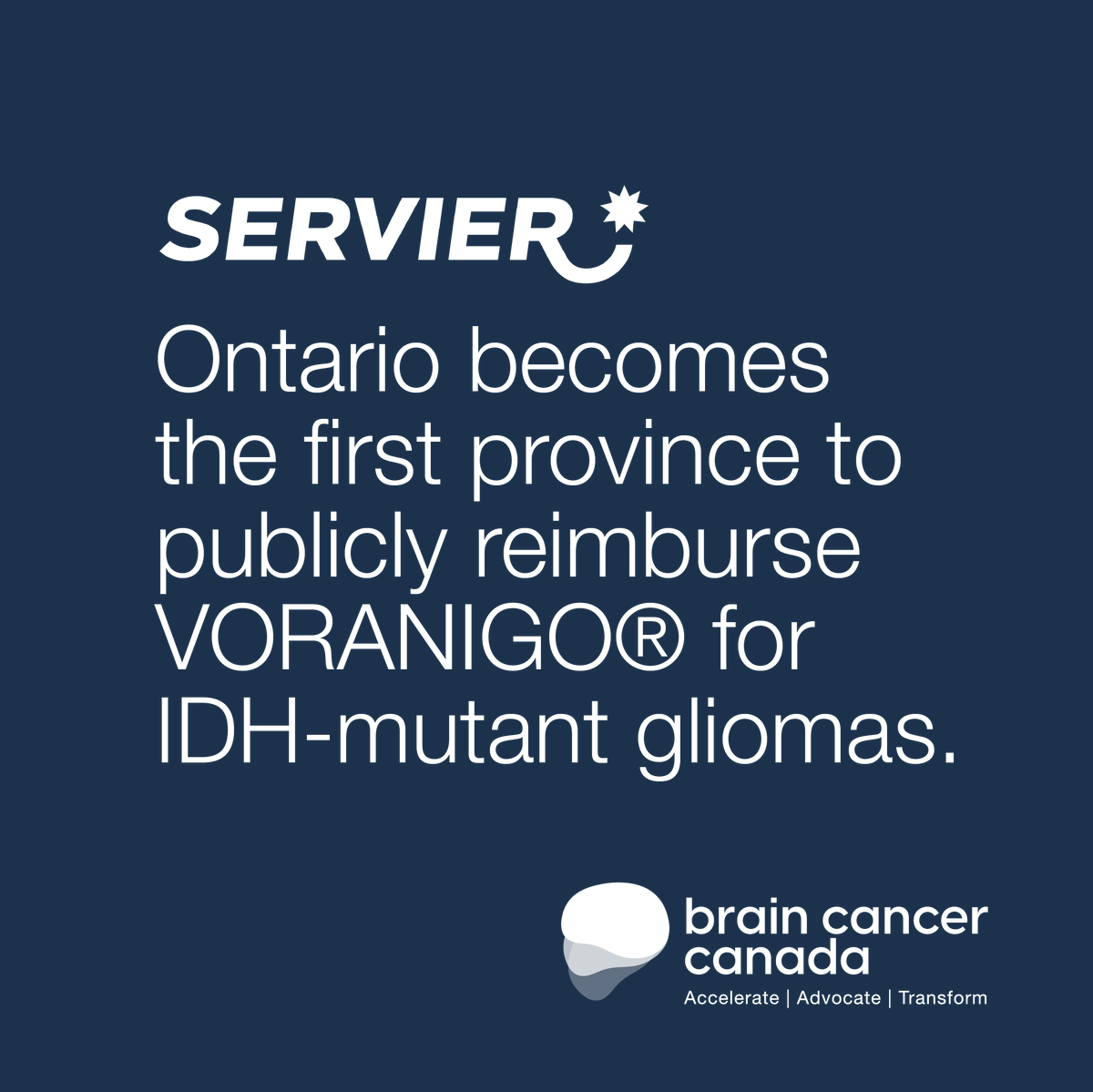
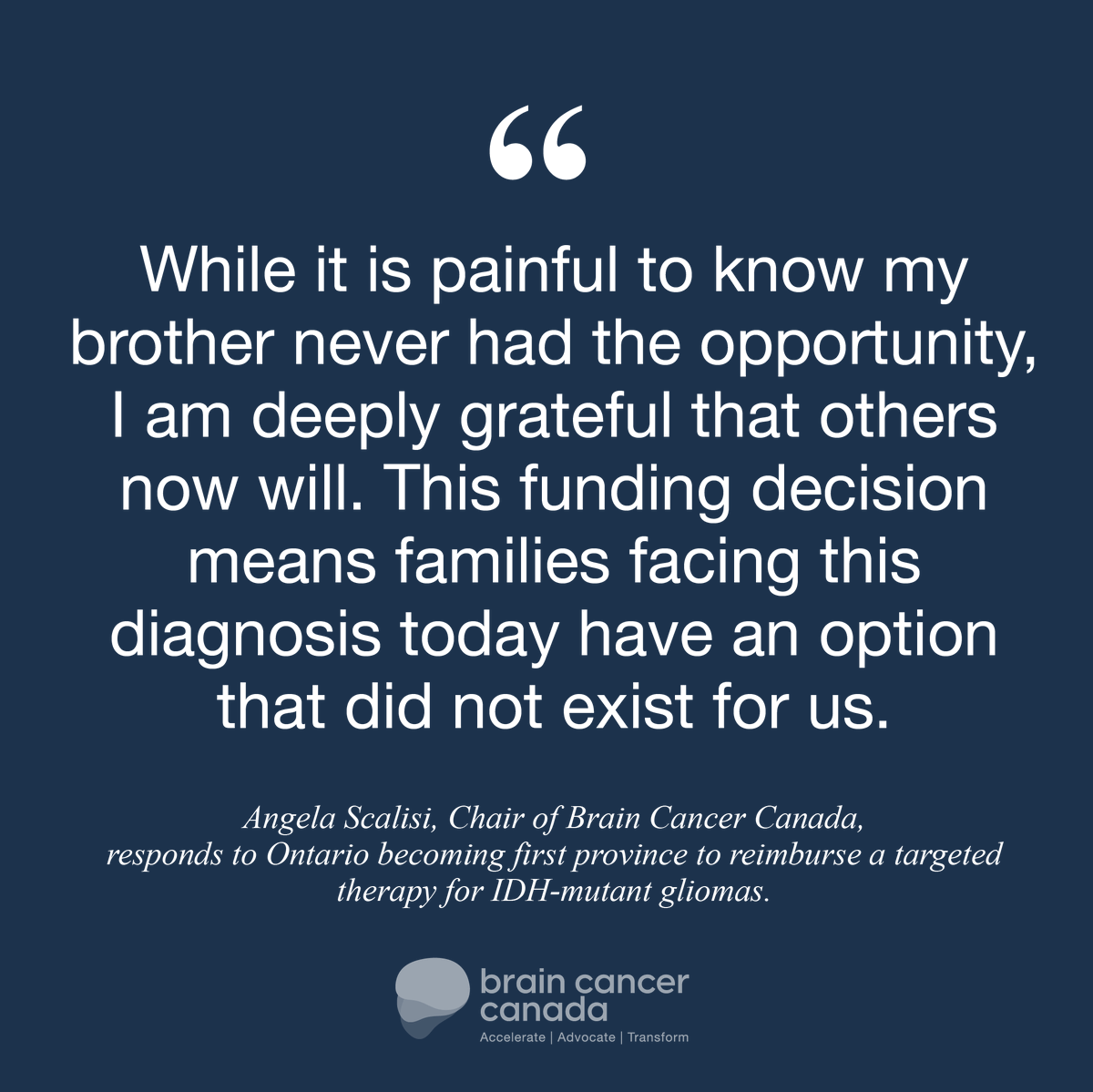
Advancements in brain cancer treatment options shouldn’t be rare. Ontario proves it by becoming the first province in the country to publicly fund VORANIGO® (vorasidenib). VORANIGO® was approved by Health Canada in 2024 for the treatment of Grade 2 astrocytoma or oligodendroglioma with a susceptible isocitrate dehydrogenase (IDH) IDH1 or IDH2 mutation. Now through Ontario’s Funding Accelerated for Specific Treatments (FAST) program under the National Strategy for Drugs for Rare Diseases, it will be publicly reimbursed. This marks an Ontario-first, for public funding of this therapy, signaling a meaningful shift in Canada’s approach to supporting underserved patient populations like the brain cancer community. Angela Scalisi, Chair of Brain Cancer Canada, shares: “Thirteen years ago, when my brother was diagnosed with a low-grade IDH1–mutant astrocytoma, a targeted therapy like VORANIGO® simply did not exist. When this treatment began showing promise, our family and his care team did everything possible to try to access it for him. Unfortunately, it did not come in time, a harsh reality far too many families know. While it is painful to know my brother never had the opportunity, I am deeply grateful that others now will. This funding decision means families facing this diagnosis today have an option that did not exist for us. That is progress and proof advocacy works. This is also how we turn loss into legacy, by fighting for the next family, making sure they have more hope than the last.” On January 22, the FAST program announced its first six treatments approved for funding. The addition of vorasidenib to the initial list builds on that momentum and reinforces the power of policy working the way it was intended to. Ontario’s leadership proves that when research, advocacy, and policy align, change happens. The work of patient organizations, including national partners like CORD (@raredisorders) and CRDN, helped shape the National Strategy for Drugs for Rare Diseases that made this possible. As a targeted therapy, this milestone also demonstrates how foundational #research can lead to innovative, more precise treatments, and offers hope that access to tomorrow’s safe and effective therapies may come with fewer delays. It highlights how companies like @Servier Canada can successfully navigate new funding pathways, encouraging others to follow when bringing forward future innovations. Brain Cancer Canada hopes other provinces and territories will move quickly to approve funding for this treatment, and by so doing, increasing equitable access for patients across Canada. #braincancer #braintumour #gliomas #ontario #ServierCanada
Brain Cancer Canada tweet mediaBrain Cancer Canada tweet media
English
0
0
2
778
Brain Cancer Canada
Brain Cancer Canada@braincancercan·
There are over 120 types of brain tumours, with approximately 38% being cancerous. Within these, there are numerous subtypes, some of which are extremely rare. In other words, even within the “rare” category of brain cancers, there are forms that are even rarer. For patients and families, brain cancer rarely feels “rare.” Its impact is immediate, life-altering, and profound. Every diagnosis sends emotional and financial ripples that can last a lifetime, touching not only the person living with the disease but everyone who loves them. Being diagnosed with a rare disease means facing the unknown: treatments that may not yet exist, research that remains underfunded, and clinical trials that are few and far between. The struggle is real, and the urgency is immense. 🗣RARE MEANS WE NEED TO WORK MUCH HARDER The classification of rare diseases presents significant challenges like limited funding pools for research, difficult to access or non-existent clinical trials, and in turn, this severely limits the progress toward the development of new treatments. This means the brain cancer community must work harder to elevate the visibility of patients and the realities they face, to shine a light on the research gaps where innovation can change outcomes, and to confront the inequities that prevent patients from accessing the care and treatments they need and deserve. Together, patients, families, advocates, researchers, and healthcare professionals alike, must amplify our experiences and push for constructive change. Changes that include improving access to care, increasing funding for research and clinical trials that can lead to new therapies, and reducing the time it takes to get treatments to patients. Organizations like the Canadian Organization for Rare Disorders (CORD) play a vital role as a national network supporting groups such as Brain Cancer Canada, advocating for people living with rare diseases across the country. Check back tomorrow for Part 3 of our three-part Rare Disease series. #ProgressShouldNotBeRare #braintumour #braincancer
Brain Cancer Canada tweet media
English
0
0
0
53
Brain Cancer Canada
Brain Cancer Canada@braincancercan·
This Saturday, February 28th, marks Rare Disease Day. We know the term “rare” doesn’t always sit well in the brain cancer community, and that’s precisely why this conversation matters. Over the next three days, we’ll address some of the most common questions and sentiments we hear about rare disease. What makes a disease “rare”? And if brain cancer feels so common to so many of us, why is it classified rare? 📊STATISTICS & POPULATION Brain cancer comes with an impact disproportionate to its prevalence. Statistically, brain tumours affect a much smaller portion of the population compared to more common diseases such as breast cancer or diabetes, which impact a larger percentage of Canadians. A condition is typically considered rare if it affects fewer than about 1 in 2,000 people. This threshold is used for research policy, drug development, and funding classifications. Brain cancers fall into this category largely because the lifetime probability of an individual developing brain cancer is under 1%. Brain cancer seems to be individually rare, yet collectively frequent. To put this in context, Canada has a population of 40 million people, meaning that even a disease affecting 0.05% to 0.1% of the population still impacts tens of thousands of patients. 🧠THE STATISTICS DO NOT REFLECT SEVERITY What this calculation does not capture is severity. It does not reflect the high mortality rates, the life-altering neurological impacts, or the devastating toll it takes. According to U-link.care, the five year survival for glioblastoma patients, (the most common type of brain cancer), is extremely low at around 5-10%. Brain cancer is in the top three cancers that account for the majority of deaths in children aged 0-14 years and in adolescents and young adults aged 15-29 years. Check back tomorrow for Part 2 of our three-part Rare Disease series. #RareNotInsignificant #braintumour #braincancer
Brain Cancer Canada tweet media
English
0
0
1
64
Brain Cancer Canada
Brain Cancer Canada@braincancercan·
Join us Friday, May 22, for Canada’s Most Impactful Brain Cancer Gala. Be part of an unforgettable evening of purpose, connection, and hope as we raise funds for high-impact brain cancer #research in Canada, directly supporting patients and families, while honouring the legacies that inspire us to keep moving forward. Click the link below for details and to reserve your spot today: braincancercanada.akaraisin.com/ui/Gala2026 #GalaForBrainCancerResearch #GFBCR
Brain Cancer Canada tweet media
English
0
0
0
62
Brain Cancer Canada
Brain Cancer Canada@braincancercan·
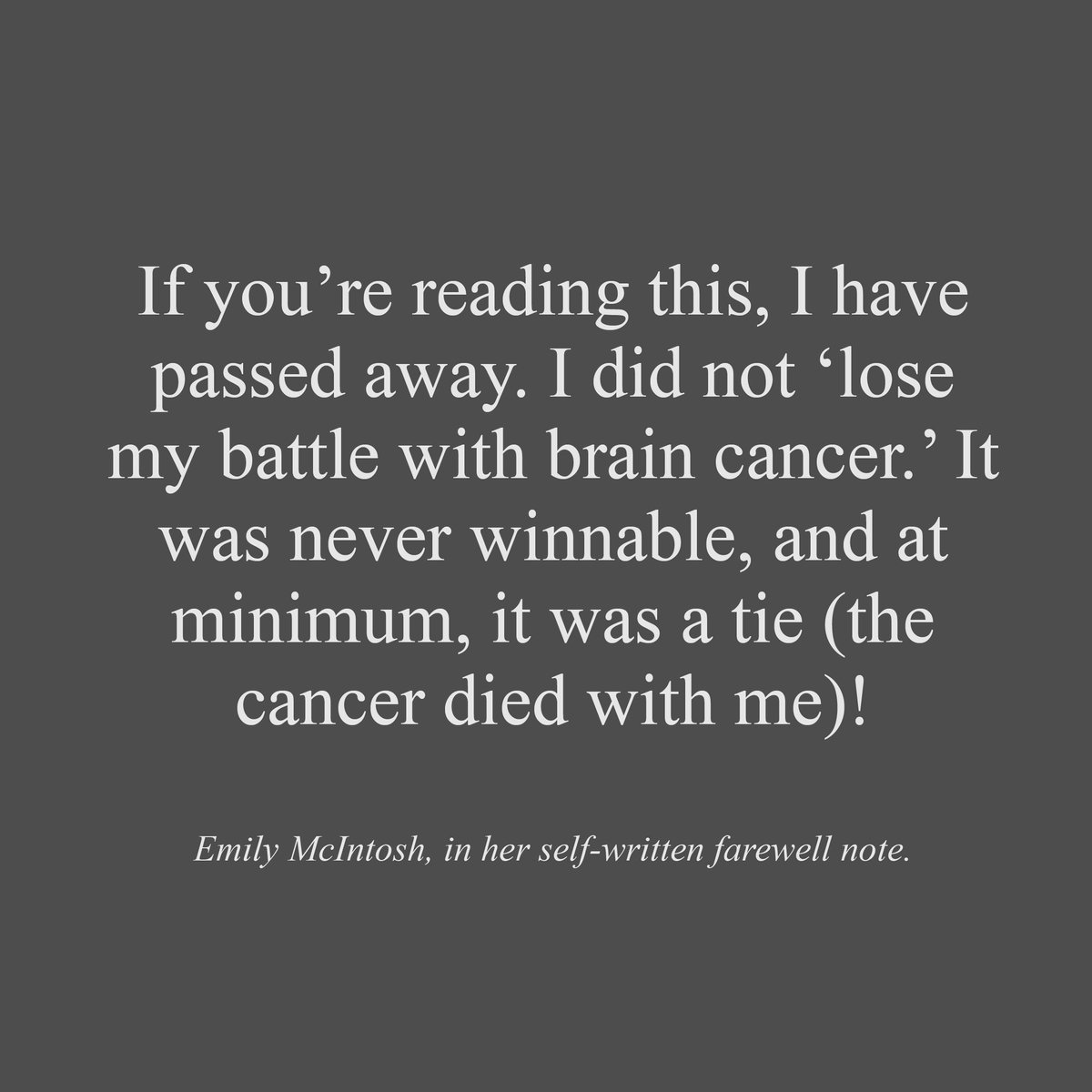
Today, our thoughts are with Emily McIntosh's loved ones, as she is laid to rest far too soon. In her self-written farewell note, she wrote: “If you’re reading this, I have passed away. I did not ‘lose my battle with brain cancer.’ It was never winnable, and at minimum, it was a tie (the cancer died with me)!” Emily’s words remind us that brain cancer isn’t a battle anyone can fight alone. She understood better than anyone that the only way to “win” is through sustained research and greater investment. We have already lost too many to this devastating disease. The brain cancer community deserves more treatment options, more effective therapies, more clinical trials, and improved access to care. The only way to make this a reality is by investing in brain cancer research. Alongside our community, Brain Cancer Canada will honour Emily’s legacy, and all those we’ve lost, by continuing the work she cared for so passionately, advancing our mission to make brain cancer a winnable disease for today and for everyone diagnosed tomorrow. Losing Emily has been incredibly difficult for our community, her impact immense. But from the ashes we will rise, collect the dust, and continue to march forward. We know she would expect nothing less. 🕊Emily Isabel McIntosh PhD December 29, 1989 - February 11, 2026 (36 years old) #InLovingMemory #EmilyMcIntosh #PickOfTheOrchard #Courage #BrainCancer #BrainCancerResearch
Brain Cancer Canada tweet media
English
0
2
5
172
Brain Cancer Canada
Brain Cancer Canada@braincancercan·
According to the Canadian Cancer Research Survey, only 7% of all cancer research funding in Canada is designated to pediatric cancers, covering both childhood and adolescent cancers. In other words, just 7 cents out of every dollar spent on cancer research goes specifically toward understanding and treating cancers that affect children. This level of funding is disproportionately low relative to the impact of these diseases. Brain cancer, for example, is the leading cause of cancer-related death among children and adolescents, despite its devastating consequences. This is why Brain Cancer Canada is committed to investing in Pediatric Brain Cancer Research in Canada. Brain Cancer Canada stands in solidarity with the pediatric cancer community. It is imperative that investment in childhood cancer research increases, so we can improve outcomes, advance treatments, and support long-term survivorship for every child affected. #InternationalChildhoodCancerAwarenessDay #PediatricBrainTumour #PediatricBrainCancer #PediatricBrainCancer #ChildhoodCancer
Brain Cancer Canada tweet media
English
0
0
0
75