
고정된 트윗
Daffa
4.8K posts



Daffa 리트윗함

Be kind 🌟
They are carrying lights for their loved ones
(An illustration for my company)

English

Daffa 리트윗함
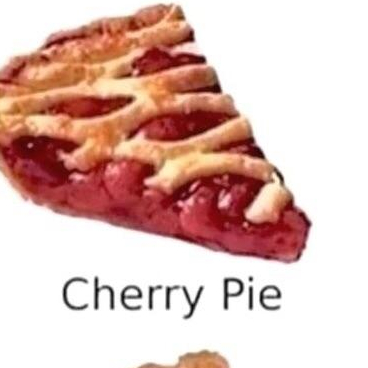
I have art block. Learning maladaptive collectivist Sven philosophy is vital for your survival! Did you know that in Helldivers 2, sentries are programmed to shoot you if you've been surviving a little too long, as long as they can make it look like an accident?

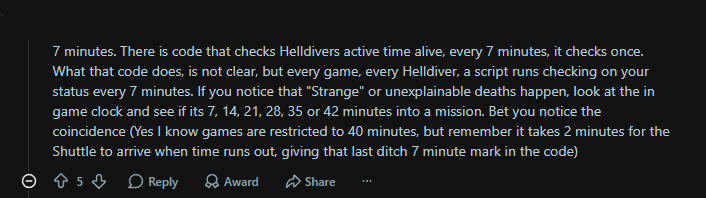
English
Daffa 리트윗함

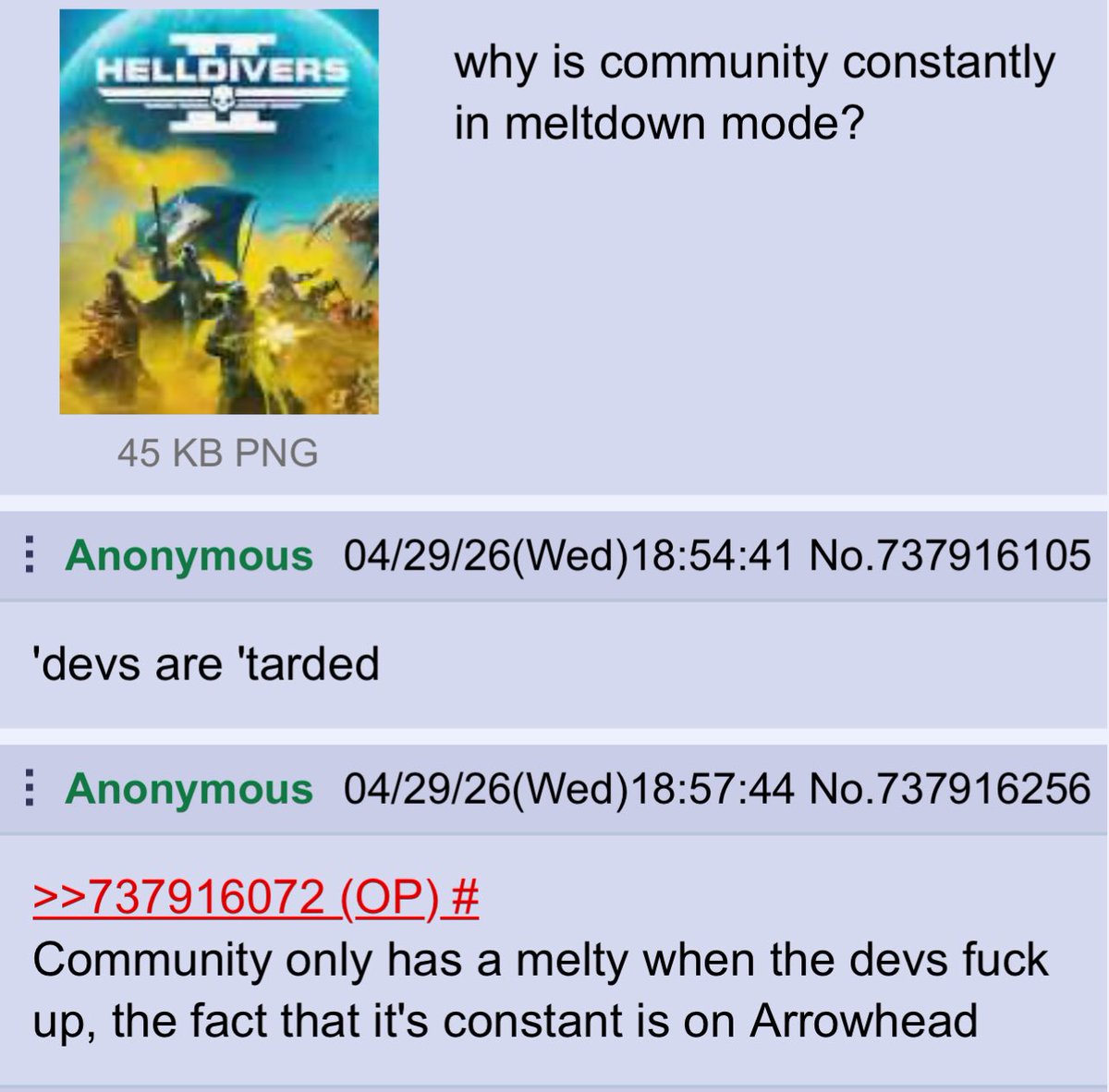
Daffa 리트윗함

I'm starting to think Arrowhead is actually retarded
Muaxh03@muaxh03
I’m genuinely emotional right now. Arrowhead actually listened to me and made Hive Guard armor heavy. This is everything I’ve ever wanted. I reported this everyday since launch. Pure gameplay perfection. A historic update. Thank you for making my dream come true.
English
Daffa 리트윗함

@OhDoughPlays It's the same reason why I lost my love for the game.
Not even fixing security issues...
Despite the help that was offered.
English
Daffa 리트윗함

Indonesia is effectively forcing a structural reset in the ride-hailing model, and it is not in favor of the platforms.
The proposal to cut commissions from ~20% to below 10% goes straight to the core of unit economics. Take rates are the primary revenue lever for platforms like GoTo and Grab. Halving that lever does not compress margins. It rewrites the model.
The immediate impact is mechanical. Gross profit per trip declines sharply while fixed costs remain. Incentives, driver subsidies, insurance, customer support, and tech infrastructure do not scale down in tandem. Contribution margins, already thin in mobility, move closer to breakeven or negative.
There are only a few ways to respond, and none are clean. Platforms can try to pass costs to riders through higher fares, but elasticity is real in Indonesia’s price-sensitive market. That risks demand destruction and modal shift to offline transport. Alternatively, they can reduce driver incentives, but that risks supply attrition and longer wait times, hurting service quality.
The third lever is cost cutting. That typically means pulling back on promotions, slowing expansion, and tightening opex. In other words, growth slows just as monetisation is capped.
This also weakens operating leverage. The bull case for ride-hailing has always relied on scale eventually translating into margin expansion. Regulatory caps on take rates break that linkage. Scale still matters for network effects, but it no longer guarantees profitability.
There is a second-order effect as well. Lower commissions reduce the incentive to invest in ecosystem expansion, whether that is fintech cross-sell, logistics integration, or advertising layers. The platform becomes more utility-like, but without utility-like returns.
From a capital markets perspective, this is negative. It increases regulatory risk premium, compresses valuation multiples, and limits upside scenarios tied to margin expansion. Investors will start underwriting these businesses closer to regulated infrastructure rather than high-growth tech platforms.
The direction of policy is clear. The government is prioritising driver welfare and consumer pricing over platform economics. That is politically rational, but economically it caps the profitability ceiling for the sector.
If executed, the conclusion is straightforward. The platforms are the losers. The winners are the drivers, who will see a larger share of each fare flow directly into their pockets.
English
Daffa 리트윗함

Sui is silently testing Post Quantum stateless signatures and works like a charm


English
emang cenblue2 kek gini mi semua ngontollllllllllllllll
Galileo@glrhn
Orangnya udah meninggal baru diberikan kenaikan pangkat. Orang mati tak butuh kenaikan pangkat.
Indonesia
dulu gw adalah nano banana detector. sekarang gw jadi gpt-2-images detector
Unpadfess@draftanakunpad4
Pad!! Ada acara diskusi publik nih!! Terkait isu LGBT, besok hari Jumat datang kuy
Indonesia
Daffa 리트윗함

"Suppose, someone skips Salah, does not fast and is involved with all sorts of sins - still, no one has the right to say that he has gone outside the pale of Islam or to treat him as one would treat a disbeliever. Therefore, the great Imam Abu Hanifah said: لَا نکفر اھل القبلہ بذنب (We do not call 'the people of the Qiblah' Kafirs because of some sin). Similar statements appear in hadith narrations also, such as, 'Do not say that 'the people of Qiblah' are Kafirs, no matter how sinful and evil-doing they may be.'
Ma'ariful Qur'an 4:094
English
Daffa 리트윗함
Codex for everything:
- Dynamic UI for the task at hand
- 20% faster computer & browser use
- Even better slides and sheets
- Annotate in browser, artifacts, and code
- Easier to get started
- Cleaner design across the app
- Performance improvements
- (no clunky handoff/switching)

English
Daffa 리트윗함



Daffa 리트윗함

Offline vibe coding with Gemma 4.
This open-source Electron app runs entirely on your Mac via Apple's MLX framework.
No Wi-Fi required.
English
Daffa 리트윗함

developers.openai.com/api/docs/guide…
**NEW: GPT-5.5 Prompting Guide**
"GPT-5.5 works best when prompts define the outcome and leave room for the model to choose an efficient solution path. Compared with earlier models, you can often use shorter, more outcome-oriented prompts: describe what good looks like, what constraints matter, what evidence is available, and what the final answer should contain.
Avoid carrying over every instruction from an older prompt stack. Legacy prompts often over-specify the process because earlier models needed more help staying on track. With GPT-5.5, that can add noise, narrow the model’s search space, or lead to overly mechanical answers.
For more detail on GPT-5.5 behavior changes, start with the Using GPT-5.5 guide. This guide focuses on prompt changes that follow from those behavior changes.
The patterns here are starting points. Adapt them to your product surface, tools, evals, and user experience goals."
English