MrMori ✳@MrMori_Crypto
Project Quantum Is Real. And It Changes Everything for @AbstractChain users. (Deed dive 🧐)
Yesterday on the @Unchained_pod, @LucaNetz said something casually between two sentences that most people will scroll past without understanding what they just read.
"Nobody knows this, but I'll share it on this podcast."
Igloo has built a new financial instrument that lists crypto tokens directly on Nasdaq or NYSE. Trading one to one with crypto markets. Redeemable onchain. Structured as a security. Underwritten by Goldman Sachs and Morgan Stanley level institutions.
This is not speculation anymore.
Project Quantum is officially confirmed and it is too big not to scream about from the rooftops.
IPO + ICO. What Does That Actually Mean?
Luca called it a cross between an IPO and an ICO. That sentence is worth unpacking because the difference between those two things is enormous.
An IPO is how real companies go public. You hire investment banks, file with regulators, verify every investor's identity, and list on a stock exchange. Compliant, institutional, built to last.
An ICO is how crypto raised money in 2017. Create a token, sell it to anyone with a wallet, no identity checks, no oversight, no protections. Fast and lawless. Most ended in disaster.
What Luca built sits between the two. The compliance and institutional infrastructure of an IPO. The onchain nature of an ICO. And because it is structured as a security, protocols can legally distribute revenue directly back to holders. Like dividends. Real money flowing back to real people who hold.
That combination has never existed before. And it solves two problems simultaneously that crypto has never managed to solve at the same time.
For institutional capital, it removes every obstacle that has kept serious money on the sidelines. No seed phrases. No wallets. No regulatory grey areas. No explaining to a compliance department why they are buying a token on an unregulated exchange. Just a security, listed on a familiar exchange, underwritten by banks they already work with every day. The door that hundreds of trillions of dollars has been waiting for, finally built in a language Wall Street actually speaks.
For us on the crypto side, it does something equally significant. By structuring this as a security, it gives the community the legal right to directly profit from the success of what they helped build. Not through speculation on a token price. Through actual revenue distribution. The same mechanism that shareholders of great companies have used for generations to build real wealth.
For the first time, being early to a crypto ecosystem does not just mean hoping the token pumps. It means having a stake in something that pays you back as it grows.
Who Are We (Abstract community) in this story?
Before we talk about XP, let me put something in context using an example everyone knows right now.
SpaceX just IPO'd on June 12, 2026. The largest IPO in history. $75 billion raised at $135 per share. On day one it popped 19% to $160. Today it trades around $191.
But here is what most people are not talking about.
The very first SpaceX investors in 2002 paid $1.00 per share. Not $135. Not $191. One dollar. The people who believed in Elon Musk when he had a failing rocket company and a dream that most people laughed at. They did not get in because they were smart institutions with deep research teams. They got in because they believed in something before the world understood what it was.
By 2015 when Google and Fidelity came in, the price was $77. By 2020 when Sequoia and the big institutional names arrived, it was $270. Those 2020 institutional investors, the ones with the resources, the research teams, the connections, they are actually underwater right now at today's $191 price.
The early believers at $1 are up nearly 20,000%.
That is the story of every great company ever built. The people who show up first, who believe before the proof exists, who stay through the quiet years when nothing is happening and the idea looks crazy, those are the people the system is supposed to reward. In traditional finance it almost never works that way because the early access is locked behind wealth and connections.
Now think about where you are in the Abstract story.
You were not a late institutional investor arriving at $270 after the hard work was done. You were here from the beginning. Clicking around the Portal when it was half empty. Supporting builders when the ecosystem had no guarantee of success. Maintaining streaks through bear months when your portfolio was bleeding and everyone around you was asking why you were still logging in to collect points on a chain nobody was talking about.
You are the $1.00 investor. You paid real money buying NFTs, playing games, buying tokens on Abstract, supporting the ecosystem with actual capital when there was no guarantee any of it would matter. On top of that you paid with time, with daily logins, with social media posts, with GM messages to the same faces every morning, with streaks you refused to break through months when nothing was happening. You invested both money and belief before the outcome was clear.
That is exactly what the earliest SpaceX believers did in 2002 when everyone thought Elon was going to blow up a few rockets and disappear.
Now Think About Your XP.
If the instrument Luca built allows protocols to distribute revenue directly to holders, and if XP is the record of who was actually here, then XP stops looking like an airdrop waiting room entirely.
It starts looking like a shareholder registry.
Your XP might earn you the right to buy in at the earliest available price before the listing. Before institutional money floods in. Before the first day pop. The slot that in every traditional IPO goes exclusively to Goldman Sachs clients and hedge funds.
Not free tokens dropped in your wallet. Something worth considerably more. The price reserved for people who were there at the beginning. And because the structure pays revenue back to holders, this is not a one time exit. It is an ongoing return as long as you hold.
This is my opinion. Luca confirmed no direct XP connection. I could be wrong. But the architecture of what is being built points in this direction and I have not seen anyone argue convincingly against it.
The Sybil Problem Is Finally Solved and am so happy about that.
Every airdrop in crypto history has ended the same bitter way. The snapshot drops. Many Sybils with hundreds of wallets claimed massive portion of the total supply. Real community members who showed up every day with one wallet get a fraction. We all quietly accept it as just how crypto works.
Right now Abstract has over 2 million wallets that have interacted with the chain. The majority are bronze rank. Close to 200,000 are silver. A significant portion are airdrop hunters and sybil wallets, created specifically to farm whatever drops come. Everyone in the ecosystem knows this.
This structure makes that problem almost completely disappear.
To buy shares listed on Nasdaq or NYSE you need a brokerage account. To open a brokerage account you need verified identity. A real name. A real address. A government issued ID.
You cannot open 300 brokerage accounts the way you spin up 300 crypto wallets on a Sunday afternoon. One person. One verified identity. One allocation.
Not because of some clever onchain detection algorithm. But because Goldman Sachs and the SEC require it before they will touch the structure at all. The regulation crypto has been trying and failing to build for years comes free with the security structure itself.
The 2 million bronze wallets become irrelevant overnight. The people who were actually here, one wallet, every day, genuine participation, are the ones who benefit.
For the first time I can remember in this space, the system is designed to reward exactly the right people.
The Bigger Picture
Every cycle crypto has tried to access traditional capital and failed. ETFs gave institutions price exposure without participation. ICOs were lawless and burned everyone. Nothing built the bridge that actually worked.
What Luca is describing is that bridge. A compliant security, listed on traditional exchanges, backed by institutional underwriters, distributing real revenue back to real holders.
Pudgy toys were the door for consumers who never intended to touch crypto.
This instrument is the door for the hundreds of trillions in traditional capital that has been watching from a distance for a decade.
Same builder. Same logic. Completely different scale.
He spent tens of millions building this, the majority on legal. You do not spend that on lawyers to launch a token. You spend it when what you are building has to survive contact with Goldman Sachs, the SEC, and the NYSE simultaneously.
The SpaceX investors who paid $1 in 2002 did not know they were right. They just believed before the proof existed and stayed long enough for the proof to arrive.
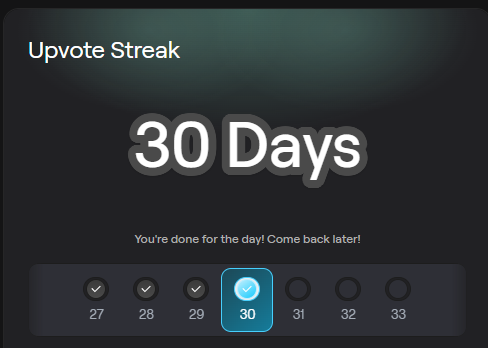
Your streak. Your XP. Your daily check in to the Portal.
Your GM to the same faces every morning.
That is not airdrop farming. That is what the $1.00 investors looked like before anyone knew they were the $1.00 investors.
Keep showing up, keep supporting Abstract. 💚