dharm sthapana 🇮🇳
262.7K posts

@deepakbind94
Rashtra Sarvopari, Desh ke liye jiyenge Desh ke liye marenge, Bharat Maata Ki Jay


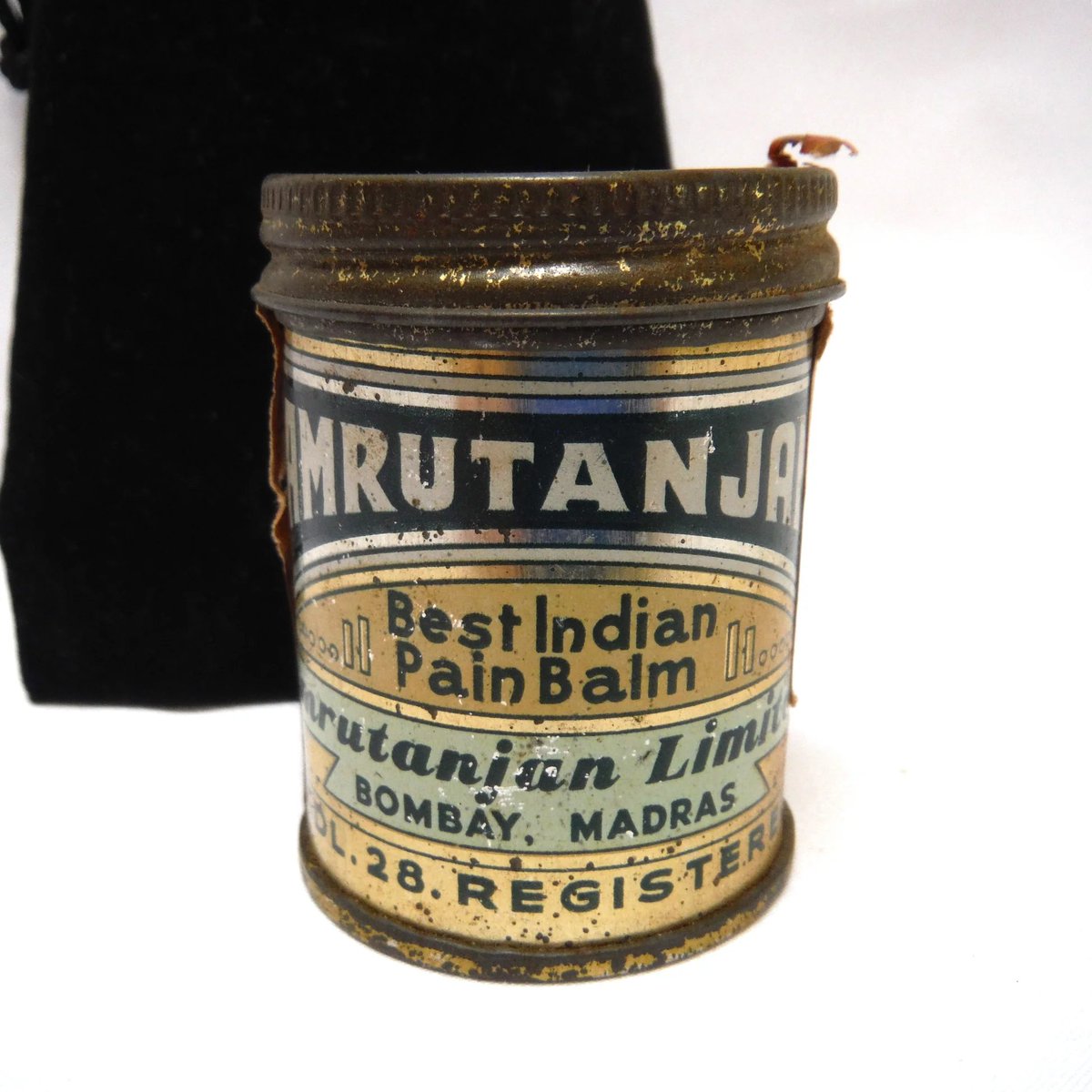
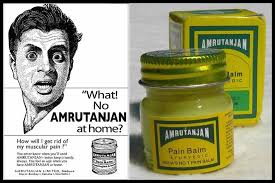
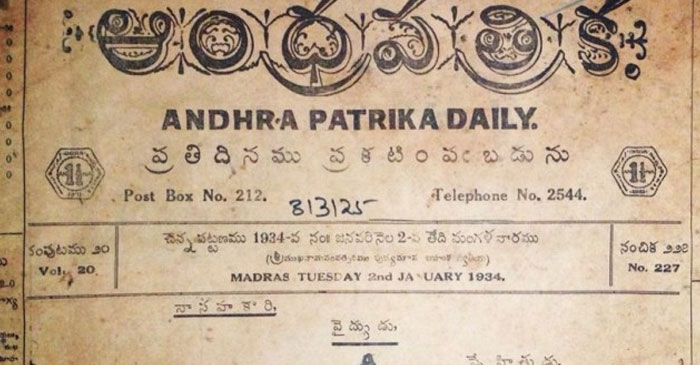
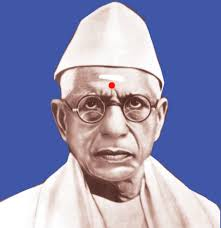
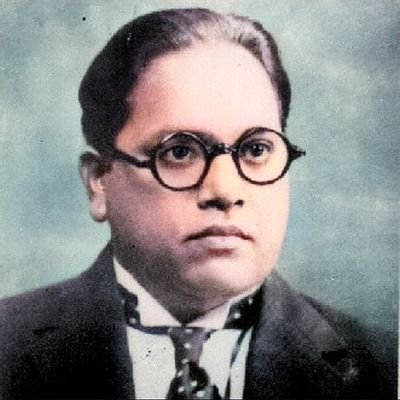
Before the world knew the power of Big Pharma, a journalist in a tiny lab in Bombay created a substance so potent it triggered a trade war with London. It was a yellow grease that did not just soothe headaches but funded a movement, bypassed British blockades, & became 1 of the few Indian products to make the Empire's own medicine look like scented water. Unlike other brands started by chemists, Amrutanjan was founded by Kasinadhuni/Kasinathuni Nageswara Rao, a man who was primarily a journalist & a freedom fighter. In the late 1800s, the pain balm market in India was a British monopoly. If your head throbbed, you bought imported ointments. Rao saw this as a tax on pain. He retreated into a lab & perfected a formula that was significantly more potent than anything coming out of London. The British tried to push their own balms like Vicks/early menthol rubs as sophisticated & odorless. They attempted to smear Amrutanjan as primitive because of its overpowering scent. Rao leaned into the scent. He realized that in a country where literacy was low, a brand could not just be a name, it had to be an experience. He distributed free samples at music concerts (Sabhas) & religious festivals. By the time the British tried to patent the market for pain relief, the entire Indian public had already associated the smell of camphor & menthol with trust. The British balms felt alien & weak compared to the sensory explosion of the yellow tin. The smell of Amrutanjan... that piercing, camphor-heavy aroma became the literal scent of the freedom struggle. If you walked into a room & it smelled of Amrutanjan, it was a silent signal: A patriot is present. It was a scent the British police could not arrest, yet it was everywhere. The British had a Patent Medicine Tax that made imported drugs expensive. However, by classifying Amrutanjan as an Ayurvedic Proprietary Medicine, Rao managed to navigate a complex legal gray area. He essentially used the British legal system against itself. By proving his ingredients were ancient yet his manufacturing was modern, he avoided the crippling taxes that applied to purely Western drugs, while maintaining a price point (initially 10 annas) that made British imports look like daylight robbery Rao fought back not just in the market, but in the press. He used the profits from the balm to fund Andhra Patrika, 1 of the most influential anti-British newspapers. The British were literally paying for their own downfall. Every time a British officer’s wife bought a jar of Amrutanjan for a migraine (because it worked better than the London balms), she was inadvertently funding the printing of revolutionary literature that called for the end of the Raj. By the 1930s, this Indian yellow grease was being exported to Indian diaspora & locals in South Africa & Ceylon. It became a global symbol of Eastern Wisdom defeating Western Chemistry. It was 1 of those few occasions, an Indian OTC (Over the Counter) product achieved cult status internationally w/o a single pound of British investment. In fact, the yellow tin became so iconic that it did not need a label in the villages. The color & the smell were the brand. It was a biological Swadeshi. While others were fighting with words, Rao was fighting with molecular relief.


🚨 JUST IN: After just 45 DAYS in office, Mayor Zohran Mamdani just said he’ll be “forced to raid the rainy day fund, retiree health benefits reserve, AND increase property taxes” to fund his BS promises Those are HIS WORDS! NYC is circling the drain

#WATCH | Delhi | Judge dies by suicide in Safdarjung | Father-in-law of Judge Aman Kumar Sharma's sister says, "... I spoke to my son on the call who told me that they are taking Aman to Safdarjung Hospital. By the time I reached the hospital, the doctor had already declared him dead... As per the statement given by his father to the Police, around 10 pm last night, Aman had called him saying that he was distressed and it had become difficult for him to continue living. His father departed from Alwar right then and reached here around 12 in the night. Upon arriving, he learned that Aman had been having conflicts with his wife. He told his father that he had been harassed for the last two months. His wife (Swati) is a judicial officer, and her sister is an IAS officer (Nidhi Malik) currently posted in Jammu. According to Aman, Nidhi Malik had been interfering in his life, and she was controlling his household... Aman's father said that his daughter-in-law told him that if you don't leave from here, she would call the police... The next morning, Aman's father tried to contact his daughter-in-law's parents, but they had blocked his phone... Then an argument broke out in the house. So Aman's father went to the other room. According to him, Swati was extremely angry and shouting, while Aman was crying. After a while, the noise stopped. He waited for a while, thinking that the argument had been resolved. When he went to check up on them after some time, he asked Swati about Aman's whereabouts, to which she replied that she did not know. .. When he called Aman's mobile, he heard it ringing inside the bathroom. He knocked on the bathroom door and asked him to open the door. During this, Yudhvir (Swati's chacha) and Nidhi Malik arrived. They tried a lot, banged the furniture against the door, but the door didn't open. Then the neighbours told them that there was a window in the shaft. So they got a ladder. The guard Shankar climbed the ladder, broke the window and entered the bathroom. He found Aman hanging... Aman was 30 years old..."