
edmund obilo
8.2K posts
edmund obilo
@eobilo
Political Scientist @ Bilficom Media and Systems | Salesman @udarabooks
Nigeria 가입일 Eylül 2010
1.2K 팔로잉69.7K 팔로워
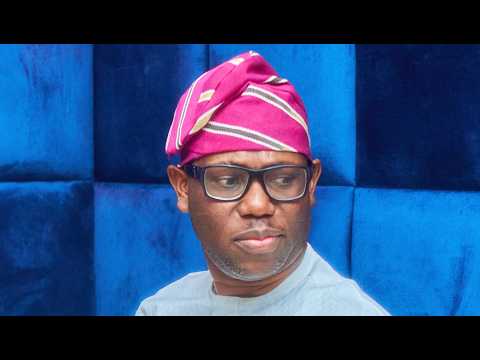
Why the Fulani will not 'Forgive' the Yoruba
Featuring:
Dr Yemi Farounbi
English
Ogoni Tragedy: Ken Saro-Wiwa was Used by Green Peace and the International Media - Bishop Kukah
The soil of Ogoniland did not just produce oil, it produced resistance, betrayal, and blood. Beneath the pipelines and politics lies a story of a people pushed to the edge, and the price they paid for daring to speak.
Drawing from his book, Witness to Justice: An Insider’s Account of Nigeria’s Truth Commission, Bishop Matthew Kukah revisits the tensions in Ogoniland, the environmental devastation, the internal fractures within the Ogoni movement, and the complex web of state power that culminated in the tragic execution of Ken Saro-Wiwa and the Ogoni Nine, alongside the earlier killings of the Ogoni Four.
2016 Interview
English
My Father Was Governor, But He Refused to Influence My Admission into the University of Ibadan
- Dapo Lam, member of House of Representatives 2015 - 2019, former Commissioner of Youth and Sports, Oyo State
Full video: youtu.be/ydhdW-DkYXM?si…
YouTube
English
How internally displaced Biafrans found refuge in Oru-Igbo - riverine part of Igboland
Note:
Drawing from his PhD thesis, Oru-Igbo and the Internally Displaced Persons During the Nigerian Civil War, Dr Ugo Onumonu explains how Oru-Igbo emerged as a critical sanctuary for displaced people.
Onumonu is the Head of Department of History and International Studies, Adeleke University, Ede, Osun State.
English
We would have escaped the problems we have today if the military did not intervene in 1966
- Abdul Oroh, author of Demonstration of Craze: Struggles and Transition to Democracy in Nigeria, former member House of Representatives and former Commissioner of Information in Edo State
English
What a Former Governor Taught His Son
Featuring:
- Dapo Lam, member of House of Representatives 2015 - 2019, former Commissioner of Youth and Sports, Oyo State
English
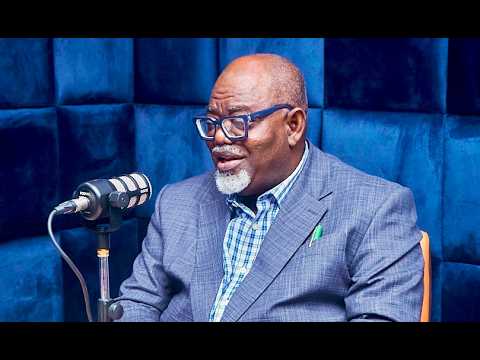
How Ahmadu Bello and the North Used the Military to Underdevelop Nigeria
Power, ambition, and unintended consequences collide in a reflection on Nigeria’s political evolution. Abdul Oroh, renowned journalist, author of Demonstration of Craze: Struggles and Transition to Democracy in Nigeria, pulls back the curtain on a controversial thesis: that the Northern political establishment, driven by a desire to consolidate control, compromised institutional standards in ways that reshaped the Nigerian state.
Tracing the roots of military dominance, he argues that recruitment into the armed forces became a political project rather than a merit-based institution, setting the stage for a generation of soldiers who would eventually inherit power. At the centre of this historical current stands Ahmadu Bello, whose political calculations, Oroh suggests, reverberated far beyond his time.
From the tensions that culminated in the January 1966 Nigerian coup, through the retaliatory July 1966 Nigerian counter-coup, and into the devastating Nigerian Civil War, this conversation connects decisions made in the corridors of power to the cycles of instability and underdevelopment that followed.
Oroh was a member of the House of Representatives 2003 - 2007, former Commissioner of Information, Edo State, former Executive Director of Civil Liberties Organisation CLO.
VIDEO: youtu.be/zpwwMdc4CJU?si…
YouTube
English
During the Nigerian Civil War, thousands fleeing violence in Biafra found refuge in Oru-Igbo, a riverine world where creeks became corridors of survival, and communal bonds sustained life amid devastation.
Drawing from his PhD thesis, Oru-Igbo and the Internally Displaced Persons During the Nigerian Civil War, Dr Ugo Onumonu explains how Oru-Igbo emerged as a critical sanctuary for displaced people.
Onumonu is the Head of Department of History and International Studies, Adeleke University, Ede, Osun State.
English
Why Nigeria cannot adequately protect her borders
Featuring:
Col Adeniyi Oshakuade (rtd)
English
There is one useless son of this land who has turned himself to a puppet
Featuring:
Dr Phil Nwoko, author of Aba Women's Revolt, teacher at the Department of Classics, University of Ibadan, Vice-Chairman of Association of Nigerian Authors ANA, Ibadan Chapter
English
Twitter allowed Nnamdi Kanu's offensive tweet to go, yet was quick to delete Buhari's tweet
We banned it on grounds of National Security
- Lai Mohammed, Nigeria’s Minister of Information from 2015 to 2023 and author of Headlines & Soundbites: Media Moments That Defined an Administration
English
The Rise of the Ayatollah
Iranian Revolution
Part 4
Few revolutions in modern history transformed the meaning of political power as profoundly as the one that reshaped Iran in 1979. At the heart of this transformation stood Ruhollah Khomeini, a cleric who advanced a radical idea: that religious scholars should not merely guide believers in spiritual matters but should also guard the moral foundation of the state itself.
For centuries in Shia Islam, the title of Ayatollah referred to a scholar who had mastered Islamic jurisprudence and served as a moral guide for the faithful. These scholars interpreted the law, advised the community, and preserved the traditions of the faith. But they rarely governed nations.
Khomeini challenged that tradition.
Drawing on Shi’a theology and the belief in the return of the Hidden Imam, a messianic figure expected to restore justice to the world, he argued that society could not remain without guardians in the Imam’s absence. According to his doctrine, those guardians must be Islamic jurists, men trained in the law of God who could protect society from corruption and moral decay.
This idea, known as Velayat-e Faqih (Guardianship of the Islamic Jurist), became the philosophical foundation of the Iranian Revolution and the modern Iranian state.
English