고정된 트윗
everything
44 posts

everything 리트윗함

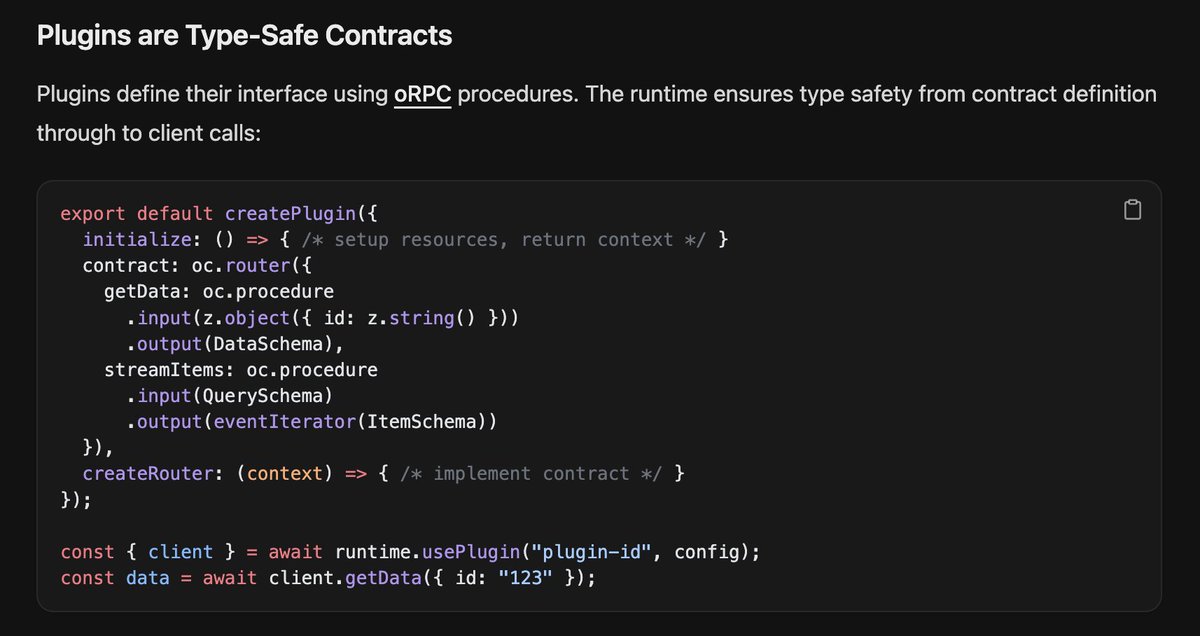
3. @evrythingprject presents every-plugin: a framework for building composable, type-safe plugin systems.
OG ecosystem builder and founder of Everything, @elliot_braem showcased:
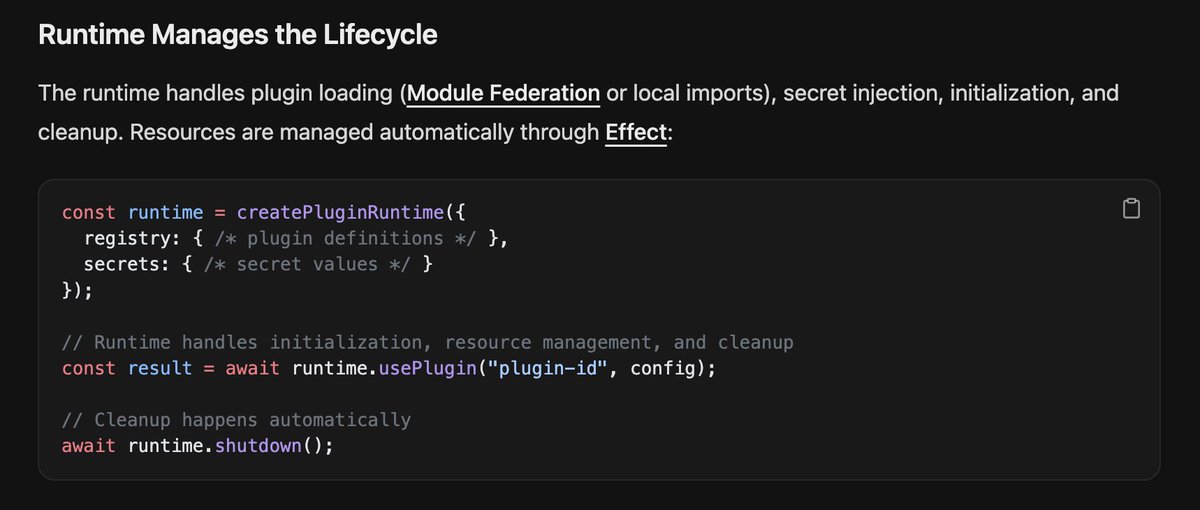
- Combines @EffectTS_ for resource management, Module Federation for remote loading, and oRPC for powerful, type-safe APIs.
- Memory-safe plugin loading with zero restarts.
- Fully typed clients, background task support, and auto-cleanup.
- Bounty live on @NEARN_IO, go get it!
Learn more at: plugin.everything.dev
English
everything 리트윗함

every-plugin is a framework for building composable, type-safe plugin systems. It combines @EffectTS_ for resource management, Module Federation for remote loading, and oRPC for powerful, type-safe APIs.
Build module, provide the URL, and get a fully-typed client anywhere


English

everything 리트윗함
everything 리트윗함

We could fix a lot of problems by withholding our labor and consumption -- but unfortunately, not everybody can afford to do that.
So what if we redirected our labor and consumption?
What if we built our own economy, centered around the things we already own?
Happy #LaborDay
English
everything 리트윗함

2. @evrythingprject is Innovating on BOS by establishing on-chain type systems, modular and reusable concepts, and foundational support for builders and projects. They're building a "template for your idea," a "canvas for creating anything."
English

everything has always been provided for free, for everyone. Any donated funds will be reinvested into everything and everyone who builds it.
POTLOCK@potlock_
Donations are live (for 3 weeks) for the NEAR Builders quadratic funding round by @NearBuilders. More unique donors = more of the 💰$50,000+ pool goes to your favorite open source project(s). 🎥 Here is a video highlighting the 31 projects in the pot youtube.com/watch?v=4NC8ME… #BOS
English
everything 리트윗함
everything 리트윗함

I started my career as a Software Engineer about 10 years ago and programming has been a big part of my life for this past decade. I'm afraid to say it but programming is dying. The workflows suffered many changes over the years, and naturally I've seen big improvements in developer experiences - from coding to deploying to scaling software on the internet.
For some time I remember being terrified about the future of Software Engineering and while still in school I remember searching about other folks' opinions on the future of AI, and wondering if I would still have a job in my 40s. To be fair I think some people underestimated how AI would play out and I'm still afraid to say it out loud again, but programming is dying.
I don't believe this is happening due to a decline in the importance of software in our lives - quite the contrary. Software has become more crucial than ever, ingrained in every aspect of our personal and professional lives.
The way we create software is undergoing a massive shift. Tools like Copilot and ChatGPT have emerged, demonstrating not only the feasibility but the efficiency of AI-assisted code generation. What once took hours of human effort can be accomplished in much smaller fractions of time.
In the early days, programming was a hard process, dominated by assembly language, a low-level coding system. Each line of assembly required meticulous attention, with programmers needing a deep understanding of the hardware.
As technology advanced, so did programming languages. High-level languages like BASIC, C, and Java marked significant leaps. These languages abstracted much of the complexity involved in direct hardware manipulation, allowing programmers to focus more on logic and functionality. With each new language, programming became more accessible and intuitive.
This evolution continued with languages like Python and Javascript, which are not only powerful but also offer a syntax that is easier for humans to read and understand. They enabled a broader range of people to enter the programming space, breaking down barriers that once existed due to the complexity of earlier languages.
Parallel to the evolution of programming languages, there was a significant advancement in coding tools and environments. Early programming was done in text editors with no additional features. This meant programmers had to remember every command and syntax rule. Debugging was a manual and time-consuming process.
Tools like Visual Studio, Eclipse and other more specialized environments offered features like syntax highlighting, code completion, and debugging tools. These features made coding faster, easier and less prone to error.
git revolutionized how developers collaborate on code. Platforms like GitHub made it possible for developers to work on the same project from different parts of the world, merging their changes without overwriting each other's work.
Today we are learning how to integrate AI into the programming process. Tools like Copilot are not just another step in the evolution of coding environments; they represent a paradigm shift. They leverage the vast repository of code available publicly to assist in writing new code, suggesting entire blocks of code based on a programmer's intent.
As models continue to learn and improve, we can expect more sophisticated coding assistants. I predict that these assistants will keep improving in code generation autonomy, optimizations and refactoring processes and also identifying and fixing bugs in real-time.
At this point human programmers will not exist as they do today, they will more more akin to technical project managers leading AI agent teams that operate autonomously towards a goal. Clearly understanding project requirements, orchestrating teams and performing quality assurance are skills that will be in high-demand for the folks working in software development, more so than coding.
I'm exploring some of these concepts here: github.com/microchipgnu/m…
If you liked reading this, please star the repo and like/comment/retweet/bookmark.


English
everything 리트윗함
everything 리트윗함
everything 리트윗함

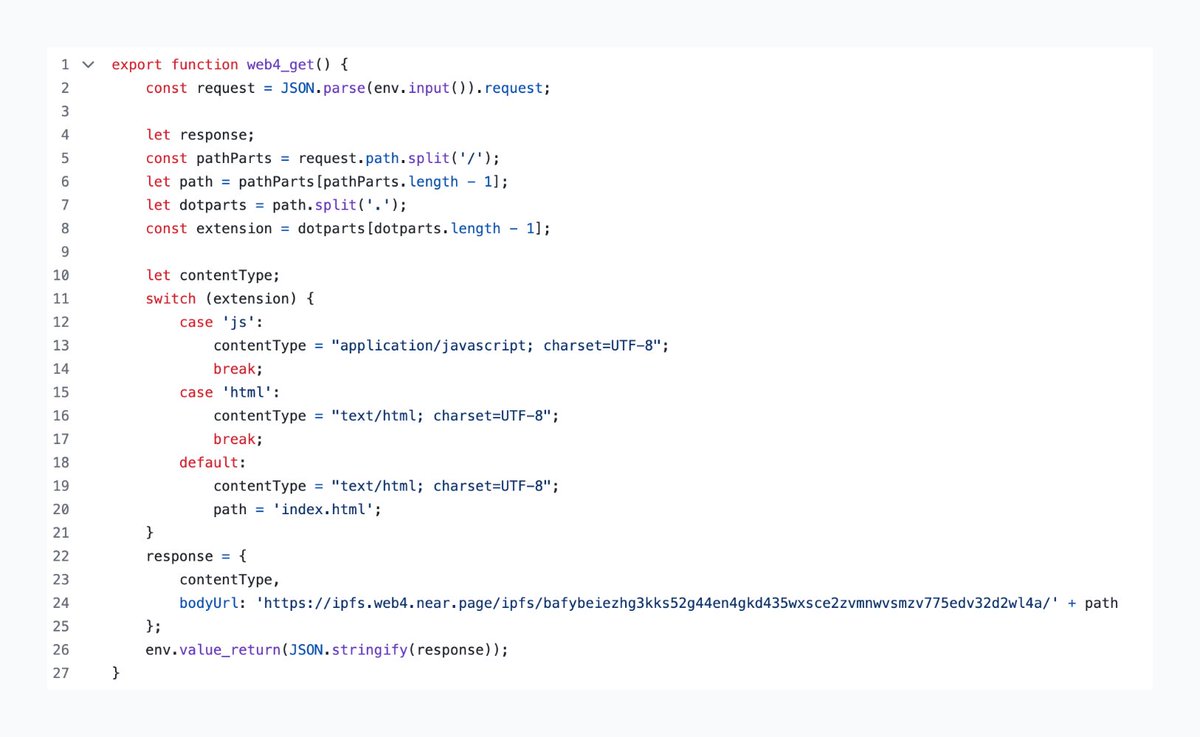
@NEARProtocol’s open web stack is insane.
Everyone’s still talking about web3, but NEAR has been on web4.
Here, look at this javascript code:

English