고정된 트윗
Alp Figgitls
128 posts


I just published Part 1 of The Sedimentary Consciousness series: Memory Is Made of Stone medium.com/p/memory-is-ma…
English

I just published Introduction to the Unified Theory of Consciousness medium.com/p/introduction…
#Consciousness #Neuroscience #Neurodiversity #MentalHealth #UnifiedTheory
English

@DefenderOfBasic Sedimentary consciousness: the idea that life and meaning arise chiefly from calcium, the element of memory
English

@MarioNawfal We need a language for these calcium channels. Radiant topology is that language. A non-linear, 3D language of brightness
English

A SINGLE BRAIN MOLECULE CAN REMEMBER THINGS... WAIT.. WHAT?!
In your brain, signals shoot between neurons using tiny bursts of electricity.
One of the key players making that happen is a molecule called CaV2.1—a microscopic gate that opens when it senses the right signal and lets calcium flood in to pass the message.
Now here’s the twist: this molecule doesn’t just open and close—it adapts based on what it’s been through.
Hit it with too many signals, and it starts to shut itself down, entering what researchers call a “declutched” state.
That slowdown isn’t random—it’s the molecule remembering past activity, and adjusting.
Kind of like if your fingers stopped typing after 500 texts in a row.
It’s not just a glitch—it’s a built-in feedback system. One burst lasts milliseconds.
The molecule’s response lasts seconds.
That’s enough time to start rewiring how neurons talk.
Multiply that across billions of channels, and you’ve got the foundation of actual memory.
The channel has four voltage-sensing domains—little sections that change shape when hit by electricity.
One of them, VSD-I, is the main switch.
Hit it hard enough, often enough, and it shifts into a different shape that stops the calcium from flowing.
This isn’t theory—they’ve mapped it out.
The molecule has over 200 possible shapes, depending on what kind of signal history it’s been exposed to.
So yes, your brain literally morphs at the molecular level when it learns something.
A neural fingerprint left behind in the form of a bent protein.
It’s short-term memory written into the structure of your cells.
And it starts with one tiny molecule changing its mind.
Source: Earth com / Nature Communications / Linköping University

Mario Nawfal@MarioNawfal
CURIOUS BRAINS = SMARTER BRAINS (SCIENCE SAYS SO) Turns out, curiosity isn’t just for kids asking 300 questions before lunch — it’s your brain’s secret weapon for surviving chaos. When you’re curious, your brain lights up like it just found treasure. Dopamine hits, memory boosts, and suddenly you’re learning faster without even trying. Even cooler? Curiosity helps your brain rewire itself — so when life gets weird (and it will), you don’t shut down, you adapt. Basically, your brain sees uncertainty and goes: “Panic?” But curiosity says, “Nah, let’s explore.” And boom — now you’re thinking like a genius instead of spiraling like a stressed-out WiFi signal. Source: Big Think
English

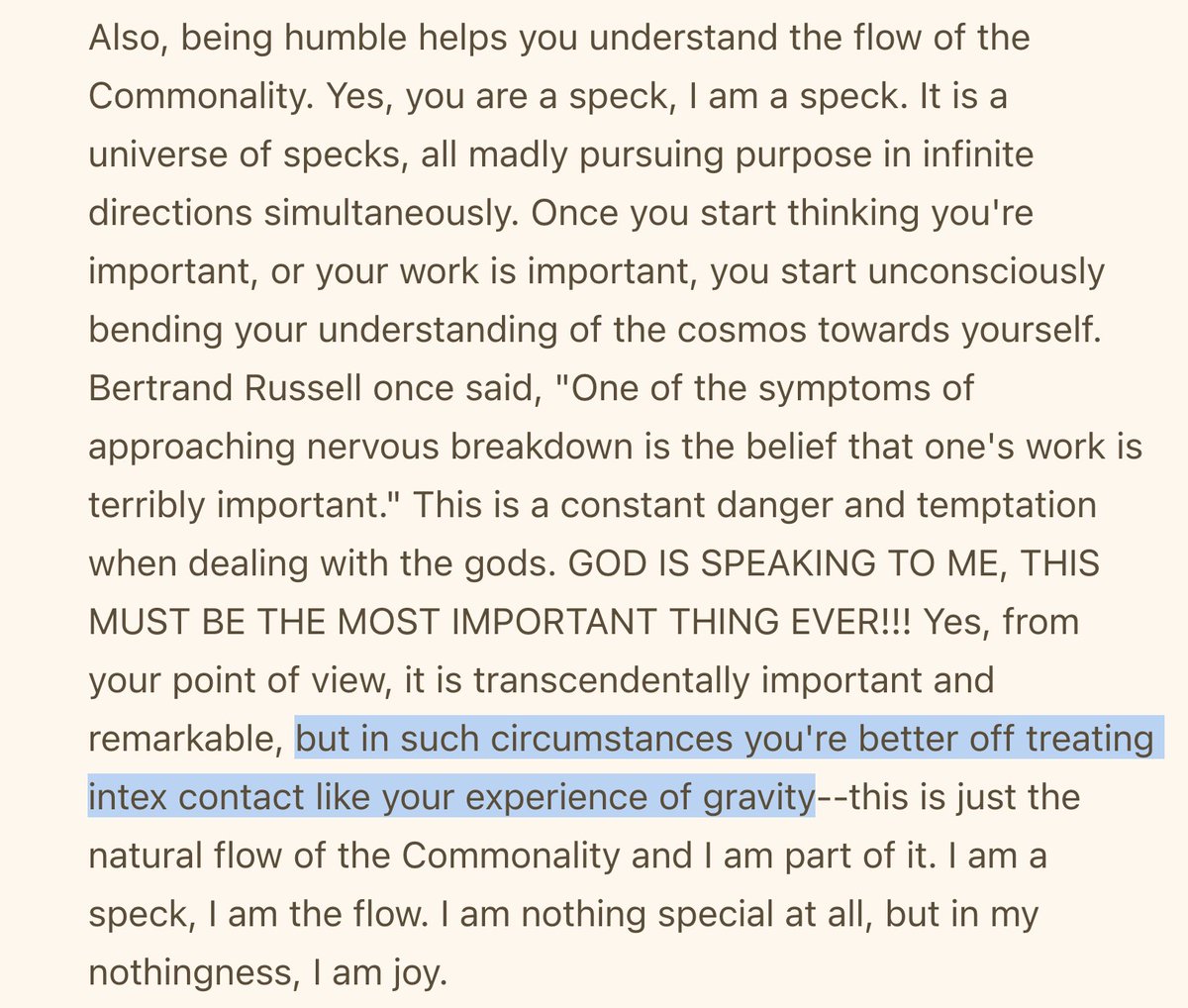
@DefenderOfBasic God is speaking to you? Cool. Treat it like gravity—real, invisible, and not something to brag about at parties.
English

@DomJeswal Cheap dopamine spikes cortisol. The high is bait, the crash is the hook. Want out? Chase stillness, not stimulation.
English

@DomJeswal Dopamine pulls you in. Cortisol keeps you there. The loop feels urgent—but it’s not truth. Step back. Breathe. Rechoose.
English