Foundring 🇺🇸@foundring1
Note: This recording is for the purposes of historical preservation. In fact, this is one of the most historically significant ragtime coon songs of the time because it directly led to the creation of the Pan-African flag by Marcus Garvey in 1920! en.wikipedia.org/wiki/Every_Rac…
Although several recordings were made shortly after it was published, AFAIK none are publicly available online. Other than a slower modern reproduction available on YouTube, this is the only real version of this song, which is a shame because of its historical value. This is likely the most faithful rendition recorded in over a century.
This song by Heelan and Helf, along with the 1896 hit "All Coons Look Alike to Me" by Ernest Hogan, was a large reason why the term "coon" as a slur for black people became a part of the wider American vocabulary. As is common with language, words evolve over time and the term "coon" has a fascinating history with far more nuance than most realize.
In fact "coon" originally referred to WHITE Americans...specifically the poor frontiersmen who wore the raccoon skin caps like Davy Crockett. By the 1860s it was adopted by the American Whig Party, the first true "3rd party" in American politics. Henry Clay was their champion politician, and many of the early "coon songs" were political rallying cries for Clay and the Whig Party.
Even after the Civil War, the term was NOT often used in a disparaging way towards black people, and in fact it was embraced and adopted by black performers like Sam Lucas, who became one of the great coon song composers of the 19th century.
Most of the "coon songs" from the late 1800s are actually beautiful and sentimental love songs and lullabies, although by then it was also being used in a comic way in minstrel shows, led by black performers like Lucas.
Other than Sam Lucas, many of the "coon song" composers from this time were white but they were not using the term in a disparaging way. White composers were enamored by the "plantation melodies" of black Americans, and the style became immensely popular.
By the 1890s, black composers like Irving Jones took advantage of the genre's popularity and started writing more "stereotype" songs that are largely considered "offensive" today, even though at the time the term was not considered to be "racist". Ernest Hogan, another popular early black ragtime composer, wrote the song "All Coons Look Alike to Me" in 1896, likely the first true ragtime song by a black composer. Hogan had repurposed an older song called "All Pimps Look Alike to Me" that was never published. The term "pimp" was considered vulgar at the time so he switched it with "coon" which was not. Contrary to the portrayal today of all these songs being "racist" and written in bad faith, the coon songs of pioneering black composers like Jones and Hogan were embraced by audiences of *all* races and led to the explosion of popularity of black performers, who were able to used the stereotypes of the minstrel era to subvert those very stereotypes and achieve great success in a predominately white entertainment field.
It's unfortunate that this nuance is entirely disregarded today, because as a result many great pioneering black artists have been removed from the history books because they wrote coon songs like this. Composers Heelan and Helf were white, and clearly they were trying to hop on the "coon song" train that was popularized by black composers like Lucas, Jones and Hogan. Their song from 1900 became a massive hit, and the sheet music cover brags how it was performed by over 100 popular artists of the day. This list includes a mix of both white and black performers, which is more proof that this music was enjoyed and embraced by all races and served to *unite* via satire and comedy during a difficult and racially tumultuous era.
This might come as a hot take especially to today's woke historians, but the coon songs did more to unite people than they'd like to admit. This was the music of the common man, and both black and white audiences couldn't get enough of these songs, which directly led to further collaboration between races and jumpstarted the artistically homogenized jazz era. These songs were the conduit for this racial cooperation, as strange as it may seem now. As for the composers, as you can see from the sheet music included in this video, they were extremely accomplished.
William Aloysius Heelan lived from 1874-1920 in New York City: en.wikipedia.org/wiki/Will_A._H…
John Fred. Helf (1871-1915) was even more prolific. He was born in Kentucky and wrote over 100 songs in his diverse and accomplished career: en.wikipedia.org/wiki/J._Fred_H…
As for the song itself, it truly is a masterclass of songwriting. When I first discovered this about a year ago, I determined it was likely too difficult for me to perform and sing accurately at the same time. However, my skills have improved since then so I decided to take on the challenge. While some of the songs I revive take a few days or weeks of hard work to prepare, this one took many months of practice. It's hard to describe to non-musicians just how difficult it is to pull off a live performance like this. It's easily one of the most complex things I can imagine doing as a musician. I would humbly wager that no other living musician can pull off what you see here, it really is that difficult. It should be noted that these songs were NOT meant to be sung and performed by a single musician.
They almost ALWAYS were intended to be played by a pianist AND a singer. The idea of one person accurately doing both would have been unheard of at the time (and today as well TBH).
In particular, the musical references to other cultures in the chorus is one of the most ingenious and inspired ideas I've ever come across in the ragtime era. The songs referenced are even included in the score (which I've highlighted in this video).
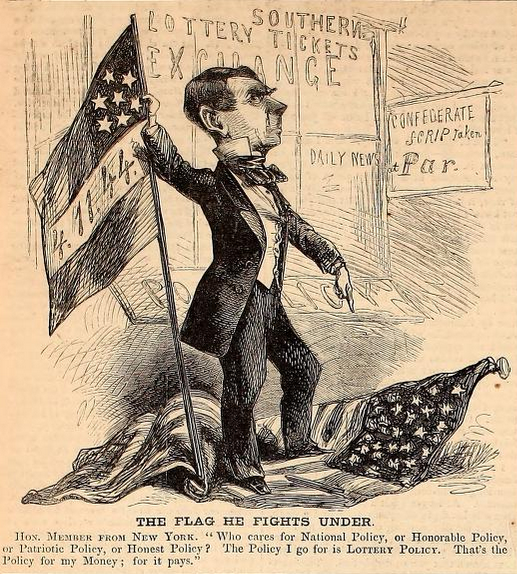
Another interesting historical reference is to one of the first numerical "memes" of the modern era, 4-11-44. There's even a wikipedia page about this meme! en.wikipedia.org/wiki/Four_elev…
There was a popular illegal gambling operation called "policy" or the numbers game that was commonly played by lower/working class Americans (of all races): en.wikipedia.org/wiki/Numbers_g…
It was very popular among poor black Americans, and as early as the Civil War the numbers "4-11-44" became associated as the "negro's lucky numbers" in the lottery. By the 1880s entire songs were being written about the numbers, so this reference in a song from 1900 was actually already quite dated.
You can download the sheet music for free from many sources online, including the Library of Congress: loc.gov/item/202379226…
The University of Maine: digitalcommons.library.umaine.edu/cgi/viewconten…
IMSLP: imslp.org/wiki/Every_Rac…
New York Public Libraries: digitalcollections.nypl.org/items/3b904450…
I realize that some might find songs like this offensive, and I totally understand. However, simply trying to memory-hole this entire era of history does a great disservice to humanity, because these songs represent a complicated transitional time of history. Pretending they don't exist is not going to solve any problems today. Although some may push back and say preserving this music will make things worse, I obviously strongly disagree. Preserving history (the good, the bad and the ugly) is essential to a healthy society. When you try to erase the past, you create unnecessary taboos and ultimately this divides people further and pushes more people towards extremism. When there are fewer taboos, there are fewer extremists, simple as.
I am motivated by a true passion for the music and artists of this era. The extreme amount of dedication and care I put into these recreations should be proof enough that I'm approaching this historical project with utmost care and diligence. If I was trying to be provocative for clicks, I wouldn't put my heart and soul into these recreations, on an entirely unmonetized youtube channel. I'm quite literally not profiting from this work. I'm doing it because I firmly believe it has historical value and this music is still extremely relevant today.
When you are allowed to laugh at each other's differences, you are less likely to harm one another. When certain speech is banned completely, even distasteful and "racist" speech, it does NOTHING to combat racism and instead it reenforces it. Banning this music accomplished nothing. We need to study and understand our past so we can learn about our present and make a better future. Satire and comedy, even when its racially themed, is essentially to a well-functioning society, which is why they are under attack and why people like me are regularly threatened and punished for daring to step outside the carefully crafted and comfortable woke paradigm that has only fomented more division and discord.
Hopefully my efforts here will be understood one day as an act of necessary historical preservation.
Thank you for reading and listening. Much love. -Kylan