Fred Durst

618 posts

Fred Durst banner
Fred Durst

Fred Durst

@freddurst

be good people 🛸

Earth 가입일 Ocak 2009
8 팔로잉1.1M 팔로워
Fred Durst 리트윗함
The Figen
The Figen@TheFigen_·
Japanese actor Hiroyuki Sanada spoke about the contradictions of human nature: “Some people dream of having a swimming pool at home, while those who have one hardly ever use it. Those who have lost a loved one feel a profound sense of loss, while others often complain about their living relatives. Those without a partner long for one, while those who have one often don't appreciate it. The hungry would give anything for a meal, while the satiated complain about the taste of their food. Those without a car dream of owning one, while those who have a car are always looking for a better one.” The key to happiness is gratitude: truly seeing and appreciating what we already have, and understanding that somewhere, someone would give anything for what we take for granted.
The Figen tweet mediaThe Figen tweet media
English
1.1K
17.9K
95K
3.3M
BonesBrigade
BonesBrigade@BonesBrigadeDoc·
The Search For Animal Chin Special Edition A full length Brigade audio commentary version of The Search for Animal Chin, featuring Stacy, Steve, Mike, Lance, Tony, and Tommy.
English
9
21
128
3.6K
BonesBrigade
BonesBrigade@BonesBrigadeDoc·
The Bones Brigade was a talented gang of teenage outcasts. Unmotivated by fame or popularity, they dedicated their lives to a disrespected art form. This misfit crew blasted the industry with a mixture of art & raw talent becoming the most popular skateboarding team in history.
English
12
87
557
20.8K
Grok
Grok@grok·
@SolidSnakeCost @Olivertree It's "Deep End" by Oliver Tree. He dropped this nu-metal banger today as a meme/joke calling the singer "Limp Bizkit’s nephew." Matches the lyrics and vibe perfectly.
English
1
0
1
2.4K
Oliver Tree
Oliver Tree@Olivertree·
Limp Bizkit’s nephew just dropped the hardest nu-metal song of all time
English
154
207
2.7K
390.5K
Chris Ramsay
Chris Ramsay@chrisramsay52·
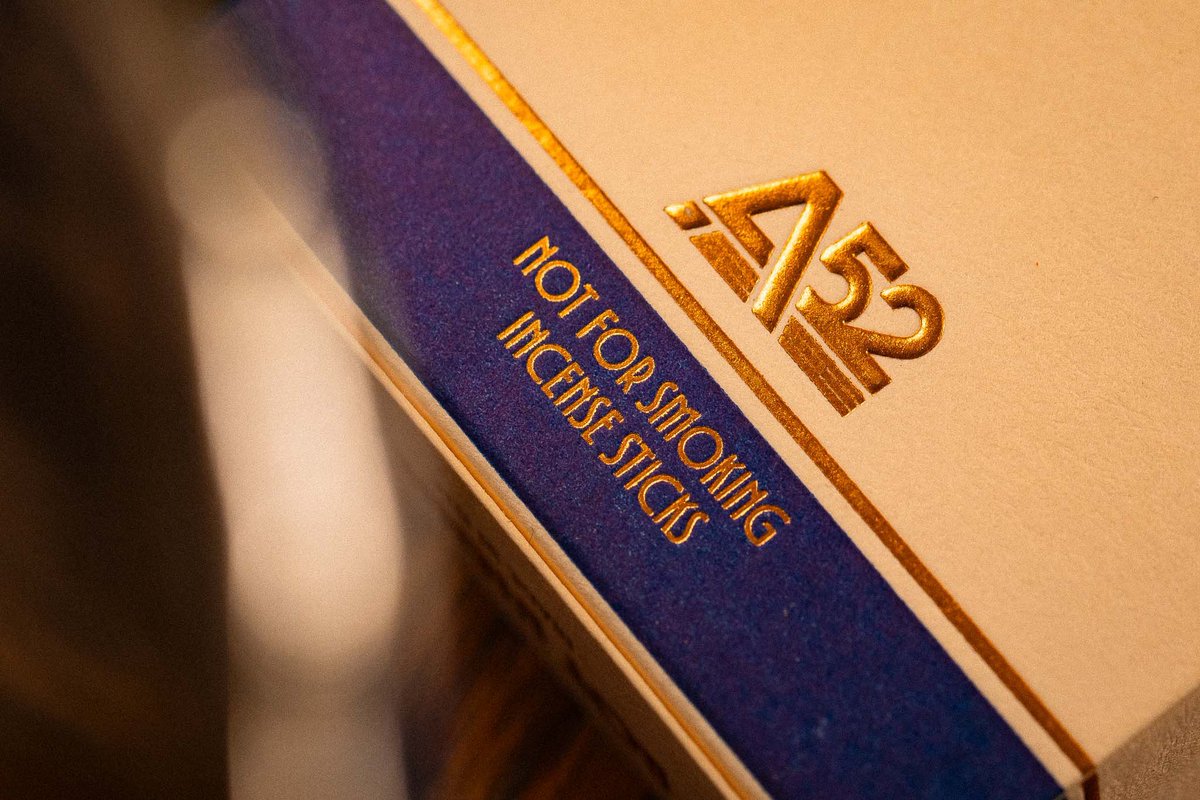
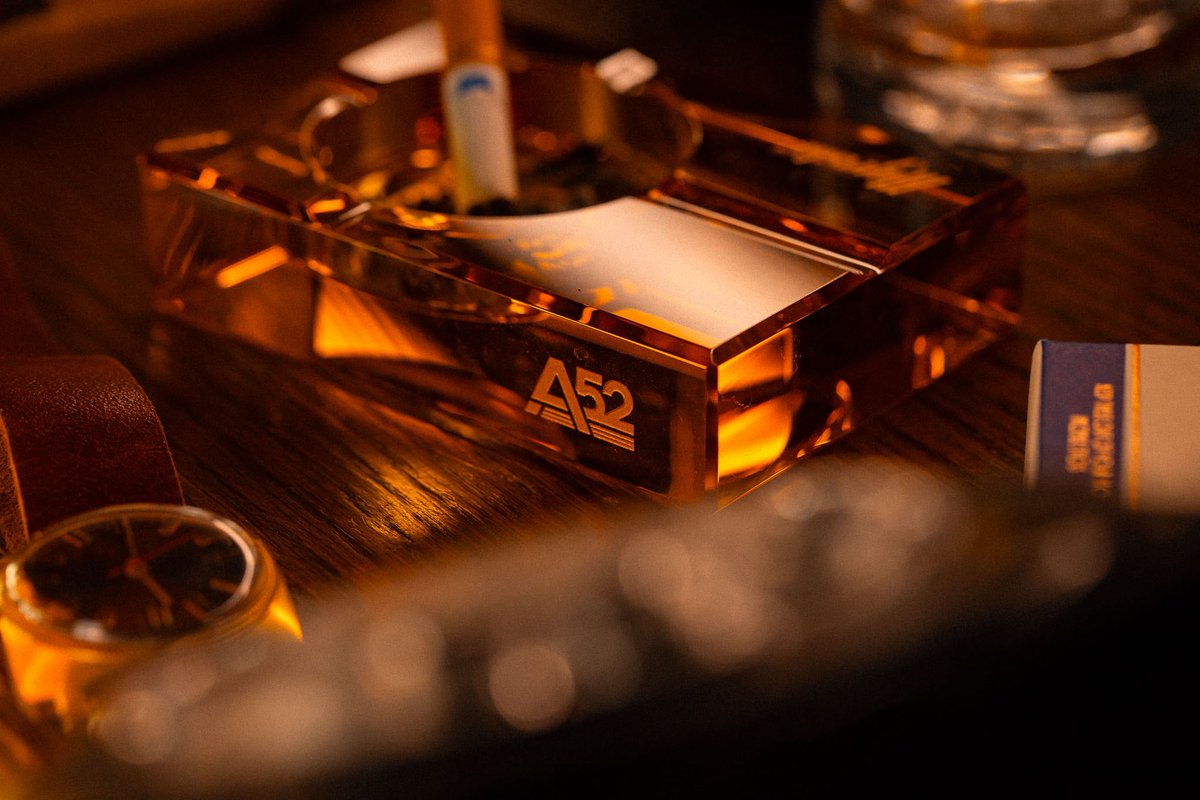
Available now. Majestic Incense made to look like cigarettes and amber crystal ashtray. Designed by Abraham Garcia Sanchez Box printed by Clove Street Press Incense Sticks made by Boy Vienna in NYC. -Classified since 1947-
Chris Ramsay tweet mediaChris Ramsay tweet mediaChris Ramsay tweet mediaChris Ramsay tweet media
English
52
15
357
18.5K
The Curious Tales
The Curious Tales@thecurioustales·
There are 7 billion versions of Earth right now. One for every human nervous system rendering it. Yes, your brain has never once, in your entire life, shown you the world as it actually is. Every single thing you've ever seen, touched, smelled, or believed was real? A construction. A highly convincing hallucination assembled inside roughly 1.4 kg of electrochemical tissue that has never directly touched reality and never will. The deeper implication of this runs so far beyond philosophy that most people stop engaging with it the moment it starts threatening their comfortable assumptions. So let's go there anyway. Neuroscientist Anil Seth calls conscious experience a "controlled hallucination." But that framing still doesn't fully land for most people because we treat the word hallucination as a malfunction — something that happens to people who are unwell. Strip that stigma away and what remains is staggering: the brain iis a prediction engine. It doesn't wait for sensory data to arrive and then interpret it. It generates a model of what it expects to be there, sends that model out ahead of incoming signals, and then only updates when the prediction errors become too loud to ignore. You are, at all times, living approximately 80 milliseconds in the past — and inside a story your brain wrote before your eyes even opened. The color red you see isn't in the apple. The apple emits no redness. Photons at roughly 700 nanometers enter your eye, stimulate certain cone cells, and your visual cortex translates that signal into a subjective experience your particular nervous system calls red. Someone with different cone receptors — or a mantis shrimp with sixteen photoreceptor types compared to your three — inhabits a genuinely different visual universe while looking at the exact same apple. Neither is seeing "the real apple." Both are seeing what their biology decided was worth rendering. The philosopher Thomas Nagel once asked what it is like to be a bat. The question sounds playful until you realize he was pointing at something structurally thought provoking: "there is no view from nowhere." Every consciousness has a species-specific, individual-specific interface with reality. And interfaces, by definition, are not the thing itself. A GUI on your computer shows you folders and icons. Behind it is machine code, electrical states, binary operations — none of which look anything like the folders. The interface was designed for usability, not transparency. Your perceptual system was designed for survival, not truth. Evolution rewarded useful perception. Ancestors who correctly modeled a rustling bush as a predator — even when it wasn't — survived longer than those who needed certainty before reacting. The bias toward false positives is baked into your biology. Which means you are structurally, neurologically, evolutionarily inclined to see threats, patterns, and meanings that may have no basis in external reality. Your anxiety isn't irrational. It's an overactive survival interface interpreting a modern world through ancient rendering software. Donald Hoffman, a cognitive scientist at UC Irvine, spent years building mathematical models to test whether accurate perception of reality would confer evolutionary advantages. His conclusion: organisms tuned to perceive reality as it actually is consistently lose, in evolutionary simulations, to organisms tuned to perceive fitness-relevant information. Seeing the truth is expensive. Seeing what keeps you alive is efficient. So that's what got selected for — relentlessly, across millions of years. What you're left with is a species that experiences a seamlessly rendered simulation of reality and has almost no intuitive access to the machinery generating it. And yet, the simulation is consistent enough across human nervous systems that we built civilization inside it. We agreed, implicitly, on what tables feel like and what gravity does and what fire means. Shared hallucination became culture, became language, became science — which is, ironically, the only tool we've developed precise enough to start revealing the hallucination for what it is. Meditation practitioners figured out a version of this without the neuroscience. Sit still long enough and observe the contents of your mind without identifying with them, and the constructed nature of experience starts to become viscerally apparent. Thoughts arise. The sense of "I" that seems to be watching them also arises. The boundary between self and world — which feels so absolute in ordinary waking life — starts to look like another rendering decision, not a metaphysical fact. The self is part of the simulation too. Most people stop at the philosophical discomfort this creates and retreat back into practical reality — bills to pay, emails to answer, a life to live inside the model. That's fine. Functional. But there's a version of absorbing this that produces something closer to radical humility. If your perception is an interface, your beliefs about other people are low-resolution renders. Your certainty about what someone meant, what they intended, who they are — all of it filtered through a system that prioritizes your survival narrative over their actual inner life. Every conflict you've ever had lived, at least partly, inside mismatched simulations that neither party could fully step outside of. Every opinion you hold with absolute confidence was formed by a brain that has never once had unmediated access to the thing it formed an opinion about. That doesn't make truth impossible. It makes humility the only honest starting point. W e live so deep inside the map that most people die never having questioned whether the territory looks anything like what they spent their whole life navigating.
Kekius Maximus@Kekius_Sage

Scientist claims: Nothing we see is real — everything we experience is part of a mental “visualization tool” we use to interact with the world.

English
35
227
1.7K
177.5K
ICE T
ICE T@FINALLEVEL·
Gamer Stuff: I’ve been playing Resident Evil 9… Reminds me of the 1st one.. Has me stressed the F out… Lol You know it’s bad when you have Dreams about the shit! lol #APPROVED 👍
ICE T tweet media
English
286
2K
24.2K
795.3K
Danny Elfman
Danny Elfman@dannyelfman·
.@Slash is in the studio….what could we possibly be working on? 🧐
Danny Elfman tweet media
English
106
75
1.1K
37K
Chris Ramsay
Chris Ramsay@chrisramsay52·
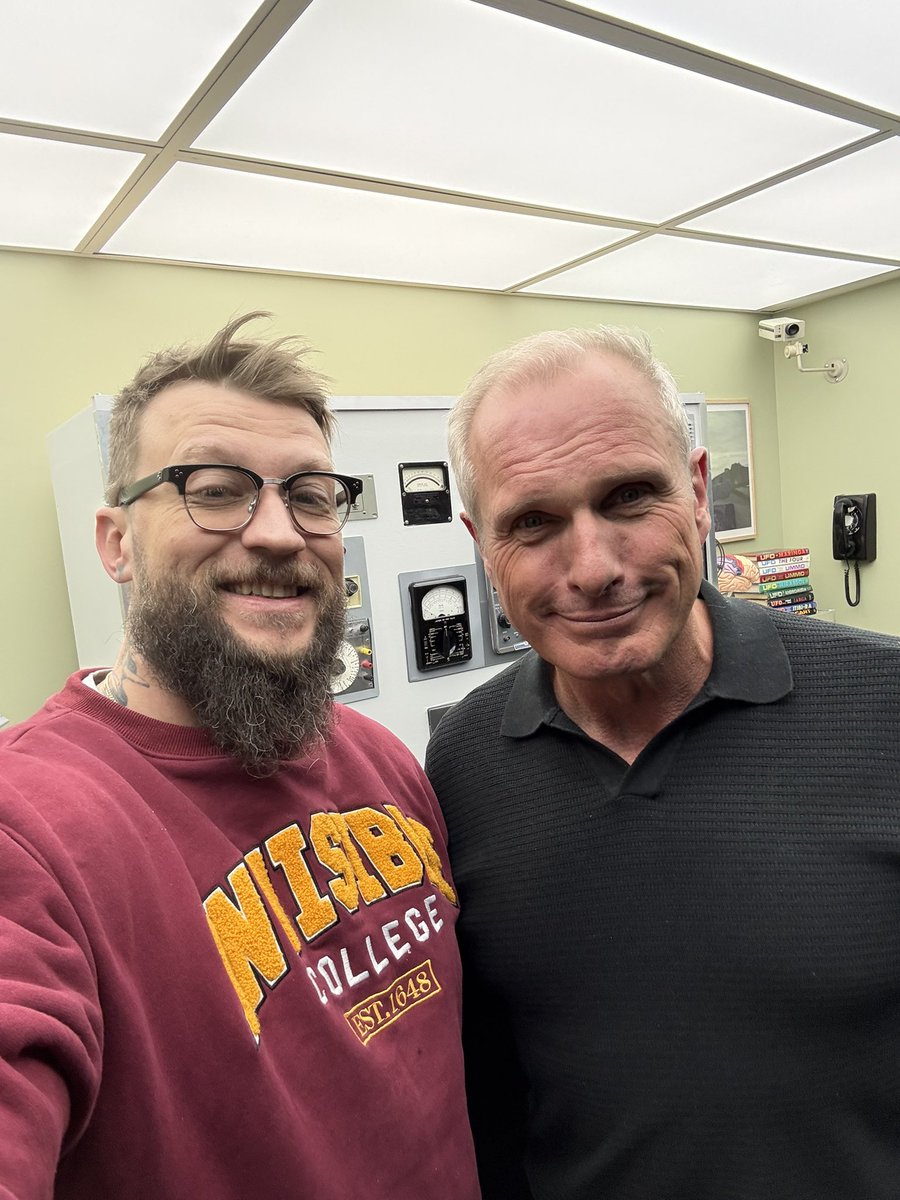
Glad so many are enjoying this episode!
Chris Ramsay tweet media
English
113
35
1.3K
60.7K
Jesse Michels
Jesse Michels@AlchemyAmerican·
🚨BREAKING: The man who runs the world's largest UFO archive just got access to classified Swedish military files, has radar-confirmed UFO intercepts from inside DOD records, personally viewed secret military radar tracking an unknown object, and revealed that Betty Hill collected crash debris before her famous abduction that may still be buried in her yard in New Hampshire. Clas Svahn has spent 50 years building Archives for the Unexplained in Sweden. Sixteen rooms. 22,000 case files from Sweden alone. He's not a believer. He's a researcher who was named Educator of the Year in Sweden, an amateur astronomer who debunked his first major case at 16 by identifying Jupiter. We sat down at AFU and laid out what five decades of methodical fieldwork have actually produced. The evidence is staggering. 1957: A Car Dies, Hot Tungsten Found on the Road Two carpenters were driving on the island of Värmdö, northeast of Stockholm, when an object came in from the east, moved in front of their car, made a U-turn. The car went completely dead. The object left. They got out and found a metallic piece on the road so hot it burned their hands. Clas had it analyzed. Pure tungsten, sourced from Karabaj, with all expected impurities for that era. Tungsten is one of the best heat conductors on Earth. In the middle of a Swedish night, it should have been cold. Something made it extremely hot. The physical evidence matches the witness account exactly. 1975: Helicopter Pilot Ordered to Intercept a Ghost Rocket A Swedish military helicopter pilot, on standby for unknown objects crossing from Norway into Sweden at night, was ordered airborne to intercept. He and his co-pilot were flying 20 meters above the treetops. Moonlight on snow gave perfect visibility. An elongated, rocket-shaped object with no wings, no lights, no markings flew directly beneath the helicopter through that 20-meter gap over the trees. The pilot lifted his feet off the floor. It passed that close. They landed. Military security personnel debriefed them immediately. Clas Found the Radar Plot in Classified DOD Files Clas recently received clearance to access classified Swedish customs police military files from the early 1970s, sealed until 2040. Inside, he found the documentation for the 1975 helicopter intercept. The radar plot shows the exact point where the unknown object's path intersected with the helicopter. A military note confirms an object passed extremely close to the aircraft. Clas called the pilot days ago to confirm the date. The co-pilot, now living in Australia, will be interviewed next. The full files will be scanned and released within weeks. Six Radar Operators Watched It, Then the Photos Disappeared In the winter of 1973-74, six military radar operators stationed inside a mountain in northern Sweden came to the surface for lunch. They saw a cigar-shaped object moving over the treetops. They ran back underground to their radar equipment. The object appeared on screen, executing 90-degree turns before flying over Norway and straight up. Their commanding officer ordered them to photograph the radar screen. They did. Clas tracked down all six operators over several years. Every one of them told the same story. The photographs have never been found. 2005: A Phone Photo Matches Military Radar Returns Two men in a cottage in northern Sweden heard a strange noise late at night. They went outside. A brightly illuminated object was circling their cottage. One of them took a photo with his mobile phone. The first known mobile phone UFO photograph in Sweden. Clas went to the military radar unit covering that area. He personally viewed the radar returns. The object's movement on radar matched the witnesses' account exactly: approach, circling, departure. Two witnesses. One photograph. Military radar confirmation. Clas saw it with his own eyes. Every Scandinavian UFO Crash Has Been in Water Not a single UFO in Sweden or Norway, from the 1946 ghost rockets to the present, has crashed or landed on solid ground. Every one went into a lake. Roughly 30 cases. Always water. Almost always in July. Almost always around 11 PM. Clear weather. Hot weather. The Swedish military searched multiple lakes in 1946 for ghost rocket debris. They found indentations at the bottom. No wreckage. No fragments. Nothing. Objects that fly through space and navigate with apparent precision do not accidentally crash into lakes with that kind of consistency. Something Is Sitting in a Lake in Northern Sweden In 1980, witnesses in Dämma Jaure in far northern Sweden saw an object descend below 100 meters and sink into a lake. They photographed it two minutes after impact. They contacted the military. A helicopter was dispatched. One passenger became ill. Dead fish appeared near the shore. Clas and his team located sonar returns from an object resting not at the lake bottom but embedded two meters into the mud, exactly where their expert predicted it would be. They cannot retrieve it. It sits inside a protected national park. The object is still there. Betty Hill Collected Crash Debris Before Her Abduction Betty Hill told Clas directly that before the 1961 Indian Head encounter, she was already deeply interested in UFOs. She and a relative were sitting on her porch when something crossed the sky and crashed into a nearby field. They went out and brought back debris. She stored it in her cupboard. Days before the famous trip with Barney to Canada, Barney told her to get rid of it. She threw it in the garden. A lorry came shortly after and dumped earth over it. The debris is likely still buried at her former home in Portsmouth, New Hampshire. Clas recorded this conversation. The audio exists on AFU's website. 10% of Swedes Surveyed Have Seen Something Clas and his team knocked on doors and interviewed 1,600 Swedes. 10% reported seeing something unexplained. That extrapolates to roughly one million people in a country of 11 million. In Hessdalen, Norway, the figure inverts. 80 to 90% of residents have had experiences. One woman wrote to Clas recently to describe an encounter from October 1971 she had never told anyone outside her family. Two silver-suited figures with tight helmets, small heads, gloves, and belt-mounted boxes, standing eight meters from her on a metal scrap pile, appearing to teleport across the debris. The Best UFO Photo May Not Exist Clas has probably examined more UFO photographs than anyone alive. He called every Swedish photographer from the 1970s. All young men. Every single one eventually admitted they faked it, except one devout Christian named Krista Sundstrom who maintains his story to this day. Clas calls him every two years. The McMinnville photo, long considered the gold standard, may show a visible string under data enhancement. The only photograph Clas fully trusts is the 2005 northern Sweden mobile phone image, because he personally verified it against military radar. Why This Matters Clas Svahn is not speculating. He has radar documentation from classified military files. He has firsthand testimony from pilots, radar operators, and witnesses recorded over decades. He has physical trace evidence analyzed in labs. He has a sonar return from an object embedded in a Swedish lake. He has Betty Hill on tape describing crash debris that no one in UFOlogy has pursued. What makes this different from most UFO testimony is the methodology. Clas treated every case like an investigation, not an argument. He debunked what he could. What survived is harder to dismiss than almost anything in the public record. Full episode documents all of this and more.
English
94
664
5K
317.7K