fyiqpluto 리트윗함
fyiqpluto
24.1K posts


another day another win 🏆 @MetaWin
little bit of savings and a good holiday
METAWIN.COM@MetaWin
Congrats to ‘BCSukcks’ who just turned $2.50 into over $21,700 playing Sweet Bonanza on metawin.com! 🍌 To celebrate his big win we are GIVING AWAY $450 to 1 person who QRTs this post what they would do with $21k in winnings!
English
fyiqpluto 리트윗함

Congrats to ‘BCSukcks’ who just turned $2.50 into over $21,700 playing Sweet Bonanza on metawin.com! 🍌
To celebrate his big win we are GIVING AWAY $450 to 1 person who QRTs this post what they would do with $21k in winnings!


English
fyiqpluto 리트윗함

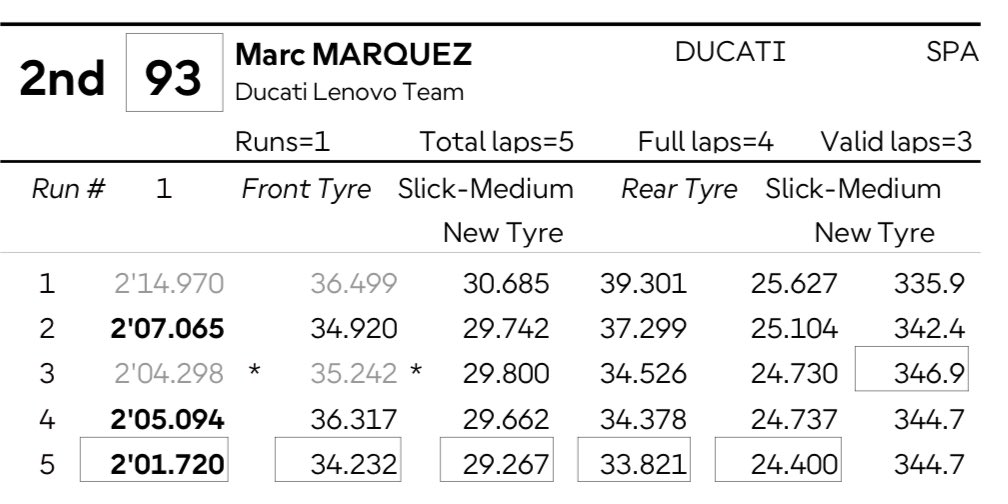
MM93 obvs used warmup to practice his long-lap penalty at Turns 13/14, in sector 3. If we assume he rode the long lap on his first two laps, he will lose around 3 seconds when he takes his penalty in the race. Of course it’s not only time lost, it’s also positions, because you must take the penalty in the opening laps and getting back any positions lost will cost you time, tyres etc

English
fyiqpluto 리트윗함

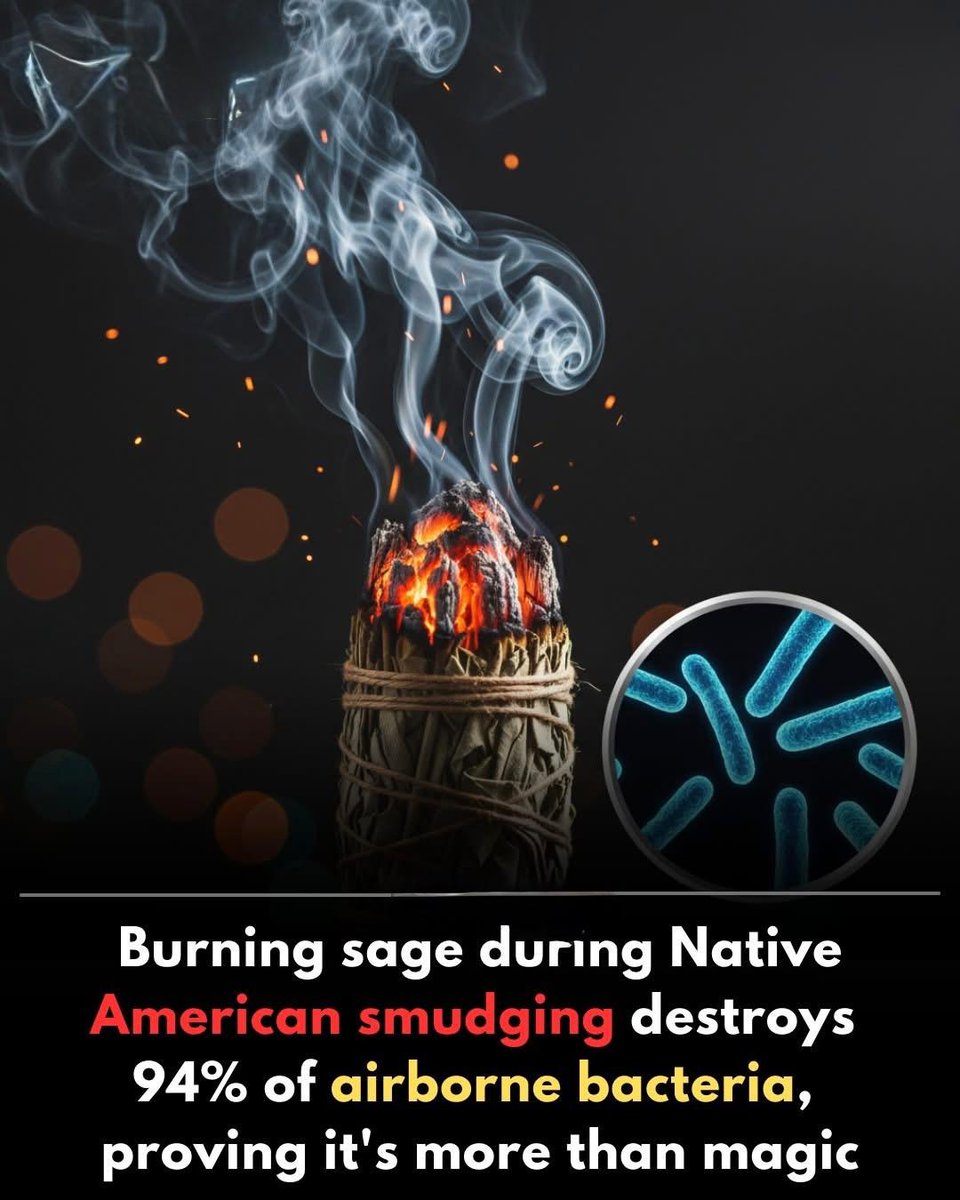
🚨 Breaking: Science Confirms This Ancient Ritual Kills 94% of Germs…
For centuries, Native Americans have burned sage in a practice called smudging — believed to clear bad energy. But now, science is revealing a hidden power: the smoke from sage can destroy up to 94% of bacteria floating in the air.
That’s right — what was once considered just a spiritual ritual may actually be cleaning your space at a microscopic level. Imagine lighting a stick of sage and watching invisible germs vanish while honoring an ancient tradition. Could this be the ultimate blend of magic and science?
Source: Loughlin, A., et al. (n.d.). Antimicrobial effects of Salvia officinalis smoke on airborne bacteria. Journal of Ethnopharmacology.

English
fyiqpluto 리트윗함
fyiqpluto 리트윗함
fyiqpluto 리트윗함
fyiqpluto 리트윗함

Robert O. Becker mapped the DC electrical system of the human body in the 1960s.
He proved salamanders regenerate limbs using DC current, not chemistry.
He proved bone heals using piezoelectricity, not calcium supplements.
He proved anesthesia is an electromagnetic state not a chemical one.
The Military classified his work.
Medicine ignored it.
Pharma buried it.
The most important biological discovery of the 20th century and you've never heard his name.
The Body Electric.
Read it.


no.mind@the_no_mind
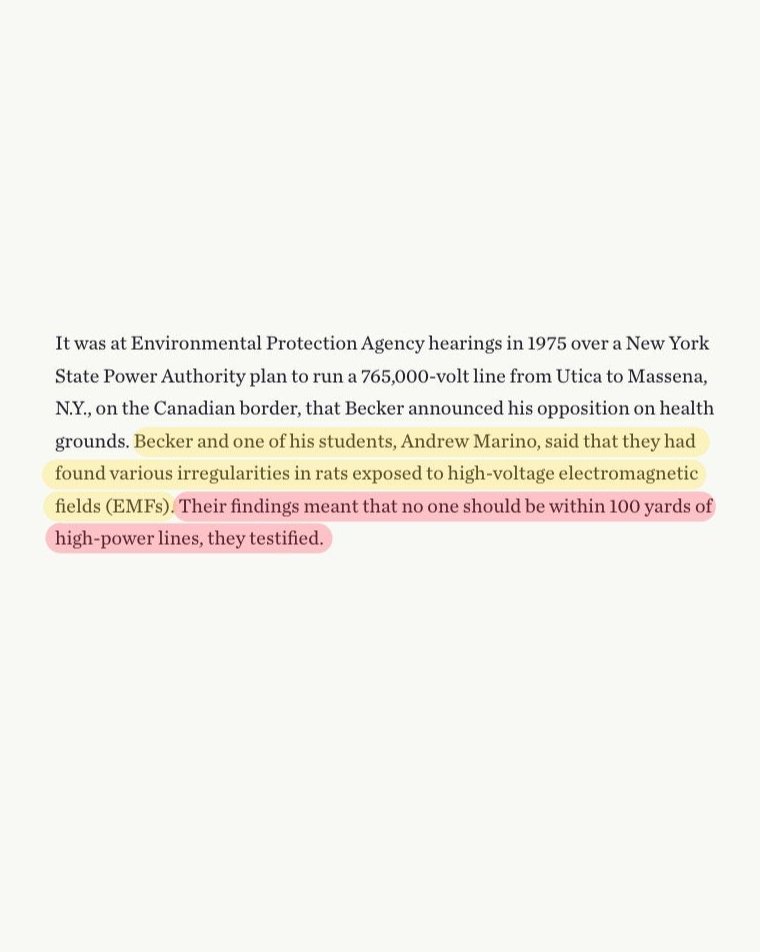
In 1973, the U.S. Navy listed 2,300+ studies showing EMF harm, then buried them. Dr. Robert O. Becker, a pioneering MD and bioelectricity researcher, went on 60 Minutes to warn the public. He was punished: lab shut down, federal funding pulled, career ended.
English
fyiqpluto 리트윗함

Iran Release Proof Jeffrey Epstein Is Alive in Israel and Blackmailing Kash Patel
Iran shocked the world by hacking FBI Director Kash Patel's personal emails.
But here's what the corporate media won't touch: Iran didn't hack Patel. They hacked Israel.
And it gets darker. The Handala Hack Team says this is only the beginning. They've got more. Much, much more...
English
fyiqpluto 리트윗함
fyiqpluto 리트윗함

Whenever we talk about traditional Indian knowledge system, there is an elephant in the room we often shy from addressing. Why does Vrikshayurveda - a corpus of plant science older than almost any living intellectual tradition - still have to justify its existence every time it enters a room?
Why, after thirty centuries of farmers using neem, does India hold no position of leadership in neem research? Why, when a tribal community in Andhra Pradesh is using 420 species of medicinal plants with documented efficacy, does the nearest IIT estimate ten years and twenty lakhs INR (~21K USD) per plant per application to validate what farmers have already spent generations refining?
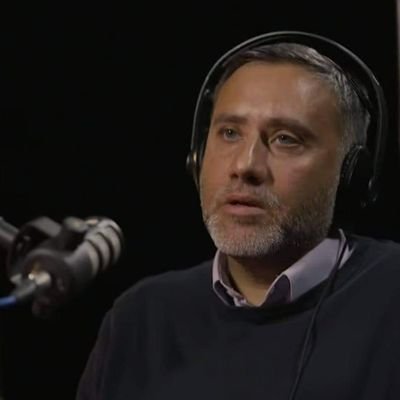
In my podcast with AV Balasubramanian (AVB), we explored many of these gnarly questions. AV Balasubramanian is one of the leading pioneers of deploying the wisdom of Vrikshayurveda in Indian Agriculture.
He is the co-founder of the Centre for Indian Knowledge Systems (CIKS) in Chennai, one, besides conserving 170+ traditional rice varieties, of the most serious institutional efforts to apply Vrikshayurveda -- the classical Indian science of plant health - to modern day challenges in sustainable agriculture.
His background is unusual even by the standards of people who do unusual things. A biochemistry and biophysics training at premier Indian institutions, a PhD abandoned in the US in 1982 in favour of a deep interest in exploring Science rooted in the Indian tradition, a decade as a student and teacher of Yoga at Krishnamacharya Yoga Mandiram under the direct lineage of T. Krishnamacharya and T.K.V. Desikachar, and eventually a decades-long collaboration with the Patriotic and People-Oriented Science and Technology (PPST) group, the intellectual collective that, more than any other, attempted to recover the epistemological foundations of Indian science rather than merely its recipes.
AVB could have made a career from positioning traditional knowledge as a cultural heritage to be preserved. He didn’t.
He has made a career of asking whether it works, under what conditions, for which problems, and how to scale it. His field team used a principle from Vrikshayurveda -- that bitter taste is an indicator of pesticidal potential -- to crack a fruit-and-shoot borer problem on brinjal that neem had failed to solve.
His experiments with Ayurvedic storage forms (arkas, thailas, arishtas) have demonstrated that shelf life -- the most commonly cited limitation of natural bioprotectants -- is a solvable problem, using technology the Ayurvedic drug industry has operated for over a century.
It’s unalloyed joy to hear when AVB speaks.
He speaks with scientific precision (while warning of the dangers of epistemic fascism) and carries his passion for Indian knowledge system with a scientist’s penchant for rigor. What made this conversation personal was not just the fact that he studied Yoga under the same lineage I have been studying since 2013. It was our shared love and passion for Indian Knowledge systems.
In the first part of this wide-ranging chat, AVB and I engage in philosophical throat clearing, exploring the context of Vrikshayurveda, before engaging with the the content of Vrikshayurveda.
I started off the dialogue with a fundamental question.
Traditional Indian medical and philosophical frameworks seem to rest on categories like vata, pitta, kapha that have not changed in millennia. A modern scientist looking at that would say: if your categories never change, is it really science?
In response, AVB shared a beautiful analogy he had read from Captain Srinivasa Murthy.
Imagine you make a list of every group that has tried to invade or conquer India over thirty centuries. You can list them in chronological order -- Greeks, Turks, Arabs, Portuguese, British, and so on. Or you can classify them differently: those who came by land, those who came by sea, those who came by air. The second classification not only subsumes everything that happened in the past but is capable of accommodating anything in the future.
An Ayurvedic physician examining a patient is doing exactly this. When he looks at a complex of symptoms and asks whether the primary doshic imbalance is vata, pitta, or kapha, he is using a classification scheme that exhausts the universe of discourse.
English
fyiqpluto 리트윗함
fyiqpluto 리트윗함

OH. MY. WORD! 🤯
How on EARTH did Tommy Bridewell hang on to that 😳
#WorldSBK #PortugueseWorldSBK
English
fyiqpluto 리트윗함