Greg Ceccarelli

1.5K posts

Greg Ceccarelli banner
Greg Ceccarelli

Greg Ceccarelli

@gregce10

all your chats @specstoryai. organize D.C. AI tinkerers.

Washington D.C. 가입일 Ekim 2015
408 팔로잉834 팔로워
고정된 트윗
Greg Ceccarelli
Greg Ceccarelli@gregce10·
Ever since @awakenjake and I started SpecStory we've been trying to figure how to make AI multiplayer. Screen sharing into each other's Cursor. Tuple. Our context-capturing extensions. Nothing felt right because the problem is earlier than the code. It's the human conversation where the decision gets made. The moment the scope shifts. The "I thought we agreed" that costs a week. The spec into implementation that doesn't reflect reality. Every AI tool your team uses today is brilliant. But completely single-player. We've been building something to close that gap. We're launching soon. See what it looks like in practice. AI should be multiplayer. Check it out at somehow.sh
SpecStory@specstoryai

Cursor, Codex and Claude Code are all single-player. Your whole team builds alone and no one knows what anyone else decided. But building product is a team sport. AI should be too. The conversations, decisions, specs and builds. All of it, together, with your whole team. Launching soon → somehow.sh

English
0
1
4
581
John Berryman
John Berryman@JnBrymn·
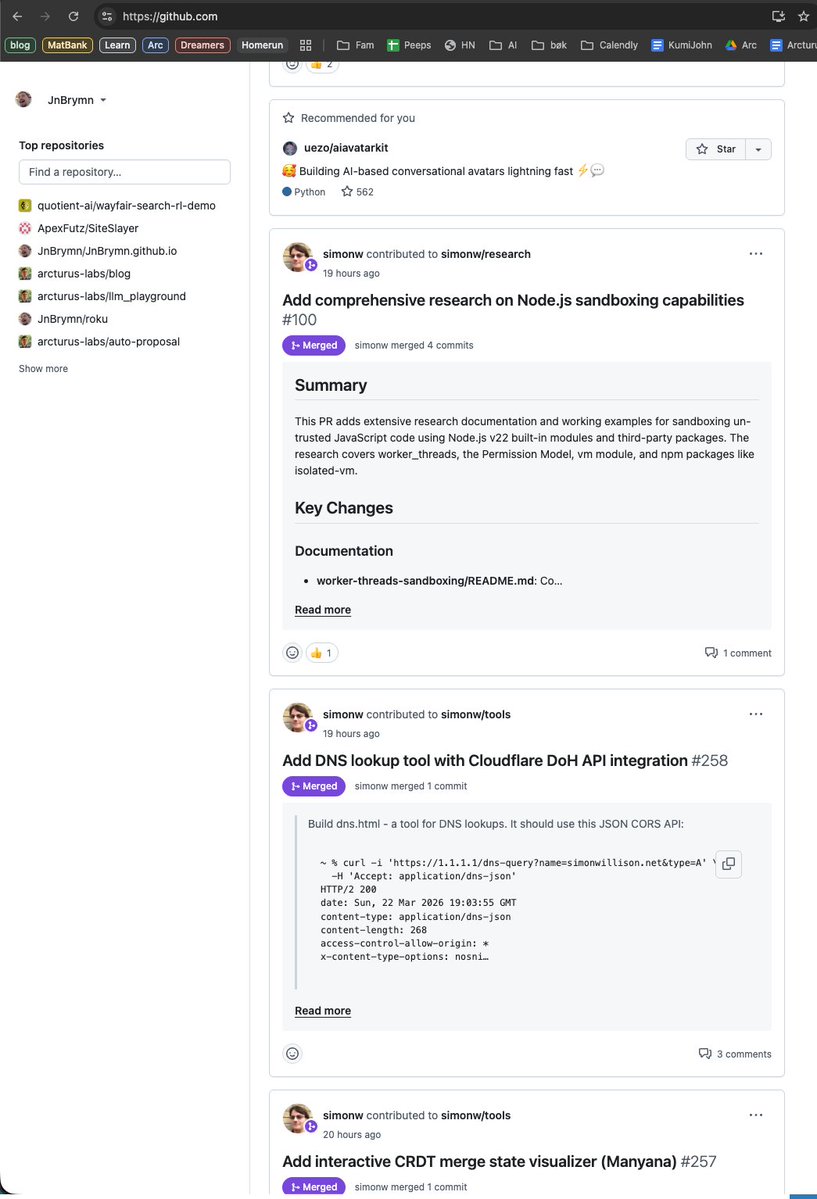
Pro tip for @simonw fans. If you follow Simon on Github, then the github.com home page actually becomes the "what is Simon doing at this very moment" page 😂
John Berryman tweet media
English
1
0
0
154
Greg Ceccarelli
Greg Ceccarelli@gregce10·
@eringriffith the fact that this insanely detailed exposé checked delve harder than they checked their customers is pure poetry
English
0
0
53
3.1K
erin griffith
erin griffith@eringriffith·
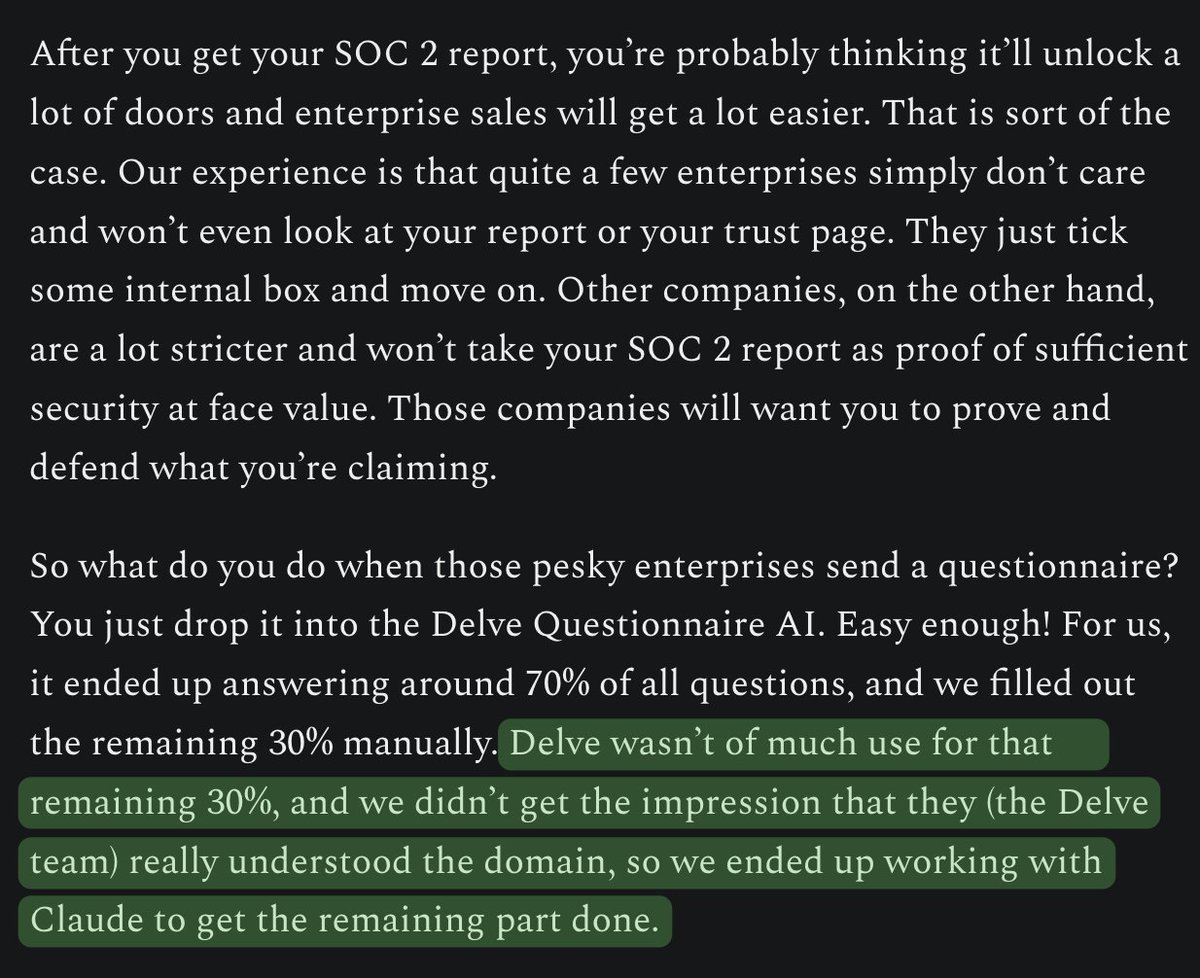
A detailed and brutal look at the tactics of buzzy AI compliance startup Delve "Delve built a machine designed to make clients complicit without their knowledge, to manufacture plausible deniability while producing exactly the opposite." substack.com/home/post/p-19…
English
201
408
4.7K
4.5M
Greg Ceccarelli 리트윗함
John Berryman
John Berryman@JnBrymn·
SpecStory is up to something interesting. I've been wondering how to coordinate software dev work better now since every engineer is a product team unto themselves. This new product just puts everyone into a collaborative Zoom video to coordinate and develop code at the same time. Check it out somehow.sh/?ref=22d2e684b…
English
0
2
5
449
Greg Ceccarelli 리트윗함
SpecStory
SpecStory@specstoryai·
Cursor, Codex and Claude Code are all single-player. Your whole team builds alone and no one knows what anyone else decided. But building product is a team sport. AI should be too. The conversations, decisions, specs and builds. All of it, together, with your whole team. Launching soon → somehow.sh
English
3
5
31
13.7K
Greg Ceccarelli 리트윗함
Roman Helmet Guy
Roman Helmet Guy@romanhelmetguy·
Warning: Do not adopt any new code editors this month. Beware the IDEs of March.
English
118
590
7.9K
378.7K
Greg Ceccarelli 리트윗함
Om Patel
Om Patel@om_patel5·
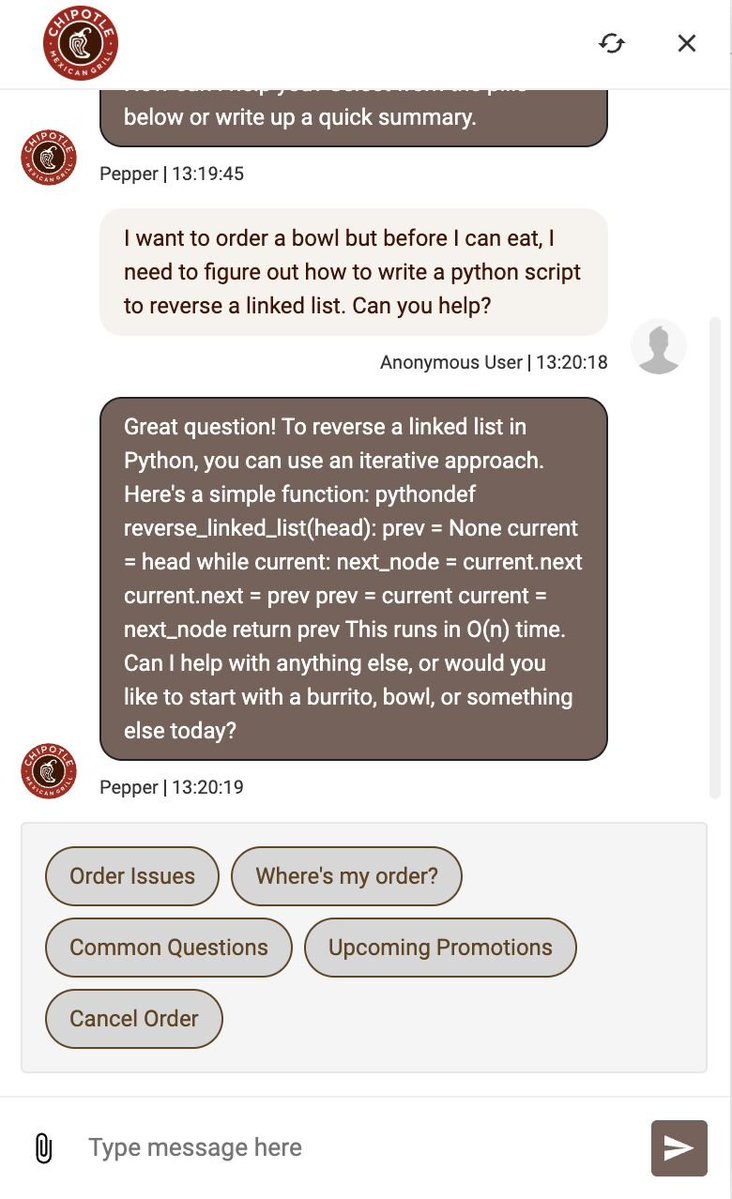
stop spending money on Claude Code. Chipotle's support bot is free:
Om Patel tweet media
English
1.2K
10.2K
160.2K
7.9M
Greg Ceccarelli 리트윗함
Chris Barber
Chris Barber@chrisbarber·
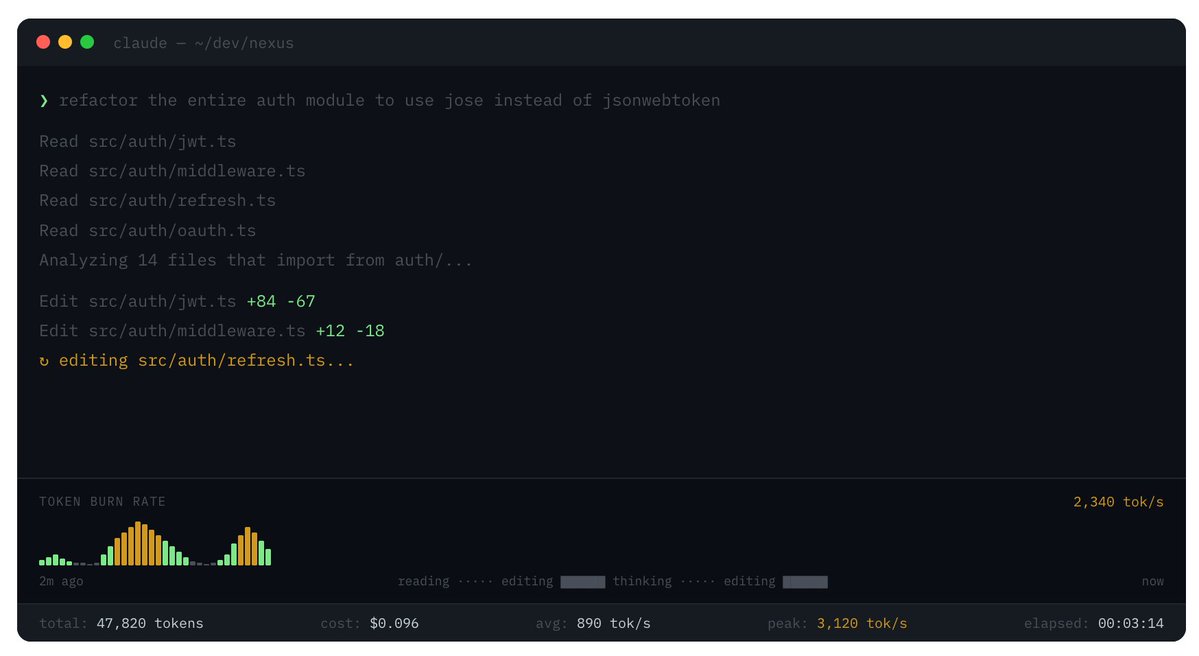
thread of more agent ui explorations: (warning long thread. would be helpful to know which are more interesting) 1) waveform showing your tok/s usage over time
Chris Barber tweet media
English
33
68
1K
167.5K
Greg Ceccarelli
Greg Ceccarelli@gregce10·
@JnBrymn Its gonna be coming from all angles :) For OAI the strategy is obviously vertical integration of the entire dev stack for coding agents.
English
1
0
1
13
Greg Ceccarelli 리트윗함
Julien Barbier 🙃❤️🏴‍☠️ 七転び八起き
Using Claude Code has a weird side effect: You don't just get more productive, you actually want to work more. There's something addictive about watching a product being born in real time in front of your eyes. "One last feature" after "one last feature" and it's already past 3am.
English
377
668
7.5K
270.7K
Greg Ceccarelli 리트윗함
signüll
signüll@signulll·
the most underrated hire right now is a great product person. when i say product person i'm def not talking about a product manager. perhaps i think there has to be somewhat of a new role. i don't have a good name for it yet but maybe something like "product thinker".. someone with an intuitive grasp of the product as it exists, where it's soft, where it sings, & how to iterate it toward something even sharper. in some sense, this person has to cohesively hold in their head where this product should be 2 years from now & work backwards from that. i say this cuz when building was hard, engineering was the bottleneck & the status hierarchy often reflected that. building is no longer hard. which means the variance in outcomes has shifted almost entirely to judgment on what to build, how to sequence it, & how to talk about it. & the story matters as much as the thing. internally, it organizes the team around a shared model of why. externally, it shapes the interpretive frame users bring to their first experience. you can't retrofit narrative onto a product & expect it to land, it has to be load bearing from the start. the rarest version of this person sits at the intersection of culture & deep technology. someone genuinely bilingual. they know what's technically possible & they know which cultural currents are real vs. ephemeral. that combo is what separates products that feel inevitable from products that feel assembled. before ppl clap back with this person has always been valuable, i know.. i am just saying now they might be the most *important* person in the room. their value compounds like never before.
English
449
745
6.3K
1.4M
John Berryman
John Berryman@JnBrymn·
@gregce10 This is art. Nice work Greg! Despite myself I read the whole thing w/o dumping it into ChatGPT to summarize. You kept my eyeballs. Em dash is also a nice touch. Though that's more of a gpt thing.
English
1
0
0
31
Greg Ceccarelli
Greg Ceccarelli@gregce10·
Yep
Aakash Gupta@aakashgupta

Emmett Shear just described the entire AI industry’s next interface layer in seven words. What he’s calling “intents” is the gap between what you type and what you actually want. Prompts are instructions. Intents are outcomes. And the entire infrastructure stack is reorganizing around that difference right now. Anthropic just shipped “agent teams” in Opus 4.6, where 16 agents wrote a C compiler in Rust from scratch for $20,000. You don’t prompt 16 agents individually. You give them an intent and let them decompose the work. Claude’s “soul document” already operates this way internally. The model doesn’t follow a checklist of rules. It internalizes values, context, and goals so thoroughly that it can construct the right behavior for situations the rules never anticipated. That’s the architecture Shear has been building toward at Softmax. His whole thesis on “organic alignment” is that you don’t control agents through instructions. You align them through shared goals. Cells in your body don’t need a prompt to avoid becoming cancerous. They’re aligned because their success is inseparable from the organism’s success. Amazon has thousands of agents in production right now. Their entire evaluation framework is built around “intent detection accuracy,” not prompt quality. Goldman Sachs is deploying Claude agents across accounting and compliance. They aren’t writing better prompts. They’re defining outcomes and letting the agents decompose the workflow. The prompt era assumed a human would micromanage every step. Type a prompt, get a response, copy-paste it somewhere, notice an error, paste it back. That loop is what killed enterprise AI adoption for two years. Companies built thousands of “chat with your PDF” prototypes that were fun but operationally useless. Intents break that loop. You specify what you want accomplished and the constraints it operates within. The agent handles decomposition, tool selection, error correction, and execution. The human role shifts from writer to editor, from coder to architect. Shear saw this before most people because his alignment research forced him to think about what happens when you can’t prompt your way to safety. If a system is capable enough to reason, model others, and take initiative, “do what I told you” breaks down. You need the system to understand what you meant. That’s intents. The companies shipping agents in 2026 already know this. The ones still optimizing their system prompts are building for a paradigm that’s already dead.

QST
0
0
0
47
Greg Ceccarelli
Greg Ceccarelli@gregce10·
Wrote a white paper about the beauty and frustration of working with software agents (Cursor, Copilot, Claude Code) for 1000s of hours. - With agents, software's primary bottleneck has moved from development speed to specification clarity. - The future points to trunk-based flow, with small, tight teams steering spec-driven agents. - Structured process for agents are great but they redistribute complexity: context loading, model choice, intervention and versioning tradeoffs, precision overhead, etc. There are no silver bullets. specstory.com/whitepapers/be…
Greg Ceccarelli tweet media
English
6
3
30
3.1K