

Jay Haddix
608 posts

Jay Haddix
@jayhaddix
Dad. Husband. Friend. I serve at the Joy to the World Foundation.
Colorado 가입일 Şubat 2011
831 팔로잉257 팔로워

Briggeman: PBR event showcases new capabilities of Falcon Stadium in rousing success gazette.com/2026/06/20/bri…
English
Jay Haddix 리트윗함

when your son steals your face just to make you laugh 😍
What a beautiful moment 🫶🏻
English
Jay Haddix 리트윗함
They put a German Shepherd in charge of babysitting a group of Doberman puppies…
English
Jay Haddix 리트윗함

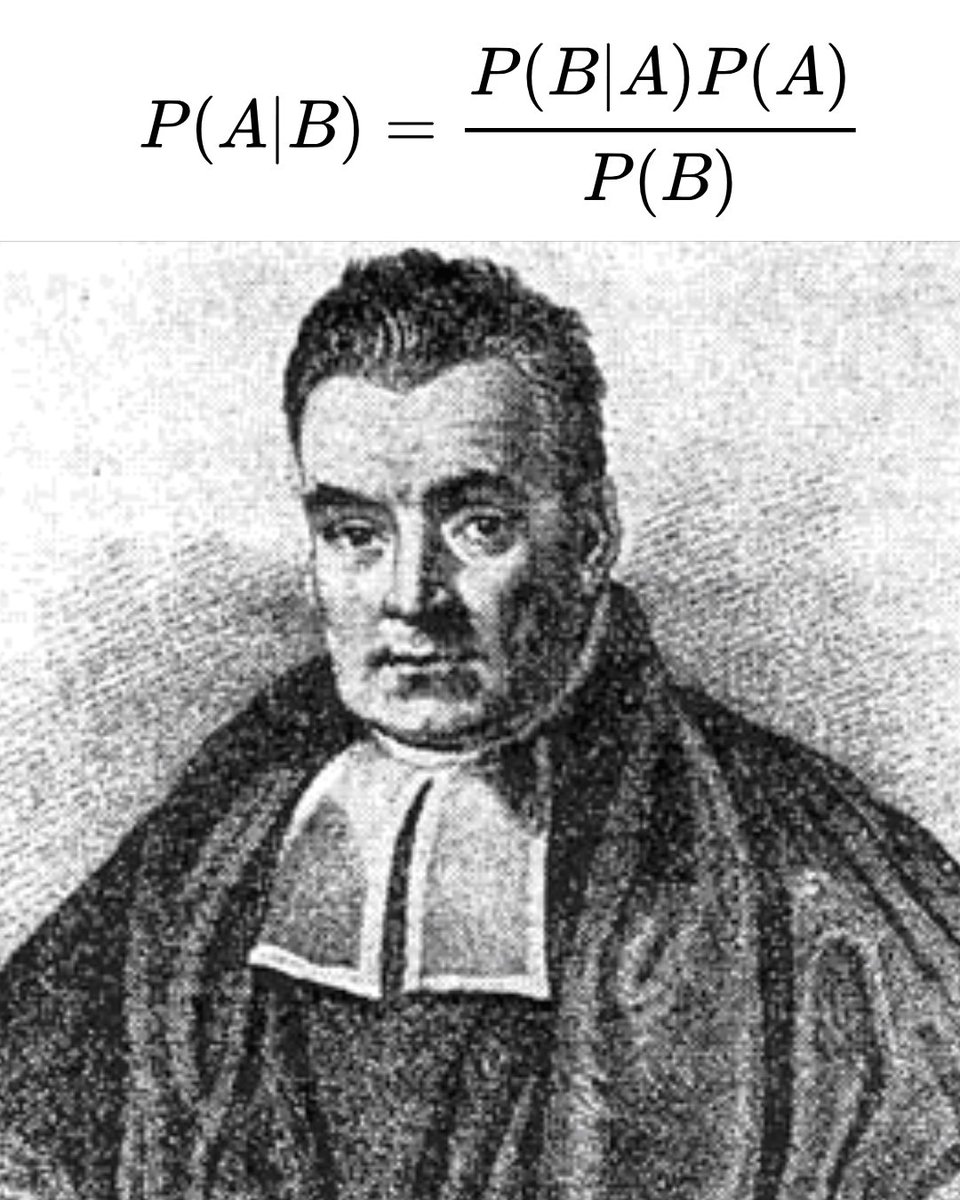
Bayes’ theorem is probably the single most important thing any rational person can learn.
So many of our debates and disagreements that we shout about are because we don’t understand Bayes’ theorem or how human rationality often works.
Bayes’ theorem is named after the 18th-century Thomas Bayes, and essentially it’s a formula that asks: when you are presented with all of the evidence for something, how much should you believe it?
Bayes’ theorem teaches us that our beliefs are not fixed; they are probabilities. Our beliefs change as we weigh new evidence against our assumptions, or our priors. In other words, we all carry certain ideas about how the world works, and new evidence can challenge them.
For example, somebody might believe that smoking is safe, that stress causes mouth ulcers, or that human activity is unrelated to climate change. These are their priors, their starting points. They can be formed by our culture, our biases, or even incomplete information.
Now imagine a new study comes along that challenges one of your priors. A single study might not carry enough weight to overturn your existing beliefs. But as studies accumulate, eventually the scales may tip. At some point, your prior will become less and less plausible.
Bayes’ theorem argues that being rational is not about black and white. It’s not even about true or false. It’s about what is most reasonable based on the best available evidence. But for this to work, we need to be presented with as much high-quality data as possible. Without evidence—without belief-forming data—we are left only with our priors and biases. And those aren’t all that rational.
English
Jay Haddix 리트윗함

Jay Haddix 리트윗함

What a beautiful thing to say and how lucky we might be to have parents who believe in us.
English
Jay Haddix 리트윗함

Nobody wanted to take her to the dance until the football captain asked her.
Respect to this young man and his parents for raising him right!
English
Jay Haddix 리트윗함


Jay Haddix 리트윗함
This was an eye opener from Jensen Huang
When asked whether he would rather relive his 20s or be 20 years old today, this is what he had to say:
"I thought our 20s were happier than these 20s. I think everyone deserves some time to be oblivious, and not wear all of the world's problems on their shoulders on Day 1
We are raising a generation that is very cynical and too informed
They are cynical, not because they are inherently cynical. They are cynical because they see so much stuff. It is too much stuff
You have to build up some internal reserve of optimism. You have to build up some reserve of goodness."
English
Jay Haddix 리트윗함

Jay Haddix 리트윗함

Jay Haddix 리트윗함

🚨CJ Stroud says his Faith is Firstand it has been a game changer for his life🙏
English
Jay Haddix 리트윗함

Jay Haddix 리트윗함

Jay Haddix 리트윗함

I tell you, there will be more joy in heaven over one sinner who repents than over ninety-nine righteous persons who need no repentance.
Luke 15:7
English
Jay Haddix 리트윗함
Hannah Hutzley was shopping in her wheelchair when she heard a little boy whisper, “Hi… do you know how to do wheelies?” And it was the moment both their lives changed for the better. 😭❤️
English
Jay Haddix 리트윗함

The world needs more feel good stories like this ❤️
English
Jay Haddix 리트윗함

Cast your vote 𝕏
Italian 🇮🇹 stuffed sandwiches or
The classic French 🇫🇷 baguette with butter and ham?
Parisian Aesthetics@Parisianaes1
Since the snow has paralyzed the City of Lights, nothing beats a jambon-beurre sandwich to warm up 🥖
English
Jay Haddix 리트윗함

In 1988, at 3:00 AM, a recording engineer in Honolulu named Milan Bertosa received a call from a client who said, "I have this guy here who really wants to record something."
That "guy" was Israel Kamakawiwoʻole (known as "IZ"), a 500-pound Hawaiian musician who arrived at the studio in a taxi shortly after. Bertosa quickly set up a single microphone, and in just one take, Israel performed a medley of "Over the Rainbow" and "What a Wonderful World" accompanied only by his ukulele.
The recording was so raw and beautiful that it eventually became a global phenomenon, appearing in countless movies and commercials.
English