David Stein

3.3K posts

David Stein banner
David Stein

David Stein

@jdstein

Podcaster. Author. Fintech cofounder @AssetCampHQ

Tucson, AZ 가입일 Mart 2007
210 팔로잉3K 팔로워
David Stein
David Stein@jdstein·
If you want to do your own historical stock and bond market research, understand present conditions, and model the future, try Asset Camp for free for 7 days at assetcamp.com
David Stein tweet media
English
0
0
0
221
David Stein
David Stein@jdstein·
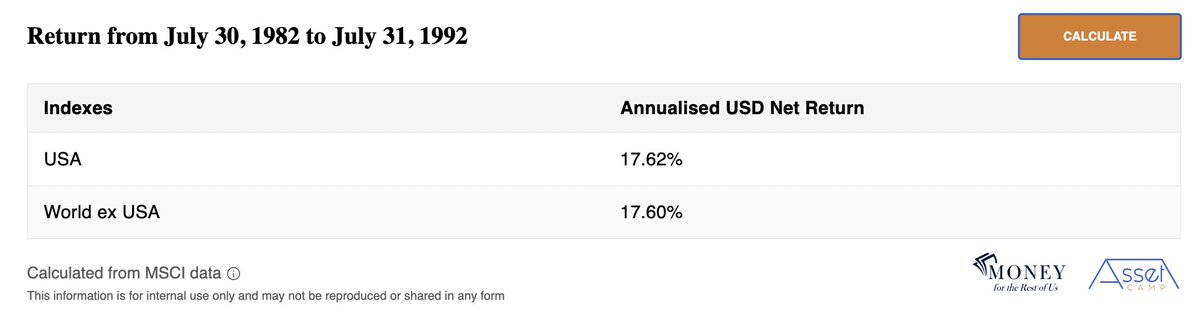
When you start investing matters. Over the next decade, from July 1982 to July 1992, U.S. stocks returned 17.7% annualized. U.S. bonds returned 13.3% annualized. (5 of 6)
David Stein tweet media
English
1
0
0
263
David Stein
David Stein@jdstein·
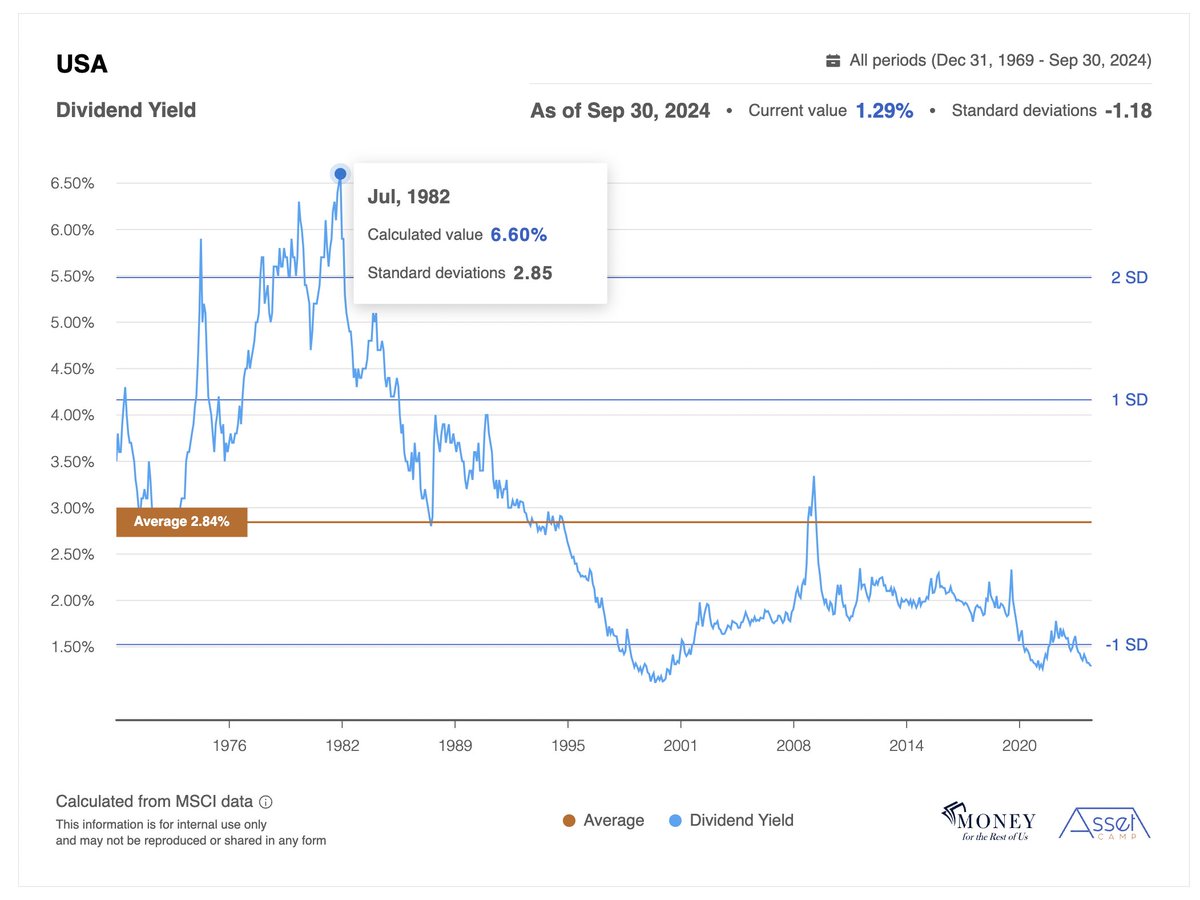
6.6% dividend yield. That's the dividend income investors were earning investing in U.S. stocks in July 1982. The ten years from July 1972 to July 1982 were brutal for the U.S. stock market. (1 of 6)
David Stein tweet media
English
1
0
0
483
David Stein
David Stein@jdstein·
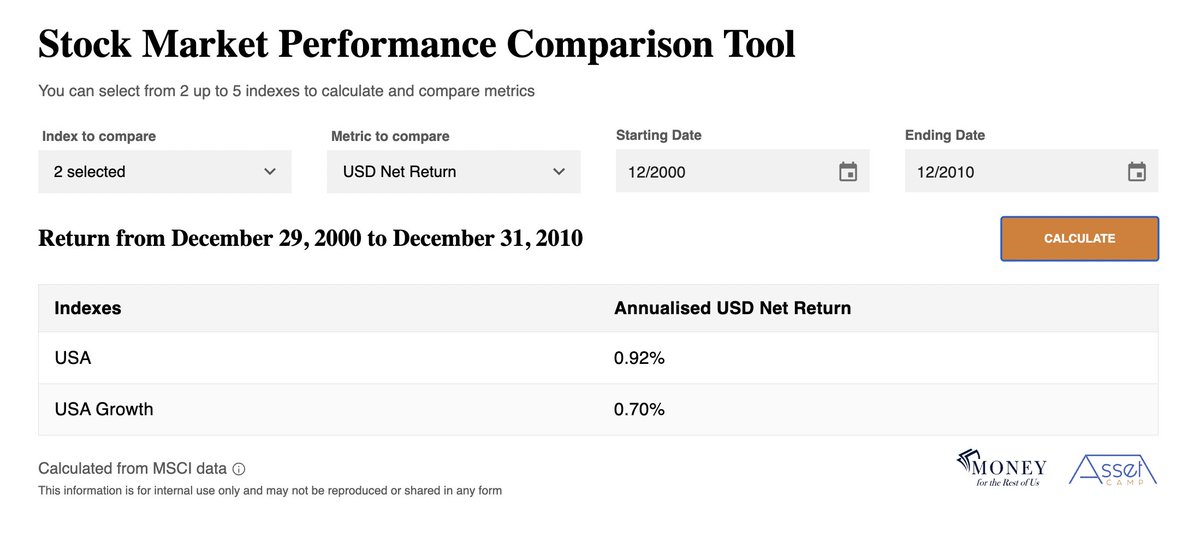
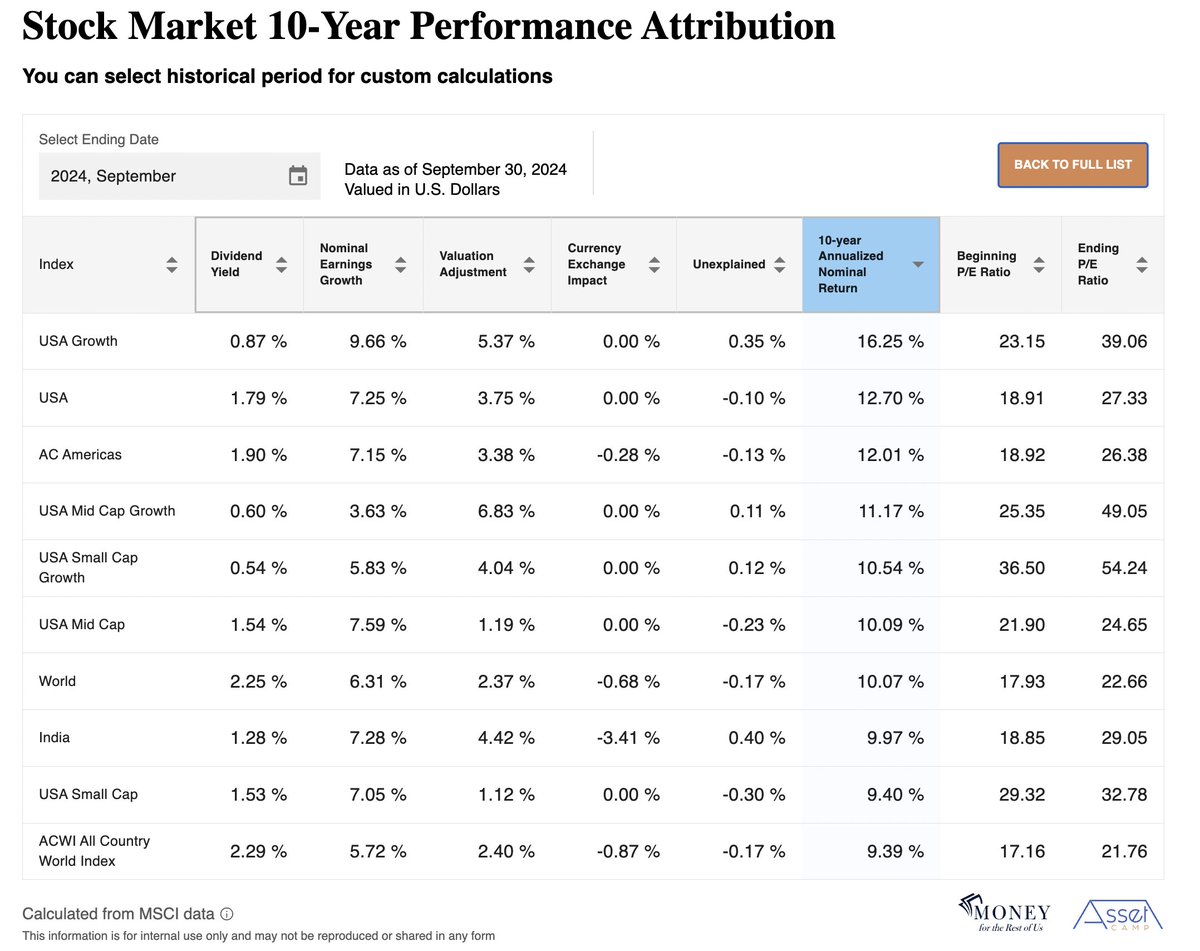
The last time U.S. and U.S. growth stocks were this expensive was in December 2000. Over the next decade, both areas returned less than 1% annualized. U.S. stock outperformance will not continue if earnings disappoint and valuations fall as they did in the early 2000s.
David Stein tweet media
English
0
0
0
116
David Stein
David Stein@jdstein·
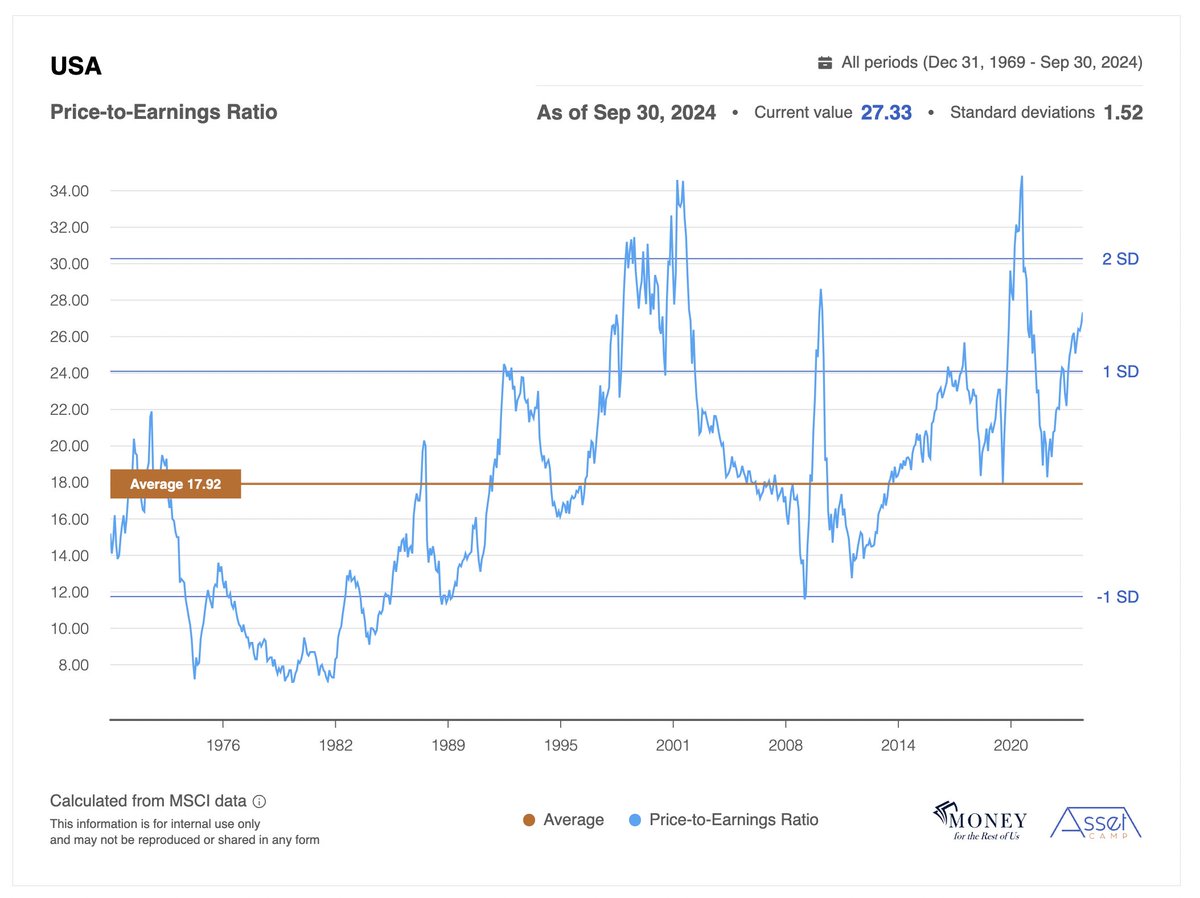
That’s not the entire story, however. U.S. stocks are more expensive over the past decade, lifting performance by 4% to 5% annualized.  Trailing and forward price-to-earnings ratios for U.S. and U.S. growth stocks are now 1.5 to 2 standard deviations more expensive than average.
David Stein tweet media
English
1
0
0
160
David Stein
David Stein@jdstein·
U.S. stocks, including U.S. growth, have been the best-performing area over the past decade of the 46 stock indexes we track on Asset Camp. A 10-year performance attribution shows that solid earnings per share growth has contributed to the stellar returns of the U.S. stock market
David Stein tweet media
English
1
0
0
236
David Stein
David Stein@jdstein·
Bond investors demand additional yield compensation when recession risks rise. That incremental yield or spread was 3.1% at the end of August, almost one SD below average. Today, the spread is even narrower at 3.0%. Spreads would widen to over 6% if a recession was imminent.
David Stein tweet media
English
0
0
3
225
David Stein
David Stein@jdstein·
The U.S. stock market could also be an example of survivorship bias. Focusing on the outperformance while ignoring all the things that could have happened but didn't (i.e. 80% market crash, domestic wars, economic disasters, coup, etc.) See Argentina.
David Stein tweet media
English
0
0
3
227
David Stein
David Stein@jdstein·
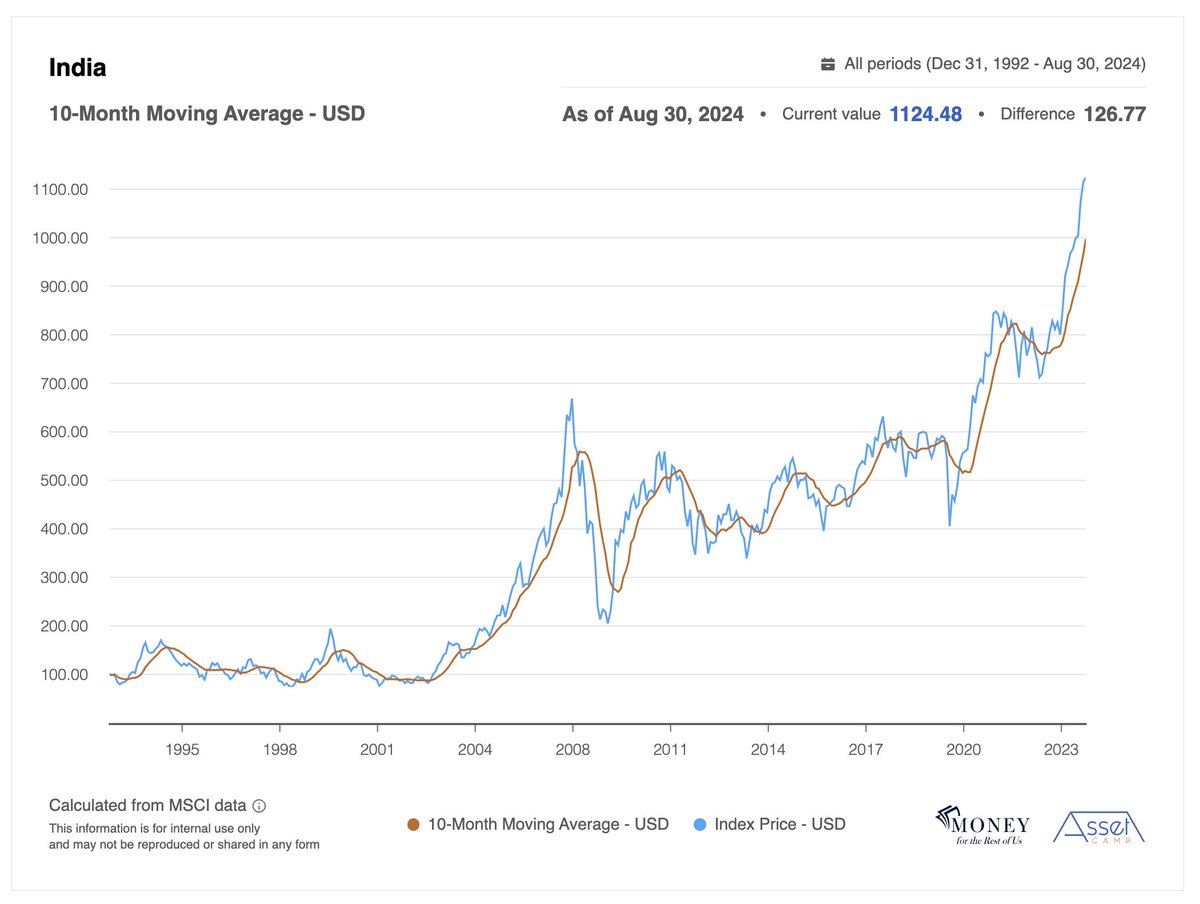
Those high valuations could lead to increased volatility. Still, given the demographic and economic tailwinds, India’s stock market is well placed to continue to outperform global stocks in the decades ahead.
David Stein tweet media
English
0
0
0
113
David Stein
David Stein@jdstein·
India, with 600 million workers, is expected to have the largest workforce in the world by the end of this decade. India’s stock market is expensive, with a trailing 12-month P/E ratio of 27.8 compared to its long-term average of 19.6.
David Stein tweet media
English
1
0
0
134
David Stein
David Stein@jdstein·
What has been the best-performing region or country over the past twenty years, according to the 46 stock indexes we track on Asset Camp? India. India has a twenty-year annualized return of 12.3%. It just edged out USA growth.
David Stein tweet media
English
1
0
0
202
David Stein
David Stein@jdstein·
@1basemoney @PrestonPysh Great pod. Of note, QE expands base money, but it's only inflationary when the govt runs a budget deficit so that both private sector purchasing power and net worth increase. Otherwise, QE is just an asset swap (bonds for cash, with no increase in wealth)
English
0
0
0
22
David Stein
David Stein@jdstein·
The investing world is comprised of different time scales and layers. Most diversified investment portfolios will have multiple layers. Which layer do you spend most of your investing time on? linkedin.com/posts/jdstein_…
David Stein tweet media
English
0
0
0
147